يُعد التيتانيوم أحد أكثر المعادن أمانًا التي يمكنك ارتداؤها إذا كنت تعاني من حساسية الجلد. فهو يشكل طبقة أكسيد خاملة كيميائيًا تمنع إطلاق الأيونات — وهي الآلية الفعلية الكامنة وراء معظم حالات الحساسية تجاه المجوهرات. كما أنه لا يتغير لونه، ولا يصدأ، ولا يتسبب في تحول لون البشرة إلى الأخضر. لكن هناك مشكلة: المجوهرات “المطلية بالتيتانيوم” تختلف عن التيتانيوم الصلب، كما أن درجة النقاء مهمة. يغطي هذا الدليل الجوانب العلمية ودرجات النقاء وما يجب البحث عنه حتى لا تضطر إلى التخمين.
السبب الحقيقي وراء تسبب معظم المجوهرات في تهيج بشرتك
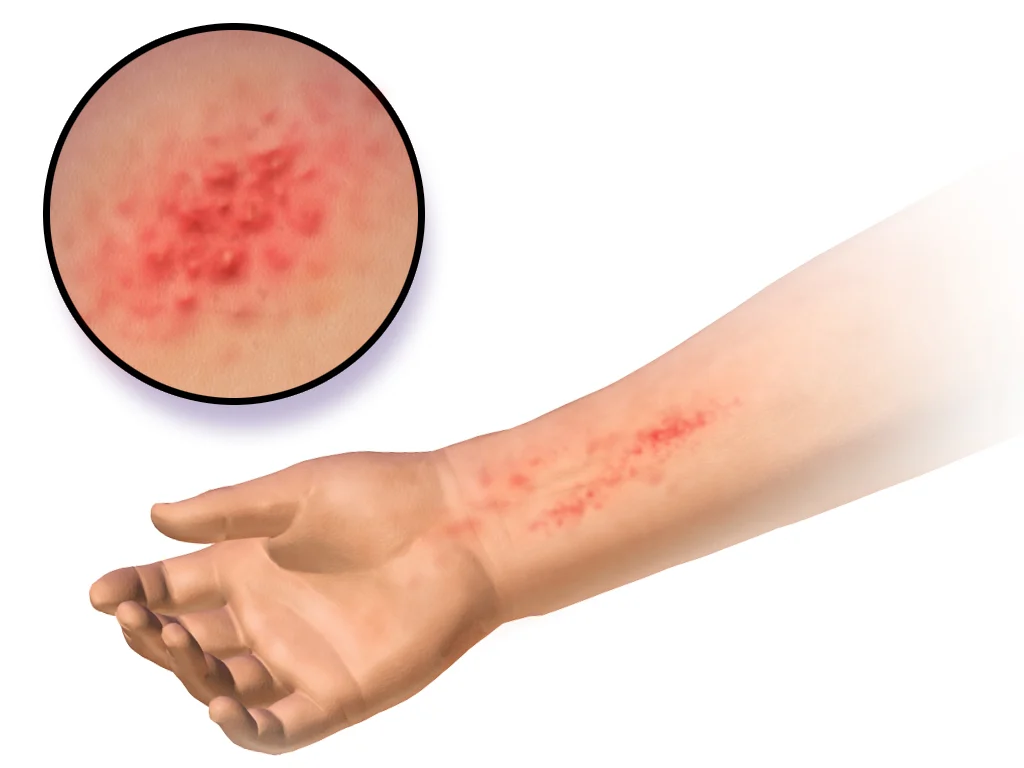
معظم التفاعلات الجلدية الناتجة عن ارتداء المجوهرات ليست غامضة — فهي تتبع سلسلة كيميائية يمكن التنبؤ بها. فعندما يتلامس النيكل (الموجود في معظم المجوهرات المصنوعة من السبائك، بما في ذلك الكثير من “الفولاذ الجراحي”) مع بشرتك، فإنه يتآكل ببطء ويطلق أيونات النيكل. وترتبط هذه الأيونات ببروتينات الجلد. ويعتبر جهازك المناعي مركب النيكل والبروتين هذا جسمًا غريبًا، فيطلق استجابة التهابية تتمثل في احمرار وحكة، وأحيانًا ظهور بثور أو طفح جلدي يظهر بالضبط في المكان الذي لامسه المعدن.
هذا هو تفاعل فرط الحساسية المتأخر من النوع الرابع — استجابة مناعية موثقة جيدًا. تشير الدراسات الوبائية المنشورة في «مجلة الأكاديمية الأمريكية للأمراض الجلدية» إلى أن معدل انتشار الحساسية تجاه النيكل يبلغ تقريبًا 17% من النساء و3% من الرجال. يُحفز الكوبالت والكروم نفس الآلية. وهذه العناصر الثلاثة مكونات شائعة في سبائك المجوهرات المصنوعة من المعادن غير الثمينة.
الفكرة الأساسية هي التالية: الحساسية لا تنشأ عن وجود المعدن. بل تنشأ عن الأيونات التي تتسرب من سطح المعدن. المعدن الذي لا يُطلق أيونات هو معدن لا يمكنه إحداث تلك التفاعل.
وهذا بالضبط ما يميز التيتانيوم.
لماذا لا يسبب التيتانيوم ردود فعل تحسسية؟
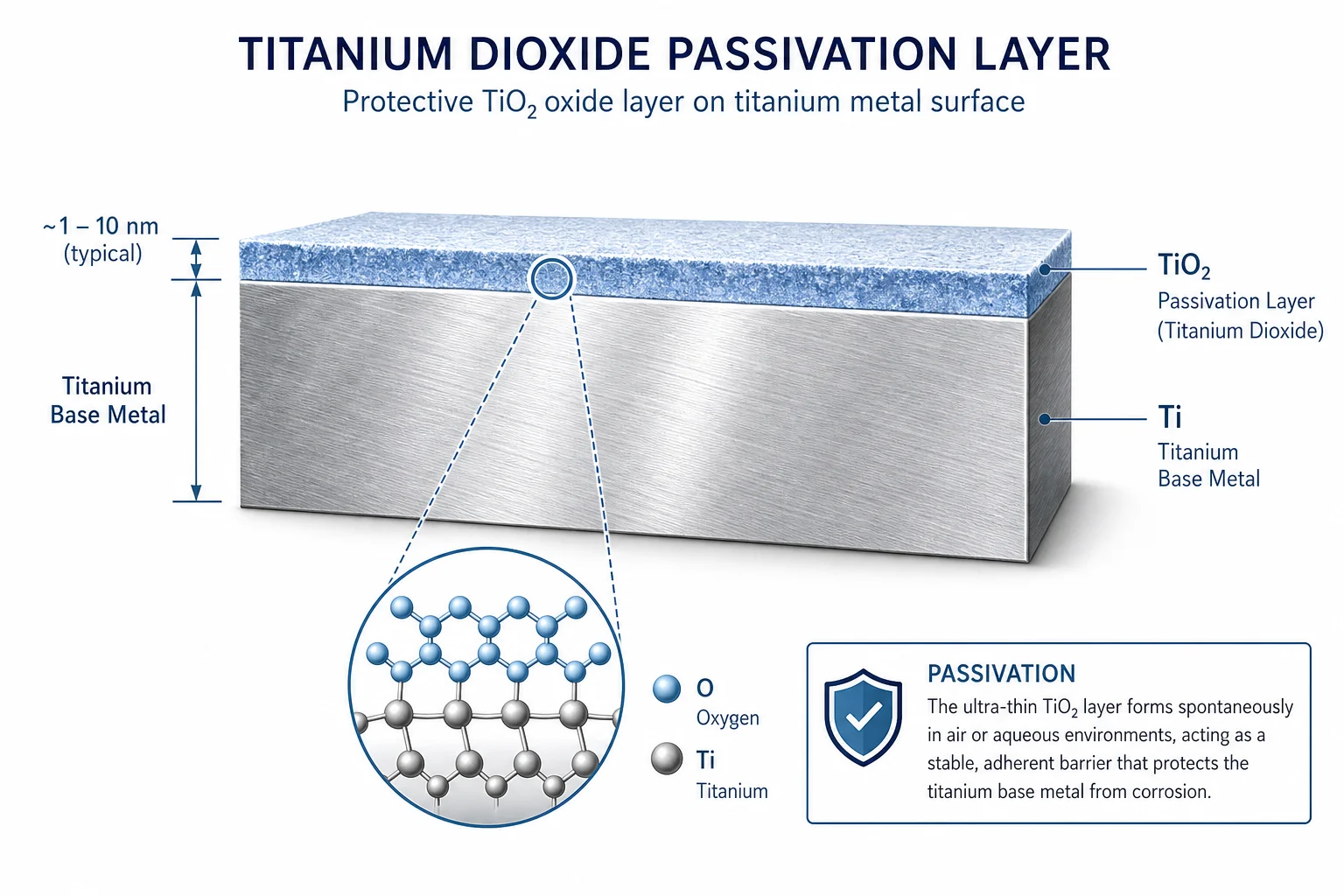
في اللحظة التي يتعرض فيها التيتانيوم للأكسجين — وهو ما يحدث فورًا في الهواء — فإنه يشكل طبقة سطحية رقيقة وغير مرئية من ثاني أكسيد التيتانيوم (TiO₂). ويُطلق على هذه العملية اسم «التخميل»، وهي ليست طبقة طلاء يمكن أن تتآكل. بل هي أكسيد مستقر لا يتفاعل كيميائيًا في ظل ظروف الاستخدام العادية.
ما الذي يعنيه مصطلح “خامل كيميائيًا” في الواقع العملي:
- لا يتفاعل مع العرق أو الزيوت الطبيعية للبشرة أو المستحضرات المرطبة أو العطور
- لا يتآكل في الماء أو المياه المالحة أو حمامات السباحة المعالجة بالكلور
- لا يطلق أيونات معدنية عند ملامسته للبشرة
نظرًا لأن معظم حالات الحساسية تجاه المجوهرات تنجم عن الأيونات، فإن السطح الذي لا يطلق أي أيونات لا يحتوي في الأساس على أي عنصر يثير التفاعل. حساسية التيتانيوم الحقيقية موثقة ولكنها نادرة — فقد وجدت دراسة أجراها سيسيليا وزملاؤه على 1,500 مريض زرع أسنان معدل تفاعل يبلغ 0.6%، على الرغم من أن الأبحاث التي أجريت على مجموعات خضعت لاختبار اللصقة تشير إلى أن المعدل الفعلي لدى الأفراد الذين يعانون من حساسية سريرية قد يكون أعلى. ما يتفق عليه جميع الدراسات هو: يُحدث التيتانيوم حساسية بمعدل أقل بكثير من النيكل أو الكوبالت أو الكروم.
كما أن طبقة TiO₂ هي أيضًا الشفاء الذاتي: إذا خدشته، فإنه يستعيد شكله في غضون ثوانٍ في وجود الأكسجين. ولا يمكن أن يتآكل بفعل الاستخدام اليومي كما يحدث مع الطلاء المطلي.
هذه هي نفس الخاصية التي تجعل من التيتانيوم المادة المفضلة في عمليات استبدال مفصل الورك، وزراعة الأسنان، وألواح العظام. فالجسم لا يعتبره جسمًا غريبًا. وهو متوافق حيويًا حقًّا، على عكس معظم معادن صناعة المجوهرات.
الإجابة المختصرة: لا يسبب التيتانيوم أي تفاعلات لأن سطحه لا يطلق أيونات. فبدون أيونات، لا تحدث استجابة مناعية، ولا يظهر طفح جلدي.
هل تتعرض مجوهرات التيتانيوم للتلطيخ؟
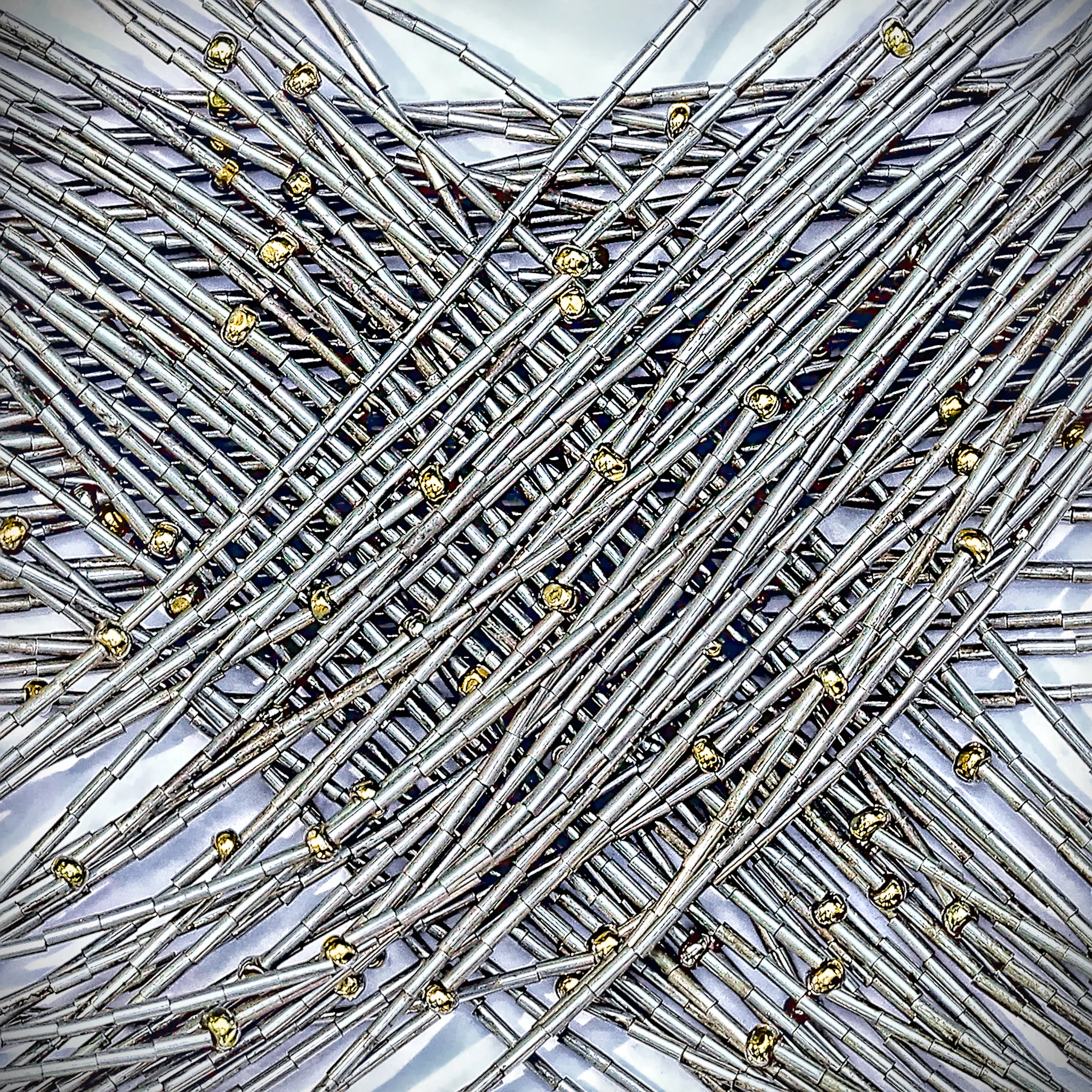
لا — التيتانيوم الصلب لا يتعرض للتآكل.
يحدث تغير لون الفضة الاسترلينية لأن الفضة تتفاعل مع الكبريت الموجود في الهواء لتكوّن كبريتيد الفضة، وهو مركب داكن يتراكم على السطح. أما التيتانيوم فلا يحدث فيه مثل هذا التفاعل. فسطحه المغطى بأكسيد التيتانيوم (TiO₂) مستقر في مواجهة الكبريت والأكسجين ومعظم المواد الكيميائية التي قد تتعرض لها في الحياة اليومية.
ما الذي قد يحدث مع مرور الوقت:
- تراكم الأوساخ — يمكن أن تتسبب زيوت الجسم وبقايا الصابون واللوشن في إضفاء مظهر باهت على أي معدن، بما في ذلك التيتانيوم. وهذا الأمر يقتصر على السطح ويمكن إزالته بالمسح.
- الخدوش الدقيقة — التيتانيوم أكثر صلابة من الفضة أو الذهب، لكنه ليس مقاومًا للخدوش. فقد تؤدي الخدوش الدقيقة الناتجة عن الاستخدام اليومي إلى تغيير مظهر السطح.
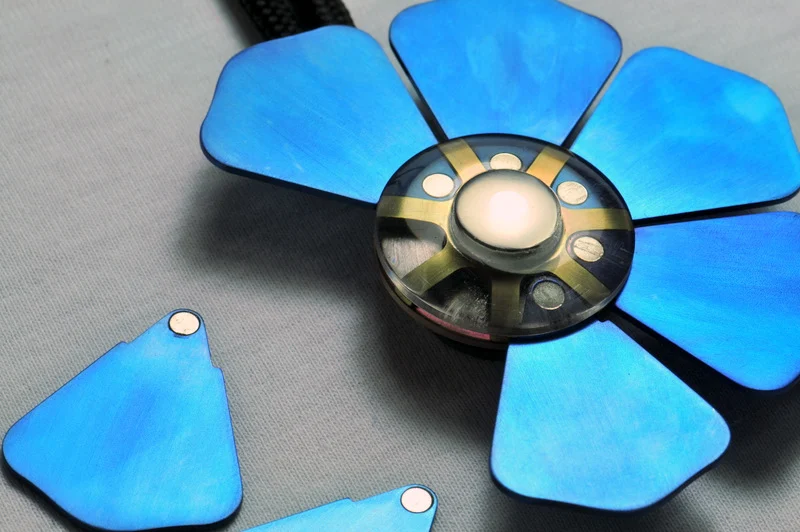
- تلاشي لون الطلاء المؤكسد — يستمد التيتانيوم المطلي بالأنود (الملون) لونه من تداخل الضوء على طبقة الأكسيد، وليس من الصبغة. وقد يؤدي التعرض المطول لمكونات الجسم الكيميائية والعرق إلى تغير هذا اللون بمرور الوقت.
النقطة الثالثة تُطرح من حين لآخر في المنتديات — حيث يشتري شخص ما قطعة من التيتانيوم المطلية بالأنود باللون الأزرق أو الأرجواني، ويلاحظ أنها تتغير. هذا هو تأثير المعالجة اللونية، وليس تدهورًا في التيتانيوم نفسه. فالمعدن الأساسي يظل خاملًا.
إذا كنت تشتري قلادة من التيتانيوم بلون فضي طبيعي، فلن تواجه أي مشكلة تتعلق بتغير لونها. كل ما تحتاجه من عناية هو شطفها بالماء الدافئ وتنظيفها بقطعة قماش ناعمة.
درجات التيتانيوم: ما الذي تعنيه العلامات فعليًّا
وهذا هو المكان الذي تحدث فيه معظم أخطاء الشراء. فليست كل المجوهرات التي تُسوَّق تحت مسمى “التيتانيوم” متشابهة.
الدرجة 2 (تيتانيوم نقي تجاريًا)
- يحتوي على التيتانيوم 99%+ دون أي نسبة ملحوظة من النيكل
- الدرجة الأكثر شيوعًا في سلاسل التيتانيوم ومكونات القلائد
- مقاومة ممتازة للتآكل، وقابلية تشكيل جيدة لروابط السلاسل
- آمن على البشرة الحساسة
ASTM F136 (الدرجة 23 / Ti-6Al-4V ELI المخصص للزراعة)
- المعيار الذهبي المستخدم في الغرسات الجراحية ومجوهرات ثقب الجسم
- محتوى النيكل أقل من 0.05%، تم التحقق منه بشهادة المصنع
- موصى به من قبل رابطة محترفي الثقب (APP) للثقوب الحديثة
- الخيار الأفضل إذا كنت تعاني من حساسية شديدة مؤكدة تجاه المعادن
الدرجة 5 (Ti-6Al-4V)
- أقوى من الدرجة 2، شائع الاستخدام في بعض الحلقات والأدوات المعدنية
- يحتوي على الألومنيوم والفاناديوم كعناصر مكونة للسبائك
- تُعتبر آمنة بشكل عام، ولكن في غياب مواصفات ELI (مواد ذات نسبة منخفضة جدًّا من المواد الخلالية) الواردة في معيار ASTM F136، يكون التحقق من النقاء أقل صرامةً
مطلية بالتيتانيوم أو مغلفة بالتيتانيوم
- طبقة رقيقة من التيتانيوم تغطي معدنًا أساسيًا، غالبًا ما يكون النحاس الأصفر أو سبيكة من النيكل
- بمجرد أن يتآكل الطلاء — وهو ما سيحدث لا محالة، خاصة في نقاط الاحتكاك مثل المشابك وحلقات التعليق — يتلامس المعدن الأساسي مع بشرتك
- هذا هو المصدر الأكثر شيوعًا لـ“تفاعلات التيتانيوم” المبلغ عنها. والتفاعل ليس مع التيتانيوم نفسه، بل مع ما يوجد تحته
عند التسوق: ابحث عن عبارات مثل “التيتانيوم الصلب” أو “التيتانيوم النقي تجاريًا” أو “الدرجة 2 / ASTM F136”. إذا كان الوصف يذكر فقط “سبائك التيتانيوم” دون تحديد الدرجة، فهذا مؤشر تحذيري. أما إذا كان مكتوبًا “مطلي بالتيتانيوم”، فعاملها كما تعامل أي مجوهرات مطلية.
التيتانيوم مقابل المعادن الأخرى “المضادة للحساسية”
لا يوجد تعريف تنظيمي لمصطلح “مضاد للحساسية” في مجال المجوهرات. ويمكن لأي علامة تجارية أن تدرجه على الملصق. وفيما يلي مقارنة بين البدائل الشائعة:
| معدن | محتوى النيكل | بقع؟ | آمن لمن يعانون من حساسية النيكل | الملاحظات |
|---|---|---|---|---|
| التيتانيوم الصلب (الدرجة 2 / ASTM F136) | لا شيء (<0.05%) | لا يوجد | نعم — الخيار الأقوى | أفضل خيار على المدى الطويل |
| ذهب خالص عيار 14K–18K | لا شيء (ذهب خالص) | لا يوجد | نعم | التكلفة المرتفعة؛ قد تحتوي السبائك من عيار 10K على النيكل |
| الفولاذ الجراحي 316L | 10–14% (مُدمج في سبيكة) | لا يوجد | يُتقبل عادةً، لكن ليس مضمونًا | النيكل موجود ولكنه غالبًا ما يكون غير تفاعلي |
| فضة ستيرلينغ (925) | لا شيء، لكنه يتأكسد | نعم | نعم (في حالة الحساسية من النيكل) | يتفاعل مع الجلد/الهواء؛ تراكم الكبريتيد |
| الفولاذ المقاوم للصدأ (عام) | متغير | لا يوجد | خطر حدوث رد فعل | تتفاوت الجودة بشكل كبير؛ تجنب المنتجات غير المُعلَّمة |
| مطلي بالذهب / مطلي بالفضة | يعتمد على القاعدة | يختلف | المخاطر الناجمة عن تآكل الطلاء | يُعامل كمعادن غير ثمينة بمجرد إزالة الطلاء |
تجدر الإشارة إلى الفولاذ الجراحي. فهو خيار شائع ويُتقبل جيدًا بشكل عام، لكنه يحتوي على النيكل كعنصر مقوِّم مقصود. ولا يمثل ذلك مشكلة بالنسبة لمعظم الناس. أما بالنسبة لمن يعانون من حساسية مؤكدة تجاه النيكل تتراوح بين متوسطة وشديدة، فإنه لا يزال يمثل خطرًا — وإن كان أقل خطورة من النحاس الأصفر العادي أو المجوهرات المقلدة. أما التيتانيوم فيقضي على هذا الخطر تمامًا.
ما يقوله فعلاً الأشخاص الحقيقيون ذوو البشرة الحساسة
في العديد من مجتمعات موقع Reddit — r/piercing، r/jewelry، r/TheGirlSurvivalGuide، r/Allergies — يظهر نمط متسق.
الأشخاص الذين عانوا من حالات حساسية متكررة تجاه المجوهرات “المضادة للحساسية” وانتقلوا إلى استخدام مجوهرات مصنوعة من التيتانيوم الصلب المعتمد، أفادوا بعدم حدوث أي ردود فعل. المسار المعتاد: سنوات من تجنب ارتداء أي مجوهرات → توصية من شخص ما باستخدام التيتانيوم → شكوك مبدئية → عدم حدوث أي رد فعل حتى بعد أشهر من الارتداء المستمر.
من r/TheGirlSurvivalGuide: “ابنتي تعاني من حساسية شديدة في البشرة وكانت تعاني من حساسية شديدة تجاه النيكل. وقد أحدث التيتانيوم تغييرًا جذريًّا في حياتنا.”
هناك نقطة دقيقة تتكرر باستمرار: عندما يبلغ شخص ما عن حدوث رد فعل تجاه مجوهرات “التيتانيوم”، فإن المجتمع يعزو السبب في الغالب إلى قطعة مطلية، أو سبيكة غير محددة النوع، أو قفل/قطعة تثبيت مصنوعة من معدن مختلف. إن تفاعل التيتانيوم الخالص مع البشرة الحساسة أمر نادر حقًّا في هذه المناقشات — ليس “نادرًا من الناحية التسويقية”، بل نادرًا بنفس القدر الذي تكون فيه ردود الفعل الشديدة تجاه الذهب عيار 18 قيراطًا نادرة.
لقد قمتُ شخصياً بوضع عينات من التيتانيوم من موردين من الدرجة الثانية على بشرتي لفترة طويلة من التلامس، ولم ألاحظ أي تفاعل، في حين أن نفس المنطقة من الجلد كانت قد أظهرت تفاعلاً مع الفولاذ المقاوم للصدأ القياسي في غضون ساعات. هذه تجربة شخصية، لكنها تتوافق مع القواعد الكيميائية.
قلائد التيتانيوم على وجه التحديد: ما الذي يجب التحقق منه
تركز معظم الأبحاث المتعلقة بالتيتانيوم والبشرة الحساسة على الأقراط وثقوب الجسم. أما بالنسبة للقلائد، فهناك بعض النقاط الإضافية التي يجب أخذها في الاعتبار:
مادة المشبك — يُعد المشبك نقطة الاحتكاك في القلادة. فإذا كانت السلسلة مصنوعة من التيتانيوم، لكن مشبك «مخلب الكركند» مطلي بالنحاس، فستظل رقبتك تتأثر بذلك. ابحث عن القلائد التي يُذكر أن القطعة بأكملها مصنوعة من التيتانيوم، أو التي تحتوي على مشبك مصنوع صراحةً من التيتانيوم أو الذهب الخالص.
حلقة تعليق القلادة وحلقات الربط — نفس المنطق. إذا تم تثبيت قلادة من التيتانيوم على حلقة تعليق قياسية بلون الفضة، فمن المرجح أن تكون الحلقة من الفضة الاسترلينية أو مطلية بالفضة. ولضمان السلامة التامة، اشترِ مجموعات مصنوعة بالكامل من التيتانيوم أو تحقق من كل مكون على حدة.
وزن السلسلة — يعتبر التيتانيوم أخف وزنًا من الفولاذ بنحو 45% عند نفس الحجم. فالسلسلة المصنوعة من التيتانيوم التي تبدو ثقيلة ستبدو أخف وزنًا بشكل ملحوظ مقارنة بسلسلة مماثلة مصنوعة من الفولاذ. وهذا أمر مهم للبشرة الحساسة لأن السلاسل الثقيلة تسبب مزيدًا من الضغط والاحتكاك عند نقاط التلامس.
الإنهاء — يمكن استخدام كل من التيتانيوم المصقول بالفرشاة والمصقول والملون بالأنودة. ويُعد التيتانيوم المصقول هو الأكثر شيوعًا في سلاسل القلائد. وإذا اخترت التيتانيوم الملون بالأنودة، فاعلم أن اللون قد يتغير بمرور السنين من الاستخدام.
كيفية العناية بقلادة من التيتانيوم
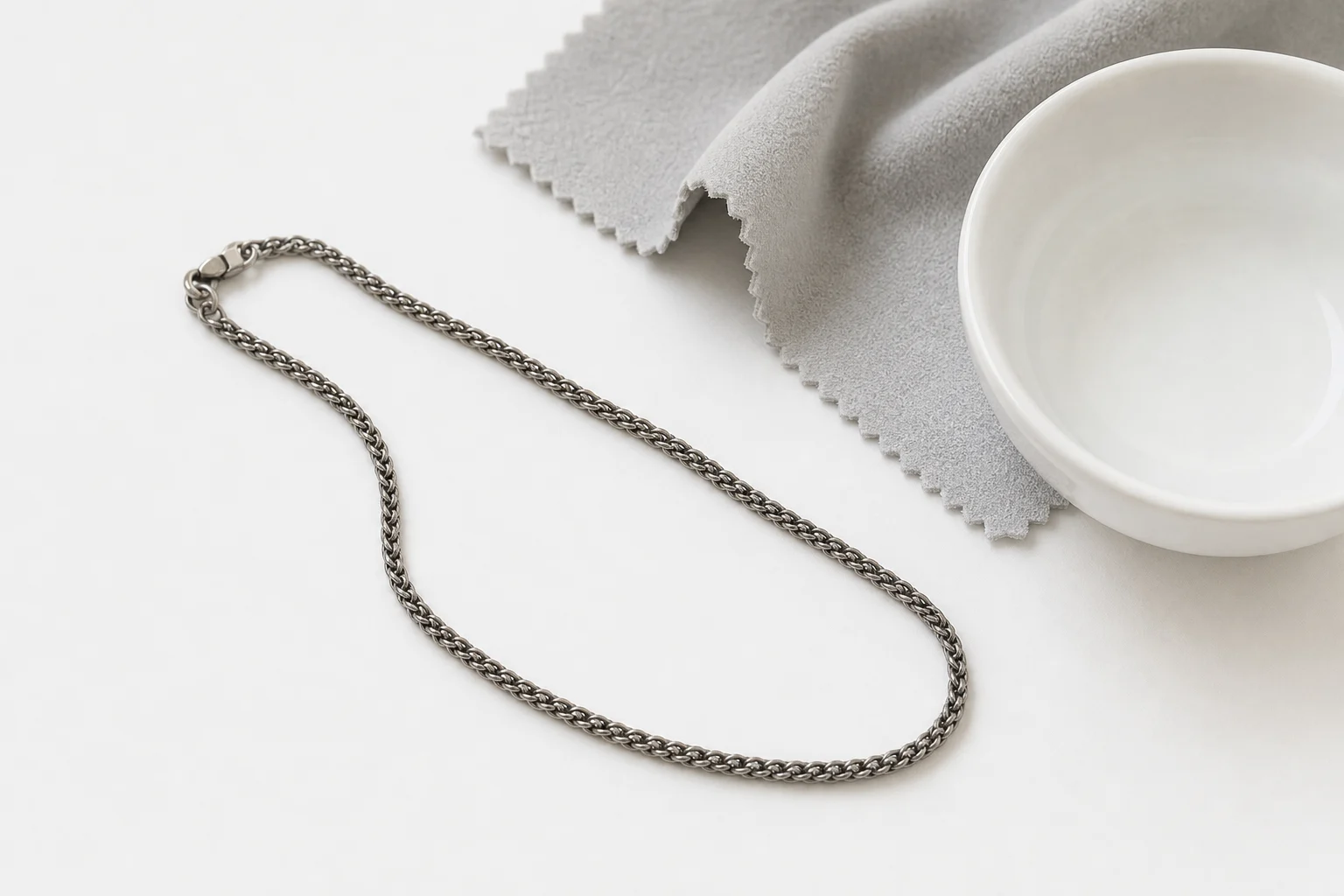
تعد سهولة الصيانة إحدى المزايا الحقيقية التي يتميز بها التيتانيوم:
- التنظيف المنتظم: ماء دافئ + صابون أطباق معتدل + قطعة قماش ناعمة. هذا كل شيء.
- جهاز التنظيف بالموجات فوق الصوتية: آمن للاستخدام مع سلاسل التيتانيوم غير المطلية. تجنب استخدامه إذا كان العقد يحتوي على أحجار كريمة — فبعض الأحجار حساسة للموجات فوق الصوتية.
- تجنب المواد الكاشطة: الصوف الفولاذي ومركبات التلميع القوية ومعجون الأسنان الكاشط ستؤدي إلى خدش الطلاء. يتعرض التيتانيوم للخدش بدرجة أقل من الفضة، لكنه ليس مقاومًا للخدش.
- التخزين: لا توجد متطلبات خاصة. على عكس الفضة، لا تحتاج إلى أكياس مانعة للتلطيخ أو حاويات محكمة الإغلاق. يكفي استخدام كيس ناعم لمنع حدوث خدوش.
- التشطيبات المؤكسدة: قم بالتنظيف برفق — فالفرك بقوة قد يؤثر على طبقة اللون. يُعد استخدام قطعة قماش ناعمة والماء خيارًا أكثر أمانًا من صابون الأطباق بالنسبة للقطع الملونة.
الأسئلة المتداولة
هل التيتانيوم 100% مادة لا تسبب الحساسية؟
لا يوجد معدن مضمون بنسبة 100% للجميع، لكن التيتانيوم الصلب (الدرجة 2 أو ASTM F136) يتمتع بأحد أدنى معدلات التفاعل الموثقة مقارنة بأي معدن مستخدم في صناعة المجوهرات — حيث تقل عن 0.6% في معظم التحليلات. توجد حساسية حقيقية تجاه التيتانيوم، لكنها نادرة الحدوث. إذا كانت لديك رد فعل تجاه شيء يحمل علامة «تيتانيوم»، فتحقق مما إذا كان تيتانيومًا صلبًا أم مطليًا.
ما هي درجة التيتانيوم الأكثر أمانًا للبشرة الحساسة؟
يُعتبر كل من الدرجة 2 (نقاء تجاري) والمعيار ASTM F136 (درجة زراعة، Ti-6Al-4V ELI) آمنين. ويخضع المعيار ASTM F136 لأشد إجراءات التحقق من النقاء صرامةً، وهو المعيار الذي توصي به «رابطة محترفي ثقب الجسم». وبالنسبة لمعظم استخدامات القلائد، تُعد الدرجة 2 خيارًا ممتازًا.
هل يمكنني ارتداء قلادة من التيتانيوم أثناء السباحة أو الاستحمام؟
نعم. تتميز طبقة أكسيد التيتانيوم بالاستقرار في كل من المياه العذبة والمياه المالحة. ولن تتعرض للصدأ أو التآكل جراء التعرض لمياه الدش أو مياه المسبح. قم بشطفها وتجفيفها بعد الاستخدام لمنع تراكم الرواسب المعدنية بمرور الوقت.
هل يتسبب التيتانيوم في تحول لون البشرة إلى اللون الأخضر؟
لا. يتسبب أكسيد النحاس (الموجود في النحاس الأصفر والبرونز وسبائك الذهب منخفضة القيراط) في تحول لون البشرة إلى اللون الأخضر بسبب ارتداء المجوهرات. ولا يحتوي التيتانيوم على أي نحاس. كما أن طبقة أكسيد التيتانيوم عديمة اللون ولا تنتقل إلى البشرة.
أيهما أفضل للبشرة الحساسة: التيتانيوم أم الفولاذ المقاوم للصدأ؟
في حالة الحساسية المؤكدة تجاه النيكل، يُعد التيتانيوم الخيار الأكثر أمانًا. وعادةً ما يكون الفولاذ الجراحي (316L) مقبولًا، لكنه يحتوي على النيكل كعنصر صناعة مقصود بنسبة تتراوح بين 10 و14%. ولا يواجه معظم الأشخاص الذين يعانون من حساسية تجاه النيكل أي مشكلة مع الفولاذ الجراحي، لكن أولئك الذين يعانون من حساسية شديدة قد يظلون عرضة لردود فعل. يخلو التيتانيوم فعليًا من النيكل في الدرجات 1 و2 وASTM F136.
لماذا ظهرت لديّ رد فعل تجاه مجوهرات تم بيعها على أنها مصنوعة من التيتانيوم؟
التفسير الأرجح: إما أنها مطلية بالتيتانيوم فوق معدن أساسي يحتوي على النيكل، أو أن المشبك/التركيبات مصنوعة من مادة مختلفة. اطلب من البائعين مواصفات الدرجة. إذا لم يتمكنوا من تقديمها، فمن المحتمل ألا تكون القطعة مصنوعة من التيتانيوم الخالص.
الملخص
التيتانيوم مناسب للبشرة الحساسة بفضل خصائصه الكيميائية، وليس بفضل الحملات التسويقية. طبقة أكسيد ثاني أكسيد التيتانيوم (TiO₂) التي تتشكل على سطحه خاملة كيميائيًا — فهي لا تتآكل، ولا تطلق أيونات، ولا تثير الاستجابة المناعية التي تسبب التهاب الجلد التلامسي. كما أنه لا يتغير لونه لنفس السبب: فلا يوجد ما يتفاعل مع الكبريت أو الرطوبة الموجودة في الهواء.
بالنسبة للقلادة على وجه التحديد، تأكد من أن القطعة بأكملها — السلسلة، والمشبك، وأي قطع إضافية — مصنوعة من التيتانيوم الخالص. ويُعد كل من الدرجة 2 أو معيار ASTM F136 خيارين موثوقين. تجنب القطع “المطلية بالتيتانيوم” إذا كنت تعاني من حساسية شديدة، وكن حذرًا من أي إعلان يكتفي بذكر “سبائك التيتانيوم” دون تحديد الدرجة.
إذا كنت قد جربت خيارات الفضة الاسترلينية والفولاذ المقاوم للصدأ والمطلية بالذهب وما زلت تعاني من ردود فعل سلبية، فإن التيتانيوم الخالص هو الخطوة المنطقية التالية. فالأبحاث العلمية تدعم ذلك، وكذلك تجارب الأشخاص الذين كانوا في نفس موقفك بالضبط قبل أن يقرروا التبديل.