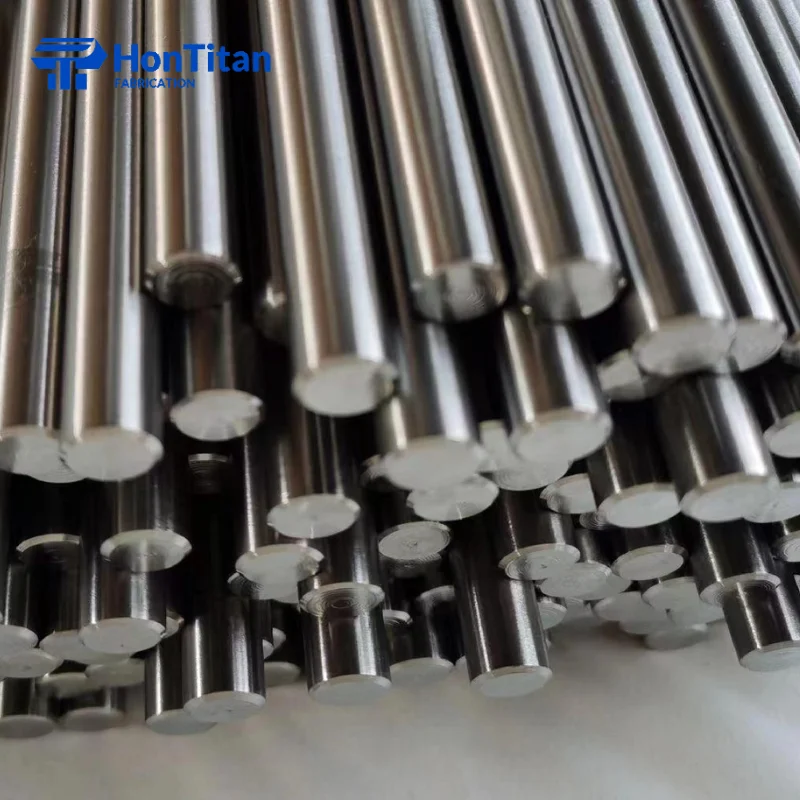
Titanium travel mugs weigh 40–45% less than stainless steel and never leave a metallic taste in your coffee. But the insulation story is more nuanced than most guides admit: single-wall titanium cools your drink in 15–20 minutes, while double-wall titanium buys you 45–60 minutes — still well short of a vacuum-insulated stainless thermos (3–6 hours). The best titanium mug for backpacking in 2026 is the TOAKS 450 Single-Wall (~$22). For daily travel use, the Snow Peak Ti-Double 450 ($54.95) or TOAKS Double Wall 450 ($39.95) are the top choices. Pure titanium mugs (Grade 1–2 CP) are FDA-biocompatible and completely taste-neutral.
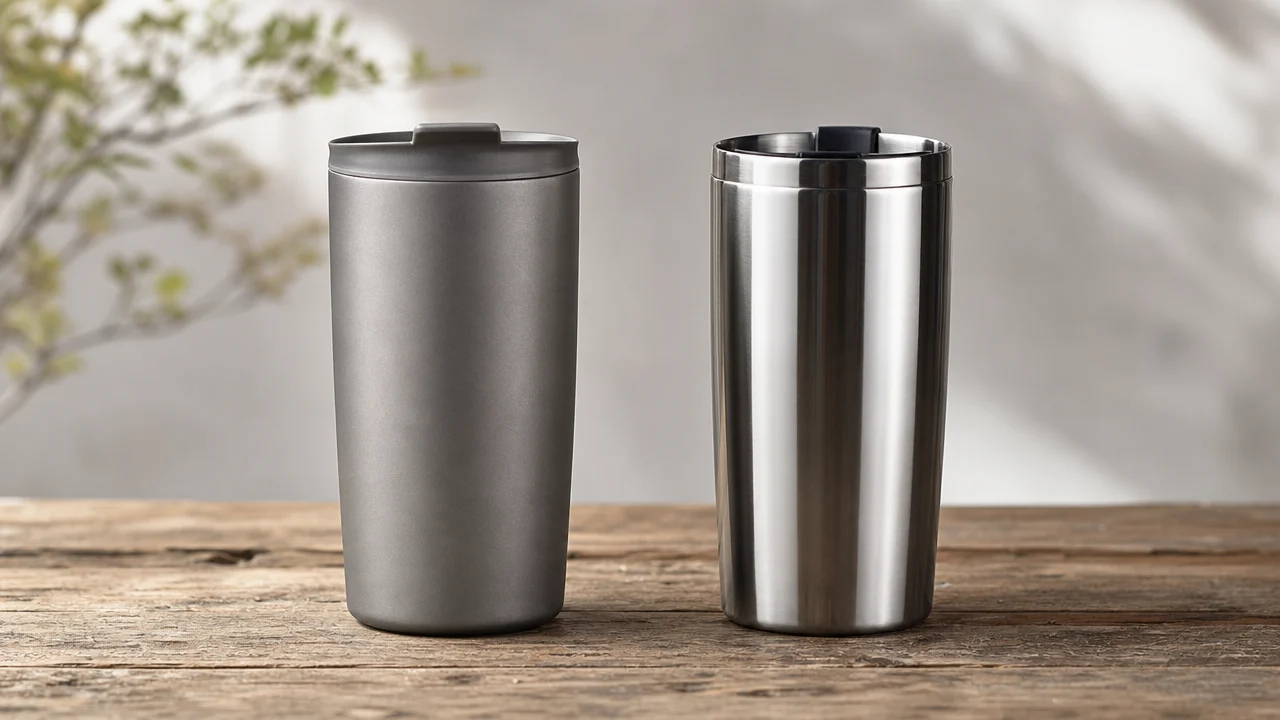
The Real Difference Between Titanium and Stainless Steel Mugs
The weight comparison is simple. Titanium has a density of 4.5 g/cm³ versus roughly 8.0 g/cm³ for food-grade stainless steel (304 grade). That makes titanium about 45% lighter for the same volume — which is why a TOAKS 450ml single-wall mug weighs 76g while a comparable stainless steel mug like the GSI Glacier 470ml weighs 198g. That 122g gap is the difference between carrying two AA batteries vs. a full deck of cards.
For everyday desk or travel use, the weight difference is less dramatic but still real. If you commute with your mug or hike to the office, shaving 120g off your bag adds up.
But there’s a persistent myth I want to address upfront, because every other comparison article gets this wrong.
The Thermal Conductivity Myth
Most guides imply titanium is naturally a better insulator than stainless steel because it’s a “different” metal. Not true.
Commercially pure titanium (CP Ti Grade 2) has a thermal conductivity of roughly 16–17 W/m·K. Stainless steel 304 sits at 14–16 W/m·K. They’re nearly identical. Neither material is a meaningful insulator on its own.
What actually keeps your drink hot is the air gap — specifically, a sealed vacuum gap in double-wall construction. When you see a double-wall titanium mug keeping coffee warm for 45 minutes, the titanium isn’t doing the insulating. The vacuum layer is. A double-wall stainless steel mug works on exactly the same principle, and a well-engineered vacuum-insulated stainless thermos (Yeti, Hydro Flask, Stanley) will outperform any double-wall titanium mug on heat retention — by a lot.
Here’s the honest comparison, because this is what most guides won’t show you:
| Mug Type | Wärmespeicherung | Weight (450ml) | Herdgeeignet | Preisspanne |
|---|---|---|---|---|
| Einwandiges Titan | 15–20 min (room temp) | 48–76 g | Ja | $20–$45 |
| Double-wall titanium | 45–60 min | 77–101g | Nein | $40–$60 |
| Einwandiger Edelstahl | 10–15 min | 180–220g | Ja | $10–$20 |
| Vakuumisolierter Edelstahl (Yeti, Stanley) | 3–6 Stunden | 300–385g | Nein | $30–$55 |
Wenn maximale Wärmespeicherung Ihre Priorität ist, gewinnt eine vakuumisolierte Edelstahl-Thermoskanne. Das ist schlicht die Wahrheit. Der Grund, sich für Titan zu entscheiden, ist das Gewicht-Qualitäts-Verhältnis, die Geschmacksneutralität und die lebenslange Haltbarkeit — nicht die Isolationsleistung.
Titan vs. Edelstahl: Ein direkter Vergleich
| Merkmal | Titan (kommerziell reines Titan Grade 1–2) | Rostfreier Stahl (304) |
|---|---|---|
| Dichte | 4,5 g/cm³ | 7,9 g/cm³ |
| Gewichtsvorteil | ~45% leichter | Ausgangswert |
| Auswirkung auf den Geschmack | Keine — vollständig inert | Leichter metallischer Geschmack möglich |
| Sicherheit | FDA-zugelassen für Implantate | Lebensmittelecht (18/8 oder 304) sicher |
| Rost/Korrosion | Null | Möglich bei niedrigeren Güten |
| Schlagfestigkeit | Lower (0.3–0.5mm thin walls) | Höher (dickere Wände) |
| Dishwasher | Hand wash recommended | Usually dishwasher-safe |
| Stove-direct | Yes (single-wall only) | Ja |
| Price (450ml) | $20–$60 | $10–$45 |
| Lifespan | Indefinite if not dented | Indefinite |
On taste, titanium has a genuine advantage. I’ve poured the same pour-over into a titantasse and a stainless tumbler side by side — the stainless produced a detectable metallic edge at the 10-minute mark. The titantasse tasted exactly like the coffee should. This is consistent with what people report on r/Coffee: titanium is “the metal that tastes like nothing.” The chemistry reason is that titanium’s surface oxide layer is extremely stable and doesn’t catalyze reactions with coffee acids the way stainless steel can under heat.
On durability, stainless wins if you’re rough on gear. Titanium mugs use very thin walls (0.3–0.5mm) to save weight — drop one on a rock and it will dent permanently. A thicker-walled stainless steel mug absorbs the same impact without denting. Both are lifetime purchases if treated reasonably; stainless is more forgiving of abuse.
Is Titanium Safe? Clearing Up the TiO2 Confusion
Pure titanium mugs are among the safest drinkware options available. The FDA has cleared titanium for long-term medical implantation (hip replacements, bone plates, dental implants) — which sets a higher safety bar than holding hot coffee. Brands including Snow Peak, TOAKS, Vargo, and SilverAnt use CP Grade 1 or Grade 2 titanium: 99%+ pure titanium, no coatings, no alloying elements that could leach into drinks.
There is a separate product — titanium dioxide (TiO2) — used as a whitening agent in some ceramic non-stick coatings. The European Food Safety Authority (EFSA) reclassified TiO2 as “not safe” as a food additive (E171) in 2022. This gets misread online as a concern about titanium mugs. It isn’t. TiO2 in nano-particle coating form is a different thing entirely from a solid titantasse. A pure titanium mug sheds zero particles into your drink.
Single-Wall vs Double-Wall: The Decision That Actually Matters
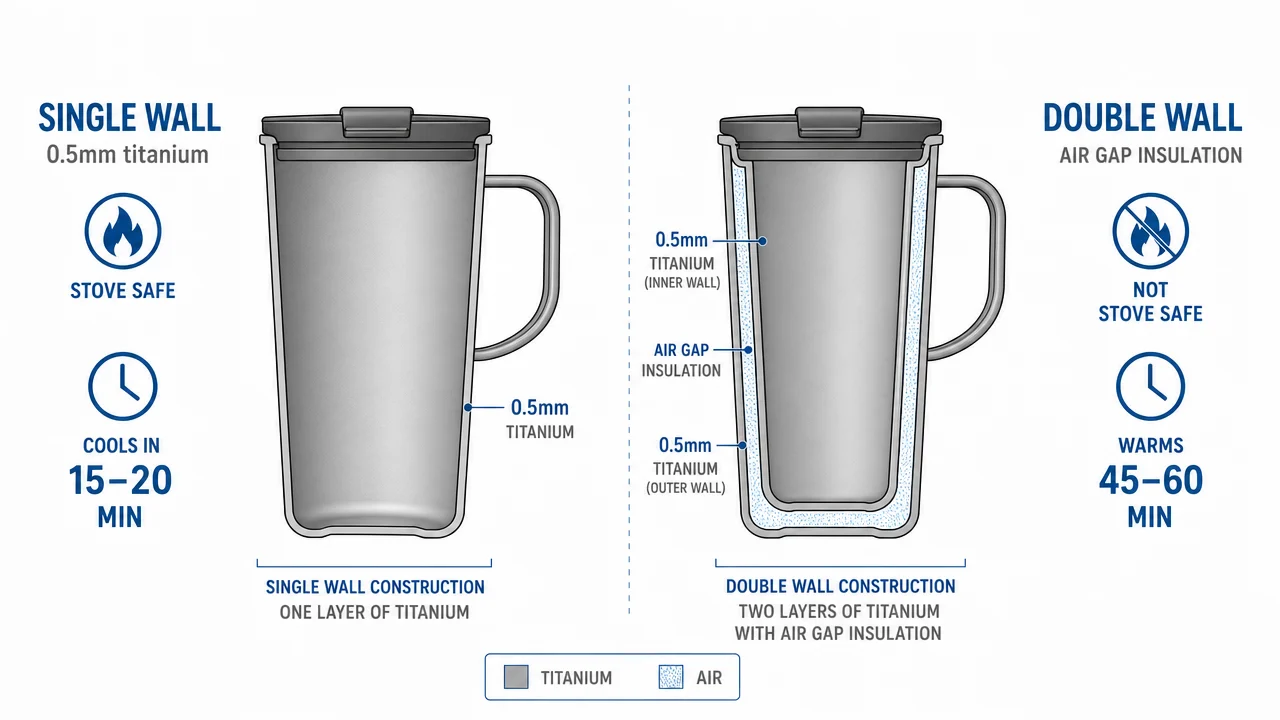
This is the most important choice when buying a titanium mug, and it’s not about insulation preferences — it’s about how you’ll use it.
Einwandiges Titan is a single rolled sheet, 0.3–0.5mm thick. It can go directly on a gas stove, alcohol burner, or campfire. Coffee cools fast (15–20 minutes). The outer surface gets hot when liquid is hot inside. Weight: 48–76g for a 450ml mug. Price: $20–$35.
Double-wall titanium has an inner and outer shell with a sealed air gap. It cannot go on any heat source — the gap expands and can rupture the weld. Coffee stays warm 45–60 minutes. Outer surface stays cool. Weight: 77–101g. Price: $40–$60.
The rule: If you’re buying for backpacking or camping, get single-wall. You’ll want to boil water directly in it. If you’re buying for daily commuting or travel, get double-wall — the cooler exterior and extended warmth time matter when you’re not near a stove.
Noch etwas, das die Datenblätter nicht erwähnen: Die meisten doppelwandigen Titanbecher sind grifflos (Snow Peak Ti-Double, TOAKS Doppelwand), um die Kontinuität der Isolierschicht zu gewährleisten. Wenn Sie einen Griff benötigen, schauen Sie sich die Doppelwand-Optionen von Keith oder SilverAnt an.
Wandstärke Leitfaden: 0,3 mm vs. 0,5 mm
Bei einwandigen Titanbechern gibt es von Marken wie TOAKS zwei Varianten:
- 0,3 mm (Ultraleicht): TOAKS 450 Ultralight mit 48 g. Das absolut leichteste Modell. Beulen sich unter Druck leichter ein — nicht ideal, wenn Sie Ihren Becher lose im Rucksack transportieren.
- 0,5 mm (verstärkt): TOAKS 450 Standard mit 76 g. 28 g schwerer, aber spürbar steifer. Übersteht rauen Rucksackeinsatz wesentlich besser.
Für die meisten Menschen ist die 0,5-mm-Variante die richtige Wahl. Der Unterschied von 28 g rechtfertigt die höhere Haltbarkeit, es sei denn, Sie sind ein grammzählender Fernwanderer, der sein Gewichtsziel bereits erreicht hat.
Die besten Titankaffeebecher für Reisen im Jahr 2026

Bestes Preis-Leistungs-Verhältnis: TOAKS 450 Einwand (0,5 mm) — ~$22
76 g, 450 ml, Grade 1 Titan, klappbare Griffe, inklusive Netzbeutel. 4,8 Sterne aus über 1.900 Amazon-Bewertungen. Die Standardempfehlung — günstig genug zum Ausprobieren von Titan, gut verarbeitet genug zum Behalten. Herdgeeignet. Kein Reisebecher im isolierten Sinne, aber der beste Allround-Titan-Camp-/Wanderbecher.
Beste Wahl für den täglichen Reiseeinsatz: TOAKS Doppelwand 450 — $39.95
77 g, 450 ml, doppelwandig isoliert. Grifflos. Um $15 günstiger als das Snow-Peak-Äquivalent bei vergleichbarer Isolierleistung laut Nutzerbewertungen. Bestes Verhältnis aus Preis und täglicher Reiseleistung.
Premium-Wahl: Snow Peak Ti-Double 450 — $54.95
101 g, 450 ml, hergestellt in Japan. Der Maßstab für doppelwandige Titankonstruktion — fortschrittliche Schweißtechnik, kühles Äußeres, stapelbar mit dem H300-Becher. Kein Deckel enthalten, kein Griff. Das Premium lohnt sich, wenn Sie den am besten verarbeiteten erhältlichen Titan-Reisebecher wünschen und ihn dauerhaft behalten möchten.
Beste Wahl für Minimalisten: Fire Maple Alti 300 — $21.99
63 g, 300 ml, einwandig. 84 mm Durchmesser passt in größere Töpfe. 4,72 Sterne aus über 3.000 Bewertungen. 3 Jahre Garantie. Beste Option, wenn die Packgröße wichtiger ist als das Fassungsvermögen.
Beste Wahl mit Deckel: Vargo Titanium 450 Travel Mug — $34.95
85 g, 450 ml, einwandig. Mit Vargos klappbarem Bot-Griff und einem mitgelieferten Silikondeckel mit Dichtung. Wenn Sie einen einwandigen Becher möchten, der für Reisen verschließbar ist, ist dies die einzige dedizierte Option im gängigen Titan-Sortiment.
Bester Doppelwandbecher mit Griff: SilverAnt Titan Doppelwand 450 — ~$45
Grade 1 titanium, double-wall, folding handles (unlike Snow Peak’s handle-less design), lifetime warranty. If the handle-less form factor of the Snow Peak bothers you, SilverAnt is the alternative.
Care and Maintenance
Hand wash with mild soap and warm water. 30 seconds, done. Titanium doesn’t rust, doesn’t hold odors, and doesn’t stain permanently — coffee stains come off with a baking soda paste.
Snow Peak explicitly marks their double-wall mugs “not dishwasher safe” — the concern is the weld on the vacuum seal, not the titanium itself. Single-wall mugs can technically go in the dishwasher but develop a cloudy surface finish over time (cosmetic only). TOAKS and Fire Maple both recommend hand washing.
What will actually damage a titanium mug: dropping it on concrete (permanent dent), putting a double-wall on a stove (weld failure, safety risk), or using bleach-based cleaners.
Summary: Who Should Buy Titanium, and Who Shouldn’t
Titanium is the right choice if: You’re a backpacker counting grams, you want a mug that lasts indefinitely without rust or breakage, or you can taste the metallic edge in your stainless steel cup.
Stick with stainless if: Heat retention for 3+ hours is your priority (get a vacuum-insulated thermos), you’re rough on gear and don’t want to worry about dents, or you need dishwasher-safe above all else.
The entry point that makes sense for most people: the TOAKS 450 single-wall at ~$22. It’s cheap enough to test whether titanium suits your habits. If it does, the TOAKS Double Wall 450 at $39.95 is the logical daily-use upgrade.
FAQ
Does titanium make coffee taste different?
No. Pure titanium (Grade 1–2 CP) is chemically inert. Its surface oxide layer doesn’t react with coffee acids. In blind taste tests, titanium is indistinguishable from ceramic — unlike stainless steel, which can introduce a metallic aftertaste at higher temperatures.
Can titanium mugs go on a stove or campfire?
Single-wall titanium only. Double-wall mugs have a sealed air gap that expands under heat and can rupture the weld — this is a genuine safety issue. Never heat a double-wall titanium mug on any flame or burner.
How long does a titanium double-wall mug keep coffee hot?
45–60 minutes at room temperature (around 70°F/21°C). Significantly less than a vacuum-insulated stainless thermos (3–6 hours). If long heat retention is your main priority, a stainless vacuum thermos is the better tool.
Sind Titanbecher spülmaschinenfest?
Das Metall selbst ist in der Spülmaschine unbedenklich. Doppelwandige Modelle sollten niemals in die Spülmaschine gegeben werden – Hitze- und Druckzyklen belasten die Schweißnaht. Einwandige Becher können hinein, entwickeln jedoch mit der Zeit eine trübere Oberfläche. Handwäsche ist für alle Typen am besten.
Warum sind Titanbecher so teuer?
Rohes Titan ist schwieriger zu raffinieren und zu bearbeiten als Edelstahl. Der Energie- und Werkzeugaufwand ist höher. Ein einfacher Edelstahlbecher kostet $10–$15 in der Herstellung; ein gleichwertiger titanium cup kostet $20–$35. Die hochwertige doppelwandige Konstruktion erhöht die Kosten durch Präzisionsschweißen weiter.
Ist der Snow Peak Ti-Double seinen Preis von $55 wert?
Für den täglichen Gebrauch als dauerhafte Anschaffung ja. Die in Japan gefertigte Schweißqualität und das ausgefeilte Design rechtfertigen den Preis, wenn man ihn mit dem Ersetzen günstigerer Becher alle paar Jahre vergleicht. Wer auf das Budget achtet, findet beim TOAKS Double Wall 450 für $39,95 eine vergleichbare Isolierleistung.
Schlussfolgerung
Titan-Reisebecher punkten beim Gewicht und der Geschmacksneutralität. Edelstahl punktet bei der Wärmespeicherung (insbesondere vakuumisoliert) und beim Preis. Die entscheidende Erkenntnis, die die meisten Ratgeber übersehen: Titan und Edelstahl haben nahezu identische Wärmeleitfähigkeit – der Unterschied in der Isolierung kommt ausschließlich vom Vakuumspalt bei der doppelwandigen Konstruktion, nicht vom Metall selbst.
Für das Backpacking ist ein einwandiger Titanbecher die naheliegende Wahl. Für den täglichen Reiseeinsatz ist ein doppelwandiger Titanbecher eine Premium-Option, die ihren Preis durch lebenslange Langlebigkeit und keinerlei Geschmacksbeeinträchtigung rechtfertigt – erwarten Sie jedoch nicht, dass er einen Yeti in Sachen Wärmespeicherung übertrifft.