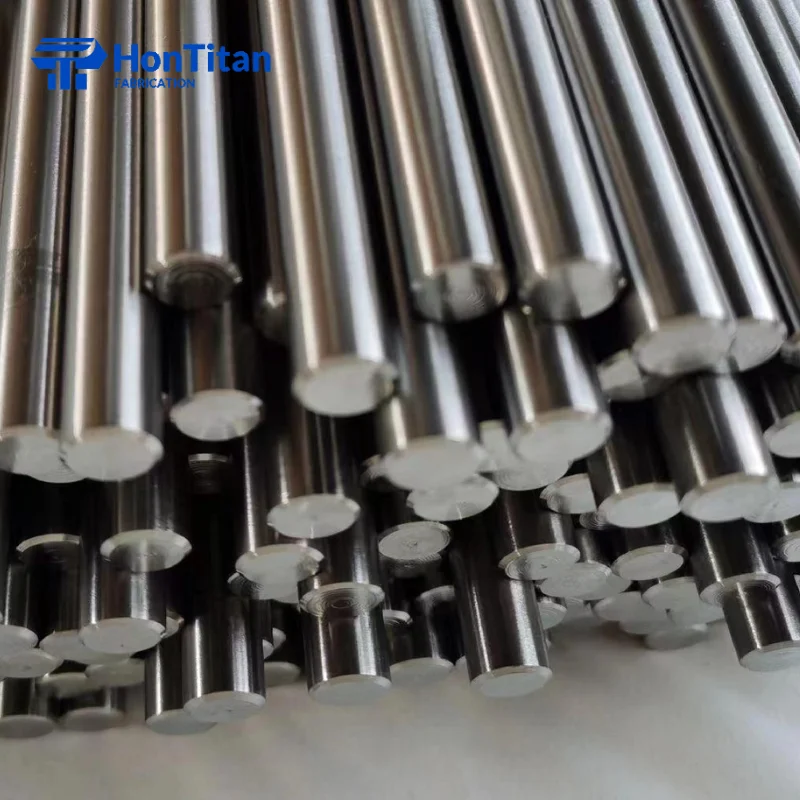
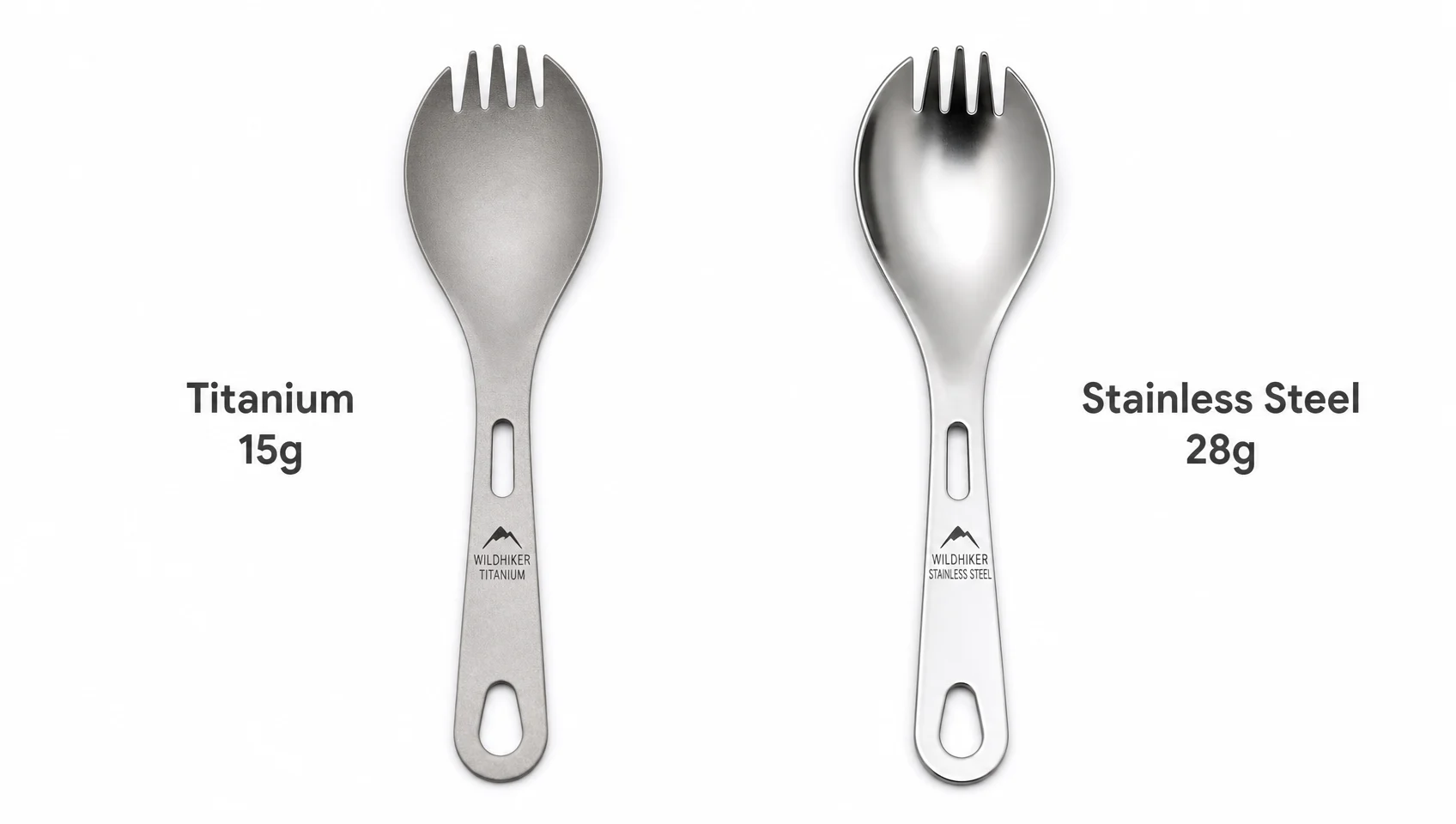
Les ustensiles en titane pur sont non réactifs, sans nickel, et environ 44% plus légers que les pièces équivalentes en acier inoxydable. Grade 1 le titane pur est biocompatible — le même matériau utilisé dans les implants chirurgicaux — ce qui en fait l'un des matériaux les plus sûrs pour les ustensiles disponibles sur le marché. Le principal compromis est le coût : une cuillère-fourchette de camping en titane coûte entre $9 et $20, contre $3 à $8 pour l'inoxydable. Pour les randonneurs qui comptent les grammes et toute personne sensible au nickel, le titane constitue une nette amélioration. Pour la cuisine quotidienne à la maison, l'acier inoxydable reste un choix pratique et peu risqué.
Le piège de l'étiquette : “ Titane ” ne signifie pas toujours titane
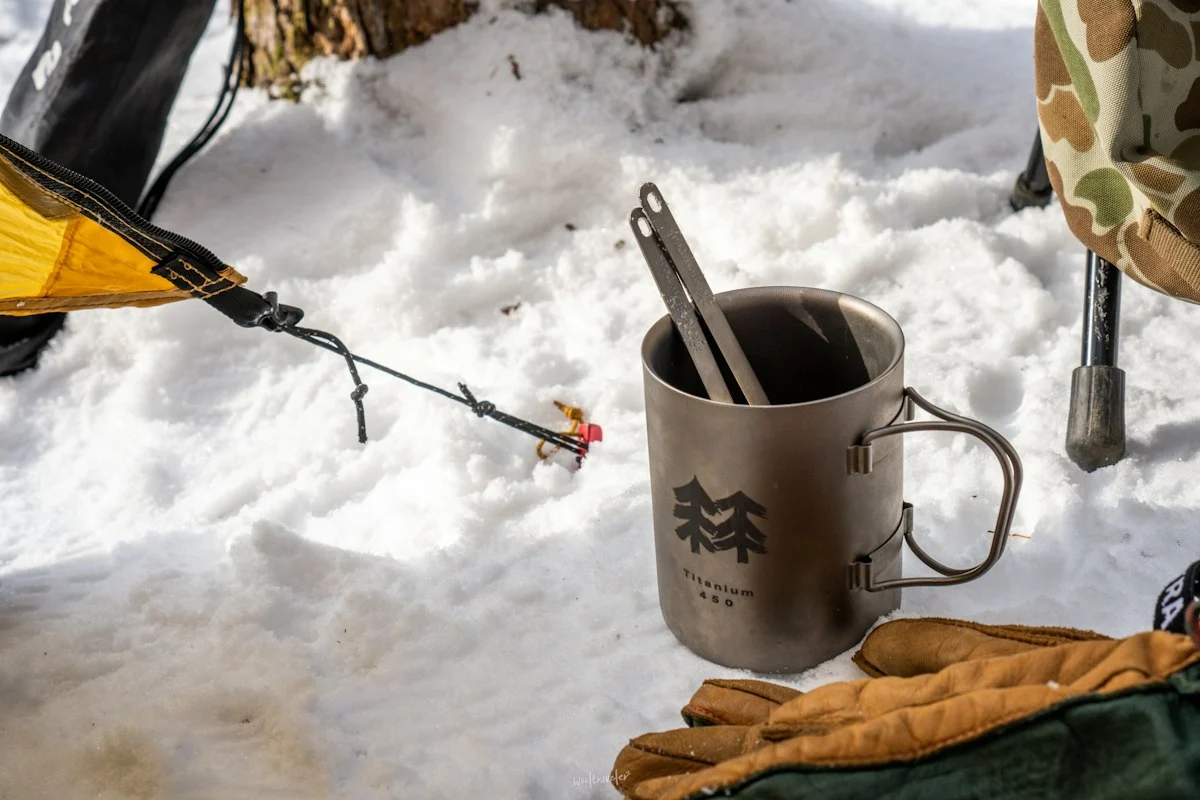
Avant de comparer quoi que ce soit, il existe une distinction que chaque guide d'achat relègue en notes de bas de page : “ ustensiles de cuisine en titane ” et “ ustensiles de cuisine recouverts de titane ” sont des produits entièrement différents.
La plupart des casseroles bon marché commercialisées comme “ titane ” sont des casseroles en aluminium avec un revêtement antiadhésif infusé au titane — parfois d'une épaisseur de seulement quelques microns. Celles-ci sont évaluées pour les performances de leur revêtement (résistance aux rayures, libération de la chaleur), et non pour l'inertie du métal sous-jacent.
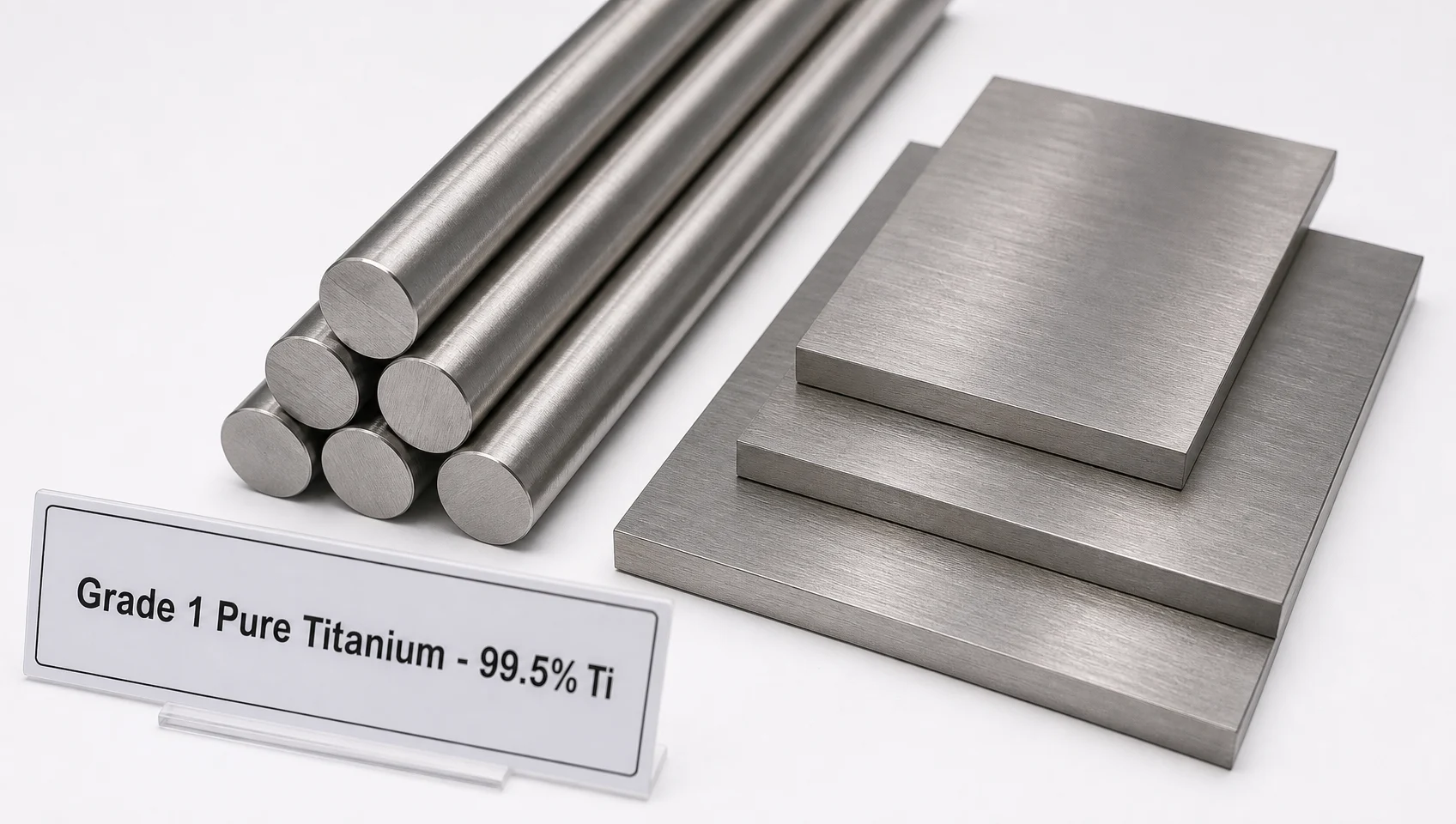
Les ustensiles en titane pur — le type utilisé dans les équipements de camping et de plein air — sont estampés ou usinés à partir de titane commercialement pur Grade 1 solide (≥99,5% Ti). Aucun revêtement. Aucun alliage de remplissage. Le métal lui-même est l'ustensile.
Cet article traite des ustensiles en titane pur. Si vous comparez une casserole revêtue à l'inoxydable, c'est une autre conversation.
Les ustensiles en titane sont-ils sûrs ?
Oui — le titane pur est l'un des matériaux les plus sûrs que vous puissiez utiliser pour des ustensiles.
Le titane pur Grade 1 forme une couche d'oxyde d'oxyde de titane (TiO₂) auto-cicatrisante sur sa surface. Cette couche est chimiquement inerte : elle ne réagit pas avec les aliments acides (agrumes, tomates, vinaigre), les alcalis ni l'eau salée. Le métal ne libère pas d'ions dans les aliments dans des conditions normales de cuisson ou de consommation.
Les propres données de biocompatibilité de la FDA, publiées dans son résumé sur la sécurité des matériaux des dispositifs médicaux, confirment systématiquement que le titane est biocompatible — le même matériau Grade 1 utilisé dans les vis osseuses, les implants dentaires et les prothèses de hanche qui restent à l'intérieur du corps humain pendant des décennies. Si un matériau est suffisamment sûr pour rester dans votre fémur pendant 30 ans, il est suffisamment sûr pour toucher vos pâtes pendant 20 minutes.
Qu'en est-il du goût ? Dans des comparaisons de dégustation contrôlées, le titane pur ne transfère aucune saveur métallique — ce que les couverts en inoxydable bon marché peuvent parfois faire, en particulier avec des aliments acides.
La seule mise en garde : ce profil de sécurité s'applique à titane pur. Le Ti-6Al-4V (Grade 5), qui contient 6% d'aluminium et 4% de vanadium, est utilisé dans l'aérospatiale et certains outils, mais pas dans les ustensiles de qualité alimentaire. Les marques réputées d'ustensiles de camping (TOAKS, Snow Peak, Boundless Voyage) spécifient le titane commercialement pur Grade 1 — vérifiez avant d'acheter.
Titane vs ustensiles en acier inoxydable : comparaison directe
| Propriété | Titane pur (Gr. 1) | Stainless Steel (SS 304) |
|---|---|---|
| Densité | 4,51 g/cm³ | 7.75–8.0 g/cm³ |
| Weight (same-size spork) | ~12–16 g | ~25–35 g |
| Économies de poids | ~44% lighter | — |
| Teneur en nickel | 0% | 8–10.5% |
| Teneur en chrome | 0% (pure grade) | 17.5–19.5% |
| Conductivité thermique | ~21.9 W/m·K | ~16 W/m·K (SS 304) |
| Résistance à la corrosion | Excellent (self-healing TiO₂) | Good (passive Cr₂O₃ layer) |
| Metal taste transfer | Aucun | Minimal (detectable with acids) |
| Typical utensil price | $9–$20 | $3–$8 |
| Durability (utensil) | Excellent, scratches patina | Excellent, more scratch-resistant |
| Lavable au lave-vaisselle | Oui | Oui |
Sources: Density from ASTM data via steelprogroup.com; thermal conductivity from chalcotitanium.com; SS 304 composition from silverantoutdoors.com citing manufacturer data.
Weight: Where Titanium Wins Every Argument
Titanium’s density is 4.51 g/cm³ vs. stainless steel’s 7.75–8.0 g/cm³ — making it roughly 44% lighter for the same volume of metal.
In practice, that translates directly to product weights:
- Snow Peak Titanium Spork (SCT-004): 15 g (per REI and manufacturer specs)
- TOAKS Titanium Spork: 12.5 g (tested by bikehikesafari.com on multiple thru-hiking routes)
- TOAKS Titanium 3-Piece Set (spoon + fork + chopsticks): ~48 g
- A comparable stainless steel 3-piece set typically runs 80–110 g
For a weekend backpacker, that’s 30–60 g saved on cutlery alone — roughly equivalent to removing a couple of energy bars from your pack without eating them.
For ultralight hikers and thru-hikers doing 500+ mile routes, these numbers compound. On a 5-month PCT or AT attempt, every gram is negotiated. Titanium utensils are one of the easiest weight reductions available at under $20.
The Heat Distribution Issue — And Why It Mostly Doesn’t Apply to Utensils
You’ll read in almost every comparison article that “titanium heats unevenly.” This is true — and almost entirely irrelevant for utensils.
Thermal conductivity matters for ustensiles de cuisine (pots, pans) because you need heat to distribute from the burner across the full cooking surface. Uneven distribution means hot spots, scorched food, undercooked edges.
A spoon, fork, or spork doesn’t cook anything. It transfers food from container to mouth.
The thermal conductivity of your fork is only relevant in one edge case: eating directly from a hot titanium pot over a camp stove. In that scenario, a titanium spoon handle will get warm faster than you’d expect because titanium conducts heat from the bowl to the handle more quickly than some people anticipate. Snow Peak’s spork is short enough that this isn’t an issue. TOAKS’s long handle spoon (8.5 inches) keeps your hand further from the heat source — a deliberate design choice.
For home flatware, thermal conductivity of the metal is simply not a consideration. Your fork isn’t touching a flame.
Nickel Sensitivity: The Stainless Steel Concern Worth Taking Seriously
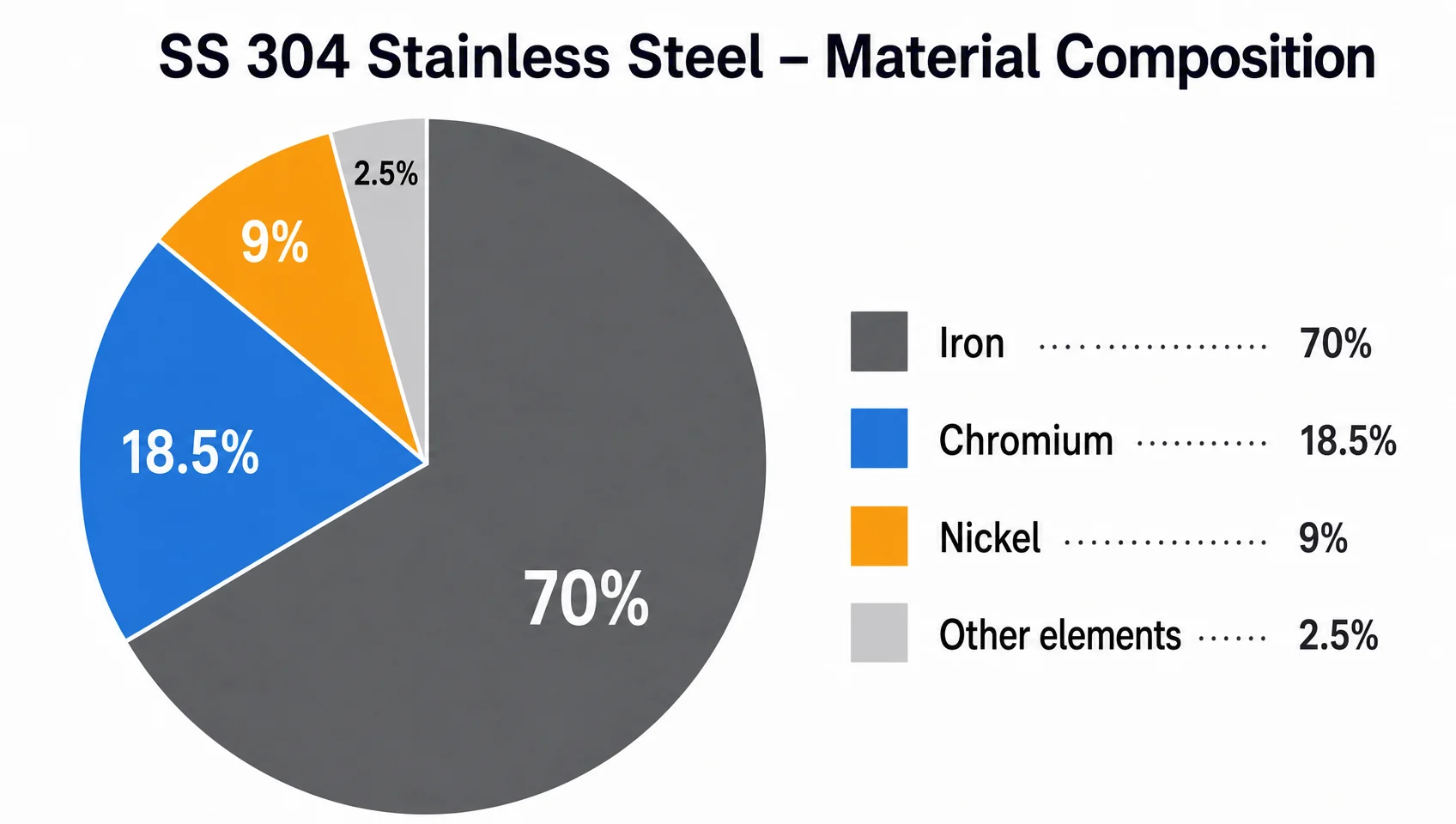
SS 304 — the most common grade in kitchen flatware and camping utensils — contains 8–10.5% nickel and 17.5–19.5% chromium by weight. Under normal use, migration is minimal. But two conditions increase it:
- Acidic foods — tomato sauce, citrus, vinegar left in contact with stainless over time
- Scratched or worn surfaces — damaged passive layer allows higher ion transfer
Nickel is the most common cause of contact dermatitis. The National Library of Medicine has linked chronic nickel exposure to cardiovascular effects, kidney effects, and respiratory concerns at elevated levels. For most people, the ion transfer from food-grade SS 304 flatware is far below threshold.
But for people with confirmed nickel allergies, stainless steel flatware is a genuine issue. Titanium has zero nickel content, making it the straightforward choice for anyone in this group.
This isn’t a marketing claim — it’s a practical substitution. Several titanium flatware brands (Everti, TOAKS, Snow Peak) market directly to the nickel-sensitive community for this reason.
Best Titanium Camping Utensil Sets (With Actual Weights)
After looking at specs and verified buyer feedback, here are the picks worth considering:
For most backpackers: Snow Peak Titanium Spork (SCT-004)
- Weight: 15 g
- Length: 16.5 cm
- Material: Grade 1 pure titanium
- Price: ~$9
- The standard-bearer. Used on the Wonderland Trail, AT, and PCT by more thru-hikers than I can count. The spork tines are functional, the spoon bowl is deep enough for freeze-dried meals. Carabiner loop built in.
For deep pot cooking (freeze-dried bags): TOAKS Titanium Long Handle Spoon
- Weight: ~23 g
- Length: 21.5 cm (8.5 inches)
- Material: Grade 1 pure titanium
- Price: ~$14
- Reaches the bottom of a Mountain House bag without scraping your knuckles. Polished bowl is noticeably more food-releasing than the matte finish. CleverHiker called it “the magic wand of backcountry meal making” after testing it on multiple seasons of routes.
For a full set: TOAKS Titanium 3-Piece Cutlery Set
- Weight: ~48 g (fork + spoon + knife)
- Material: Grade 1 pure titanium
- Price: ~$25–$30
- Gives you proper flatware geometry instead of the spork compromise. The knife is thin enough to slice most camp food. At under 50 g for a complete set, the weight penalty over a single spork is minor.
For home use (nickel-sensitive): Everti Titanium Flatware
- Material: Grade 1 pure titanium
- Note: Designed for kitchen table use, not camping weight optimization
- Price: Higher (~$40–$60 per set)
- For people replacing SS flatware due to nickel sensitivity, this is the pragmatic solution.
When Stainless Steel Still Makes More Sense
Titanium wins on weight and purity, but stainless makes sense in several real scenarios:
- Home kitchen, everyday use: The weight advantage doesn’t matter at your dining table. SS 304 flatware at $15–$30 per set is food-safe, dishwasher-proof, and lasts decades.
- Car camping or canoe tripping: Weight is irrelevant when you’re driving or paddling to camp. Bring real flatware.
- High-contact cooking surfaces: If you’re searing in a pan, a stainless steel spatula survives harder use without patina concerns.
- Budget-constrained buyers: A titanium spork at $9 is reasonable; a full titanium flatware set at $50+ is a luxury.
How to Care for Titanium Utensils
Titanium requires almost no maintenance:
- Wash: Soap and water or dishwasher — the TiO₂ layer is stable
- Rayures : Will develop a patina over time but don’t compromise safety or performance
- Conservation : No special requirements; titanium doesn’t rust or corrode in any normal environment
- Don’t: Use titanium utensils to stir highly alkaline solutions at high temperature for extended periods — extremely edge case in a kitchen, irrelevant for eating utensils
Which Should You Choose?
Buy titanium if: You’re backpacking and counting grams, have a nickel sensitivity, or want the cleanest possible material choice for long-term daily use.
Restez avec l'acier inoxydable si : Weight doesn’t matter in your use case, budget is the primary constraint, or you’re outfitting a car camping kit where durability under rough handling outweighs everything else.
The one thing to avoid: “titanium-coated” cookware sold as equivalent to pure titanium. The coating may be safe, but it’s a different product with a different failure mode. For pure titanium utensils — the kind that are just solid metal — there’s no documented safety concern, and the weight savings are real and measurable.
Questions fréquemment posées
Les ustensiles en titane sont-ils sûrs pour un usage quotidien ?
Yes. Grade 1 pure titanium is biocompatible and non-reactive. It does not leach metals into food and has no nickel content. The FDA recognizes titanium as a safe implant material, and the same inertness applies at the dining table.
Le titane a-t-il un goût métallique ?
No. Pure titanium has zero detectable taste transfer, even with acidic foods. This is one area where it outperforms budget stainless flatware, which can impart a faint metallic note with citrus or vinegar.
En quoi une cuillère-fourchette en titane est-elle plus légère qu'en acier inoxydable ?
The Snow Peak titanium spork weighs 15 g. A comparable stainless steel spork of the same size typically weighs 25–35 g — about 40–50% heavier.
Is titanium-coated cookware the same as pure titanium?
No. Titanium-coated pans are aluminum pans with a titanium-infused non-stick layer. They behave like non-stick cookware. Pure titanium utensils are solid metal with no coating. The safety profiles and performance characteristics are different.
Can I use titanium utensils with all types of cookware?
Yes. Titanium won’t scratch ceramic, non-stick, or stainless cookware any more aggressively than stainless flatware does. Its dureté is lower than steel, so it’s actually gentler on coated surfaces.
Is titanium utensil safe for people with nickel allergies?
Yes. Grade 1 pure titanium contains no nickel. It’s the recommended substitution for anyone with confirmed nickel contact sensitivity who currently uses SS 304 flatware.