Specifying the wrong titanium alloy for a high-performance project won’t just compromise your design—it can cause your manufacturing costs to spiral completely out of control. When it comes to top-tier applications like aerospace engineering, medical devices, and custom bicycle fabrication, two giants dominate the conversation: Grade 5 vs Grade 9 titanium.
Both alloys offer exceptional corrosion resistance and a phenomenal strength-to-weight ratio, but their “personalities” on the shop floor are entirely different. This guide strips away the dense metallurgical jargon. We are going to look at the real-world engineering, fabrication realities, and mechanical limits to help you make the smartest material choice for your next production run.
The Core Differences Between Grade 9 and Grade 5
For those who need a quick, actionable answer, the fundamental difference between the two comes down to how these metals are shaped and what they are designed to do:
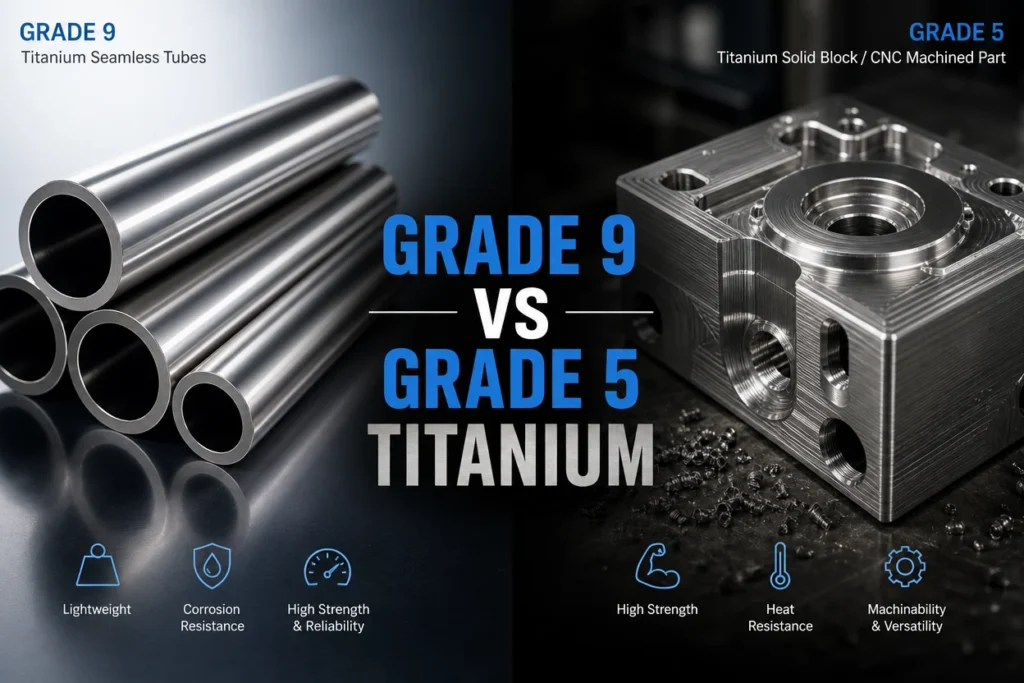
- Grade 5 (Ti-6Al-4V) – The Machined Powerhouse: Offering uncompromising strength, this is the undisputed workhorse of the aerospace and medical industries. However, it has very poor cold formability. It cannot be easily bent or drawn. Instead, Grade 5 is designed to be forged or CNC machined into complex, high-stress, load-bearing components.
- Grade 9 (Ti-3Al-2.5V) – The King of Formability: Often considered the “sweet spot” of titanium alloys. It sacrifices a small amount of ultimate strength compared to Grade 5, but rewards you with unmatched cold formability and excellent elasticity. It is purpose-built to be rolled, drawn, and formed into highly durable, lightweight seamless tubing.
The Golden Rule: If your component needs to be carved out of a solid block to hold extreme point-loads, you want Grade 5. If your project relies on seamless tubing, bending, and structural compliance, Grade 9 is your absolute best option.
Chemical Composition and Mechanical Properties Comparison
The names of these alloys tell the story of their chemistry. Grade 5 is officially designated as Ti-6Al-4V, meaning it contains 6% aluminum and 4% vanadium. Grade 9, designated as Ti-3Al-2.5V, contains roughly half of those alloying elements at 3% aluminum and 2.5% vanadium. These precise chemical variations are what dictate their vastly different mechanical behaviors.
Here is how they stack up in a head-to-head comparison of typical mechanical properties:
| Mechanical Property | Grade 5 (Ti-6Al-4V) | Grade 9 (Ti-3Al-2.5V) |
|---|---|---|
| Tensile Strength | ~ 950 – 1000 MPa | ~ 620 – 750 MPa |
| Yield Strength | ~ 880 – 920 MPa | ~ 480 – 620 MPa |
| Elongation (Ductility) | ~ 10 – 14% | ~ 15 – 20% |
| Density | 4.43 g/cm³ | 4.48 g/cm³ |
Note: Exact values can vary slightly depending on the specific heat treatment and manufacturing condition (e.g., annealed vs. cold-worked).
Instead of just looking at the raw numbers, it is crucial to understand how these metrics translate to the shop floor and the final product:
The Yield Strength Factor: Grade 5 dominates in yield strength, meaning it requires a massive amount of force to permanently deform. This is exactly why it acts as a rigid, unyielding anchor in structural applications. However, this extreme yield strength is also the reason it is notoriously difficult to bend or roll at room temperature without cracking.
The Elongation Advantage: Grade 9 features a significantly higher elongation percentage. It has the innate ability to stretch and flex more before reaching its breaking point. This superior ductility gives Grade 9 its “compliance.” It can absorb vibrations and shocks without failing, which is a highly prized characteristic for dynamic structural frameworks.
The Density Myth: Notice that the density is practically identical. Choosing Grade 9 over Grade 5, or vice versa, will not inherently save you weight if the volume of the material is the same. The true weight savings come from the manufacturing methods they allow—such as drawing Grade 9 into incredibly thin-walled tubing to reduce overall mass, rather than relying on heavy, solid components.
Machining and Fabrication Challenges
This is where the theoretical numbers meet the harsh reality of the machine shop. While engineers often gravitate toward the highest strength numbers on a spec sheet, the actual cost and feasibility of a project are decided by how the metal behaves when you try to cut, bend, and weld it.
Why Grade 9 Excels in Seamless Tubing and Cold Forming
Grade 9 was specifically formulated to bridge the gap between the unyielding strength of Grade 5 and the easily moldable, but weaker, commercially pure titanium (Grades 1-4). Its true superpower is its ability to be cold-worked.
In a manufacturing setting, this means Grade 9 can be rolled, stretched, and drawn through dies at room temperature without cracking or losing its structural integrity. This seamless titanium tubing process allows factories to produce incredibly thin-walled tubes with strict tolerances. Furthermore, Grade 9 offers excellent weldability. When subjected to TIG (Tungsten Inert Gas) welding with proper argon shielding, it forms strong, reliable joints, making it the undisputed champion for building complex tubular structures.
Forging and CNC Machining Grade 5 Titanium
Grade 5 behaves completely differently. Because of its extreme yield strength, it has severe “springback” and a very low tolerance for cold forming. If you try to cold-roll Grade 5 into a tube, it will fight the machinery and likely fracture.
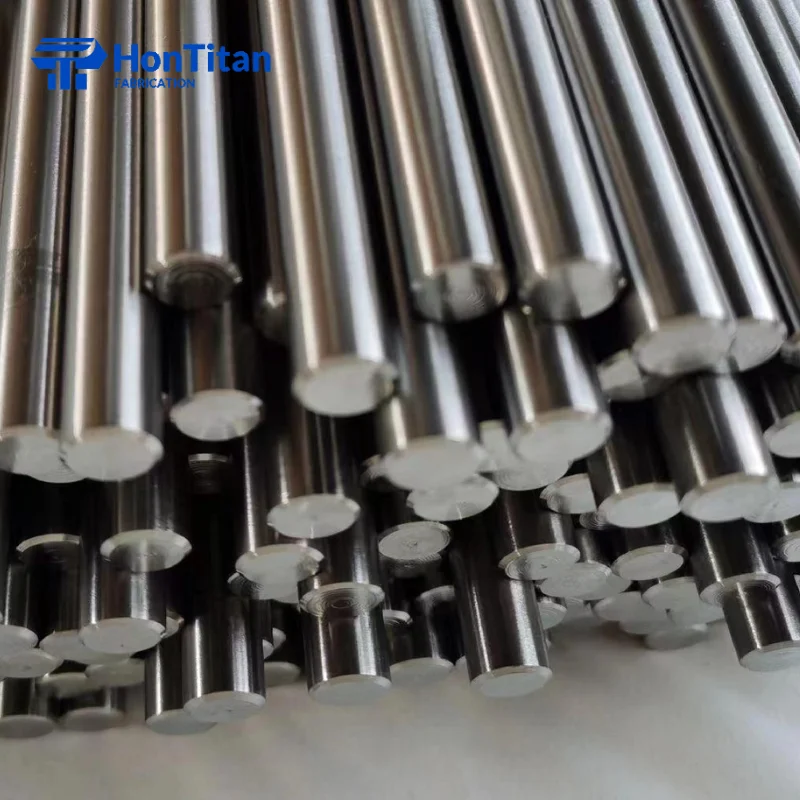
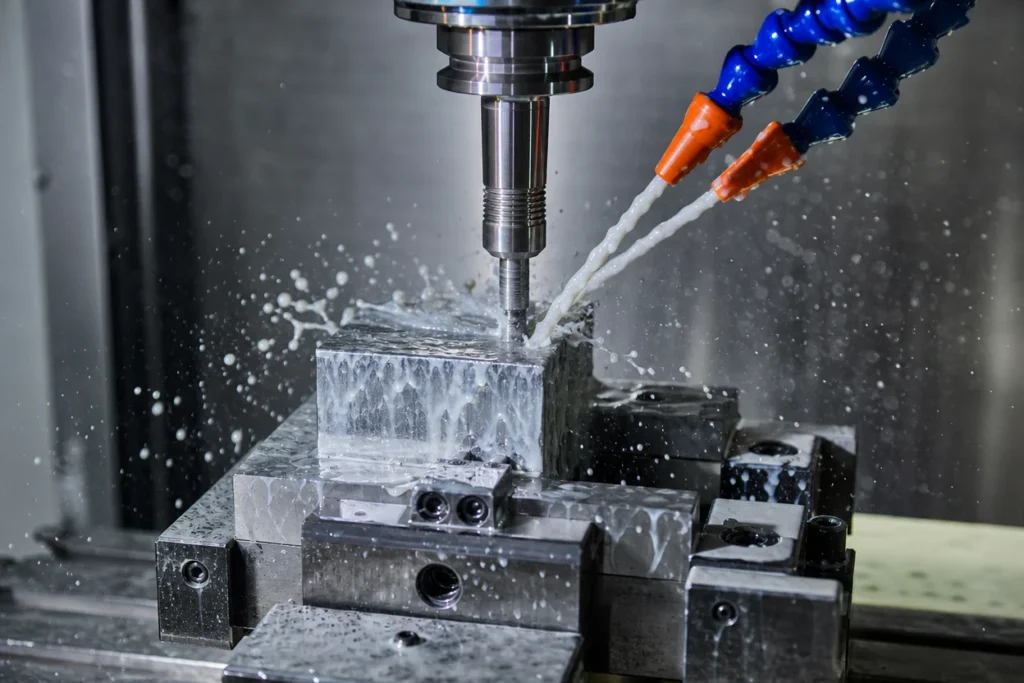
Therefore, Grade 5 components almost always start their life as a solid titanium billet or a heavy forging. To get to the final shape, you have to rely heavily on titanium CNC machining. While it can be machined to incredibly precise tolerances, Grade 5 is notorious for generating high heat and rapidly wearing down cutting tools. Machining it requires rigid setups, slow cutting speeds, and copious amounts of high-pressure coolant.
The Hidden Costs of Using Grade 5 for Every Component
One of the most common mistakes novice designers make is the “Grade 5 Trap.” They assume that because Grade 5 is the strongest, it should be used for the entire project.
Let’s say you need a titanium tube. While Grade 5 can be made into tubing, it usually requires taking a flat sheet of Grade 5 and welding it together (a seamed tube), or taking a solid titanium rod and using a deep-hole drill to hollow it out (gun-drilling). The latter results in massive material waste (scrap) and astronomical machine-time costs.
By forcing Grade 5 into an application better suited for Grade 9, you aren’t just over-engineering the product; you are needlessly multiplying your manufacturing costs by a factor of five or ten, with no real-world benefit to the end user. Engineering is about using the right material for the specific job, not just defaulting to the highest tensile strength available.
Practical Applications Across Different Industries
Understanding how to process these alloys is only half the battle; knowing where to deploy them is what separates good engineering from great engineering. Let’s look at how these two grades perform in the wild, often working together in the same product to deliver ultimate performance.
The Perfect Material Mix in Custom Titanium Bike Frames
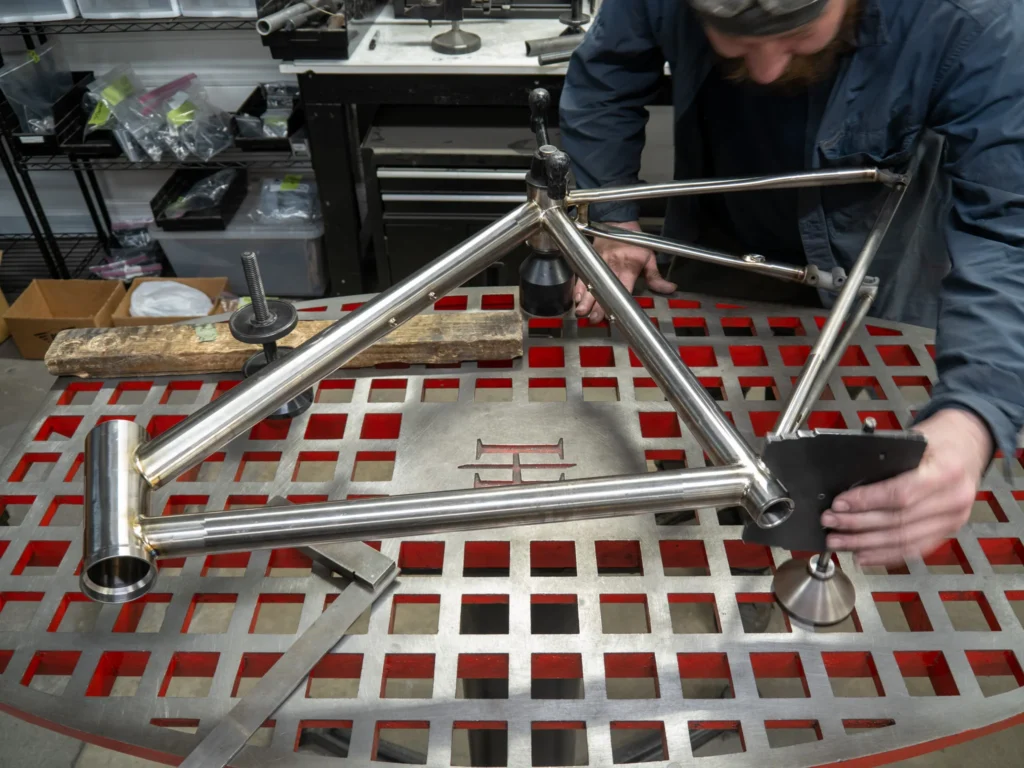
If you want a masterclass in material selection, look no further than a high-end custom titanium bicycle frame. Master frame builders use both Grade 9 and Grade 5 titanium, strategically placing each alloy exactly where its strengths are needed.
- The Tubing (Grade 9): The main structure of the bike—the top tube, down tube, seat tube, and stays—is almost exclusively built from Grade 9 seamless tubing. Because of its excellent elongation and “springiness,” Grade 9 absorbs high-frequency road vibrations, delivering that legendary, buttery-smooth “titanium ride quality.” Furthermore, the ability to cold-draw Grade 9 allows builders to use butted tubing (thicker at the ends for welding, thinner in the middle to save weight).
- The Nodes (Grade 5): The areas of the frame that endure massive torsional stress and require absolute stiffness—such as the bottom bracket shell, head tube, and rear dropouts—are CNC machined from solid blocks of Grade 5 titanium. When a rider sprints, they need uncompromising rigidity at the bottom bracket to transfer power to the drivetrain without flexing. Grade 5 delivers this absolute rigidity perfectly.
Material Selection in Aerospace and Medical Engineering
In the high-stakes environments of aerospace and medicine, the distinction between forming and machining dictates the material choice.
- Aerospace: Modern aircraft are packed with titanium. Grade 9 is the industry standard for aerospace hydraulic lines. These tubes must contain high-pressure fluids while being snaked and bent through tight spaces in the fuselage—a perfect job for a cold-formable alloy. Conversely, when engineers need to design jet engine turbine blades, heavy-duty fasteners, or structural airframe bulkheads, they rely on the sheer tensile strength of forged and machined Grade 5.
- Medical Implants: Grade 5 is one of the most biocompatible metals on earth. It is heavily utilized in orthopedic implants, such as hip and knee joint replacements, as well as bone plates and screws. Because these implants require complex, anatomical shapes and must support the weight of the human body without warping, CNC-machined Grade 5 is the undisputed choice.
Everyday Carry and Premium Consumer Goods
Titanium has exploded in popularity within the EDC (Everyday Carry) community and the luxury consumer electronics market (such as premium smartwatch cases).
Whether it is a high-end tactical flashlight, a folding knife scale, or a tactical pen, enthusiasts demand materials that won’t rust, won’t trigger metal allergies, and can survive extreme abuse. Because these items are typically small, intricate, and heavily reliant on CNC milling to achieve their final aesthetic shape, Grade 5 is the dominant player here. Its higher hardness also makes it slightly more resistant to daily scratches and dings than Grade 9, while taking surface treatments like bead blasting and color anodizing exceptionally well.
Frequently Asked Questions About Grade 5 and Grade 9 Titanium
When navigating the complexities of titanium procurement and fabrication, certain questions come up repeatedly on the shop floor. Here are the clear-cut answers to the most common queries.
Can You Weld Grade 9 Titanium to Grade 5?
Yes. Joining Grade 9 tubing to CNC-machined Grade 5 parts is standard practice, especially in high-end bicycle manufacturing and aerospace fabrication. However, titanium is highly reactive at welding temperatures. The process requires meticulous TIG (Tungsten Inert Gas) welding with strict argon back-purging to ensure the weld pool is completely shielded from oxygen. Typically, a filler rod matching the Grade 9 composition or a commercially pure (CP) titanium filler is used to maintain the weld’s ductility and prevent brittle joints.
Is Grade 5 Titanium More Expensive Than Grade 9?
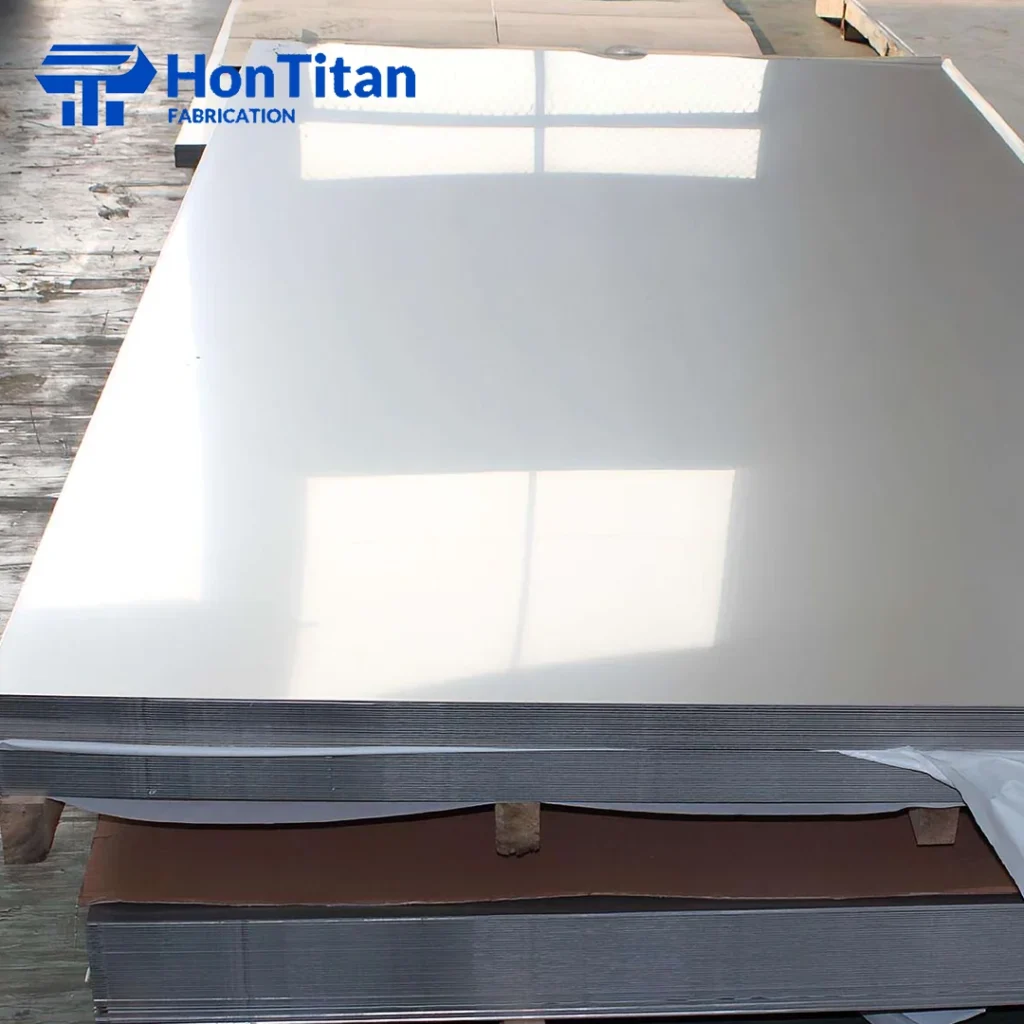
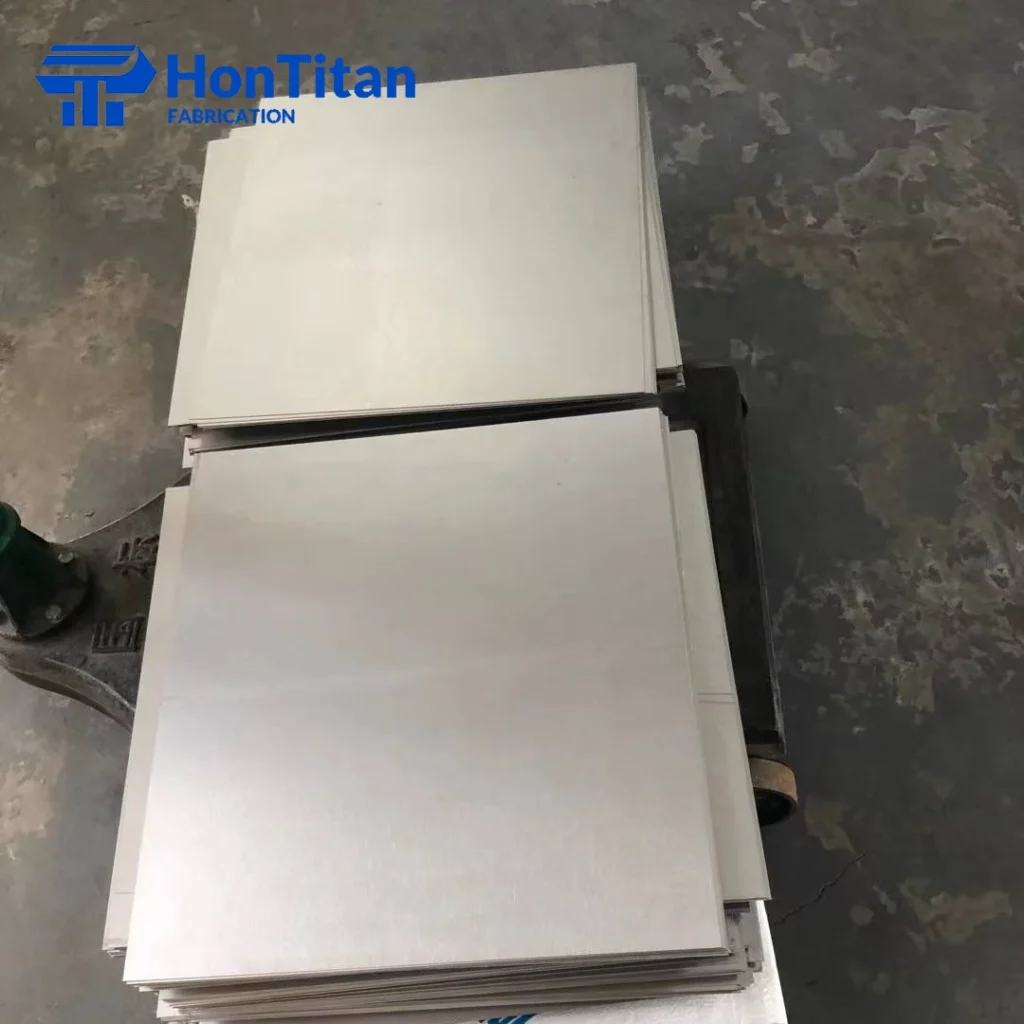
It depends entirely on the final shape you need. As raw material (like a solid billet or ingot), the price difference between Grade 5 and Grade 9 is relatively marginal. The true cost disparity lies in the manufacturing process. If you need a solid block or a plate, Grade 5 is highly cost-effective. But if you need tubing, trying to manufacture a tube out of Grade 5 is astronomically more expensive—and yields far more scrap material—than simply extruding and drawing a Grade 9 seamless tube.
Can Grade 5 Titanium Be Made Into Seamless Tubing?
It is extremely difficult and rarely done. Because Grade 5 has incredibly low cold formability and severe springback, it cannot be easily drawn over a mandrel at room temperature like Grade 9. Most Grade 5 “tubes” on the market are either seamed (made by rolling a titanium sheet and welding the seam) or gun-drilled (machining a hole through a solid rod). If you specifically require lightweight, thin-walled, seamless tubing, Grade 9 is the industry standard.
Which Grade is Better for Anodizing and Surface Finishing?
Both take surface treatments exceptionally well, but they may react slightly differently. Titanium anodizing works by using electricity to grow a transparent oxide layer on the metal’s surface, which refracts light to create brilliant colors. Because Grade 5 and Grade 9 have different ratios of aluminum and vanadium, applying the exact same voltage to both alloys might yield very slightly different color hues. For EDC enthusiasts and custom designers, both grades offer excellent, durable finishes, though Grade 5’s harder surface makes it slightly more resistant to underlying scratches.
Final Verdict for Your Manufacturing Needs
Ultimately, there is no single “superior” titanium alloy—there is only the right tool for the specific job. Choosing between Grade 9 and Grade 5 should never be based purely on which material boasts the highest tensile strength on a spec sheet. Instead, your decision must be driven by manufacturing reality and the functional demands of your final product.
If your design relies on seamless tubing, intricate bending, and a perfect balance of strength and structural compliance, Grade 9 is your undisputed champion. However, if your project demands complex, CNC-machined geometries that must withstand extreme load-bearing forces without yielding, Grade 5 is the ultimate powerhouse.
Navigating material specifications, machining tolerances, and supply chain costs can be a complex process. Whether you are prototyping a new aerospace component, designing high-end sporting equipment, or evaluating material costs for a large-scale production run, partnering with an experienced metal supplier and fabricator is crucial to keeping your budget in check.
If you need expert guidance on sourcing the right titanium grade, or if you want to discuss the machining and fabrication feasibility of your latest blueprints, reach out to a professional metal fabrication team today to get a detailed quote and optimize your next manufacturing project.