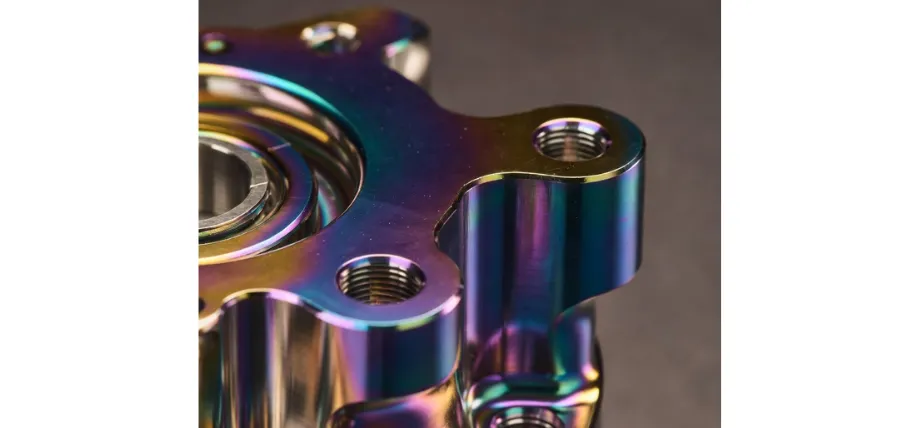
Titanium Surface Finishing & Polishing: A Practical Engineering Guide for 2026

Quick Summary: Titanium surface finishing encompasses mechanical polishing, chemical polishing, electropolishing, anodizing, passivation, and advanced coatings—each serving distinct performance and aesthetic goals. This guide covers complete grit progressions, Ra value specifications by industry, alloy-specific procedures, and a decision framework for selecting the right finishing method based on application, budget, and compliance

Read More »

Titanium Alloy vs Pure Titanium: Complete Material Science Guide for Engineers

This guide compares titanium alloys (mainly Ti-6Al-4V/Grade 5) with pure titanium (CP Grade 1-4) across mechanical properties, corrosion resistance, biocompatibility, applications, and cost. Ti-6Al-4V offers 2-3x the strength of Grade 2 CP titanium but with lowerFormability and weldability. Choose CP titanium for maximum corrosion resistance and weldability; choose Ti-6Al-4V for

Read More »

Choosing Between Grade 9 and Grade 5 Titanium for Your Project

Specifying the wrong titanium alloy for a high-performance project won’t just compromise your design—it can cause your manufacturing costs to spiral completely out of control. When it comes to top-tier applications like aerospace engineering, medical devices, and custom bicycle fabrication, two giants dominate the conversation: Grade 5 vs Grade 9

Read More »
Blog
Wayne

Grade 2 vs. Grade 4 Titanium: Which CP Grade Should You Choose?

When selecting materials for a demanding engineering project, designers often face a classic dilemma: prioritizing ease of manufacturing or maximizing mechanical strength. If you have narrowed your options down to Commercially Pure (CP) titanium, you are likely weighing the difference between grade 2 and 4 titanium. The Quick Answer: The

Read More »

Is Grade 4 Titanium Sheet Easy to Weld? The Ultimate Guide

Titanium has a notoriously intimidating reputation in the fabrication industry. If you ask a fabricator if Grade 4 titanium sheet is easy to weld, the most accurate answer is: Yes, it is highly weldable—but it demands absolute discipline. Unlike mastering the puddle manipulation required for aluminum or thin-gauge stainless steel,

Read More »

Seamless vs. Welded Titanium Tube: Which Is the Best Choice for Your Project?

When designing industrial systems for highly corrosive environments, extreme temperatures, or high-pressure applications, specifying titanium is often a straightforward engineering decision. However, when it comes time to finalize the procurement budget, project managers and engineers inevitably face a classic, high-stakes dilemma: Should you allocate a premium budget for seamless titanium

Read More »

ASTM B338 vs ASTM B861: The Ultimate Guide to Titanium Tubing and Piping

In multi-million dollar chemical processing, power generation, or desalination projects, specifying the wrong titanium standard isn’t just a minor purchasing error—it can lead to catastrophic equipment failure, ruptured pipelines, and costly facility downtime. When reviewing a Bill of Materials (BOM), engineers and procurement managers often encounter “titanium tubing” and might

Read More »
Blog
Wayne

Comparative Analysis of Ti-6Al-4V and Ti-6Al-4V ELI Titanium Alloys

The primary difference between Ti-6Al-4V (Grade 5) and Ti-6Al-4V ELI (Grade 23) is material purity. Grade 5 contains higher oxygen and iron levels, offering maximum tensile strength for aerospace applications. Conversely, Grade 23 features Extra Low Interstitials (ELI), deliberately restricting these impurities to deliver superior fracture toughness, ductility, and exceptional

Read More »
PDF

Send Your Inquiry Today