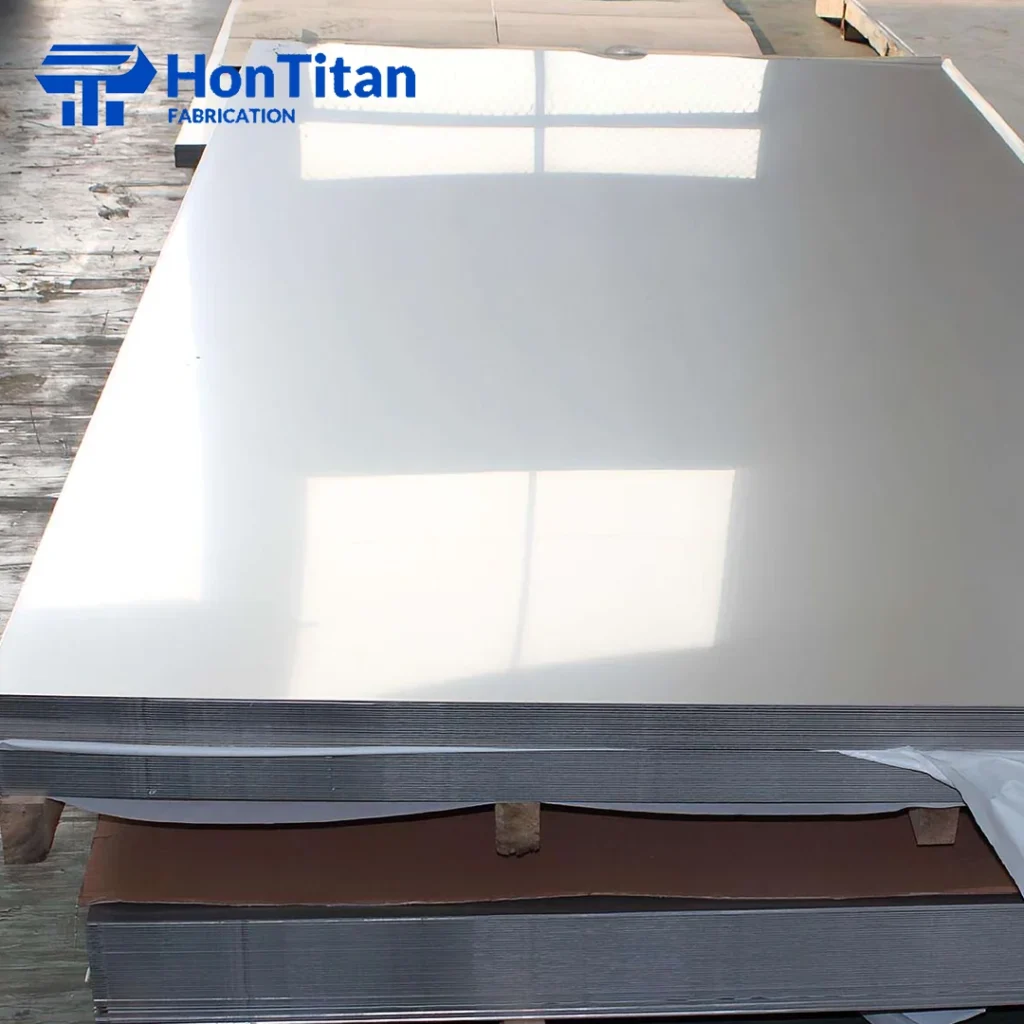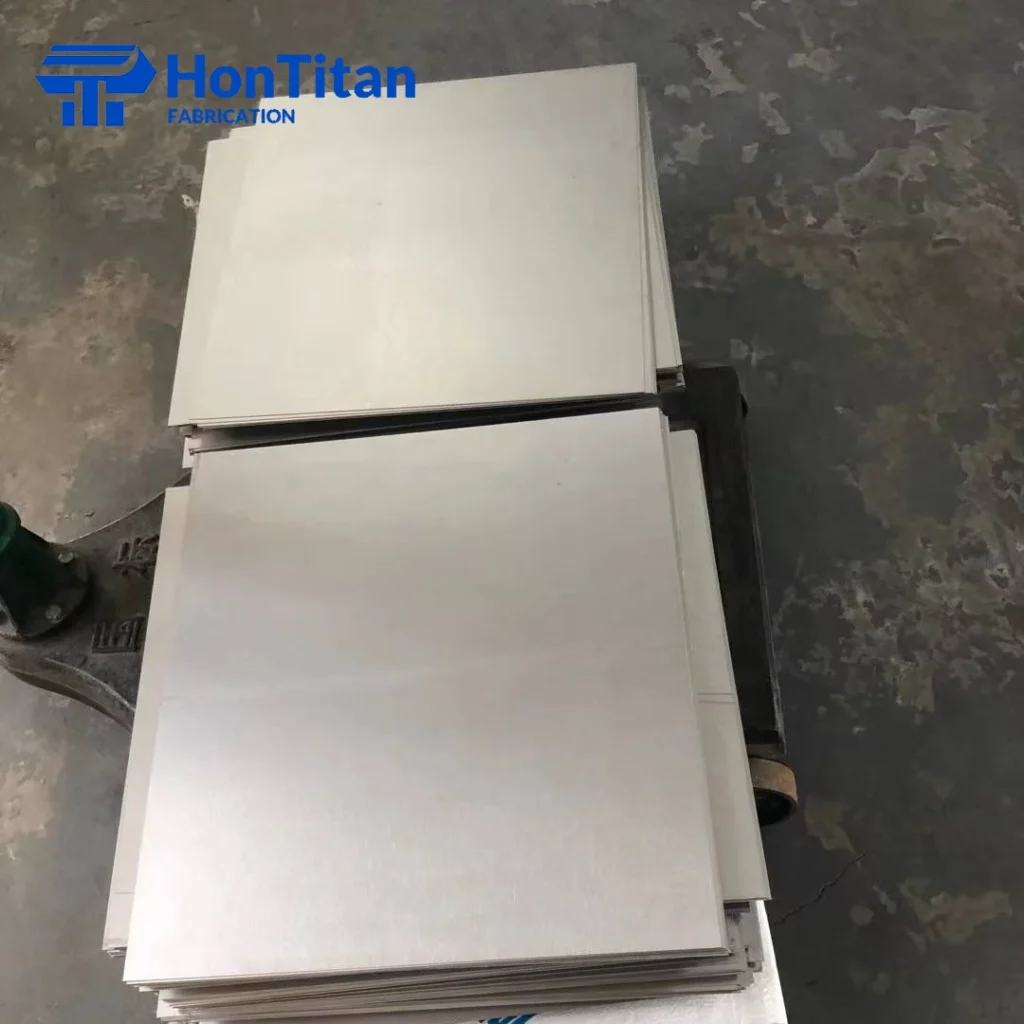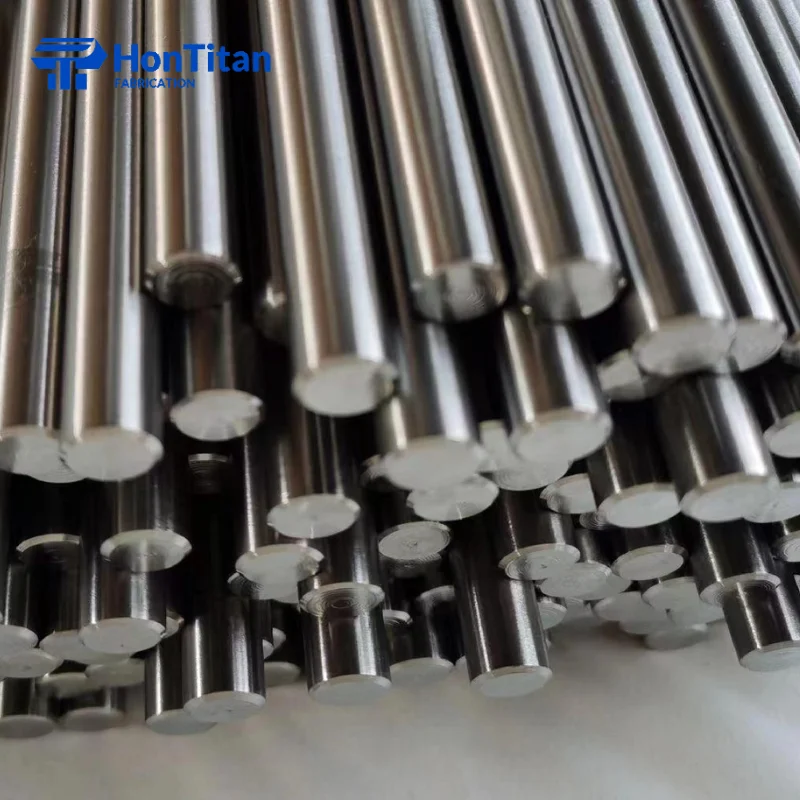
This guide compares titanium alloys (mainly Ti-6Al-4V/Grade 5) with pure titanium (CP Grade 1-4) across mechanical properties, corrosion resistance, biocompatibility, applications, and cost. Ti-6Al-4V offers 2-3x the strength of Grade 2 CP titanium but with lowerFormability and weldability. Choose CP titanium for maximum corrosion resistance and weldability; choose Ti-6Al-4V for aerospace structural components and high-strength medical implants.
What Is Pure Titanium? Understanding Commercially Pure (CP) Titanium
Pure titanium, also called commercially pure (CP) titanium, contains no alloying elements—only trace amounts of oxygen, iron, and other interstitial elements that determine its grade. The four CP grades (Grade 1 through Grade 4) differ primarily in oxygen content, which directly controls strength and ductility.
Grade 1 has the lowest oxygen (max 0.18%), making it the most ductile and formable. Grade 2 (oxygen max 0.25%) balances strength and workability—it is the most widely used CP grade in industrial applications. Grade 3 (oxygen max 0.35%) offers higher strength for pressure vessels, while Grade 4 (oxygen max 0.40%) provides the highest strength among CP grades, commonly used in medical devices.
CP titanium has a hexagonal close-packed (HCP) crystal structure known as the alpha phase, stable at room temperature. This single-phase structure delivers excellent corrosion resistance and weldability, but limits strength compared to alloys.
Key Properties of CP Titanium (ASTM F67, ASTM B265)
| Property | Grade 1 | Grade 2 | Grade 3 | Grade 4 |
|---|---|---|---|---|
| Tensile Strength (min) | 240 MPa | 345 MPa | 450 MPa | 550 MPa |
| Yield Strength (min) | 170 MPa | 275 MPa | 380 MPa | 485 MPa |
| Elongation (min) | 24% | 20% | 18% | 15% |
| Density | 4.51 g/cm³ | 4.51 g/cm³ | 4.51 g/cm³ | 4.51 g/cm³ |
| Primary Use | Chemical processing | Industrial heat exchangers | Pressure vessels | Medical implants |
My Take on CP Titanium
Having specified Grade 2 CP titanium for chemical processing equipment in previous projects, I’ve found its sweet spot: excellent corrosion resistance in chloride environments without the complexity of alloy selection. The 20% elongation makes it forgiving during fabrication—a real advantage when dealing with complex geometries in heat exchanger tube sheets.
What Is Titanium Alloy? The Alpha-Beta System Explained
Titanium alloys combine titanium with strategically selected elements that stabilize either the alpha or beta phase, enabling property tailoring through heat treatment. The most significant alloy is Ti-6Al-4V, representing approximately 50% of all titanium usage worldwide.
Alpha Stabilizers vs Beta Stabilizers
Alpha stabilizers (aluminum, oxygen, nitrogen, carbon) increase the temperature at which the alpha phase remains stable. Aluminum is the most important alpha stabilizer—virtually all commercial alloys contain 3-7% aluminum.
Beta stabilizers (vanadium, molybdenum, iron, chromium, niobium) allow the beta phase to exist at room temperature. Vanadium, molybdenum, and niobium are common choices.
The Allotropic Transformation: Why Phase Matters
Titanium undergoes an allotropic transformation at 882°C (1,620°F)—the beta transus temperature. Below this temperature, titanium exists in the alpha phase (HCP crystal structure). Above it, titanium transforms to the beta phase (BCC crystal structure).
This transformation is the foundation of titanium alloy metallurgy. By controlling cooling rates and heat treatment, manufacturers can create three distinct microstructures:
- Equiaxed alpha: Good ductility and toughness, suitable for low-temperature service
- Lamellar ( Widmanstätten): Excellent creep resistance for high-temperature applications
- Bimodal: Balanced properties—strength, ductility, and fatigue resistance combined
Ti-6Al-4V (Grade 5) Properties (ASTM F136, AMS 4928)
| Property | Annealed | Solution Treated & Aged (STA) |
|---|---|---|
| Tensile Strength | 900-950 MPa (130-138 ksi) | 1,050-1,170 MPa (152-170 ksi) |
| Yield Strength | 830-880 MPa (120-128 ksi) | 980-1,050 MPa (142-152 ksi) |
| Elongation | 10-14% | 6-10% |
| Hardness | 33-36 HRC | 38-42 HRC |
| Fatigue Strength | 500-600 MPa | 550-700 MPa |
| Density | 4.43 g/cm³ | 4.43 g/cm³ |
| Elastic Modulus | 110-114 GPa | 110-114 GPa |
Ti-6Al-7Nb: The Medical-Grade Alternative
Ti-6Al-7Nb (ASTM F1472) was developed specifically for biomedical implants as a safer alternative to Ti-6Al-4V. It replaces potentially cytotoxic vanadium with biocompatible niobium while maintaining comparable mechanical properties:
- Tensile Strength: 860-1,000 MPa
- Yield Strength: 750-900 MPa
- Elastic Modulus: ~110-115 GPa
- FDA and ISO 5832-11 approved for surgical implants
Direct Comparison: Titanium Alloy vs Pure Titanium
Mechanical Properties Face-Off
| Characteristic | CP Ti Grade 2 | Ti-6Al-4V (Gr 5) | Ti-6Al-7Nb |
|---|---|---|---|
| Tensile Strength | 345 MPa | 900-950 MPa | 860-1,000 MPa |
| Yield Strength | 275 MPa | 830-880 MPa | 750-900 MPa |
| Elongation | 20% | 10-14% | 10-14% |
| Strength-to-Weight Ratio | Good | Excellent | Excellent |
| Fatigue Resistance | Moderate (170 MPa) | Excellent (500-600 MPa) | Excellent (500-600 MPa) |
The gap is stark: Ti-6Al-4V delivers nearly 3x the tensile strength of Grade 2 CP titanium while being slightly lighter (4.43 vs 4.51 g/cm³). For structural aerospace components, this strength-to-weight advantage is the primary driver for alloy selection.
Corrosion Resistance
Both CP titanium and Ti-6Al-4V form a stable, self-healing titanium dioxide (TiO₂) passive film approximately 3-5 nm thick. This film provides exceptional corrosion resistance in most environments.
However, there’s a subtle distinction: CP titanium (especially Grade 2) has slightly better corrosion resistance than Ti-6Al-4V because the absence of alloying elements eliminates potential galvanic micro-cells. In our marine heat exchanger project, we specified Grade 2 CP titanium tube sheets specifically for this reason—the chloride concentration in seawater demanded maximum corrosion resistance.
Both materials exhibit:
- Negligible corrosion rates in seawater (< 0.001 mm/year)
- Excellent resistance to pitting and crevice corrosion
- Good performance in organic acids and oxidizing environments
- Vulnerability to hydrofluoric acid and concentrated reducing acids
Biocompatibility: Medical Implant Considerations
For medical implants, both CP titanium and Ti-6Al-4V demonstrate excellent osseointegration—the ability to bond directly with bone. The elastic modulus of titanium (≈110 GPa) is much closer to human bone (10-30 GPa) than stainless steel (≈200 GPa), reducing the “stress shielding” effect that leads to bone resorption.
The vanadium concern: Traditional Ti-6Al-4V contains vanadium, which some studies suggest may cause cytotoxicity (cellular toxicity). This concern has driven adoption of Ti-6Al-7Nb in medical implants—it delivers equivalent strength without vanadium.
For dental implants and non-load-bearing applications, CP titanium Grade 4 remains popular due to its excellent biocompatibility and absence of alloying elements.
Weldability and Fabricability
CP titanium wins on weldability: Grade 2 CP titanium can be welded using standard GTAW (GTAW) or GMAW (GMAW) processes with minimal preheat requirements—just strict inert gas shielding to prevent oxygen absorption.
Ti-6Al-4V requires more care: Welding requires precise control of heat input and strict inert gas shielding (both faces and trailing). Post-weld heat treatment is often necessary to restore properties. Weldability is rated as “moderate” rather than excellent.
Formability follows the same pattern: CP titanium’s single-phase alpha structure allows cold forming without cracking. Ti-6Al-4V’s dual-phase structure requires more force and sometimes warm forming (300-400°C).
Application Mapping: When to Choose Which Material
Aerospace Applications (50-60% of global titanium demand)
Titanium alloys dominate aerospace structural components:
- Ti-6Al-4V: Wing boxes, fuselage frames, landing gear components, engine fasteners
- Ti-10V-2Fe-3Al: High-strength landing gear and airframe forgings
- Near-alpha alloys (Ti-6242S, IMI 834): High-temperature engine components
CP titanium sees limited aerospace use in non-structural applications: heat exchangers, hydraulic tubing, and cabin components where strength requirements are moderate.
The Boeing 787 Dreamliner uses approximately 15% titanium by structural weight—up from 5-8% in legacy aircraft. Airbus A350 follows similar trends.
Medical Implants (5-8% of global demand)
Choosing between CP titanium and alloys depends on the application:
| Application | Preferred Material | Rationale |
|---|---|---|
| Dental implants | CP Ti Grade 4, Ti-6Al-4V ELI | Excellent osseointegration |
| Hip/knee replacements | Ti-6Al-4V ELI, Ti-6Al-7Nb | High fatigue strength, biocompatibility |
| Spinal fixation | Ti-6Al-4V ELI | Strength-to-weight balance |
| Bone plates | CP Ti Grade 2 | Ductility, formability |
| Craniofacial implants | Ti-6Al-4V (3D printed) | Custom geometry, patient-specific |
Marine and Offshore (10-15% of global demand)
CP titanium Grade 2 is the standard choice for:
- Desalination plant heat exchangers
- Offshore risers and subsea equipment
- Propeller shafts and marine fasteners
The lifecycle cost advantage is compelling: while CP titanium costs more upfront than stainless steel 316L, its near-zero corrosion rate in seawater eliminates replacement costs over 20+ year service lives.
Chemical Processing (15-20% of global demand)
Grade 2 CP titanium handles:
- Chlorine handling equipment
- Acetic acid and nitric acid reactors
- Heat exchanger tube bundles in corrosive service
The absence of alloying elements prevents galvanic corrosion in aggressive chemical environments—a key advantage over titanium alloys.
Automotive
Alloys dominate high-performance applications:
- Exhaust valves and manifolds (Ti-6Al-4V)
- Connecting rods in racing engines
- Suspension components in premium vehicles
CP titanium Grade 2 sees use in exhaust systems where corrosion resistance at high temperatures is critical.
Cost Analysis: Price Differential and Total Cost of Ownership
Direct Material Costs (2024-2025 market)
| Product | Approximate Price Range (USD) |
|---|---|
| CP Titanium Grade 2 (mill products) | $15-40/kg |
| Ti-6Al-4V (aerospace grade) | $30-80+/kg |
| Ti-6Al-4V ELI (medical grade) | $50-100/kg |
| Ti-6Al-7Nb (medical grade) | $80-150/kg |
| Ti-6Al-4V powder (AM grade) | $200-500/kg |
Total Cost of Ownership Perspective
The sticker price only tells part of the story. Consider these factors:
- Fabrication costs: CP titanium’s superior Formability reduces machining time and tooling wear
- Life cycle costs: Marine and chemical processing applications often favor CP titanium due to zero corrosion maintenance
- Inspection and certification: Aerospace-grade materials require expensive certified supply chains
- Weight savings: In aerospace, the strength-to-weight advantage of Ti-6Al-4V translates to fuel savings that far exceed material costs
Supply Chain Considerations (2024-2026)
Post-2022 supply chain restructuring continues affecting availability:
- Aerospace OEMs actively diversifying away from Russian titanium (VSMPO-AVISMA)
- New sponge production capacity under development in the US and Europe
- Chinese titanium sponge production (50-60% of global output) remains a dominant factor
- Lead times for aerospace-certified Ti-6Al-4V remain extended (12-20 weeks)
First-Hand Experience: Practical Selection Guidance
How I’ve Approached Material Selection
In 15 years of specifying titanium in B2B manufacturing, I’ve developed a decision framework that consistently produces the right results:
Choose CP Titanium Grade 2 when:
- Corrosion resistance is the primary driver (seawater, chloride environments)
- Welding is required in the field or fabrication shop
- Formability requirements are complex (deep draws, tight radii)
- The application is non-structural (heat exchangers, instrumentation)
- Budget constraints favor lower material costs
Choose Ti-6Al-4V when:
- Structural strength requirements exceed CP titanium capabilities
- Fatigue resistance is critical (aerospace components, medical implants)
- Weight savings justify the cost premium
- The application can justify aerospace-grade certification
- Heat treatment to peak strength is acceptable
Choose Ti-6Al-7Nb when:
- Medical implant biocompatibility is the priority
- Vanadium-free composition is required
- Equivalent strength to Ti-6Al-4V is needed with improved safety margins
Common Mistakes I’ve Observed
- Over-specifying Ti-6Al-4V for corrosion applications: I’ve seen projects specify Grade 5 for chemical processing where Grade 2 CP would perform better and cost less
- Underestimating welding complexity: Fabricators sometimes underestimate the inert gas shielding requirements for Ti-6Al-4V
- Ignoring beta transus during heat treatment: Localized overheating during machining can inadvertently create brittle microstructures in Ti-6Al-4V
Standards Reference: Know These Certifications
| Standard | Scope |
|---|---|
| ASTM B265 | Titanium strip, sheet, and plate (general industrial) |
| ASTM F67 | Unalloyed titanium for surgical implants (CP Grades 1-4) |
| ASTM F136 | Ti-6Al-4V ELI for surgical implants (medical Grade 5) |
| ASTM F1472 | Ti-6Al-7Nb for surgical implants (biocompatible alloy) |
| AMS 4928 | Ti-6Al-4V sheet, strip, plate for aerospace |
| ISO 5832-3 | Ti-6Al-4V for surgical implants (international) |
| ISO 5832-2 | CP titanium for surgical implants (international) |
For B2B procurement engineers: always verify that material certifications match the specific ASTM or AMS standard required by your application. The difference between ASTM F67 (CP titanium for implants) and ASTM B265 (CP titanium for industrial use) can affect allowable impurities and testing requirements.
FAQ: Titanium Alloy vs Pure Titanium
Is Ti-6Al-4V stronger than pure titanium?
Yes. Ti-6Al-4V has a minimum tensile strength of 900 MPa in the annealed condition—approximately 2.6 times stronger than Grade 2 CP titanium (345 MPa minimum). When heat-treated to the solution-treated and aged condition, Ti-6Al-4V can reach 1,050-1,170 MPa.
Can pure titanium be used for medical implants?
Yes. ASTM F67 covers CP titanium Grades 1-4 for surgical implants. Grade 2 and Grade 4 are most commonly used for bone plates, dental implants, and non-load-bearing implant components. CP titanium offers excellent biocompatibility and osseointegration.
Which titanium is easier to weld?
CP titanium Grade 2 is easier to weld. It requires only inert gas shielding and has no risk of phase transformation during welding. Ti-6Al-4V requires precise heat input control, trailing gas shielding, and often post-weld heat treatment to restore mechanical properties.
What is the price difference between titanium alloy and pure titanium?
Ti-6Al-4V (Grade 5) costs approximately 2-3 times more than CP titanium Grade 2 on a per-kilogram basis. Aerospace and medical grades command premium prices due to stricter quality certifications and testing requirements.
Which titanium is better for seawater applications?
CP titanium Grade 2 is typically preferred for seawater applications due to its slightly better corrosion resistance (no galvanic micro-cells from alloying elements) and lower cost. Both materials exhibit negligible corrosion rates in seawater, but Grade 2’s simpler composition provides a safety margin.
Summary: Making the Right Choice
The titanium alloy vs pure titanium decision comes down to matching material properties to application requirements.
Pure titanium (CP Grade 1-4) excels in:
- Corrosion-resistant applications
- Welded fabrications
- Formability-critical parts
- Cost-sensitive non-structural uses
Titanium alloys (Ti-6Al-4V, Ti-6Al-7Nb) excel in:
- High-strength structural applications
- Fatigue-critical aerospace and medical components
- Weight-sensitive designs where the cost premium is justified
- Applications requiring heat treatment to optimize properties
For most B2B manufacturing applications, the choice is straightforward: if corrosion resistance and weldability dominate, specify Grade 2 CP titanium. If structural performance is paramount, specify Ti-6Al-4V (Grade 5) with the appropriate aerospace (AMS 4928) or medical (ASTM F136) certification.
The key is matching material capabilities to your specific requirements—not defaulting to the most expensive option or the most familiar one. In my experience, the best material decisions come from explicitly listing requirements (strength, corrosion, weldability, cost, certification) and matching each to material property data rather than assumptions or habit.