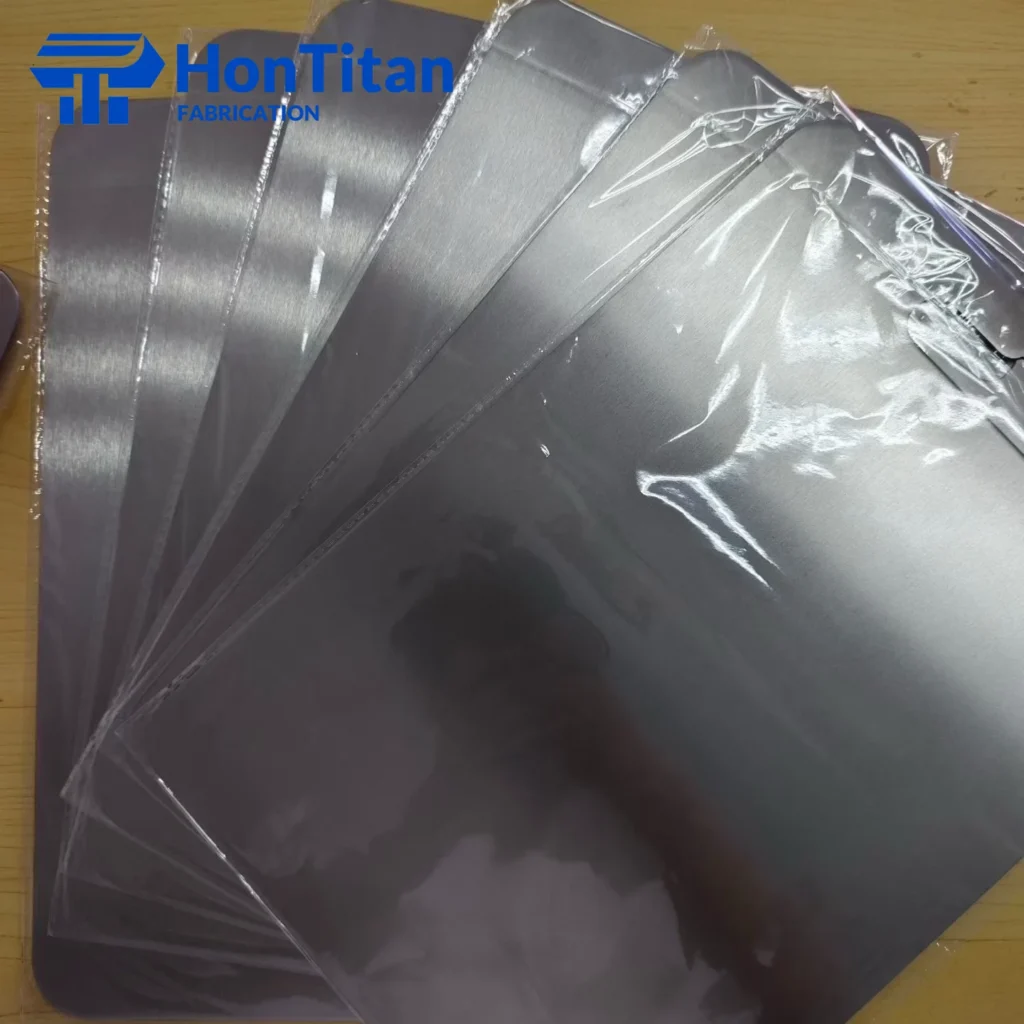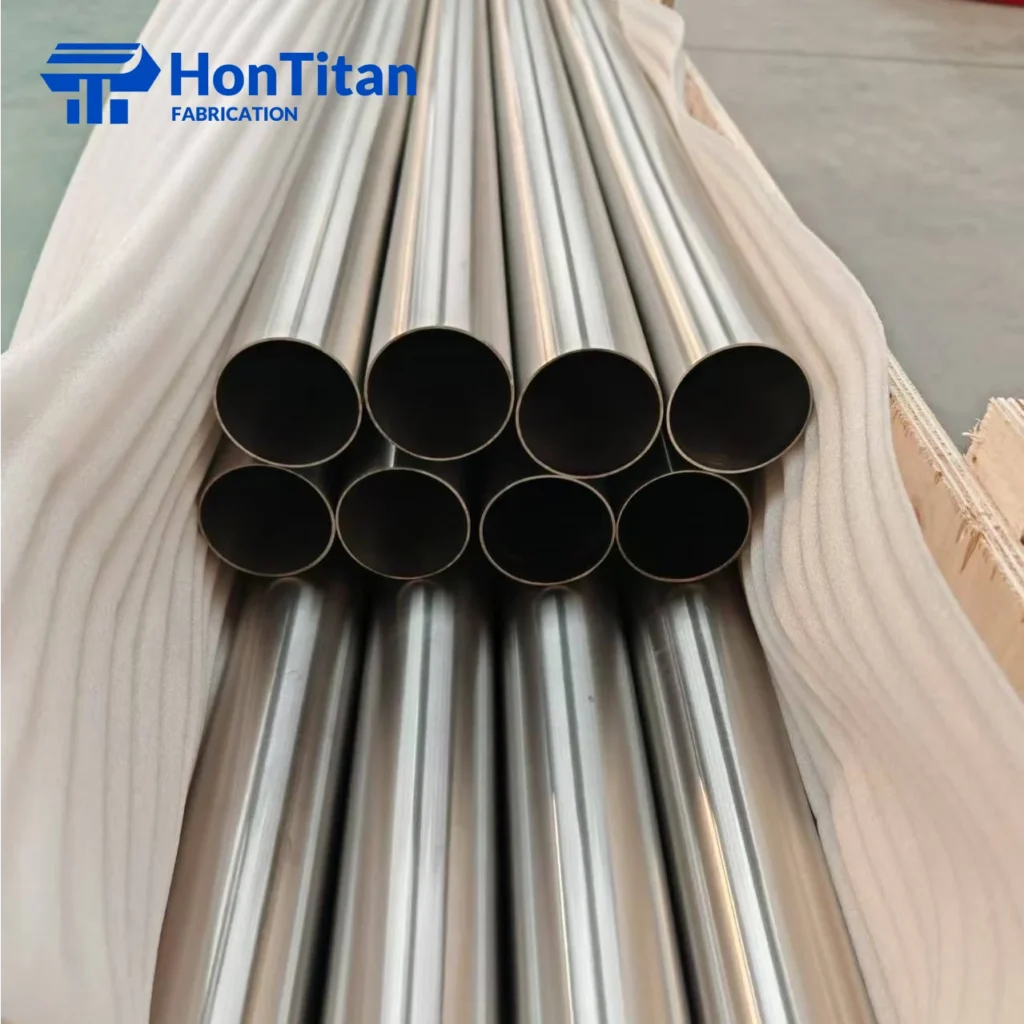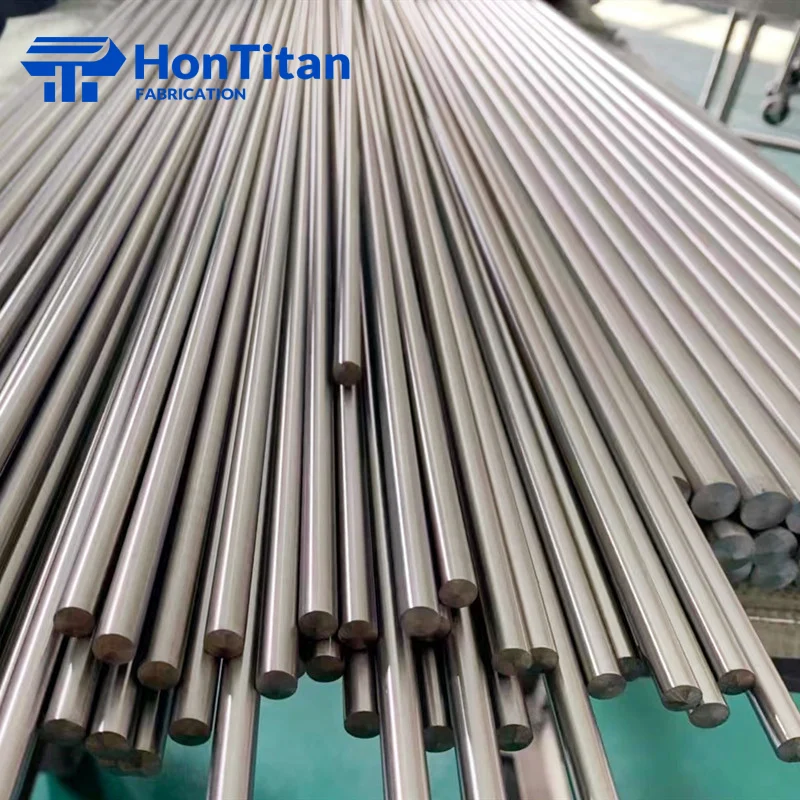
Titanium is frequently chosen for products ranging from durable wedding bands and premium smartwatches (like the Apple Watch Ultra) to everyday carry (EDC) tools and lightweight camping cookware. Its popularity stems from its exceptionally high strength-to-weight ratio and excellent corrosion resistance.
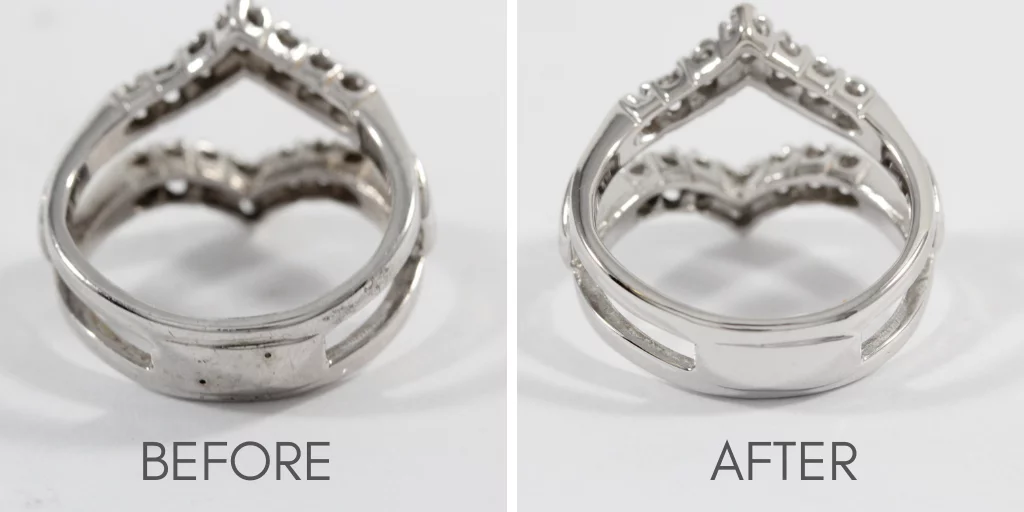
However, over time, you may notice your titanium gear appearing dull, smudged, or seemingly losing its color. You might wonder if the metal is tarnishing. From a chemical standpoint, pure titanium does not tarnish or rust. It naturally forms a passive oxide layer that protects it from the elements.
What you are actually observing—especially on matte or brushed finishes—is the accumulation of surface contaminants. Because of its surface texture, titanium can readily show fingerprints. Dark smudges and muted colors are typically the result of a buildup of sebum (body oils), dead skin cells, lotions, or environmental residues like campfire soot.
Restoring the original luster is a straightforward process that rarely requires specialized chemicals. In fact, using incorrect cleaning methods can compromise the surface finish. This guide outlines safe, scientifically sound methods to clean various titanium items, ensuring their longevity and appearance.
Essential Guidelines: What to Avoid on Titanium
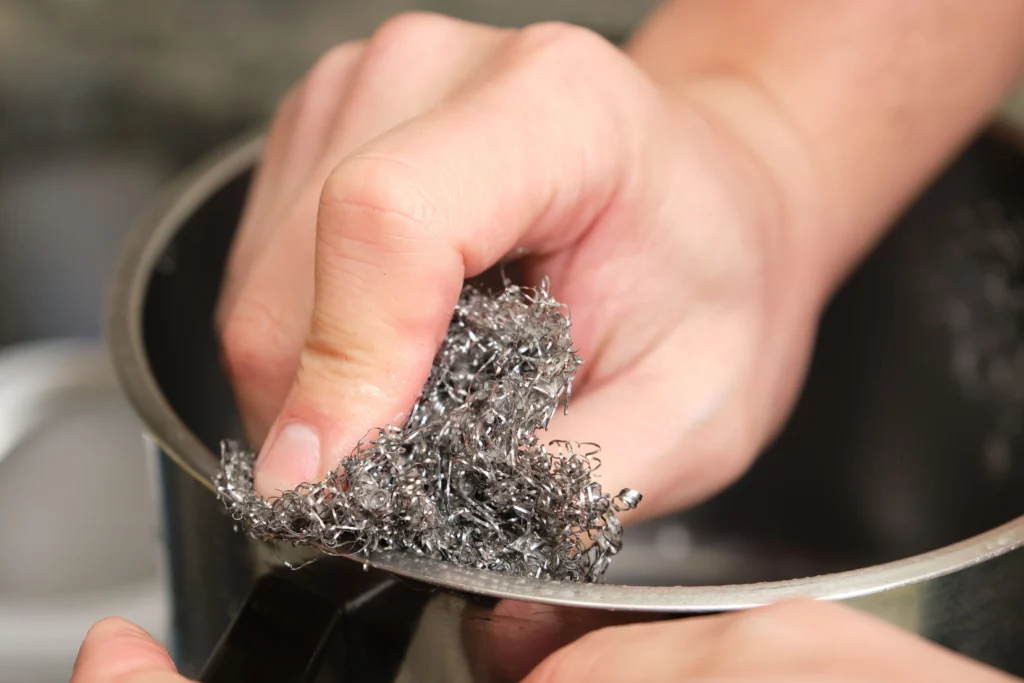
Before discussing specific cleaning methods, it is crucial to understand which practices can damage titanium’s surface, particularly if it features a polished or anodized finish. To protect the metal’s integrity and aesthetics, avoid the following:
- Chlorine and Bleach: Avoid exposing titanium to chlorine bleach or highly concentrated chlorinated cleaning products. While brief exposure (such as swimming in a chlorinated pool) is generally fine if rinsed promptly, prolonged soaking in bleach can lead to pitting, localized corrosion, and degradation of the metal’s structural integrity.
- Abrasive Scrubbers: Do not use steel wool, stiff-bristled brushes, or heavy-duty scouring pads. These abrasive materials will create micro-scratches on the surface, compromising polished or brushed finishes permanently.
- Abrasive Polishing on Anodized Titanium: If your titanium item features vibrant colors (anodization), do not use polishing compounds. The color is not a dye; it is a microscopic oxide layer generated through an electrolytic process. Abrasive polishes will strip this layer, exposing the bare, silver-colored metal beneath.
- Air Drying: Allowing titanium to air dry after washing can result in mineral deposits from tap water, leaving noticeable water spots. It is recommended to pat the item dry immediately with a clean, soft microfiber cloth.
The Universal Method: Standard Light Cleaning
For the majority of titanium items—such as pocket knives, watch clasps, or rings—a simple, non-abrasive method is highly effective. This approach is safe for brushed, polished, matte, and anodized finishes.
The objective is to gently dissolve body oils and daily grime without degrading the surface material.
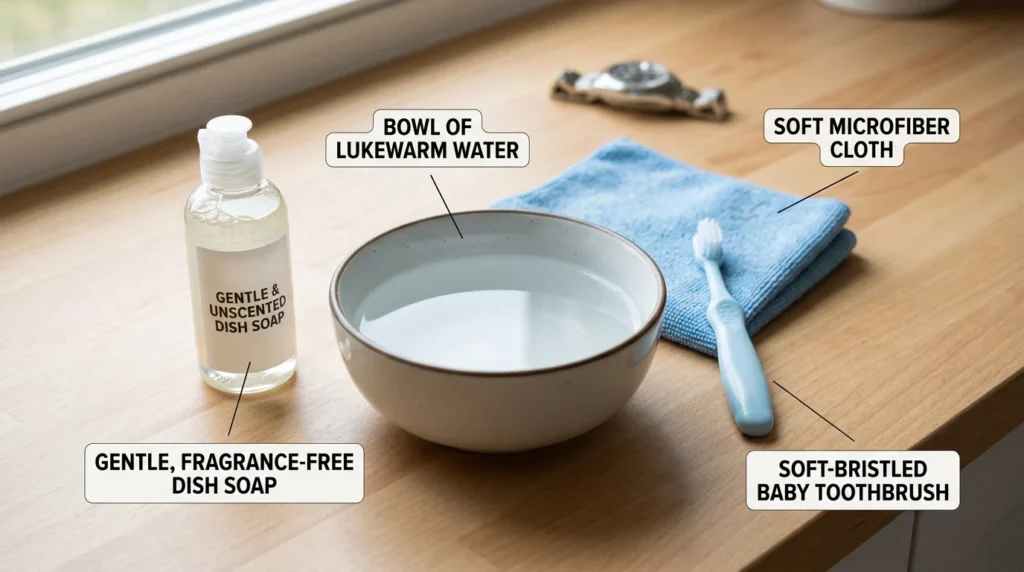
What You Need:
- A bowl of lukewarm water
- Mild, fragrance-free dish soap (which acts as a surfactant)
- A soft microfiber cloth
- A soft-bristled baby toothbrush (for crevices and intricate parts)
Step-by-Step Instructions:
- Prepare the Solution: Fill a small bowl with lukewarm water and add a few drops of mild dish soap to create a dilute soapy solution. Avoid using excessively hot water, especially if your item contains adhesive parts or delicate inlays.
- The Soak: Submerge the titanium item in the solution and let it sit for 5 to 15 minutes. This allows the surfactants in the soap to break down lipid-based finger oils and soften hardened dirt, minimizing the need for physical friction.
- Gentle Cleaning: For flat surfaces, wipe the metal with a soft microfiber cloth while it is submerged. For items with intricate geometries, such as watch bands, grooved rings, or knife pivots, use a soft-bristled baby toothbrush to gently dislodge trapped debris.
- The Rinse: Remove the item and rinse it thoroughly under warm, running water to ensure all soap residue is removed, as leftover soap can dry into a cloudy film. (Pro tip: Rinsing with distilled water prevents any risk of hard water mineral deposits).
- Immediate Drying: Use a clean, dry microfiber cloth to gently pat the titanium completely dry. Do not allow it to air dry.
specialized Cleaning by Category
While the Universal Method covers basic maintenance, certain titanium items face specific environmental challenges and require tailored approaches.
1. Cleaning Titanium Jewelry & Watches (e.g., Apple Watch Ultra, Rings)
Items worn close to the skin, such as titanium wedding bands and smartwatches, are subject to continuous exposure to sweat, epidermal oils, and cosmetic products. Over time, these substances accumulate in the micro-texture of brushed or matte finishes, turning the metal’s appearance dark or grey.
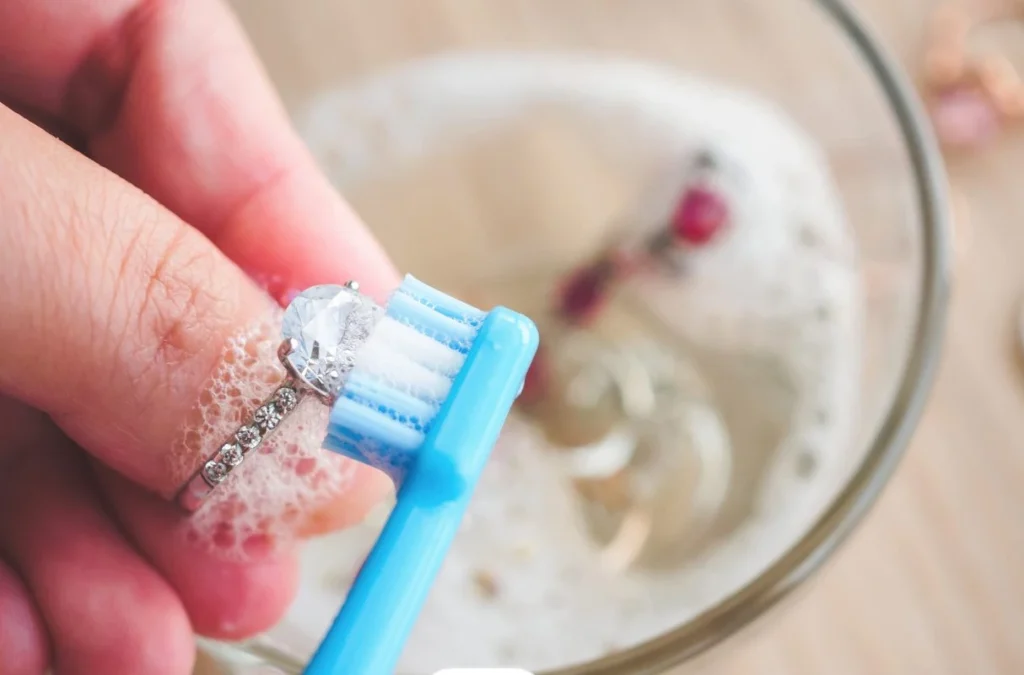
Best Cleaning Strategy: The Universal Method (mild dish soap and warm water) is the most effective approach. Utilize the soft toothbrush to carefully clean the inner circumference of rings or the articulated links of a watch band.
Important Consideration: Ultrasonic Cleaners Pure titanium is safe to clean in an ultrasonic jewelry cleaner. The high-frequency sound waves cause cavitation, which is highly effective at removing debris from microscopic crevices. Caution: Only use an ultrasonic cleaner if your titanium jewelry consists strictly of solid metal. If the piece features inlays (such as wood, carbon fiber, or meteorite) or is set with fragile gemstones (like pearls or opals), the intense vibrations can cause significant structural damage to those materials.
2. How to Clean Anodized Titanium Gear (EDC Knives & Pens)
A common concern among owners of anodized titanium gear is the sudden appearance of fading or discoloration.
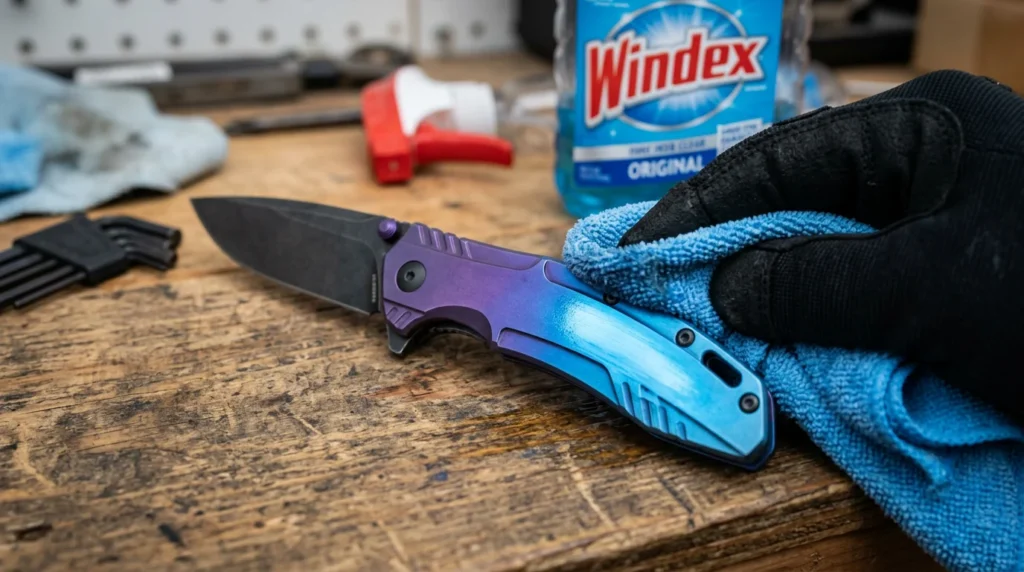
The Optical Principle Behind “Fading”: Anodized titanium does not use pigments or dyes. The vibrant colors are structural, created by passing an electrical current through the metal to grow a controlled oxide layer. This layer manipulates the refraction of light. When you handle the item, natural skin oils coat this microscopic layer, altering its refractive index. This optical shift mutes the colors, making the metal look dull or grey.
The Solution (Solvent Cleaning): To restore the color, you must remove the oil without damaging the oxide layer. As mentioned earlier, abrasive polishing will permanently remove the color. Instead, use a solvent that quickly evaporates and dissolves lipids.
- Application: Spray the surface lightly with an ammonia-based glass cleaner, or use a cotton pad dampened with isopropyl alcohol (rubbing alcohol).
- Wiping: Gently wipe the surface with a clean microfiber cloth.
- Result: As the solvent evaporates and removes the oil, the original refractive properties of the oxide layer are restored, bringing back the vibrant color.
3. Cleaning Burnt Titanium Cookware & Camp Mugs
Titanium is highly favored in ultralight backpacking, but its relatively low thermal conductivity can lead to uneven heat distribution. Cooking over concentrated heat sources often results in scorched food and carbonized soot adhering to the metal.

The Baking Soda Paste Method: To remove heavy soot and burnt organic matter without scratching the cookware, a mild abrasive is necessary.
- Mix equal parts baking soda and warm water to create a thick paste. Baking soda acts as a gentle mechanical abrasive and a mild alkali to break down organic bonds.
- Apply the paste evenly over the burnt areas and soot stains.
- Allow it to sit for 15 to 20 minutes.
- Use a soft sponge to gently scrub the areas in circular motions.
- Rinse thoroughly with hot water.
For Stubborn Residue: If food is firmly adhered to the bottom, add a small amount of water and a splash of white vinegar (acetic acid) to the pot. Simmer the mixture on a stove for 5 minutes, which will help loosen the carbonized food, making it easier to scrape away with a silicone spatula.
Understanding “Bluing”: When titanium cookware is exposed to a direct flame, the extreme heat accelerates the oxidation process, causing the metal to turn shades of blue, purple, or gold. This heat-induced anodization is a permanent, natural physical change. It does not negatively impact the structural integrity or safety of the cookware and cannot be washed off.
4. Cleaning Titanium Exhausts (Motorcycles & Cars)
Titanium exhaust systems operate at extremely high temperatures. Consequently, road tar, grease, and sometimes synthetic materials (like melted plastic) can bake onto the surface upon contact.
Using Penetrating Solvents (e.g., WD-40): Standard soap solutions are generally ineffective against baked-on polymers and petroleum-based grime.
- Spray a penetrating oil/solvent like WD-40 directly onto a clean microfiber cloth (avoid spraying near brake components or tires).
- Press the dampened cloth against the residue for a minute to allow the solvent to penetrate and soften the hydrocarbons.
- Gently wipe the debris away.
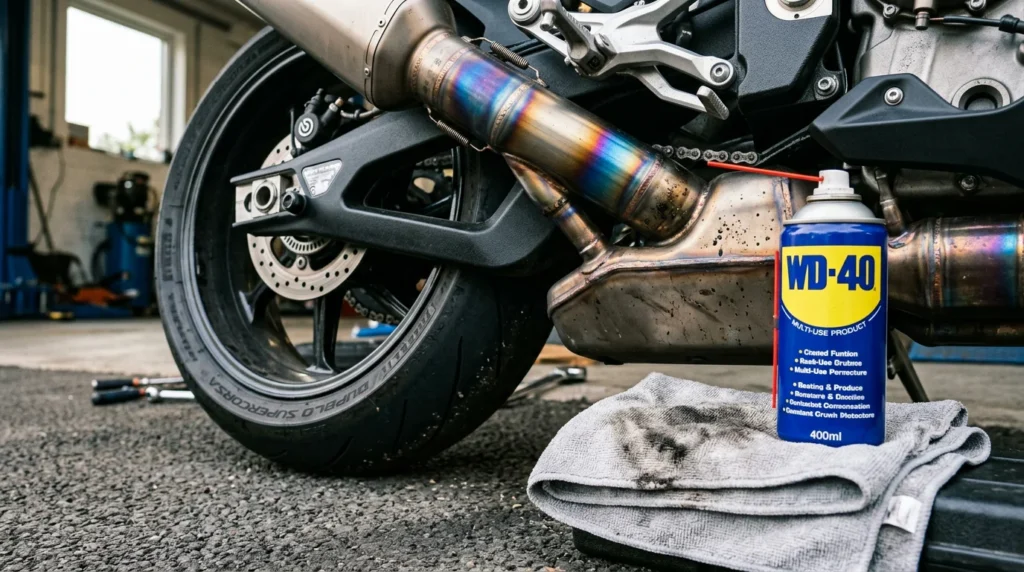
Critical Final Step: It is imperative to remove all WD-40 residue after cleaning. WD-40 leaves a thin film of oil. If this film is left on the exhaust when the engine is started, the high operating temperatures will bake the oil into the titanium, causing permanent yellow or brown discoloration. Wipe the entire cleaned area thoroughly with isopropyl alcohol until completely dry.
Advanced Care: Surface Restoration and Scratches
While titanium is structurally robust, its surface is not entirely immune to abrasion. It will inevitably accumulate micro-scratches from daily mechanical wear.
Note that cleaning removes chemical contaminants (dirt and oil), whereas polishing removes physical material to level out scratches.
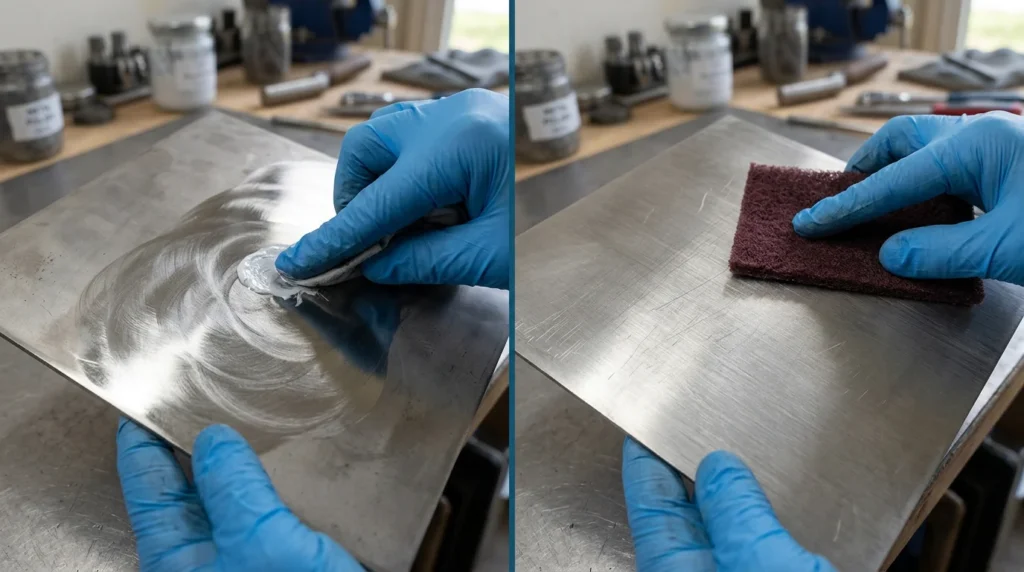
For Polished Titanium: To restore a mirror finish on solid, uncolored titanium, apply a specialized, non-ferrous metal polish (such as Flitz or Mother’s Mag & Aluminum Polish). Apply a small amount to a microfiber cloth and buff using small, circular motions, then wipe clean.
For Brushed Titanium: To restore a brushed finish (a matte surface with directional micro-abrasions), do not use liquid polishes. Instead, use a fine abrasive pad (such as a very fine Scotch-Brite pad). Apply extremely light pressure and rub the pad strictly parallel to the original grain. Circular motions will disrupt the brushed aesthetic.
Critical Rule for Polishing: Never attempt to polish or buff anodized (colored) titanium. Any abrasive action will permanently strip the colored oxide layer, exposing the underlying silver-toned metal.
Frequently Asked Questions (FAQs)
Does titanium tarnish or rust?
No, pure titanium does not tarnish, rust, or corrode under normal environmental conditions. It forms a protective passive oxide layer upon exposure to oxygen. Surface dullness is typically a buildup of environmental contaminants or body oils.
Can you use rubbing alcohol to clean titanium?
Yes, isopropyl alcohol is chemically safe for titanium. It is highly effective for cleaning anodized titanium gear because it acts as a solvent to dissolve oils without degrading the surface finish or leaving water spots.
Does baking soda scratch titanium?
Baking soda is a mild mechanical abrasive. While it is safe and effective for removing carbonized food from outdoor cookware, it should be used cautiously on highly polished titanium jewelry to avoid inducing micro-scratches.
Can you clean titanium with WD-40?
Yes, WD-40 is safe to use and highly effective at softening tar or adhesive residue. However, the oily film it leaves behind must be entirely removed with a solvent like isopropyl alcohol, especially on exhaust pipes, to prevent heat-induced staining.
Is it safe to put titanium in an ultrasonic cleaner?
Pure, solid titanium is completely safe for ultrasonic cleaning. However, the high-frequency vibrations can damage secondary materials such as wood inlays, carbon fiber, or fragile gemstones often set in titanium jewelry.