For individuals who wear prescription lenses for extended periods, frame weight and material compatibility are crucial factors. Heavy frames can cause persistent pressure marks on the nasal bridge, while certain metal alloys may lead to contact dermatitis or skin discoloration.

Aerospace-grade titanium has become a prominent material in the eyewear industry due to its unique physical properties, offering a lightweight and biocompatible alternative. However, given its premium price point, it is essential to understand its structural characteristics before making a purchase.
This guide provides an objective analysis of titanium glasses. We will examine the material benefits and limitations, clarify the metallurgical differences between Pure and Beta titanium, and provide guidelines for verifying material authenticity.
The Physical Properties of Titanium
To understand the functional benefits of titanium eyewear, it is helpful to look at its core physical properties. The primary advantage of titanium lies in its high strength-to-weight ratio.
Titanium offers tensile strength comparable to steel but at approximately 45% less weight. It is also highly resilient and has a low modulus of elasticity in specific alloy forms. Historically, the eyewear industry relied heavily on stainless steel, aluminum, or standard alloys, which present structural compromises regarding weight, flexibility, or oxidation. Titanium provides a material solution that addresses these structural and wearability concerns simultaneously.
The Pros: Functional Benefits of Titanium Frames
1. Significant Weight Reduction
For those requiring thicker, heavier prescription lenses, titanium’s lower density is highly beneficial. By reducing the overall weight of the eyewear, titanium minimizes the downward pressure on the nose and ears. This reduction in continuous physical pressure can help alleviate tension headaches and skin indentations associated with prolonged daily wear.

2. Biocompatibility and Hypoallergenic Properties
Contact dermatitis, often triggered by a nickel allergy, is a frequent issue with standard metal alloy frames. Pure titanium is completely biocompatible and hypoallergenic, making it a standard material in the medical field for surgical implants and joint replacements. Nickel-free titanium frames are highly recommended for individuals with sensitive skin, as they do not oxidize or react with the skin to cause discoloration or allergic rashes.
3. Durability and Corrosion Resistance
Titanium exhibits high tensile strength, making the frames less prone to permanent deformation from minor impacts compared to standard wire frames. Furthermore, titanium is highly resistant to corrosion. It does not react to the salt in perspiration, humidity, or saline environments. This prevents the structural degradation, peeling, and rusting often observed in lower-grade metal alloys over time.
Limitations and Considerations
While titanium offers significant functional benefits, there are several structural and economic factors to consider before investing.
1. Higher Manufacturing Costs
Titanium frames are generally more expensive than stainless steel or acetate frames. The raw material extraction is costly, and the manufacturing process requires specialized machinery, vacuum environments, and high temperatures for precise cutting and welding. However, from a cost-per-wear perspective, the extended longevity of titanium often offsets the higher initial investment.
2. Adjustment and Repair Complexity
Unlike acetate frames, which can be easily heated and molded, pure titanium is highly rigid. If a titanium frame requires alignment adjustments, it should be done by a professional optician. Additionally, in the event of a structural break, titanium cannot be repaired with standard optical soldering. It requires specialized argon gas welding, a service that is not available at all local optical dispensaries.
3. Restricted Aesthetic Options
Due to the physical properties of the metal, coloring titanium typically requires Ion Plating (IP). While IP plating is highly durable and resists chipping, the color palette is generally restricted to metallic and matte hues such as black, gunmetal, gold, silver, and rose gold. It cannot replicate the vibrant, semi-transparent, or tortoise-shell patterns achievable with acetate plastics.
Types of Titanium Frames: Pure, Beta, and Memory Alloys
Not all titanium frames share the exact same properties. Understanding the metallurgical differences is crucial for selecting the right frame for your specific optical and physiological needs.
1. Pure Titanium
Containing over 99% titanium, this is the optimal choice for maximum weight reduction and strict biocompatibility.
- Characteristics: It is highly rigid and maintains optical alignment exceptionally well.
- Consideration: Because it lacks elasticity, pure titanium temples will not flex outward significantly to accommodate wider facial structures.
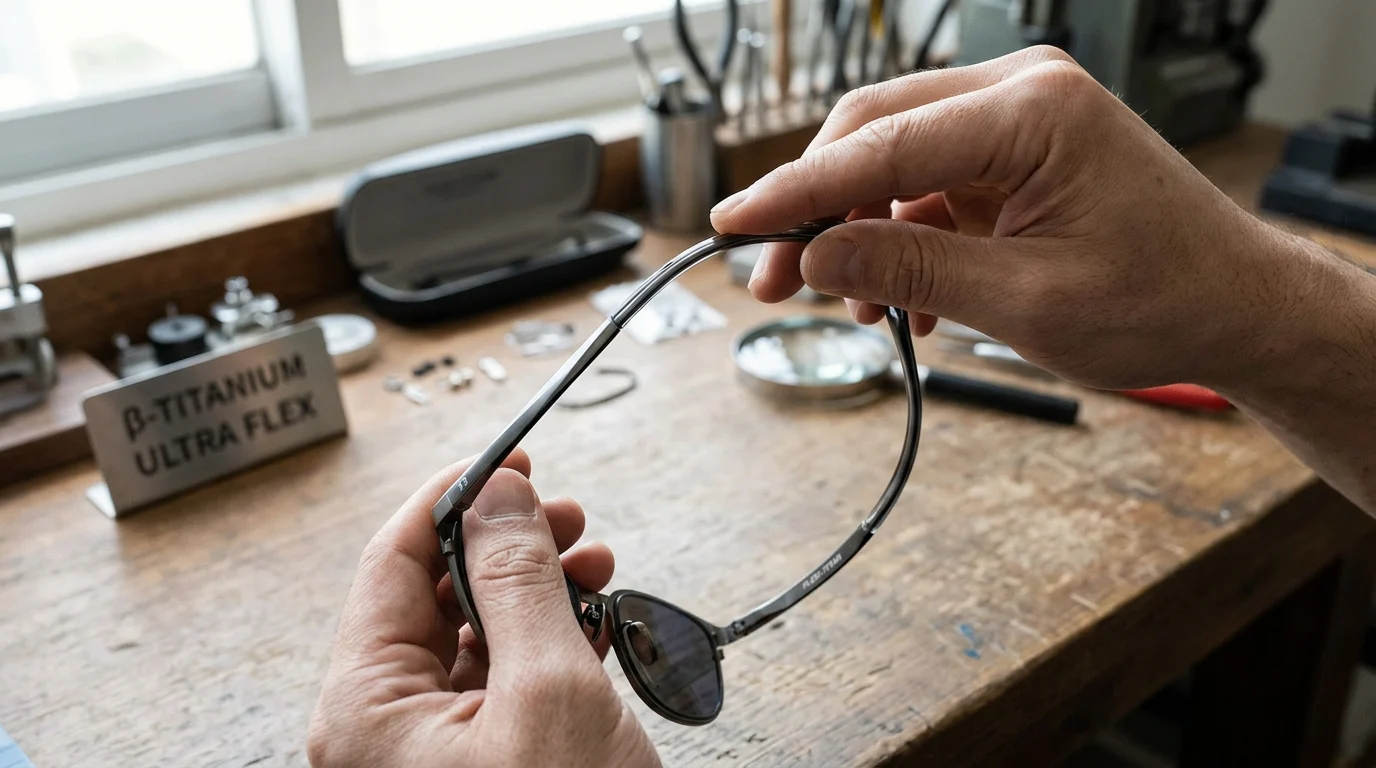
2. Beta Titanium
Beta titanium is an alloy created by adding small percentages of elements like aluminum and vanadium to pure titanium.
- Characteristics: This metallurgical alteration maintains the hypoallergenic and lightweight properties while introducing significant elasticity.
- Consideration: Beta titanium frames are highly flexible; the temples can bend outward slightly and return to their original shape without permanent deformation, offering a more forgiving fit.
3. Memory Titanium (Nickel-Titanium Alloy)
Often marketed as “shape memory” alloys (such as Nitinol or Flexon), these frames offer extreme flexibility and shape retention, capable of returning to their original form even after severe bending.
- Important Warning: It is critical to note that memory titanium is typically an alloy containing approximately 50% nickel. Individuals with nickel allergies or sensitive skin must avoid memory titanium to prevent adverse dermatological reactions.
Consumer Guidelines: Identifying Authentic Titanium
Because titanium is a premium material, misleading labeling occasionally occurs in budget markets. A common practice is utilizing titanium only for the temples, while manufacturing the front chassis from a cheaper, non-hypoallergenic alloy.
Here are two reliable methods to verify the material composition:
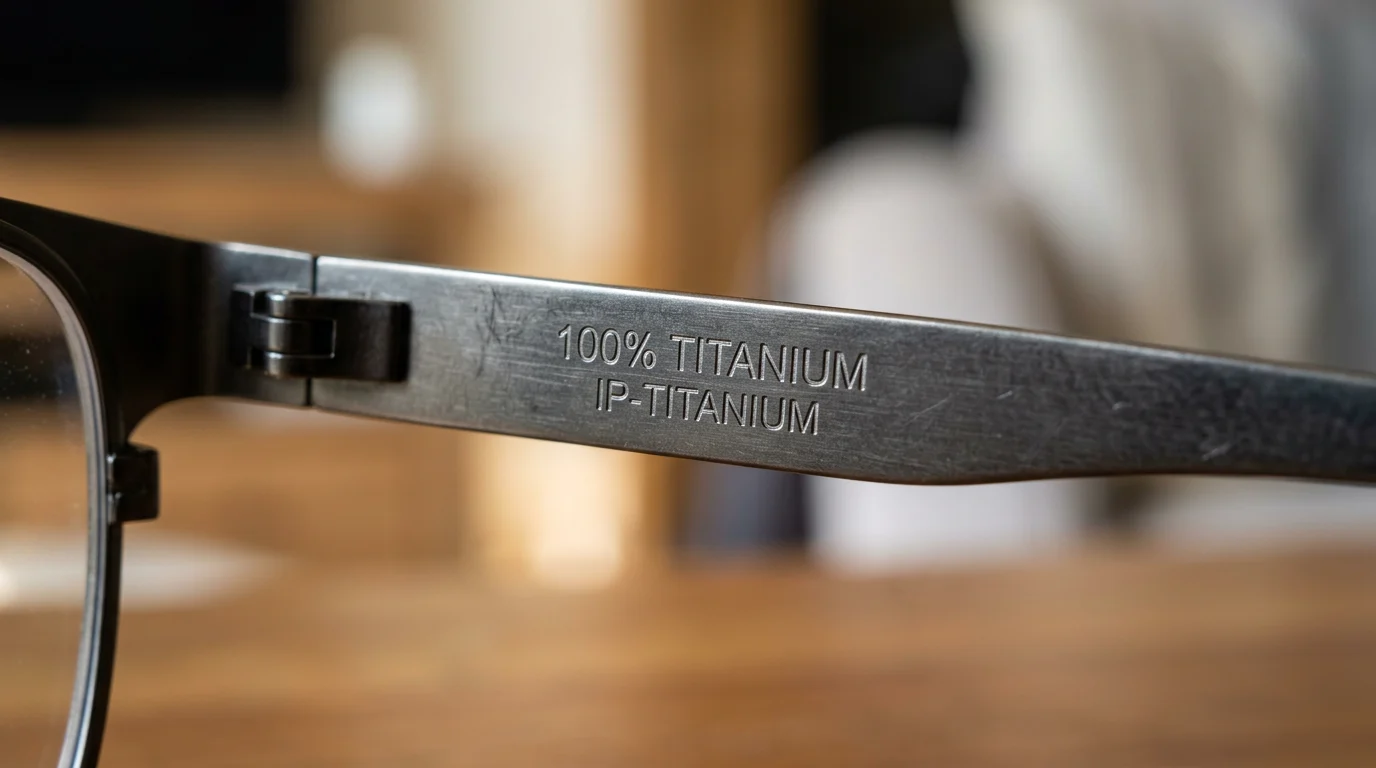
1. Manufacturer Markings
Verify the engravings on the inside of the temples or on the demo lenses. Reputable manufacturers explicitly state the material composition. Look for specific designations such as:
- “100% Titanium” or “Pure Titanium”
- “Beta Titanium” or “β-Titanium”
- “IP-Titanium” (indicating titanium with Ion Plating).
Exercise caution with budget frames simply labeled “Titanium Alloy,” as this may indicate a high concentration of non-titanium metals.
2. The Magnetic Property Test
Pure and Beta titanium are non-magnetic materials. If a strong magnet reacts to the main body of the frame, it indicates the presence of ferrous metals or nickel. (Note: Structural components like hinge cores and tiny screws are often made of steel to prevent stripping, and may exhibit slight magnetism. However, the primary frame chassis should not react to a magnet).

Summary and Recommendations
To conclude, titanium eyewear represents a significant functional upgrade, but it may not align with every consumer’s priorities.
Titanium frames are highly recommended for:
- Individuals with high prescriptions needing lightweight structural support to minimize pressure.
- Patients with a history of contact dermatitis or nickel allergies requiring biocompatible materials.
- Users seeking long-term durability and resistance to perspiration or environmental corrosion.
- Professionals preferring a minimalist, streamlined aesthetic.
Alternative materials (like acetate or standard steel) may be preferable for:
- Consumers seeking vibrant colors, thick profiles, or statement-making designs.
- Individuals who frequently change eyewear styles due to fast-moving fashion trends.
- Buyers prioritizing a lower initial price point over long-term material longevity.
Frequently Asked Questions (FAQs)
Q: Are titanium glasses functionally better than stainless steel?
A: Yes, in several key metrics. While stainless steel is durable, titanium is roughly 45% lighter, completely resistant to rust, and hypoallergenic. Stainless steel often contains traces of nickel which can trigger skin allergies, whereas pure titanium is biocompatible.
Q: Do titanium glasses break easily?
A: No, they are highly durable. They possess one of the highest strength-to-weight ratios of any optical metal. Beta titanium is also highly flexible. However, if subjected to extreme, crushing force, the metal can snap and will require specialized argon welding for repair.
Q: What is the proper way to clean titanium frames?
A: Because titanium does not rust or corrode, cleaning is straightforward. Rinse the frames under lukewarm water with a small drop of mild, lotion-free dish detergent. Gently clean the frames and lenses, rinse thoroughly, and dry with a clean microfiber optical cloth.