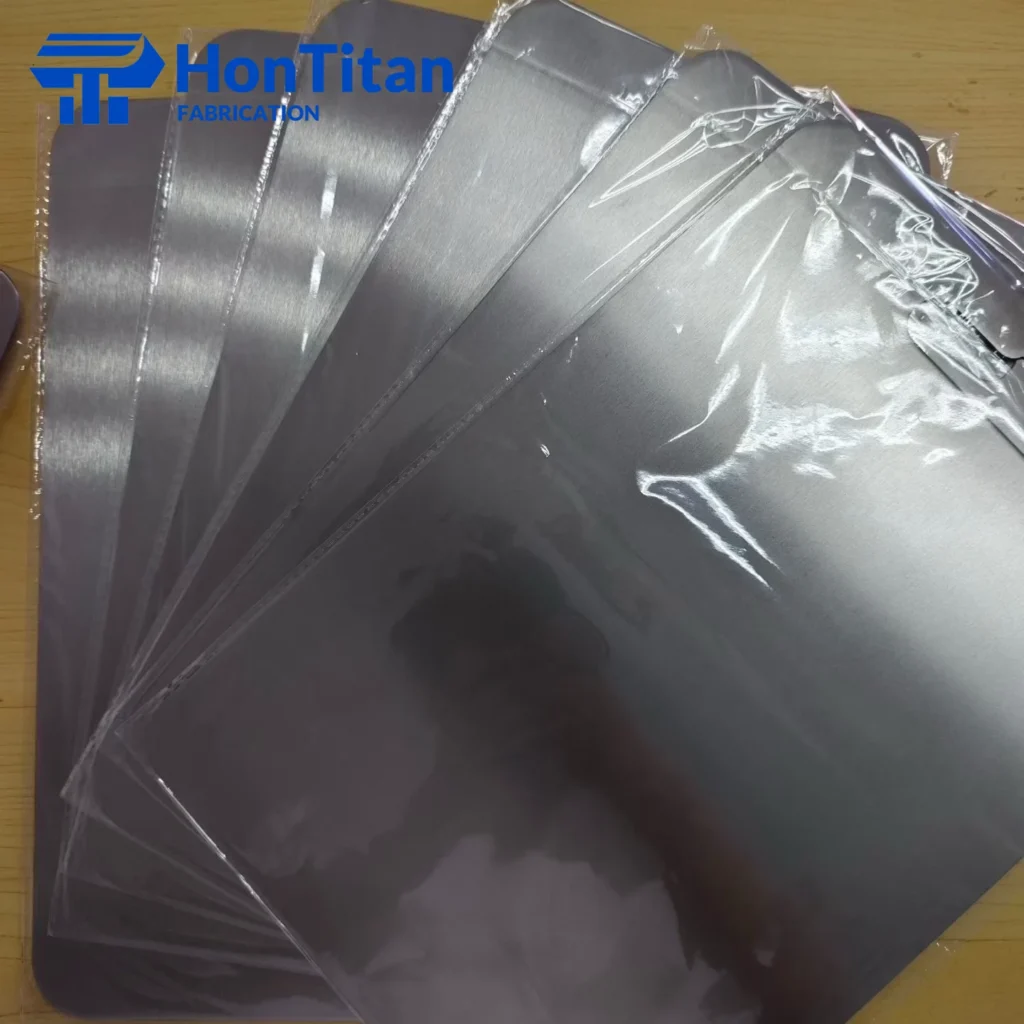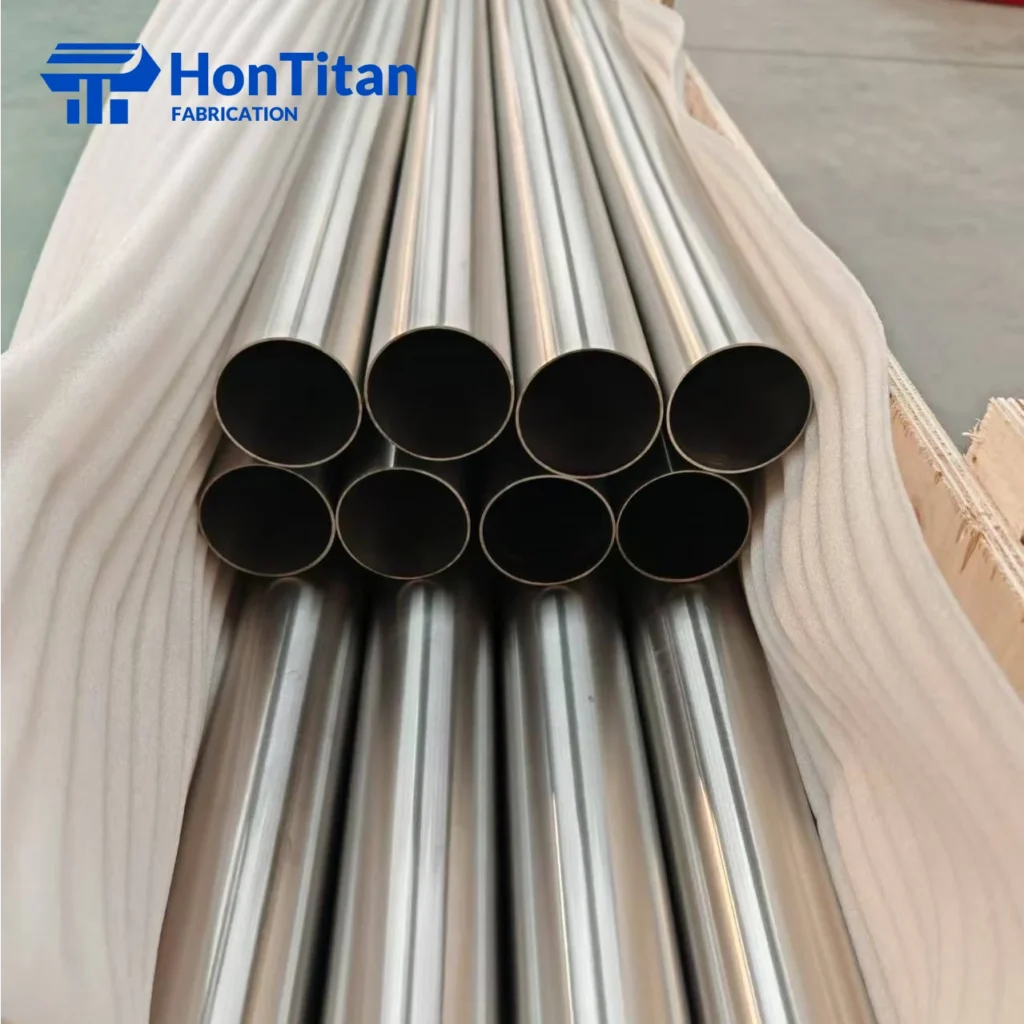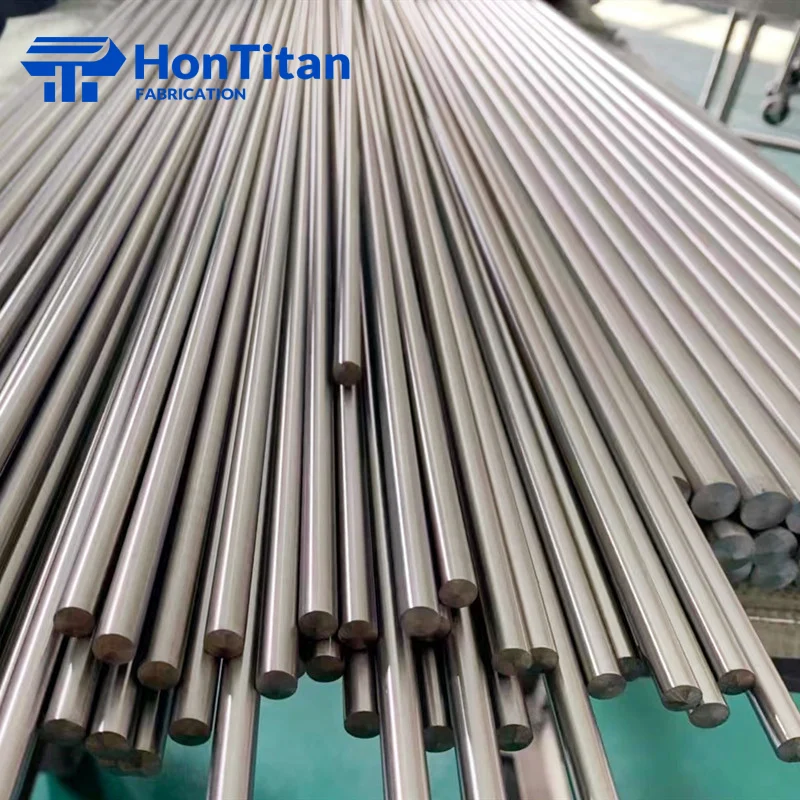
The density of pure titanium is approximately 4.506 g/cm³ (or 0.163 lbs/in³). To put this into practical terms: titanium is approximately 43% lighter than steel while delivering comparable strength. Conversely, while it is about 67% heavier than aluminum, it is more than twice as strong.
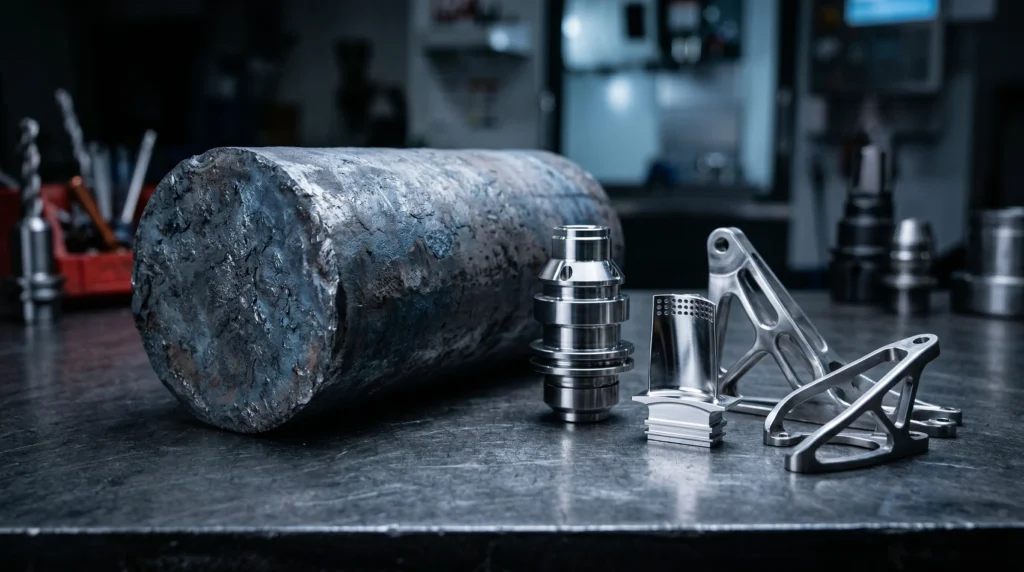
This exceptional physical property—striking the perfect balance between extreme durability and lightness—is exactly why titanium is the ultimate material of choice for aerospace components, high-end medical implants, and premium EDC (Everyday Carry) gear. However, titanium’s density isn’t just one universal number. Depending on the specific alloy grade you are working with, this value slightly shifts. Let’s dive into the exact measurements, see how titanium stacks up against other common manufacturing metals, and explore how to accurately calculate its weight for your next engineering project.
The Quick Answer: Titanium Density Across Different Units
Engineers, machinists, and procurement teams around the globe rely on different measurement systems depending on their location and the scope of their projects. Whether you are calculating the microscopic volume of a dental implant or the gross weight of a massive aerospace bulkhead, you need accurate data in the right format.
Here is the standard density of Commercially Pure (CP) titanium across the most common metric and imperial units:
- 4.506 g/cm³ (Grams per cubic centimeter) – Standard for lab testing and small part volume.
- 4,506 kg/m³ (Kilograms per cubic meter) – Standard for structural engineering calculations and large-scale material procurement.
- 0.163 lbs/in³ (Pounds per cubic inch) – Standard for North American manufacturing, CAD design, and CNC machining.
- 281.3 lbs/ft³ (Pounds per cubic foot) – Useful for bulk material logistics and shipping estimates.
Pro Tip for Quick Estimations: If you are out on the shop floor or in a meeting without a materials handbook, a helpful rule of thumb is to compare it to water. Since the density of water is exactly 1 g/cm³, you can easily remember that a solid block of titanium will be roughly four and a half times heavier than an identical volume of water.
Density by Titanium Grades: Pure Titanium vs. Alloys
When people use the word “titanium,” they are often referring to an entire family of metals rather than just the raw element. In industrial manufacturing, titanium is broadly categorized into Commercially Pure (CP) titanium and titanium alloys. It is important to note that when you blend titanium with other elements to enhance specific properties—like tensile strength or heat resistance—the overall density of the final material shifts slightly.
Let’s start with the baseline. Commercially Pure titanium, most commonly represented by Titanium Grade 2, sits at that standard density of 4.51 g/cm³. Because it is unalloyed, it doesn’t boast the highest strength in the titanium family, but it offers unparalleled corrosion resistance. This makes Grade 2 the go-to choice for chemical processing pipes, marine hardware, and heat exchangers where surviving harsh, corrosive environments is more critical than bearing massive structural loads.
Now, let’s look at the absolute workhorse of the industry: Titanium Grade 5 (Ti-6Al-4V). This specific alloy accounts for over 50% of total titanium usage globally. As its chemical designation suggests, it is alloyed with 6% aluminum and 4% vanadium. Because aluminum is a significantly lighter metal, blending it into the titanium matrix actually lowers the overall density of Grade 5 to approximately 4.43 g/cm³ (or 0.160 lbs/in³).
While a drop from 4.51 to 4.43 g/cm³ might seem like a negligible rounding error on paper, in engineering, it is a game-changer. When you are designing a commercial airliner or a space vehicle utilizing thousands of individual fasteners, brackets, and structural ribs, that tiny fractional difference in density translates to hundreds of pounds in total weight savings—and ultimately, massive improvements in fuel efficiency and payload capacity.
Material Comparison: Titanium vs. Steel vs. Aluminum
In the real world of product development and manufacturing, engineers rarely evaluate a material in a vacuum. Choosing the right metal is almost always a balancing act, and the decision usually comes down to a three-way showdown: titanium, steel, or aluminum. Absolute density is just one piece of the puzzle, but comparing these numbers provides a clear picture of why titanium commands such a premium.
Titanium vs. Steel Density
When it comes to heavy-duty applications, steel has been the undisputed king for over a century. Common stainless steels, such as 304 or 316, have a density of approximately 7.9 to 8.0 g/cm³.
When you compare this to titanium’s density of 4.51 g/cm³, the math is striking: titanium is approximately 43% lighter than steel.
The true magic, however, lies in the fact that certain titanium alloys can match or even exceed the ultimate tensile strength of high-grade steel. This is a massive advantage in industries where every ounce counts. For example, by swapping a stainless steel motorsport exhaust system for a titanium one, engineers can instantly cut the component’s weight in half without sacrificing any structural integrity or heat resistance.
Titanium vs. Aluminum Density
There is a common misconception among consumers that titanium is the lightest metal available. It is important to set the record straight: aluminum is absolutely lighter than titanium. A standard aluminum alloy, such as 6061, has a density of roughly 2.7 g/cm³. This makes titanium about 67% heavier than aluminum.
So, if aluminum is so much lighter, why do aerospace companies use heavier titanium for critical parts like landing gear or jet engine turbines? The answer comes down to performance under stress. Aluminum is a relatively soft metal that loses its strength rapidly at high temperatures and has a lower fatigue limit. Titanium, on the other hand, can endure extreme thermal stress and repeated mechanical loads without failing. In high-stakes environments, aluminum simply cannot survive, making titanium the only reliable lightweight option.
Beyond Density: The Magic of the Strength-to-Weight Ratio
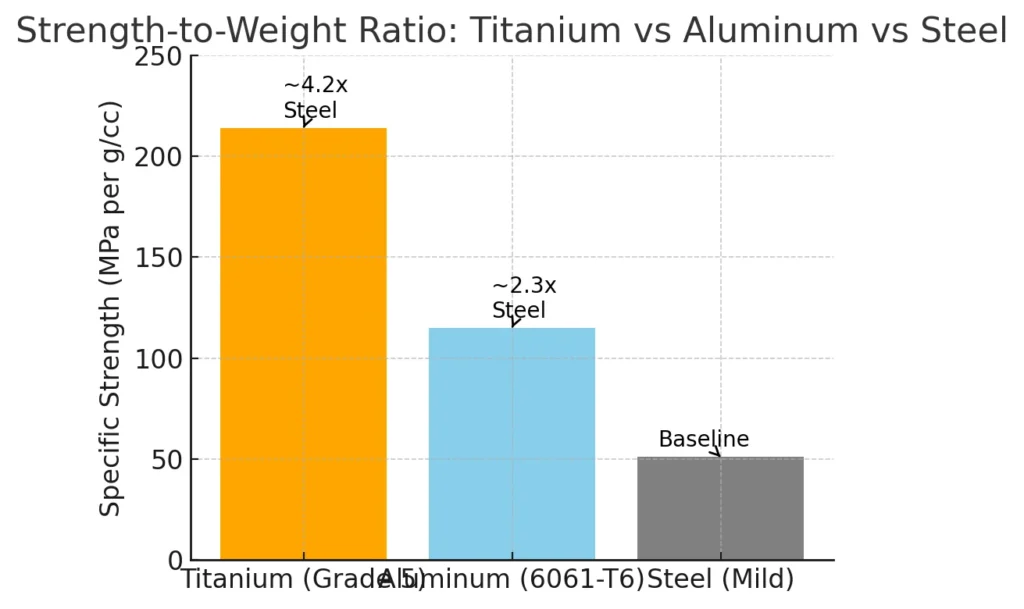
To truly understand why titanium is universally recognized as one of the premier lightweight metals for aerospace, we have to look beyond raw density and introduce a crucial engineering concept: the strength-to-weight ratio (also known as specific strength). When evaluating materials for high-performance applications, the question isn’t just “how much does it weigh?” The real question is “how much structural load can it carry per kilogram of material?”
Let’s look at a practical, real-world example to illustrate this. Imagine you are designing a structural bracket that must safely support a 1-ton tensile load.
If you choose to machine this bracket out of aluminum, you are working with a weaker material. To ensure it doesn’t break under the 1-ton load, you must design a thick, bulky bracket that requires a large volume of aluminum. Even though aluminum has a low density, that large volume means your final machined part might weigh 2 kilograms.
Now, if you manufacture that exact same bracket out of titanium, the rules change. Because titanium possesses exceptional yield and tensile strength, you can design a much thinner, smaller, and sleeker bracket to hold that identical 1-ton load. You are using a significantly smaller volume of material. Consequently, even though titanium’s material density is higher than aluminum’s, your final titanium bracket might only weigh 1 kilogram.
This is the ultimate advantage of the strength-to-weight ratio of metals. By allowing engineers to use less material to achieve the required strength, titanium enables the creation of end products that are simultaneously lighter, thinner, and vastly more durable than their aluminum or steel counterparts.
How to Calculate the Weight of Titanium Parts
Now that you understand the physical properties and the science behind titanium’s density, let’s move from theory to practical application. Whether you are estimating shipping logistics, calculating raw material costs, or preparing for a production run, knowing exactly how to calculate titanium weight based on your engineering drawings is a vital everyday skill.
While you can always use a dedicated online titanium weight calculator for complex geometries, doing the math manually for standard stock shapes like flat plates or sheets is incredibly straightforward. The fundamental principle is simply multiplying the physical volume of the part by the material’s density.
The Titanium Plate Weight Formula (Metric)
For a rectangular sheet or plate, you can use the following formula to find the final weight in kilograms using standard millimeter measurements:
Weight (kg) = [ Length (mm) × Width (mm) × Thickness (mm) × 4.51 ] ÷ 1,000,000
(Note: 4.51 represents the standard g/cm³ density of pure titanium. If you are using Grade 5, replace this with 4.43).
A Step-by-Step Calculation Example
Let’s say your procurement team needs to order a flat plate of Grade 2 Commercially Pure Titanium. The dimensions on your CAD drawing are 1000 mm long, 500 mm wide, and 10 mm thick. Here is how the math breaks down:
- Calculate the raw volume: 1000 mm × 500 mm × 10 mm = 5,000,000 mm³
- Convert volume to cubic centimeters: 5,000,000 mm³ ÷ 1,000 = 5,000 cm³
- Multiply by the titanium density: 5,000 cm³ × 4.51 g/cm³ = 22,550 grams
- Convert to final kilograms: 22,550 grams ÷ 1,000 = 22.55 kg
Using this simple, step-by-step method, you can quickly and confidently determine that your required titanium plate will weigh exactly 22.55 kilograms. You can then use this figure to accurately forecast your raw material budget.
Frequently Asked Questions (FAQs)
Is titanium the lightest metal?
No. While it is classified as a lightweight engineering metal, elements like magnesium and aluminum are significantly lighter in terms of absolute density. However, titanium remains the top choice in high-performance industries because it offers the highest strength-to-weight ratio of any natural metallic element.
Does titanium float in water?
No, solid titanium does not float. For a material to float, its density must be lower than that of water, which is exactly 1 g/cm³. With a density of approximately 4.51 g/cm³, titanium is four and a half times denser than water and will quickly sink.
Does Grade 5 titanium weigh less than pure Grade 2 titanium?
Yes, slightly. Titanium Grade 5 (Ti-6Al-4V) is alloyed with 6% aluminum, which is a much lighter metal. This addition brings the overall density of the alloy down to about 4.43 g/cm³, making it roughly 1.7% lighter than Commercially Pure Grade 2 titanium (which sits at 4.51 g/cm³).
Bring Your Next Titanium Project to Life
Understanding the precise density and weight of titanium is the crucial first step in any successful product design or manufacturing run. Now that you have crunched the numbers and calculated your exact material requirements, it is time to turn those engineering drawings into reality.
Whether you need an up-to-date quote on the current titanium price per kg for raw material procurement, or you are looking for highly specialized titanium CNC machining services to manufacture your complex components, our expert team is ready to assist.
Contact us today to request a custom quote or upload your 3D models, and let’s get your project off the ground!