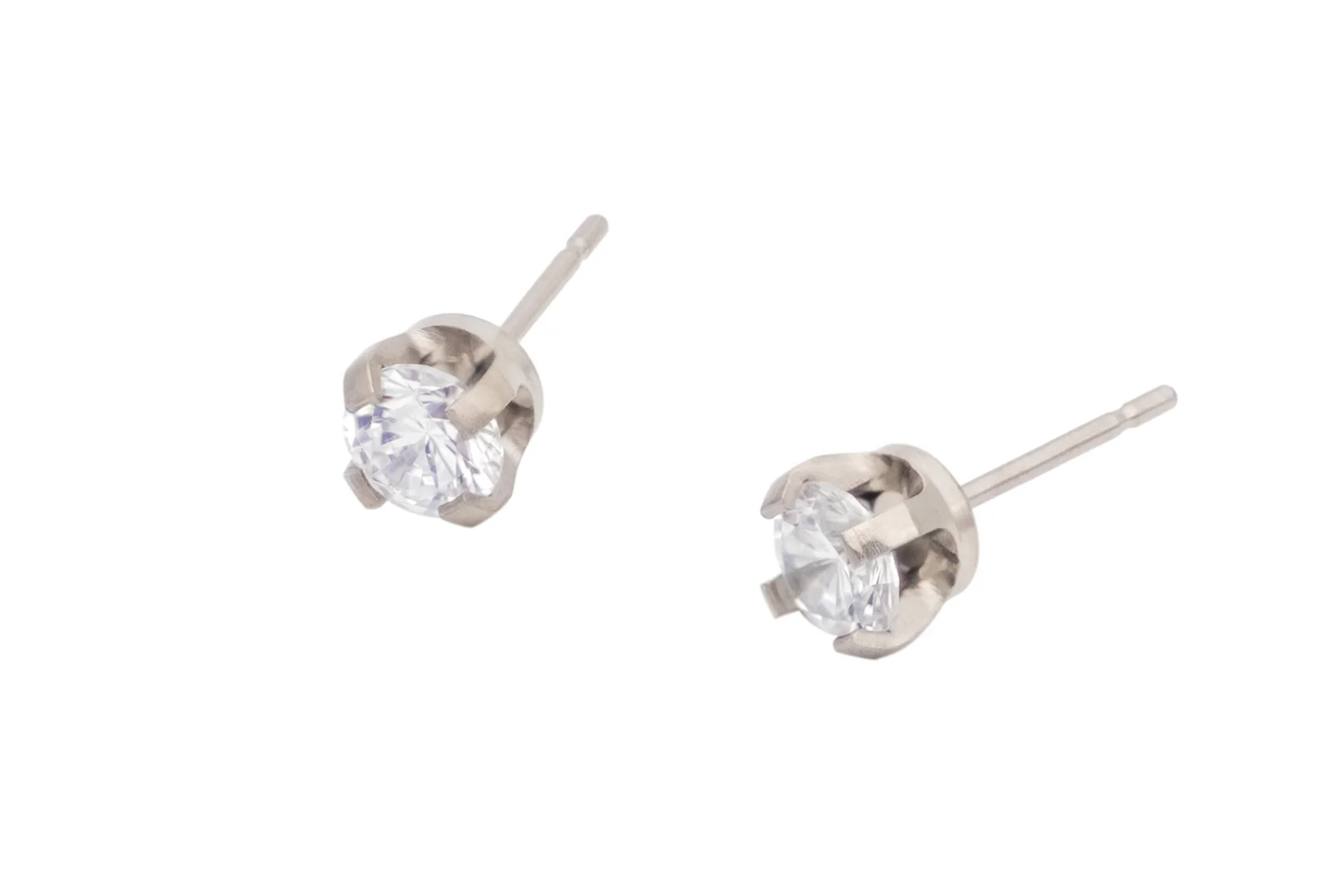
It starts with an impulse buy. You spot a cute pair of studs online, the seller swears they are “hypoallergenic,” and they look perfect in the photos. You wear them for a day, maybe two. But then comes the morning regret: you wake up to hot, throbbing earlobes, a little bit of crust, and that familiar, stinging pain.
You take them out, wait for your ears to heal, and tell yourself, “Maybe my ears just aren’t meant for jewelry.”
Stop blaming your ears. Your body isn’t broken; it’s just doing its job. It is trying to protect you from the junk metals hiding inside your “gold” or “silver” studs.
I spent years dealing with the endless cycle of infection and healing, wasting hundreds of dollars on earrings I could only tolerate for an hour. That cycle stopped the day I switched to Implant Grade Titanium. Not just “titanium”—the real stuff recommended by the Association of Professional Piercers.
This isn’t just another product list. This is a reality check on why your ears hurt, how to spot the fakes flooding the market, and why this dark grey metal is the only thing that belongs in a healing piercing.
Why Do Your Ears Itch? (The Trojan Horse)
Let’s get technical for a second, but I promise to keep it painless.
That itchiness you feel? That isn’t usually an infection. That is Allergic Contact Dermatitis. It’s your immune system launching a full-scale attack against a foreign invader.
The enemy is almost always Nickel.
Nickel is the “Trojan Horse” of the jewelry world. It’s a cheap, durable filler metal used to harden everything from costume jewelry to zippers. The problem? It acts like a toxin to sensitive bodies. According to the Mayo Clinic, nickel allergy is one of the most common causes of itchy skin, affecting a massive number of people worldwide.
“But I only wear Gold and Silver!”
Here is the uncomfortable truth: pure gold (24k) and pure silver are too soft to hold a shape. To make them wearable, jewelers mix them with other metals to create alloys like 14k Gold or Sterling Silver. Guess what they often use to make that alloy harder?
You guessed it. Nickel.
Even “Surgical Steel” (often marked as 316L) is a lie for many of us. It contains about 8-13% nickel trapped inside the alloy. For most people, that’s fine. But for the “super-sensitive” crowd—us—it’s enough to trigger a flare-up the moment your immune system senses it.
You need a metal that doesn’t just “hide” the nickel. You need a metal that simply doesn’t care about reacting with your body.
The “Implant Grade” Lie: G23 vs. ASTM F136
This is the part where most people get scammed.
You go to an online marketplace, search “Titanium Earrings,” and see a pack of 5 pairs for $12. You buy them, wear them, and… itch. You think, “Well, I guess I’m allergic to titanium too.”
Wrong. You probably just bought Industrial Titanium.
In the world of metallurgy, titanium isn’t just titanium. It comes in grades, like beef. The two you will see most often are Grade 23 (G23) and ASTM F136. They look identical to the naked eye, but under a microscope, they are worlds apart.
- Grade 23 (The “Good Enough” Standard): This is widely used in aerospace and industrial components. It’s strong, light, and cheap. For 90% of people with fully healed earlobes, G23 is passable. However, standards for G23 allow for slightly more impurities and a rougher surface finish. For a raw, unhealed wound, “good enough” often isn’t enough.
- ASTM F136 (The Gold Standard): This is the game-changer. The “F” stands for Medical efficacy. This specific alloy specification by ASTM International was created for surgical implants—bone screws, pacemakers, and hip replacements. It is refined to eliminate microscopic impurities that could irritate the body.
The Bottom Line: If a seller just says “Titanium” or “Surgical Titanium” without listing a specific grade, run away. It’s likely cheap industrial metal. Always look for “ASTM F136” or “Implant Grade” in the description.
Titanium vs. The World: A Reality Check
So, is titanium always the best choice? Honestly, it depends on what you value more: your health, your wallet, or the “bling” factor.
Let’s break down how titanium stacks up against the other big three metals in your jewelry box.
1. Titanium vs. Surgical Steel (316L)
Think of this as the Featherweight vs. the Heavyweight.
- The Nickel Factor: Surgical steel relies on a polish to keep its nickel content (8-13%) from touching your skin. If that polish scratches? Hello, reaction. Titanium is 100% nickel-free by nature.
- The Weight Test: Titanium is about 45% lighter than steel. If you are wearing chunky hoops or have a healing piercing, steel drags the wound down, slowing healing. Titanium feels like wearing nothing at all.
- The Winner: Titanium (hands down for comfort and safety).
2. Titanium vs. Sterling Silver (925)
- The Lazy Factor: Silver is high-maintenance. It oxidizes, turns black (tarnish), and needs constant polishing. Worse, tarnish is actually a chemical reaction that can stain your skin green and irritate your piercing.
- Durability: Titanium is an inert metal. It does not rust, it does not tarnish, and it does not care if you wear it in the shower, the ocean, or a sweaty gym session.
- The Winner: Titanium (for the “set it and forget it” lifestyle).
3. Titanium vs. White Gold (14k/18k)
- The “Look” (Important!): This is the one area where titanium has a “flaw.” White Gold is bright, shiny, and pale—often because it’s plated with Rhodium.
- The Reality: Titanium is naturally darker. It has a deep, gunmetal grey tone. It looks cool, modern, and edgy, but it does not look like bright silver.
- The Winner: Tie. Choose Gold for sparkle/tradition; choose Titanium for health/durability.
The “Anodizing” Myth & The Comfort Revolution
One of the coolest things about titanium is that it comes in a rainbow of colors—Electric Blue, Blurple, Rose Gold, even Rainbow. But when people see these colors, their first reaction is often fear: “Is that paint? Is it toxic?”
The Answer: No. It is science, not dye. The process is called Anodizing. It works like a soap bubble. There is no pigment in a bubble; it’s just the way light hits the surface film. Anodized titanium is just as safe and hypoallergenic as the raw grey metal. There is nothing to chip or flake off into your ear.
The Real Game Changer: Flat Backs & The “Bend”
If you are still wearing traditional earrings with those sharp butterfly backs that stab you while you sleep, stop. High-end titanium usually comes as a Flat Back Labret (a smooth disc behind the ear) with a Threadless (Push-Pin) top.
⚠️ The Secret “Bend” Trick: Most people buy these, stick the pin in, and panic when it falls out. They think it’s broken. It’s not. The system relies on tension. You have to bend the pin slightly before pushing it in. That tiny bend creates friction, locking the jewelry inside the post.
How to Spot Fake Titanium (The 3-Step Home Test)
You don’t need a science lab to check if you’ve been ripped off. Here are three quick tests you can do right now.
- The Magnet Test: Titanium is non-magnetic. Take a strong fridge magnet and touch it to the earring. If it sticks? It’s steel. If it doesn’t react, it’s a good sign.
- The Color Test: Compare your earring to a piece of aluminum foil. Steel and aluminum are bright white. Titanium should look darker, like a pencil lead. If it’s super shiny and white, be suspicious.
- The Weight Test: Hold a steel earring in one hand and your titanium one in the other. The titanium one should feel almost “plastic-like” in its lightness. This lightness is exactly what helps your piercings heal faster.
Conclusion: Your Ears Deserve Peace
Investing in a pair of ASTM F136 Titanium earrings isn’t just about fashion; it’s about buying peace of mind. It’s about waking up without crusty ears. It’s about taking a shower without worrying about your jewelry turning green.
Check your jewelry box today. If it’s heavy, shiny, and makes you itch, toss it. Your ears will thank you.