Every machinist knows that sinking feeling. You are deep into a complex part, the spindle is humming, and then—SNAP. Silence, or worse, the sound of carbide crunching against metal.
When it comes to CNC machining titanium, this isn’t just a minor annoyance; it is a costly disaster. Titanium raw material is expensive, and a catastrophic tool failure often means scrapping a high-value workpiece along with the cutter. It is a scenario that kills profit margins and delays production schedules.
Why is Titanium a Machinist’s Nightmare?
Before we fix the problem, we need to understand the enemy. Why exactly does machining titanium chew up tools so quickly? It is not just about hardness; it is about heat.
Titanium has notoriously low thermal conductivity. Unlike steel or aluminum, where the chips carry away the majority of the heat, titanium acts as a heat barrier. This means about 80% of the cutting heat is trapped at the cutting edge rather than being evacuated with the chip.
Combine this with titanium’s high chemical reactivity (it wants to weld itself to your cutter) and its tendency to work-harden instantly, and you have a perfect storm for rapid tool failure.
The good news? Taming this metal doesn’t require luck. It requires a shift in strategy. By respecting the material’s properties and following a few golden rules, you can process titanium efficiently and reliably. Here are five essential tips to keep your spindle running and your tools intact.
Tip 1: Master Your Titanium Speeds and Feeds
If there is one mantra you must memorize when working with this material, it is this: Low RPM, High Feed.
The most common mistake machinists make is running their spindle too fast. Remember, heat is your enemy. High surface footage generates excessive heat that titanium simply won’t accept. However, you cannot compensate by babying the feed rate. If you feed too slowly, the tool will rub against the material rather than cutting it. This rubbing generates friction and heat, causing the material to work-harden instantly. Once the surface hardens, your tool’s next pass is doomed.
You need to maintain a heavy enough chip load to get the heat into the chip and away from the workpiece.
💡 Real-World Case Study: The 470 vs. 250 SFM Rule
The importance of slowing down was perfectly illustrated in a case involving high-end knife manufacturing. A machinist (documented by Grimsmo Knives) struggled with rapid insert failure when facing titanium. They were initially running at 470 SFM, treating the material too much like steel. The inserts were burning out almost instantly.
By simply dialing the speed back to 250 SFM—nearly a 50% reduction—the tool life extended dramatically without sacrificing surface finish. This validates the golden rule: with titanium speeds and feeds, speed kills, but feed heals.
Recommended Starting Parameters for Ti-6Al-4V (Grade 5)
While every machine setup is different, use these conservative values as a baseline to prevent immediate tool breakage:
| Tool Material | Operation | Recommended Speed (SFM) | Note |
|---|---|---|---|
| Carbide End Mill | Roughing | 150 – 200 SFM | Maintain heavy radial engagement to utilize chip thinning. |
| Carbide End Mill | Finishing | 200 – 300 SFM | Use light radial cuts (3-5% of diameter). |
| HSS / Cobalt | Drilling | 30 – 50 SFM | Peck drilling is recommended to clear chips and reduce heat. |
Note: Always verify recommendations against your specific tool manufacturer’s data, but when in doubt, start at the lower end of the SFM range.
Tip 2: Strategic Tooling Selection for Milling
When milling titanium, your choice of end mill can make or break the job. Since we established in Tip 1 that you must run at a lower RPM, you risk losing productivity. To regain that lost Material Removal Rate (MRR), you should opt for tools with a higher flute count.
While a 3-flute cutter is great for aluminum, titanium demands a 5, 6, or even 7-flute end mill. More cutting edges allow you to maintain a higher chip load per revolution (IPM) even at lower spindle speeds.
However, more flutes can sometimes lead to resonance issues. This is where Variable Helix technology becomes critical. In our workshop, we noticed that standard end mills often induce a “scream” or chatter when cutting Grade 5 titanium. Chatter is the prelude to a chipped edge. Switching to end mills with unequal flute spacing or variable helix angles breaks these harmonic frequencies. This simple change stabilizes the cut, allowing for smoother surface finishes and significantly longer tool life.
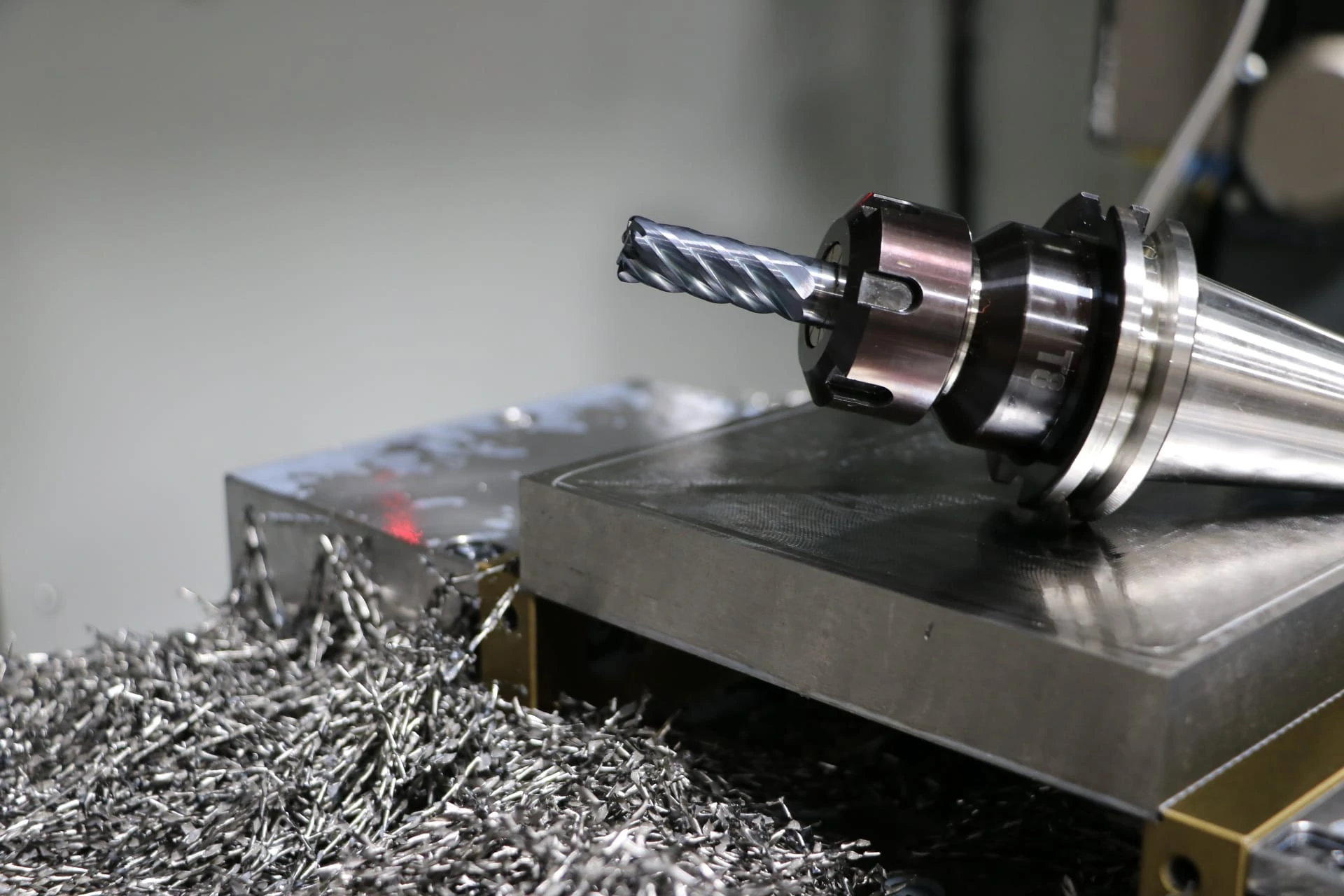
A Note on Coatings: Never use uncoated or “bright” tools intended for aluminum. Titanium requires heat-resistant coatings. Look for AlTiN (Aluminum Titanium Nitride) or TiAlN coatings. These dark, violet-colored coatings create a thermal barrier that protects the carbide substrate from the intense heat generated during the cut.
Tip 3: Optimize Tool Paths with Dynamic Milling
Brute force does not work with titanium; finesse does. Traditional offset milling—where the tool engages heavy corners—causes spikes in tool pressure and heat, leading to instant failure.
Instead, you must embrace Dynamic Milling (also known as HEM or Trochoidal Milling). This strategy involves a small radial depth of cut (step-over) paired with a high axial depth.
Many machinists are initially afraid to push feed rates in titanium, but practical testing proves that speed is possible if the engagement angle is low. We have observed successful roughing operations running at an aggressive 250 IPM (Inches Per Minute) by adhering to a strict 10-15% radial step-over.
Why does this work? It utilizes Radial Chip Thinning. By taking a thinner slice, the chip absorbs the heat and evacuates it away from the part. If you keep that radial engagement low, you can run surprisingly fast without thermal buildup.
The “No Plunge” Rule: Finally, pay close attention to how your tool enters the material. Titanium does not forgive plunging (moving straight down in Z). The shock is too great for the tool tip. Always program a Helical Ramp or Arc-in entry. This eases the tool into the cut, distributing the initial cutting forces gradually and preserving your cutter’s sharp corners.
Tip 4: Conquer the Challenges of Turning
Turning titanium requires a shift in mindset regarding tool geometry. While you might get away with negative rake inserts on steel to prolong edge life, titanium demands a sharp, positive rake angle. The goal is to “shear” the metal cleanly rather than pushing it. A blunt edge builds up pressure, generates excess heat, and leads to the dreaded Built-Up Edge (BUE), where the material chemically welds itself to the insert.
Chip control is another major hurdle. Titanium produces long, stringy chips that can easily wrap around the chuck or the part, damaging the surface finish. While using inserts with aggressive chip breakers helps, the way you program the cut matters even more.
💡 Pro Tip from the Floor: The “Dwell” Disaster
We learned a hard lesson about this during a project involving Grade 5 titanium spacers. During a grooving operation, the tool hesitated for a split second at the bottom of the groove before retracting—a command known as a “dwell.” That momentary pause was disastrous.
The friction caused the titanium to work-harden instantly. When the tool tried to engage again, it screamed and chipped immediately. The lesson? Keep the tool moving. If you need to pause, retract the tool completely off the material surface first.
Additionally, because titanium has a lower modulus of elasticity (it is “springy”), it tends to deflect away from the cutter. When turning long parts, always use a live center to maintain rigidity and prevent the vibration that leads to tool failure.
Tip 5: Coolant Strategy – Pressure and Consistency
Heat is the arch-nemesis of titanium machining, but how you apply coolant matters just as much as using it. Because titanium chips don’t carry heat away, your coolant must do the heavy lifting.
For most operations, High-Pressure Coolant (HPC) is a game-changer. Standard flood coolant often boils away before it even touches the cutting edge, creating a “vapor barrier” that blocks cooling. High pressure (ideally 1,000 PSI or more) punches through this steam, blasting chips out of the flutes and delivering fluid directly to the cut zone. This prevents “recutting chips,” which is a common cause of broken inserts.
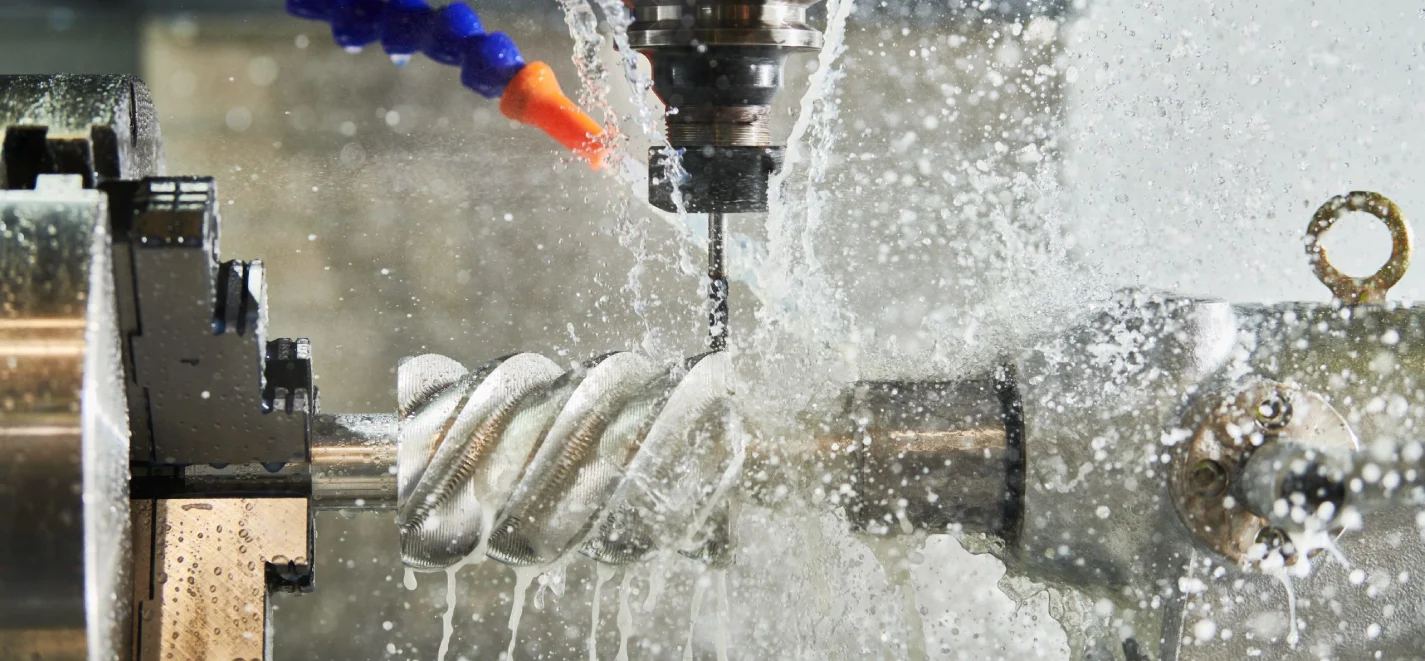
However, consistency is key. We have seen machinists ruin perfectly good carbide end mills by using manual coolant lines that splash intermittently. This causes Thermal Shock—the rapid heating and cooling of the tool. The carbide expands and contracts violently, causing micro-cracks to form on the cutting edge. Eventually, the edge crumbles.
The Rule: It’s all or nothing. Flood the zone completely to keep temperatures stable.
Quick Troubleshooting Guide: The “Doctor’s Chart”
Running into issues? Use this chart to diagnose the symptoms before you break another tool.
| Symptom | Likely Cause | Immediate Solution |
|---|---|---|
| Built-Up Edge (BUE)(Material welding to tool) | Cutting speed too low or chemical reaction. | Increase RPM slightly; check coolant concentration; use sharper positive inserts. |
| Chipping at Edge*(Small pieces breaking off)* | Vibration or lack of rigidity. | Reduce feed rate; check runout; ensure tool overhang is minimal. |
| Rapid Flank Wear*(Smooth wear on side)* | Cutting speed (SFM) is too high. | STOP immediately.Reduce Surface Footage (SFM). |
| Screeching Sound | Harmonic vibration (Chatter). | Change to variable helix end mill; check workholding rigidity. |
FAQ: Common Questions About Machining Titanium
Why is titanium so difficult to machine?
It has low thermal conductivity (heat stays in the tool) and high chemical reactivity (it sticks to the cutter). It also has a low modulus of elasticity, meaning it is “springy” and likes to push away from the tool, causing chatter.
What is the best surface speed (SFM) for titanium?
There is no single number, but for Ti-6Al-4V, a safe starting range for carbide tools is 150 – 250 SFM. Remember: Speed kills tool life; feed rate (chip load) is generally safer to increase.
Should I machine titanium dry or wet?
Almost always Wet. Titanium powder and fine chips are highly flammable. Using copious coolant suppresses the risk of fire and manages the intense heat. Only specific high-speed milling strategies with specialized coatings should consider dry/air-blast techniques.
Is titanium harder to machine than stainless steel (e.g., 304)?
Yes. While some stainless steels are harder, titanium is more abrasive and “gummy.” The window for error in titanium is much smaller—if you run slightly too fast in stainless, you might shorten tool life; in titanium, you will destroy the tool instantly.
Conclusion
Machining titanium doesn’t have to be a gamble. While the material’s reputation for destroying tools is well-earned, it is not invincible. The secret lies in respecting its thermal properties and resisting the urge to run it like aluminum or steel.
By mastering the “Low RPM, High Feed” rule, investing in variable helix tooling, utilizing dynamic tool paths, and maintaining rigorous coolant discipline, you can turn this “nightmare” metal into high-precision, profitable parts. It is about patience with your spindle speed, but aggression with your feed rate.
Ready to Eliminate the Risk?
Even with the best tips, CNC machining titanium remains a high-stakes game. One small error can lead to scrapped parts, broken tools, and missed deadlines.
If you prefer to skip the headache and ensure your components are manufactured to the highest standards, let us handle the heavy lifting. Our expert team specializes in Titanium CNC Machining Services, utilizing the latest dynamic milling strategies and high-end tooling to deliver flawless parts every time.