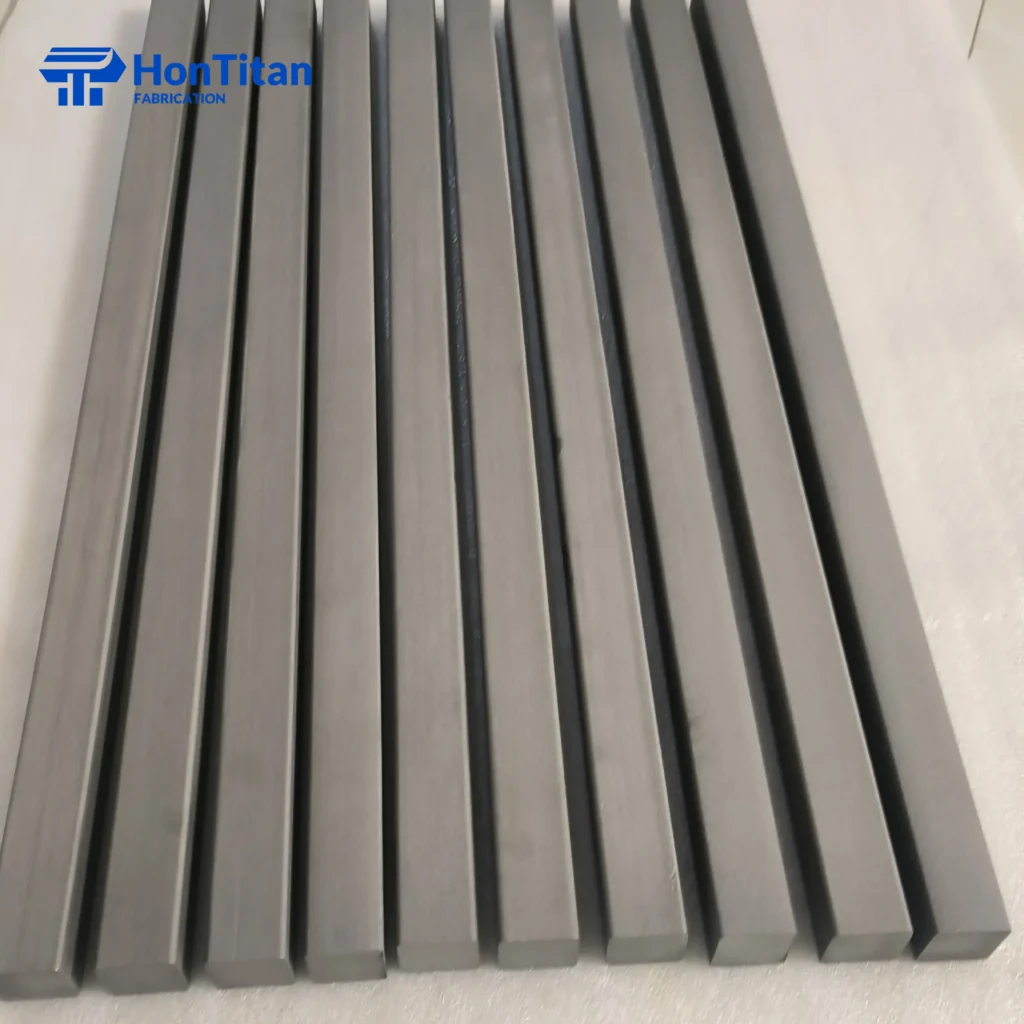
From the SR-71 Blackbird slicing through the stratosphere to the sleek chassis of the latest flagship smartphones, titanium has cemented its reputation as the ultimate “Space Age” metal. But what exactly makes this element number 22 so special?
When engineers, medical professionals, and product designers look for the perfect balance of strength, lightness, and durability, the properties of titanium make it the undisputed choice. Although titanium ores—such as rutile and ilmenite—are surprisingly abundant in the Earth’s crust, unlocking the pure metal requires complex and energy-intensive engineering.
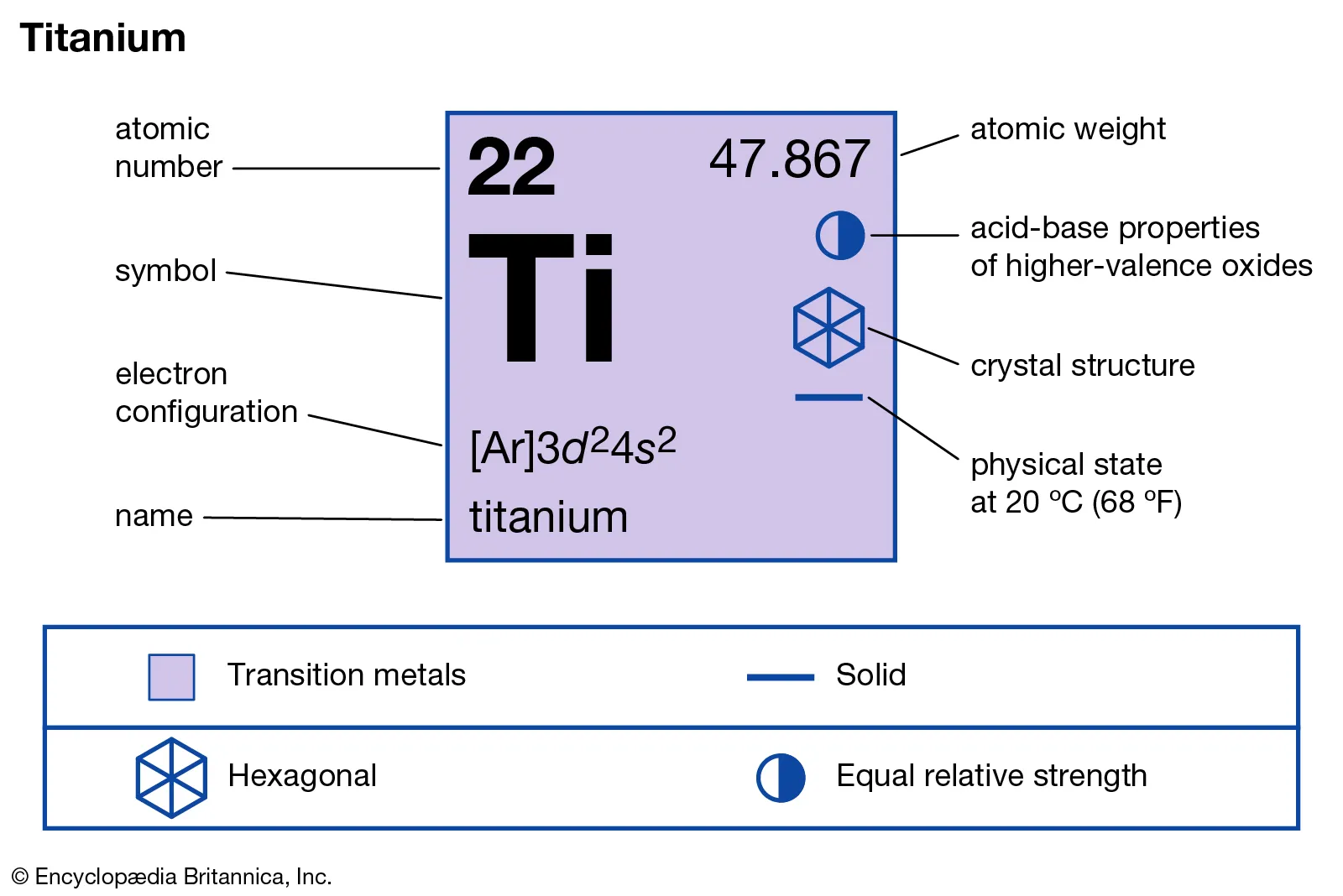
This guide breaks down the core characteristics that make titanium one of the most highly sought-after materials in both industrial and clinical engineering.
Titanium Quick Facts
A quick glance at the fundamental metrics of this transition metal (based on standard Commercially Pure Grade 2):
| Property | Value |
|---|---|
| Atomic Number | 22 (Symbol: Ti) |
| Density | 4.506 g/cm³ (at 20 °C) |
| Melting Point | 1,668 °C (3,034 °F) |
| Boiling Point | 3,287 °C (5,949 °F) |
Physical and Mechanical Properties
The physical metrics of titanium are what initially drove its adoption in the mid-20th century. It bridges the gap between heavy, high-strength metals and ultra-light, lower-strength materials.
High Strength-to-Weight Ratio
The most celebrated attribute of titanium is its exceptional strength-to-weight ratio. To put it simply: specific grades of titanium are as strong as high-strength steel, but roughly 45% lighter. Conversely, it is about 60% heavier than aluminum, but boasts more than twice the strength.
For context in engineering practice, Grade 5 titanium (Ti-6Al-4V) typically exhibits a yield strength of 880–950 MPa. This is comparable to quenched and tempered alloy steels (such as 4140 steel) used in heavy machinery, but it achieves this at a fraction of the mass. This specific mechanical property is why aerospace engineers rely heavily on titanium alloys for structural airframe components subjected to high fatigue.
Comparison Table: Titanium vs. Steel vs. Aluminum at Room Temperature*(Note: Values represent common commercial grades in their standard annealed/tempered states)*
| Material | Density (g/cm³) | Yield Strength (MPa) | Weight Profile |
|---|---|---|---|
| Grade 5 Titanium (Ti-6Al-4V) | 4.43 | ~880 – 950 | Medium |
| 4140 Alloy Steel (Q&T) | 7.85 | ~650 – 950+ | Heavy |
| 6061-T6 Aluminum | 2.70 | ~276 | Light |
High Melting Point and Thermal Stability
While common aluminum alloys (like 6061 or 7075) begin to lose their structural integrity and suffer from creep at temperatures as low as 150 °C to 200 °C, titanium remains remarkably stable in extreme heat. Thanks to its high melting point of 1,668 °C, titanium components maintain useful mechanical strength up to roughly 500 °C to 600 °C (depending on the alloy). This thermal stability is crucial for jet engine compressor blades and motorsport exhaust systems.
Low Thermal Conductivity and Non-Magnetic Nature
Unlike copper or aluminum, titanium is a poor conductor of heat. While this makes it notoriously difficult to machine—because heat builds up on the cutting tool rather than dissipating through the metal chip—it is excellent for applications requiring thermal insulation.
Furthermore, titanium is paramagnetic, meaning its interaction with magnetic fields is extraordinarily weak. This specific property is a game-changer in the medical field, but requires strict clinical distinction:
- Solid Orthopedic Implants: Patients with solid titanium bone plates, screws, or joint replacements can generally undergo MRI (Magnetic Resonance Imaging) scans safely without the risk of implant displacement or significant heating.
- Active Medical Devices (Safety Caveat): It is a dangerous misconception that all titanium medical devices are MRI-safe. While a pacemaker’s outer casing may be made of biocompatible titanium, the device contains internal electronics, magnetic switches, and batteries that are highly sensitive to strong magnetic fields. Patients with pacemakers or neurostimulators must rely on the device’s specific “MRI Conditional” rating provided by the manufacturer, rather than assuming safety based solely on the casing material.
Chemical Properties
While the mechanical properties of titanium dictate how much weight it can support, its chemical properties dictate how long it can survive in the harshest environments on Earth—and inside the human body.
Corrosion Resistance
If you leave a piece of steel in the ocean, it will inevitably rust. If you leave a piece of titanium in the ocean for a decade, it will show virtually a zero corrosion rate. The secret lies in a phenomenon called the passivating oxide film.
The moment pure titanium is exposed to air or moisture, it reacts instantaneously with oxygen to form an incredibly dense, invisible layer of titanium dioxide (TiO2) on its surface (typically 1–2 nanometers thick initially). This film is tenacious. Even if the metal is scratched or mechanically damaged, the oxide layer will instantly reform and “heal” itself, provided there is a trace of oxygen or water present.
In engineering practice, this means titanium boasts outstanding immunity to:
- Seawater and Chloride Environments: It resists pitting and crevice corrosion in seawater at temperatures up to 260°C (500°F), making it the premier choice for desalination plants and submarine ball valves.
- Harsh Chemicals: Allowing it to endure aggressive environments (such as wet chlorine gas and nitric acid) in chemical processing facilities without degrading.
Biocompatibility and Osseointegration
When a foreign object is introduced into the human body, the immune system typically attacks it or forms fibrous scar tissue around it. Titanium is one of the rare exceptions. It is inherently non-toxic and features supreme biocompatibility.
The human body does not recognize the titanium dioxide surface layer as a threat. In fact, human bone tissue actually embraces it through a biological process known as osseointegration. Bone cells (osteoblasts) will attach directly to the roughened microscopic surface of a titanium implant and grow into it, permanently fusing the metal with the living skeleton.
In clinical practice, orthopedic and dental surgeons specifically rely on Extra Low Interstitial grades, such as Ti-6Al-4V ELI (ASTM F136). This specific grade strictly limits oxygen and iron content to maximize ductility and fracture toughness within the dynamic environment of the human body.
Commercially Pure Titanium vs. Titanium Alloys
A common misconception among consumers is that all titanium products are made of the exact same material. Engineers categorize the metal into different grades based on specific industry standards (e.g., ASTM International):
- Commercially Pure Titanium (CP Ti – e.g., ASTM Grades 1 to 4): CP Ti is unalloyed. While it has a lower tensile strength compared to its alloyed cousins (Grade 1 yields around 170 MPa), it offers the absolute highest level of corrosion resistance and excellent cold formability. You will typically find CP Ti in heat exchangers and chemical processing tanks where chemical resistance outweighs structural load demands.
- Titanium Alloys (The “Workhorses” – e.g., Grade 5 / Ti-6Al-4V): When extreme structural strength is required, engineers turn to titanium alloys. The most widely used grade in the world is Ti-6Al-4V (Grade 5), alloyed with 6% aluminum and 4% vanadium. This precise mixture dramatically increases the metal’s yield strength and fatigue limits while maintaining its lightweight nature. Grade 5 is the backbone of aerospace fasteners and high-end consumer tech.
Production Costs and Machining Challenges
If the properties of titanium are so spectacular, why haven’t we replaced all the steel and aluminum in mass-market vehicles? The answer comes down to two massive hurdles: the complexity of extraction and the difficulty of machining.
The Kroll Process and High Production Costs
Titanium is the ninth most abundant element in the Earth’s crust. There is no shortage of titanium ore. The bottleneck is the refining process.
Unlike iron, which can be easily smelted from ore in a blast furnace, titanium binds fiercely with oxygen. To separate it, the industry relies on the incredibly energy-intensive Kroll process.
This multi-step chemical procedure involves treating the ore with chlorine gas and carbon at blazing temperatures, then reducing it with liquid magnesium or sodium in an argon atmosphere. The end result is a porous form of the metal known as titanium sponge, which must then be vacuum-arc melted. This slow, expensive batch process is the primary reason why titanium costs significantly more than steel.
Machining and Fabrication Difficulties
Working with titanium is a formidable engineering challenge:
- Tool Wear: Due to its low thermal conductivity, heat generated during CNC machining does not dissipate through the metal chips. Instead, heat concentrates directly on the cutting edge, causing expensive carbide end mills to wear out, gall, or plastically deform rapidly.
- Reactivity at High Temperatures: During welding or high-speed machining, titanium becomes highly reactive and will readily absorb oxygen and nitrogen from the atmosphere, leading to severe embrittlement. Therefore, welding titanium requires specialized techniques, such as trailing shields and strict inert gas (usually ultra-pure argon) purging.
Key Applications of Titanium
Despite the high manufacturing costs, the unparalleled properties of titanium make it an absolute necessity in mission-critical industries.
Aerospace and Military
Every pound saved on an aircraft translates to massive fuel savings over its lifespan. You will find titanium alloys utilized in:
- Turbofan Engines: Compressor blades and discs that must withstand high rotational stress and elevated temperatures.
- Airframes: Landing gear forgings and structural bulkheads (like those extensively used in the Boeing 787 and Airbus A350), which demand a high strength-to-weight ratio and exceptional fatigue life.
Medical and Bioengineering
- Orthopedic Implants: From hip and knee joint replacements to trauma plates, ASTM F136 titanium allows patients to regain mobility with minimal risk of immune rejection.
- Dental Implants: The process of osseointegration allows a CP Titanium or Ti-6Al-4V screw to fuse with the human jawbone, acting as a highly durable artificial tooth root.
Consumer Technology and Sporting Goods
- Modern Tech Gadgets: Premium devices, such as the Apple Watch Ultra and flagship smartphone chassis, leverage titanium to reduce weight while dramatically increasing scratch and drop resistance compared to aluminum.
- Sporting Goods: High-end titanium bicycles absorb road vibrations better than stiff aluminum frames, offering superior ride quality and infinite fatigue life under normal loads.
Industrial and Marine Engineering
- Desalination Plants: Converting seawater to drinking water requires thousands of feet of tubing that won’t succumb to chloride pitting—a perfect application for CP Titanium.
- Chemical Processing: Heat exchangers handling highly aggressive acids rely on titanium’s passivating oxide film to prevent catastrophic leaks.
Frequently Asked Questions (FAQ)
Q1: Does titanium rust?
No. Rust specifically refers to iron oxide. When titanium is exposed to oxygen, it forms an invisible, impenetrable layer of titanium dioxide. This passivating oxide film prevents the metal from degrading, even after decades of submersion in seawater.
Q2: Is titanium stronger than steel?
It depends on the specific grades being compared. Commercially pure titanium (Grades 1-4) is generally not as strong as high-strength steel. However, titanium alloys (like Grade 5) offer yield strengths comparable to many structural and alloy steels, but with roughly 45% less weight. Its true superpower is its specific strength (strength-to-weight ratio).
Q3: Are all titanium medical implants safe for MRI?
Solid implants generally are; electronic devices are NOT inherently safe. Solid orthopedic implants (like rods or joint replacements) are paramagnetic and generally safe for MRI scanners. However, patients with electronic implants enclosed in titanium (like pacemakers) must consult their cardiologist, as the internal electronics and magnets can be severely disrupted by the MRI field. Always verify the device’s “MRI Conditional” status.
Q4: Why is titanium so expensive compared to aluminum or steel?
Extraction and machining. It requires the energy-intensive Kroll process to separate it from its ore using chlorine and magnesium under inert atmospheres. Furthermore, its low thermal conductivity makes it notoriously difficult and slow to machine, driving up manufacturing costs.
Q5: Is titanium bulletproof?
Yes, in the right thicknesses. Because of its high specific strength, thick titanium plates are used in specialized military armor and pilot seats (like in the A-10 Warthog). However, the ultra-thin titanium layer used on consumer smartphones or watches is designed for scratch/dent resistance and is not ballistic armor.
Conclusion
From the corrosive depths of the ocean to the vacuum of space, and even inside the dynamic environment of the human body, the unique properties of titanium make it a true engineering marvel. It perfectly bridges the gap between the lightweight nature of aluminum and the immense durability of steel, all while offering unparalleled corrosion resistance and biocompatibility.
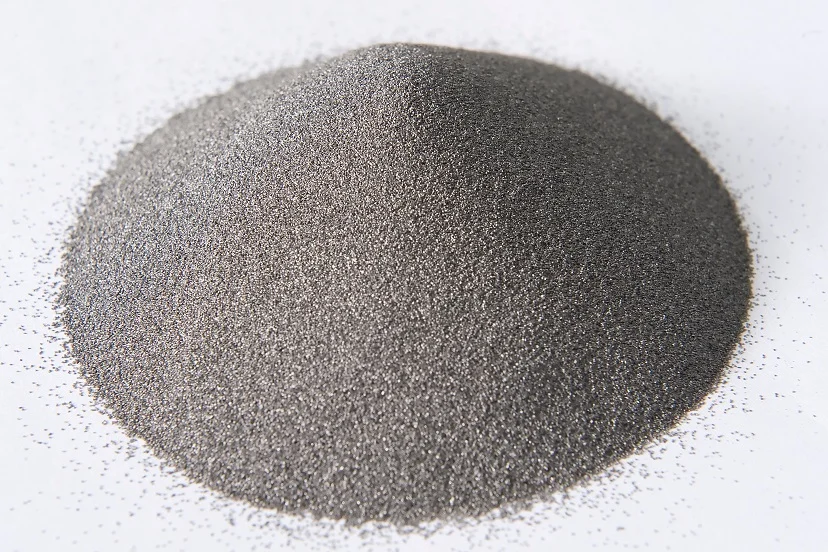
While the high costs of extraction and machining have historically limited its mass-market use, the rapid advancement of Additive Manufacturing (3D printing)—specifically Powder Bed Fusion technologies—is changing the game. By 3D printing titanium powder directly into complex net-shapes, engineers can bypass traditional machining nightmares, dramatically reducing material waste. As these technologies mature, we can expect this “Space Age” metal to find its way into an even broader range of daily applications.