Titanium vs. Steel Fasteners
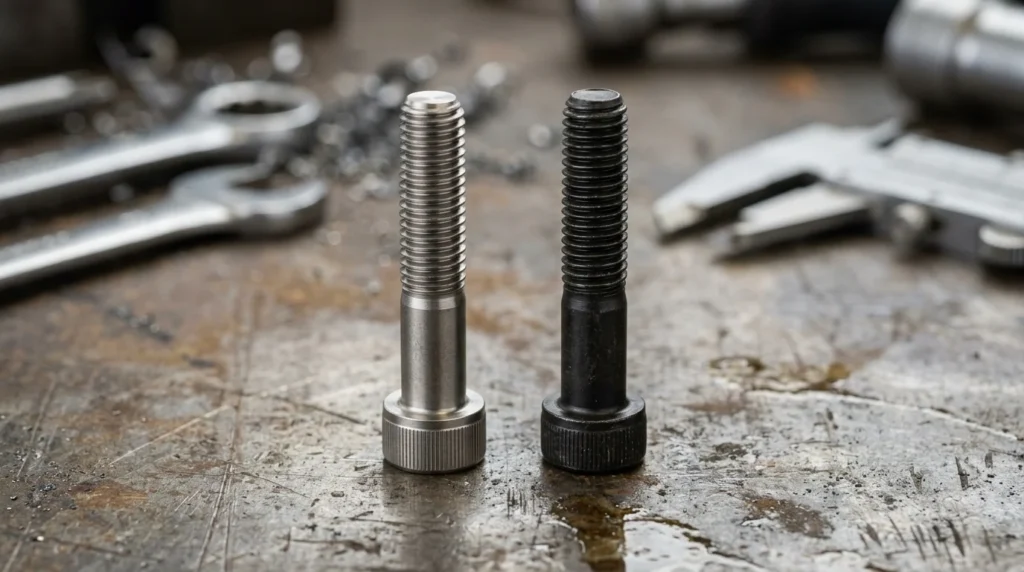
In the demanding worlds of aerospace, marine engineering, and high-performance motorsports, every gram of excess weight and every microscopic spot of rust can lead to catastrophic failure. Because of this, engineers and procurement managers constantly face a critical material dilemma: titanium vs steel bolts.
The most common question we hear from our B2B clients is straightforward: “Are titanium bolts actually stronger than steel?” The answer, however, is a matter of physics, not just a simple yes or no.
Quick Material Selection Summary
If you are short on time, here is the bottom line:
- Choose High-Strength Steel IF: Your project requires maximum absolute tensile strength (e.g., heavy machinery), budget is strict, and component weight is not a factor.
- Choose Titanium IF: You need an exceptional strength-to-weight ratio. Titanium allows you to shed up to 45% of the fastener weight while maintaining high structural integrity, plus it offers exceptional resistance to rust and corrosion in harsh environments (like seawater or many industrial chemicals).
Comparing Absolute Strength and Strength-to-Weight Ratio
Let’s be brutally honest—a trait that experienced B2B buyers appreciate. When discussing pure, absolute strength, top-tier alloy steel takes the crown.
If we look at high-strength Class 12.9 steel bolts, they boast an ultimate tensile strength of around 1,220 MPa and a yield strength of approximately 1,100 MPa. In contrast, Grade 5 Titanium (Ti-6Al-4V), which is the workhorse of the industrial titanium family, typically has an ultimate tensile strength of around 950 MPa and a yield strength of 830 to 880 MPa. Therefore, if your application relies solely on resisting the maximum possible pulling force—and component mass is completely irrelevant—high-grade steel is technically “stronger.”
However, comparing them pound-for-pound changes the engineering equation entirely. This brings us to the most critical metric in advanced manufacturing: the titanium strength-to-weight ratio (also known as specific strength).
Titanium is remarkably light. With a density of roughly 4.43 g/cm³, it is about 44% lighter than typical steel (which sits at a heavier 7.85 g/cm³). When you evaluate titanium yield strength vs steel relative to their physical mass, titanium outperforms almost every standard industrial metal on the market. By upgrading to titanium, you get fastener hardware that easily exceeds the strength of standard Class 8.8 steel bolts, but at nearly half the weight. This is exactly why aerospace engineers and motorsport teams rely heavily on titanium—it allows them to shed massive amounts of dead weight without sacrificing required structural integrity.
Grade 5 Titanium and Steel Data Chart
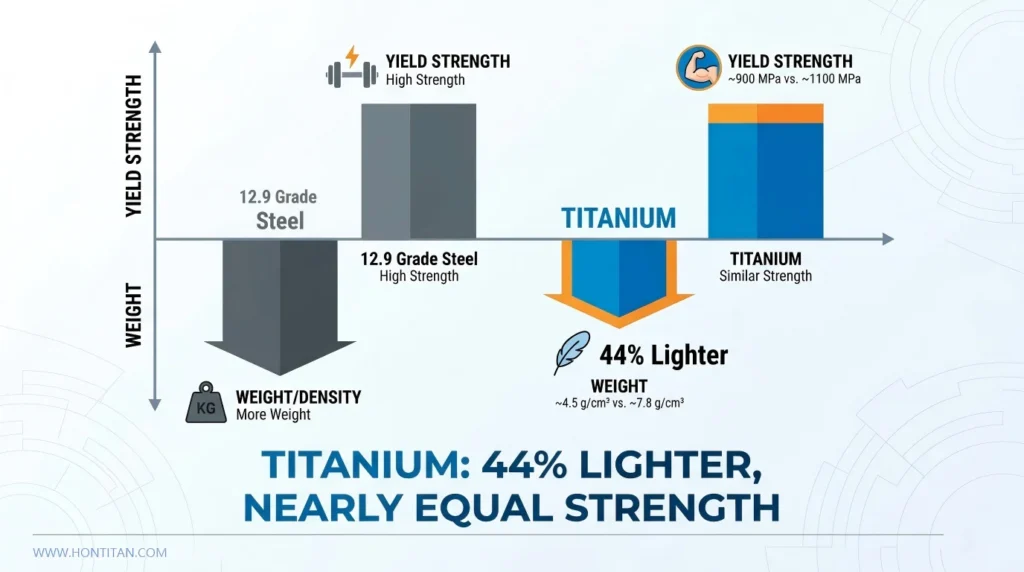
Data doesn’t lie. To make an informed B2B procurement decision, engineers need to look beyond marketing jargon and compare the physical properties directly. Below is a comprehensive comparison of the most common industrial fastener materials based on standard engineering specifications.
| Material Grade | Typical Yield Strength (MPa) | Density (g/cm³) | Corrosion Resistance | Fatigue Limit Performance |
|---|---|---|---|---|
| 316 Stainless Steel | 205 – 290 | 8.00 | High | Moderate |
| Class 8.8 Carbon Steel | 640 | 7.85 | Poor (Rusts easily) | Moderate |
| Class 12.9 Alloy Steel | 1,100 | 7.85 | Poor (Requires coating) | High |
| Grade 2 Titanium (Pure) | 275 – 350 | 4.51 | Exceptional | Good |
| Grade 5 Titanium (Ti-6Al-4V) | 830 – 880 | 4.43 | Exceptional | Outstanding |
The Engineering Takeaway
When you analyze the matrix above, the true value of grade 5 titanium vs grade 8 / Class 12.9 steel becomes crystal clear:
- The Upgrade from Stainless: If you are currently using 316 stainless steel bolts for their corrosion resistance, switching to Grade 5 Titanium gives you nearly 3 to 4 times the yield strength while simultaneously dropping the component weight by over 44%.
- The Upgrade from Standard Steel: Grade 5 Titanium easily outperforms standard Class 8.8 carbon steel bolts in pure strength, yet it weighs virtually half as much.
- The Fatigue Factor: While Class 12.9 steel boasts a higher static yield strength, Grade 5 Titanium shines in dynamic, high-vibration environments (such as aerospace engine mounts or marine propellers). Its outstanding fatigue limit ensures it is far less likely to develop micro-cracks under repeated, alternating stress.
Corrosion Resistance and Total Cost of Ownership
When evaluating industrial fasteners, looking only at the initial purchase price is a dangerous trap. High-strength steel might be cheap upfront, but it has a fatal flaw: it rusts. Even premium 316 stainless steel, widely used in marine and chemical industries, is highly susceptible to pitting, crevice corrosion, and galvanic corrosion when exposed to aggressive chlorides or seawater over extended periods.
When a cheap steel bolt fails due to rust, the true cost is never just the price of a replacement bolt. The real costs are measured in catastrophic equipment failure, hazardous chemical leaks, expensive maintenance labor, and devastating operational downtime.
This is where titanium transitions from a premium material to an essential financial investment.
Titanium possesses a unique, highly advantageous characteristic. The moment it is exposed to oxygen, it forms an invisible, impenetrable Titanium Dioxide (TiO2) passive film on its surface. If the bolt is scratched or mechanically damaged, this oxide layer instantly heals itself as long as oxygen or moisture is present. This self-healing mechanism makes titanium virtually immune to seawater, chlorides, and many harsh industrial acids (with a few specific exceptions, such as hydrofluoric acid).
For B2B procurement managers, this translates to a drastically lower Total Cost of Ownership (TCO). While the upfront cost of a titanium bolt is higher than steel, its lifespan is measured in decades, not months. By serving as a permanent, near-zero-maintenance alternative to 316 stainless steel bolts, titanium fasteners significantly reduce the recurring costs of replacement, inspection, and unexpected downtime, paying for themselves many times over in harsh operating environments.
How to Prevent Titanium Bolt Galling
While titanium is an exceptional metal in many respects, it does have one physical quirk that catches inexperienced buyers off guard: its tendency to gall. Also known as cold welding, galling occurs when the high friction between titanium threads causes the metal surfaces to literally tear and fuse together during installation. If a bolt seizes inside an expensive engine block or a critical aerospace component, removing it can become an engineering nightmare.
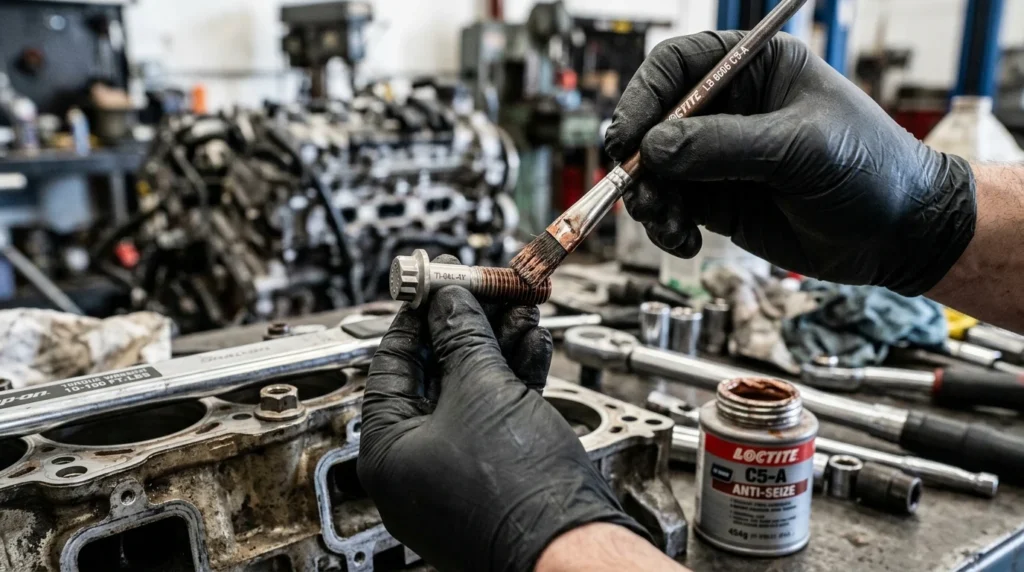
Fortunately, learning how to fix bolt galling—or better yet, how to prevent it entirely—is straightforward if you follow industry best practices during assembly:
- Always Use Anti-Seize: Never install bare titanium threads dry, especially when threading them into other titanium or aluminum parts. Applying a high-quality, nickel-based, copper-based, or specifically formulated anti-seize paste is mandatory to create a protective barrier between the mating threads.
- Ditch the Power Tools: High-speed impact wrenches generate massive amounts of friction heat in mere milliseconds, significantly increasing the risk of a cold weld. Always thread titanium fasteners carefully by hand, and use a calibrated manual torque wrench for final tightening.
- Adjust Your Torque Specs: Because you must use a lubricant, and due to titanium’s unique elasticity, you cannot use the exact same torque values as you would for dry steel bolts. Applying standard steel torque specs to a lubricated titanium bolt will often lead to over-tightening and thread stripping.
- Specify Advanced Surface Treatments (The Manufacturer Advantage): If your assembly line cannot accommodate messy anti-seize pastes, the ultimate solution happens during the manufacturing process. By partnering with a capable custom CNC titanium bolts manufacturer, you can specify advanced surface treatments like Anodizing, PVD (Physical Vapor Deposition) coatings, or dry film lubricants. These factory-applied finishes harden the outer layer of the thread and drastically lower the friction coefficient, effectively mitigating the risk of galling before the bolt even reaches your facility.
When to Choose Steel vs. Titanium
By now, the engineering facts and financial implications are clear. However, material selection ultimately depends on the specific demands of your project. Use this straightforward decision matrix to choose the right fastener for your application:
- Choose High-Strength Alloy Steel (e.g., Class 12.9) IF: Your primary concern is raw, absolute tensile strength. If the component is located in a dry, indoor, or heavily lubricated environment, weight is absolutely not a factor, and upfront budget constraints are extremely tight, high-strength steel remains the most economical choice for brute-force applications.
- Choose 316 Stainless Steel IF: You need a reliable, general-purpose fastener with moderate corrosion resistance. If the bolts will be exposed to mild moisture or weather, but not harsh chlorides or saltwater, and the structural load (yield strength) requirements are relatively low, stainless steel provides a decent middle-ground solution.
- Choose Titanium Bolts (Grade 5 / Grade 2) IF: You are engineering for the extremes. If your project demands aggressive weight reduction without sacrificing structural integrity (aerospace, motorsports, robotics), or if the equipment operates in highly corrosive environments like deep-sea submersibles, chemical processing plants, or desalination facilities. Choose titanium when your ultimate goal is a near-zero-maintenance Total Cost of Ownership.
Frequently Asked Questions
How much weight do titanium bolts save?
Compared to standard steel fasteners of the exact same size, titanium bolts save approximately 40% to 45% in weight. In large-scale assemblies like aerospace chassis or automotive engines, this massive weight reduction significantly improves fuel efficiency, handling, and overall performance.
Do titanium bolts rust?
No. Titanium is virtually immune to rust and general corrosion. When exposed to oxygen, it instantly forms a microscopic, self-healing Titanium Dioxide (TiO2) film. This passive layer protects the underlying metal from degrading, even in highly corrosive environments like saltwater or many industrial chemicals.
Are titanium bolts worth it?
Yes—if your application demands them. While the initial purchase price is higher than steel, titanium fasteners offer a drastically lower Total Cost of Ownership (TCO) in harsh environments. By preventing equipment downtime, minimizing regular maintenance, and outlasting the machinery itself, titanium bolts prove to be a highly cost-effective long-term investment.
Upgrading Your Engineering Project
Stop accepting preventable equipment failures, and stop paying for the hidden costs of rusted fasteners.
Ultimately, the debate of titanium vs steel bolts comes down to the specific goals of your engineering project. If you are building machinery where extreme weight savings and exceptional corrosion resistance are critical to your operational success, titanium is the logical choice.
Ready to upgrade your next project? Whether you need standard DIN/ISO specification fasteners in bulk or require a highly specialized custom CNC titanium bolts manufacturer for non-standard drawings, our engineering team is here to help.
Contact us today to submit your CAD drawings, and let us provide you with a free material evaluation and a highly competitive wholesale quote within 24 hours.