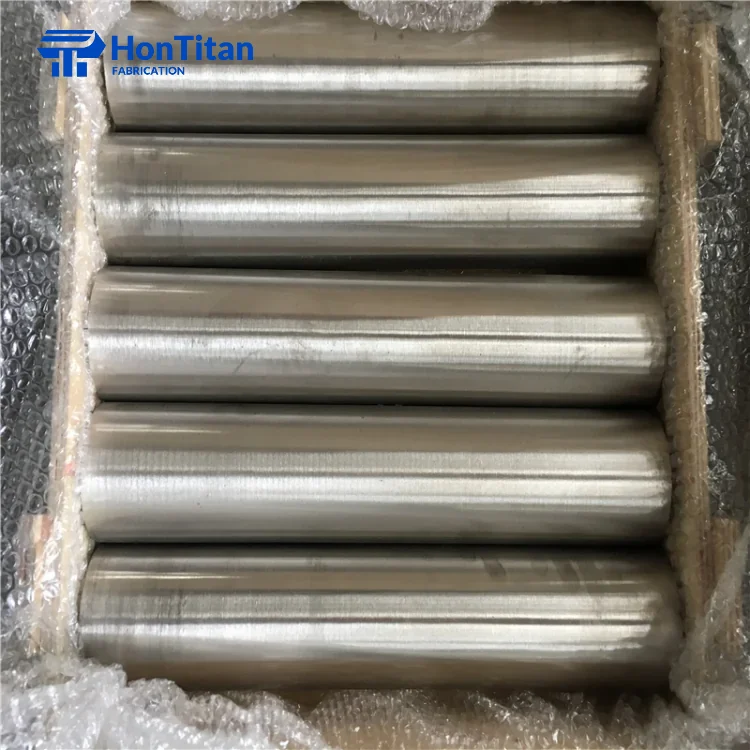
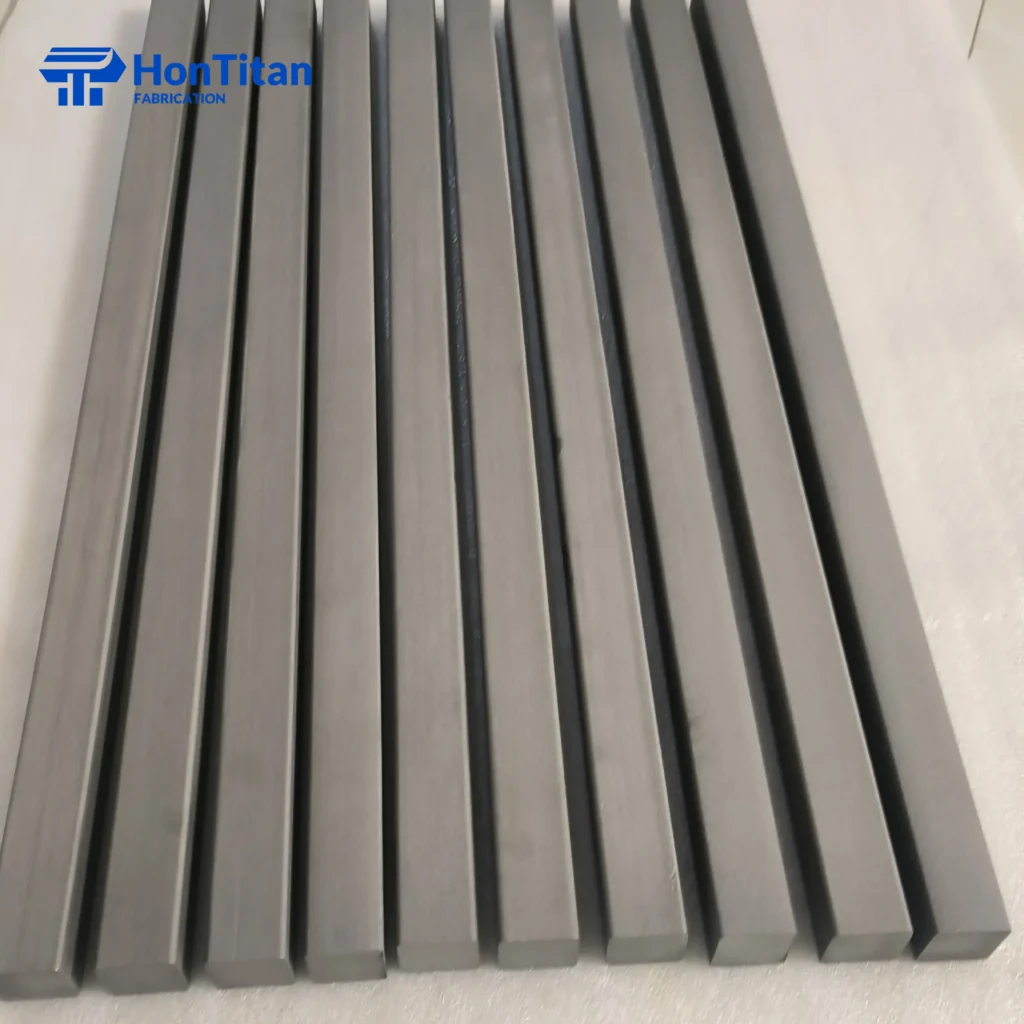
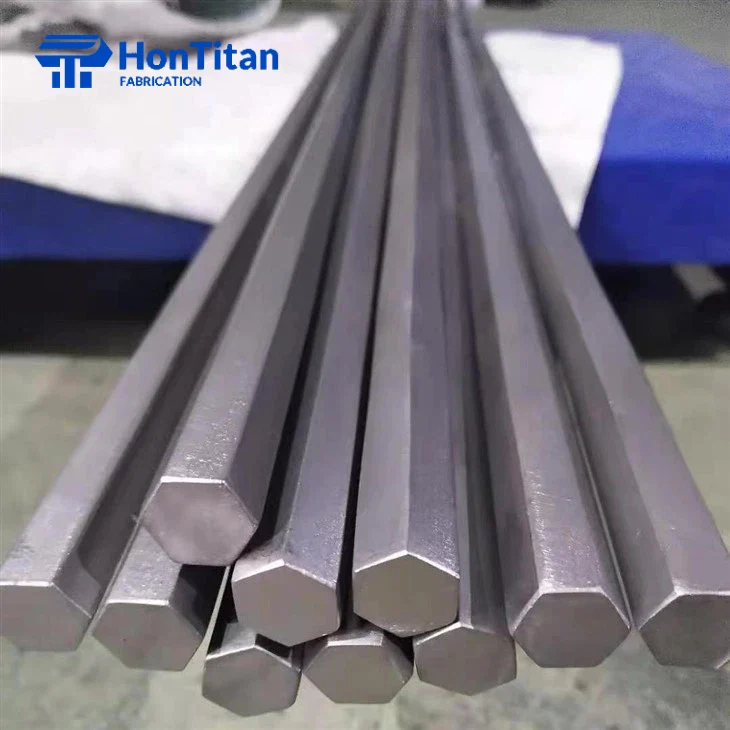
Ti-5553 (Ti-5Al-5Mo-5V-3Cr) is a near-beta titanium alloy engineered for high-strength structural applications where conventional alpha-beta alloys reach their design limits. With tensile strength up to 1,250 MPa in STA condition and superior fracture toughness in BASCA condition, it serves as the primary material for aerospace landing gear beams, wing spars, and structural airframe fittings. Supplied per ASTM B348 with EN 10204 3.1 Mill Test Certificate as standard — direct from certified titanium mills, with documented traceability to the production heat lot.
Quick Specifications
| Parameter |
Value |
| Material |
Ti-5Al-5Mo-5V-3Cr (Ti-5553 / TB8) |
| Governing Standards |
ASTM B348 / AMS 7026 / GB/T 2965 TB8 |
| Diameter Range |
10 mm – 300 mm (0.394 in – 11.81 in) |
| Length |
Up to 6,000 mm; custom cut-to-size available |
| Surface Condition |
Ground (h9/h11), Turned, Black Bar, As-Forged |
| Heat Treatment |
STA / BASCA / Annealed (specify at RFQ) |
| Mill Test Certificate |
EN 10204 3.1 (included with every order) |
| MOQ |
Ground bar: 50 kg; Black bar / as-rolled: 100 kg |
| Lead Time |
Stock items: 5–10 business days; non-stock: 4–10 weeks |
Ti-5553 Near-Beta Titanium Alloy — Material Overview
Ti-5553, designated Ti-5Al-5Mo-5V-3Cr, is classified as a near-beta titanium alloy. The alloying strategy combines four beta-stabilizing elements — vanadium, molybdenum, chromium, and iron — with aluminum as the primary alpha stabilizer. This chemistry positions the alloy close to the beta transus boundary (~860 °C), enabling a broad range of mechanical property combinations through heat treatment. The result is a material capable of achieving tensile strengths from 1,050 MPa to 1,250 MPa while retaining useful ductility and fracture toughness values that alpha-beta alloys at equivalent strength levels cannot match.
The alloy’s confirmed deployment in the Boeing 787 Dreamliner main landing gear beam established its role as a weight-reduction enabler in safety-critical structures. At a density of 4.65 g/cm³ — approximately 5% higher than Ti-6Al-4V — it delivers significantly higher specific strength at the design-limiting load levels typical of landing gear and wing attachment fittings. Material supplied by certified titanium manufacturers carries full heat-lot traceability from ingot melt through bar production, with chemical and mechanical test data documented on the EN 10204 3.1 Mill Test Certificate issued by a third-party inspecting authority.
Standard Cross-Reference
| Standard Body |
Designation |
Scope |
| ASTM |
ASTM B348 |
Titanium and titanium alloy bar and billet — dimensional and testing requirements |
| SAE AMS |
AMS 7026 |
Ti-5553 alloy composition reference — the established elemental limits document for this alloy |
| China GB |
GB/T 2965 TB8 |
Chinese national standard for Ti-5553 wrought bar |
| EN |
EN 10204 3.1 |
Mill Test Certificate type — mandatory for aerospace supply chain |
Procurement note: Ti-5553 does not have a dedicated wrought bar AMS specification. Aerospace procurement teams typically reference ASTM B348 combined with the alloy composition defined in AMS 7026, plus customer drawing requirements and EN 10204 3.1 MTC certification. This combination is accepted across major Tier 1 aerospace supply chains.
Chemical Composition — Ti-5Al-5Mo-5V-3Cr
Nominal composition targets and permissible ranges per AMS 7026 alloy chemistry — the established composition reference for Ti-5553 as cited in published aerospace materials literature. Every Mill Test Certificate issued per EN 10204 3.1 includes a full chemical analysis traceable to the melt heat, verifiable against the limits below.
| Element |
Nominal (wt%) |
Min (wt%) |
Max (wt%) |
| Aluminum (Al) |
5.0 |
4.4 |
5.7 |
| Vanadium (V) |
5.0 |
4.0 |
5.5 |
| Molybdenum (Mo) |
5.0 |
4.0 |
5.5 |
| Chromium (Cr) |
3.0 |
2.5 |
3.5 |
| Iron (Fe) |
— |
— |
0.25 |
| Oxygen (O) |
— |
— |
0.18 |
| Nitrogen (N) |
— |
— |
0.05 |
| Carbon © |
— |
— |
0.05 |
| Hydrogen (H) |
— |
— |
0.015 |
| Titanium (Ti) |
Balance |
— |
— |
Procurement teams sourcing Ti-5553 from any manufacturer should request that the chemical analysis certificate explicitly list all elements above against the AMS 7026 limits — not just the four primary alloying elements. Oxygen and hydrogen control is particularly important for fatigue-critical applications; a third-party inspection authority co-signing the MTC provides independent confirmation that reported values reflect actual melt batch chemistry.
Mechanical Properties — STA vs BASCA Heat Treatment Conditions
Ti-5553 is supplied in two primary heat-treated conditions. The choice between them determines the strength-toughness trade-off for the end application. Procurement teams should specify the required condition on the RFQ or purchase order, as mechanical properties vary significantly between them.
STA (Solution Treated and Aged): Solution treatment above the beta transus followed by aging. Maximizes yield and tensile strength. Preferred for highly loaded structural fittings where ultimate strength governs the design.
BASCA (Beta Annealed, Slow Cooled and Aged): Beta annealing followed by slow furnace cooling and aging. Produces a coarser microstructure that improves fracture toughness and fatigue crack growth resistance at modest strength reduction. Preferred for landing gear beams and primary structure where damage tolerance certification is required.
| Property |
Test Standard |
STA Condition |
BASCA Condition |
| Ultimate Tensile Strength (UTS) |
ASTM E8 |
1,050 – 1,250 MPa |
1,050 – 1,150 MPa |
| 0.2% Yield Strength (YS) |
ASTM E8 |
1,000 – 1,100 MPa |
950 – 1,050 MPa |
| Elongation (5d) |
ASTM E8 |
5 – 12% |
6 – 8% |
| Fracture Toughness K₁c |
ASTM E399 |
44 – 59 MPa√m |
65 – 85 MPa√m |
Reduction in area and hardness data vary significantly by bar diameter and heat treatment cycle; consult the EN 10204 3.1 MTC for heat-lot specific values. Property data above is sourced from Aubert & Duval Ti-5553 datasheet and Fanning et al. (2007), TIMET.
Comparison with Ti-6Al-4V (Grade 5, mill-annealed):
| Property |
Ti-5553 STA |
Ti-6Al-4V mill-annealed |
Difference |
| UTS |
~1,200 MPa |
~930 MPa |
+29% |
| YS |
~1,050 MPa |
~860 MPa |
+22% |
| K₁c (BASCA) |
~70 MPa√m |
~55 MPa√m |
+27% |
| Density |
4.65 g/cm³ |
4.43 g/cm³ |
+5% |
When compared to mill-annealed Ti-6Al-4V, Ti-5553 in STA condition delivers approximately 30–50% higher yield and tensile strength. The BASCA condition achieves superior fracture toughness, making it the preferred condition for damage-tolerant primary aircraft structures.
Sourcing Ti-5553 Round Bar: What to Verify Before Placing an Order
Ti-5553 is a specialty near-beta alloy — not a commodity stocked by general titanium distributors. Procurement teams sourcing this material for the first time encounter a shorter supplier list than Grade 5, and higher qualification stakes. The following checklist reflects standard aerospace procurement practice for specialty titanium bar.
Supplier Qualification Checklist
Documentation requirements (non-negotiable for aerospace programs):
- EN 10204 3.1 Mill Test Certificate — issued by third-party inspecting authority, not self-certified
- Full chemical analysis per AMS 7026 elemental limits (all 9 elements listed)
- Mechanical test results (UTS, YS, elongation) per ASTM E8, traceable to heat lot
- Heat treatment record (time, temperature, quench method, aging cycle)
- Dimensional inspection report (diameter, straightness, length)
Supplier capability to confirm before RFQ:
- Does the supplier manufacture from certified ingot, or re-process from third-party billet? (Direct manufacturing offers shorter traceability chain)
- Is the facility ISO 9001 certified? AS9100 registration adds aerospace-specific quality system requirements
- Can the supplier provide ultrasonic testing (UT) per AMS 2631 as an add-on service?
- Minimum order quantity: ground bar typically 50 kg, black bar 100 kg — confirm before submitting drawings
China-Based Ti-5553 Suppliers: Key Considerations
China-based titanium manufacturers account for a significant share of global near-beta alloy bar production, operating under GB/T 2965 TB8 as the domestic standard equivalent to the ASTM B348 / AMS 7026 combination. Several China factory suppliers export Ti-5553 bar to aerospace Tier 1 programs under EN 10204 3.1 MTC with third-party inspection by SGS, Bureau Veritas, or TÜV Rheinland.
When sourcing Ti-5553 wholesale from a China titanium factory, verify:
- That the MTC third-party inspector is independent (not an affiliate of the manufacturer)
- That the heat lot number on the MTC matches the bar markings
- Whether the supplier can accommodate OEM specification requirements — custom heat treatment conditions, non-standard diameters, or customer-drawing-referenced tolerances
Bulk Order vs. Spot Purchase
| Scenario |
Approach |
Typical Lead Time |
| Repeat production quantities (≥500 kg) |
Blanket order with scheduled releases |
4–6 weeks production + transit |
| One-time or pilot batch (50–200 kg) |
Spot purchase from stocked material |
5–10 business days (if in stock) |
| Custom specification (non-standard OD, cut-to-size) |
RFQ with drawing or spec sheet |
6–10 weeks |
| Aerospace program qualification material |
Include in supplier qualification process |
8–16 weeks (including testing) |
Note: Aerospace titanium lead times can extend to 20–60 weeks during peak demand periods (documented as recently as 2024–2025 per industry procurement reports). Early engagement with a qualified titanium manufacturer is strongly recommended for new program sourcing.
Physical Properties
| Property |
Value |
Unit |
Notes |
| Density |
4.65 |
g/cm³ |
Per Aubert & Duval datasheet |
| Melting Range |
~1,580 – 1,650 |
°C |
Solidus–liquidus approximate range |
| Beta Transus Temperature |
~860 |
°C |
Per Aubert & Duval; Fanning et al. (2007) |
| Elastic Modulus |
80 – 114 |
GPa |
Heat treatment dependent; ~114 GPa in fully aged STA condition |
| Poisson’s Ratio |
~0.33 |
— |
— |
| Thermal Conductivity |
~7–8 |
W/(m·K) |
Approximate; beta alloy values; exact data heat-treatment dependent |
| Coefficient of Thermal Expansion |
~8.6 |
µm/(m·°C) |
20–300 °C |
Aerospace and Industrial Applications
Ti-5553 round bar is specified where high static strength, damage tolerance, and fatigue resistance must be achieved simultaneously in a structural metallic component. Bulk orders for aerospace structural programs are typically placed 3–6 months in advance of machining schedules to account for supply chain lead times and qualification requirements.
Primary Aerospace Applications
- Landing Gear Beams and Actuator Bodies — The alloy’s high yield strength in BASCA condition, combined with superior fracture toughness, makes it the material of choice for commercial aircraft main landing gear beam forgings. The Boeing 787 Dreamliner main landing gear beam is a documented production application.
- Wing Spars and Fuselage Fittings — High-strength structural connections where load transfer demands exceed the capacity of Ti-6Al-4V.
- Airframe Brackets and Lug Fittings — Weight-optimized single-piece fittings replacing multi-piece steel assemblies.
Defense and Military
- Rotorcraft Primary Structure — Helicopter rotor head and transmission structural components where strength-to-weight ratio is critical.
- Fixed-Wing Military Airframe — Structural forgings for fighter aircraft frames where thinner sections reduce weight without sacrificing load capacity.
Industrial and Emerging
- Motorsport Chassis Components — Formula-class suspension uprights and wheel carriers where alloy strength allows thinner wall sections.
- High-Performance Fasteners — Bolts and studs for structures requiring higher preload capacity than Ti-6Al-4V Grade 5 allows.
Machining Considerations for Ti-5553
Ti-5553 is significantly more challenging to machine than Ti-6Al-4V. The higher alloy content increases work hardening tendency, reduces thermal conductivity (already low in titanium), and accelerates tool wear at cutting speeds appropriate for Grade 5. Machine shops transitioning from Ti-6Al-4V should plan for extended tooling budgets and reduced cutting speeds when evaluating raw material costs from any titanium supplier.
Starting Cutting Parameters (Turning, Carbide Tooling)
| Parameter |
Ti-5553 |
Ti-6Al-4V |
Notes |
| Surface Speed (Vc) |
18 – 25 m/min |
40 – 55 m/min |
~50% reduction |
| Feed per Revolution |
0.10 – 0.15 mm/rev |
0.15 – 0.20 mm/rev |
Reduce for hard condition |
| Depth of Cut |
0.5 – 2.0 mm |
1.0 – 3.0 mm |
Shallower passes recommended |
| Coolant |
High-pressure flood (70+ bar) |
Standard flood |
Mandatory; reduces thermal damage |
| Tool Grade |
Submicron carbide, PVD-TiAlN coating |
Standard carbide |
Edge honing required |
Alpha-Case Risk: Ti-5553, like all titanium alloys, forms an oxygen-enriched surface layer (alpha-case) when exposed to elevated temperatures in air. This hard, brittle layer must be fully removed post-forging/heat-treat before any fatigue-critical machining. Machining from black bar stock without surface prep verification is not recommended for aerospace components.
Tool Life Guidance: Expect tool life 40–60% shorter than equivalent Ti-6Al-4V operations. Carbide inserts with sharp positive geometry, PVD coating, and a honed edge reduce built-up edge formation. Ceramic tooling is generally not suitable for Ti-5553.
Available Dimensions, Surface Conditions, and Custom Cut Options
Diameter Range and Tolerance Classes
| Surface Condition |
Diameter Range |
Tolerance Class |
Typical Use |
| Ground Bar |
10 – 150 mm |
h9 / h11 |
Precision machining, aerospace forgings |
| Turned Bar |
20 – 200 mm |
h11 / h12 |
General machining, structural blanks |
| Black Bar (as-rolled) |
25 – 300 mm |
± 1% OD |
Rough machining, heavy forgings |
| As-Forged |
80 – 300 mm |
Drawing-dependent |
Custom forging blanks |
Standard Length Options
- 1,000 mm, 2,000 mm, 3,000 mm, 6,000 mm
- Custom cut-to-size available; minimum 100 mm per piece
- Random mill lengths available for bulk orders ≥500 kg
OEM / Custom Specification Orders
Custom-specification orders are accommodated for procurement teams requiring non-standard diameters, tighter tolerances, or customer-drawing-referenced dimensions. Provide the following on the RFQ to enable accurate lead time and pricing:
- Target diameter and tolerance class (or reference drawing)
- Heat treatment condition (STA / BASCA / annealed)
- Required length and quantity (pieces or kg)
- Certification requirements (EN 10204 3.1 standard; UT per AMS 2631 if required)
Material Traceability and Quality Documentation
Every Ti-5553 round bar order is accompanied by a full Mill Test Certificate issued to EN 10204 3.1 standards. This document type requires that the test results be validated by a third-party inspecting authority — not self-certified by the supplier — and provides the traceability chain required by AS9100 and Nadcap audit programs.
Documentation Package (Standard)
- EN 10204 3.1 MTC — Chemical composition and mechanical properties, heat-lot traceable
- Chemical Analysis Certificate — Full elemental analysis per AMS 7026 limits
- Mechanical Test Report — Tensile, yield, elongation (ASTM E8)
- Dimensional Inspection Report — Diameter, straightness, length
- Heat Treatment Record — Time, temperature, quench method, aging cycle
Optional Documentation
- Ultrasonic Testing (UT) per AMS 2631 (specify at order)
- Dye Penetrant Inspection (DPI) per ASTM E1417 (specify at order)
- Compliance statement to customer engineering drawing or purchase order specification
Frequently Asked Questions
Q1: What is the nominal chemical composition of Ti-5553?
Ti-5553 contains nominally 5% aluminum, 5% molybdenum, 5% vanadium, and 3% chromium by weight, with titanium as the balance. Chromium is limited to a maximum of 3.5 wt% per AMS 7026. Every shipment from a qualified titanium manufacturer includes a full chemical analysis certificate verifiable against these limits.
Q2: What is the difference between Ti-5553 and Ti-6Al-4V (Grade 5)?
Ti-6Al-4V is an alpha-beta alloy with typical mill-annealed tensile strength of approximately 930 MPa. Ti-5553 in STA condition achieves 1,050–1,250 MPa — approximately 30–50% higher depending on heat treatment. Ti-5553 in BASCA condition also offers significantly higher fracture toughness (~70 MPa√m vs ~55 MPa√m for Ti-6Al-4V), making it preferable for damage-tolerant primary structures. The trade-offs are reduced machinability (approximately 50% lower cutting speeds) and higher material cost compared to wholesale Grade 5 pricing.
Q3: What specifications cover Ti-5553 round bar?
ASTM B348 governs titanium bar and billet dimensional and testing requirements. The alloy chemical composition is defined in AMS 7026. The Chinese national standard for this alloy in bar form is GB/T 2965 TB8. Every order is supplied with an EN 10204 3.1 Mill Test Certificate. Ti-5553 does not have a dedicated wrought bar AMS specification — procurement teams use the ASTM B348 + AMS 7026 composition reference combination.
Q4: What mechanical properties does Ti-5553 achieve in STA condition?
In STA condition, Ti-5553 round bar typically achieves: UTS 1,050–1,250 MPa, 0.2% Yield Strength 1,000–1,100 MPa, elongation 5–12%, and fracture toughness K₁c 44–59 MPa√m. In BASCA condition, fracture toughness improves to 65–85 MPa√m. Actual values depend on bar diameter, exact heat treatment cycle, and production batch — all reported on the EN 10204 3.1 MTC.
Q5: What are the recommended machining parameters for Ti-5553?
Starting parameters for carbide turning: surface speed 18–25 m/min (approximately 50% of Ti-6Al-4V), feed 0.10–0.15 mm/rev, depth of cut 0.5–2.0 mm, with high-pressure flood coolant (70+ bar mandatory). PVD-coated submicron carbide inserts with honed edges are recommended. Ceramic tooling is not suitable for Ti-5553.
Q6: Do you provide Mill Test Certificates (MTC) with shipments?
Yes. Every order includes an EN 10204 3.1 Mill Test Certificate covering full chemical analysis and mechanical test results, traceable to the production heat lot. The document is issued by a third-party inspecting authority and meets the traceability requirements of AS9100 and Nadcap audits.
Q7: What is the minimum order quantity (MOQ) for Ti-5553 round bar?
MOQ depends on diameter and surface condition. Ground bar requires a minimum of 50 kg. Black bar and as-rolled conditions are available from 100 kg. Custom cut-to-size orders can be accommodated within these minimums. Submit an RFQ with diameter, length, heat treatment condition, and required quantity for a lead time and availability confirmation within one business day.
Q8: Which industries are the primary end users of Ti-5553 bar?
Aerospace and defense account for the majority of Ti-5553 consumption, specifically for landing gear beams, wing attachment fittings, and airframe structural forgings. Secondary markets include high-performance motorsport chassis components and medical implant machining shops requiring a higher-strength alternative to Ti-6Al-4V ELI where fatigue governs the design.