
The short answer is no. In most cases, pure titanium does not set off standard walk-through metal detectors. Because titanium is a non-ferrous metal (meaning it contains no iron) and has extremely low magnetic permeability, typical airport and courthouse security arches simply don’t register it.
However, the complete reality of navigating security is a bit more nuanced. Whether you’re preparing for your first flight after a knee or hip replacement surgery, or you’re just wondering if you need to painstakingly remove your new titanium piercing before facing the TSA, the fear of triggering an alarm and enduring an awkward public pat-down can be highly stressful.
Take a deep breath. In this ultimate guide, we will break down the exact science of why titanium usually flies under the radar, how different modern scanners (like advanced millimeter-wave machines) react to your implants or jewelry, and the actionable steps you need to breeze through security checkpoints with absolute confidence.

Why Titanium Usually Escapes Detection
To understand why your titanium joint or body piercing gets a free pass at security, you first need to understand how metal detectors actually work. Standard walk-through metal detectors rely on electromagnetic fields. They send out a pulsed magnetic field and listen for a disruption or an “echo” bouncing back from a metal object.
How intensely a metal reacts to this field determines whether the alarm sounds. Here is where titanium’s unique physical properties come into play:
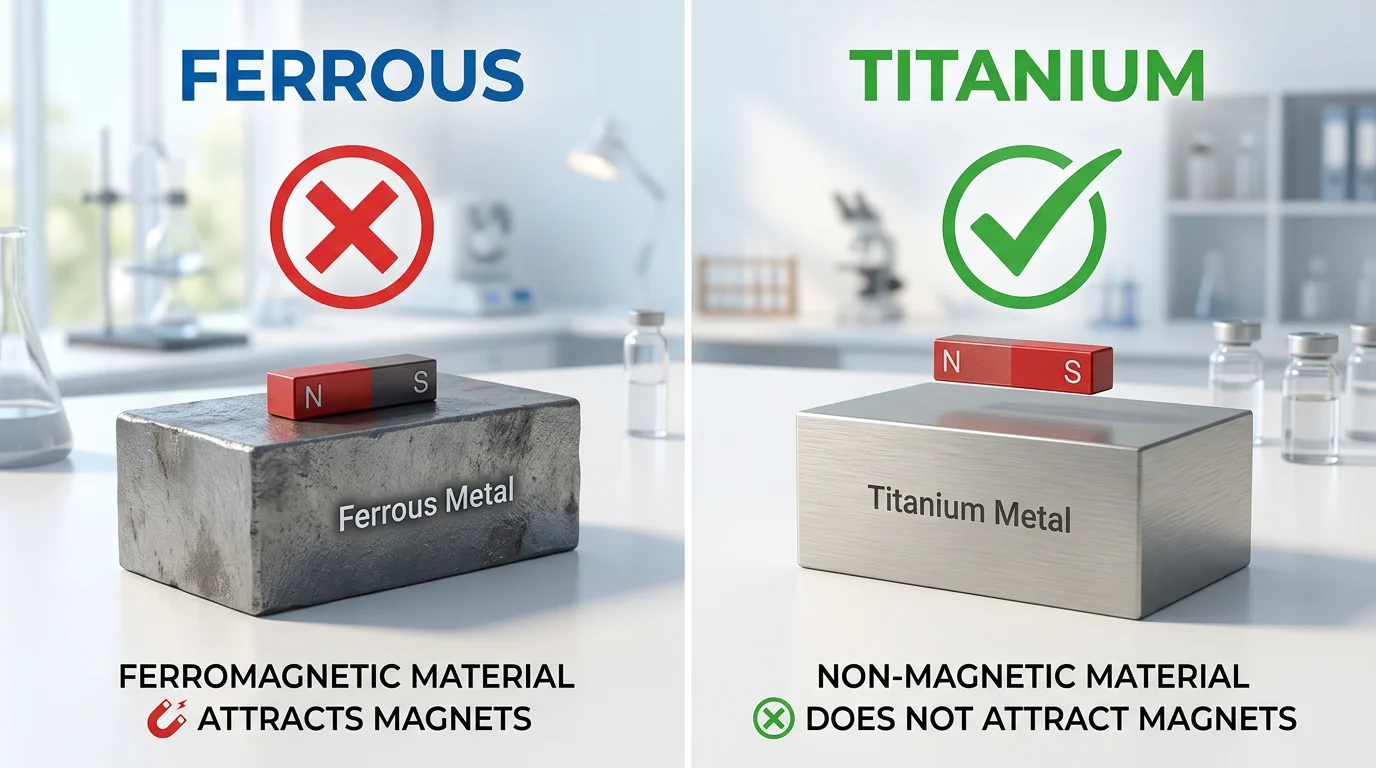
- Ferrous vs. Non-Ferrous Metals: Metals are broadly categorized into two groups. Ferrous metals contain iron (like steel or cast iron) and are highly magnetic. These are the metals that security scanners are designed to catch. Titanium, however, is a non-ferrous metal. It contains absolutely no iron, meaning it does not naturally react to magnets.
- Extremely Low Magnetic Permeability: Magnetic permeability is simply a fancy way of measuring how easily a material can support the formation of a magnetic field within itself. Titanium is incredibly stubborn in this regard. Because it has such low magnetic permeability and is a poor conductor of electricity compared to copper or silver, it barely disrupts the scanner’s electromagnetic pulses. The machine basically “looks” right through it.
The “Alloy” Exception: Why Do Some People Still Beep?
If the science says titanium is invisible to detectors, why do some travelers with titanium implants or jewelry still trigger the dreaded red light? The answer lies in the mix.
Very few medical implants or jewelry pieces are made of 100% pure, unadulterated titanium (often referred to as Commercially Pure or CP Titanium). Instead, they are usually titanium alloys—a mixture of titanium and other metals designed to increase strength and durability.
The most common medical-grade alloy (Ti-6Al-4V) mixes titanium with aluminum and vanadium, which are also non-magnetic. However, if you have an older implant, a cheaper piece of body jewelry, or a complex joint replacement that utilizes stainless steel components (like screws or a femoral head) alongside the titanium, those trace amounts of iron and nickel will interact with the magnetic field and trigger the alarm.
Not All Scanners Are Created Equal (Equipment Matters)
A major reason there is so much conflicting information online—with one person swearing their titanium knee never beeps, and another saying they get stopped every time—is because “metal detector” is a broad term.
The type of security equipment you are walking through plays a massive role in whether your titanium will be detected. Here is how the three most common security scanners react to titanium:
1. Traditional Walk-Through Metal Detectors
These are the classic security arches you see at courthouses, concerts, and some older airport checkpoints. As we established, these rely on magnetic fields. Because security personnel need to keep lines moving, these machines are usually calibrated to ignore small amounts of non-ferrous metals (like brass zippers or small keys) to avoid constant false alarms.
The Verdict: Pure titanium implants and jewelry will almost never set these off.
2. Handheld Wands (Garrett Wands)
If you trigger the walk-through arch, or if you are selected for random screening, an agent will likely use a handheld wand. These devices operate on the same magnetic principles as the arches but are much more sensitive and are passed just inches from your body.
The Verdict: While they still struggle to detect titanium, if a wand is passed directly over a massive titanium rod in your femur or a large piece of thick body jewelry, it might emit a faint beep due to its close proximity and high sensitivity setting.
3. Advanced Imaging Technology (Millimeter-Wave Scanners)
This is the game-changer. These are the modern, cylindrical glass booths at TSA checkpoints where you are asked to stand with your arms raised above your head. These machines are not metal detectors. Instead of looking for magnetic fields, millimeter-wave scanners bounce harmless, high-frequency radio waves off your body to create a topological map of your skin. They are designed to detect any anomaly or dense object sitting on or just beneath the surface of the skin—regardless of what it’s made of. Plastics, ceramics, and yes, non-magnetic titanium, will all show up.
The Verdict: A millimeter-wave scanner will absolutely detect your titanium joint replacement, spinal fusion hardware, or body piercing. The machine will highlight the specific area on a generic avatar screen, prompting the TSA agent to perform a targeted pat-down of that specific spot.

Titanium Medical Implants and Airport Security (TSA)
If you have recently undergone orthopedic surgery, the thought of navigating an airport security checkpoint can be daunting. Medical implants are the number one reason travelers search for information about titanium and metal detectors.
Here is exactly what you need to know about traveling with your new hardware.
Knees, Hips, and Spinal Implants: Does Size Matter?
While titanium itself is non-magnetic, the size of your implant can occasionally influence the screening process.
- Small Implants: Dental implants, tiny bone screws, and small surgical plates used for minor fractures are incredibly unlikely to trigger any standard walk-through metal detector or handheld wand.
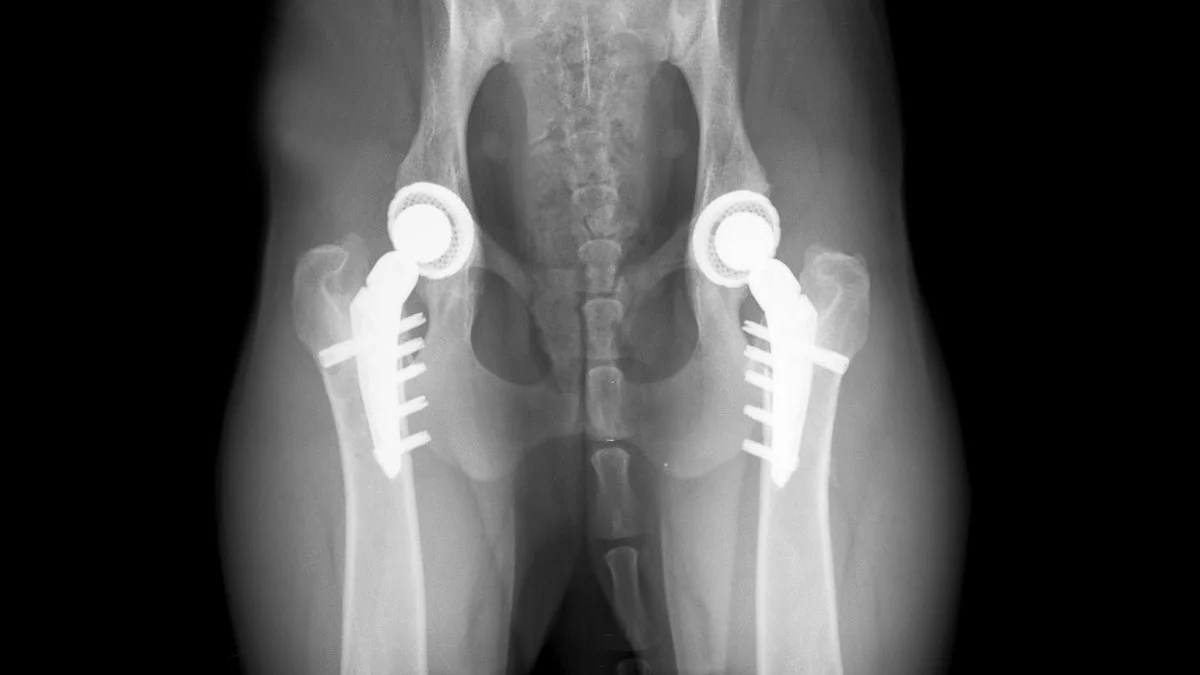
- Large Implants: If you have a total knee or hip replacement, or extensive spinal fusion hardware, there is a slightly higher chance of setting off a highly sensitive walk-through detector. More importantly, as mentioned earlier, these large implants will always appear as anomalies on a millimeter-wave body scanner.
Do I Need a Medical Implant Card for the Airport?
This is one of the most common myths in travel. Many patients ask their surgeons for a “medical implant card” to prove to security that they have a piece of titanium inside them.
The truth is: The TSA does not require, nor do they officially rely on, medical implant cards. Because anyone can easily forge or print a card from the internet, a TSA agent cannot use it as an excuse to skip a screening. If you set off an alarm or an anomaly appears on the scanner, the agent is legally required to resolve it, card or no card. You can certainly carry one for your own peace of mind or for medical emergencies, but it will not serve as a “get out of security free” pass.
How to Navigate Security Smoothly
Instead of relying on a piece of paper, the best way to get through security with a titanium implant is proactive communication. Here are three actionable steps:
- Speak Up Immediately: Before you step into the scanner, simply tell the Transportation Security Officer (TSO), “I have a titanium hip replacement in my right leg.”
- Expect a Targeted Pat-Down: If the millimeter-wave scanner highlights your implant, the agent will need to conduct a standard pat-down of that specific area to ensure nothing is hidden beneath your clothes. Because you already communicated your implant, this process will be quick and professional.
- Dress Strategically: Wear loose, comfortable clothing. While you will not be asked to remove clothing, wearing loose sweatpants makes a pat-down over a knee or hip replacement much easier and less intrusive than tight jeans.
Titanium Jewelry, Piercings, and Everyday Carry (EDC)
Not everyone searching for metal detector rules is recovering from surgery. A massive portion of travelers are simply trying to figure out if they need to spend ten minutes awkwardly unscrewing a belly button ring or removing a stubborn wedding band before getting in the security line.
If you wear titanium jewelry or carry titanium gear, here is how you should handle your next trip through the scanners.
Do Titanium Piercings Beep at the Airport?
Titanium—specifically implant-grade titanium (like ASTM F136)—is the absolute gold standard for body piercings and hypoallergenic jewelry. Because it is so lightweight, biocompatible, and completely non-ferrous, it is exceptionally security-friendly.
- Rings, Earrings, and Small Piercings: Tiny pieces of titanium jewelry simply do not have enough mass or magnetic permeability to disrupt the electromagnetic field of a walk-through metal detector. Even handheld wands will usually pass right over them without a peep.
- The Golden Rule for Jewelry:Do not take it off. Taking off body piercings in a rush can lead to lost jewelry, irritation, or closed piercings. The TSA specifically advises travelers to leave small body piercings and rings on. If a millimeter-wave body scanner happens to flag a larger piece of titanium jewelry (like a chunky necklace or a heavy gauge piercing), the agent will simply ask to visually inspect it or perform a quick, localized pat-down.
The Tactical Gear Exception (Fun Fact)
In the world of Everyday Carry (EDC), titanium is prized for being incredibly tough yet incredibly light. You can find titanium tactical pens, pry bars, keychains, and even specialized pocket knives.
Because pure titanium can technically pass through older magnetic walk-through detectors undetected, you might assume a titanium EDC tool is the perfect “stealth” item. However, there is a fascinating catch.
Many reputable manufacturers of tactical titanium gear actually design their products to fail metal detector tests on purpose. To prevent their tools from being used maliciously to bypass security, manufacturers will often intentionally mix trace amounts of ferrous metals into the titanium alloy, or they will use steel springs and screws in the internal mechanisms. This ensures that a titanium tactical pen will still trigger an airport alarm, keeping the skies safe.
Real-World Experiences: What Frequent Flyers Say
While understanding the physics of titanium and the operating manuals of TSA equipment is helpful, nothing beats hearing from people who actually travel with metal in their bodies every week.
If you browse travel forums or communities like Reddit’s r/tsa and r/travel, you will find thousands of firsthand accounts from passengers navigating security with titanium hips, spinal fusions, and body modifications. Their collective experiences reveal a few universal truths that should instantly put your mind at ease.
1. You Are Not an Exception; You Are the Rule
The biggest fear most travelers have is holding up the security line or feeling embarrassed. Frequent flyers emphasize that you should let go of this anxiety entirely. Transportation Security Officers (TSOs) screen hundreds of people with joint replacements, pacemakers, and surgical hardware every single shift. To them, a titanium knee is as mundane as a forgotten water bottle. It is a completely routine procedure, and they are trained to handle it swiftly and respectfully.
2. The Scanner Screen is Generic and Private
Many travelers express anxiety about the advanced millimeter-wave body scanners, worrying about what the agent is actually seeing when an implant is detected.
As you can see, modern scanners do not generate an anatomical or “naked” image of your body. Software automatically processes the scan and displays a generic, cookie-cutter outline of a person (often referred to as a “Gumby” avatar). If your titanium implant is detected, the screen simply places a yellow box over that general area (e.g., the right hip). The agent only pats down the specific area highlighted by that yellow box, ensuring your privacy is maintained.
3. Be Prepared for Global Inconsistencies
Frequent international travelers note a major difference between flying domestically in the United States and flying abroad. While major US and European hubs rely heavily on the millimeter-wave body scanners (which will spot your titanium), many smaller regional airports or developing nations still rely exclusively on older walk-through magnetic arches.
Travelers frequently report that they get a localized pat-down when leaving New York, but on their return flight from a small island airport in the Caribbean, they walk straight through the magnetic arch without a single beep. The golden rule from seasoned travelers: Expect the body scanner, but enjoy the pleasant surprise if you only have to walk through an older arch.
Frequently Asked Questions (FAQ)
To wrap up our ultimate guide, here are quick, definitive answers to the most common questions travelers and patients ask about titanium.
Can you get an MRI with titanium implants?
Yes, in almost all cases, you can safely get an MRI with titanium implants. Because titanium is non-ferromagnetic (it does not contain iron), it will not be pulled by the MRI machine’s extremely powerful magnetic field. However, titanium can sometimes create minor “artifacts” or blurry spots on the image itself. Always inform your doctor and the MRI technician about your implants before the scan.(Note: This is where you will add an internal link to your dedicated MRI article later!)
Does surgical steel set off metal detectors compared to titanium?
Yes, surgical steel is much more likely to set off a metal detector than titanium. While “surgical steel” sounds highly refined, it is still an alloy made primarily of iron, often mixed with chromium and nickel. Because it is a ferrous metal, a sensitive walk-through metal detector or handheld wand will easily pick up surgical steel implants or body jewelry.
Can I get TSA PreCheck with medical implants?
Absolutely, and it is highly recommended! Having a medical implant does not disqualify you from TSA PreCheck. In fact, getting PreCheck is the best “travel hack” for implant patients. Standard TSA lanes usually require you to go through the millimeter-wave body scanner (which will flag your implant). PreCheck lanes, however, predominantly use the older, magnetic walk-through metal detectors, which pure titanium usually passes through without a single beep.
Conclusion: Travel with Confidence
The anxiety of setting off an alarm at an airport, courthouse, or concert venue is entirely valid, but armed with the right knowledge, it doesn’t have to ruin your day.
To summarize: pure titanium and high-grade titanium alloys are non-ferrous and have incredibly low magnetic permeability. This means they will usually glide right through traditional walk-through metal detectors undetected. If you encounter an advanced millimeter-wave body scanner, your titanium will be spotted, but remember—security agents see this hundreds of times a day. It is a completely routine, five-second interaction.
Wear your titanium jewelry with pride, trust in your medical implants, communicate openly with security staff, and most importantly, enjoy your travels!