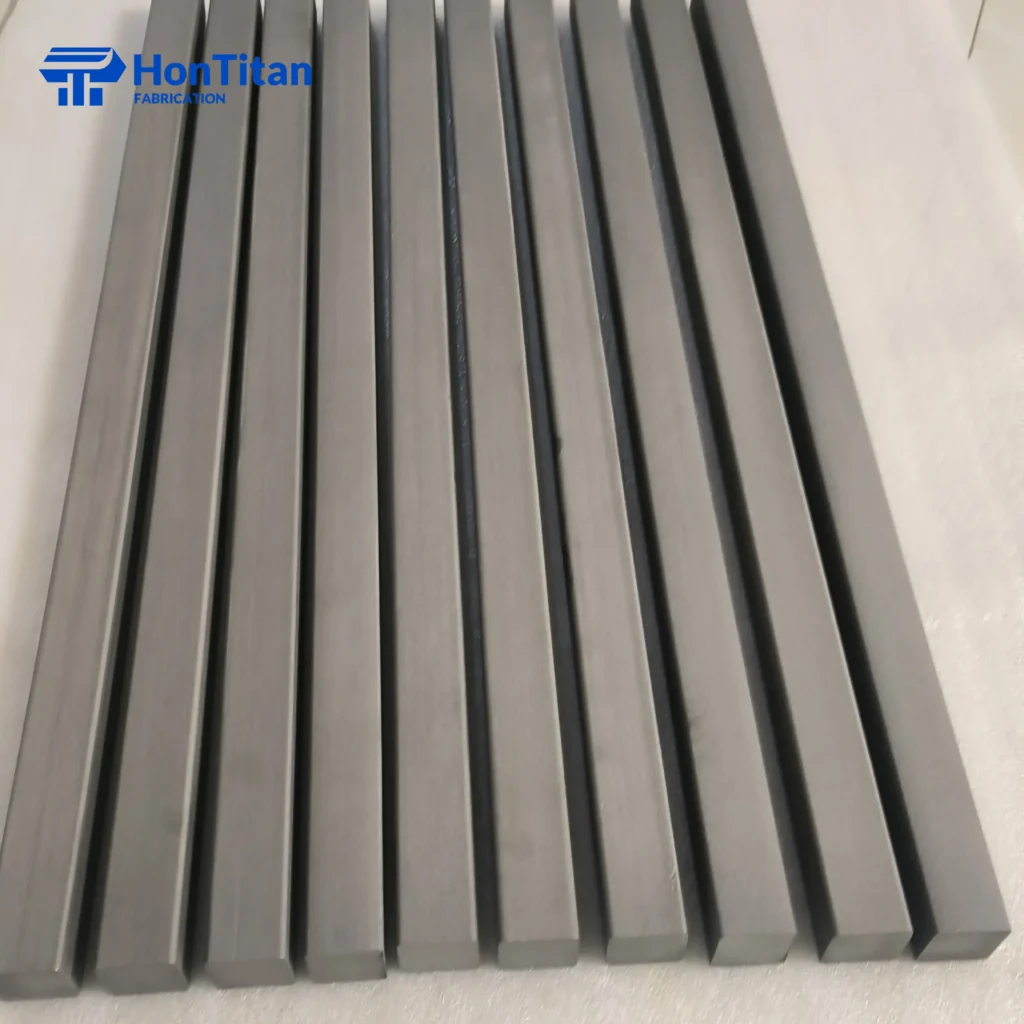
Titanium Grade 3 (UNS R50550) is a commercially pure (CP) alpha-phase titanium containing up to 0.35 wt% oxygen — more than any other CP grade except Grade 4. That extra oxygen gives it a minimum tensile strength of 448 MPa (65 ksi), roughly 30% higher than Grade 2’s 345 MPa. The tradeoff is modest: elongation drops from 20% to 18%, and formability decreases slightly. Corrosion resistance is essentially identical to Grade 2. Grade 3 is specified when a project needs Grade 2’s corrosion performance but with a meaningful strength bump — most commonly in chemical processing pressure vessels, marine hardware, and airframe skin panels. It is less common than Grade 2 and more expensive; most applications that consider it end up using Grade 2 unless load calculations specifically demand higher yield.
What Is Grade 3 Titanium?
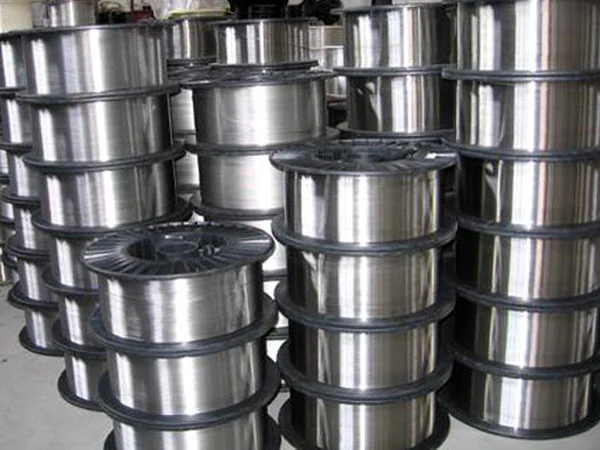
Grade 3 titanium is the third of four commercially pure (CP) titanium grades defined under ASTM B265 and AMS 4900. “Commercially pure” means the metal is essentially unalloyed — the titanium content runs to approximately 99% by weight, with the balance occupied by tightly controlled impurity elements rather than deliberate alloying additions.
What distinguishes Grade 3 from Grades 1 and 2 is its oxygen content ceiling: 0.35 wt% oxygen versus 0.25 wt% for Grade 2. This single difference accounts for nearly all the mechanical property gap between them.
Why oxygen raises strength in CP titanium: Oxygen dissolves interstitially into titanium’s hexagonal close-packed crystal lattice. Each dissolved oxygen atom strains the lattice and resists dislocation movement — the mechanism behind plastic deformation. More interstitial oxygen means stronger resistance to dislocation slip, which translates directly into higher tensile and yield strength. The same mechanism slightly reduces ductility, but not dramatically: Grade 3’s minimum elongation of 18% is only two percentage points below Grade 2’s 20%.
Grade 3 is also identified by:
- UNS designation: R50550
- Common alias: CP-2 (under AMS-T-9046 classification)
- Key standards: ASTM B265, ASTM F67, AMS 4900, AMS-T-9046 CP-2, ASME SB-265
The “CP-2” alias can cause confusion because some manufacturers label Grade 2 as CP-2 under different classification systems. When ordering, always specify the ASTM B265 grade number and UNS designation together to eliminate ambiguity.
Microstructurally, Grade 3 is a single-phase alpha alloy — fully hexagonal close-packed at room temperature with no beta-phase transformation. This microstructure gives it excellent corrosion resistance, good weldability, and predictable mechanical behavior across a wide temperature range.
Chemical Composition of Grade 3 Titanium (ASTM B265)
The composition of Grade 3 titanium is defined in ASTM B265 (strip, sheet, and plate) and cross-referenced in AMS 4900, ASTM F67, and ASME SB-265. All maximum limits apply — the actual oxygen and iron content in a mill-certified product will typically run below these ceilings.
| Element | Maximum (wt%) | Role |
|---|---|---|
| Oxygen (O) | 0.35 | Primary strength lever; interstitial hardener |
| Iron (Fe) | 0.30 | Secondary solid-solution strengthener |
| Nitrogen (N) | 0.050 | Interstitial strengthener (minor contribution) |
| Carbon © | 0.08 | Interstitial, minimal effect at these levels |
| Hydrogen (H) | 0.015 | Controlled strictly to prevent embrittlement |
| Other (each) | 0.10 | Residual trace elements |
| Other (total) | 0.30 | |
| Titanium (Ti) | Balance | ~99% by weight |
Oxygen is the critical element. The progression from Grade 1 (0.18 wt% O max) through Grade 4 (0.40 wt% O max) is essentially a controlled increase in oxygen content, with each step adding roughly 100 MPa to the minimum tensile strength and subtracting a few percent from elongation.
Hydrogen deserves attention beyond its low limit number. Titanium at room temperature has very low hydrogen solubility, and hydrogen absorbed during processing or welding can cause delayed cracking or embrittlement over time. The 0.015 wt% maximum is a standard protection against this. When welding Grade 3, the same precautions apply as for any CP titanium: inert gas shielding on both the weld pool and the heat-affected zone backside is mandatory.
Iron content up to 0.30 wt% also contributes to strength via solid-solution strengthening, though its effect is smaller than oxygen’s at equivalent concentrations. Unlike some stainless steels where iron content raises corrosion concerns, iron at these trace levels in titanium does not meaningfully affect corrosion performance.
Mechanical Properties of Titanium Grade 3
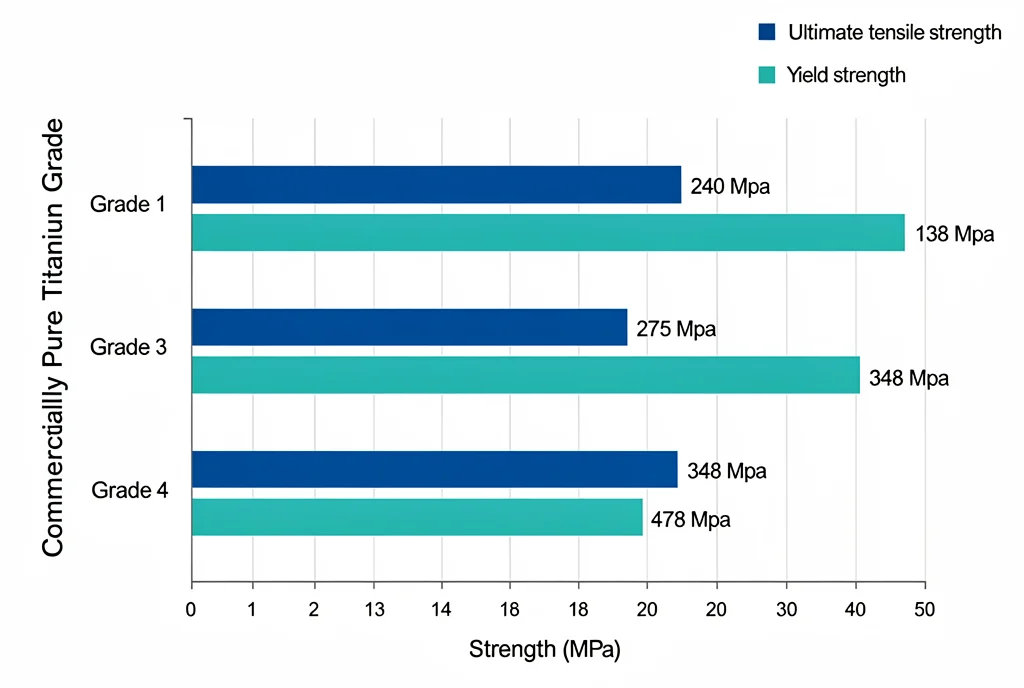
The values below are minimum requirements per ASTM B265 for sheet, strip, and plate. Actual certified material typically exceeds the minimums — a mill test report will show the measured values for each heat.
| Property | Grade 3 | Units |
|---|---|---|
| Tensile Strength (UTS) | 448 min (65 ksi) | MPa |
| Yield Strength (0.2% offset) | 379 min (55 ksi) | MPa |
| Elongation (gauge length 2 in / 50 mm) | 18 min | % |
| Modulus of Elasticity | ~104.8 (15,200 ksi) | GPa |
| Density | 4.51 | g/cm³ |
| Melting Range | ~1649–1671 (3000–3040°F) | °C |
| Brinell Hardness | ~200–225 | HB |
A few numbers worth unpacking for engineering decisions:
Tensile strength at 448 MPa places Grade 3 in a useful middle ground. It clears the threshold for many pressure vessel designs under ASME Section VIII where Grade 2 is borderline — without jumping to Grade 4 or an alloy.
The 104.8 GPa elastic modulus is characteristic of all CP titanium grades; it does not change significantly between Grade 1 and Grade 4. This means Grade 3 has the same stiffness as Grade 2 — an important point for designs where deflection controls the geometry rather than stress.
Elongation at 18% is high enough that Grade 3 sheet can be formed using conventional press-brake and roll-forming operations. The practical difference from Grade 2’s 20% elongation is real but small; tooling radii may need to be slightly larger, and springback will be marginally greater.
Cryogenic performance: CP titanium grades, including Grade 3, maintain ductility at sub-zero temperatures better than most structural alloys. The face-centered cubic metals (austenitic stainless steels) are the usual go-to for cryogenic service, but CP titanium’s hexagonal structure does not exhibit a sharp ductile-to-brittle transition temperature in the way ferritic steels do. Grade 3 sees use in cold-service equipment and cryogenic-adjacent applications where its corrosion resistance is also needed.
Grade 2 vs Grade 3 Titanium: Direct Comparison
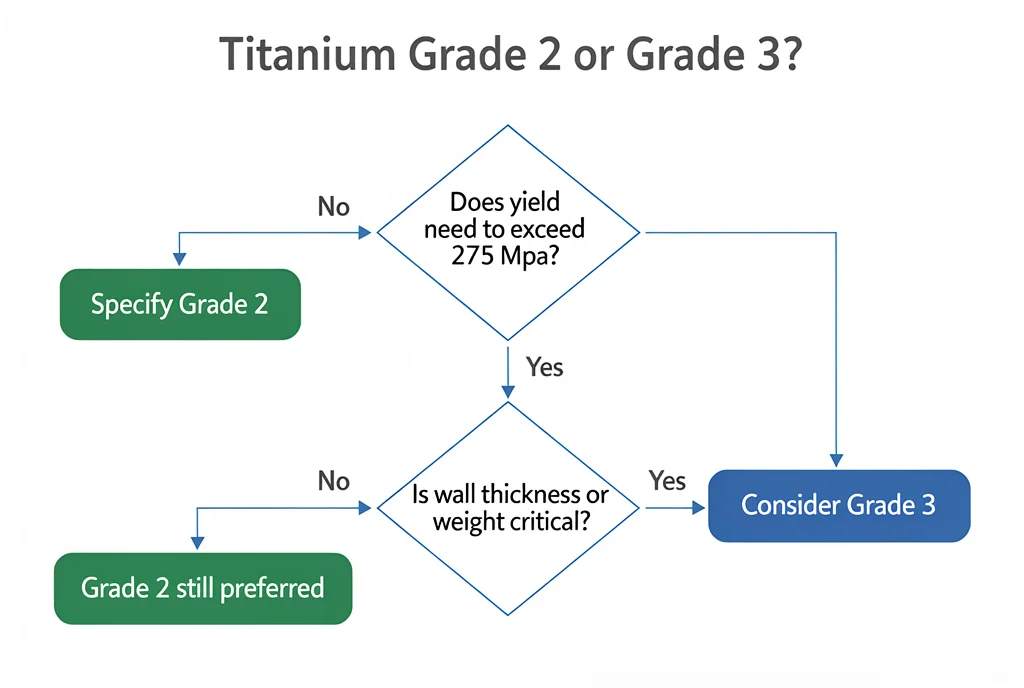
The short answer: Grade 3 is approximately 30% stronger than Grade 2 in tensile strength, with essentially identical corrosion resistance and only marginally reduced ductility. It costs more and is produced in smaller volumes, which affects availability and lead times.
| Property | Grade 2 (R50400) | Grade 3 (R50550) | Difference |
|---|---|---|---|
| UTS min | 345 MPa (50 ksi) | 448 MPa (65 ksi) | +30% |
| Yield min | 275 MPa (40 ksi) | 379 MPa (55 ksi) | +38% |
| Elongation min | 20% | 18% | −2 pp |
| O max (wt%) | 0.25% | 0.35% | +40% |
| Fe max (wt%) | 0.30% | 0.30% | Equal |
| Density | 4.51 g/cm³ | 4.51 g/cm³ | Equal |
| Modulus | ~103 GPa | ~104.8 GPa | Negligible |
| Corrosion resistance | Excellent | Excellent | Equal |
| Weldability | Excellent | Good | Minor reduction |
| Availability | Wide | Limited | Grade 2 wins |
| Typical cost | Lower | 10–20% premium | Grade 2 wins |
Where Grade 3 makes sense over Grade 2
Grade 3 earns its place when an application meets one of these conditions:
- Wall thickness reduction is valuable. If a pressure vessel can use thinner Grade 3 wall stock instead of heavier Grade 2, material weight drops and fabrication costs may offset the unit price premium — particularly relevant in aerospace structures where mass is a hard constraint.
- The design is yield-strength limited, not corrosion-limited. When a stress analysis shows Grade 2 yields under load while Grade 3 clears the margin, and switching to a titanium alloy like Ti-6Al-4V would introduce weld-heat-treatment complexity, Grade 3 is the logical step up.
- Medical device applications under ASTM F67. Grade 3 appears in ASTM F67 (implant-quality titanium) alongside Grades 1, 2, and 4. When a surgical component needs higher strength than Grade 2 provides without the alloy elements (aluminum and vanadium in Grade 5) that complicate biocompatibility assessments, Grade 3 is a clean choice.
Where Grade 2 remains the better choice
Grade 2 is the right call in the vast majority of applications:
- When corrosion resistance is the primary driver and mechanical load is modest
- When sheet-metal forming complexity is high (tighter bends, deep draws)
- When project schedules are tight and supply availability matters
- When the design is stiffness-limited rather than strength-limited (both grades have the same modulus)
- When cost is under pressure and the strength margin is not critical
In practice, procurement engineers working on chemical plant equipment and heat exchanger tube sheets routinely use Grade 2, and it handles those environments without problem. Grade 3 comes up when a structural review flags an inadequate yield margin and an alloyed grade would complicate the fabrication procedure specification.
What Is Grade 3 Titanium Used For?
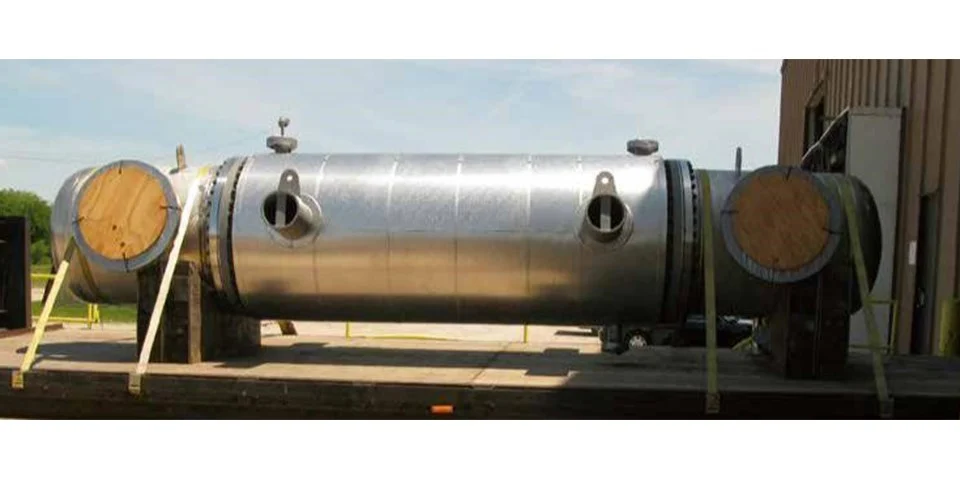
Grade 3 titanium occupies a specific niche: applications that need Grade 2’s corrosion resistance in environments where Grade 2’s strength is marginal. The following industries draw on it most.
Chemical Processing Equipment
Titanium’s resistance to wet chlorine, chloride solutions, oxidizing acids, and seawater makes it a material of choice for chemical plants. Most of this equipment — heat exchanger tubes, reactor vessels, piping — is manufactured in Grade 2. Grade 3 appears when:
- A pressure vessel design requires higher allowable stress values to achieve the target wall thickness in a constrained space
- An ASME Section VIII Code calculation shows Grade 2 needs a wall thicker than preferred and Grade 3 resolves the design with standard stock dimensions
The corrosion environments that Grade 2 handles — dilute sulfuric acid, nitric acid, bleach solutions, phosphoric acid, wet chlorine gas — are equally within Grade 3’s capability. Switching from Grade 2 to Grade 3 in these environments carries no corrosion risk.
Aerospace Airframe Components
Grade 3 appears in ASTM B265 and AMS 4900 specifically because aerospace skin panels and structural sheet occasionally need a CP titanium with higher allowable stress than Grade 2 delivers. In aircraft applications, every kilogram of structural weight matters, and the ability to use thinner Grade 3 sheet to meet a strength requirement can produce measurable weight savings over a large panel area.
It is not as common as Grade 2 in airframes — Ti-6Al-4V (Grade 5) dominates aerospace structural applications — but Grade 3 sits in a useful gap: for non-primary structure where an alloy grade’s heat-treatment requirements would add process complexity, and where Grade 2’s strength margin is tight.
Marine Hardware
Titanium’s near-immunity to seawater corrosion, including resistance to crevice corrosion and pitting in salt water at elevated temperatures, makes it valuable for offshore and naval applications. Grade 2 handles most marine service. Grade 3 shows up in load-bearing marine fasteners, brackets, and fittings where a higher proof load is required without switching to an alloy.
Pressure Vessels and Heat Exchangers
Fabricated pressure vessels operating at moderate pressures, particularly in corrosive chemical or marine service, may specify Grade 3 when the process conditions demand both corrosion resistance and elevated allowable design stress. The ASME Boiler & Pressure Vessel Code (ASME SB-265 cross-references ASTM B265 for titanium) includes Grade 3 as a recognized material, giving it a design stress basis for Code-stamped equipment.
Cold-Service and Cryogenic-Adjacent Applications
CP titanium grades, including Grade 3, do not exhibit the ductile-to-brittle transition behavior that makes ferritic and martensitic steels dangerous at sub-zero temperatures. Grade 3 maintains its ductility down to cryogenic temperatures, making it usable in liquefied gas handling equipment and cold-service chemical piping where the combination of low-temperature toughness and corrosion resistance is required.
This low-temperature behavior is a property that many Grade 3 data sheets mention briefly but rarely explain — it comes directly from the hexagonal close-packed crystal structure and the absence of a body-centered cubic phase transformation.
Corrosion Resistance: Does Grade 3 Match Grade 2?
Yes — Grade 3 and Grade 2 have identical corrosion resistance in all practical service environments.
Both grades form the same passive surface oxide: titanium dioxide (TiO₂). This oxide layer forms spontaneously when titanium is exposed to oxygen or moisture, and it is self-repairing — scratch through it and it rebuilds within milliseconds in air or water. The composition of this oxide is determined by the titanium metal itself, not by the interstitial oxygen content inside the bulk alloy. Higher bulk oxygen (the Grade 3 differentiator) does not affect the TiO₂ surface layer.
The practical result: in corrosive media where Grade 2 is specified — chlorides, oxidizing acids, seawater, bleach, wet industrial gases — Grade 3 performs equally. Corrosion engineers reviewing a Grade 3 proposal against a Grade 2 specification do not need to re-run corrosion assessments for the media; the titanium corrosion resistance data carries over directly.
Where the distinction actually matters: reducing acids
Titanium’s notable weakness — reducing acids like hot concentrated hydrochloric acid, or dilute sulfuric acid at elevated temperatures without an oxidizer present — applies equally to Grade 3 and Grade 2. Neither grade is suitable for these environments without special alloy additions (Grades 7, 11, 12, or 16 with palladium or ruthenium additions are designed for reducing acid service).
If a corrosive media review flags titanium as borderline for a reducing acid environment, upgrading from Grade 2 to Grade 3 solves nothing on the corrosion side. The solution is a different grade entirely.
Temperature limits
Titanium’s passive oxide layer remains stable up to approximately 315°C (600°F) in most aqueous service. Above this range, oxidation rates increase significantly and the oxide can become non-protective. This applies equally to Grade 2 and Grade 3. For elevated-temperature oxidizing environments, titanium alloys with enhanced oxidation resistance are required.
Fabrication, Weldability, and Forming
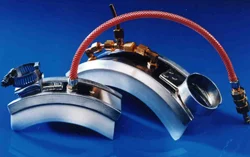
Grade 3 is a workable material for standard titanium fabrication methods, but it requires the same level of care as any CP or alloy titanium. The slightly higher strength compared to Grade 2 has practical implications for forming operations.
Weldability
Grade 3 welds well using the same procedures as Grade 2 — gas tungsten arc welding (GTAW/TIG) is standard practice. The key requirement for all CP titanium welding is contamination control:
- Shielding gas: Pure argon (99.999%) on the torch and a trailing shield on the weld bead
- Back purge: The back side of the weld must be shielded with argon until the metal cools below approximately 315°C (600°F). Titanium oxidizes rapidly at welding temperatures and the resulting discoloration (from gold through blue to white) indicates oxide contamination that degrades mechanical properties and corrosion resistance.
- Cleanliness: Mill scale, lubricants, and surface oxides must be removed mechanically or chemically before welding. Contaminated welds in titanium are not repairable by grinding — the contaminated zone must be removed and rewelded.
Grade 3 weld metal meets the strength requirements of the base material when the weld procedure is properly qualified under the applicable standard. Post-weld heat treatment is not required for CP titanium grades to restore corrosion resistance, unlike some titanium alloys.
Sheet Forming and Press-Brake Operations
Grade 3’s higher yield strength means it requires slightly more forming force than Grade 2, and springback will be somewhat greater. Tooling that works for Grade 2 will generally work for Grade 3 with minor parameter adjustments — increased bend radii (approximately 10–15% larger than Grade 2 minimums) and increased tonnage estimates.
Deep-draw operations are more sensitive. The 2-percentage-point reduction in elongation (18% vs 20%) is small but real, and complex draw geometries that are at the edge of Grade 2’s capability may require Grade 3 blank annealing between draw stages or tool redesign.
Machining
CP titanium grades machine with the same tool materials and cutting fluid requirements as titanium alloys, but at generally lower cutting forces due to lower strength. Grade 3 is slightly harder to machine than Grade 2, but both are significantly easier than Ti-6Al-4V (Grade 5). Key machining considerations for Grade 3:
- Use sharp tools; titanium work-hardens rapidly with dull tooling
- Maintain consistent chip load; interrupted cuts cause work hardening
- Use cutting fluid aggressively to prevent heat buildup and tool welding
- Carbide or high-cobalt high-speed steel tools work; avoid running dry
Grade 3 vs Grade 5 Titanium (Ti-6Al-4V): When CP Is Enough
Grade 5 — Ti-6Al-4V, the most widely used titanium alloy — sits in a completely different performance class than Grade 3. Understanding the boundary helps engineers avoid over-engineering on one side and under-designing on the other.
| Property | Grade 3 CP | Grade 5 (Ti-6Al-4V) |
|---|---|---|
| UTS min | 448 MPa (65 ksi) | 895 MPa (130 ksi) |
| Yield min | 379 MPa (55 ksi) | 828 MPa (120 ksi) |
| Elongation min | 18% | 10% |
| Density | 4.51 g/cm³ | 4.43 g/cm³ |
| Corrosion resistance | Excellent (CP TiO₂ passive) | Good (alloy) |
| Weldability | Good | Fair (requires post-weld HT for full properties) |
| Cost | Lower | Significantly higher |
| Heat treatment | Not applicable | Required for full structural strength |
Grade 5 is approximately twice as strong as Grade 3 in tensile and yield strength (895 MPa UTS minimum vs 448 MPa). This is not a small gap — it is a fundamental capability difference.
Choose Grade 3 (or Grade 2) when:
- Corrosion resistance is the primary function and mechanical loads are modest
- Welding is extensive and post-weld heat treatment is impractical
- Wall thickness is adequate for Grade 3’s allowable stress at design pressure
- The component is non-structural (ducting, lining, tubing, cladding)
Choose Grade 5 when:
- Structural load-bearing is primary (airframe structural members, landing gear, turbine blades)
- Weight reduction against steel drives the design and strength-to-weight ratio is critical
- The design is fatigue-driven (Grade 5 has substantially better fatigue performance than CP grades)
- Operating temperature reaches 300–400°C under load
The fabrication complexity factor
Ti-6Al-4V welds are rated “fair” — the heat-affected zone loses toughness without post-weld heat treatment, and qualifying a welding procedure for structural Grade 5 components under aerospace or pressure vessel codes is a significant effort. For fabricated structures where welding is extensive and post-weld heat treatment is not feasible, a CP titanium grade that welds cleanly without heat treatment remains a genuine choice.
Commercially Pure Titanium Grades 1 Through 4: Full Comparison
All four CP titanium grades are alpha-phase alloys covered by ASTM B265. They share the same crystal structure, the same corrosion resistance mechanism, and similar weldability. The differences trace entirely back to interstitial element content — primarily oxygen — which is deliberately increased from Grade 1 through Grade 4 to raise strength.
| Property | Grade 1 (R50250) | Grade 2 (R50400) | Grade 3 (R50550) | Grade 4 (R50700) |
|---|---|---|---|---|
| O max (wt%) | 0.18 | 0.25 | 0.35 | 0.40 |
| Fe max (wt%) | 0.20 | 0.30 | 0.30 | 0.50 |
| UTS min (MPa) | 240 | 345 | 448 | 550 |
| Yield min (MPa) | 138 | 275 | 379 | 483 |
| Elongation min (%) | 24 | 20 | 18 | 15 |
| Formability | Best | Very good | Good | Fair |
| Relative strength | Lowest | Moderate | High | Highest CP |
| Availability | High | Highest | Limited | Limited |
Grade 1 is the most ductile and most corrosion-resistant (lowest interstitials). Used in chemical plant cladding, heat exchanger tubing, medical devices, and applications requiring maximum formability.
Grade 2 is the industry workhorse. Highest availability, widest range of stock forms, and adequate strength for most corrosion-focused applications. The default choice for industrial titanium.
Grade 3 fills the gap between Grade 2 and Grade 4 — more strength than Grade 2, better ductility than Grade 4. Specified when Grade 2’s yield margin is insufficient and Grade 4’s reduced formability would complicate fabrication.
Grade 4 has the highest strength of the CP grades at 550 MPa UTS minimum. Used in aerospace fasteners, medical implants (ASTM F67), and applications where CP titanium must carry the highest possible structural load. Elongation drops to 15% minimum, which limits forming options.
Frequently Asked Questions
What is the difference between Grade 2 and Grade 3 titanium?
Grade 3 has a higher oxygen content (0.35 wt% max vs 0.25 wt% max for Grade 2), which raises its minimum tensile strength to 448 MPa versus 345 MPa — a 30% increase. Yield strength increases from 275 MPa to 379 MPa. Elongation drops slightly from 20% to 18%. Corrosion resistance is identical. Grade 3 costs more and is less widely available than Grade 2.
What is Grade 3 titanium used for?
Grade 3 is used in chemical processing pressure vessels, heat exchangers, marine hardware, aerospace airframe sheet, and cold-service equipment. It is specified when a design requires Grade 2’s corrosion resistance with a higher allowable stress — typically to reduce wall thickness or resolve a yield-margin shortfall identified in a stress calculation.
Is Grade 3 titanium weldable?
Yes. Grade 3 welds well using GTAW (TIG) with pure argon shielding and back purging. The procedures are the same as for Grade 2. Weld metal meets base metal strength requirements when procedures are properly qualified. Post-weld heat treatment is not required to restore corrosion resistance.
What grade of titanium is used in aerospace?
Ti-6Al-4V (Grade 5) dominates aerospace structural applications due to its high strength-to-weight ratio. Among the CP grades, Grade 2 is most common for non-structural airframe components, ducting, and fluid systems. Grade 3 appears in specific applications where CP titanium is needed with higher allowable stress, particularly under AMS 4900. Grade 4 is used in some fastener applications.
Is Grade 3 titanium stronger than Grade 2?
Yes. Grade 3 has a minimum tensile strength of 448 MPa and minimum yield of 379 MPa, compared to Grade 2’s 345 MPa tensile and 275 MPa yield. The yield strength difference of approximately 38% is the more significant figure for most structural design calculations.
How does Grade 3 titanium compare to Grade 5 (Ti-6Al-4V)?
Grade 5 is approximately twice as strong: minimum UTS of 897 MPa versus Grade 3’s 448 MPa. Grade 3 has superior weldability (Grade 5 requires post-weld heat treatment for full structural properties), slightly better corrosion resistance, and lower cost. Grade 5 is chosen when structural strength, fatigue performance, or elevated-temperature capability drives the design.
Summary
Titanium Grade 3 is a commercially pure alpha-phase titanium specified under ASTM B265, UNS R50550, and AMS 4900. Its defining characteristic is an oxygen content ceiling of 0.35 wt%, which delivers a minimum tensile strength of 448 MPa and minimum yield of 379 MPa — roughly 30% and 38% higher than Grade 2 respectively. Corrosion resistance, density, and modulus are essentially identical to Grade 2; the tradeoffs are modest reductions in formability and a higher price tag.
Grade 3 is not a replacement for Grade 2. It occupies a specific engineering niche: applications where Grade 2’s corrosion performance is required but its yield margin is insufficient. In practice, this comes up most in pressure vessel design, aerospace airframe sheet, and marine load-bearing hardware. Most buyers evaluating Grade 3 end up with Grade 2 — and that is the right outcome when load calculations do not demand the extra strength.
When the load analysis does flag Grade 2 as marginal, Grade 3 solves the problem cleanly: same TIG welding procedures, no heat treatment requirements, no alloy element concerns, and direct substitution in corrosion assessments.