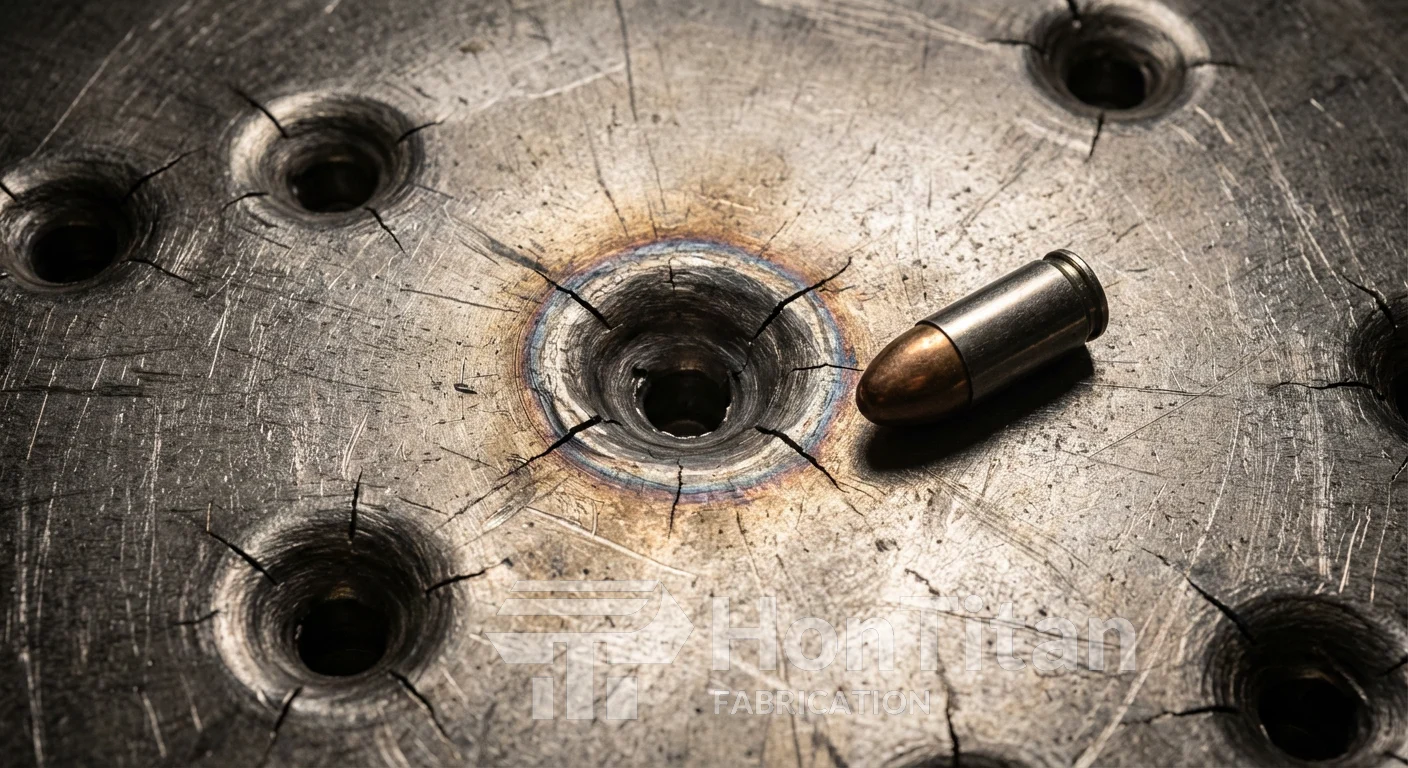
Is titanium bulletproof? The short answer is yes and no. While specific high-grade alloys like Grade 5 Titanium (Ti-6Al-4V) can effectively stop lower-velocity handgun rounds (such as 9mm or .44 Magnum) and shrapnel due to their high strength-to-weight ratio, they typically fail against high-velocity rifle rounds. Unlike modern ceramic or steel armor, titanium is vulnerable to a specific failure mode called shear plugging, which allows fast-moving bullets (like 5.56 NATO) to punch through the metal.
So, if titanium is the “ultimate armor” in video games and movies, why don’t we see soldiers wearing it on the battlefield today? The reality is a mix of fascinating physics, extreme costs, and a fatal flaw that Hollywood doesn’t tell you about.
⚠️ Important Safety Disclaimer & Methodology
Methodology: The data presented in this article is a meta-analysis based on NIJ Standard-0101.06 protocols, unclassified technical reports from the U.S. Army Research Laboratory (ARL), and material property data from ASM International.
Safety Warning: This article is for informational and educational purposes only. Ballistic performance varies significantly based on alloy heat treatment, plate geometry, and ammunition type. Do NOT use this guide to manufacture DIY personal protective equipment. Always rely on NIJ-certified commercially manufactured armor for life-saving applications.
It’s Not Just “Metal”: Pure Titanium vs. The Good Stuff
When people ask, “Is titanium bulletproof?”, they often imagine a block of pure, raw metal. But here is the catch: Pure titanium is actually surprisingly soft.
Commercially Pure (CP) titanium has a strength level comparable to low-grade steel. If you made armor out of pure titanium, a standard handgun bullet would likely dent it deeply or punch right through.
The material that has earned a legendary reputation in aerospace and military applications is Grade 5 Titanium (Ti-6Al-4V). This isn’t just titanium; it is an alloy mixed with 6% Aluminum and 4% Vanadium.
- The Magic Ratio: Grade 5 titanium offers a high strength-to-weight ratio. It is roughly 45% lighter than steel (Density: 4.43 g/cm³ vs 7.85 g/cm³) but offers comparable tensile strength.
The “Kryptonite” of Titanium: Shear Plugging
If Grade 5 titanium is so strong and light, why don’t soldiers wear it as their primary chest plate? Why do they use heavy steel or bulky ceramic instead?
To understand this, we must look at the research. According to studies by the U.S. Army Research Laboratory (ARL), specifically regarding Adiabatic Shear Banding, titanium exhibits a distinct weakness:
- Thermal Conductivity: Steel conducts heat relatively well (~50 W/m·K). Titanium is a poor conductor (~6.7 W/m·K).
- Trapped Heat: When a high-velocity bullet (2,800+ fps) hits titanium, the friction generates intense heat that cannot escape.
- The Failure: This trapped heat causes the metal to thermally soften in a microscopic zone (less than 20μm wide).
The Result: Instead of shattering the bullet (like ceramic) or catching it (like Kevlar), the titanium plate undergoes Shear Plugging. The bullet punches a neat, round plug out of the armor—like a hot knife going through butter—allowing it to pass through with surprisingly little resistance.
Real-World Tests: What Caliber Can Titanium Actually Stop?
Based on NIJ (National Institute of Justice) standards and ballistic testing data, here is a practical breakdown of what Grade 5 Titanium can handle.
(Note: Estimates assume standard lead-core FMJ ammunition.)
1. Handguns (NIJ Level IIIA equivalent)
- Threat: 9mm Luger, .44 Magnum, .357 SIG.
- Verdict: YES (Highly Effective)
- Required Thickness: 3mm – 5mm
- Analysis: A relatively thin plate of Grade 5 titanium will stop almost any standard handgun round. The metal is hard enough to deform the bullet upon impact, absorbing the energy with acceptable Backface Deformation (BFD).
2. Intermediate Rifles (NIJ Level III context)
- Threat: 5.56 NATO, 7.62x39mm (AK-47), 7.62x51mm (M80 Ball).
- Verdict: MIXED / LOW EFFICIENCY
- Required Thickness: 15mm – 18mm+
- Analysis: To achieve NIJ Level III protection, titanium loses its weight advantage.
- A titanium plate thick enough to stop M80 Ball (~15mm) would weigh more than a modern Ceramic (Alumina/Boron Carbide) plate of the same rating.
- Furthermore, “Shear Plugging” makes performance inconsistent against high-velocity 5.56mm rounds.
3. Armor Piercing & Heavy Caliber (NIJ Level IV)
- Threat: .30-06 M2 AP, .50 BMG.
- Verdict: ABSOLUTELY NO
- Analysis: Titanium cannot practically achieve NIJ Level IV. The hardness of the tungsten/steel core in AP ammo combined with titanium’s shear susceptibility means the plate would need to be impractically thick (>40mm), rendering it useless for body armor.

Titanium vs. Steel vs. Ceramic: Which Armor is Best?
How does titanium stack up against the market standards?
| Feature | Titanium (Grade 5) | Steel (AR500) | Ceramic (Composite) |
|---|---|---|---|
| Best Used For | Helmets / Face Shields | Training / Targets | Military Combat (Level IV) |
| Weight | Light | Heavy | Lightest (for Level IV) |
| Stops AP Rounds? | No | Yes (Level III+/IV) | Yes (Best) |
| Multi-Hit Capable? | Moderate | Excellent | Poor (Shatters) |
| Spalling Risk | High (Dangerous fragments) | High (Needs coating) | Low (Captures bullet) |
| Cost | $$$$ (Very High) | $ (Cheap) | $$ (Moderate) |
Why We Don’t All Wear Titanium: The Hidden Dangers
Beyond the high price tag, there is a dangerous safety issue with metal armor that video games often ignore: Spalling.
Titanium is “Sparky” (Pyrophoric)
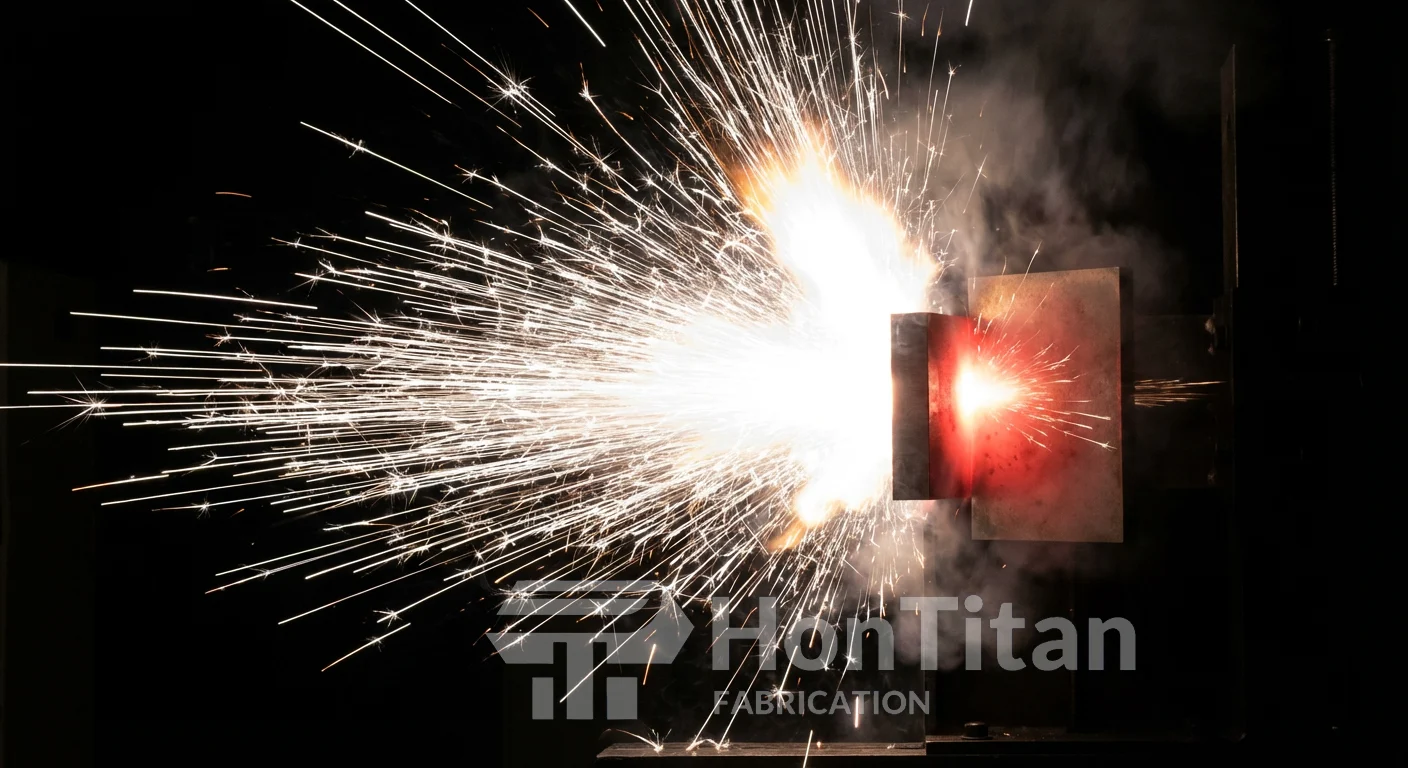
When a bullet strikes a hard metal plate, it disintegrates, sending hot fragments flying into the wearer’s chin or arms (Spalling). Titanium makes this worse because it is pyrophoric.
- The Effect: Titanium particles can spontaneously ignite under the friction of a bullet impact, creating a brilliant white flash of sparks (burning at over 3,000°F).
- The Risk: In a real tactical situation, this flash reveals your position, and the burning dust adds a thermal burn hazard to the fragmentation injury.
Safety Tip: Titanium armor MUST be coated with a thick layer of anti-spall material (like PAXCON) or worn behind a soft Kevlar backer.
The “Tarkov Effect”: Gaming vs. Reality
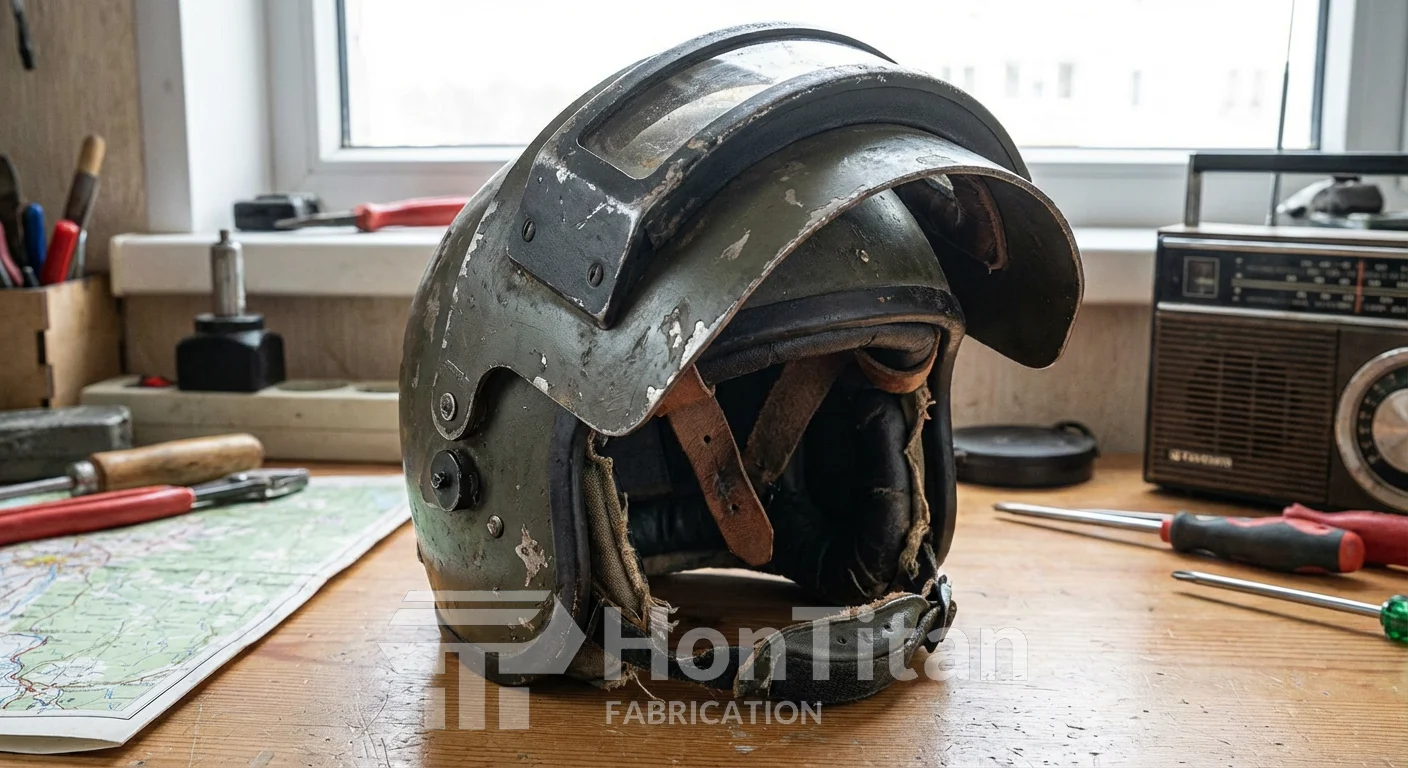
If you play Escape from Tarkov or PUBG, you might know the Altyn helmet.
The Reality Check
- In Game: The Altyn stops rifle rounds and allows you to sprint.
- Real Life: The real Russian Altyn features a titanium shell (approx. 3-4mm thick) with an aramid liner.
- Weight: It weighs nearly 4 kg (8.8 lbs). Wearing this causes severe neck strain.
- Protection: It is rated for 9mm pistols and grenade shrapnel. A direct hit from an AK-47 would penetrate the helmet or break the wearer’s neck from the impact energy alone.
Conclusion
So, is titanium bulletproof? Yes, but only within specific limits. It is a marvel of engineering for low-velocity threats like handguns and shrapnel, making it perfect for helmets.
However, for stopping high-powered rifles, modern technology has moved on to Ceramics. Titanium remains a niche material—too expensive and scientifically flawed (due to shear plugging) for your primary chest plate.
Frequently Asked Questions (FAQ)
Q: Is titanium stronger than Kevlar?
A: They work differently. Kevlar is a fabric that “catches” bullets; Titanium is a metal that deflects them. Titanium is harder, but Kevlar is lighter and flexible.
Q: Can a civilian buy titanium armor?
A: In most countries (including the US), yes. Civilians can legally own body armor, barring specific local laws or felony convictions.
Q: Why is titanium armor so expensive?
A: It destroys tools. Machining Grade 5 titanium wears out drill bits and cutting heads rapidly, driving up manufacturing costs to 5x-10x that of steel.
References & Scientific Sources
For transparency and verification, the following technical resources were consulted:
- National Institute of Justice (NIJ). Ballistic Resistance of Body Armor Standard 0101.06. U.S. Department of Justice.
- Burkins, M., & Love, B. Effect of Annealing Temperature on the Ballistic Limit Velocity of Ti-6Al-4V. U.S. Army Research Laboratory (ARL-TR-1171).
- ASM International. Properties and Selection: Nonferrous Alloys and Special-Purpose Materials. ASM Handbook, Vol 2.
- Meyers, M. A., et al. Evolution of Microstructure in Ti-6Al-4V Subjected to High-Strain-Rate Deformation. Materials Science and Engineering.