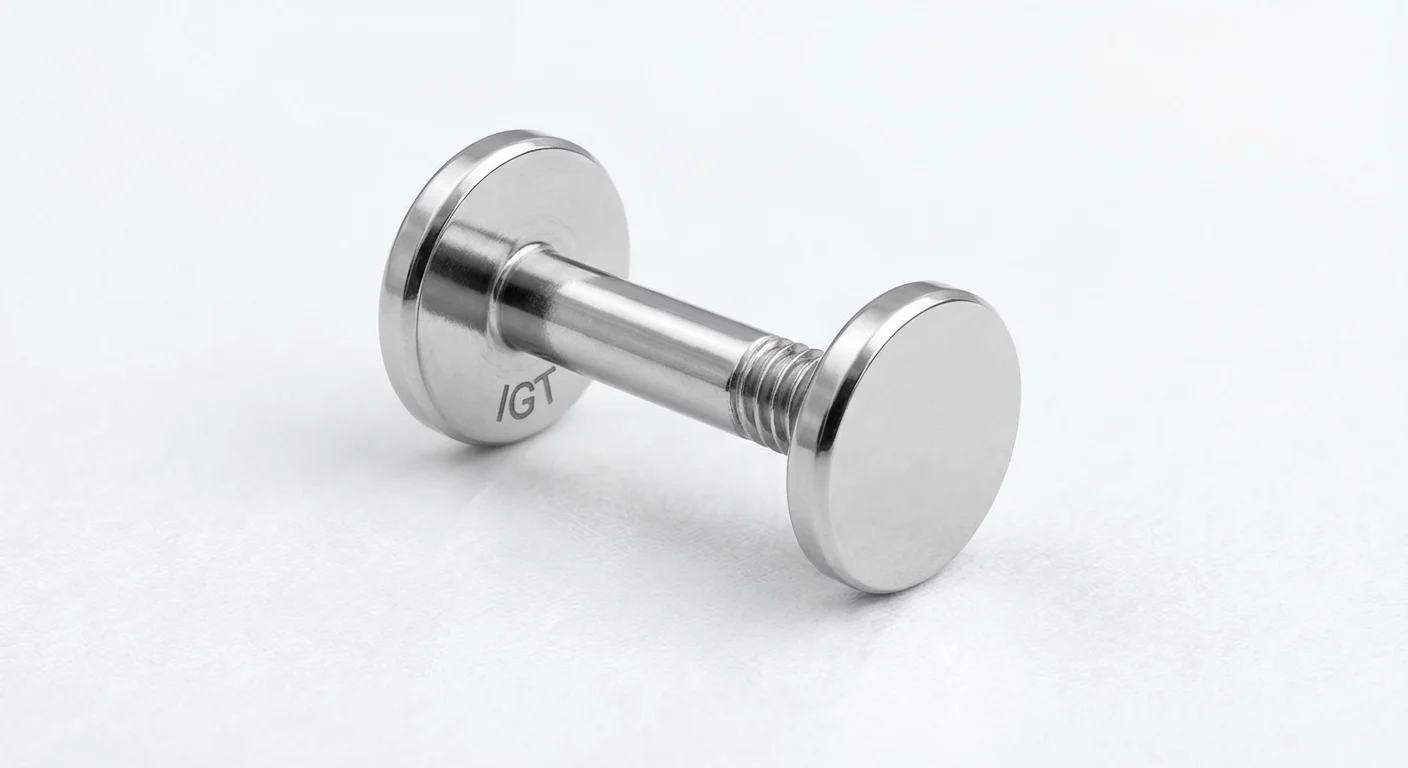
Many people experience discomfort when wearing earrings labeled “hypoallergenic.” Symptoms such as redness, itching, and irritation are common and are often caused by contact dermatitis, specifically a reaction to nickel.
If you struggle with sensitive ears, you may be considering titanium.
The short answer is yes. Titanium is widely considered the safest metal for sensitive skin and fresh piercings. It is nickel-free and biologically inert, which is why it is the standard material used in medical implants like hip replacements and heart valves.
However, it is important to choose the correct type of titanium. There is a significant difference between standard “industrial titanium” and “Implant Grade Titanium.” Choosing the lower grade may not resolve your allergy issues.
This guide explains why titanium is effective and how to choose the right grade for your piercings.
Why Is Titanium Hypoallergenic? The Science
Titanium stands out from gold, silver, or steel due to a property called biocompatibility.
Biocompatibility means the material can exist in the human body without causing an immune response or toxic reaction. Because the body accepts titanium readily, it is the preferred material for medical devices.
The Oxide Layer
Titanium possesses a distinct chemical property. Upon exposure to oxygen in the air or water, raw titanium instantly forms a stable film on its surface called the oxide layer (Titanium Dioxide or TiO₂).
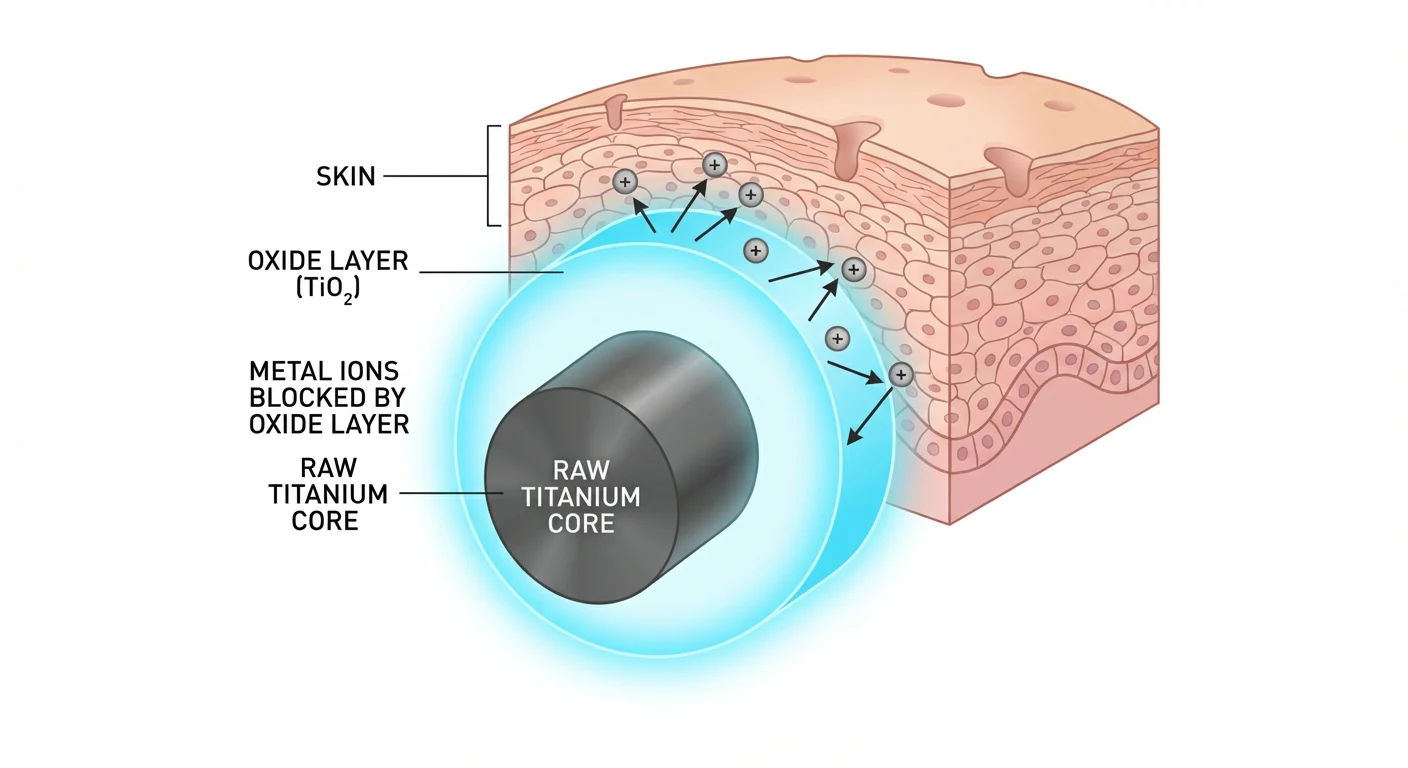
This layer acts as a barrier. It seals the metal core, preventing metal ions from dissolving or contacting the skin. Because the body interacts with this inert oxide layer rather than the raw metal, an immune response is highly unlikely.
Nickel-Free Structure
For most individuals, metal allergies are actually nickel allergies. Nickel is often used as a filler in alloy jewelry, including white gold and stainless steel, to increase hardness.
High-quality titanium (specifically Implant Grade) contains no nickel. By eliminating the allergen entirely, titanium allows the skin to heal without the irritation caused by other metals.
Titanium vs. Surgical Steel: A Comparison
A common dilemma for buyers is choosing between “Surgical Steel” and Titanium. While steel is durable, it is not always suitable for metal sensitivities.
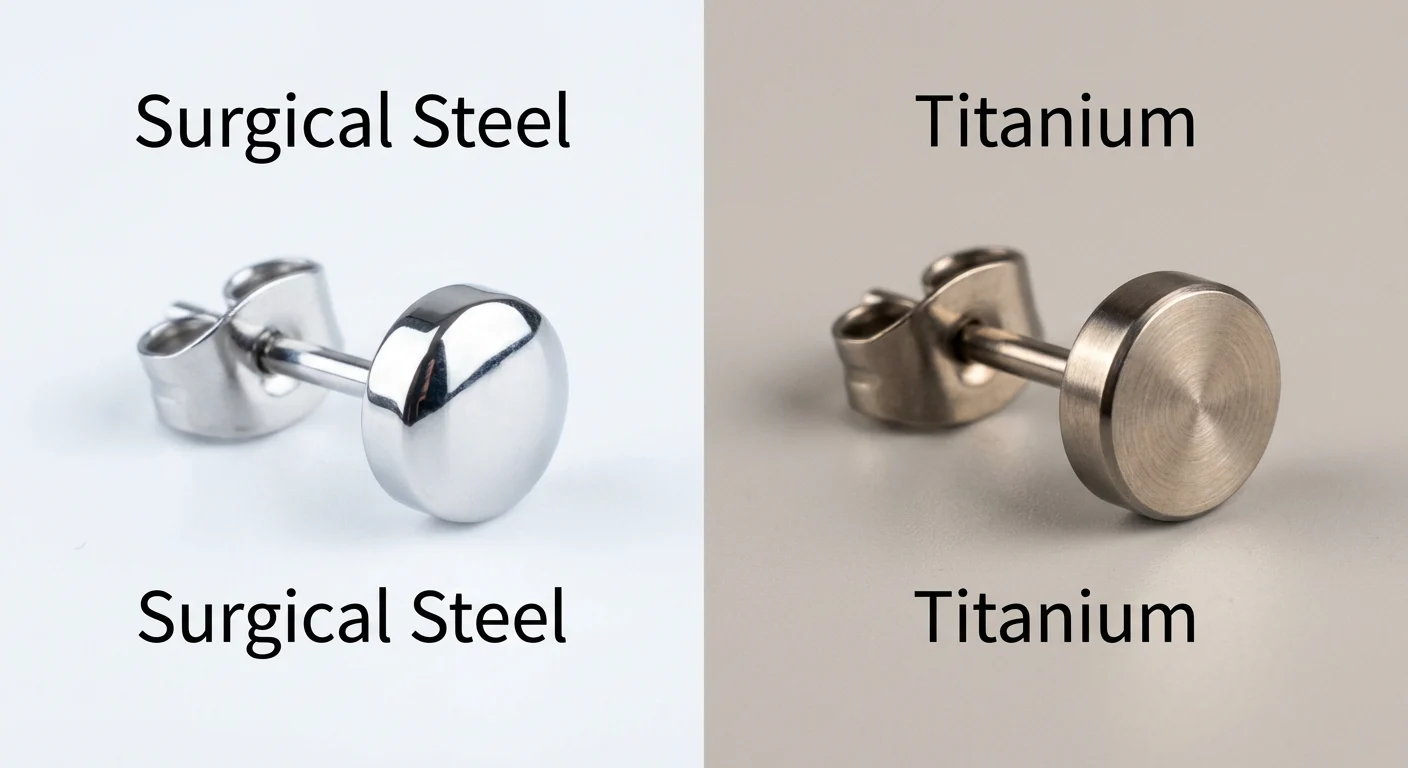
Here is the breakdown:
Quick Comparison: Titanium vs. Surgical Steel (316L)
| Feature | Surgical Steel (316L) | Implant Grade Titanium (Ti-6Al-4V) |
|---|---|---|
| Hypoallergenic? | Varies (Can cause reaction) | Yes (Standard for Sensitive Skin) |
| Nickel Content | Contains 8-12% Nickel | 0% (Nickel-Free) |
| Weight | Heavy | Lightweight (45% lighter) |
| Corrosion Resistance | Good | Excellent |
| Bio-compatibility | Low | High |
| Price | Low | Moderate |
Understanding Surgical Steel
The term “Surgical Steel” can be misleading. The most common type used in jewelry (316L Stainless Steel) is an alloy containing chromium, molybdenum, and nickel.
While the nickel is bonded within the steel, acidic sweat or scratches can cause trace amounts to release over time, triggering a reaction in sensitive individuals.
Titanium eliminates this risk. Since high-quality Implant Grade Titanium is nickel-free, there is no risk of nickel leaching.
The Weight Factor
Titanium is approximately 45% lighter than steel.
For fresh piercings, heavy jewelry can drag on the wound, causing irritation and slowing the healing process. Titanium’s light weight reduces physical stress on the piercing site, which aids in healing.
Understanding Grades: ASTM F-136
To ensure safety, you must look for specific grades of titanium. Not all titanium jewelry meets medical standards.
Implant Grade (ASTM F-136)
For sensitive ears or fresh piercings, look for the designation ASTM F-136.
This refers to a specific alloy (Ti-6Al-4V ELI) certified by the American Society for Testing and Materials for surgical implant applications.
- ELI stands for “Extra Low Interstitials,” indicating extremely low levels of impurities.
- This material is rigorously tested to ensure it will not corrode inside the body.
“G23 Titanium”
You may see jewelry labeled as “G23 Titanium.” While chemically similar to Implant Grade titanium, G23 is an industrial specification. It does not necessarily meet the strict biocompatibility standards of ASTM F-136.
Recommendation: G23 is generally acceptable for fully healed piercings, but for fresh piercings or hypersensitive skin, ASTM F-136 is the safer choice.
Commercially Pure (CP) Titanium
“CP Titanium” (Grade 1-4) is unalloyed. It is hypoallergenic but softer than alloyed versions. It is suitable for simple nose rings or hoops but is less durable for threaded studs.
Pros and Cons of Titanium Jewelry
Before switching to titanium, consider the following benefits and drawbacks.
✅ The Pros
- Hypoallergenic: Implant Grade Titanium drastically reduces the risk of allergic reactions, allowing irritated piercings to settle.
- Lightweight: It provides significant comfort, especially for larger earrings or facial piercings.
- Corrosion Resistant: Titanium is highly resistant to water and sweat. It will not rust or tarnish in the shower, ocean, or pool.
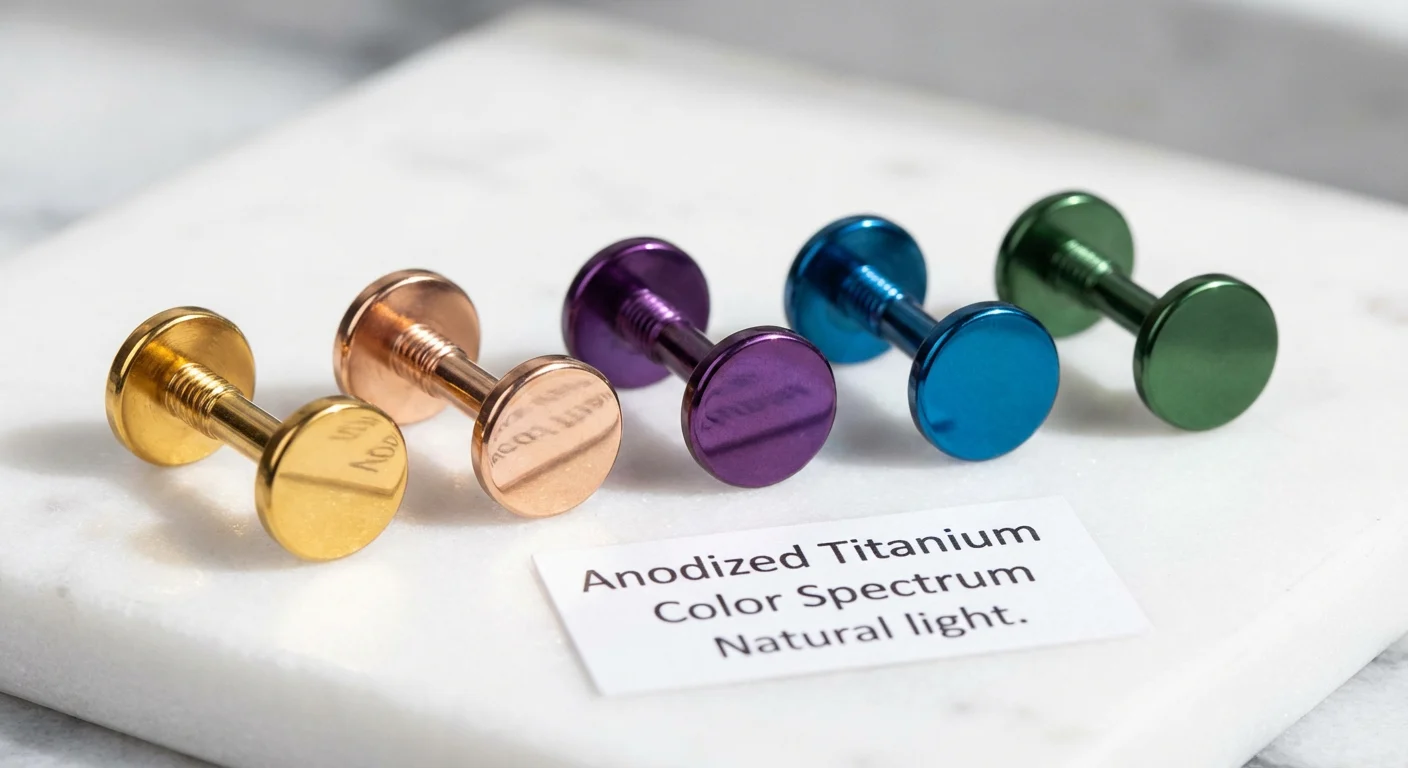
- Anodization: Titanium can be anodized to create various colors—such as gold, rose gold, or purple—without using dyes or paints.
❌ The Cons
- Price: Implant Grade Titanium is more expensive than Surgical Steel (though less expensive than solid gold).
- Appearance: Raw titanium has a darker, gunmetal-grey tone compared to the bright white of silver. However, a high-polish finish can make it appear brighter.
- Design Options: Because titanium is a hard metal, it is difficult to cast into intricate shapes, limiting some design styles compared to gold or silver.
How to Identify Real Titanium
Since titanium is more valuable than steel, mislabeling can occur. Here are three simple checks to help identify the metal.
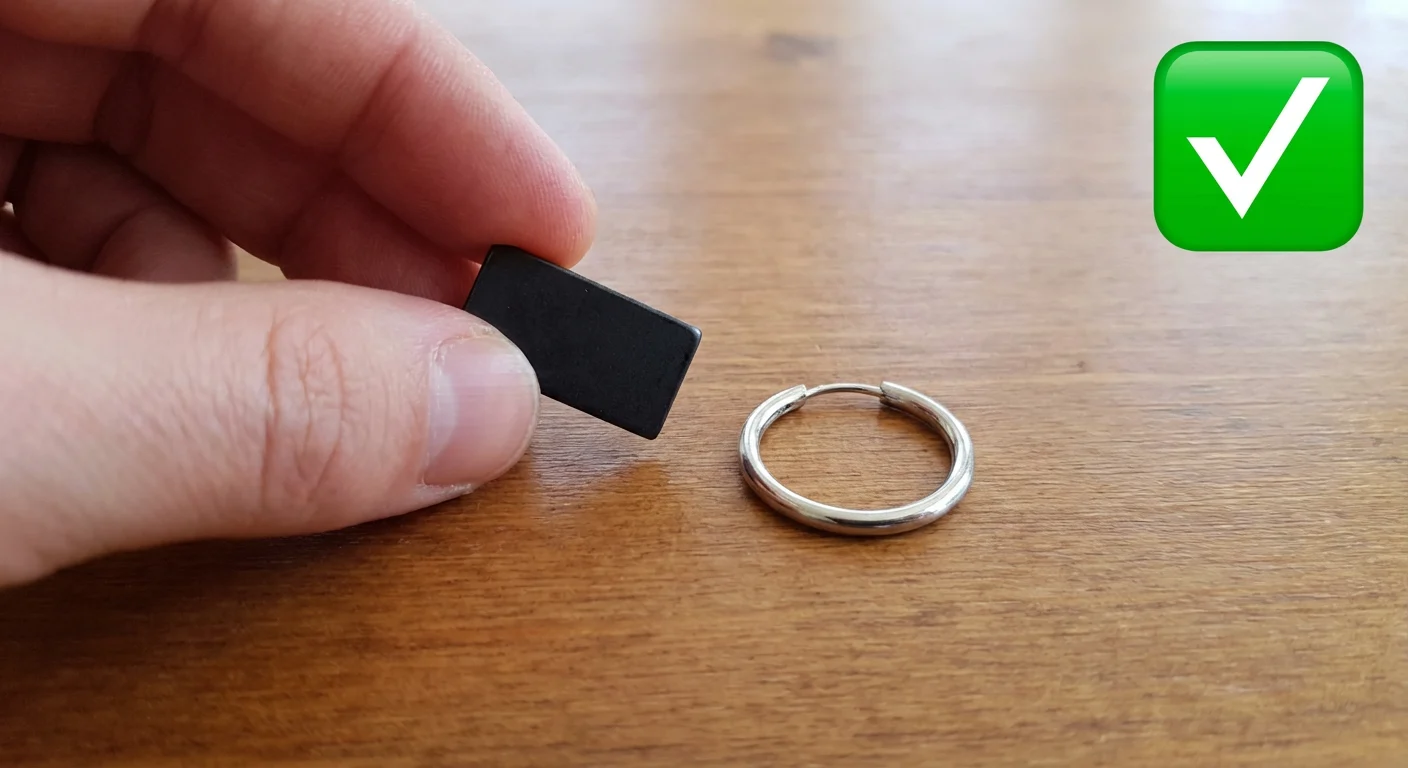
1. The Magnet Test
Titanium is non-magnetic.
- The Test: Hold a magnet against the jewelry.
- The Result: If it sticks, it is not titanium. It is likely steel or an iron-based metal.
- Note: Some high-quality steel is also non-magnetic, so this is not a definitive test on its own.
2. The Weight Test
Titanium has a lower density than steel.
- The Comparison: Titanium should feel noticeably lighter than a steel piece of the same size. Steel feels dense, similar to a coin, while titanium feels closer to aluminum.
3. The Color Inspection
Unless highly polished, raw titanium is distinct.
- Titanium: Appears darker grey (charcoal tone).
- Steel/Silver: Appears bright white or chrome-like.
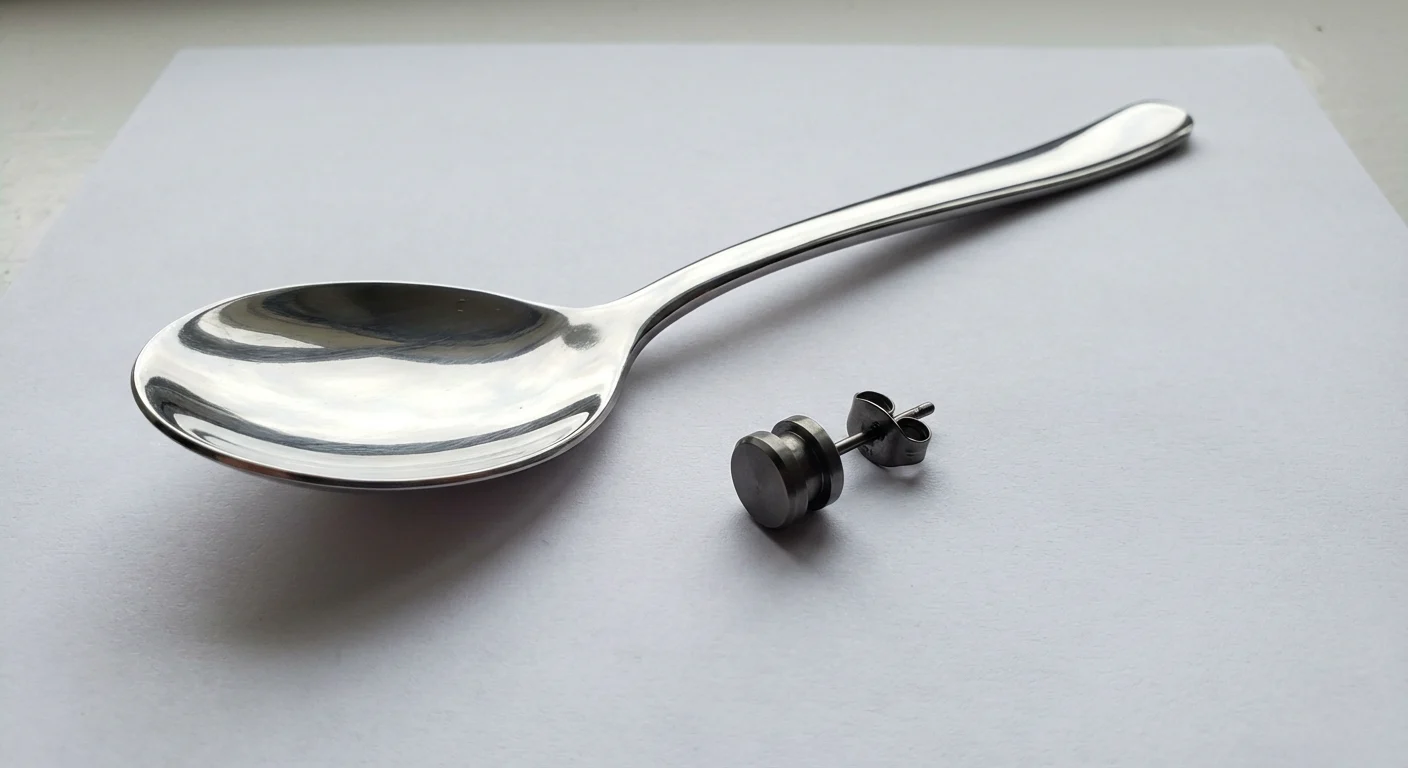
- Tip: Compare the jewelry to a stainless steel spoon. If the jewelry is darker and greyer, it is likely titanium.
FAQ
Does titanium turn your skin green?
No. Green skin is caused by a reaction with copper. Titanium contains no copper and is chemically inert, so it will not discolor the skin.
Can I wear titanium earrings in the shower?
Yes. Titanium is waterproof and resistant to corrosion. It can be worn in water without tarnishing.
Is titanium magnetic? Can I wear it in an MRI?
Titanium is non-magnetic. It is generally safe for MRI scans, but hospital policy may require removing all jewelry. Always consult your technician.
Why is titanium more expensive than steel?
Titanium is harder to mine and machine. Additionally, the certification for Implant Grade (ASTM F-136) involves strict testing, which increases the cost.
Is titanium better than gold for piercings?
For healing, yes. Gold is a soft metal that can scratch easily, potentially harboring bacteria. Alloys in gold may also contain irritants. Titanium is smoother and purer, making it superior for the healing period.
Conclusion
If you struggle with irritated piercings or contact dermatitis, the issue is likely the material, not your skin.
While “hypoallergenic” is often used loosely in marketing, Implant Grade Titanium (ASTM F-136) offers a scientifically backed solution. It eliminates nickel exposure and allows piercings to heal without interference.
Recommendation: Inspect your jewelry collection. If specific pairs cause irritation, set them aside. Try wearing certified Implant Grade Titanium studs for one week to see if your symptoms improve.