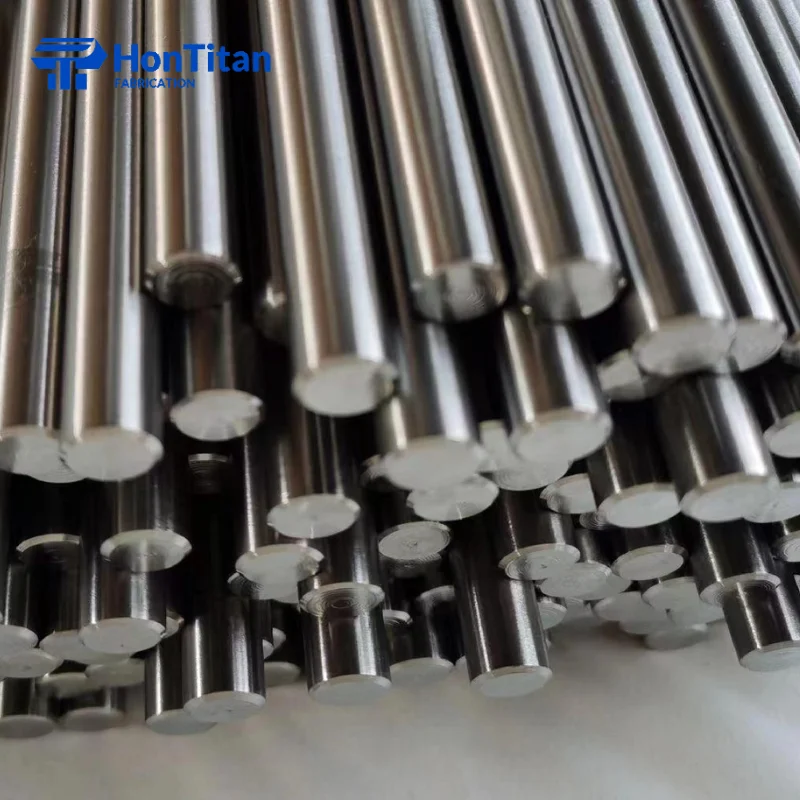
Il grado 5 (Ti-6Al-4V) e il grado 23 (Ti-6Al-4V ELI) condividono la stessa composizione di base, costituita da 61% di alluminio e 41% di vanadio. La differenza fondamentale risiede nel controllo degli elementi interstiziali: il Grado 23 limita l'ossigeno a un massimo di 0,13% rispetto al massimo di 0,20% del Grado 5, oltre a limiti più restrittivi per azoto e idrogeno. Questa variazione chimica produce un comportamento meccanico significativamente diverso: il Grado 23 offre un allungamento e una tenacità alla frattura notevolmente superiori (75–90 MPa√m contro 55–75 MPa√m), con resistenza alla trazione e allo snervamento comparabili in condizioni di ricottura. Per gli impianti medici regolati dalla norma ASTM F136, il Grado 23 è obbligatorio. Per le applicazioni strutturali aerospaziali e industriali in generale, il Grado 5 rimane lo standard e la scelta più conveniente.
Cosa significa in realtà l'acronimo ELI — e perché dovrebbe interessarti?
ELI è l'acronimo di "Extra Low Interstitials". Non si tratta di una lega distinta, bensì di una variante di produzione a maggiore purezza della stessa composizione chimica Ti-6Al-4V. La denominazione “extra low” si riferisce specificamente agli elementi interstiziali: ossigeno, azoto, carbonio e idrogeno. Si tratta di piccoli atomi che si inseriscono negli spazi vuoti (interstizi) del reticolo cristallino del titanio e hanno un effetto enorme sul comportamento del metallo sotto sforzo.
In base alla mia esperienza con le specifiche di appalto, l’errore più comune è ritenere che l’ELI sia una “lega diversa”. Non è così. Se si sottoponessero sia il Grado 5 che il Grado 23 all’analisi spettrometrica, misurando solo alluminio, vanadio e titanio, si otterrebbero risultati pressoché identici. La differenza si nota nei limiti di impurità — e sono proprio quei limiti a rendere il Grado 23 la scelta obbligatoria per i dispositivi medici impiantabili.
Il motivo per cui gli interstiziali sono così importanti è di natura metallurgica. L’ossigeno e l’azoto sono potenti stabilizzatori della fase alfa. Aumentano la temperatura di transizione da alfa a beta e producono un notevole effetto di indurimento sul reticolo del titanio. Una maggiore quantità di ossigeno comporta una maggiore resistenza alla trazione, ma anche una minore capacità di deformarsi prima della rottura. In una staffa statica che sostiene il carico su un aereo, questo compromesso favorisce il Grado 5. In un'asta spinale che si flette milioni di volte nel corso della vita di un paziente, favorisce il Grado 23.
Classe 5 vs Classe 23: un confronto a colpo d'occhio
La tabella seguente mette a confronto i due tipi di acciaio in base a tutti i parametri rilevanti per la scelta ingegneristica. I valori sono tratti dalle specifiche ASTM B348, dalle schede tecniche di Carpenter Technology e dalle banche dati dei materiali di MakeItFrom.com. Laddove sono indicati degli intervalli, questi rappresentano la variazione riscontrata tra diverse fonti certificate.
Limiti di composizione chimica (peso massimo %)
| Elemento | Grado 5 (Ti-6Al-4V) | Grado 23 (Ti-6Al-4V ELI) | Perché è importante |
|---|---|---|---|
| Alluminio (Al) | 5,5–6,751 TP3T | 5,5–6,751 TP3T | Stabilizzatore alfa; intervallo identico |
| Vanadio (V) | 3,5–4,51 TP3T | 3,5–4,51 TP3T | Stabilizzatore beta; intervallo identico |
| Ossigeno (O) | ≤ 0,20% | ≤ 0,13% | Elemento distintivo principale — unità forza contro. compromesso in termini di duttilità |
| Azoto (N) | ≤ 0,05% | ≤ 0,03% | Stabilizzante alfa; influisce sulla tenacità e sulla saldabilità |
| Ferro (Fe) | ≤ 0,40% | ≤ 0,25% | Stabilizzatore beta; influisce sull'omogeneità della microstruttura |
| Carbonio (C) | ≤ 0,08% | ≤ 0,08% | Limite identico |
| Idrogeno (H) | ≤ 0,015% | ≤ 0,0125% | Influisce sul rischio di infragilimento |
| Titanio (Ti) | Saldo (~88%) | Saldo (~89%) | Maggiore contenuto di Ti grazie alla minore presenza di impurità |
Proprietà meccaniche (condizione di ricottura)
| Proprietà | Grado 5 (Ti-6Al-4V) | Grado 23 (Ti-6Al-4V ELI) | Δ Differenza |
|---|---|---|---|
| Resistenza alla trazione massima (UTS) | Min. 895 MPa; tipicamente 950–1000 MPa | Min. 860 MPa; tipicamente 860–930 MPa | Grado 5 leggermente superiore |
| Resistenza allo snervamento (offset 0,2%) | Min. 828 MPa; tipico ~880 MPa | Min. 795 MPa; tipicamente ~795–830 MPa | Grado 5 leggermente superiore |
| Allungamento a rottura | Min. 101 TP3T; Tipico 14–181 TP3T | Min. 101 TP3T; Tipicamente 14–161 TP3T | Grado 23, paragonabile a uno leggermente superiore |
| Riduzione della superficie | Min. 20–251 TP3T; Tipico ~361 TP3T | Min. 25%; Tipicamente 30–40% | Grado 23: maggiore duttilità |
| Resistenza alla frattura (K_IC) | 55–75 MPa√m | 75–90 MPa√m | Il grado 23 è superiore di circa 301 TP3T |
| Resistenza alla fatica (10⁷ cicli) | ~510 MPa | ~500 MPa | Paragonabile |
| Modulo elastico | 114 GPa | 113 GPa | Praticamente identici |
| Durezza | 34–36 HRC | 30–35 HRC | Differenza trascurabile |
Proprietà fisiche e termiche
| Proprietà | Grado 5 | Grado 23 |
|---|---|---|
| Densità | 4,43 g/cm³ | 4,43 g/cm³ |
| Intervallo di fusione | 1604–1660 °C | 1604–1660 °C |
| Conduttività termica | 6,8 W/m·K | 7,1 W/m·K |
| Temperatura massima di esercizio | circa 350 °C | circa 350 °C |
Il succo in una frase: Il grado 5 offre una maggiore resistenza statica; il grado 23 garantisce una tolleranza al danneggiamento nettamente superiore, ovvero la capacità di resistere alla propagazione delle cricche e di sopportare carichi ciclici senza subire cedimenti catastrofici.
Il labirinto delle norme ASTM: B348, F136 e F1472
Uno degli aspetti più complessi nella definizione delle specifiche La lega di titanio è caratterizzata da molteplici norme ASTM Gli standard riguardano gli stessi principi chimici di base. Ciò non è ridondante: ogni standard disciplina una diversa forma di prodotto o un diverso impiego finale.
ASTM B348 copertine barra in lega di titanio e billette per uso generico. Sia il grado 5 che il grado 23 sono qui definiti con i rispettivi requisiti chimici e meccanici. Si tratta della norma relativa alla “catena di approvvigionamento generale”, quella che si incontra più spesso quando si ordinano prodotti laminati.
ASTM F136 è lo standard di grado implantare per il titanio Ti-6Al-4V lavorato ELI per applicazioni relative a impianti chirurgici. Questo standard fa riferimento alla composizione chimica del Grado 23 e specifica intervalli più ristretti per le proprietà meccaniche, in linea con i requisiti medici. Se il vostro prodotto è un impianto o uno strumento chirurgico, la norma F136 è quella che conta — e prescrive la composizione chimica ELI. Il Grado 5 non è conforme alla norma F136.
ASTM F1472 riguarda il Ti-6Al-4V per applicazioni nel campo degli impianti chirurgici, ma fa riferimento alla composizione standard (non ELI) del Grado 5. In pratica, l'F136 (ELI) domina il mercato degli impianti grazie alla sua superiore resistenza alla fatica e alla frattura.
Ecco la regola pratica da seguire: Se la vostra applicazione richiede la conformità alla norma ASTM F136, dovete utilizzare il grado 23. Non sono ammesse alternative. Se la vostra applicazione prevede l'uso di titanio strutturale generico (supporti aerospaziali, componenti industriali, parti per auto da corsa), lo standard è la norma ASTM B348 grado 5, che rappresenta anche la scelta più economica.
| Standard | Copertine | Classi comprese | Applicazione tipica |
|---|---|---|---|
| ASTM B348 | Barre e billette (in generale) | 5ª classe, 23ª classe | Forniture per l'ingegneria in generale |
| ASTM F136 | Impianto chirurgico forgiato | Solo livello 23 (ELI) | Impianti medici, strumenti chirurgici |
| ASTM F1472 | Impianto chirurgico forgiato | Solo per la quinta elementare | Meno comune nel caso degli impianti |
| ASTM B863 | Filo per saldatura | 5ª classe, 23ª classe | Materiali di consumo per la saldatura |
Approfondimento sulle proprietà meccaniche: i punti di forza di ogni tipo di acciaio
Punto di forza: il vantaggio della quinta elementare
Allo stato ricotto, entrambi i risultati mostrano resistenze alla trazione e resistenze allo snervamento comparabili — Il grado 5 presenta una resistenza solo leggermente superiore. Tuttavia, il grado 5 può essere sottoposto a trattamento termico per raggiungere livelli di resistenza più elevati (resistenza alla rottura (UTS) fino a oltre 1000 MPa) più facilmente rispetto al grado 23, poiché il maggiore contenuto di ossigeno favorisce una fase alfa più resistente. In uno scenario di carico statico — una staffa che sostiene un sensore, un elemento strutturale del telaio, un collegamento a flangia — questo vantaggio in termini di resistenza consente di progettare parti più sottili e leggere.
Tuttavia, il divario è minore di quanto molti ingegneri credano. Il limite di snervamento del grado 23, pari a 795 MPa (valore minimo secondo la norma ASTM F136), rimane comunque straordinariamente elevato e, per la maggior parte delle applicazioni strutturali, supera di gran lunga i requisiti di progettazione. La differenza di resistenza diventa un limite solo in applicazioni che spingono il materiale al limite delle sue capacità.
Duttilità e tenacità: il vantaggio del grado 23
È qui che il Grado 23 si distingue. Con un allungamento di 14–16% (rispetto ai 14–18% del Grado 5 in condizioni tipiche di ricottura — gli intervalli si sovrappongono più di quanto suggeriscano molte fonti) e una tenacità alla frattura di 75–90 MPa√m (rispetto ai 55–75 MPa√m), il Grado 23 è più resistente all’innesco e alla propagazione delle cricche.
Nella mia analisi delle modalità di cedimento che si verificano nella realtà, la tenacità alla frattura è la proprietà che distingue un danno fastidioso da un cedimento catastrofico. Un componente di grado 5 con una piccola crepa superficiale può tollerarla fino a una dimensione critica, per poi rompersi improvvisamente. Un componente di grado 23 tollera una crepa più grande prima di raggiungere quel punto critico, dando agli ispettori più tempo per individuarla e agli ingegneri un margine di errore maggiore.
Negli ambienti soggetti a sollecitazioni cicliche — ovvero in tutte le applicazioni sottoposte a cicli di sollecitazione ripetuti, dalle barre di fissaggio spinale alle boccole dei carrelli di atterraggio fino alle apparecchiature industriali soggette a vibrazioni — questo vantaggio in termini di resistenza si traduce direttamente in una maggiore durata.
La stanchezza: più vicina di quanto si pensi
La resistenza a fatica a 10⁷ cicli mostra che entrambi i gradi presentano prestazioni simili: circa 500 MPa per il Grado 23 e 510 MPa per il Grado 5 nelle prove senza intaglio. Il valore nominale della resistenza a fatica favorisce leggermente il Grado 5, ma il parametro più rilevante per l'integrità strutturale è la velocità di propagazione della cricca a fatica, ovvero la rapidità con cui una cricca si estende una volta che si è formata.
I dati di Carpenter Technology e le ricerche pubblicate dimostrano costantemente che l'acciaio ELI di grado 23 presenta una velocità di propagazione delle cricche da fatica più bassa, il che significa che, una volta che si forma una cricca, questa cresce più lentamente. Per le filosofie progettuali basate sulla tolleranza al danno — che regolano la maggior parte delle applicazioni aerospaziali e nel campo degli impianti — è questo il parametro che conta, non la resistenza all'innesco.
Impianti medici: perché l'ELI è imprescindibile
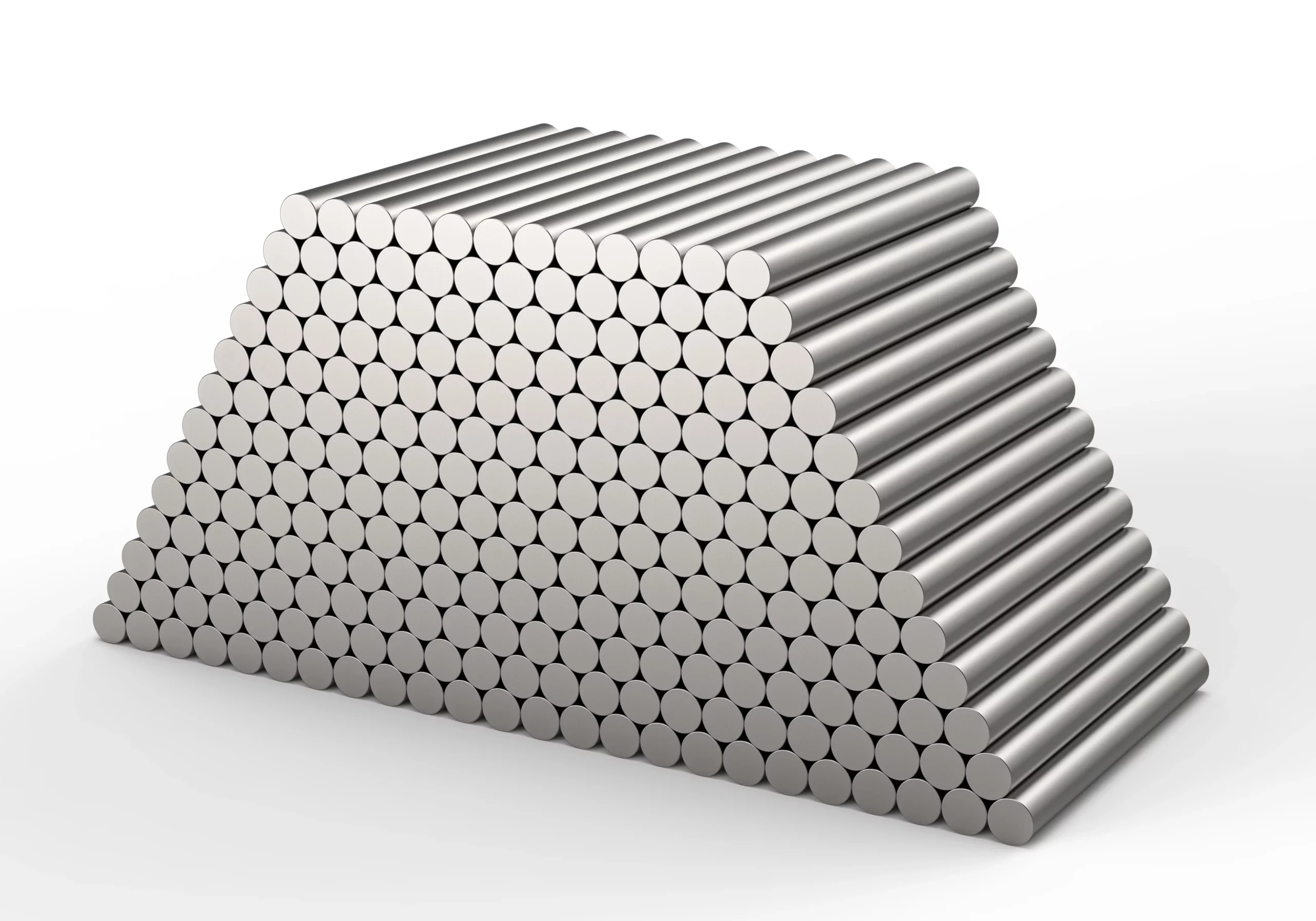
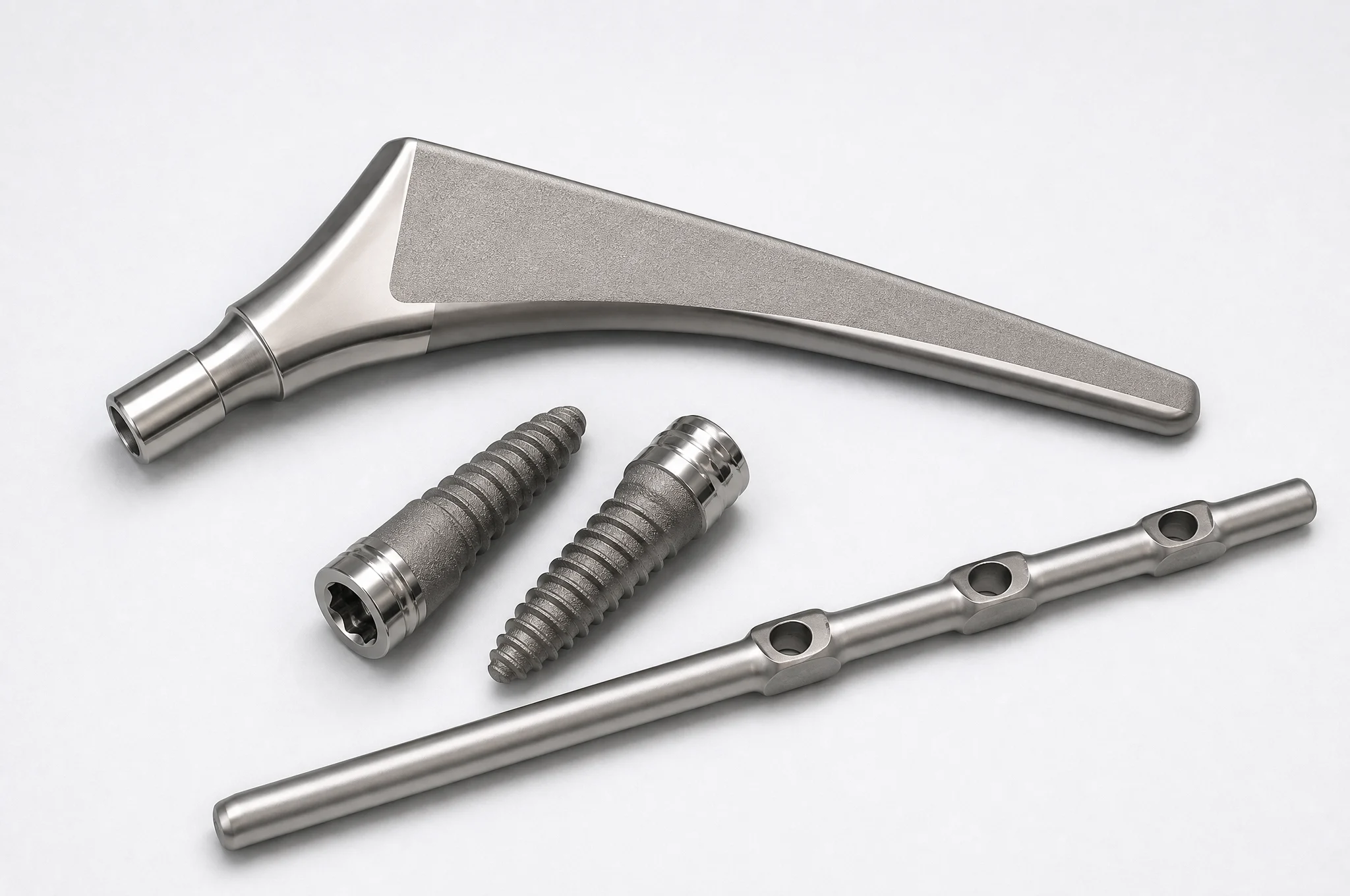
Per qualsiasi dispositivo impiantato nel corpo umano — protesi articolari, dispositivi di fissaggio spinale, impianti dentali, viti ossee, involucri per pacemaker — il grado 23 (Ti-6Al-4V ELI) è il materiale standard del settore e, nella maggior parte dei casi, il requisito normativo.
Le ragioni vanno ben oltre il semplice fatto di avere “dati migliori sulla scheda tecnica”.”
Conformità normativa. La norma ASTM F136, che disciplina gli impianti chirurgici in titanio Ti-6Al-4V lavorato, specifica esplicitamente la composizione chimica dell'ELI. Un componente di Grado 5 con un contenuto di ossigeno più elevato non soddisfa i requisiti della norma F136. La presentazione di una notifica pre-commercializzazione 510(k) alla FDA con materiale di Grado 5 per un'applicazione implantare non supererebbe la revisione delle specifiche del materiale.
Biocompatibilità. Sebbene entrambi i gradi presentino una buona biocompatibilità, il minor contenuto interstiziale del Grado 23 produce uno strato di ossido superficiale (TiO₂) più pulito e omogeneo. La composizione chimica ELI è lo standard industriale per le applicazioni implantari proprio perché soddisfa i requisiti più rigorosi della norma ASTM F136 ed è stata convalidata da decenni di uso clinico nelle protesi d'anca, negli impianti spinali e nelle applicazioni dentali.
Affaticamento fisico. Lo stelo femorale di una protesi d'anca è sottoposto a circa 1-2 milioni di cicli di carico all'anno. L'asta vertebrale di un paziente attivo si flette ad ogni movimento. Il corpo umano rappresenta un ambiente di fatica estremamente impegnativo. L'eccellente resistenza alla frattura e la minore velocità di propagazione delle cricche dell'acciaio di grado 23 rispondono direttamente a questa sfida.
Margine per un intervento di revisione. Quando è necessario revisionare o rimuovere un impianto, l'osso e il tessuto circostanti risultano compromessi. La maggiore duttilità del grado 23 consente di estrarre l'impianto più facilmente senza causarne la frattura e garantisce una maggiore tolleranza nei confronti dei microdanneggiamenti preesistenti.
Ho visto team di approvvigionamento tentare di sostituire il grado 5 con il grado 23 nei componenti degli impianti per ridurre i costi dei materiali del 20–30%. In tutti i casi di cui sono a conoscenza, tale sostituzione è stata respinta in fase di controllo qualità. Le ragioni normative e prestazionali a favore dell’ELI negli impianti sono semplicemente troppo convincenti.
Applicazioni ingegneristiche al di fuori del settore medico
Componenti strutturali per l'industria aerospaziale
Il grado 5 è prevalente nelle applicazioni strutturali aerospaziali generali: paratie, elementi di fissaggio delle ali, supporti motore, componenti del carrello di atterraggio. Oltre il 70% del totale La lega di titanio prodotta a livello mondiale è una variante della Ti-6Al-4V, e la maggior parte di questo materiale è di livello standard 5.
Il grado 23 viene utilizzato nelle strutture della cellula soggette a rottura critica, ovvero componenti il cui cedimento avrebbe conseguenze catastrofiche e per i quali gli intervalli di ispezione devono tenere conto della crescita delle cricche tra un controllo e l'altro. Si pensi alle travi del carrello di atterraggio, alle strutture di collegamento delle ali e alle pale della ventola del motore. La maggiore tenacità garantisce un margine di tempo nel ciclo di ispezione.
Sport motoristici e automobili ad alte prestazioni
Per quanto riguarda i componenti delle sospensioni, gli elementi del telaio e le parti della trasmissione delle auto da corsa, il grado 5 rappresenta la scelta standard. In queste applicazioni, la resistenza è più importante della tenacità, poiché i componenti sono progettati per una durata di servizio più breve e una sostituzione più frequente.
Detto questo, ho visto specificare l'acciaio di grado 23 per i giunti delle gabbie di sicurezza e per i componenti delle strutture di sicurezza, dove l'assorbimento di energia attraverso la deformazione è più importante della resistenza massima.
Fabbricazione additiva
Il panorama della produzione additiva sta introducendo nuove sfumature nel dibattito tra il grado 5 e il grado 23. Per la fusione a letto di polvere (PBF-LB, precedentemente SLM), la polvere ELI di grado 23 è sempre più preferita perché:
- Un minor contenuto di ossigeno nella polvere di partenza si traduce in una minore presenza di ossigeno nel pezzo finito
- I componenti AM presentano intrinsecamente una porosità residua maggiore rispetto a quelli lavorati, rendendo la tenacità alla frattura un fattore ancora più critico
- Le velocità di solidificazione più basse nella produzione additiva danno origine a microstrutture diverse, in cui viene preservato il vantaggio in termini di tenacità offerto dalla tecnologia ELI
Per la deposizione di energia diretta (DED/WAAM) vengono utilizzati entrambi i gradi. Una ricerca pubblicata (Mashigo et al., SAIMM 2021) ha rilevato che le pareti di Grado 5 prodotte con WAAM mostravano maggiore resistenza e durezza ma minore duttilità rispetto alle pareti di Grado 23 — in linea con il comportamento del forgiato, confermando che l’effetto interstiziale persiste indipendentemente dal metodo di produzione.
Considerazioni sui costi: qual è il vero importo del premio ELI
Il grado 23 ELI comporta un sovrapprezzo rispetto al grado 5, solitamente compreso tra il 15 e il 40% a seconda della forma del prodotto, del volume dell'ordine e del fornitore. Per le barre di dimensioni standard, il sovrapprezzo è di circa il 20–40%. Per le barre certificate di grado medico secondo la norma ASTM F136 — con piena tracciabilità del materiale, rapporti di prova di fabbrica e documentazione a livello di lotto — il sovrapprezzo totale può essere più elevato a causa dei costi aggiuntivi di prova e certificazione.
Il sovrapprezzo è dovuto a due fattori. In primo luogo, il controllo più rigoroso delle proprietà chimiche durante la fusione e la raffinazione richiede fasi di lavorazione aggiuntive e comporta tassi di scarto più elevati. In secondo luogo, il materiale per uso medico comporta costi aggiuntivi legati alla completa tracciabilità del materiale, ai rapporti di prova certificati (certificati di fabbrica) e alla documentazione di qualità a livello di lotto.
Il sovrapprezzo è giustificato? Dipende interamente dall'applicazione:
| Applicazione | Efficienza in termini di costi per la quinta classe | Motivazione per il grado 23 |
|---|---|---|
| Struttura aerospaziale generale | ✅ La quinta elementare vince | No — la concentrazione standard è sufficiente |
| Struttura critica in caso di rottura | — | ✅ ELI obbligatorio secondo le specifiche di progettazione |
| Impianto medico | — | ✅ ELI richiesto dalla norma ASTM F136/FDA |
| Componente da competizione | ✅ La quinta elementare vince | Solo per strutture di sicurezza |
| Prototipo AM (PBF-LB) | Si consideri il grado 23 | ✅ Risultati migliori nei pezzi finiti |
| Attrezzature industriali | ✅ La quinta elementare vince | Nessun costo aggiuntivo senza alcun vantaggio |
Schema decisionale: quale grado indicare?
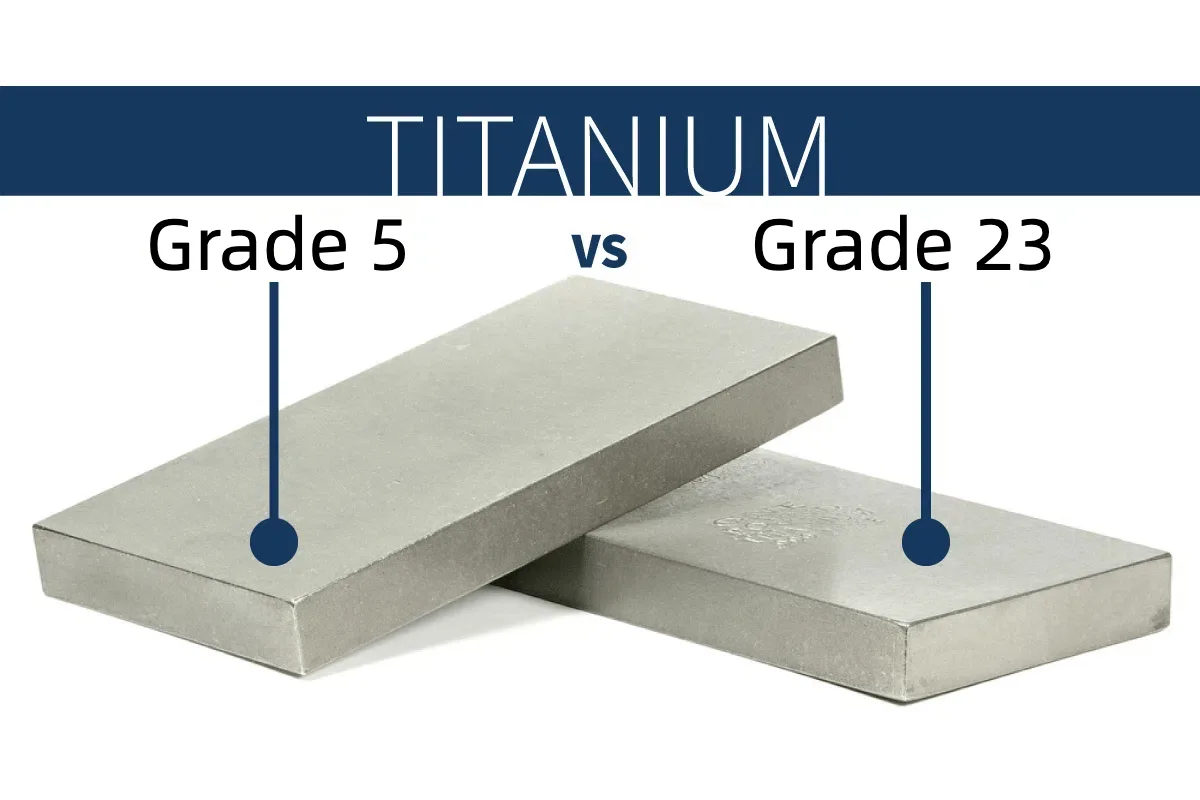
Piuttosto che fornire una raccomandazione generica, ecco un albero decisionale basato sui requisiti dell'applicazione:
Fase 1: Si tratta di un dispositivo impiantabile nel corpo umano o di uno strumento chirurgico? → Se SÌ: Grado 23 (ELI) — come previsto dalla norma ASTM F136. Non sono previste alternative. → Se NO: Passare alla Fase 2.
Fase 2: Il componente è critico in termini di rottura (guasto = incidente di sicurezza)? → Se SÌ: valutare attentamente l'uso del grado 23 per il margine di tenacità alla frattura. → Se NO: passare alla fase 3.
Fase 3: Il componente è sottoposto a carichi ciclici significativi (>10⁶ cicli)? → Se SÌ: verificare se la resistenza alla fatica del Grado 5 soddisfa i requisiti di progetto con un adeguato coefficiente di sicurezza. Se il margine è ridotto, la resistenza alla propagazione delle cricche del Grado 23 offre una garanzia in più. → Se NO: passare alla Fase 4.
Fase 4: Il progetto è limitato dalla resistenza del materiale (funziona in prossimità del limite di snervamento)? → Se SÌ: il grado 5 potrebbe essere la scelta migliore grazie al suo vantaggio in termini di resistenza (3–8%). → Se NO: il grado 5 è l'opzione predefinita più conveniente.
Fase 5: Il componente è stato realizzato con la produzione additiva (PBF-LB)? → Se SÌ: prendere in considerazione la polvere ELI di grado 23 per ottenere migliori proprietà del pezzo finito. → Se NO: grado 5 per applicazioni di ingegneria generale.
Differenze tra saldatura, lavorazione meccanica e trattamento termico
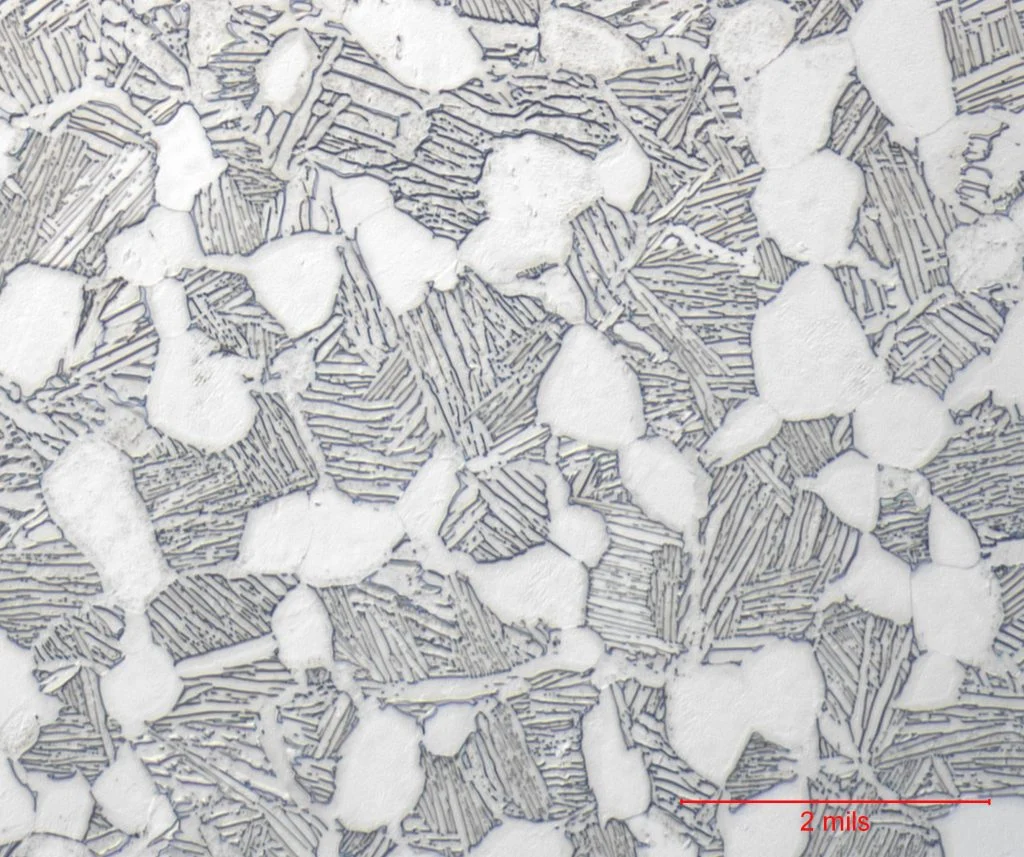
In pratica, i gradi 5 e 23 presentano caratteristiche molto simili durante la lavorazione. Entrambi sono completamente trattabili termicamente in sezioni di dimensioni fino a circa 15 mm e possono essere sottoposti a trattamento di solubilizzazione e invecchiamento (STA) per aumentarne la resistenza. Entrambi rispondono bene alla lavorazione convenzionale con utensili e parametri adeguati.
Le differenze sono sottili ma reali:
Saldatura. Il minor contenuto di azoto del Grado 23 garantisce una migliore saldabilità. L'azoto aumenta il rischio di porosità della saldatura e di infragilimento. Per le strutture saldate critiche, il filo d'apporto ELI (ASTM B863 Grado 23) è preferibile anche quando si salda materiale di base di Grado 5. Nelle specifiche di saldatura aerospaziale, i materiali di consumo ELI sono spesso obbligatori indipendentemente dal grado del materiale di base.
Risposta al trattamento termico. Il minor contenuto di ossigeno nel grado 23 comporta un comportamento leggermente diverso delle trasformazioni di fase durante il trattamento termico. La temperatura di transizione alfa-beta subisce uno spostamento e la microstruttura risultante dopo il trattamento STA può variare. Per la maggior parte delle applicazioni, i cicli standard di trattamento termico funzionano per entrambi i gradi, ma se si sta ottimizzando per proprietà specifiche (ad esempio, massimizzare la resistenza alla fatica in un componente prodotto con AM), vale la pena sviluppare un trattamento termico specifico per il grado.
Lavorazione meccanica. In pratica non vi è alcuna differenza significativa. Entrambi i gradi richiedono gli stessi utensili, le stesse velocità e gli stessi avanzamenti. La resistenza leggermente superiore del Grado 5 potrebbe aumentare marginalmente l'usura degli utensili, ma ciò rientra nei normali limiti di variazione del processo.
Errori comuni commessi dagli ingegneri
Errore n. 1: dare per scontato che “maggiore resistenza = migliore”.” Il vantaggio in termini di resistenza del grado 5 si manifesta principalmente nelle condizioni di trattamento termico. Allo stato ricotto, entrambi i gradi presentano resistenze alla trazione e allo snervamento comparabili. Scegliere il grado 5 ’solo perché è più resistente“ significa ignorare il compromesso in termini di tenacità e può comportare il cedimento più grave del componente.
Errore n. 2: Confondere ASTM B348 e ASTM F136. Una barra B348 di grado 5 e una F136 Le barre di grado 23 hanno un aspetto identico. Non sono intercambiabili nelle applicazioni implantari. Verificare sempre quale standard sia effettivamente richiesto dalle specifiche di progettazione.
Errore n. 3: considerare l'ELI come un semplice marchio di marketing. Alcuni fornitori commercializzano prodotti di qualità “ELI” senza la certificazione completa F136. Se la vostra applicazione richiede materiali di grado implantare, esigete la certificazione ASTM F136 corredata dai rapporti completi delle prove sui materiali, non limitatevi alla semplice “composizione ELI”.”
Errore n. 4: ignorare il contenuto di ossigeno nelle polveri AM. Se si utilizza polvere di titanio per la stampa 3D, il contenuto di ossigeno della polvere di partenza influisce direttamente sulle proprietà del pezzo finito. Una polvere di grado 5 con un contenuto di ossigeno pari a 0,201% non consentirà di ottenere le proprietà del grado 23 nel pezzo finito, indipendentemente dai parametri di stampa.
Errore n. 5: trascurare i costi a livello di sistema. Il sovrapprezzo del materiale per il grado 23 è spesso modesto rispetto al costo totale di un impianto finito (lavorazione meccanica, trattamento superficiale, sterilizzazione, conformità normativa, imballaggio). In base alla mia esperienza, la differenza di costo del materiale rappresenta in genere il 2–5% del costo totale del dispositivo — molto meno del costo normativo necessario per ottenere l’approvazione di una sostituzione del materiale.
Domande frequenti: risposte rapide
Qual è la differenza tra il Ti-6Al-4V di grado 5 e quello di grado 23?
Il grado 23 (ELI) presenta limiti massimi inferiori per l'ossigeno (0,13% contro 0,20%), azoto (0,03% vs 0,05%) e idrogeno (0,0125% vs 0,015%). Ciò produce una tenacità alla frattura significativamente più elevata (75–90 vs 55–75 MPa√m) e una duttilità comparabile, con resistenza alla trazione simile allo stato ricotto.
Il titanio di grado 23 è uguale al titanio per impianti?
Sì, il grado 23 (Ti-6Al-4V ELI) è la lega di titanio per impianti standard quando specificata secondo la norma ASTM F136. Si tratta della lega di titanio per impianti medici più utilizzata a livello mondiale.
Cosa significa l'acronimo ELI nel campo del titanio?
ELI è l'acronimo di "Extra Low Interstitials" (contenuto estremamente basso di elementi interstiziali) e si riferisce a un contenuto ridotto di ossigeno, azoto, carbonio e idrogeno rispetto al grado standard della lega.
Il titanio di grado 23 è migliore di quello di grado 5?
Nessuno dei due è universalmente “migliore”. Il grado 23 presenta una duttilità, una resistenza alla frattura e una biocompatibilità superiori. Il grado 5 ha una resistenza alla trazione maggiore e un costo inferiore. La scelta giusta dipende dall'applicazione.
Il grado 23 può sostituire il grado 5?
Sì, il grado 23 può sostituire il grado 5 nella maggior parte delle applicazioni (soddisfa o supera i requisiti meccanici del grado 5, fatta eccezione per una modesta differenza in termini di resistenza). Tuttavia, la sostituzione del grado 5 con il grado 23 non è ammessa nelle applicazioni implantari disciplinate dalla norma ASTM F136.
Perché si utilizza il Ti-6Al-4V ELI al posto del grado 5 standard?
Per applicazioni che richiedono una tolleranza ai danni superiore (tenacità alla frattura, resistenza alla propagazione delle cricche da fatica) o la conformità normativa alla norma ASTM F136 per gli impianti medici.
Qual è la differenza di prezzo tra il grado 5 e il grado 23?
Il grado 23 costa in genere dai 15 ai 401 TP3T in più rispetto al grado 5 per le barre commerciali, a seconda della forma del prodotto, del volume dell'ordine e dei requisiti di certificazione. Il materiale F136 certificato per uso medico comporta un sovrapprezzo aggiuntivo a causa dei requisiti di collaudo e tracciabilità.
Sintesi: Il punto di vista di un ingegnere
Dopo anni di esperienza con le specifiche delle leghe di titanio in applicazioni aerospaziali, mediche e industriali, ho notato che la scelta tra il Grado 5 e il Grado 23 viene spesso gestita in modo errato — di solito perché gli ingegneri optano automaticamente per il Grado 5 “perché è più resistente”, senza comprendere appieno il compromesso in termini di tenacità.
Ecco il mio punto di vista:
La quinta elementare è il pilastro della scuola. È la scelta predefinita ideale per il modello 80% nelle applicazioni strutturali in titanio. È più resistente, è più economico ed è quello che il vostro fornitore ha in magazzino. Non sostituitelo senza una valida ragione tecnica.
Il grado 23 è quello dello specialista. Esiste per tre motivi specifici: conformità degli impianti medici (ASTM F136), applicazioni strutturali critiche in caso di frattura e ambienti in cui la tolleranza al danneggiamento è più importante della resistenza massima. Quando serve, serve davvero — e non ci sono alternative.
Il contenuto di ossigeno è l'elemento fondamentale. Se non dovessi ricordare nient'altro di questo articolo, ricorda questo: la differenza tra i due gradi 0.13% e 0.20% sta nel tenore di ossigeno. Tutto il resto deriva da quella singola specifica chimica.
Se state per effettuare un ordine di materiale e non siete ancora sicuri di quale tipo sia più adatto alla vostra applicazione, vi consiglio vivamente di rivolgervi al team tecnico del vostro fornitore di materiali, illustrando i vostri specifici requisiti di progettazione. Il costo di quella consulenza è pari a zero; il costo di specificare il grado sbagliato può tradursi in pezzi scartati, certificazioni non ottenute o, nel peggiore dei casi, guasti sul campo.