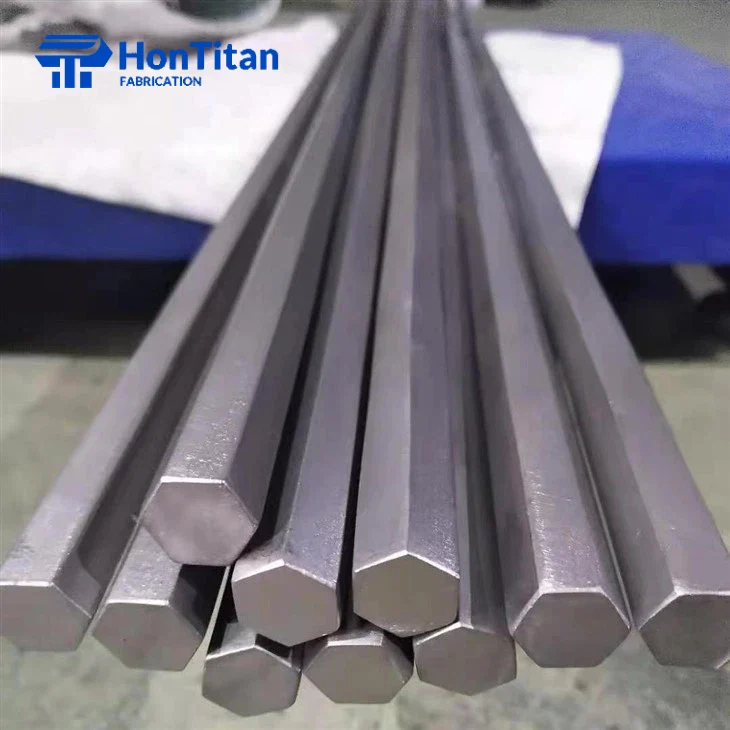
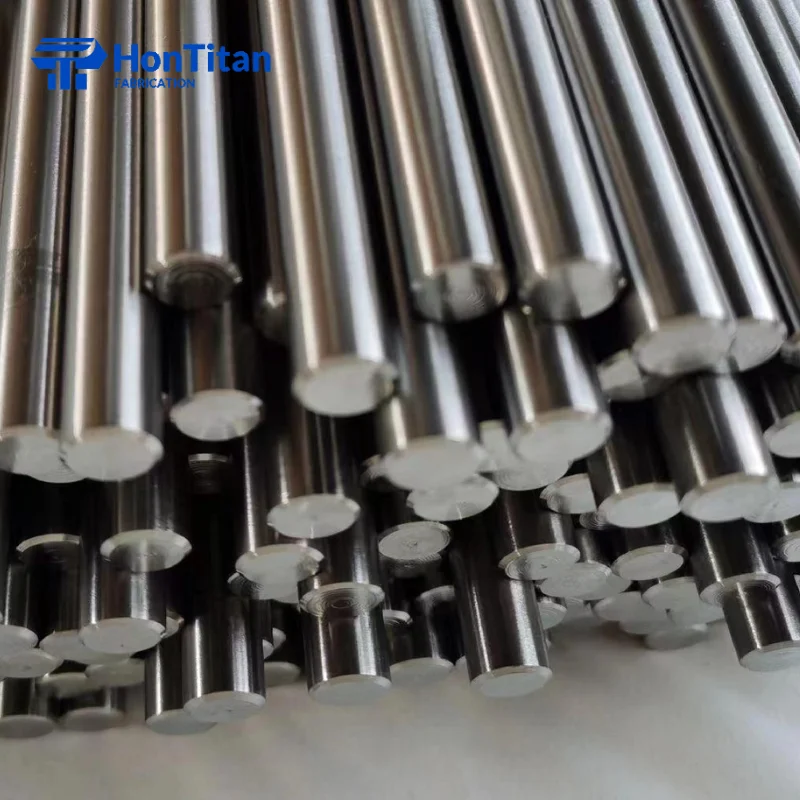
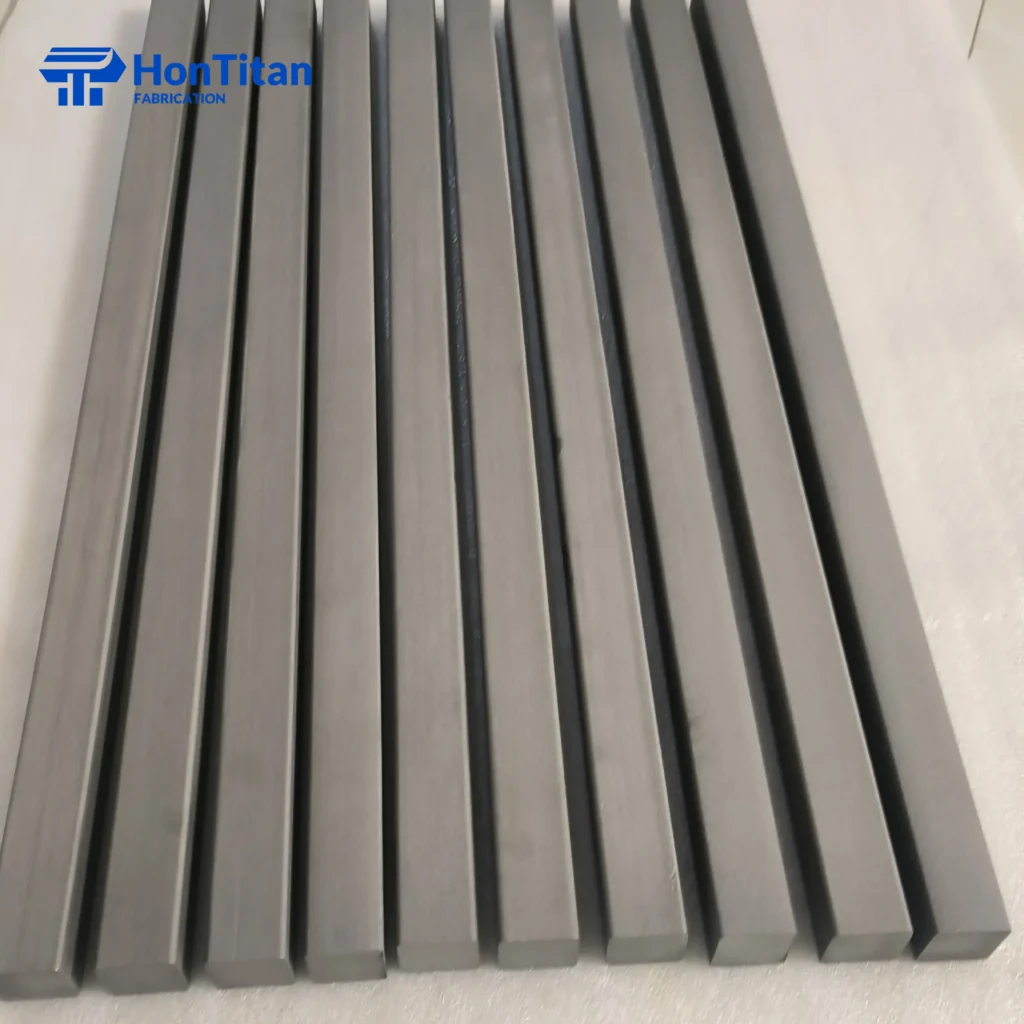
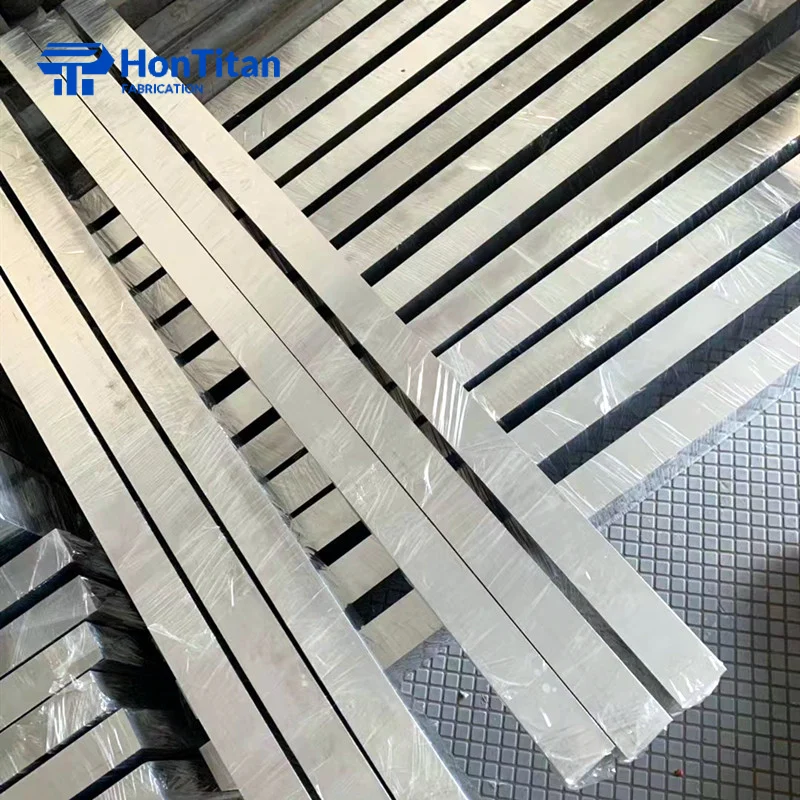
Grade 23 titanium hex bar (Ti-6Al-4V ELI) is the extra-low-interstitial variant of Ti-6Al-4V, supplied to ASTM B348/B348M-25 (UNS R56407) and ASTM F136-26 (UNS R56401) with tighter oxygen, nitrogen, and iron limits than standard Grade 5. The hexagonal cross-section reduces machining stock removal for fastener blanks, valve stems, and connector bodies compared to round bar. Available in annealed condition per AMS 4930M or duplex-annealed condition per AMS 4931H for fracture-critical applications, with EN 10204 3.1 Mill Test Certificates included on every shipment.
Quick Specs
| Property |
Value |
| Material Grade |
Grade 23 / Ti-6Al-4V ELI |
| UNS Number |
R56407 (ASTM B348) / R56401 (ASTM F136) |
| Standards |
ASTM B348/B348M-25 / ASTM F136-26 / AMS 4930M / AMS 4931H / ISO 5832-3:2021 |
| Alloy System |
Alpha-Beta Titanium, Extra Low Interstitial (ELI) |
| Available Forms |
Hex Bar (hexagonal cross-section) |
| Across-Flats (AF) Range |
6 mm – 25 mm stocked (0.24 in – 0.98 in); larger sizes on inquiry |
| Length |
Up to 3,000 mm standard; custom lengths on request |
| Tolerance |
h9 (ground) / h11 (as-drawn); custom available |
| Condition |
Mill Annealed (AMS 4930M) / Duplex Annealed (AMS 4931H) |
| Mill Test Certificate |
EN 10204 3.1 — included |
| Lead Time |
To be confirmed per order quantity and size — request RFQ |
Chemical Composition
Grade 23 titanium (Ti-6Al-4V ELI) contains 5.50–6.50% aluminum and 3.50–4.50% vanadium as primary alloying elements, with interstitial element limits set below Grade 5 to improve fracture toughness and fatigue performance.
| Element |
Min (wt.%) |
Max (wt.%) |
| Aluminum (Al) |
5.50 |
6.50 |
| Vanadium (V) |
3.50 |
4.50 |
| Iron (Fe) |
— |
0.25 |
| Oxygen (O) |
— |
0.13 |
| Carbon © |
— |
0.08 |
| Nitrogen (N) |
— |
0.05 |
| Hydrogen (H) |
— |
0.0125 |
| Titanium (Ti) |
Balance |
— |
Source: ASTM F136-26 composition requirements for Ti-6Al-4V ELI (UNS R56401); ASTM B348/B348M-25 Grade 23 (UNS R56407) specifies the equivalent composition range under the commercial bar and billet standard.
Mechanical Properties
Grade 23 titanium hex bar in the mill-annealed condition meets a minimum tensile strength of 860 MPa (125 ksi) and minimum yield strength of 795 MPa (115 ksi) per ASTM F136-26, verified by tensile testing per ASTM E8/E8M.
Mill Annealed Condition — ASTM F136-26 / AMS 4930M Minimums
| Property |
Minimum Value (SI) |
Minimum Value (Imperial) |
Test Method |
| Tensile Strength (UTS) |
860 MPa |
125,000 psi |
ASTM E8/E8M |
| Yield Strength (0.2% offset) |
795 MPa |
115,000 psi |
ASTM E8/E8M |
| Elongation in 4D gauge |
10% min. |
10% min. |
ASTM E8/E8M |
Duplex Annealed Condition — AMS 4931H (Fracture-Critical Applications)
AMS 4931H specifies a duplex-annealed heat treatment route for Grade 23 titanium bar limited to 152.4 mm (6.000 in) diameter, applied where enhanced fracture toughness is required beyond the AMS 4930M mill-annealed condition. Representative mechanical values for the duplex-annealed condition depend on section size and are confirmed against the ordered specification at time of quotation.
Physical Properties (Typical)
| Property |
Value |
Unit |
| Density |
4.43 |
g/cm³ (0.160 lb/in³) |
| Elastic Modulus |
105–116 |
GPa (15.2–16.8 Msi) |
| Beta Transus |
975–995 |
°C (typical range) |
Physical property values are typical references per ASM International data; not minimums specified by ASTM B348 or ASTM F136.
Technical Overview: Extra Low Interstitial Titanium Alloy
Grade 23 titanium (Ti-6Al-4V ELI) achieves higher fracture toughness and fatigue crack growth resistance than standard Grade 5 by restricting interstitial elements — oxygen to 0.13% max versus 0.20% max in Grade 5, with corresponding reductions in iron and nitrogen. Interstitial atoms occupy lattice positions within the alpha-beta microstructure and directly govern ductility and crack propagation resistance; lowering their concentration reduces the alloy’s susceptibility to brittle fracture initiation under cyclic loading. This makes Grade 23 the preferred alloy for applications where fatigue life and damage tolerance outweigh the marginal strength advantage of Grade 5.
The hexagonal cross-section profile provides specific machining and assembly advantages over round bar stock. Flat-to-flat geometry allows direct clamping without secondary operations for fastener blank production, reduces material waste when producing hex socket components and valve stems, and provides positive anti-rotation geometry in assembly applications. Stocked across-flats dimensions cover fastener blanks through mid-size structural connectors and orthopedic instrument components; larger custom sections are quoted against drawing requirements.
Corrosion resistance derives from a passive, self-healing TiO₂ oxide layer that forms spontaneously in air, body fluids, and aqueous environments. Grade 23 resists attack from chlorinated media, seawater, and physiological saline — the basis for its use in both marine hardware and permanent surgical implants under ASTM F136.
Standards Comparison: ASTM B348 vs ASTM F136 vs AMS 4930 vs AMS 4931
ASTM B348/B348M-25 Grade 23 and ASTM F136-26 specify the same Ti-6Al-4V ELI composition and mechanical minimums but govern different procurement routes and certification requirements — the applicable standard is determined by end use, not by alloy chemistry alone.
| Standard |
UNS Number |
Scope |
Typical End Use |
| ASTM B348/B348M-25 |
R56407 |
General commercial titanium bar and billet specification |
Industrial, marine, chemical processing components |
| ASTM F136-26 |
R56401 |
Wrought Ti-6Al-4V ELI for surgical implant applications |
Permanent orthopedic and dental implants |
| AMS 4930M |
R56401 |
Mill-annealed bar, wire, and stock for aerospace/defense; size range through 254 mm (10.000 in) |
General aerospace fastener and structural stock |
| AMS 4931H |
R56401 |
Duplex-annealed bar for enhanced fracture toughness; limited to 152.4 mm (6.000 in) diameter |
Fracture-critical aerospace components |
| ISO 5832-3:2021 |
— |
Metallic materials for surgical implants — Ti-6Al-4V wrought alloy |
International medical device certification |
ASTM F136 imposes additional requirements beyond ASTM B348 Grade 23, including biocompatibility evaluation referencing ASTM F981 (muscle and bone implant compatibility) and microstructure controls specific to implant-grade material; procurement for permanent implants should cite ASTM F136 explicitly rather than “Grade 23” alone. For aerospace bar stock, AMS 4930M (mill annealed) is the standard route; AMS 4931H applies only when the drawing specifically calls for duplex-annealed fracture toughness within its 152.4 mm size limit. Buyers should confirm the exact standard designation on the purchase order, since “Grade 23” by itself does not specify which certification path the material must follow.
Available Sizes and Tolerances
Grade 23 Ti-6Al-4V ELI hex bar is supplied in across-flats (AF) dimensions from 6 mm to 25 mm as regularly stocked sizes, with larger AF dimensions available on inquiry subject to production lead time for ELI-grade material.
| AF Size (mm) |
AF Size (in) |
Standard Length |
Tolerance Class |
| 6 |
0.236 |
Up to 3,000 mm |
h9 |
| 8 |
0.315 |
Up to 3,000 mm |
h9 |
| 10 |
0.394 |
Up to 3,000 mm |
h9 |
| 12 |
0.472 |
Up to 3,000 mm |
h9 |
| 16 |
0.630 |
Up to 3,000 mm |
h9 |
| 20 |
0.787 |
Up to 3,000 mm |
h9/h11 |
| 25 |
0.984 |
Up to 3,000 mm |
h9/h11 |
Sizes above 25 mm AF and custom lengths beyond 3,000 mm are confirmed against drawing requirements and production capability at time of quotation.
- h9 tolerance: Ground finish; tightest dimensional control for fastener blank and close-tolerance machining stock, per EN 10278 bright bar tolerance convention
- h11 tolerance: As-drawn or mill finish; standard for general structural and machining stock, per EN 10278 bright bar tolerance convention
Applications
Grade 23 titanium hex bar is specified across sectors where extra-low interstitial control, fatigue resistance, and hexagonal machining geometry combine to deliver measurable engineering value.
Medical Devices and Permanent Implants
Grade 23 hex bar per ASTM F136 is machined into orthopedic bone screws, dental abutment blanks, and surgical instrument components requiring direct tissue contact. Lower oxygen content improves fatigue performance in load-bearing implant applications compared to standard Grade 5.
Aerospace Fasteners and Structural Connectors
Ti-6Al-4V ELI hex bar per AMS 4930M or AMS 4931H is used for fracture-critical fastener blanks and structural connectors where damage tolerance requirements exceed standard Grade 5 specifications. The hex cross-section reduces machining stock removal in bolt-head and nut-body production.
Marine and Subsea Hardware
Grade 23 hex bar resists seawater corrosion and chloride-induced stress corrosion cracking in subsea connector bodies, ROV structural components, and offshore fastener applications where fatigue life in a saline environment is a governing design factor.
Chemical Processing Valve Stems and Pump Shafts
The alloy’s corrosion resistance in chlorinated and sour-gas environments, combined with improved fatigue resistance over Grade 5, supports valve stem and pump shaft applications subject to cyclic loading in aggressive process media.
Cryogenic and Low-Temperature Vessels
Grade 23 retains ductility at cryogenic temperatures where standard Grade 5 titanium becomes susceptible to embrittlement, supporting its use in liquid fuel system components and low-temperature pressure vessel hardware.
Motorsport and High-Performance Fasteners
Ti-6Al-4V ELI hex bar is machined into suspension fasteners and safety-critical connector hardware in motorsport applications where fatigue performance under repeated load cycles is a primary design consideration.
Quality and Certification
Every shipment of Grade 23 titanium hex bar includes a Mill Test Certificate to EN 10204 3.1, documenting chemical composition and mechanical test results traceable to the production lot.
| Document |
Standard |
| Mill Test Certificate (MTC) |
EN 10204 3.1 — chemical composition + mechanical test results |
| Dimensional Inspection Report |
Per customer drawing or applicable standard tolerances |
| Certificate of Conformance (CofC) |
ISO 9001:2015 quality management system |
| Third-Party Test Report |
SGS / TÜV available on request |
Buyers procuring material for AS9100D-qualified aerospace production or ISO 13485-regulated medical device manufacturing should specify the required documentation level and applicable standard (AMS 4930M, AMS 4931H, or ASTM F136) at the time of RFQ submission.
Frequently Asked Questions
What is Grade 23 titanium (Ti-6Al-4V ELI)?
Grade 23 titanium is the extra-low-interstitial (ELI) variant of Ti-6Al-4V, distinguished by tighter limits on oxygen, nitrogen, and iron content than standard Grade 5. It is supplied under ASTM B348/B348M-25 (UNS R56407) for general commercial use and ASTM F136-26 (UNS R56401) for surgical implant applications.
What is the difference between Grade 23 and Grade 5 titanium?
Grade 23 limits oxygen to 0.13% maximum versus 0.20% maximum in Grade 5, with corresponding reductions in iron and nitrogen content. This lowers tensile and yield strength slightly (860 MPa vs. 895 MPa minimum tensile strength) but improves fracture toughness, fatigue crack growth resistance, and ductility at low temperatures.
Is ASTM B348 Grade 23 the same as ASTM F136?
ASTM B348 Grade 23 and ASTM F136 specify the same Ti-6Al-4V ELI alloy composition but govern different certification paths. ASTM B348/B348M-25 is the general commercial bar and billet specification; ASTM F136-26 adds biocompatibility and microstructure requirements specific to surgical implant applications. Material for permanent implants should be ordered to ASTM F136 explicitly.
What is the difference between AMS 4930 and AMS 4931?
AMS 4930M covers mill-annealed Ti-6Al-4V ELI bar and stock through 254 mm (10.000 in) diameter for general aerospace use. AMS 4931H specifies a duplex-annealed heat treatment route limited to 152.4 mm (6.000 in) diameter, applied when a drawing requires enhanced fracture toughness beyond the mill-annealed condition.
What are the mechanical properties of Grade 23 titanium hex bar?
In the mill-annealed condition per ASTM F136-26 and AMS 4930M, Grade 23 titanium hex bar meets a minimum tensile strength of 860 MPa (125,000 psi) and minimum yield strength of 795 MPa (115,000 psi), with at least 10% elongation.
Why is hex bar geometry specified instead of round bar?
The hexagonal cross-section provides flat clamping surfaces for direct torque transfer and anti-rotation assembly, reducing machining stock removal in fastener blank, valve stem, and hex socket component production compared to machining a hexagonal profile from round bar stock.
Is Grade 23 titanium suitable for permanent medical implants?
Grade 23 titanium per ASTM F136 is the standard alloy for permanent load-bearing implants, including orthopedic bone screws and dental abutments, due to its lower oxygen content and improved fatigue performance relative to standard Grade 5. Both grades are biocompatible and non-magnetic for MRI compatibility.
What sizes and tolerances are available for Grade 23 titanium hex bar?
Grade 23 hex bar is regularly stocked in across-flats dimensions from 6 mm to 25 mm, in h9 (ground) tolerance for close-tolerance machining stock or h11 (as-drawn) tolerance for general structural applications. Larger AF sizes and custom dimensions are confirmed against drawing requirements at time of quotation.