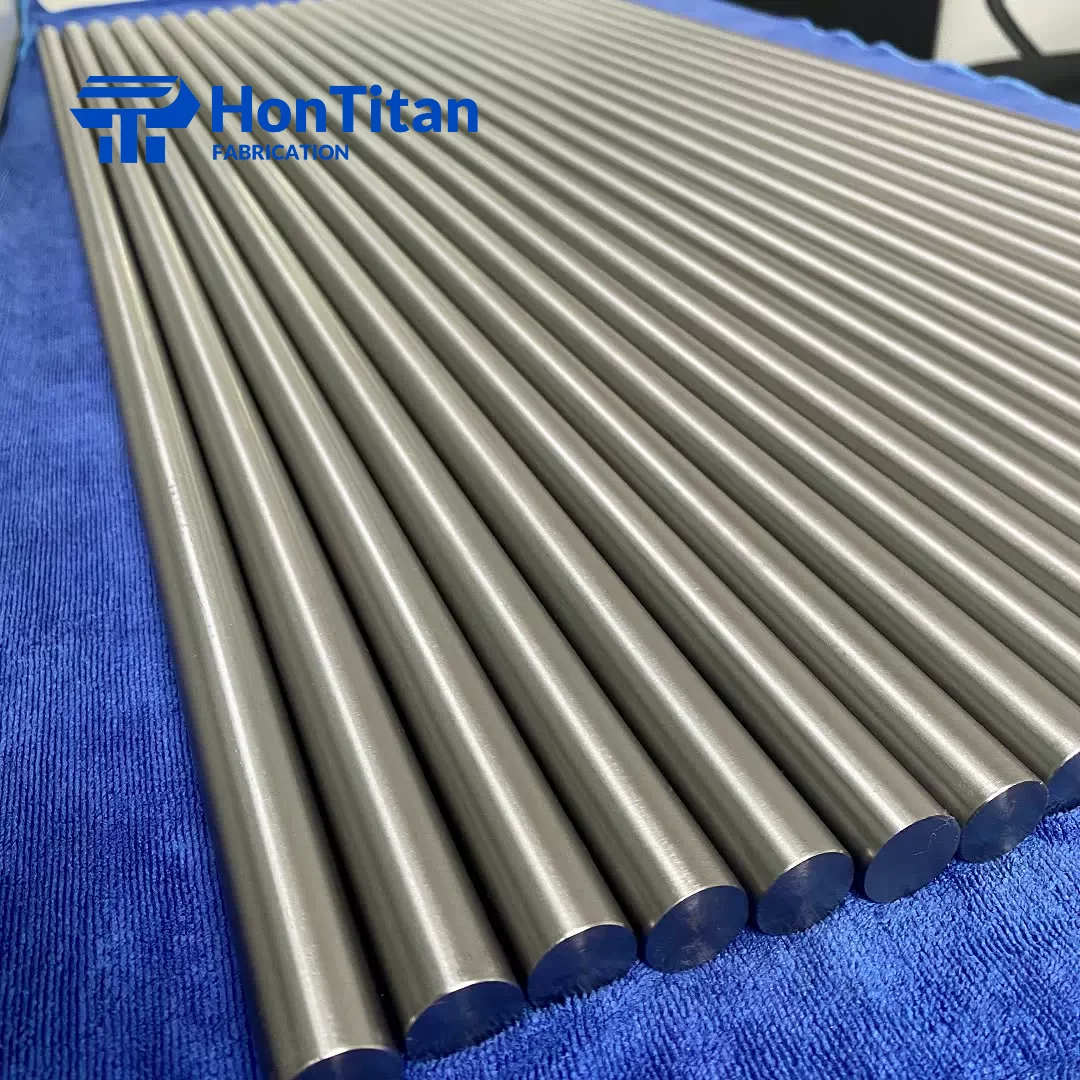
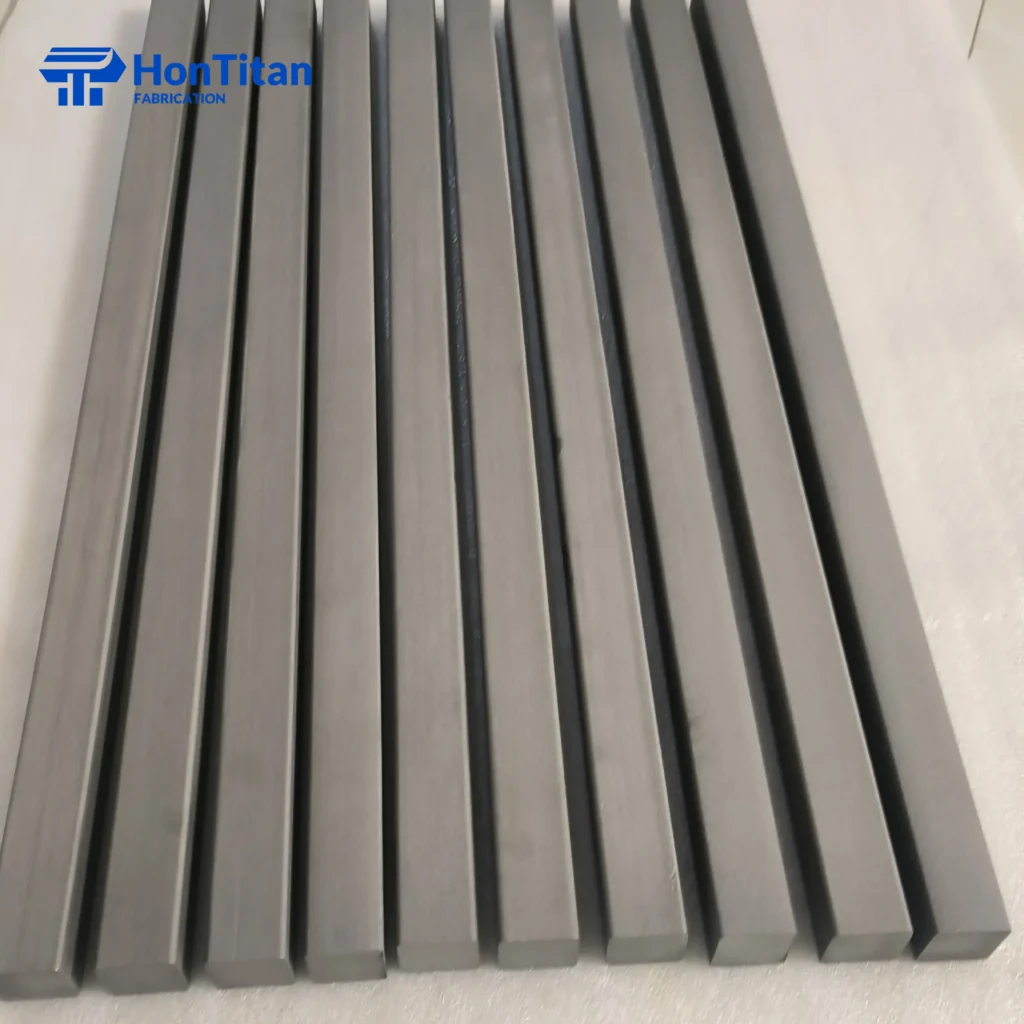
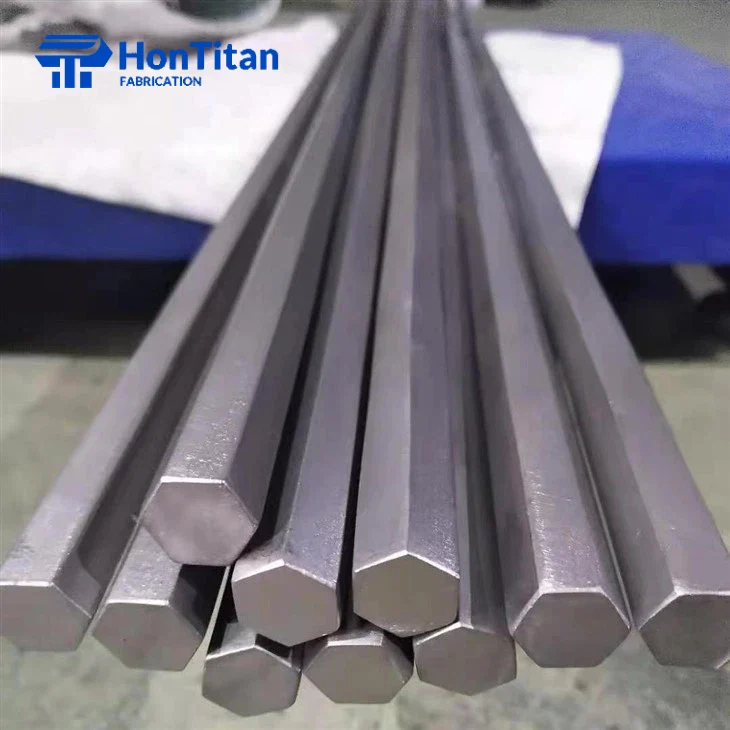
Ti-1023 titanium round bar and billet (Ti-10V-2Fe-3Al, UNS R56410) is a near-beta titanium alloy supplied as forging stock and machined bar, referenced to AMS 4983 and AMS 4984 alloy and melting requirements, with tensile strengths ranging from 970 MPa in the annealed condition to 1,193–1,260 MPa (173–183 ksi) in the solution-treated-and-aged condition. The alloy is the primary material of record for Boeing 777 main landing gear and is widely specified for critical airframe forgings and high-cycle-fatigue structural components where superior deep hardenability and near-net-shape forgeability are required.
Quick Specifications
| Parameter |
Value |
| Material Grade |
Ti-1023 (Ti-10V-2Fe-3Al) |
| UNS Number |
R56410 |
| Forging Specifications |
AMS 4983 / AMS 4984 / AMS 4986 / AMS 4987 |
| Available Forms |
Round bar / billet (forging stock); machined bar blanks |
| Diameter Range |
12.7–203 mm (0.5–8.0 in.) |
| Length |
Up to 6,000 mm (236 in.), custom cut available |
| Tolerance |
h9–h11 (ground finish); as-rolled available |
| Surface Condition |
Turned, ground, or as-rolled/peeled |
| MOQ |
50 kg (custom size) / stock items available |
| Lead Time |
4–12 weeks (subject to material availability) |
| Mill Test Certificate |
EN 10204 3.1 included with every order |
What Is Ti-1023 Titanium?
Ti-1023 (Ti-10V-2Fe-3Al) is a near-beta, metastable-beta titanium alloy containing nominally 10 wt% vanadium, 2 wt% iron, and 3 wt% aluminum, with a density of 4.65 g/cm³ and a beta transus temperature of approximately 800°C (1,472°F).
Originally developed by TIMET (Titanium Metals Corporation) and marketed as TIMETAL 10-2-3, the alloy was qualified for aerospace use in the early 1970s and became the primary structural alloy for Boeing 777 main landing gear — an application requiring through-section hardening of large cross-sections that conventional alpha-beta alloys such as Ti-6Al-4V cannot achieve. Substituting Ti-1023 forgings for 4340M steel on the 777 main landing gear reduced system weight by approximately 270 kg.
Key distinguishing characteristics:
- Deep hardenability: Forged sections up to approximately 100 mm (4 in.) can be through-hardened by solution treatment and aging (AMS 4986 / AMS 4987 conditions), enabling thick-section structural forgings
- Near-net-shape forgeability: The alloy’s wide hot-die forging window reduces material removal and machining costs versus alternative high-strength titanium alloys
- High specific strength: Solution-treated-and-aged Ti-1023 achieves minimum tensile strength of 1,193 MPa (173 ksi) per AMS 4984 at a density of 4.65 g/cm³, significantly exceeding steel on a strength-to-weight basis
- Metastable beta phase retention: The high vanadium content suppresses martensite formation on quenching, enabling controlled precipitation hardening via aging
Ti-1023 is also designated TB6 under the Chinese national standard (GB/T 2965) and carries UNS number R56410. No ASTM “grade number” (analogous to CP Grade 1–4) exists for this alloy; product specifications are governed entirely by the AMS system.
Chemical Composition
Ti-1023 chemical composition per AMS 4984 (weight percent):
| Element |
Minimum (wt%) |
Maximum (wt%) |
| Aluminum (Al) |
2.6 |
3.4 |
| Vanadium (V) |
9.0 |
11.0 |
| Iron (Fe) |
1.6 |
2.2 |
| Oxygen (O) |
— |
0.13 |
| Carbon © |
— |
0.05 |
| Nitrogen (N) |
— |
0.05 |
| Hydrogen (H) |
— |
0.015 |
| Other elements (each) |
— |
0.10 |
| Other elements (total) |
— |
0.30 |
| Titanium (Ti) |
Balance |
— |
The aluminum content stabilizes the alpha phase and provides solid-solution strengthening; vanadium is the primary beta-stabilizer and controls hardenability; iron acts as a supplementary beta-stabilizer with particularly strong influence on the martensite start temperature, making iron content the most tightly controlled variable in the alloy specification.
Mechanical Properties
Ti-1023 properties depend strongly on heat treatment condition. The four AMS forging specifications (4983, 4984, 4986, 4987) define different strength–toughness combinations achieved through varying aging temperatures on forged components.
Annealed / Solution-Treated Condition
Properties measured on bar/billet before final aging — representative of material supplied for subsequent forging and heat treatment:
| Property |
Value |
Test Standard |
| Ultimate Tensile Strength (UTS) |
~970 MPa (141 ksi) |
ASTM E8 |
| 0.2% Yield Strength |
~900 MPa (131 ksi) |
ASTM E8 |
| Elongation |
~9% |
ASTM E8 |
| Elastic Modulus |
~110 GPa (16.0 Msi) |
ASTM E111 |
AMS 4984 Condition — Peak Strength (173 ksi)
Solution treated and aged forgings: aging at 482–510°C (900–950°F), max section 76 mm (3 in.):
| Property |
Minimum |
Test Standard |
| Ultimate Tensile Strength (UTS) |
1,193 MPa (173 ksi) |
ASTM E8 |
| 0.2% Yield Strength |
1,103 MPa (160 ksi) |
ASTM E8 |
| Compressive Yield Strength |
1,145 MPa (166 ksi) |
ASTM E9 |
| Elongation |
4% |
ASTM E8 |
| Fracture Toughness (KIc) |
44 MPa·m½ (40 ksi·√in) |
ASTM E399 |
| Fatigue Strength (~10⁷ cycles) |
~945 MPa (137 ksi) |
ASTM E466 |
| Elastic Modulus |
107–114 GPa (15.5–16.5 Msi) |
ASTM E111 |
AMS 4986 / AMS 4987 Conditions — Higher Toughness
For thicker sections and damage-tolerant designs (aging at 510–593°C, max section 102 mm / 4 in.):
| AMS |
Min UTS |
Min YS |
Min Elongation |
Min KIc |
Max Section |
| AMS 4986 |
1,103 MPa (160 ksi) |
1,000 MPa (145 ksi) |
6% |
60 MPa·m½ |
102 mm (4 in.) |
| AMS 4987 |
965 MPa (140 ksi) |
896 MPa (130 ksi) |
8% |
88 MPa·m½ |
102 mm (4 in.) |
Standard heat treatment parameters:
- Solution treat: 28–56°C (50–100°F) below beta transus (~800°C), minimum 30 minutes, water quench (air cool permitted for sections < 25 mm / 1 in.)
- AMS 4984 age: 482–510°C (900–950°F) for 8 hours, air cool
- AMS 4986 age: 510–538°C (950–1,000°F) for 8 hours, air cool
- AMS 4987 age: 566–593°C (1,050–1,100°F) for 8 hours, air cool
Physical Properties
| Property |
Value |
| Density |
4.65 g/cm³ (0.168 lb/in³) |
| Beta Transus Temperature |
~800°C (1,472°F) |
| Elastic Modulus (tensile) |
~110 GPa (16.0 Msi) |
| Shear Modulus |
42.1 GPa (6.1 Msi) |
| Poisson’s Ratio |
~0.32 |
| Thermal Conductivity |
7.80 W/m·K |
| Coefficient of Thermal Expansion |
9.70 µm/m·°C (5.39 µin/in·°F) |
| Specific Heat Capacity |
~520 J/kg·K |
| Melting Range |
~1,704–1,760°C (3,100–3,200°F) |
Available Sizes and Tolerances
Ti-1023 round bar and billet is available in the following standard configurations. Custom diameters and cut lengths are accommodated with a minimum order quantity.
Diameter Range
| Form |
Diameter Range |
Surface Condition |
| Turned / ground |
12.7–76.2 mm (0.50–3.00 in.) |
h9–h11 per ISO 286-2 |
| As-rolled / peeled |
25.4–152.4 mm (1.00–6.00 in.) |
±0.5 mm |
| Oversized billet (forging stock) |
76.2–203.2 mm (3.00–8.00 in.) |
As-machined |
Length
- Standard: 914–3,048 mm (36–120 in.)
- Extended: up to 6,000 mm (236 in.) on request
- Custom cut-to-length: ±1.6 mm tolerance
Condition Options
- Annealed (pre-forging stock)
- Solution treated and aged (AMS 4984 mechanical property requirements)
- As-rolled with descaled surface
Ti-1023 vs Ti-6Al-4V: Selecting the Right Alloy
Ti-1023 and Ti-6Al-4V (Grade 5) are both high-performance aerospace titanium alloys, but they serve different structural requirements. The comparison below covers the key selection criteria for aerospace structural design.
| Property |
Ti-1023 (AMS 4984 condition) |
Ti-6Al-4V (AMS 4928, STA) |
| Min UTS |
1,193 MPa (173 ksi) |
~895 MPa (130 ksi) min |
| Min Yield Strength |
1,103 MPa (160 ksi) |
~828 MPa (120 ksi) min |
| Fracture Toughness (KIc) |
~44 MPa·m½ |
~60–80 MPa·m½ |
| Density |
4.65 g/cm³ |
4.43 g/cm³ |
| Elastic Modulus |
~110 GPa |
~114 GPa |
| Beta Transus |
~800°C |
~995°C |
| Deep Hardenability |
Up to ~100 mm (4 in.) section |
Limited (~25 mm section) |
| Forgeability (near-net-shape) |
Excellent (lower forging temperatures) |
Good |
| Machinability |
Lower (aged condition) |
Moderate |
| Weldability |
Limited (fusion welding not recommended for STA) |
Good |
| Classification |
Near-beta (metastable beta) |
Alpha-beta |
| Primary Forging Spec |
AMS 4984 |
AMS 4928 |
When to specify Ti-1023:
- Thick-section structural forgings (landing gear, bulkheads, frames) requiring through-hardening up to 100 mm section
- Applications demanding UTS above 1,100 MPa with acceptable fracture toughness
- Near-net-shape forging programs where billet utilization and reduced machining cost are critical
When to specify Ti-6Al-4V:
- Thinner sections where deep hardenability is not required
- Applications requiring fusion welding or sheet/plate forming
- Applications prioritizing fracture toughness over tensile strength
Applications
Ti-1023 titanium round bar and billet is specified for critical structural applications where high strength, low weight, and section-size hardenability are the governing design constraints:
- Aircraft landing gear: Primary material for Boeing 777 main landing gear assemblies; substitution of Ti-1023 forgings for 4340M steel reduced main landing gear weight by approximately 270 kg. Also qualified for C-17 Globemaster III military transport landing gear.
- Airframe primary structure: Critical load-bearing frames, spars, bulkheads, and attachment fittings in commercial and military aircraft where tensile strength above 1,100 MPa is required
- Helicopter structural frames: Super Lynx and similar rotary-wing platforms — specifically main rotor head forgings — where high-strength titanium reduces weight in primary dynamic structures
- Forging billet feedstock: Near-net-shape die forgings for aerospace brackets, fittings, and structural nodes; Ti-1023 billet has a wider hot-die forging temperature window than most alpha-beta alloys, improving near-net-shape capability
- High-cycle fatigue components: Structural members subjected to cyclic loading; AMS 4984 condition Ti-1023 achieves fatigue strength of approximately 945 MPa (137 ksi) at 10⁷ cycles
Standards and Certifications
AMS Forging Specifications for Ti-1023
All four AMS specifications for this alloy govern forgings. Bar and billet is supplied as forging stock meeting the alloy chemistry and melting requirements of these specifications.
| Standard |
Product Form |
Condition |
Min UTS |
Max Section |
| AMS 4983 |
Forgings |
STA — 180 ksi |
1,241 MPa (180 ksi) |
— |
| AMS 4984 |
Forgings, consumable electrode melted |
STA — 173 ksi |
1,193 MPa (173 ksi) |
76 mm (3 in.) |
| AMS 4986 |
Forgings, consumable electrode melted |
STA — 160 ksi |
1,103 MPa (160 ksi) |
102 mm (4 in.) |
| AMS 4987 |
Forgings, consumable electrode melted |
Overaged — 140 ksi |
965 MPa (140 ksi) |
102 mm (4 in.) |
Additional Standards and Identifiers
| Standard / Identifier |
Description |
| UNS R56410 |
Unified Numbering System designation |
| GB/T 2965 TB6 |
Chinese national standard equivalent designation |
| EN 10204 3.1 |
Mill Test Certificate standard; included with all shipments |
Quality System
Material is produced and supplied under a quality management system certified to:
- ISO 9001:2015
- AS9100 Rev. D (Aerospace Quality Management System)
All shipments include an EN 10204 3.1 Mill Test Certificate (MTC) covering:
- Chemical analysis results (heat/batch specific)
- Mechanical test results (UTS, YS, elongation)
- Hardness survey
- Certificate of Conformance to applicable AMS chemistry requirements
First Article Inspection (FAI) documentation available on request.
Frequently Asked Questions
What is Ti-1023 titanium alloy?
Ti-1023 is a near-beta (metastable-beta) titanium alloy with the nominal composition Ti-10V-2Fe-3Al (10 wt% vanadium, 2 wt% iron, 3 wt% aluminum), UNS R56410. Originally developed by TIMET under the trade name TIMETAL 10-2-3, it was engineered for thick-section aerospace forgings requiring through-hardening — a capability that alpha-beta alloys such as Ti-6Al-4V cannot provide in large cross-sections. It is also designated TB6 under the Chinese national standard.
What AMS specifications apply to Ti-1023?
The four AMS specifications for Ti-1023 (AMS 4983, 4984, 4986, and 4987) all govern forgings. AMS 4984 (173 ksi minimum UTS, max 76 mm section) is the most commonly specified for high-strength applications such as landing gear. AMS 4986 (160 ksi, max 102 mm section) and AMS 4987 (140 ksi, max 102 mm section) provide better fracture toughness at lower strength for damage-tolerant designs. Bar and billet is supplied as forging stock meeting the alloy chemistry and melting requirements of these specifications.
What is Ti-1023 titanium used for?
Ti-1023 is primarily used for aerospace landing gear and critical airframe structures. The most cited application is the Boeing 777 main landing gear, where Ti-1023 replaced 4340M steel and reduced main landing gear weight by approximately 270 kg. The C-17 Globemaster III military transport and Super Lynx helicopter (main rotor head forgings) also use Ti-1023 in primary structures. The alloy is specified wherever tensile strength above 1,100 MPa, deep hardenability of thick sections, and near-net-shape forgeability are simultaneously required.
What is the density of Ti-1023?
The density of Ti-1023 (Ti-10V-2Fe-3Al) is 4.65 g/cm³ (0.168 lb/in³). This is slightly higher than Ti-6Al-4V (4.43 g/cm³) due to the high vanadium content, but the alloy’s significantly higher tensile strength in the aged condition (1,193+ MPa vs. ~895 MPa minimum for Ti-6Al-4V per AMS 4928) results in superior specific strength for thick load-bearing structural applications.
What is the difference between AMS 4984, AMS 4986, and AMS 4987?
All three are Ti-1023 forging specifications. They differ in aging temperature and the resulting strength–toughness balance. AMS 4984 uses the lowest aging temperature (482–510°C) and achieves the highest strength (173 ksi minimum UTS, 40 ksi·√in fracture toughness) in sections up to 76 mm. AMS 4986 uses a mid-range aging temperature (510–538°C) for a balance of strength (160 ksi) and toughness (55 ksi·√in) in sections up to 102 mm. AMS 4987 uses the highest aging temperature (566–593°C) for the best toughness (80 ksi·√in) at the lowest strength (140 ksi) in sections up to 102 mm.
What is the beta transus temperature of Ti-1023?
The beta transus temperature of Ti-1023 (Ti-10V-2Fe-3Al) is approximately 800°C (1,472°F). For AMS 4984 solution heat treatment, forgings are held at 28–56°C (50–100°F) below the beta transus — typically 744–772°C — for a minimum of 30 minutes, then water quenched, to retain primary alpha phase before aging. Exceeding the beta transus during solution treatment results in a fully lamellar microstructure with reduced fatigue performance.
Is Ti-1023 weldable?
Ti-1023 in the annealed condition can be joined using GTAW (TIG) under inert-gas shielding; electron beam (EB) welding is the preferred method for structural joints. Ti-1023 in the solution-treated-and-aged condition (AMS 4984) is generally not recommended for fusion welding in structural applications, as the weld heat-affected zone cannot be re-aged in situ to recover the original mechanical properties. Diffusion bonding and inertia/friction welding are used in specialized aerospace joining programs.
Is Ti-1023 bar/billet available in stock or made to order?
Standard diameters in the 25.4–76.2 mm (1.0–3.0 in.) range are commonly maintained in annealed condition for prompt shipment as forging stock. Larger diameters and STA-processed bar are typically supplied as made-to-order with lead times of 4–12 weeks depending on diameter and quantity. Contact the sales team with diameter, length, condition, and quantity for current availability and a formal RFQ response.