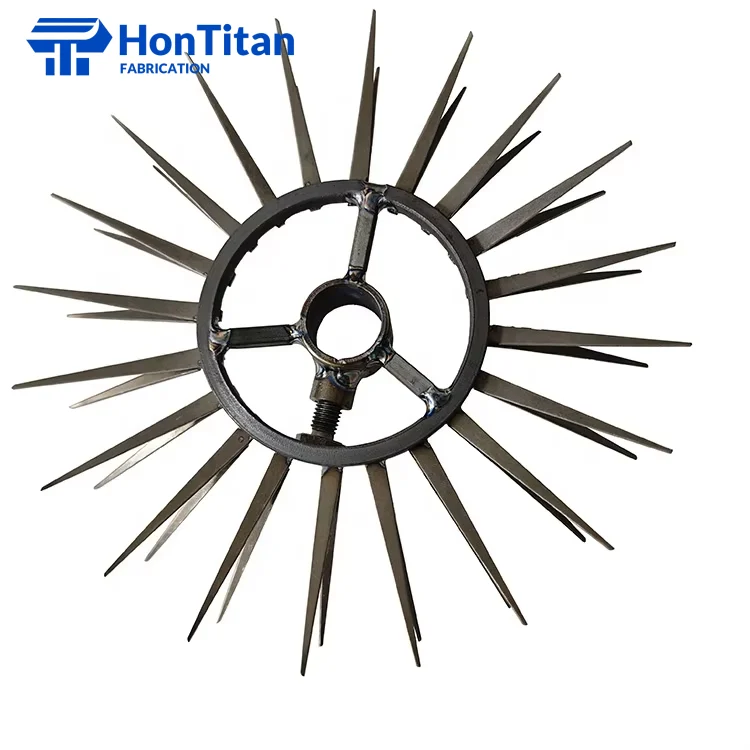
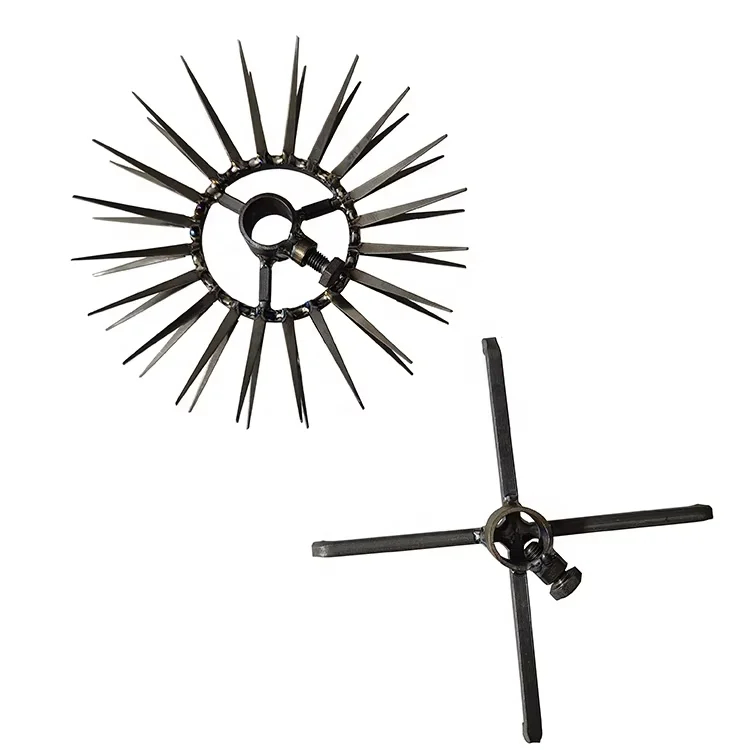
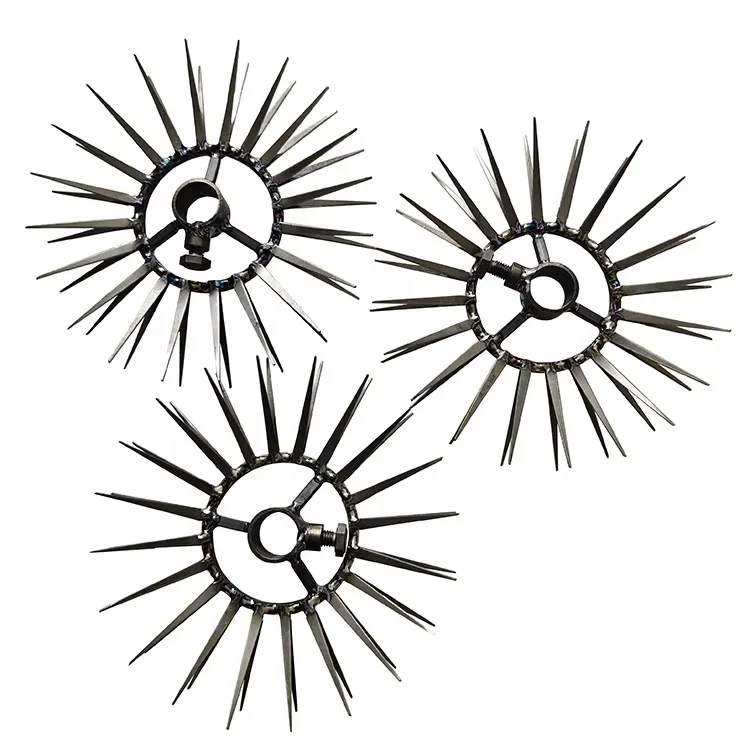
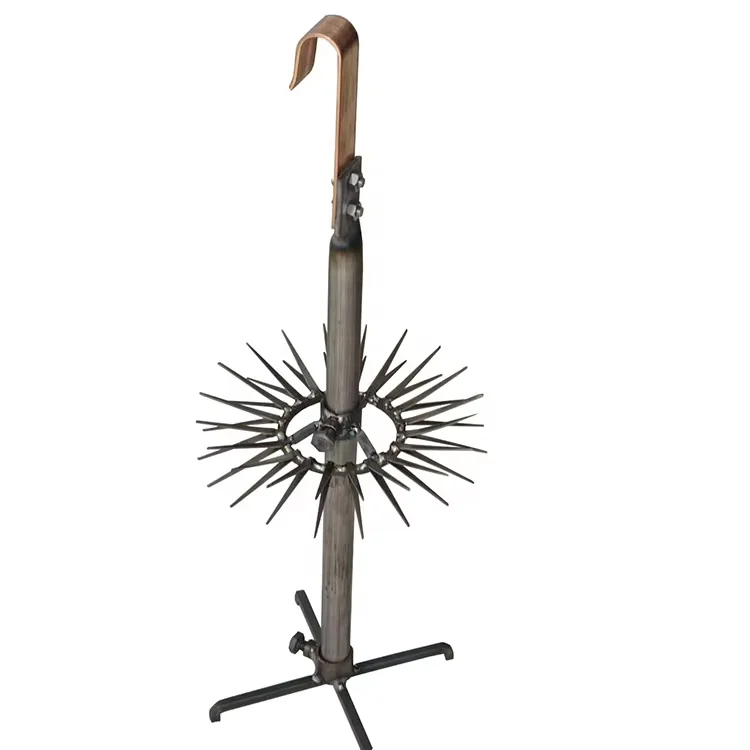
This Titanium Anodizing Disc Rack is a professional-grade fixture designed specifically for holding 9-inch aluminum discs, plates, and saw blades during Type II (Sulfuric) and Type III (Hardcoat) anodizing processes.
Unlike traditional aluminum racks that degrade rapidly and require chemical stripping after every cycle, our titanium fixture forms a thin, conductive oxide layer. This allows for continuous reuse without the stripping step, significantly reducing labor costs and chemical consumption while extending rack service life by up to 50x.
Fabricated from ASTM B265 Grade 2 Commercially Pure Titanium, the rack features a “Split Finger” design. The material undergoes a specialized stress-relief process to maintain “spring memory,” ensuring consistent clamping force over thousands of loading cycles.
Key Advantages:
| Specification Item | Standard Value | Application Note |
|---|---|---|
| Material Grade | ASTM B265 Grade 2(UNS R50400) | Balance of ductility (for forming) and strength. |
| Rack Type | Vertical Spline with Split Fingers | Designed for Discs / Plates / Saw Blades. |
| Compatible Disc Size | Max Ø 9 inches (230mm) | Tension adjustable for thickness 0.5mm – 3.0mm. |
| Station Count | 15 Stations(30 Fingers Total) | High-density configuration. |
| Current Capacity | ~15 Amps Total (0.5A per finger tip) | Suitable for standard anodizing current densities. |
| Finger Design | Stamped “Split” Finger | Dual-point contact for reliability. |
| Finger Thickness | 1.0mm – 1.5mm (Customizable) | Optimized for spring tension memory. |
| Welding Process | TIG (Gas Tungsten Arc Welding) | 100% Argon Shielded (No porosity/oxidation). |
| Dimension Tolerance | ±1.0mm (Tip Spacing) | Ensures consistent loading alignment. |
| Hook Material | Copper (T2) or Titanium (Gr2) | Copper recommended for better conductivity on busbar. |
| Service Life | 3 – 5 Years (Typical) | vs. Aluminum Racks (4 – 8 weeks). |
Reliable electrical contact is critical for uniform anodizing. Our “Split Finger” design creates two distinct contact points on the workpiece edge. This redundancy ensures that if one tip loses contact due to air bubbles or tank agitation, the second tip maintains the current flow, effectively preventing “burn marks” and reducing part rejection rates.
We utilize manual TIG (Tungsten Inert Gas) welding with 99.99% pure argon shielding. This creates a full-penetration weld that is silver or straw-colored (indicating zero oxidation). Unlike spot-welded or poorly shielded fixtures, our welded joints are free from porosity, preventing electrolyte entrapment that could cause cross-contamination between tanks.
The spacing between the 15 stations is engineered to maximize throughput while preventing “shadowing” effects. Sufficient gap allows the electrolyte to circulate freely around each 9-inch disc, ensuring uniform oxide layer thickness across the entire batch.
While the initial investment for a titanium rack is higher than aluminum, the Total Cost of Ownership (TCO) is significantly lower.
| Cost Factor | Traditional Aluminum Rack | Titanium Disc Rack | Benefit |
|---|---|---|---|
| Service Life | 4 – 8 Weeks | 3 – 5 Years | No frequent replacement costs. |
| Stripping Process | Required after every run | Not Required | Saves labor & process time. |
| Chemical Cost | High (Nitric Acid / Caustic) | Zero | Reduces chemical purchasing & disposal. |
| Throughput | Lower (Downtime for stripping) | Higher | Racks return immediately to the anodizing tank. |
| Waste Generation | High (Dissolved Aluminum sludge) | Minimal | Eco-friendly & lower waste treatment fees. |
Conclusion: Most anodizing lines see a Return on Investment (ROI) for titanium racks within 3 to 6 months due to labor and chemical savings alone.
CRITICAL APPLICATION NOTE: Fluoride Incompatibility
Titanium offers excellent corrosion resistance in many acids, but it has specific limitations. Please verify your bath chemistry before use.
We understand that consistency is key to your anodizing quality. Our manufacturing process follows strict protocols to ensure every rack performs reliably.
Q: Do I really never need to strip this titanium rack?
A: Correct. In standard sulfuric acid anodizing, the thin titanium oxide film formed on the rack is conductive enough for the high voltages used in anodizing to break through at the contact points (the “breakdown voltage” effect). You can skip the stripping tank entirely, which saves labor and extends the rack’s life.
Q: How do I clean the rack if the contact points eventually get passivated?
A: Over time (usually after hundreds of cycles), the contact tips may develop a thicker non-conductive layer. You can easily restore conductivity by soaking the tips in a mild nitric-hydrofluoric acid pickle for a few seconds, or by mechanically polishing the tips with an abrasive pad (e.g., Scotch-Brite).
Q: Can you adjust the spine length for my deeper tank?
A: Yes. As a direct manufacturer, we can cut the central titanium spline to any length (e.g., 36″, 48″) to match your tank depth and busbar height. Simply specify your required length when requesting a quote.
Q: What is the maximum weight capacity per station?
A: The standard split fingers are designed for 9-inch aluminum discs/plates. We recommend a maximum load of approx. 0.5 kg (1.1 lbs) per station. For heavier workpieces, we can upgrade the finger thickness from 1.5mm to 2.0mm.
Ready to upgrade your anodizing line efficiency? We offer both standard 9″ racks and fully custom solutions.
3-Step Customization Process:
Our titanium products and manufacturing capabilities provide strong value across multiple industries. Here are the key advantages that make HonTitan a reliable partner.
We provide fast turnaround for samples and bulk orders. With efficient titanium processing—including cutting, forging, and CNC machining—we ensure precision and speed for every project.
From complex CNC machining to welding, forming, and surface finishing, HonTitan can produce custom titanium parts with features such as holes, slots, threads, grooves, and precise geometries.
HonTitan makes titanium materials that are very strong for their weight and resist corrosion very well. This makes them stable for use in aerospace, medical, chemical, and marine settings.
WhatsApp us