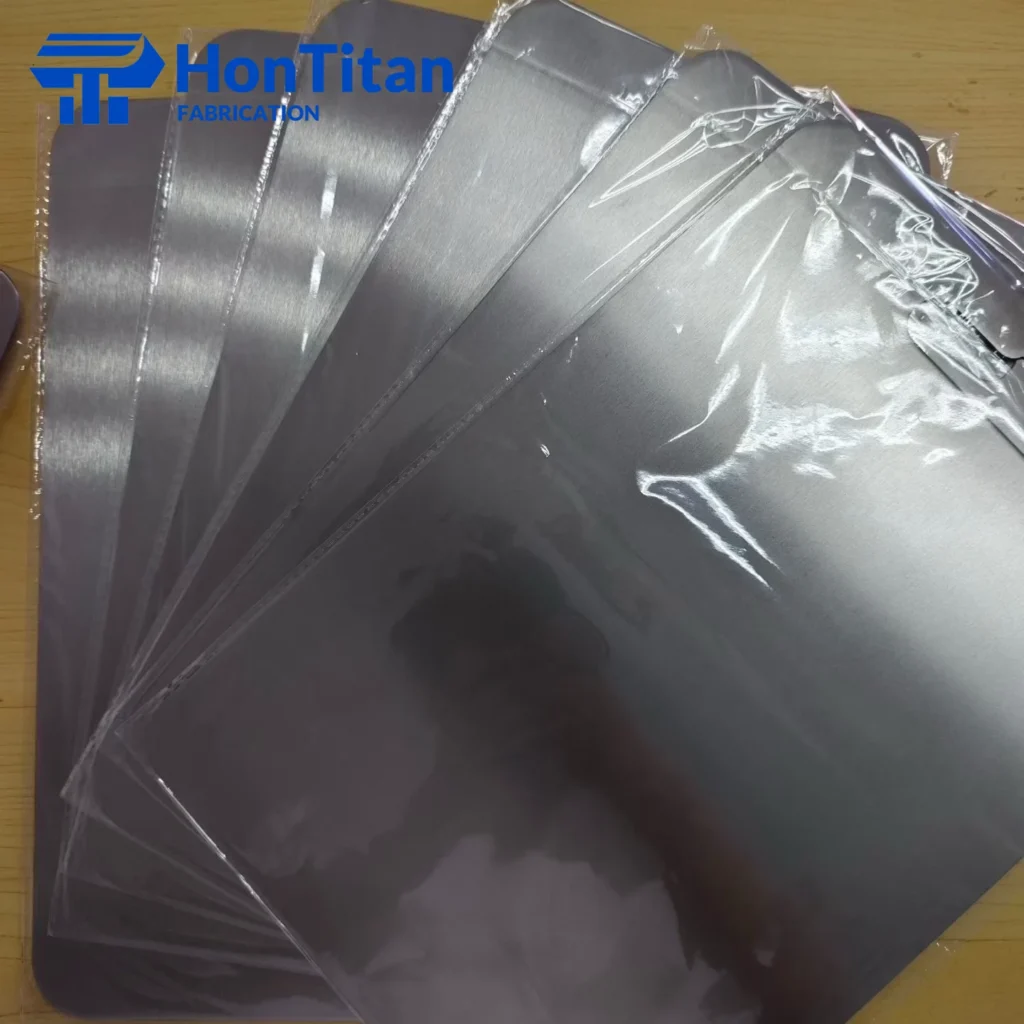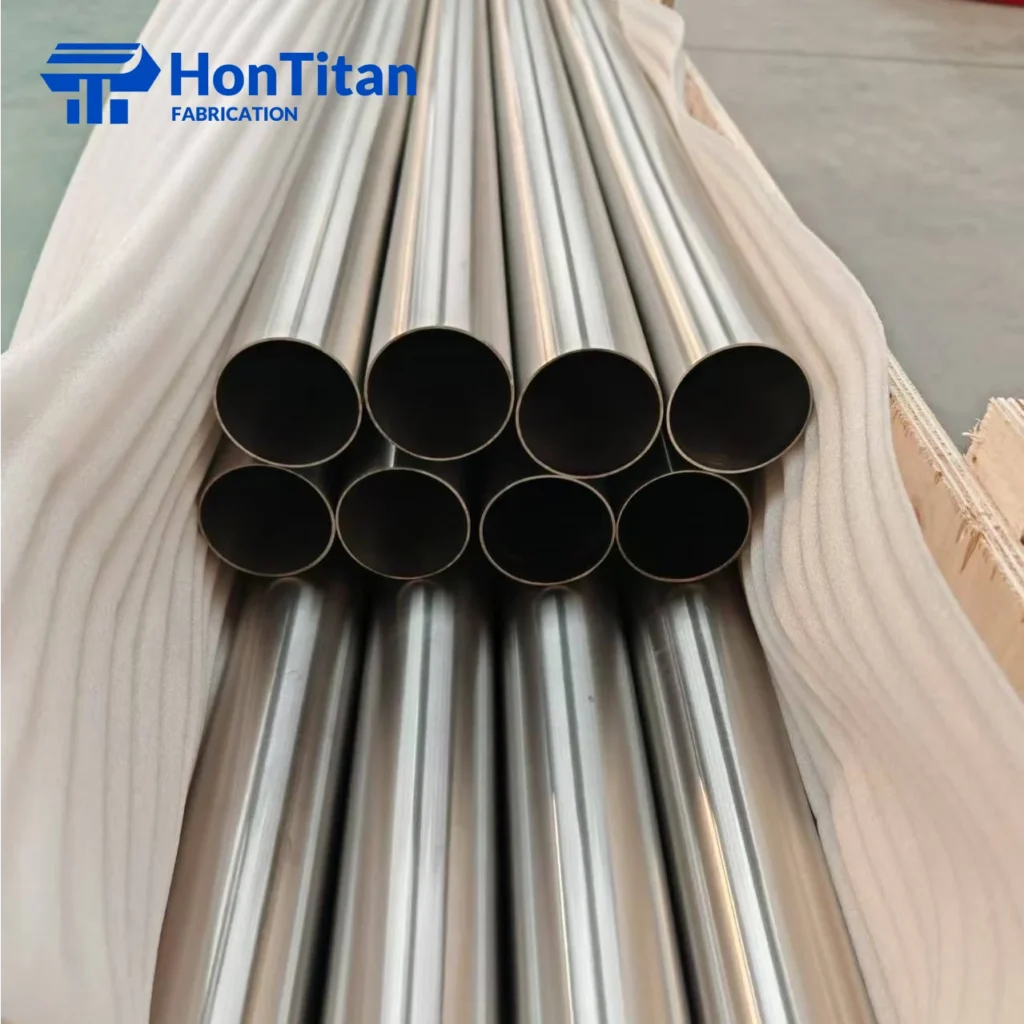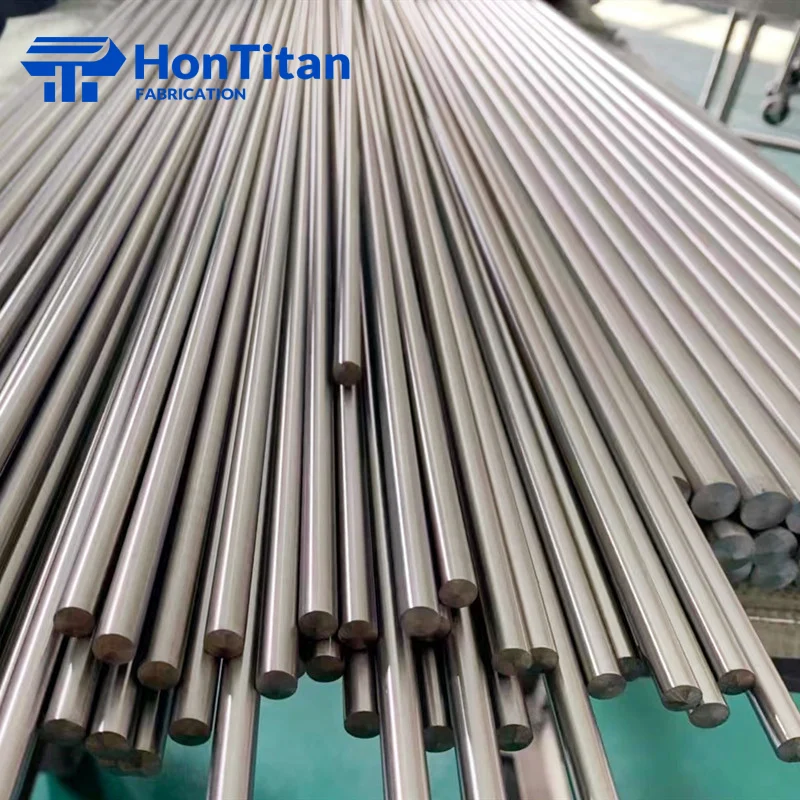
Introduction: The Metal That Changed the Rules
Hold a block of stainless steel in one hand and a block of Ti-6Al-4V in the other. The difference is visceral—disorienting, even. You are holding something that feels as light as aluminum but possesses the structural integrity of a tank.
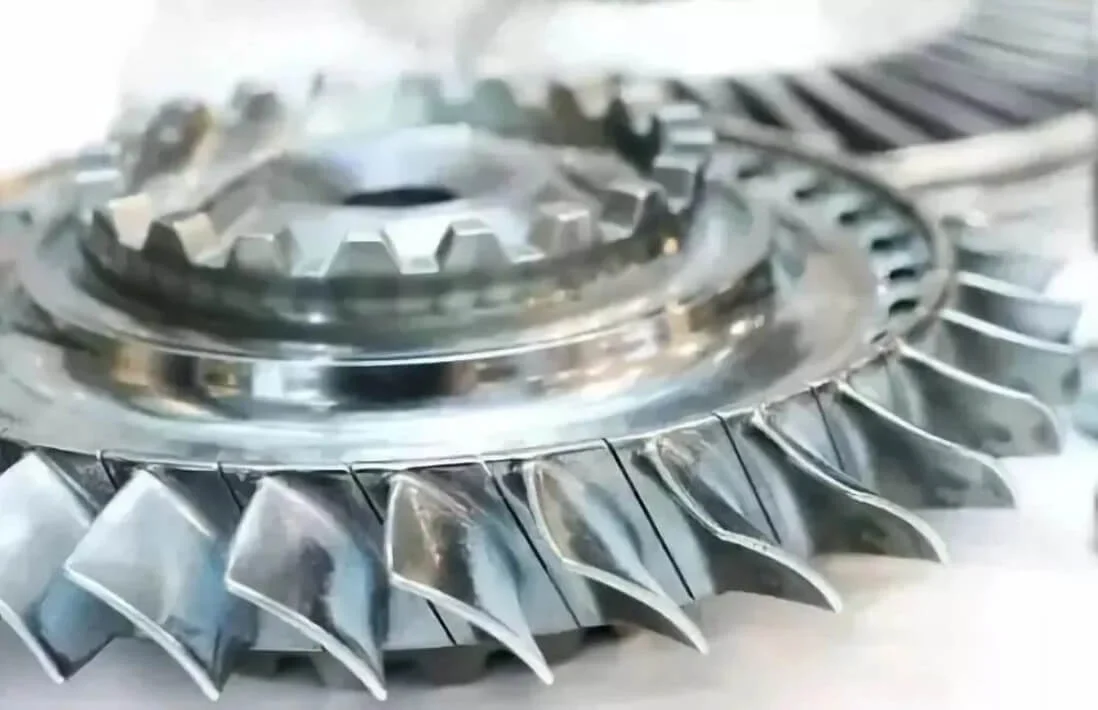
It’s no wonder this material has become the darling of modern engineering, from the GEnx turbine blades screaming at 3,000 RPM to the casing of the phone in your pocket. However, let’s briefly ignore the marketing hype.
When people say “Titanium,” they are rarely talking about the pure element. Pure titanium (Grade 1 or 2) is surprisingly underwhelming; it’s soft, rubbery, and honestly, a bit useless for high-stress applications. The material that actually runs the world is a specific, carefully engineered cocktail: Titanium fortified with Aluminum.
However, this is where complications arise. Are you specifying a structural alloy or an intermetallic compound? Are you aware of the distinction between “aerospace grade” and “medical grade” (hint: it’s not just about a price increase).
In this guide, we aren’t just reciting datasheets. We’re going to dig into the metallurgy of why aluminum turns titanium into a powerhouse, navigate the minefield of alloy selection, and discuss why machining this stuff makes even seasoned shop foremen wake up in a cold sweat.
The Science: It’s Not About Weight, It’s About Structure
There is a persistent myth among consumers—and even some junior engineers—that we add aluminum to titanium simply to make it lighter. Because aluminum is light, right?
That is dead wrong.
We don’t add aluminum to cut weight; we add it to lock the atomic structure in place. In the world of metallurgy, aluminum acts as an Alpha Stabilizer.
To understand why this feature matters, you have to look at the crystal lattice. Pure titanium is allotropic. At room temperature, it sits in a hexagonal “Alpha” (α) phase. Heat it up past 882°C, and it transforms into a body-centered cubic “Beta” (β) phase.
When aluminum dissolves into titanium, it acts like a structural reinforcement beam. It forces the metal to favor that strong, tightly-packed Alpha phase, even as temperatures rise. This mechanism—known as solid-solution strengthening—is what catapults the tensile strength from a meager 350 MPa (pure Ti) to a staggering 950+ MPa (Ti-6Al-4V).
It’s not filler. It’s a force multiplier.
Expert Note: Do not confuse Titanium Alloys (like Grade 5, where aluminum is dissolved) with Titanium Aluminides (TiAl). The latter is an intermetallic compound—a chemical bonding that behaves more like a ceramic. It is brittle, stubborn, and absolutely essential if you want to build a jet engine that doesn’t melt.
Critical Grades: The “Standard” Might Fail You
If you send a purchase order to a mill and just write “Titanium Alloy,” you are playing Russian Roulette with your supply chain. Subtle chemical tweaks translate to massive performance gaps.
Ti-6Al-4V (Grade 5): The Workhorse
This is the alloy responsible for 50% of the global titanium market. It’s the standard. It offers a formidable balance of strength, ductility, and fatigue resistance. For 90% of applications—fasteners, fuselage frames, bicycle components—this is your guy.
Ti-6Al-4V ELI (Grade 23): The Life-Saver
Here is where I see people get burned. ELI stands for Extra Low Interstitial. While Grade 5 allows for oxygen content up to 0.20%, Grade 23 caps it significantly lower (typically 0.13%) and strictly controls iron. Why care? This is because oxygen acts as a hardening agent, which in turn destroys toughness.
- The Hard Truth: If you are designing for cryogenic environments (liquid hydrogen tanks) or medical implants, you must specify Grade 23 (ASTM F136). Standard Grade 5 becomes brittle at low temperatures and snaps. Do not cheap out here.
The Decision Matrix: Titanium vs. The World
Engineers often face the budget dilemma: Why pay a premium for titanium when 7075 aluminum is right there?
It comes down to Specific Strength and Fatigue Limit.
Consider Aluminum 7075-T6. It’s the “aircraft grade” aluminum. It’s strong, cheap, and easy to machine. But aluminum has a fatal flaw: it has no fatigue limit. Subject it to enough cycles, and eventually, it will crack. Ti-6Al-4V is roughly 60% heavier, yes, but it is twice as strong and possesses a distinct fatigue limit. For parts that cycle millions of times—like landing gear or suspension springs—titanium isn’t a luxury; it’s a necessity.
What is the difference between titanium and stainless steel 316L? Titanium matches the strength but slashes the weight by 45%. Furthermore, its oxide film self-heals instantly in saltwater, rendering it virtually impervious to the pitting corrosion that consumes steel.
Machining: Why This Metal Hates Your Tools
If you want to annoy a machinist, hand them a block of Ti-6Al-4V and tell them it “cuts like steel.”
It absolutely does not.
To see why, watch this breakdown of titanium chip formation and heat generation:
The Thermal Bottleneck
Titanium is a terrible conductor of heat. Its thermal conductivity is a miserable 6.7 W/m·K (compared to Aluminum’s ~150). When you cut steel, the heat leaves with the chip. When you cut titanium, the heat has nowhere to go. It traps itself at the cutting interface, blasting straight into your tool. Without aggressive, high-pressure coolant, your expensive carbide end mill will turn into a useless piece of slag in seconds.
The “Low Modulus” Trap
Here’s the subtle killer: Young’s Modulus. Titanium is “springy” (approx. 113 GPa vs Steel’s 200 GPa). As the cutter engages, the material tries to back away. It deflects. This causes vibration—chatter—which ruins your surface finish and kills tool life. If you treat it like a rigid block of steel, you will end up with a tapered, out-of-tolerance part.
Real World Dangers: Alpha Case & Fire
We need to talk about the risks that datasheets don’t mention.
The Alpha Case Nightmare When titanium is forged or machined aggressively at temps above 500°C, it reacts avidly with oxygen. This creates a hard, glass-like surface layer called Alpha Case. If you don’t remove this layer (via chemical milling or pickling), your part is effectively pre-cracked. It will fail under fatigue load. I’ve seen entire batches of aerospace parts scrapped because the alpha case wasn’t properly stripped.
The Class D Fire Hazard This is serious. Titanium chips—especially the fine fines from finishing passes—are highly flammable. If a spark hits a pile of dry titanium dust, it ignites a white-hot fire burning at over 3,000°C.
- Warning: Never, ever throw water on a titanium fire. The heat is so intense it splits the water molecules, releasing hydrogen and causing an explosion. You need a Class D (dry powder) extinguisher nearby, always.
Sourcing Guide: How to Avoid “Scrap Metal”
In this market, a price that looks “too good to be true” is usually a trap.
Reputable mills melt fresh titanium sponge. Budget mills? They often overload their melt with “Revert” (recycled scrap). How do you catch them? You demand the MTC (Mill Test Certificate) and you look straight at the Hydrogen (H) content.
- The Red Flag: High hydrogen levels (>0.015% or 150 ppm) are the fingerprint of dirty, recycled scrap.
- The Consequence: Hydrogen Embrittlement. The metal becomes a ticking time bomb that will crack under stress, often months after installation.
The Economic Reality: Buy-to-Fly Finally, stop looking at just the raw bar price. In aerospace, we talk about the Buy-to-Fly ratio. If you machine a 1kg bracket from a 10kg block, you have a 10:1 ratio. You are turning 90% of that expensive alloy into chips. For complex geometries, consider Near-Net-Shape forging or even 3D printing (DMLS) to bypass the machining nightmare entirely.
Conclusion
Titanium Aluminium alloys are not just “stronger aluminum.” They are a distinct class of materials that demand respect—from the design desk to the CNC enclosure.
They offer an unrivaled combination of lightness, strength, and corrosion immunity, but they exact a heavy toll in processing difficulty. Whether you are building the next generation of aircraft or just trying to source a reliable supplier for Grade 5 plate, remember: The devil is in the details—the oxygen content, the alpha case, and the hydrogen levels.
Frequently Asked Questions (FAQ)
Q: Does titanium aluminium alloy rust?
No. It forms a stable, self-healing oxide film immediately upon exposure to air. This makes it virtually immune to rust and pitting, even in saltwater environments where stainless steel might fail.
Q: Is it magnetic?
No, Ti-6Al-4V is non-magnetic. This property is crucial for its use in MRI machines (to avoid image distortion) and in naval minesweepers (to avoid triggering magnetic mines).
Q: Why is it so expensive compared to steel?
It’s not just the scarcity of the ore; it’s the processing. Titanium is highly reactive. It must be extracted via the complex Kroll process and melted in a vacuum to prevent it from reacting with air. This energy-intensive process drives up the cost.
Q: Can I weld titanium to aluminum?
No. You cannot simply arc weld them together. Doing so creates brittle intermetallic compounds that will shatter like glass under stress. Joining these two requires specialized solid-state processes like explosion welding or friction stir welding.