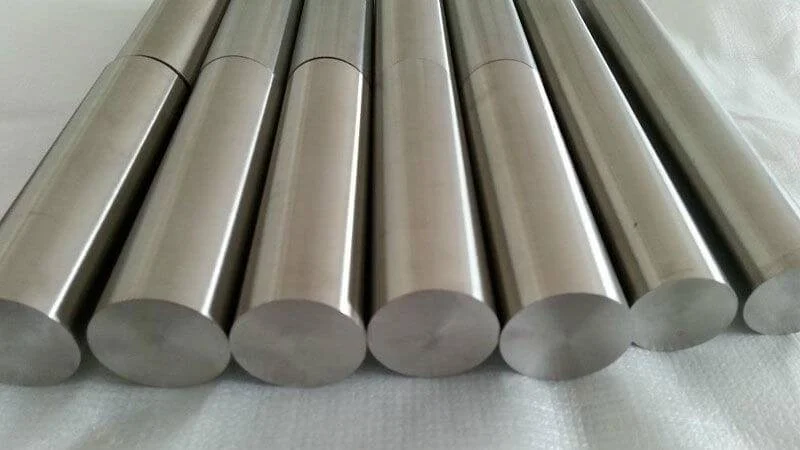
Titanium is often hailed as the “Space Metal.” It is prized for its incredible strength-to-weight ratio and immunity to corrosion, making it the backbone of modern aerospace engineering and medical implants.
But have you ever wondered why a titanium bar costs significantly more than steel or aluminum?
The answer lies not just in the raw material, but in the extraordinarily complex manufacturing process. Unlike steel, which can be melted in the open air, titanium is a reactive metal. At high temperatures, it fights to bond with oxygen and nitrogen, which—if not strictly controlled—can turn a high-performance metal into a brittle, useless piece of scrap.
From the porous, rock-like “sponge” to the shiny, precision-ground bar, the journey of titanium is a battle against chemistry and physics.
In this guide, we break down the 8 critical steps of titanium bar manufacturing. Whether you are a procurement manager or an engineer, understanding this workflow is key to identifying quality suppliers and avoiding hidden defects.
Quick Overview: How is Titanium Made?
The production of a titanium bar involves a strictly controlled sequence of vacuum melting and mechanical deformation:
- Raw Material Mixing: Blending Titanium Sponge with Master Alloys to determine the grade.
- Electrode Preparation: Compacting the mixture into a giant block and welding it into a consumable electrode.
- VAR Melting: Melting the electrode in a vacuum (Vacuum Arc Remelting) to purify the metal.
- Cogging (Forging): Breaking down the coarse cast structure using a massive hydraulic press.
- Rolling: Precision processing to reduce the diameter and achieve the final shape.
- Vacuum Annealing: Heat treating the bar to relieve internal stress.
- Machining & Straightening: Removing the brittle “Alpha Case” surface layer.
- Ultrasonic Testing (NDT): Scanning for internal defects to ensure aerospace-grade safety.
Phase 1: The Raw Material Preparation
Before any melting happens, we must create the perfect “recipe.” This stage is crucial because once the metal is melted, the chemical composition is set in stone.
Step 1: Raw Material Mixing (The Recipe)
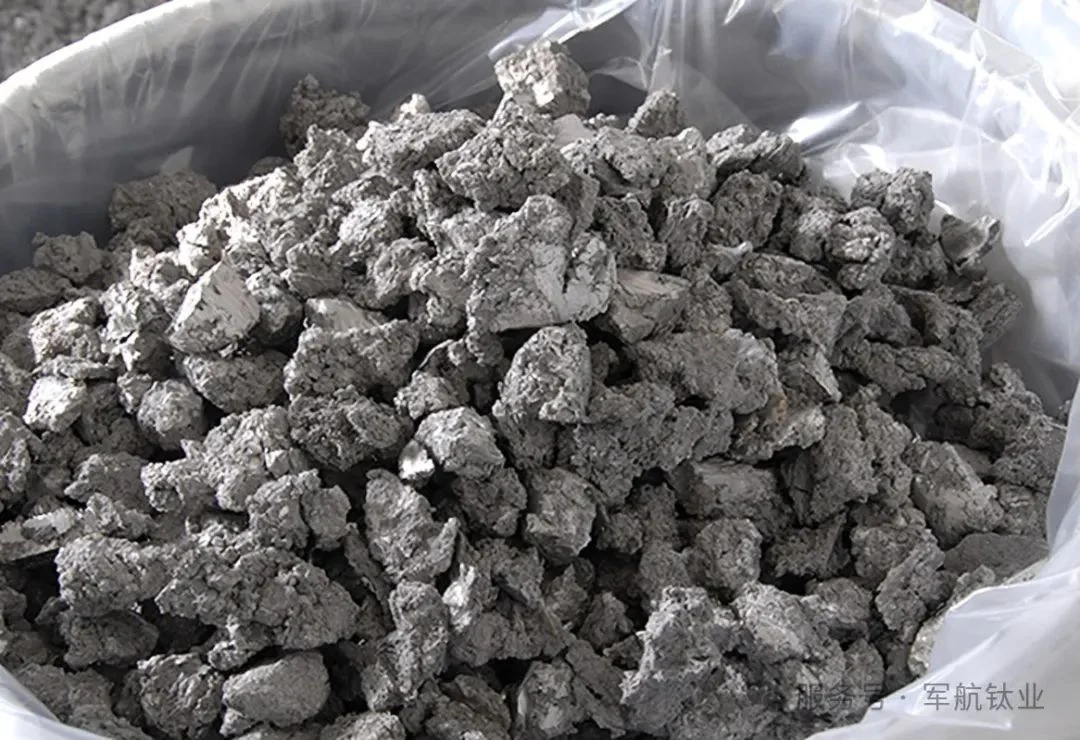
It all starts with Titanium Sponge. As the name suggests, this raw form of titanium looks exactly like a porous, grey rock or a dry sponge. It is pure titanium, but it is too soft for industrial use.
To create high-strength alloys like the famous Ti-6Al-4V (Grade 5), we must mix the sponge with precise amounts of Master Alloys (such as Aluminum beans and Vanadium-Aluminum alloy).
Think of it like baking a cake:
- The Flour: Titanium Sponge (The base).
- The Yeast/Flavor: Master Alloys (To give it strength and specific properties).
Why is this step critical? If the mixing isn’t perfectly uniform, the final bar will suffer from “Segregation.” This means one part of the bar might be too brittle while another is too soft, leading to immediate rejection during quality control.
Step 2: Electrode Preparation (Compacting)
You can’t just shovel loose sponge into a high-tech vacuum furnace; it would be a mess. We need to turn this loose mixture into a solid, conductive form.
- Compacting: A massive hydraulic press crushes the mixed sponge and alloy blend into large, solid blocks (called “compacts”).
- Welding: These blocks are then stacked and welded together in a plasma welding tower to form a single, long cylinder.
This giant cylinder is known as a “Consumable Electrode.” It acts as the “fuel” for the next and most critical step: melting.
Phase 2: The Transformation (The Melting Stage)
This is the most energy-intensive and critical phase of the entire process. It transforms the compacted “sponge block” into a uniform, high-density metal ingot.
Step 3: Vacuum Arc Remelting (VAR) – The Heart of Quality
Titanium cannot simply be melted in an open ladle like steel. If you tried, it would instantly react with oxygen and nitrogen in the air, creating a brittle, useless material.
Instead, we use Vacuum Arc Remelting (VAR).
How it works: The Consumable Electrode (from Step 2) is lowered into a vacuum furnace. A high-current electric arc strikes the bottom of the electrode, melting it drop by drop into a water-cooled copper crucible below. This slow, controlled dripping allows the metal to solidify rapidly, ensuring a fine grain structure while volatile impurities are vaporized by the vacuum.
The “Double Melt” Standard: One melt isn’t enough. For standard industrial applications, the first ingot becomes the electrode for a second melt. This is called “Double VAR.” It ensures the chemical composition is perfectly uniform from top to bottom.
💡 Procurement Pro Tip:Are you buying for Aerospace or Rotating Parts? For critical components like jet engine blades or medical implants, standard Double VAR may not be enough. You should specify “Triple VAR” (3 times melted). This extra melting step is the industry’s gold standard for eliminating microscopic defects known as High-Density Inclusions (HDI), which can cause catastrophic failure.
Phase 3: Shaping and Structure
Once the melting is complete, we have a massive titanium ingot. However, inside this ingot, the metal crystals (grains) are coarse and large, which makes the material structurally weak. To give titanium its legendary strength, we must use brute force to change its internal structure.
Step 4: Cogging (Breakdown Forging)
The massive ingot is heated to temperatures exceeding 1,000°C (entering the β-phase region) and placed into a giant hydraulic forging press.
The Process: Imagine a hammer striking with thousands of tons of force. The press repeatedly crushes and stretches the ingot, transforming it from a short, fat cylinder into a long, rectangular shape known as a “Billet.”
Why do we do this? It’s not just about changing the shape. This violent deformation shatters the coarse “as-cast” grain structure and forces the grains to reorganize into a finer, tighter pattern. This process, called Grain Refinement, is what transforms titanium from a brittle casting into a tough, ductile wrought metal.
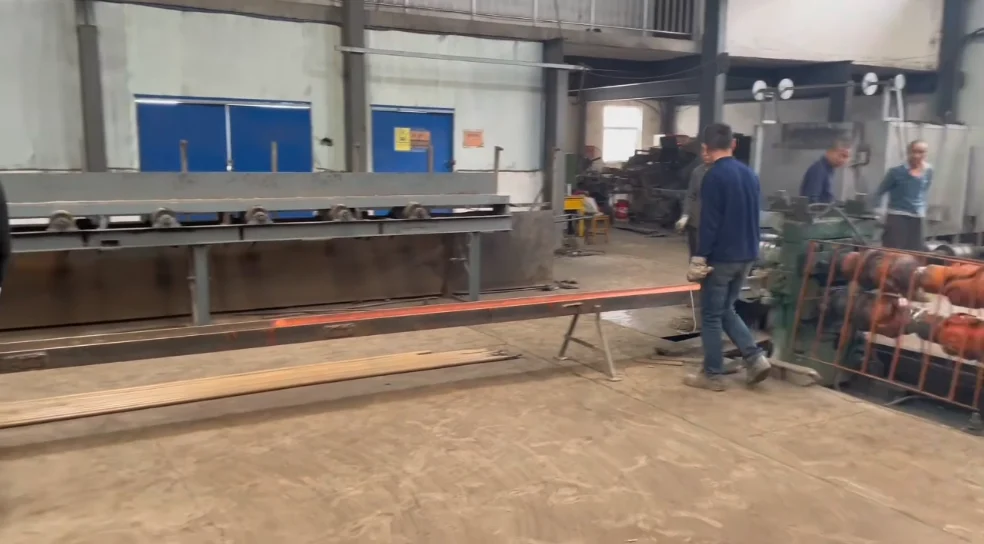
Step 5: Precision Rolling
Now that we have a strong Billet, it’s time to shape it into the specific diameter required by the customer.
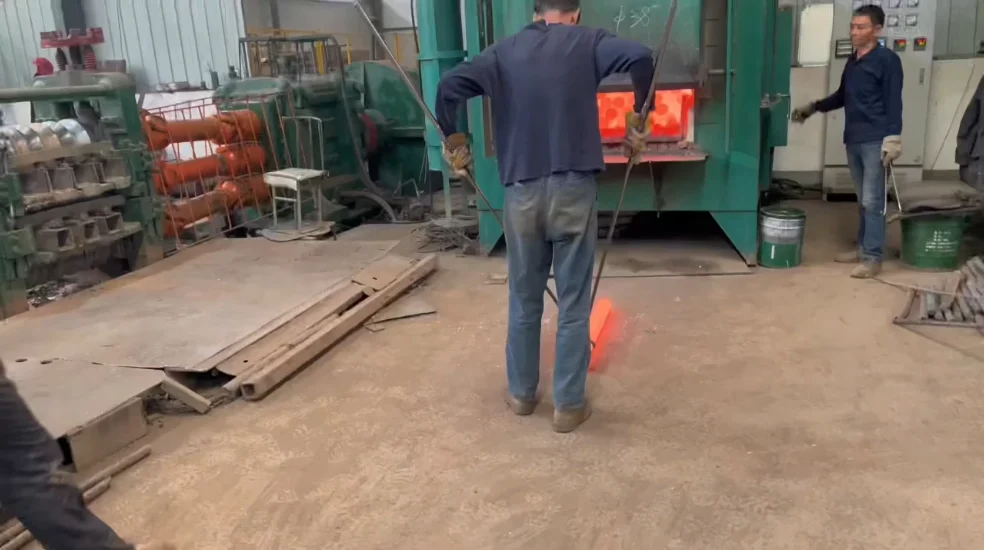
The Process: The billet is reheated and fed into a Rolling Mill. Similar to a pasta machine rolling out dough, the titanium passes through a series of rollers that progressively squeeze it into a smaller and smaller round diameter.
Precision Matters: While forging provides strength, rolling provides precision. This step ensures the bar achieves the correct dimension (e.g., 20mm, 50mm) within tight tolerances. By the end of this line, the titanium is finally looking like the long, straight bars you are familiar with.
Phase 4: The Finishing Touch (Heat Treatment & Testing)
The bar is now shaped, but it is not yet ready for shipment. It is stressed from the rolling process and covered in a dangerous surface layer. The final steps are all about ensuring safety and longevity.
Step 6: Vacuum Heat Treatment (Annealing)
After the intense pressure of forging and rolling, the titanium bar is full of “internal stress”—imagine a tightly coiled spring waiting to snap. If you tried to machine it now, it might warp or twist.
The Solution: We place the bars into a vacuum annealing furnace. By holding them at a specific temperature and then cooling them slowly, we relax these internal stresses. This process stabilizes the metal’s microstructure, ensuring it meets the specific mechanical property requirements (Yield Strength, Elongation) of standards like ASTM B348 or AMS 4928.
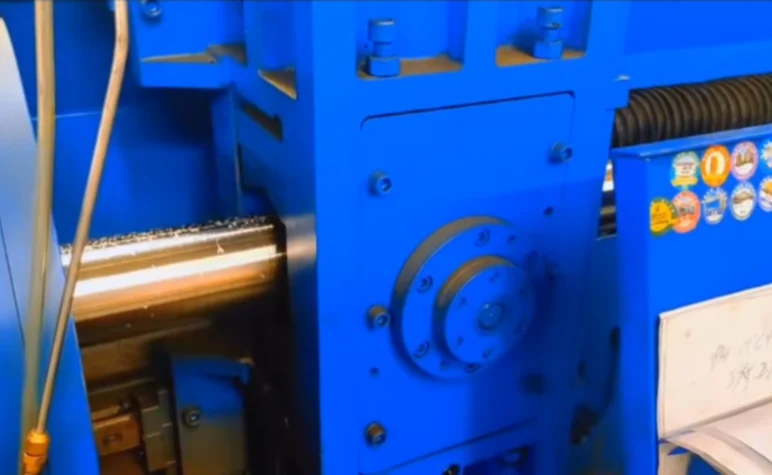
Step 7: Straightening & Machining (The “Alpha Case” Danger)
This is perhaps the most critical step for ensuring the fatigue life of the final component.
When titanium is heated, it reacts with oxygen to form a hard, brittle surface layer known as the “Alpha Case.” Think of it like a micro-thin eggshell on the surface of the metal. While it is hard, it is prone to cracking. If left on the bar, these micro-cracks can propagate inward, causing parts to fail catastrophically under load.
Our Process: We don’t just “polish” the bars. We use Centerless Grinding or Peeling to physically remove the entire outer layer, guaranteeing that the Alpha Case is 100% eliminated.
⚠️ Quality Alert for Buyers: Never accept “Black Skin” or As-Rolled bars for dynamic load applications. Always insist on “Peel-Turned” or “Ground” surfaces to ensure the Alpha Case has been removed.
Step 8: Ultrasonic Testing (NDT)
On the surface, the bar may look perfect. But what about the inside?
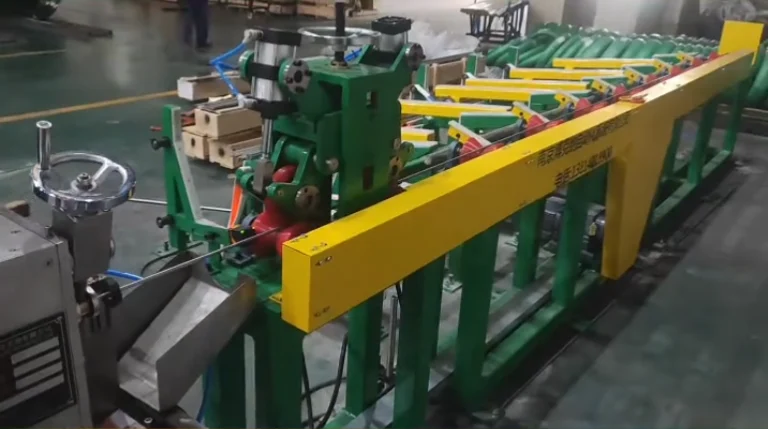
For aerospace and medical applications, “visual inspection” is not enough. We use Ultrasonic Testing (UT)—similar to a medical ultrasound—to scan the entire volume of the bar. Sound waves are sent through the metal; if they hit an internal crack, void, or inclusion, the wave bounces back, alerting our technicians.
The Standard: Only bars that pass AMS-STD-2154 Class A receive the stamp of approval. Any bar with even a microscopic internal flaw is scrapped.
Conclusion: More Than Just Metal
As we have seen, producing a titanium bar is not a simple matter of melting and pouring. It is a sophisticated orchestration of high-vacuum chemistry, massive mechanical force, and microscopic precision.
From the sponge mixing to the final ultrasonic scan, every one of these 8 steps presents a risk of failure. This is why titanium commands a premium price—and why choosing a supplier with strict process control is non-negotiable.
Whether you are designing a medical implant or an aerospace fastener, the quality of your final product starts here, in the hidden details of the manufacturing process.
Ready to source high-performance titanium? Don’t gamble with quality. Contact our engineering team today to discuss your specific requirements for AMS 4928 or ASTM F136 titanium bars.
Frequently Asked Questions (FAQ)
Q: Why is titanium melted in a vacuum (VAR)?
A: Titanium is highly reactive. If melted in normal air, it would instantly react with oxygen and nitrogen to form brittle compounds, ruining the metal’s ductility. The vacuum environment prevents this contamination and allows for the removal of volatile impurities.
Q: What is the difference between Forged and Rolled titanium bars?
A: Forged Bars are produced by hammering (Step 4) and typically typically have a coarser surface but excellent internal structure, used for large diameters (>200mm). Rolled Bars are produced by rollers (Step 5), offering tighter tolerances and smoother surfaces, ideal for smaller diameters.
Q: What is “Alpha Case” and why must it be removed?
A: Alpha Case is a hard, brittle, oxygen-enriched layer that forms on titanium when heated. If not removed by machining, it acts as a breeding ground for surface cracks, significantly reducing the part’s fatigue life.