In industrial applications, from chemical processing to marine engineering, material selection is a critical decision that dictates operational safety, asset longevity, and long-term cost-effectiveness. Titanium is renowned for its superior corrosion resistance, yet a common misconception is that all titanium is uniformly immune to degradation. In reality, its performance is highly dependent on the specific grade selected. This variability is the difference between a successful application and premature material failure.
This guide provides engineers, specifiers, and procurement managers with a comprehensive technical framework for selecting the optimal titanium grade. We will analyze the performance of key grades against specific environmental challenges, enabling you to make an informed, data-driven decision for your project.
The Foundation of Titanium’s Immunity: The Passivation Phenomenon
The remarkable corrosion resistance of titanium is not inherent to the bulk metal itself but is conferred by a protective surface layer. This phenomenon, known as passivation, is the cornerstone of its durability.
Understanding the Titanium Dioxide (TiO₂) Protective Layer
When exposed to a trace amount of oxygen in air or moisture, titanium spontaneously forms a highly stable, tenacious, and chemically inert oxide film of titanium dioxide (TiO₂). This layer is non-porous and adheres tightly to the substrate, acting as a formidable barrier that isolates the underlying metal from the surrounding corrosive environment.
The Self-Healing Mechanism
A critical feature of this passive layer is its ability to instantly self-repair. If the surface is mechanically scratched or damaged, the exposed titanium metal immediately reacts with available oxygen to regenerate the protective TiO₂ film, ensuring that corrosion protection is maintained without interruption.
Limitations and the Rationale for Grade Selection
While exceptionally robust, this protective film can be compromised under certain aggressive conditions. These include highly reducing or non-oxidizing acids (e.g., hydrochloric, sulfuric), high-temperature environments with low pH and high chloride concentrations, and conditions conducive to crevice corrosion. It is in these challenging scenarios that the chemical composition of different titanium grades becomes the decisive factor in performance, necessitating a careful selection process.
The Primary Distinction: Commercially Pure (CP) Grades vs. Titanium Alloys
The vast family of titanium materials can be broadly classified into two main categories, each with distinct advantages in the balance between corrosion resistance and mechanical strength.
Commercially Pure (CP) Titanium: The Corrosion Workhorses
Defined by standards bodies like ASTM International, Commercially Pure (CP) grades (e.g., Grades 1, 2, 3, and 4) are essentially unalloyed. Their mechanical properties are primarily controlled by varying levels of interstitial elements, mainly oxygen and iron. CP grades are characterized by superior overall corrosion resistance across a wide range of media, combined with excellent weldability and formability. They are often the first choice when corrosion resistance is the primary concern over mechanical strength.
Titanium Alloys: Engineering for Strength and Specific Resistance
Titanium alloys are created by adding elements such as Aluminum (Al), Vanadium (V), Palladium (Pd), Molybdenum (Mo), and Nickel (Ni) to the titanium base. This alloying process significantly enhances mechanical properties, particularly strength-to-weight ratio and hardness. While many alloys retain excellent corrosion resistance, they are engineered for specific performance envelopes, which can sometimes result in reduced resistance in certain media compared to the broad-spectrum immunity of CP grades.
A Detailed Analysis of Key Titanium Grades for Corrosive Service
Understanding the nuanced behavior of individual grades is essential for correct specification. Here, we examine the most common grades used in demanding applications.
Grade 2 (The Industry Standard)
- Profile: As the most widely used CP grade, Grade 2 offers an optimal and cost-effective balance of moderate strength, excellent formability, and comprehensive corrosion resistance.
- Recommended Environments: Seawater, brines, and highly oxidizing media such as wet chlorine gas, nitric acid, and metallic chloride solutions. It is the default material for many marine and chemical processing applications.
- Limitations: While generally robust, Grade 2 may be susceptible to crevice corrosion in hot (>70°C), low-pH chloride solutions or in tight, unventilated gaps where stagnating media can deoxygenate.
Grade 5 (The High-Strength Champion: Ti-6Al-4V)
- Profile: The most prevalent alpha-beta alloy, Ti-6Al-4V (UNS R56400) is the workhorse of the aerospace industry, prized for its exceptional strength-to-weight ratio, which it retains at elevated temperatures.
- Corrosion Profile: Grade 5 exhibits excellent resistance in most natural and industrial environments, including seawater. However, it is generally less resistant than CP grades to aggressive media. It can be susceptible to stress corrosion cracking (SCC) in specific environments like anhydrous methanol or red fuming nitric acid.
- Recommended Environments: Aerospace structural components, high-performance automotive parts, offshore structural members, and any application where high mechanical strength is the primary design driver.
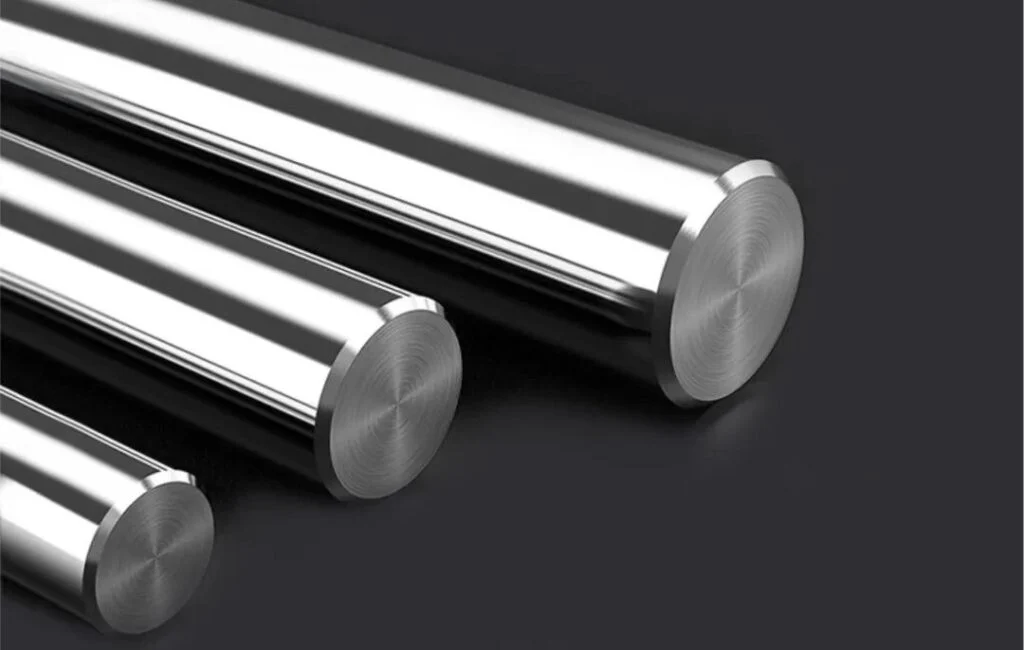
Grade 7 (The Ultimate Corrosion Specialist)
- Profile: Grade 7 is chemically and mechanically identical to Grade 2 but includes a critical addition of 0.12-0.25% Palladium (Pd). This small addition dramatically elevates its corrosion performance.
- Corrosion Profile: The palladium acts as a catalyst, significantly enhancing the material’s resistance to crevice corrosion and enabling it to perform exceptionally in reducing acid environments (e.g., dilute hydrochloric and sulfuric acids) where CP grades would fail.
- Recommended Environments: Aggressive chemical processing plants, particularly in acid chloride production, hydrometallurgical extraction, and flue-gas desulfurization (FGD) systems. It is the premier choice for preventing crevice corrosion.
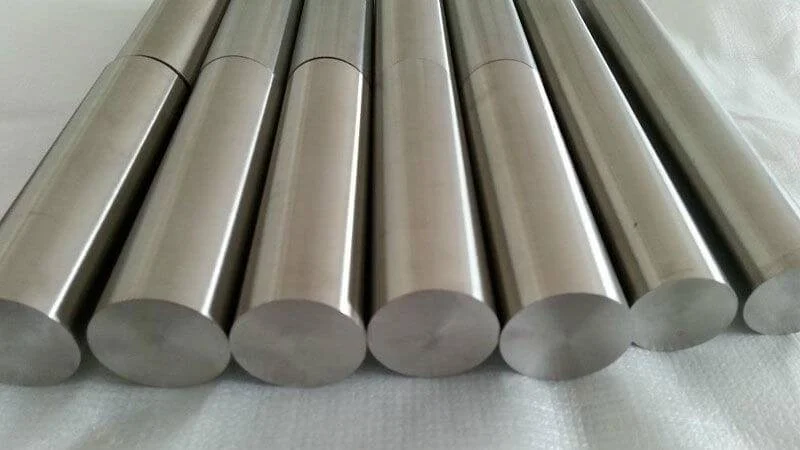
Grade 12 (The High-Temperature, Crevice-Resistant Alloy)
- Profile: A near-alpha alloy containing small additions of Molybdenum (0.2-0.4% Mo) and Nickel (0.6-0.9% Ni).
- Corrosion Profile: These alloying elements provide a significant enhancement in crevice corrosion resistance over CP grades, particularly in hot brines and moderately reducing media. It offers better strength retention at elevated temperatures than CP grades.
- Recommended Environments: Shell-and-tube heat exchangers in chemical and marine service, high-temperature brine applications, and scenarios requiring superior crevice corrosion resistance at a lower price point than Grade 7.
[Table] Comparative Properties of Key Titanium Grades
| Grade | Key Alloying Elements | Typical Tensile Strength (MPa) | Key Corrosion Feature |
|---|---|---|---|
| Grade 2 | Commercially Pure | 345 | Excellent all-around resistance, especially in oxidizing media. |
| Grade 5 | 6% Al, 4% V | 950 | Very high strength with good general corrosion resistance. |
| Grade 7 | 0.12-0.25% Pd | 345 | Supreme resistance to reducing acids and crevice corrosion. |
| Grade 12 | 0.3% Mo, 0.8% Ni | 483 | Enhanced high-temperature strength and crevice corrosion resistance. |
Application-Driven Selection: Matching the Grade to the Environment
For Marine & Desalination Applications
Primary Recommendation: Grade 2. Its near-total immunity to corrosion in seawater at ambient temperatures makes it the ideal, cost-effective choice for piping, heat exchangers, and vessel hulls.
Secondary Consideration: Grade 5. Use for high-stress structural components like riser stress joints or load-bearing subsea hardware where mechanical properties are paramount. Careful design to mitigate crevice corrosion risk is essential.
For Chemical & Petrochemical Processing
Oxidizing Environments (e.g., Nitric Acid, Wet Chlorine): CP Grades (2 or 3) are typically sufficient and provide excellent service life.
Reducing or Mixed Acid Environments: Grade 7 is the superior choice for guaranteed performance, especially where crevice corrosion is a known risk. Grade 12 serves as a capable and more economical alternative for moderately reducing or high-temperature brine conditions.
For High-Strength Aerospace & Automotive Applications
Primary Recommendation: Grade 5 (Ti-6Al-4V). This grade is dominant due to its exceptional strength-to-weight ratio. Corrosion management in these applications is typically addressed through careful design and assembly protocols rather than by selecting a different grade.
Conclusion: A Synthesis of Performance, Environment, and Cost
Titanium grade selection is a critical engineering decision that requires a multi-faceted analysis of mechanical requirements, environmental aggression, and project budget. A simplified guideline is as follows: CP Grade 2 is the default choice for general, broad-spectrum corrosion resistance. Grade 5 is mandated by high-strength requirements. For aggressive reducing environments or severe crevice corrosion risks, the investment in a palladium-stabilized (Grade 7) or Mo/Ni-alloyed (Grade 12) grade is essential to ensure long-term integrity.
Ultimately, consulting with a material specialist who understands the intricate details of titanium metallurgy is the most reliable path to ensuring optimal material selection, performance, and safety for any given application.
Your Project Demands the Right Titanium. We Deliver It.
Navigating the complexities of titanium grades can be daunting, but making the right choice is crucial for your project’s success. The technical details we’ve discussed highlight a key truth: not all titanium is the same. That’s where expert guidance becomes invaluable.
At HonTitan, we don’t just supply metal; we provide clarity and confidence. As a specialist with deep expertise across the entire titanium supply chain, we understand these nuances intimately. Our capabilities serve a diverse range of demanding sectors, including:
- Aerospace & Defense
- Medical Device Manufacturing
- Industrial and Chemical Processing
- High-Performance Consumer Goods
With a substantial inventory of high-quality raw titanium materials and the ability to provide customized solutions, we are uniquely positioned to meet your exact specifications, whether you’re a large OEM or an innovative startup. We act as your collaborative partner, helping you select the perfect grade and form factor for your application.
Don’t leave your material selection to chance. Visit hontitan.com today to send us your specific requirements, drawings, or questions. Our engineering team will provide a tailored recommendation to ensure your project’s performance and longevity.
Choose HonTitan as your preferred supplier for diverse titanium needs and experience the assurance that comes from working with a true specialist committed to your success.
Frequently Asked Questions (FAQ)
Is Grade 5 titanium (Ti-6Al-4V) good for saltwater?
Yes, Grade 5 has excellent resistance to general corrosion in saltwater and is often used for marine applications where high strength is required (e.g., structural components). However, it is less resistant to crevice corrosion than CP Grade 2. For applications with tight gaps or under deposits where stagnant saltwater may occur, Grade 2 is often a safer choice unless high strength is non-negotiable.
What is the main difference in corrosion resistance between Grade 2 and Grade 7?
Grade 2 and Grade 7 are mechanically almost identical. The key difference is the addition of 0.12-0.25% palladium to Grade 7. This small addition makes Grade 7 exceptionally resistant to reducing acids (like hydrochloric acid) and dramatically improves its resistance to all forms of crevice corrosion, especially in hot chloride environments.
Why would I choose Grade 12 over Grade 7?
The primary reason to choose Grade 12 over Grade 7 is cost. Grade 12, alloyed with molybdenum and nickel, offers significantly enhanced crevice corrosion resistance compared to CP grades, especially at high temperatures. While not as robust as Grade 7 in highly reducing acids, it provides a high-performance solution for many challenging applications at a lower price point, as palladium is a very expensive alloying element.
Does titanium rust in chlorine?
Titanium exhibits outstanding resistance to wet chlorine gas and chlorine-containing solutions (like sodium hypochlorite). The presence of water is crucial, as it allows the protective oxide layer to be maintained. However, titanium can corrode rapidly and even ignite in completely dry chlorine gas, a condition rarely encountered in typical industrial processes.
If all titanium forms a protective oxide layer, why do grades matter for corrosion?
While all titanium grades form this layer, its stability can be challenged by specific chemical environments. Alloying elements can bolster this layer’s effectiveness. For example, palladium in Grade 7 helps maintain the passive layer in reducing conditions where it would otherwise dissolve. Molybdenum and nickel in Grade 12 help to repassivate the surface more effectively within tight crevices, preventing localized corrosion.
Your Project Demands the Right Titanium. We Deliver It.
Navigating the complexities of titanium grades can be daunting, but making the right choice is crucial for your project’s success. The technical details we’ve discussed highlight a key truth: not all titanium is the same. That’s where expert guidance becomes invaluable.
At HonTitan, we don’t just supply metal; we provide clarity and confidence. As a specialist with deep expertise across the entire titanium supply chain, we understand these nuances intimately. Our capabilities serve a diverse range of demanding sectors, including:
- Aerospace & Defense
- Medical Device Manufacturing
- Industrial and Chemical Processing
- High-Performance Consumer Goods
With a substantial inventory of high-quality raw titanium materials and the ability to provide customized solutions, we are uniquely positioned to meet your exact specifications, whether you’re a large OEM or an innovative startup. We act as your collaborative partner, helping you select the perfect grade and form factor for your application.
Don’t leave your material selection to chance. Visit hontitan.com today to send us your specific requirements, drawings, or questions. Our engineering team will provide a tailored recommendation to ensure your project’s performance and longevity.
Choose HonTitan as your preferred supplier for diverse titanium needs and experience the assurance that comes from working with a true specialist committed to your success.