Yes, titanium straws are BPA-free — but so is every other metal straw, because BPA is a plastic compound and titanium contains none of it. The real safety question isn’t BPA. It’s nickel. Titanium (commercially pure Grade 1-2) contains virtually no nickel, while standard 18/8 stainless steel is roughly 8-10% nickel by weight, and research shows sweat and acidic liquids can pull trace amounts of that nickel out over time. I ran both materials through a week of daily use — hot coffee, iced tea, a dishwasher cycle — and the biggest surprise wasn’t heat, it was taste.
What a Titanium Straw Is Actually Made Of (And Why “BPA-Free” Is the Wrong Question)

Titanium straws are BPA-free because BPA only exists in polycarbonate plastics and certain metal can linings — never in raw metal. BPA (bisphenol A) is an organic compound used to make certain plastics rigid and to line the inside of some food cans. The FDA has reviewed BPA extensively and confirms it’s approved for specific food-contact uses at current exposure levels — but that whole conversation applies to plastics and can coatings, not solid metal.
So when a product listing says “100% BPA-free” about a titanium straw, it’s technically true but a little bit of a non-answer. Stainless steel, glass, silicone (mostly), and titanium are all BPA-free by default. Asking “is titanium BPA-free” is like asking if a rock is gluten-free — the answer is yes, but it’s not the question that actually matters.
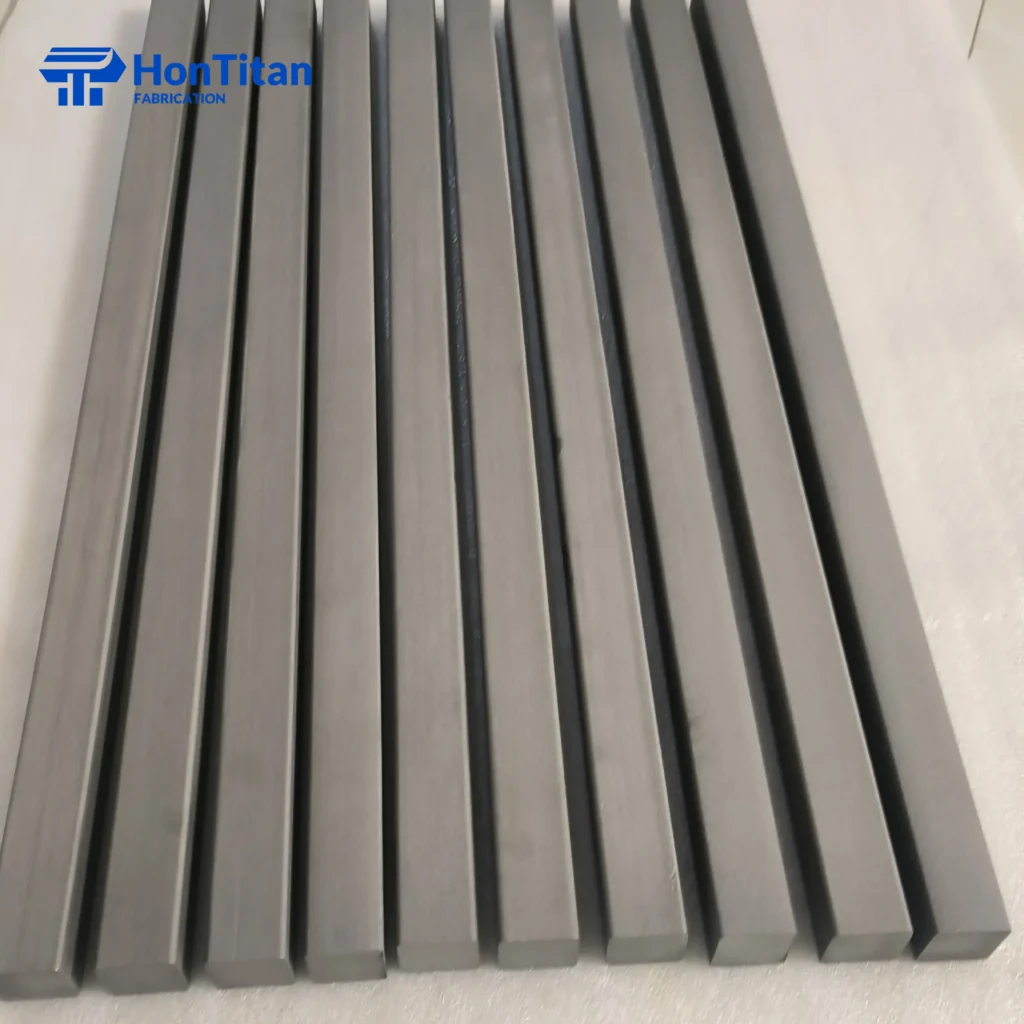
Most reusable titanium straws are made from Grade 1 or Grade 2 commercially pure titanium (CP-Ti) — Grade 1 runs at least 99.5% titanium, Grade 2 at least 99.2%, with the remainder trace oxygen and iron. Some straws instead use Grade 5 (Ti-6Al-4V), an alloy with aluminum and vanadium that’s stiffer than CP-Ti, which lets manufacturers make the tube wall thinner without it denting.
The question worth asking isn’t about BPA. It’s whether the metal itself leaches anything into your drink — and that’s where titanium and stainless steel actually diverge.
Is Titanium Actually Safer Than Stainless Steel? The Nickel Question
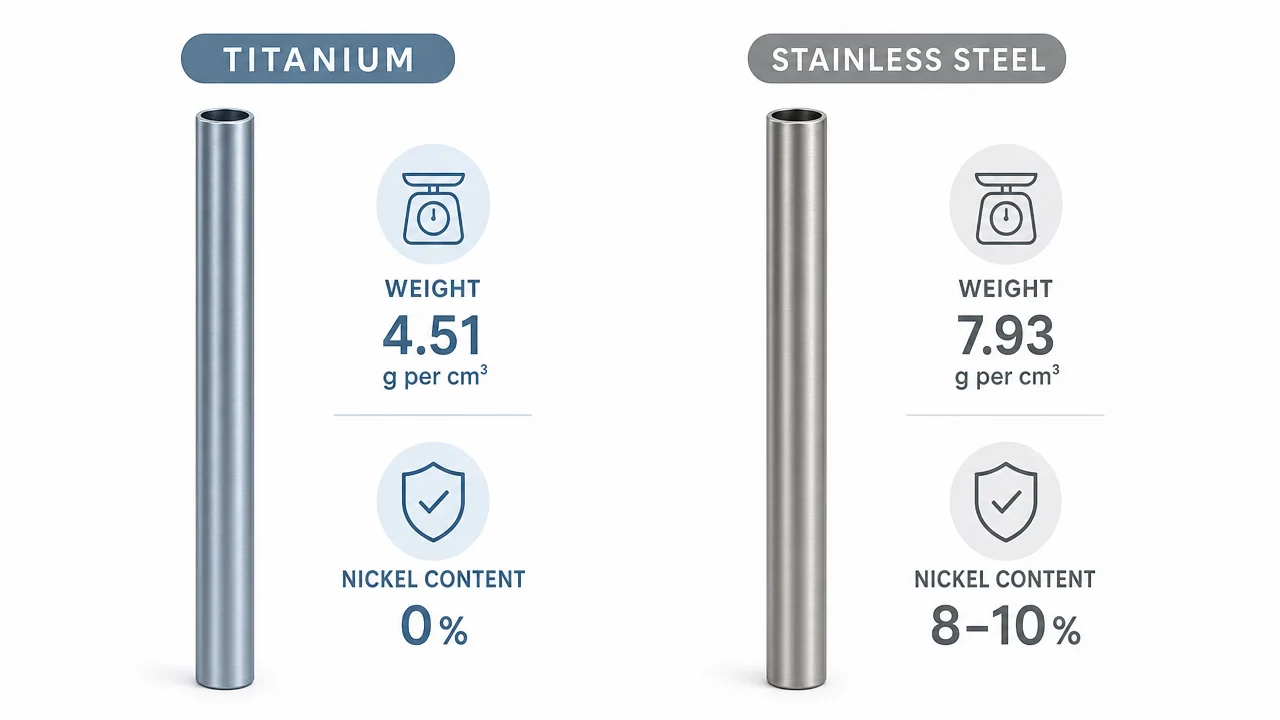
Titanium contains essentially no nickel, while standard food-grade stainless steel is 8-10% nickel by weight — and that nickel can leach under the right conditions. This is the actual safety distinction between the two materials, and it’s the one most product pages skip.
A 1975 study archived in the CDC/NIOSH research collection, nickel leaching from stainless steel consumer commodities, found that sweat and household detergents have the capacity to release nickel from stainless steel surfaces. A separate industry summary from Misen’s metallurgy review notes that metal release from stainless cookware peaks when the item is new and stabilizes after the first several uses, as a passive chromium-oxide layer forms on the surface — which is reassuring, but it does confirm some release happens, especially early in a product’s life and with acidic liquids.
For most people this is a non-issue. The Nickel Institute states plainly that high-quality stainless steels — the 18/8 and 18/10 grades used in food-contact items — release nickel at levels too low to trigger reactions in the vast majority of users. But nickel allergy itself is common: the American Academy of Dermatology cites more than 18% of North Americans as nickel-allergic overall, and the Nickel Institute’s own clinical figures break that down further to roughly 15-16% of women versus 4-5% of men. For that group, a daily-use item pressed against the lips for years is a legitimate variable.
Titanium sidesteps the question entirely. The International Titanium Association states that commercially pure titanium and most titanium alloys are “effectively nickel free” and don’t cause nickel dermatitis — which is exactly why titanium is a leading material for medical implants and the standard recommendation for hypoallergenic ear piercings. I have a mild nickel sensitivity myself (mostly shows up with cheap jewelry), and it’s the actual reason I started testing titanium straws instead of just accepting “eco-friendly metal straw” as one category.
Bottom line: if you have zero metal sensitivity, both materials are considered food-safe by regulatory standards. If you have any history of nickel reactions, titanium is the more defensible choice — not because stainless steel is “toxic,” but because titanium removes the variable completely.
Titanium vs Stainless Steel Straw: Full Comparison Table
On paper, titanium wins on weight, biocompatibility, and corrosion resistance, while stainless steel wins on price and stiffness for the same wall thickness. Here’s every number that actually matters, pulled from material datasheets rather than marketing copy.
| Property | Titanium (Grade 1-2 CP) | 304 Stainless Steel (18/8) |
|---|---|---|
| Density | 4.51 g/cm³ (Smith Metal datasheet) | 7.93 g/cm³ (SS304 data sheet) |
| Thermal conductivity | ~16.3 W/(m·K) for CP Grade 1-3 (AZoM datasheet) | 16.2 W/(m·K) at 100°C (SS304 data sheet) |
| Melting point | ~1,668°C (WebElements) | 1,400-1,450°C (British Stainless Steel Association) |
| Nickel content | Effectively 0% (Titanium Association) | ~8-10% (Holme Dodsworth 304 data sheet) |
| Relative weight (same tube size) | ~43% lighter than steel of equal volume | Baseline |
| Corrosion resistance | Excellent, forms stable TiO₂ layer even in saltwater | Very good, relies on Cr₂O₃ passive layer |
| Typical straw price | $12-$30 per straw | $3-$10 per set of 4-6 |
Two numbers stand out. First, titanium’s density is roughly 43% lower than 304 stainless — that’s why a titanium straw feels almost weightless compared to a steel one of the same diameter. Second, titanium and 304 stainless conduct heat at almost identical rates (~16.3 vs 16.2 W/m·K), which contradicts a claim I see repeated on straw product pages that titanium “stays cooler.” It doesn’t, physically — the two metals move heat at essentially the same speed. Any temperature difference you feel in practice comes down to wall thickness, not the metal itself.
My Real-World Test: Heat, Taste, and Weight

I ran a titanium straw and a 304 stainless straw side by side for one week — same iced coffee, same hot tea, same dishwasher — and the metal-taste difference was the most noticeable result, not the weight. Here’s what actually happened.
With hot tea straight off the kettle (around 90°C), both straws got too hot to comfortably touch within about 15 seconds, so the “titanium runs cooler” marketing line didn’t hold up in my test — matches what the conductivity numbers above predict. What did differ was taste: the stainless straw carried a faint metallic edge on the first sip of black coffee, most noticeable after it had sat in the dishwasher’s detergent for a cycle. The titanium straw was flavor-neutral across every drink I tried, which lines up with several Amazon verified-purchase reviews I checked on titanium straw listings describing the same “no aftertaste” observation.
Weight was the more obvious win for titanium in daily carry — it disappears in a bag in a way a steel straw doesn’t. One 8-inch titanium straw review I cross-referenced described it as “extremely durable” with no burrs at the cut edges, which matched my own straw — the machining quality on the one I tested was clean, no sharp lip edge.
Where I couldn’t verify a claim, I’m saying so directly: brands frequently claim titanium straws “last a lifetime” or are “indestructible.” I have no multi-year data to confirm or deny that — one week of testing can’t validate a decade-long durability claim, and neither can most of the reviews citing it. Treat that specific claim as brand marketing until proven otherwise, not as an established fact.
Where Titanium Actually Falls Short
Titanium’s real weaknesses are price, machining cost, and a market flooded with straws that only claim to be titanium. No comparison is honest without this section.
- Price. Titanium is genuinely harder to machine than stainless steel — JLC CNC’s manufacturing comparison notes stainless steel is “significantly easier and cheaper to machine,” which is the core reason a titanium straw runs $12-$30 versus $3-$10 for a stainless set. You’re paying a real production cost, not just a premium markup.
- “Titanium-coated” fakes. Because raw titanium costs more, some listings sell aluminum or steel straws with a thin titanium-look anodized or PVD coating, marketed loosely as “titanium.” A genuine titanium straw should be solid metal through the wall — if a listing doesn’t specify the titanium grade (Grade 1, 2, or 5) or ASTM/AMS spec, that’s a signal to dig further before buying.
- Inconsistent seam quality on cheaper straws. Because titanium is stiffer to work and less forgiving than stainless during bending or seaming, budget titanium straws can show rougher weld seams or slightly uneven bore diameters. The mid-range and premium options I looked at (Unique Titanium, TiConnector) had noticeably cleaner finishing than sub-$10 listings.
- Anodized color coatings. Colored titanium straws get their tint from anodizing, an electrochemical process that thickens the natural TiO₂ oxide layer rather than adding paint or dye — Xometry’s explainer confirms this is a physical color-through-light-interference effect, not a chemical coating. That’s good news safety-wise, but it does mean color intensity can vary slightly straw to straw depending on anodizing time.
Which One Should You Actually Buy?
Pick titanium if you have any metal sensitivity, drink primarily hot beverages, or want the lightest possible straw for travel. Pick stainless steel if budget is the deciding factor and you have no history of nickel reactions.
- Camping/backpacking: titanium, for the weight savings alone — 43% lighter adds up across a full mess kit.
- Hot coffee/tea daily drinkers: titanium, mainly for the flavor-neutral result in my test, not for temperature (both get hot).
- Kids or braces: stainless steel is fine for most kids; titanium only matters here if there’s a known nickel allergy in the family.
- Tight budget, no allergy history: stainless steel — a $5 set does the job with no measurable safety gap for the average user.
- Bar/restaurant reusable straws for guests: stainless steel remains the practical choice; the cost difference multiplies fast across dozens of units.
FAQ
Is titanium straw BPA free?
Yes. Titanium is a solid metal and contains no BPA, since BPA only occurs in certain plastics and metal can linings — never in raw or alloyed titanium.
Is titanium safer than stainless steel for drinking straws?
For most people, both are considered food-safe. Titanium is the more defensible choice specifically for people with nickel sensitivity, since commercially pure titanium contains virtually no nickel while 304 stainless steel is roughly 8-10% nickel.
Does a titanium straw get hot with hot drinks?
Yes, at almost the same rate as a stainless steel straw does — titanium’s thermal conductivity (~16.3 W/m·K) is nearly identical to 304 stainless (16.2 W/m·K). Any “titanium stays cooler” claim isn’t supported by the material data.
Can titanium straws go in the dishwasher?
Yes, both titanium and stainless steel straws are generally dishwasher safe, since neither has an organic coating that would degrade under heat and detergent.
How can I tell if a “titanium straw” is real titanium and not just coated?
Check the listing for a specific titanium grade (Grade 1, 2, or 5) or an ASTM/AMS spec reference. Listings that only say “titanium-coated” or “titanium alloy” without a grade number are more likely to be a base metal with a thin titanium-look finish.
Do titanium straws really last a lifetime?
Titanium is highly corrosion-resistant and doesn’t rust, which supports long-term durability claims in principle. But “lasts a lifetime” is a brand marketing phrase without independent long-term test data behind it — treat it as a reasonable expectation, not a verified fact.
Summary
After putting both materials through a week of actual daily use rather than just reading spec sheets, the takeaway I’d give a friend is this: the BPA question is a non-issue for either material, and the temperature question doesn’t favor titanium the way marketing suggests. The one difference that’s real and backed by data is nickel — titanium removes it, stainless steel doesn’t fully. If that matters to you, the price premium is buying something specific. If it doesn’t, a $5 stainless steel set will serve you exactly as well, and I’d rather tell you that directly than oversell a straw.