Sourcing high-performance titanium tubing is a high-stakes decision. Whether for a shell and tube heat exchanger in a desalination plant, a hydraulic system in aerospace, or a corrosive chemical processing line, the margin for error is zero. A single tube failure can lead to catastrophic downtime, safety hazards, and massive financial losses.
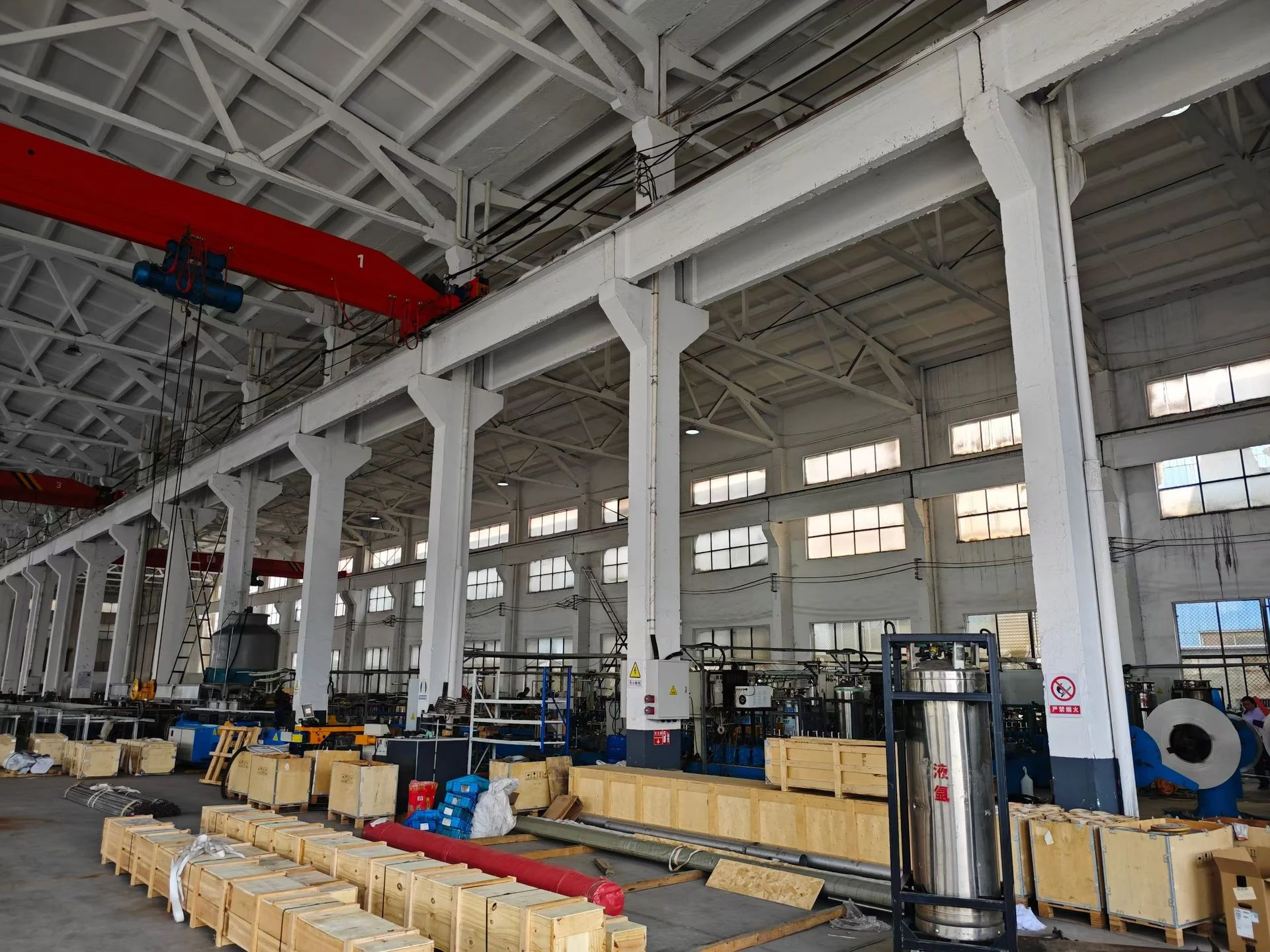
However, a quick search for “titanium tube manufacturers” on Google often leads to a confusing mix of results. The market is flooded with trading companies posing as factories, making it difficult to distinguish between a genuine source factory and a middleman.
How do you verify if a supplier has the actual production capacity, quality control systems, and financial stability to fulfill your order?
In this guide, we break down the top 7 critical factors you must evaluate before placing an order. From raw material traceability to non-destructive testing (NDT), this checklist will help you identify a partner who delivers not just products, but reliability.
Factor 1: Certification and Standards Compliance (The Baseline)
Before discussing price or lead time, the first step in vetting a titanium tubing supplier is verifying their qualifications. Certificates are not just wall decorations; they are the baseline proof of a manufacturer’s quality management system (QMS).
A reputable manufacturer must hold, at a minimum, an ISO 9001:2015 certification. However, depending on your industry application, general certification is often insufficient. You should look for specific credentials that match your project requirements:
- Pressure Equipment Directive (PED 2014/68/EU): Mandatory if your titanium tubes are intended for pressure vessels (like heat exchangers or boilers) exported to the European market.
- AS9100: The gold standard for the aerospace industry. If a supplier claims to serve aviation clients but lacks this cert, proceed with extreme caution.
- NORSOK M-650: Critical for the oil and gas industry, particularly for offshore applications.
The Crucial Distinction: ASTM B338 vs. ASTM B861 Beyond factory certifications, pay close attention to the manufacturing standards they follow.
- ASTM B338 / ASME SB338: This is the standard specification for Seamless and Welded Titanium Tubes for Condensers and Heat Exchangers. It is stricter than general standards because it mandates Non-Destructive Testing (NDT), such as ultrasonic or eddy current testing, to ensure there are no leaks or defects.
- ASTM B861: This covers seamless pipes for general corrosion-resisting / industrial service.
Pro Tip for Buyers: Always ask the supplier: “Can you provide a sample Mill Test Certificate (MTC) demonstrating compliance with ASTM B338 prior to our order?” A real factory will share this without hesitation; a trader might stall.
Factor 2: Manufacturing Capabilities: Seamless vs. Welded
Understanding the distinction between seamless titanium tubes and welded titanium tubes is critical for both performance and budget optimization. A competent manufacturer should not only offer both but also guide you on which is best for your specific application.
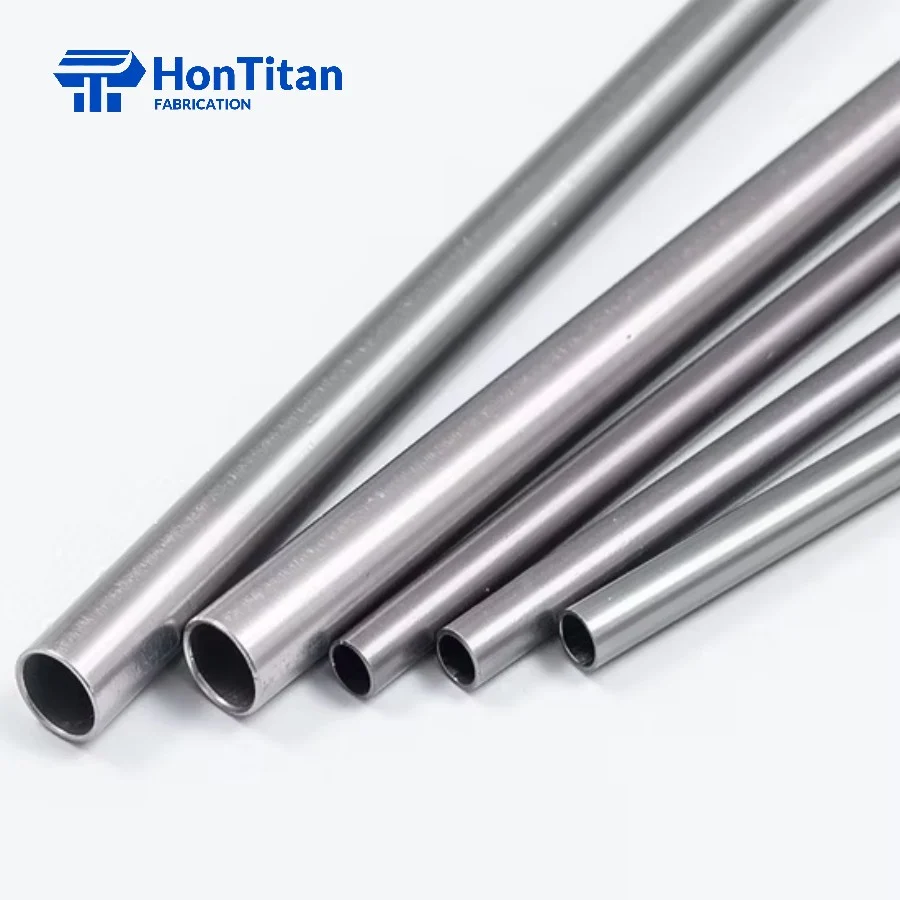
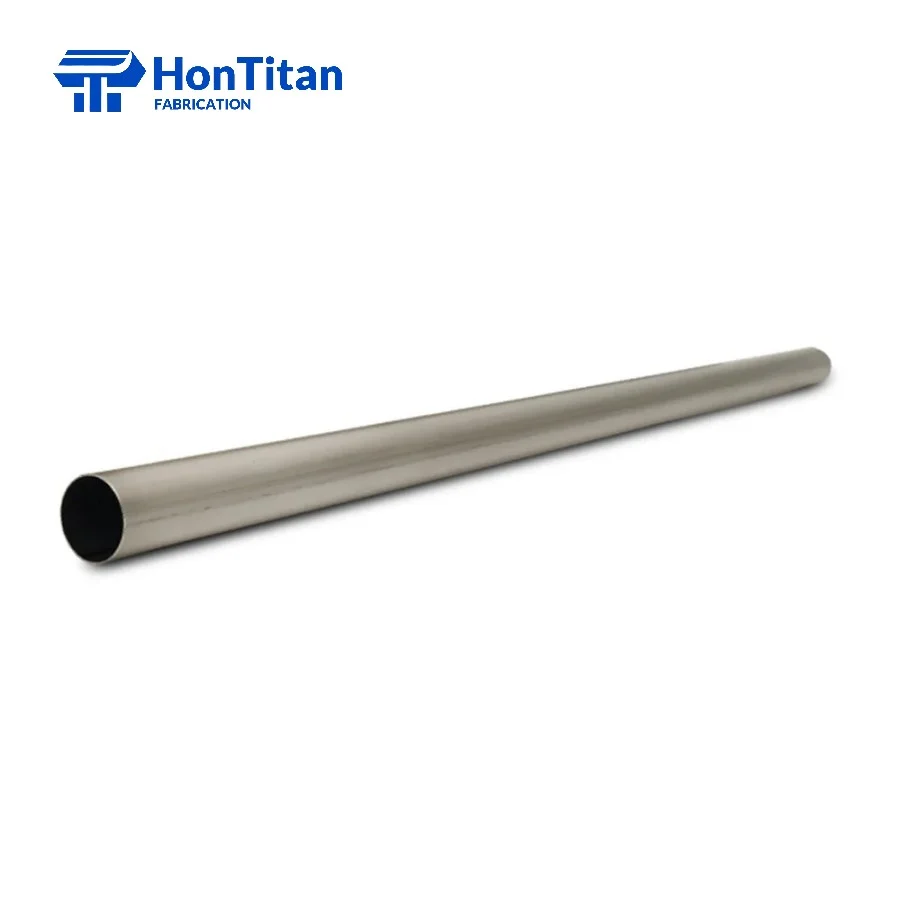
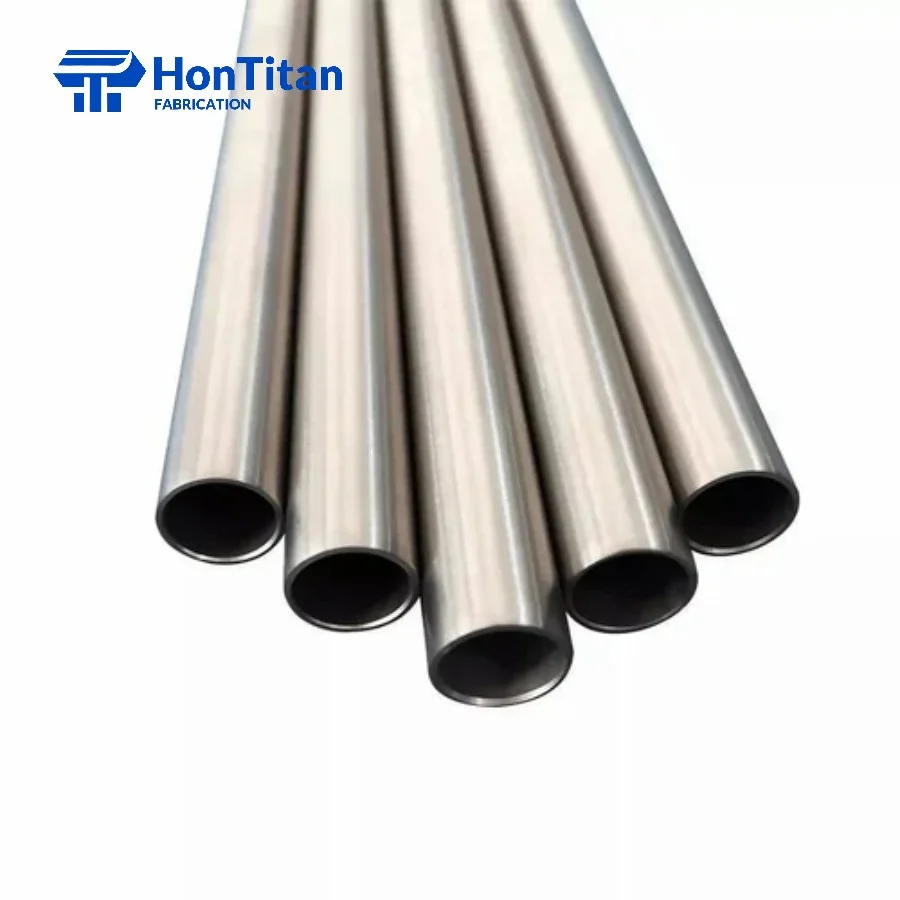
1. Seamless Titanium Tubes (Extrusion & Cold Rolling) Seamless tubes are produced from a solid titanium billet through extrusion and subsequent cold rolling or pilgering processes.
- Best For: High-pressure environments, such as offshore oil & gas hydraulic systems or aerospace structural components.
- Key Advantage: No weld seam means there is no “weak point” in the circumference, offering superior pressure resistance.
- The Manufacturer’s Role: Look for factories equipped with advanced Pilger Mills. This equipment ensures precise dimensional control and excellent surface finish, which are critical for fatigue resistance.
2. Welded Titanium Tubes (TIG Welding) Welded tubes are formed from flat titanium strip (coil) that is rolled and welded using TIG (Tungsten Inert Gas) welding.
- Best For:Shell and tube heat exchangers, power generation condensers, and desalination plants where wall thickness uniformity and concentricity are paramount.
- Key Advantage:Cost-effectiveness. Welded tubes generally cost 20-30% less than seamless options and offer better concentricity (uniform wall thickness).
- Quality Check: Ensure the manufacturer performs in-line annealing and 100% Eddy Current Testing (ET) on the weld seam to guarantee it matches the strength of the base metal.
Decision Guide: If your project involves high pressure (>2000 psi) or cyclic loading, insist on Seamless. For high-volume heat transfer applications where cost is a factor, Welded is the industry standard (ASTM B338 Grade 2).


Factor 5: Material Grade Selection & Inventory (Balancing Cost & Performance)
Titanium is not just “one metal”; it is a family of alloys. Choosing the wrong grade can either lead to unnecessary costs or performance failure. A knowledgeable manufacturer acts as a consultant, helping you select the optimal grade for your specific application.
Common Titanium Grades Explained:
Grade 1 (Unalloyed Titanium): The softest and most ductile grade.
Best For: Deep drawing applications, plate heat exchangers, and chemical processing where maximum formability is required.
Grade 2 (Unalloyed Titanium): The “Workhorse” of the industrial titanium world. It offers an excellent balance of moderate strength and high ductility.
*Best For:*Shell and tube heat exchangers, condensers, and general piping systems. It is the most readily available grade in the market.
Grade 5 (Ti-6Al-4V): The most common titanium alloy, known for its high strength-to-weight ratio.
Best For: Aerospace structural components, subsea equipment, and high-performance fasteners. Note: It is much harder to form and weld than Gr1/Gr2.
Grade 9 (Ti-3Al-2.5V): Often called “half-6-4”. It offers higher strength than Gr2 but better formability than Gr5.
Best For: Aircraft hydraulic systems, high-end bicycle frames, and golf club shafts.
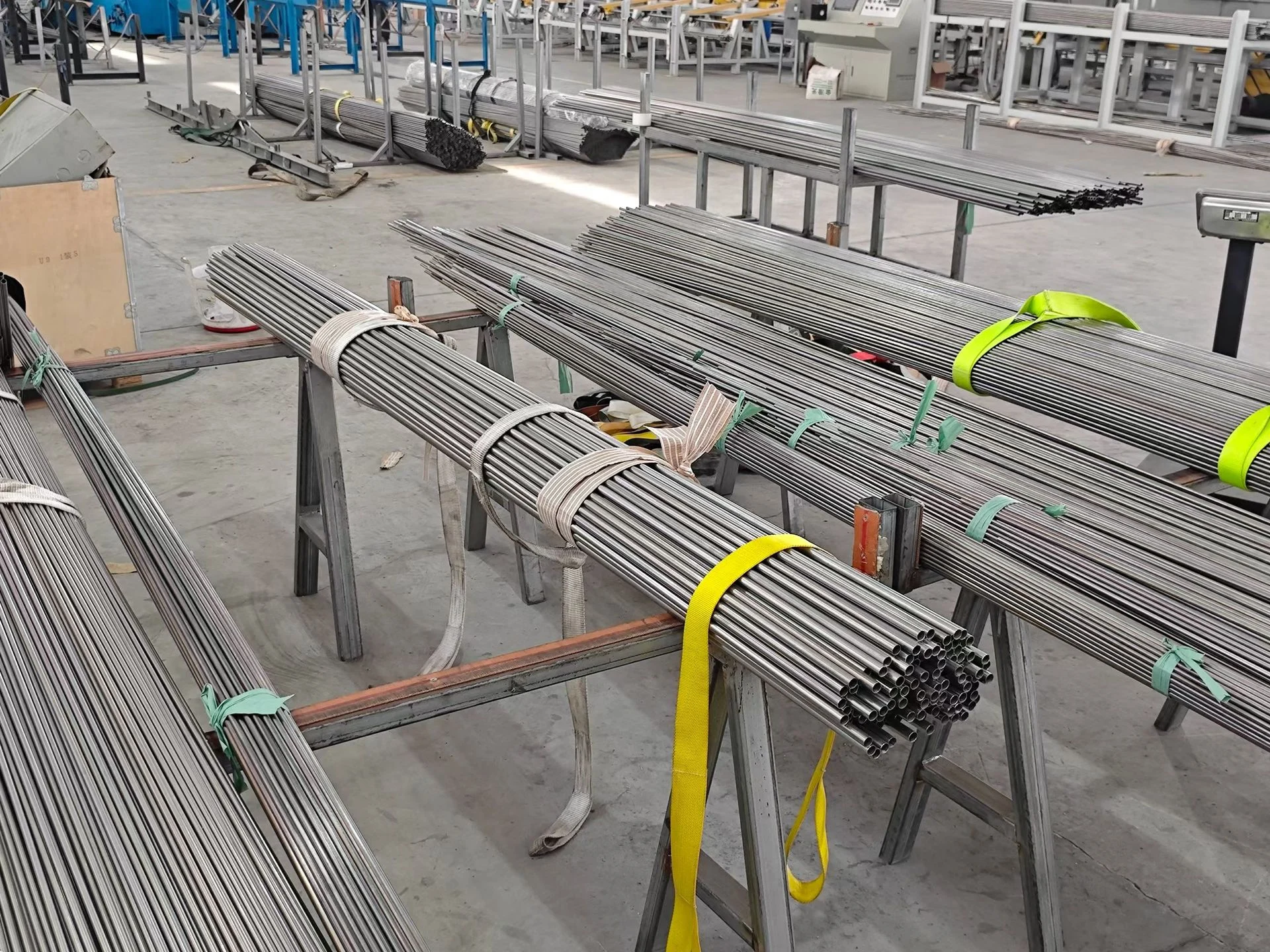
The Inventory Advantage Finally, consider the manufacturer’s Stock Availability. A factory with a healthy inventory of standard sizes (e.g., OD 19.05mm, 25.4mm) can significantly reduce your Lead Time.
- Custom Orders: Typically take 4-8 weeks depending on the mill schedule.
- Stock Orders: Can often be shipped within 3-5 days.
Asking about “Stock vs. Custom” lead times early in the negotiation can save your project schedule.
Factor 6: Dimensional Precision & Tolerances (The Engineering Reality)
For engineers designing heat exchangers or hydraulic systems, “nominal size” is not enough. You need precision.
A deviation of just 0.05mm in Outer Diameter (OD) might seem negligible, but it can cause significant issues during assembly—for example, when trying to insert tubes into a precision-drilled tube sheet.
Top manufacturers invest in high-precision Pilger Mills and Straightening Machines to control:
- OD/ID Tolerances: Typically held within ±0.08mm or better, depending on the standard (ASTM B338).
- Wall Thickness (WT): Critical for pressure ratings.
- Concentricity: This is vital for high-speed rotating applications or where uniform heat transfer is required.
- Length: Offering Cut-to-Length services with tolerances as tight as ±1mm.
Why it matters: Poor dimensional control leads to loose fits (leaks) or interference fits (assembly failure). Always ask for a Dimensional Inspection Report with your order.
Factor 7: Professional Packaging & Global Logistics (Protecting Your Investment)
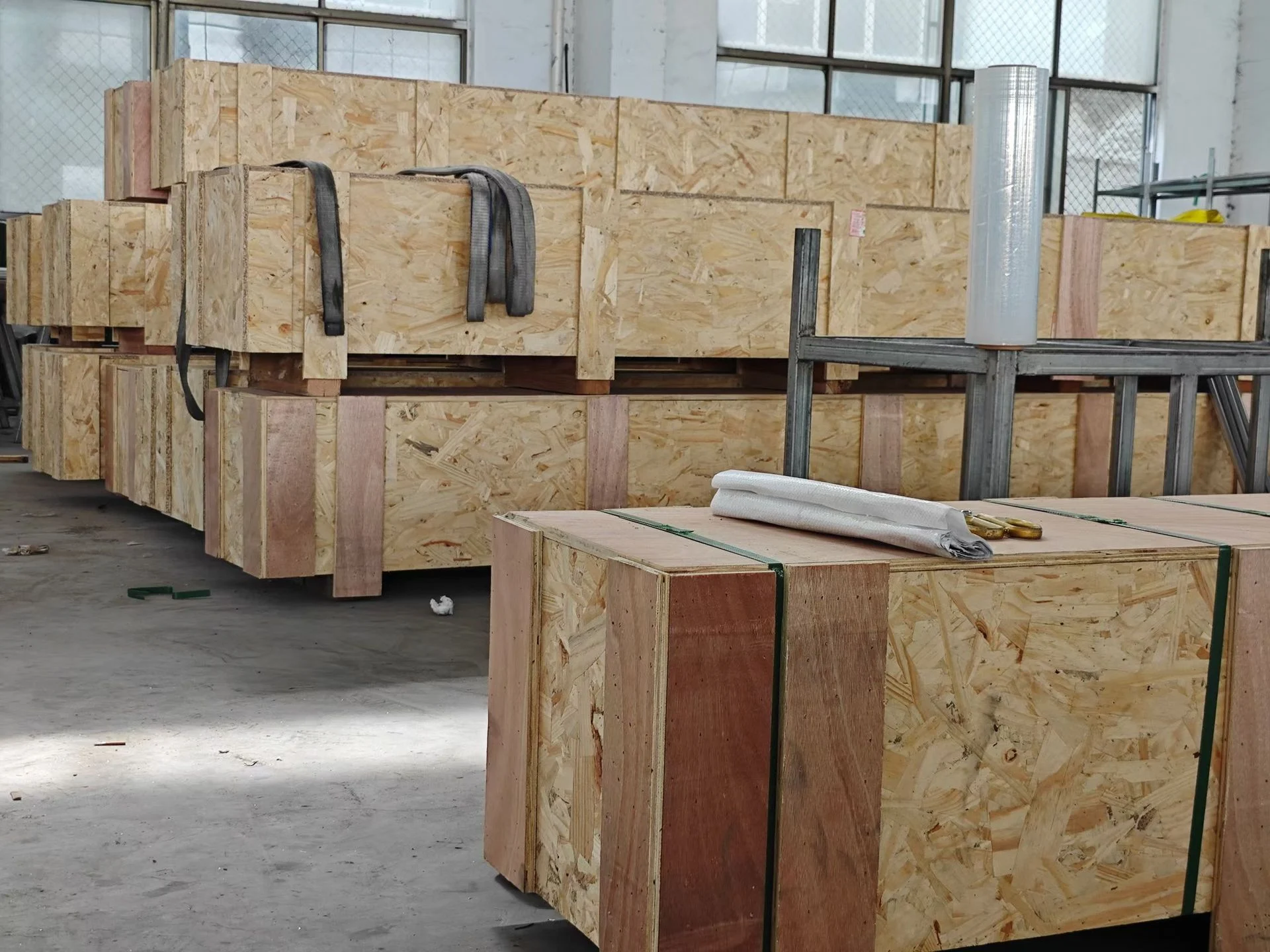
Titanium is a premium material, and its surface integrity is paramount. However, many buyers overlook packaging until their shipment arrives damaged—dented, scratched, or bent.
A professional titanium tube manufacturer treats packaging as part of the product, not an afterthought.
- Standard Export Packaging: Tubes should be individually sleeved (plastic sleeves) to prevent surface scratching.
- Outer Protection: They must be packed in reinforced plywood cases (not simple cardboard) to withstand the rigors of sea or air freight.
- End Caps: Plastic caps are essential to protect the tube ends and keep the interior clean from debris and moisture.
Logistics Capability: Does the factory have experience with Incoterms (EXW, FOB, CIF, DDP)? Can they handle customs clearance documentation smoothly? A delayed shipment due to paperwork errors can cost more than the tubes themselves.
FAQ: Frequently Asked Questions About Titanium Tube Manufacturing
Here are answers to the most common questions from procurement managers and engineers.
Q1: What is the main difference between Grade 1 and Grade 2 Titanium?
A: Grade 1 is the softest and most ductile, making it ideal for deep drawing and severe forming operations (like plate heat exchangers). Grade 2 is slightly stronger and serves as the “workhorse” for industrial applications, particularly shell and tube heat exchangers and piping systems.
Q2: Should I choose ASTM B338 or ASTM B861 for my project?
A: If your tubes are for heat exchangers or condensers, you must specify ASTM B338, which mandates strict Non-Destructive Testing (NDT) like Ultrasonic or Eddy Current testing. ASTM B861 is for general seamless pipes used in fluid transport where heat transfer is not the primary function.
Q3: Is Seamless Titanium Tube always better than Welded?
A: Not necessarily. While Seamless is superior for ultra-high pressure, modern Welded (TIG) titanium tubes offer excellent concentricity and are about 20-30% cheaper. For most desalination and power generation applications, Welded Grade 2 is the industry standard.
Q4: What is the typical lead time for a custom order?
A: It depends on raw material availability. If the manufacturer has titanium sponge or billets in stock, lead time is typically 4-6 weeks. If they have finished tubes in stock (common sizes like 19.05mm or 25.4mm OD), shipment can be 3-5 days.
Conclusion: Making the Right Choice
Choosing the right titanium tube manufacturer is about balancing technical capability with commercial reliability.
Don’t just look for the lowest price per meter. Look for the “Hidden Value”:
- Certifications: ISO 9001, PED, and AS9100.
- Traceability: From Titanium Sponge to finished tube (MTC).
- Process Control: Seamless for pressure, Welded for efficiency.
- Testing: 100% NDT (Ultrasonic/Eddy Current) is non-negotiable.
By strictly evaluating suppliers against these 7 Factors, you safeguard your project against failure and ensure a supply chain you can trust for years to come.
Ready to secure high-quality titanium tubing for your next project? Stop guessing and start validating. Contact a reputable manufacturer today to request a quote and a sample Mill Test Certificate.