Staring at geometry charts and material specs until your eyes glaze over? You’re not alone.
Selecting a frame isn’t just a technical choice; it’s a tug-of-war between marketing hype and rider identity. You are bombarded by an industry insisting that Carbon Fiber is the only path to speed, while purists swear that Steel is the only material with a “soul.” All the while, Aluminum tempts you with a value proposition that is hard to ignore.
But here is the reality check: Most of us aren’t World Tour pros with a team car following us with three spare bikes. We are “self-sponsored” riders. We pay for our own gear, we ride on unforgiving gravel, we crash, and we want our investment to last more than just a few seasons.
This is where the conversation shifts to the “Magic Metal”: Titanium.
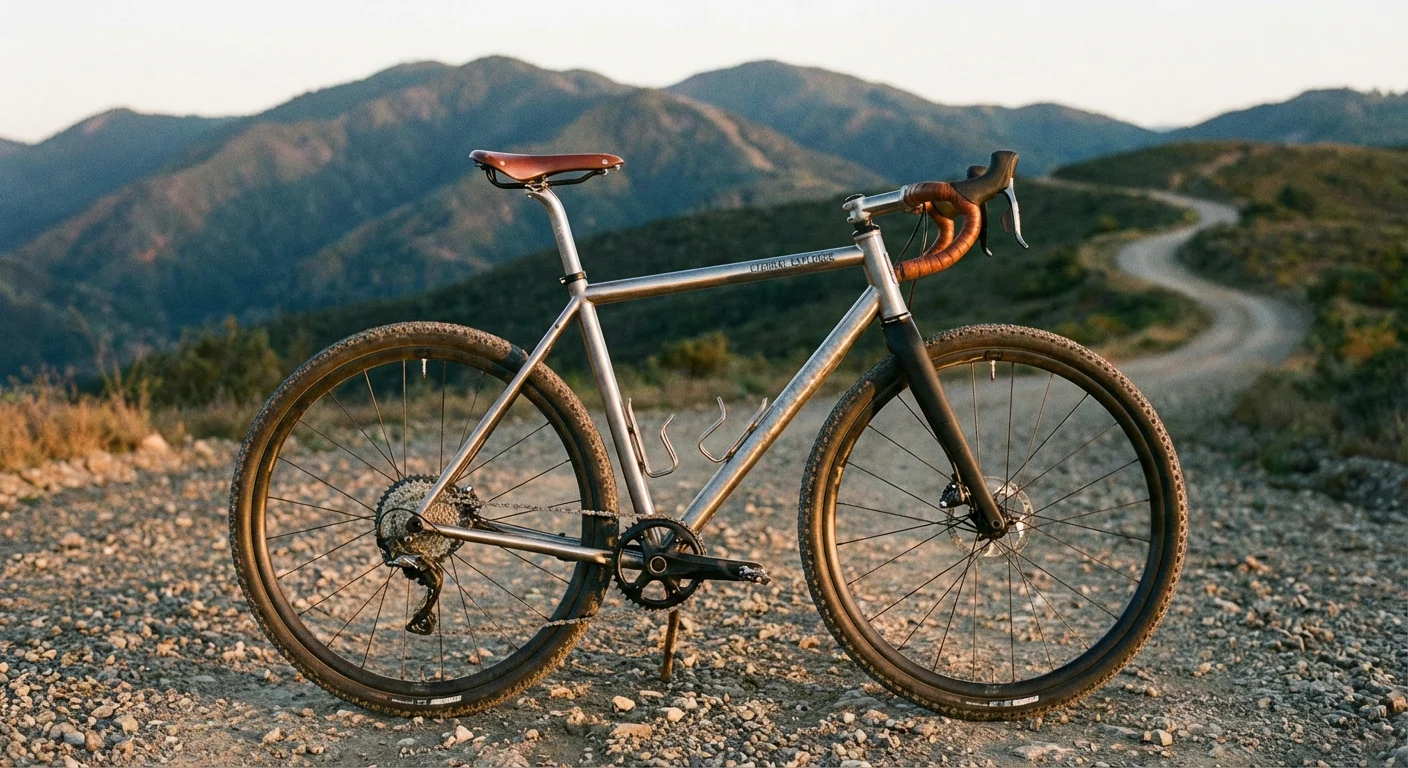
While it often sits at a premium price point, Titanium promises a holy grail that no other material can quite match: the comfort of steel, the weight savings of aluminum, and a durability that outlives them all.
In this guide, we are cutting through the marketing hype. We won’t just look at gram scales. Instead, we will analyze ride quality, long-term durability, maintenance, and the true cost of ownership over 20 years.
If you are looking for a disposable race bike, look elsewhere. But if you are looking for the last bike you will ever need to buy, read on.
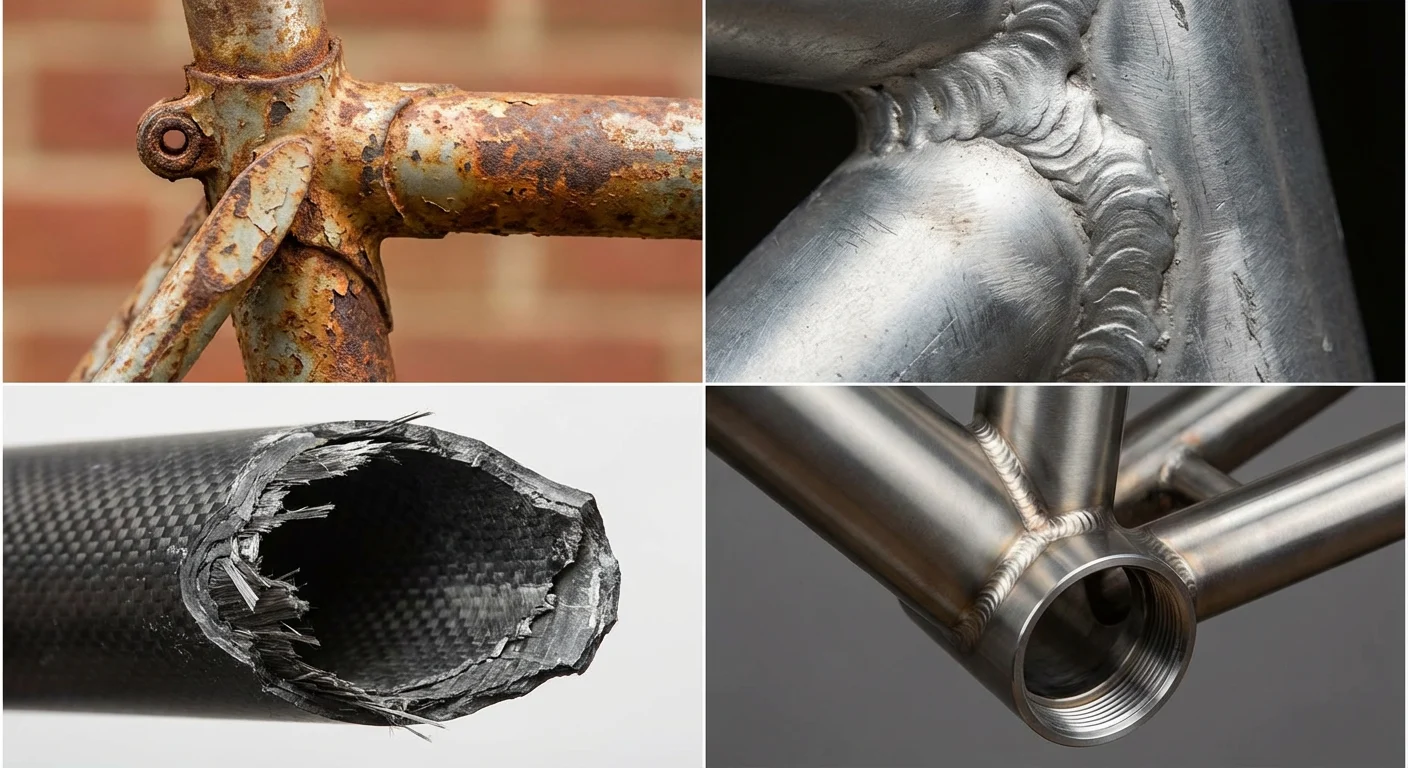
The “Big Four” Frame Materials at a Glance
Before we enter the ring for the heavy-hitting comparisons, let’s introduce the contenders. Every material has a personality, a specific use case, and a fatal flaw.
1. Steel: The Old Soul
- The Vibe: “Steel is Real.” It’s the material of romance and history.
- The Reality: Steel is famous for its lively, springy ride quality that absorbs road vibration beautifully. It is easy to repair (any village welder can fix it) and relatively affordable.
- The Catch: It is heavy. Even high-end super-steels carry a weight penalty. More importantly, it is prone to rust and corrosion. If you live near the coast or ride in wet winters, steel demands constant vigilance.
2. Aluminum: The Harsh Workhorse
- The Vibe: Cheap, stiff, and everywhere.
- The Reality: Aluminum is the most common material for a reason—it’s affordable and lightweight. Modern hydroforming allows for complex shapes and efficient power transfer.
- The Catch: That stiffness comes at a price: comfort. Aluminum frames are notorious for a “harsh” ride that transmits every pebble and crack directly to your body (“Road Buzz”). It also has a limited fatigue life; over time, aluminum accumulates stress and can fail abruptly.
3. Carbon Fiber: The Formula 1 Racer
- The Vibe: Maximum speed, minimum weight.
- The Reality: The undisputed king of the pro peloton. Carbon fiber can be molded into any aerodynamic shape imaginable and is incredibly light.
- The Catch: It is essentially plastic and glue. While strong under tension, it is brittle under impact. A rock strike on a gravel descent or a weird crash can turn a $3,000 frame into expensive trash. It suffers from “catastrophic failure”—it doesn’t bend; it snaps.
4. Titanium: The Magic Metal
- The Vibe: The “Forever Bike.”
- The Reality: Titanium is often described as the “Goldilocks” material. It possesses the legendary vibration-damping comfort of steel, but at a weight that rivals carbon (and is significantly lighter than steel).
- The Catch: It is famously difficult to refine and machine. It requires welding in an oxygen-free vacuum or argon environment. This difficulty in manufacturing makes it expensive upfront. But unlike the others, it is corrosion-proof and has a nearly infinite fatigue life.
The Deep Dive Battle: Titanium vs. The World
Now that we’ve met the contenders, let’s pit them against each other in the real world. We aren’t talking about laboratory stress tests; we are talking about rock gardens, baggage handlers, and the actual riding you do every weekend.
Round 1: Titanium vs. Carbon Fiber (The Durability War)
If you are looking at high-end bikes, your choice likely comes down to these two. Carbon is the industry darling, but is it right for you?
1. The Weight Myth Let’s give credit where it’s due: Carbon fiber is lighter. A high-end carbon frame might weigh 800g-1000g, while a high-quality 3Al-2.5V titanium frame sits around 1400g-1600g.
- The Reality Check: That 400g-600g difference is roughly the weight of a full water bottle. Unless you are racing uphill for a living, you likely won’t notice this weight penalty once the bike is built up.
2. “Carbon Anxiety” vs. Peace of Mind This is where Titanium lands the knockout punch. Carbon fiber is anisotropic—strong in the direction of the fibers but surprisingly weak against impact.
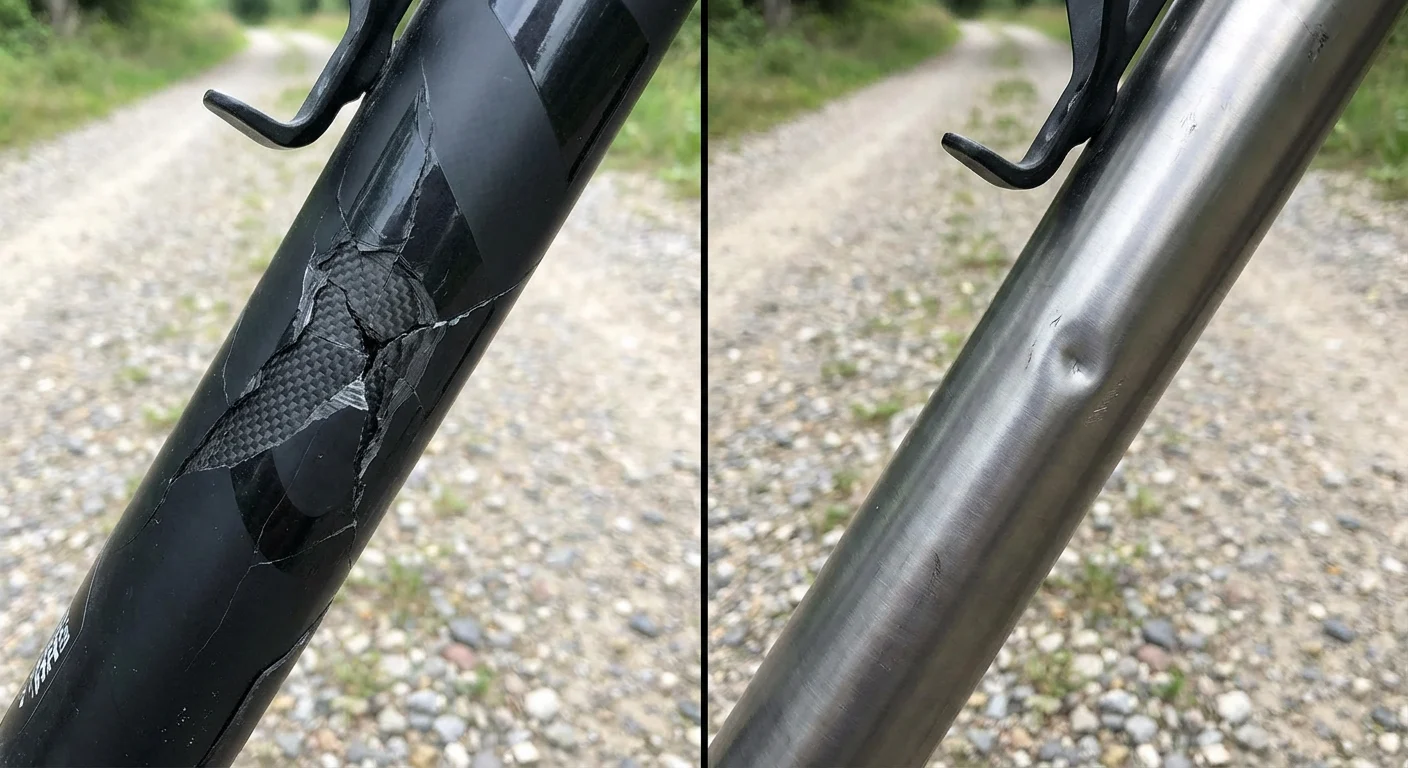
- The Scenario: You are riding gravel. A sharp rock kicks up and smacks your down tube with a sickening CRACK sound. On a carbon bike, that could be game over. Structural damage is often invisible until it fails.
- The Titanium Difference: Titanium has exceptional Fracture Toughness. That same rock strike? It might leave a tiny ding or a scratch, adding “character” to the frame, but it won’t compromise the structural integrity. You can finish your ride—and the next 10 years of rides—without worry.
The Verdict: Choose Carbon if you are renting speed for a race season. Choose Titanium if you want to own reliability for a lifetime.
Round 2: Titanium vs. Aluminum (The Comfort War)
If you are upgrading from an entry-level bike, you are likely coming from Aluminum. While impressive, Aluminum suffers from a distinct physical limitation that Titanium solves beautifully.
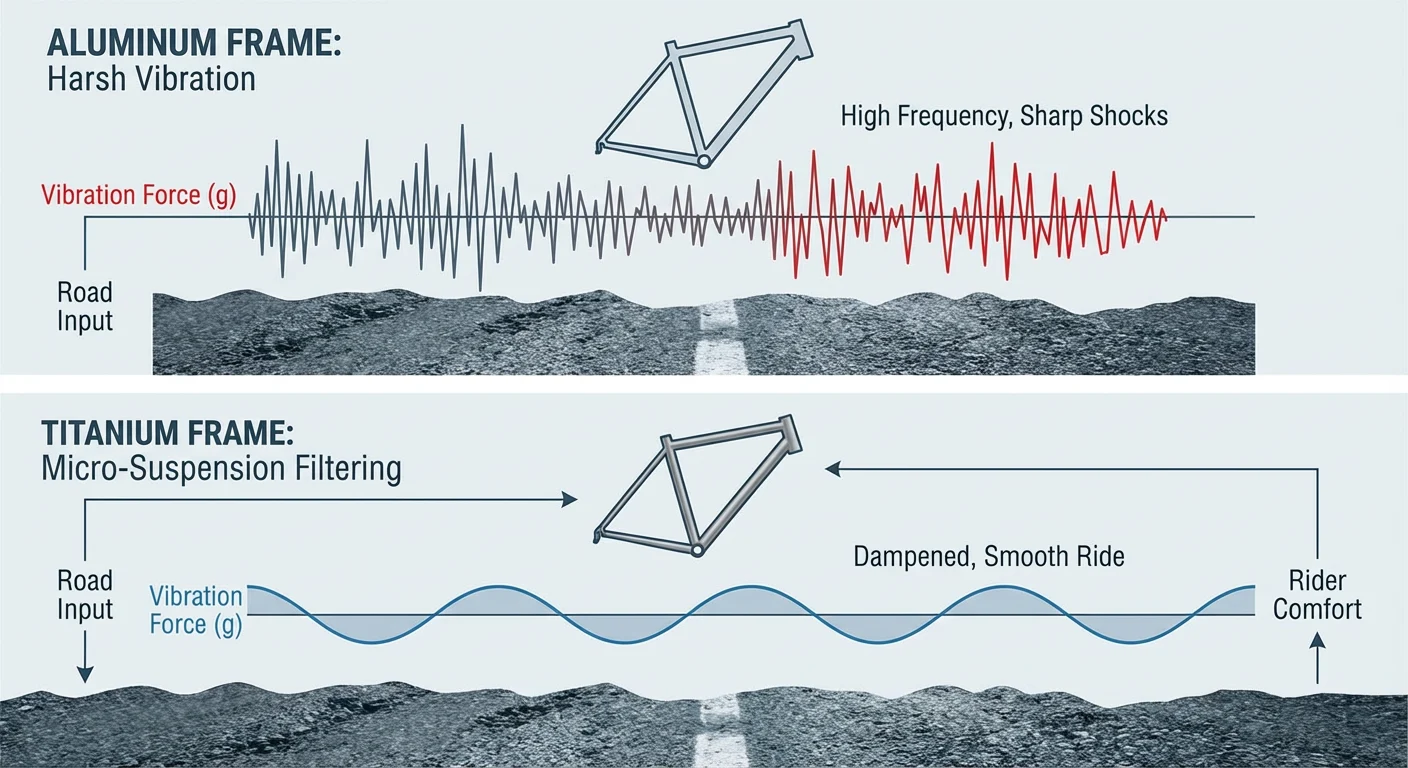
1. The “Bone-Shaking” Reality Aluminum frames are designed to be stiff, but that stiffness generates High-Frequency Vibration.
- The Physics: While raw aluminum is actually quite soft, it has a low fatigue limit. To prevent frames from breaking over time, engineers must use oversized, large-diameter tubing to stiffen the structure.
- The Feeling: This over-built structure transmits road shock directly to the rider. Ride an aluminum bike for 50 miles on rough gravel, and you will feel that constant “road buzz” in your hands and lower back.
2. The Titanium “Micro-Suspension” Titanium (specifically the 3Al-2.5V alloy) solves this engineering puzzle. It has roughly half the Elastic Modulus of steel (making it inherently springy) and significantly higher strength than aluminum.
- The Magic Carpet Ride: Because Titanium is so strong, builders can use smaller diameter, thinner-walled tubes without risking failure. This allows the frame to flex slightly under load, acting as a natural micro-suspension. It mutes the chatter of the road, meaning you finish a 100-mile ride feeling fresher because your body hasn’t been fighting the bike all day.
Round 3: Titanium vs. Steel (The Practicality War)
This is the battle of the “Soul Riders.” If you love Steel, Titanium is the upgrade you’ve been dreaming of.
1. The Rust Factor Steel is ferrous; it wants to return to the earth as rust. Ride in the rain? Dry it off. Chip the paint? Touch it up immediately. Internal rust is a silent killer of vintage frames.
- The Titanium Advantage: Titanium is inherently corrosion-proof. You can ride it through salt slush or along the beach. It will not rust. Ever.
2. The Weight Penalty “Steel is Real,” but steel is also heavy.
- The Physics: Titanium is roughly 40-45% lighter than steel for the same volume, while being twice as strong as aluminum. It allows you to build a machine that feels as lively as steel, but accelerates with the snap of a modern race bike.
The “Hidden” Economics: Why Titanium is Actually Cheaper
Let’s address the elephant in the room: The Price Tag.
Yes, a high-quality titanium frame typically costs between $2,500 and $4,000. But if you stop looking at the sticker price and start looking at the Total Cost of Ownership (TCO), the math changes dramatically.
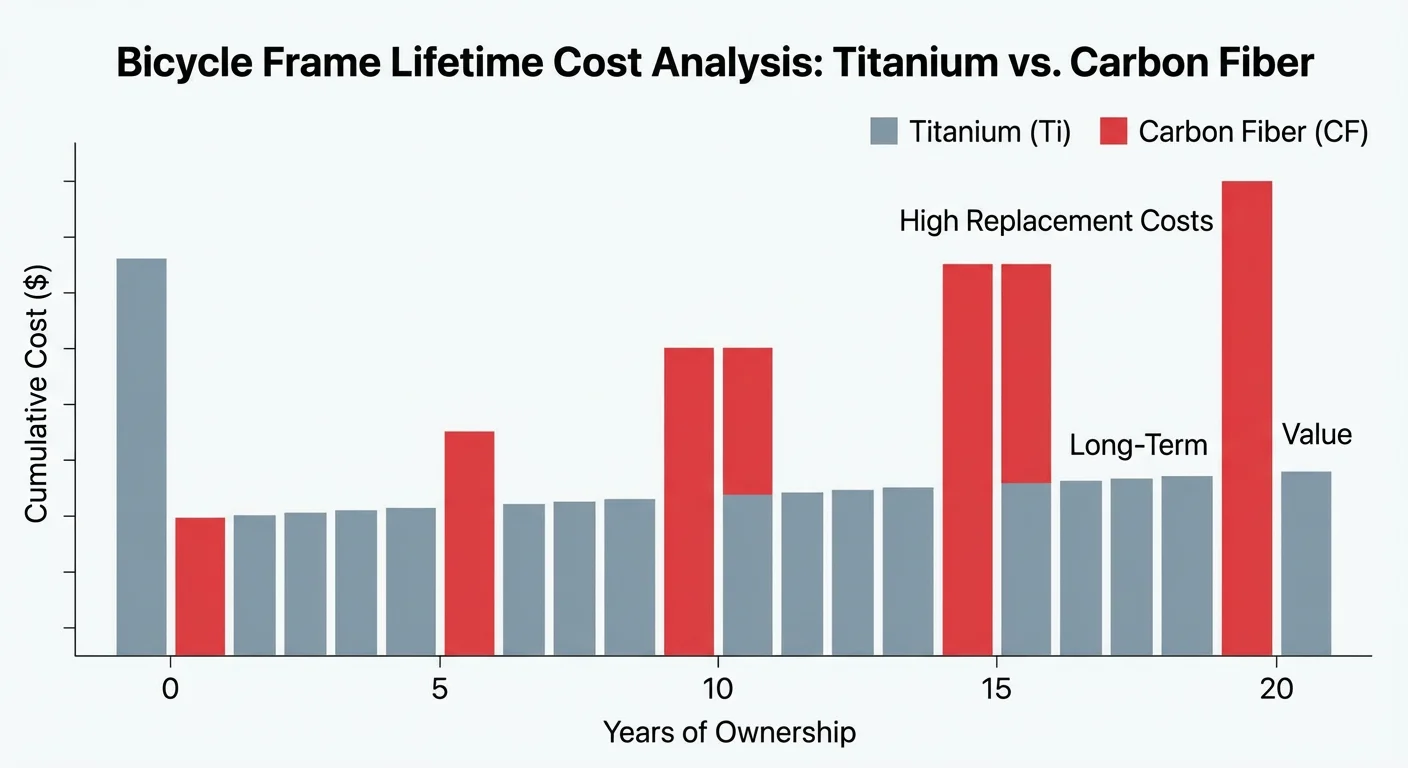
The 20-Year Timeline: A Financial Case Study
Rider A: The Carbon Upgrader
- Year 0: Buys a Carbon frame ($3,000).
- Year 5: The epoxy ages, or a crash cracks a seat stay. The bike is unsafe or outdated.
- The Cycle: Rider A replaces the frame every 5–7 years.
- 20-Year Cost:$9,000 – $12,000.
Rider B: The Titanium Believer
- Year 0: Buys a Titanium frame ($3,500).
- Year 5: Frame looks brand new (scratches buffed out).
- Year 20: Still riding. Fatigue life is untouched.
- 20-Year Cost:$3,500.
Calculate Your “Cost Per Year” (CPY)
Note: Estimates based on typical mid-to-high-end frame market prices as of 2025.
| Material | Initial Cost | Avg. Lifespan | Cost Per Year |
|---|---|---|---|
| Carbon Fiber | $3,000 | 5 Years | $600 / yr |
| Aluminum | $1,000 | 4 Years | $250 / yr |
| Titanium | $3,500 | 25+ Years | $140 / yr |
The Bottom Line: Titanium is not a purchase; it is an investment. Like a high-quality mechanical watch, the upfront cost is higher, but the cost per use is significantly lower than disposable alternatives.
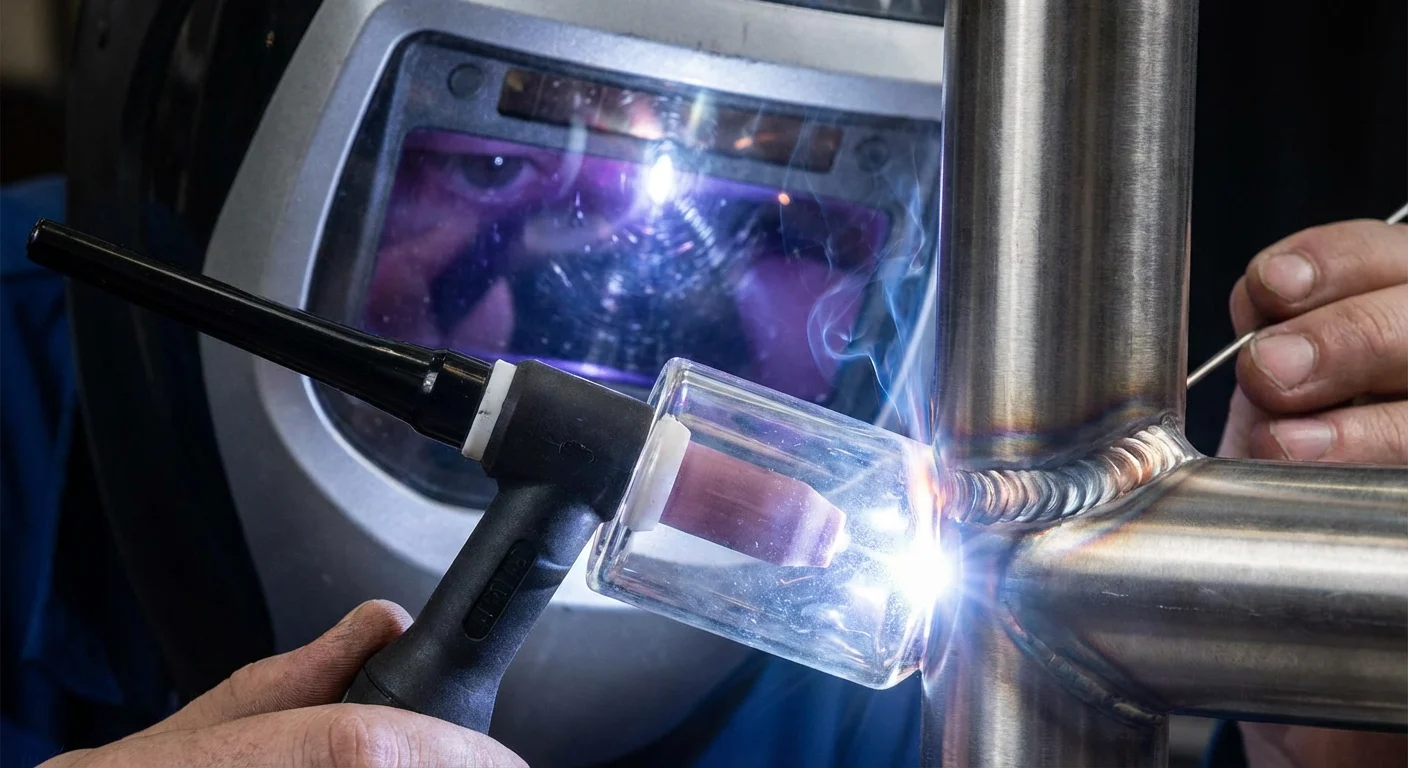
Technical Deep Dive: Why is Titanium So Expensive?
You aren’t paying for the raw ore; you are paying for the manufacturing process. As noted in technical breakdowns by industry experts like Priority Bicycles, Titanium is arguably the most difficult metal to work with.
1. The “Suffocation” Requirement (Inert Welding)
Titanium cannot be welded in open air. At high temperatures, it reacts with oxygen and becomes brittle (a defect called “alpha case”).
- The Process: Welders must create a completely Inert Environment using Argon gas. It’s like performing surgery in a vacuum. This adds massive time and cost to every joint.
2. Zero Tolerance: The “No Bending” Rule
Steel and Aluminum frames often warp during welding and are physically bent (“Cold Set”) back into alignment.
- The Reality: Titanium has a “memory.” It cannot be easily cold-set. It must be welded perfectly straight the first time. There is no “fixing it in post.” When you buy Ti, you are paying for master-level craftsmanship and a zero-tolerance rejection rate.
3. Material Grades: 3Al-2.5V vs. 6Al-4V
- Grade 9 (3Al-2.5V): Used for main tubes. Offers the perfect balance of strength and that magical springy ride quality.
- Grade 5 (6Al-4V): Harder and stiffer. Used for machined parts like the Bottom Bracket shell, Head tube, and Dropouts to ensure maximum power transfer and precision.
The Maintenance Myth: Why No Paint is a Feature
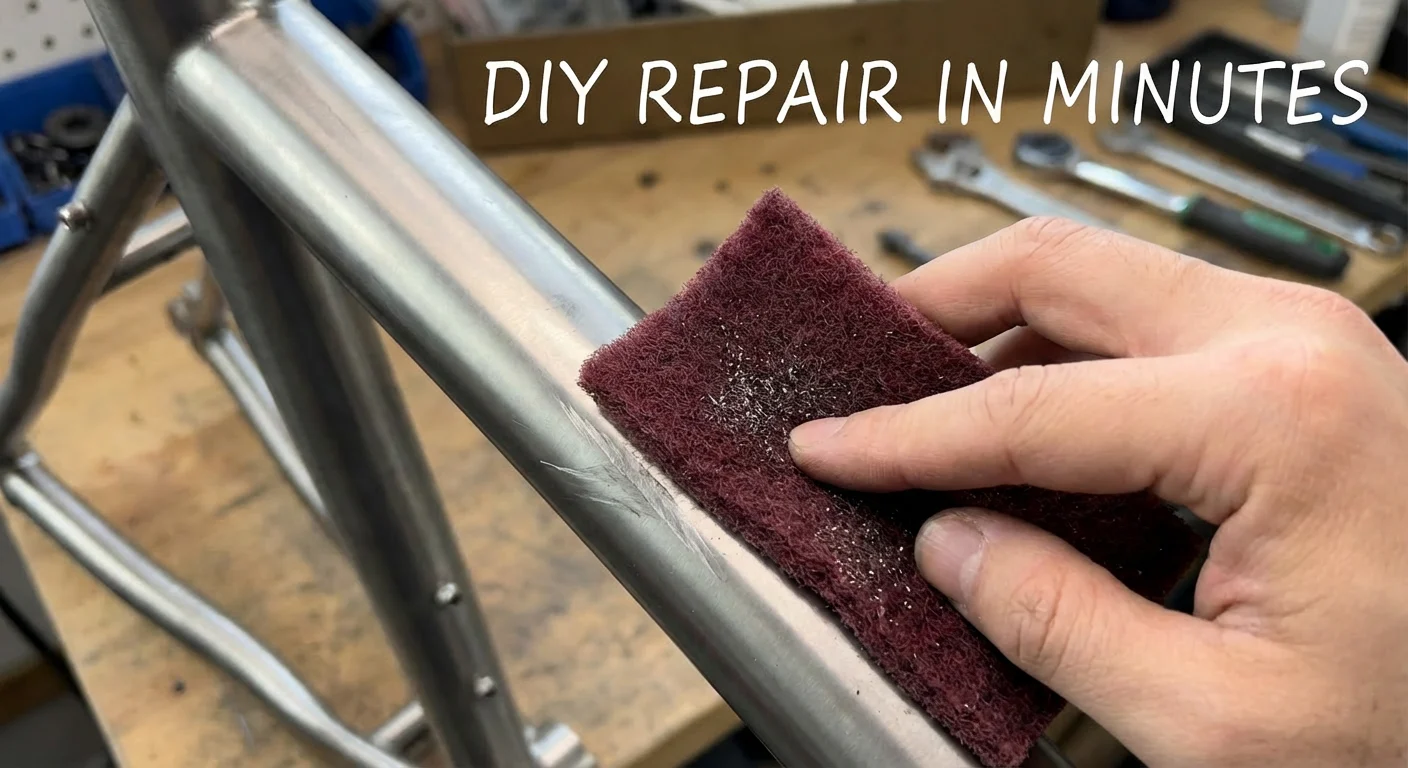
If you have owned a painted bike, you know the pain of the first rock chip. Titanium flips the script. Most Ti frames come in a Raw Brushed Finish. This isn’t just aesthetic; it’s a functional superpower.
The “Scotch-Brite” Magic Trick
Here is something you can never do with Carbon: Refinish it yourself in 5 minutes.
- The Fix: Take a standard maroon Scotch-Brite pad.
- The Method: Gently rub the frame in the direction of the grain.
- The Result: The scratch disappears.
This means you can restore your 10-year-old Titanium bike to “Showroom Condition” in your garage. It is essentially New Bike Day, on demand.
The Verdict: Who Should Buy What?
We’ve crunched the numbers and analyzed the physics. Here is our final verdict:
- Choose Carbon Fiber If: You are a competitive racer. You live for Strava KOMs and race podiums. You accept that in a bad crash, the frame might be a write-off.
- Choose Aluminum If: You are budget-conscious. It’s a fantastic entry point into the sport that gets the job done reliably.
- Choose Steel If: You are a traditionalist. You love the classic aesthetic and don’t mind the extra weight or the maintenance ritual.
- Choose Titanium If: You are an “N=1” Rider. You want one high-quality bike to do it all—Gravel, Road, and Touring. You want sublime comfort, tank-like durability, and a timeless look. You are playing the long game.
Conclusion: The Last Bike You’ll Ever Buy
In a world of planned obsolescence, where carbon bikes are updated every three years, Titanium stands alone.
It is a rejection of the “disposable” culture. Yes, it is a commitment. But that investment pays dividends in every mile you ride—in the comfort of the metal soaking up the road, in the peace of mind knowing it won’t crack, and in the satisfaction of owning a machine that defies time.
When you buy Titanium, you aren’t just buying a bike frame. You are commissioning a partner for the next 20 years of your life.

Frequently Asked Questions (FAQ)
Q: Is Titanium heavier than Carbon?
A: Yes, typically by about 400g-600g (roughly one full water bottle) depending on the frame size and build. However, Titanium is significantly stronger and more impact-resistant than Carbon.
A: No. Titanium is naturally corrosion-resistant. It will not rust, even in salt air or wet conditions, making it the ideal material for winter training or coastal living.
Q: Can I repair a Titanium frame?
A: Unlike Carbon which requires complex epoxy work, Titanium can often be repaired by a skilled welder if damage occurs. However, due to its strength, structural damage is incredibly rare.