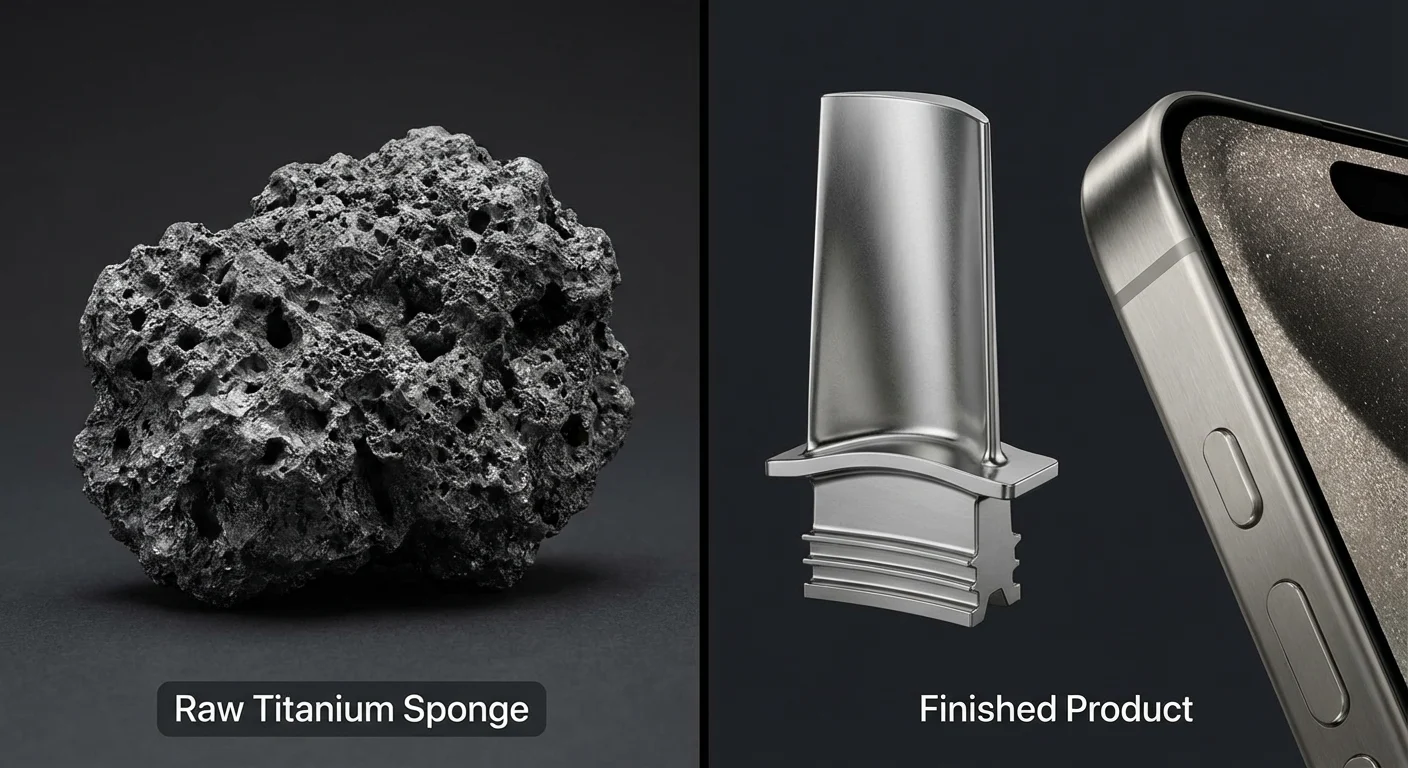
When most people hear “titanium,” they visualize the polished casing of a high-end smartphone, the precision components of a jet engine, or a surgical implant. We naturally associate the metal with a sleek, silver finish, high strength, and advanced technology.
However, titanium does not begin its lifecycle in this solid, shiny form. Before it can be machined into parts or rolled into sheets, it exists in a raw, granular state known as Titanium Sponge.
Titanium sponge is the critical intermediate material in the global titanium supply chain. It acts as the essential bridge between raw titanium ore mined from the earth and the finished titanium ingots used in modern manufacturing. Understanding this material is key to understanding the economics and engineering behind the entire titanium industry.
The Definition: Why is it Called “Sponge”?
Titanium Sponge is the primary form of titanium metal, typically achieving a purity level of 99.7% to 99.9%.
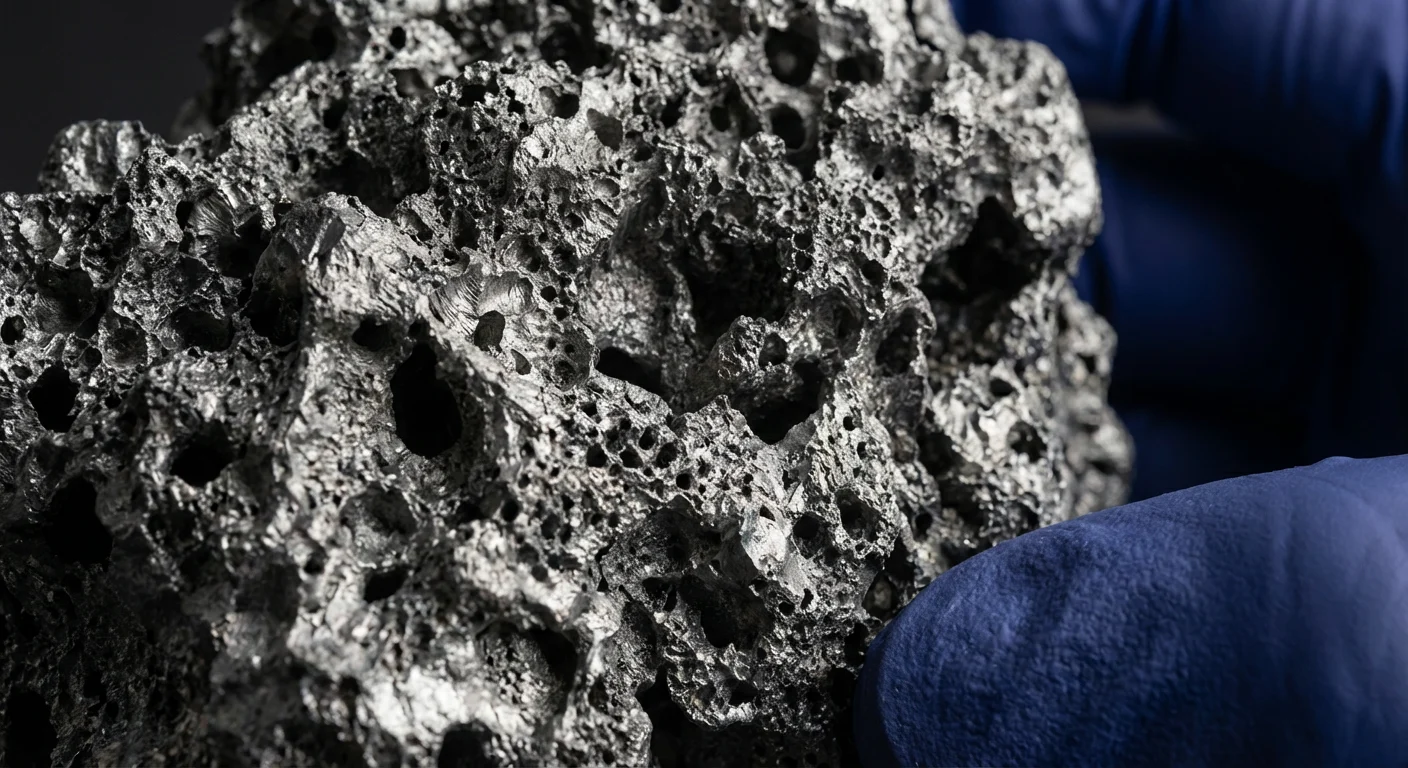
Despite its name, it is not soft or flexible like a cleaning sponge. It is a hard, rock-like metal. It acquires the name “sponge” solely from its physical structure. Produced through a chemical reduction process, the resulting metal forms a porous mass filled with microscopic voids and holes, giving it a texture that visually resembles a fossilized marine sponge or coral.
Key Physical Characteristics:
- Appearance: It is dull grey, metallic, and highly porous.
- Texture: Unlike solid titanium, sponge is brittle and frangible. It lacks structural integrity in this state and can be easily crushed into smaller particles.
- Purity: The sponge stage is where the metal’s purity is defined. High-quality sponge (often referred to as Aerospace Grade) must meet strict ASTM standards to ensure no impurities compromise the final alloy.
Production: The Kroll Process Explained
Titanium has a high affinity for oxygen, making it extremely difficult to separate from its natural ore. To achieve this, the industry relies on a batch production method known as the Kroll Process.
This process, which has been the industry standard since the 1940s, converts raw ore into pure metal through a series of precise chemical reactions.
1. Chlorination
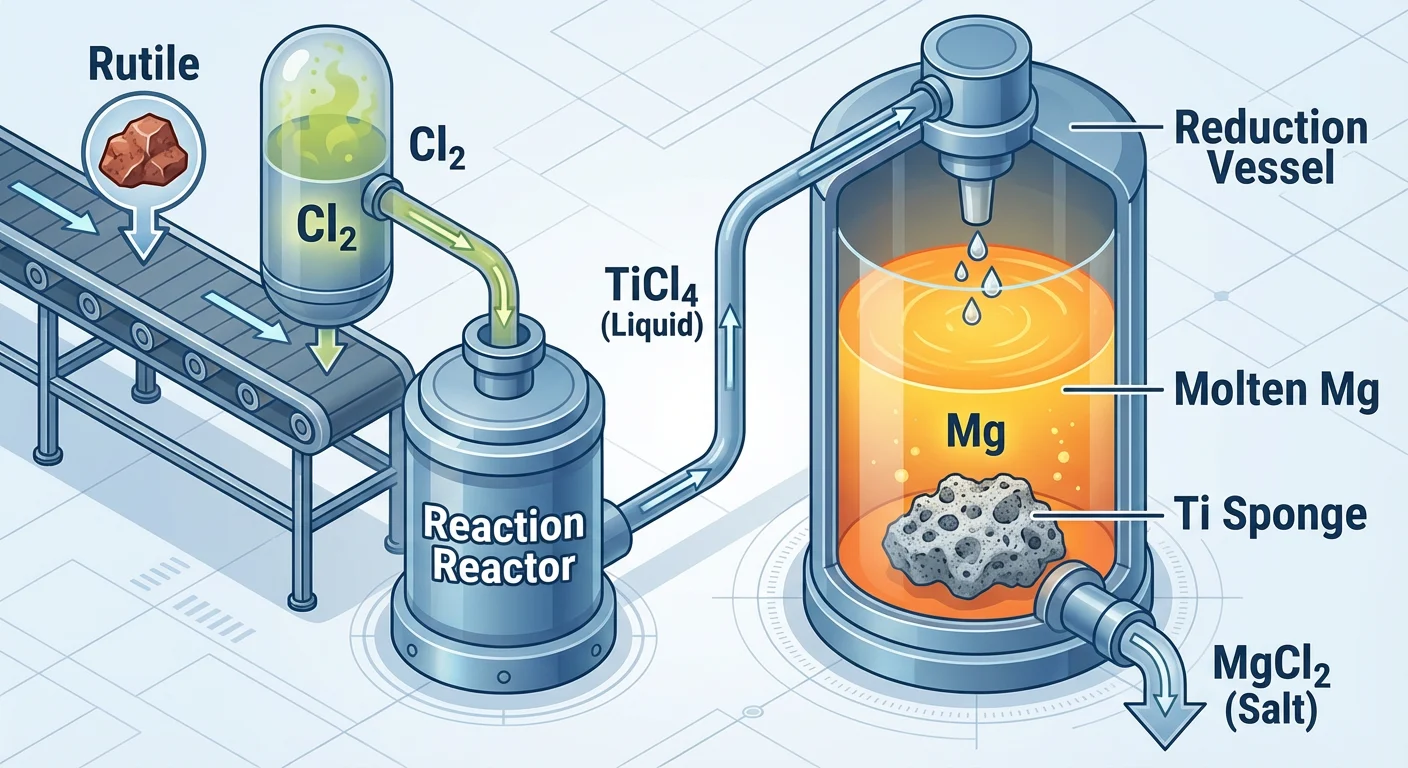
The process begins with titanium-bearing ores, such as Rutile or Ilmenite. The ore is combined with carbon (coke) and chlorine gas in a fluidized bed reactor at high temperatures. This reaction produces Titanium Tetrachloride (TiCl4), a colorless liquid often referred to in the industry as “tickle.” This step effectively strips away the oxygen but leaves the titanium bonded to chlorine.
2. Magnesium Reduction
The purified TiCl4 liquid is then fed into a large stainless steel reactor vessel. Inside, molten Magnesium (Mg) acts as a reducing agent. In an argon-filled vacuum environment (heated to over 800°C), the magnesium reacts with the tetrachloride.
In a chemical exchange, the magnesium bonds with the chlorine to form magnesium chloride (MgCl2), causing the pure titanium metal to precipitate and accumulate at the bottom of the reactor.
3. Vacuum Distillation
Once the reaction is complete, the reactor contains a mix of titanium metal and magnesium chloride salts. To separate them, the vessel is heated under a vacuum. The magnesium chloride evaporates and is removed (and often recycled), leaving behind the porous mass of pure Titanium Sponge.
From Sponge to Ingot: The Consolidation Process
Titanium sponge cannot be used directly in manufacturing applications. Because of its porous nature, brittleness, and lack of structural integrity, it would crumble under stress if machined into parts.
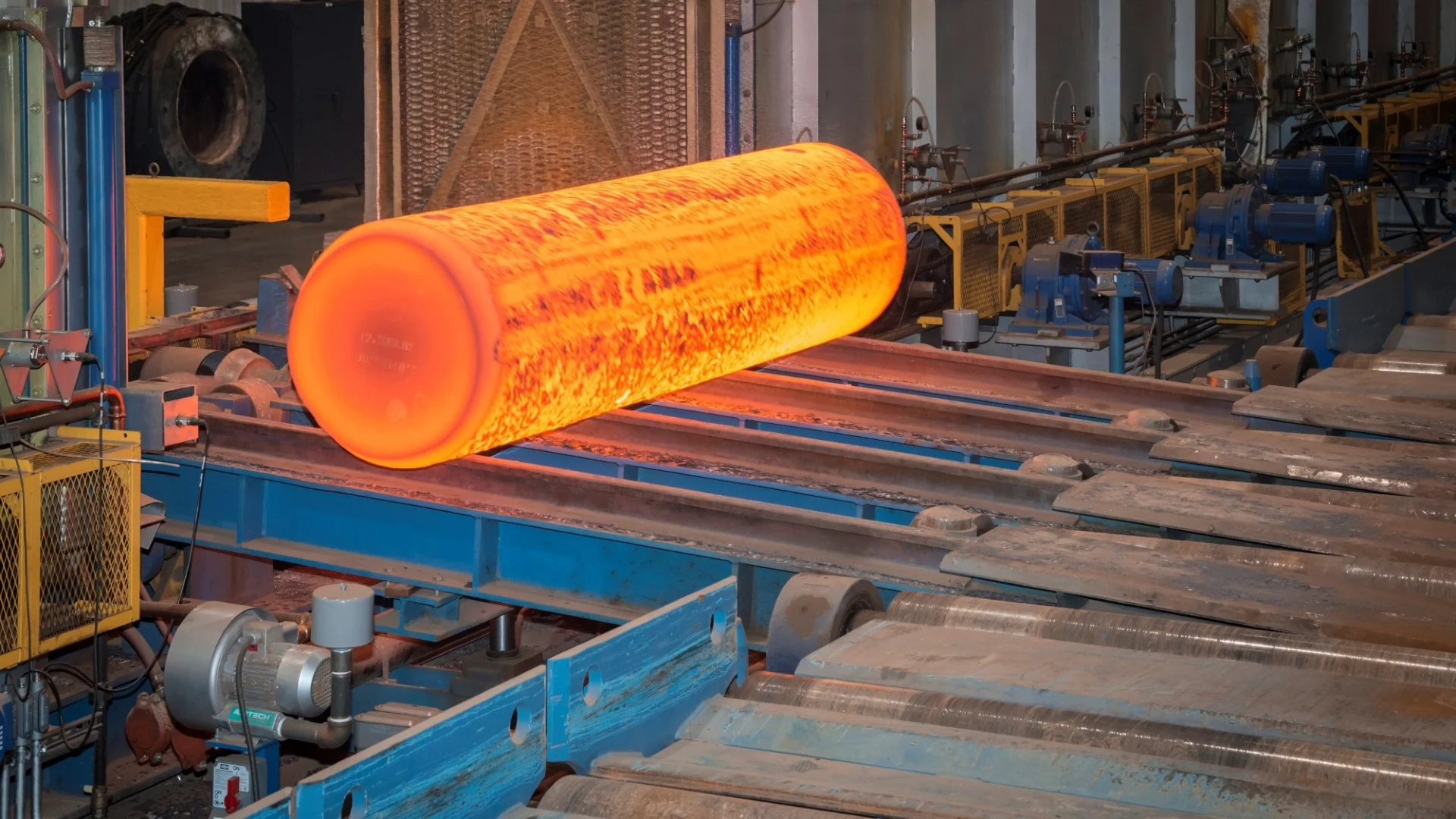
To become useful engineering material, the sponge must be consolidated into a solid, uniform mass. This involves a precise three-step sequence:
1. Crushing and Shearing
The large mass of sponge (often weighing several tons) is removed from the reactor. It is then mechanically crushed or sheared into smaller granules. This step is crucial because it allows inspectors to check for unreacted magnesium or other defects inside the sponge cake.
2. Blending and Compacting
The crushed sponge granules are mixed. At this stage, master alloys (such as Aluminum or Vanadium) are often added to the mix if the goal is to produce specific titanium alloys (like the industry-standard Ti-6Al-4V). The mixture is then compressed under high pressure to form large, solid blocks known as electrodes.
3. Melting (VAR)
The electrodes are placed into a Vacuum Arc Remelting (VAR) furnace. An electric arc generates intense heat, melting the electrode into a water-cooled copper crucible.
The vacuum environment is essential for two reasons:
- It removes any remaining volatile impurities (like hydrogen or chlorides).
- It ensures the liquid metal does not react with oxygen in the air.
The result of this process is a massive, solid cylinder called a Titanium Ingot. This dense, homogenized metal is the raw stock that is subsequently forged, rolled, and machined into final products.
Why Titanium Sponge Matters: Strategic Applications
As the raw material for all titanium products, the quality and supply of titanium sponge are critical to several high-stakes industries. The specific grade of sponge produced (determined by its purity) dictates its final destination.
Aerospace: The Sky is the Limit
The aerospace sector is the largest consumer of high-grade titanium sponge. Because titanium possesses the highest strength-to-weight ratio of any structural metal, it is indispensable for modern aviation.
- Airframes: It is used in structural components to reduce weight and improve fuel efficiency.
- Jet Engines: High-purity sponge is essential for turbine blades and discs that must withstand extreme heat and stress without deforming.

Medical: The Biocompatible Choice
Pure titanium derived from high-quality sponge is biologically inert, meaning it is non-toxic and is not rejected by the human body. This property, known as biocompatibility, makes it the standard material for:
- Orthopedic implants (hip and knee replacements).
- Dental fixtures and screws.
- Pacemaker cases.
Industrial & Chemical: The Shield Against Corrosion
Lower-grade sponge is often utilized in industrial sectors where corrosion resistance is more critical than weight. It is widely used to manufacture heat exchangers, piping systems, and valves for:
- Desalination plants (resisting saltwater corrosion).
- Chemical processing facilities (resisting acid corrosion).
- Power generation plants.
FAQ: Common Questions About Titanium Sponge
Q: Is Titanium Sponge flammable?
A: Yes, under specific conditions. While solid titanium is difficult to ignite, titanium sponge—especially when crushed into fine powder—has a high surface area relative to its volume. This makes it highly reactive and potentially flammable if exposed to sparks or open flames in the air.
Q: Why is titanium so much more expensive than steel?
A: The high cost is primarily due to the Kroll Process. Unlike steel, which is produced in a continuous, high-volume blast furnace, titanium sponge is produced in batches. This process is slow, labor-intensive, and requires significant amounts of electricity and expensive raw materials like magnesium.
Q: Who produces the most titanium sponge?
A: The production of titanium sponge requires complex industrial infrastructure and is considered a strategic capability. The majority of the global supply is concentrated in just a few countries: China, Japan, Russia, and Kazakhstan.
Conclusion
Titanium sponge is the “unsung hero” of modern materials science. It is a porous, brittle, and energy-intensive material that serves as the gateway to modern engineering.
Without the complex chemistry of the Kroll process and the production of this humble grey sponge, the lightweight aircraft, life-saving medical devices, and corrosion-resistant technologies we rely on today simply would not exist.
The next time you hold a piece of titanium gear, remember: it didn’t start as a shiny metal. It started as a sponge, forged in a vacuum to build the future.
References & Further Reading
For those interested in the technical specifications, market data, and chemistry behind titanium sponge, the following authoritative sources provide detailed information:
- USGS Mineral Commodity Summaries (Titanium): For the most up-to-date global production statistics, country-specific data, and reserve information. Visit USGS.gov
- ASTM International: To view the specific standards for titanium sponge, including ASTM B299 – Standard Specification for Titanium Sponge. Visit ASTM.org
- The Royal Society of Chemistry: For a deep dive into the elemental properties, history, and discovery of Titanium (Ti). Visit RSC Periodic Table
- International Titanium Association (ITA): For industry news, safety guidelines, and educational resources regarding the global titanium supply chain. Visit Titanium.org