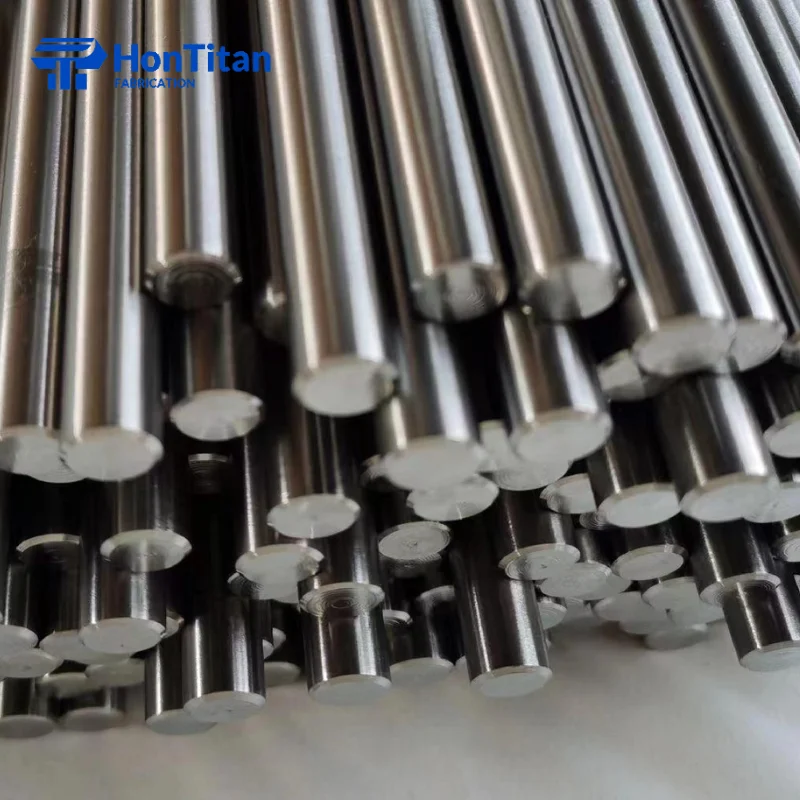
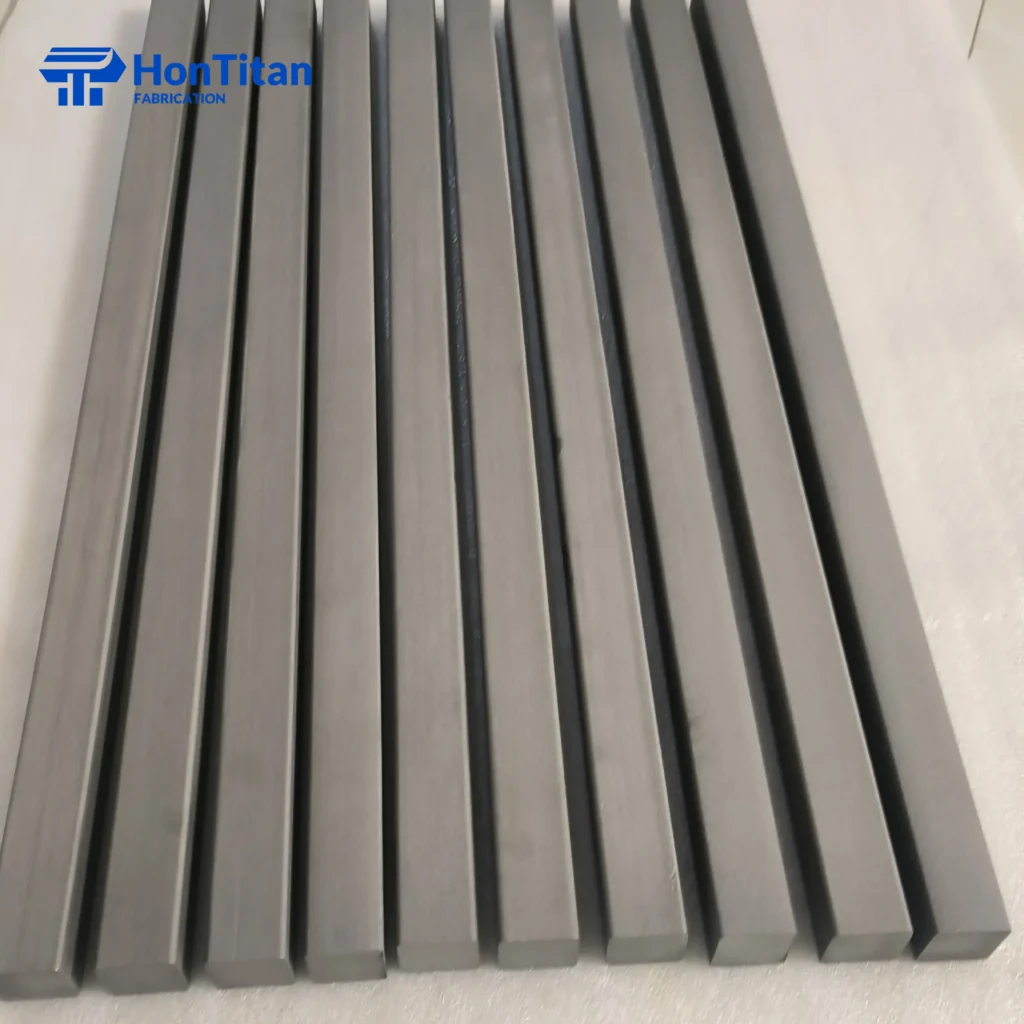
Grade 1 commercially pure titanium sheet (UNS R50250) is produced to ASTM B265-20a and ASME SB-265, offering the highest ductility and corrosion resistance of all four CP titanium grades. Available in thicknesses from 0.3 mm to 6 mm in HRAP and CRA surface conditions, with EN 10204 3.1 Mill Test Certificates included on every order. Primary markets include chemical processing, desalination, dimensionally stable anodes (DSA), and medical device manufacturing per ASTM F67.
Quick Specifications
| Property |
Value |
| Material Grade |
Grade 1 Commercially Pure Titanium (CP-4) |
| UNS Number |
R50250 |
| Primary Standard |
ASTM B265-20a / ASME SB-265 |
| Additional Standards |
ASTM F67 Grade 1 (medical) |
| Thickness Range |
0.3 mm – 6.0 mm (sheet); >6.0 mm – 50.8 mm (plate) |
| Width |
Up to 2,000 mm (CRA); up to 3,048 mm (HRAP) |
| Length |
Up to 6,000 mm; cut-to-size available |
| Surface Condition |
HRAP (Hot Rolled Annealed Pickled) / CRA (Cold Rolled Annealed) |
| Tensile Strength (min) |
240 MPa (35 ksi) per ASTM B265-20a |
| Yield Strength (min) |
170 MPa (25 ksi) per ASTM B265-20a |
| Elongation (min) |
24% in 50 mm gauge length |
| MOQ |
50 kg (standard stock); 100–200 kg (custom gauge) |
| Lead Time |
2–4 weeks (stock); 6–10 weeks (non-standard) |
| Mill Test Certificate |
EN 10204 3.1 included |
Technical Overview
Grade 1 titanium sheet is the most ductile and chemically pure form of commercially pure (CP) titanium, characterized by a single-phase hexagonal close-packed (HCP) alpha microstructure and a maximum oxygen content of 0.18 wt% per ASTM B265-20a. The low interstitial element content — principally oxygen and iron — accounts for both its superior formability and its outstanding corrosion resistance across a broad range of oxidizing and mildly reducing environments. A tenacious, self-repairing TiO₂ passive oxide film forms spontaneously on the surface in air or aerated media, providing corrosion immunity in seawater, wet chlorine, most chloride solutions, and the majority of organic and inorganic acids at ambient to moderate temperatures.
From a fabrication standpoint, Grade 1 sheet is cold-rolled to tighter tolerances than HRAP plate and supports bend radii as low as 1× thickness for 90° bends without cracking in the annealed condition. Gas tungsten arc welding (GTAW) with ERTi-1 filler wire per AWS A5.16/A5.16M produces full-strength joints when inert shielding is maintained above 427°C (800°F) on both face and root. All sheet and plate is produced under a quality management system certified to ISO 9001:2015, with mechanical and chemical test results traceable to individual heat/lot and documented on EN 10204 3.1 Mill Test Certificates.
Chemical Composition
Grade 1 titanium sheet conforms to the following elemental limits per ASTM B265-20a (wt%):
| Element |
Symbol |
Maximum (wt%) |
| Nitrogen |
N |
0.03 |
| Carbon |
C |
0.08 |
| Hydrogen |
H |
0.015 |
| Iron |
Fe |
0.20 |
| Oxygen |
O |
0.18 |
| Titanium |
Ti |
Balance (≥ 99.5%) |
Source: ASTM B265-20a, Table 1, Grade 1 (UNS R50250). All values are maximum limits unless otherwise stated.
Mechanical Properties
Minimum mechanical properties per ASTM B265-20a (annealed condition):
| Property |
Value |
Test Standard |
| Ultimate Tensile Strength |
240 MPa (35 ksi) min |
ASTM E8/E8M |
| 0.2% Offset Yield Strength |
170 MPa (25 ksi) min |
ASTM E8/E8M |
| Elongation in 50 mm |
24% min |
ASTM E8/E8M |
| Hardness (Brinell, typical) |
≤ 120 HB |
ASTM E10 |
Properties are minimums for acceptance testing. Actual lot values are reported on EN 10204 3.1 Mill Test Certificates.
Physical Properties
Typical physical properties at 20°C (68°F):
| Property |
Value |
Unit |
| Density |
4.51 |
g/cm³ |
| Elastic (Young’s) Modulus |
102.7 |
GPa (14.9 Msi) |
| Poisson’s Ratio |
0.37 |
— |
| Thermal Conductivity |
16.4 |
W/(m·K) |
| Coefficient of Thermal Expansion |
8.6 |
µm/(m·°C) at 20–100°C |
| Electrical Resistivity |
558 |
nΩ·m |
| Melting Range |
1,668 |
°C (3,034°F) |
| Specific Heat Capacity |
520 |
J/(kg·K) |
Typical values; consult EN 10204 3.1 MTC for lot-specific density confirmation if required.
Size Range and Tolerances
Grade 1 titanium sheet and plate is available in the following standard dimensional ranges:
| Dimension |
Sheet |
Plate |
| Thickness |
0.3 mm – 6.0 mm |
>6.0 mm – 50.8 mm |
| Width |
Up to 2,000 mm (CRA); up to 3,048 mm (HRAP) |
Up to 3,048 mm |
| Length |
Up to 6,000 mm |
Up to 6,000 mm |
| Thickness Tolerance |
Per ASTM B265-20a Table 9 |
Per ASTM B265-20a Table 9 |
| Width Tolerance |
Per ASTM B265-20a Table 10 |
Per ASTM B265-20a Table 10 |
Custom thicknesses, widths, and cut-to-length are available. Contact the sales team with drawing requirements for tolerance confirmation before order placement.
Grade 1 vs. Grade 2 Titanium — Key Differences
Grade 1 and Grade 2 titanium are both commercially pure (CP) alpha-phase alloys governed by ASTM B265-20a, differing primarily in interstitial element content, which controls the trade-off between strength and ductility.
| Property |
Grade 1 (UNS R50250) |
Grade 2 (UNS R50400) |
| Tensile Strength (min) |
240 MPa (35 ksi) |
345 MPa (50 ksi) |
| Yield Strength (min) |
170 MPa (25 ksi) |
275 MPa (40 ksi) |
| Elongation (min) |
24% |
20% |
| Oxygen (max) |
0.18 wt% |
0.25 wt% |
| Iron (max) |
0.20 wt% |
0.30 wt% |
| Formability |
Best of all CP grades |
Good |
| Corrosion Resistance |
Highest (purest grade) |
Excellent (slightly lower) |
| Medical Standard |
ASTM F67 Grade 1 |
ASTM F67 Grade 2 |
| Common Applications |
DSA, desalination, medical implants, severe corrosion |
Chemical processing, heat exchangers, marine, general industrial |
Selection guide: Grade 1 is specified when maximum ductility, the highest corrosion resistance, or ASTM F67 Grade 1 compliance is required. Grade 2 is the broader commercial choice when moderate strength gain is acceptable and the application does not demand the lowest possible interstitial content.
Application Industries
Grade 1 commercially pure titanium sheet serves demanding industrial and regulated markets where maximum corrosion resistance and formability are required.
Chemical Processing & Chlorate Manufacturing
Grade 1 sheet resists wet chlorine gas, chloride solutions, and most oxidizing acids without pitting or crevice corrosion. Used for reactor vessel linings, evaporator surfaces, and heat exchanger plates in chlor-alkali and chlorate production environments where stainless steel and nickel alloys fail prematurely.
Desalination Plants
The TiO₂ passive film on Grade 1 titanium is stable indefinitely in seawater and high-salinity brine. Thin-gauge sheet (0.4–0.8 mm) is fabricated into multi-effect evaporator panels and reverse-osmosis support structures where chloride-induced corrosion would otherwise limit service life.
Dimensionally Stable Anodes (DSA)
Grade 1 titanium sheet provides the substrate for mixed metal oxide (MMO) coatings used in electrochemical cells for chlor-alkali production and industrial electrolysis. Its high purity and dimensional stability under anodic polarization make it the specified substrate material for DSA manufacturing.
Medical Devices — ASTM F67 Grade 1
Produced to ASTM F67 Grade 1, this material meets biocompatibility requirements for bone plates, cranial implants, dental instruments, and surgical tools. The highest ductility of all CP grades supports precision forming of complex implant geometries without thinning or cracking.
Marine Engineering
Grade 1 titanium sheet exhibits corrosion rates below 0.025 mm/year in natural seawater. Applications include seawater piping liners, offshore splash-zone cladding panels, naval sonar housings, and subsea equipment enclosures where long service life without cathodic protection is required.
Architectural Cladding
Grade 1 sheet provides a lightweight (4.51 g/cm³), maintenance-free facade material with a documented service life exceeding 40 years under atmospheric exposure. Available with HRAP (matte) or CRA (smooth) surface finish to suit both industrial and architectural specifications.
Frequently Asked Questions
What is the difference between Grade 1 and Grade 2 titanium sheet?
Grade 1 titanium is the most ductile and purest commercially pure titanium grade, with a minimum tensile strength of 240 MPa and a maximum oxygen content of 0.18 wt% per ASTM B265-20a. Grade 2 offers higher strength (345 MPa min tensile) with slightly reduced ductility and a higher ceiling for interstitial elements (O: 0.25% max, Fe: 0.30% max). Engineers select Grade 1 when maximum formability, ASTM F67 Grade 1 compliance, or the lowest interstitial content is required; Grade 2 is the standard commercial choice for chemical processing and heat exchanger applications where the additional strength is beneficial.
What is Grade 1 titanium?
Grade 1 titanium is a commercially pure (CP) titanium alloy classified as UNS R50250, containing a minimum of 99.5% titanium with controlled maximum limits of 0.18% oxygen, 0.20% iron, 0.08% carbon, 0.03% nitrogen, and 0.015% hydrogen per ASTM B265-20a. It is the softest and most ductile of the four CP titanium grades, exhibiting a single-phase alpha hexagonal close-packed (HCP) microstructure that cannot be strengthened by heat treatment. In sheet form, it is used where maximum cold-formability and the highest corrosion resistance among CP grades are required.
What chemicals corrode Grade 1 titanium?
Grade 1 titanium resists attack from seawater, wet chlorine, chloride solutions, most organic acids, dilute sulfuric and hydrochloric acids, and oxidizing environments up to moderate temperatures. It is attacked by anhydrous hydrogen fluoride (HF), concentrated sulfuric acid above approximately 70% concentration at elevated temperatures, phosphoric acid in strongly reducing conditions, and fluoride-containing solutions at any concentration. Hydrofluoric acid corrodes titanium even at trace concentrations and must be strictly avoided in all contact applications.
Will Grade 1 titanium sheet corrode in saltwater?
Grade 1 titanium does not corrode in natural seawater or marine splash-zone environments under normal service conditions. The self-repairing TiO₂ passive oxide film maintains stability across the full range of seawater temperature, salinity, and flow velocity encountered in marine service. Commercially pure titanium sustains corrosion rates below 0.025 mm/year in seawater based on long-term exposure data, making it the material of choice for desalination plant components and offshore structural cladding without the need for cathodic protection.
What is the MOQ for Grade 1 titanium sheet?
The minimum order quantity (MOQ) for Grade 1 titanium sheet is 50 kg for standard stock thicknesses and widths. Custom gauges, non-standard widths, or specific cut-to-size configurations may require a higher MOQ of 100–200 kg depending on the production run requirements. A Mill Test Certificate per EN 10204 3.1 with full chemical and mechanical traceability is included with every shipment. Contact the sales team with dimensions and quantity requirements for a lead-time and pricing confirmation.
What surface finishes are available for Grade 1 titanium sheet?
Grade 1 titanium sheet is supplied in two standard mill surface conditions per ASTM B265-20a. Hot Rolled, Annealed and Pickled (HRAP) delivers a uniform matte grey surface free of scale and oxide, suitable for industrial fabrication, chemical processing, and marine applications. Cold Rolled, Annealed (CRA) provides tighter dimensional tolerances (±0.02–0.05 mm on thickness) and a smoother surface, preferred for medical device manufacturing, architectural cladding, and applications requiring high dimensional precision. Both conditions are oxide-free and ready for forming, welding, or surface coating.
Can Grade 1 titanium sheet be welded?
Grade 1 titanium sheet is fully weldable by gas tungsten arc welding (GTAW/TIG) using ERTi-1 filler wire per AWS A5.16/A5.16M-2017, and by electron beam (EB) and plasma arc welding. Inert gas shielding (argon ≥99.995% purity or helium) is mandatory on both the weld face and root side for all temperatures above 427°C (800°F) to prevent oxygen and nitrogen embrittlement. When welded with correct shielding and procedure qualification per ASME Section IX or AWS D1.9, the heat-affected zone retains mechanical properties within ASTM B265-20a acceptance minimums.