It is arguably the most recognizable finish in the automotive and carry community: Burnt Titanium.
Whether it’s on a scorching hot exhaust tip, a set of lug nuts, or the handle of a premium pocket knife, that signature blue-purple-gold gradient has become a symbol of high performance and industrial beauty.
But for many enthusiasts, Burnt Titanium remains a mystery. Is it a paint? Is it a chemical coating? And most importantly, how do you distinguish real Grade 5 titanium from the cheap “Neo-Chrome” steel knockoffs flooding the market?
If you are looking to upgrade your setup but don’t want to get scammed by fake parts, you’re in the right place.
This article breaks down the science behind the oxidation process, explains why real titanium is worth the investment, and provides a step-by-step guide on how to spot fakes and maintain that beautiful finish for years to come.
What Exactly IS Burnt Titanium? (The Science)
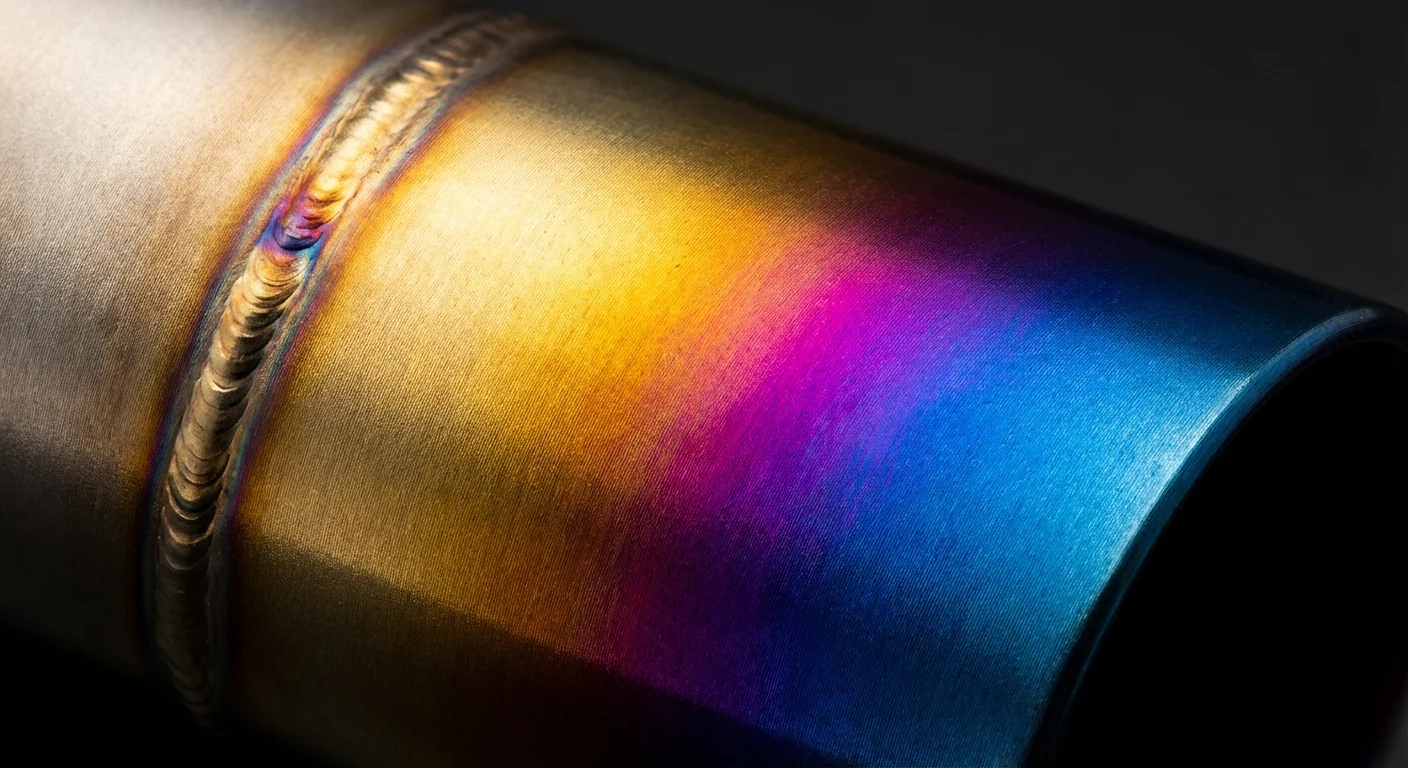
First things first: let’s bust the biggest myth out there. Burnt Titanium is not a paint, a dye, or a pigment. That mesmerizing color you see is actually a trick of the light, created by a phenomenon called Thin-Film Interference.
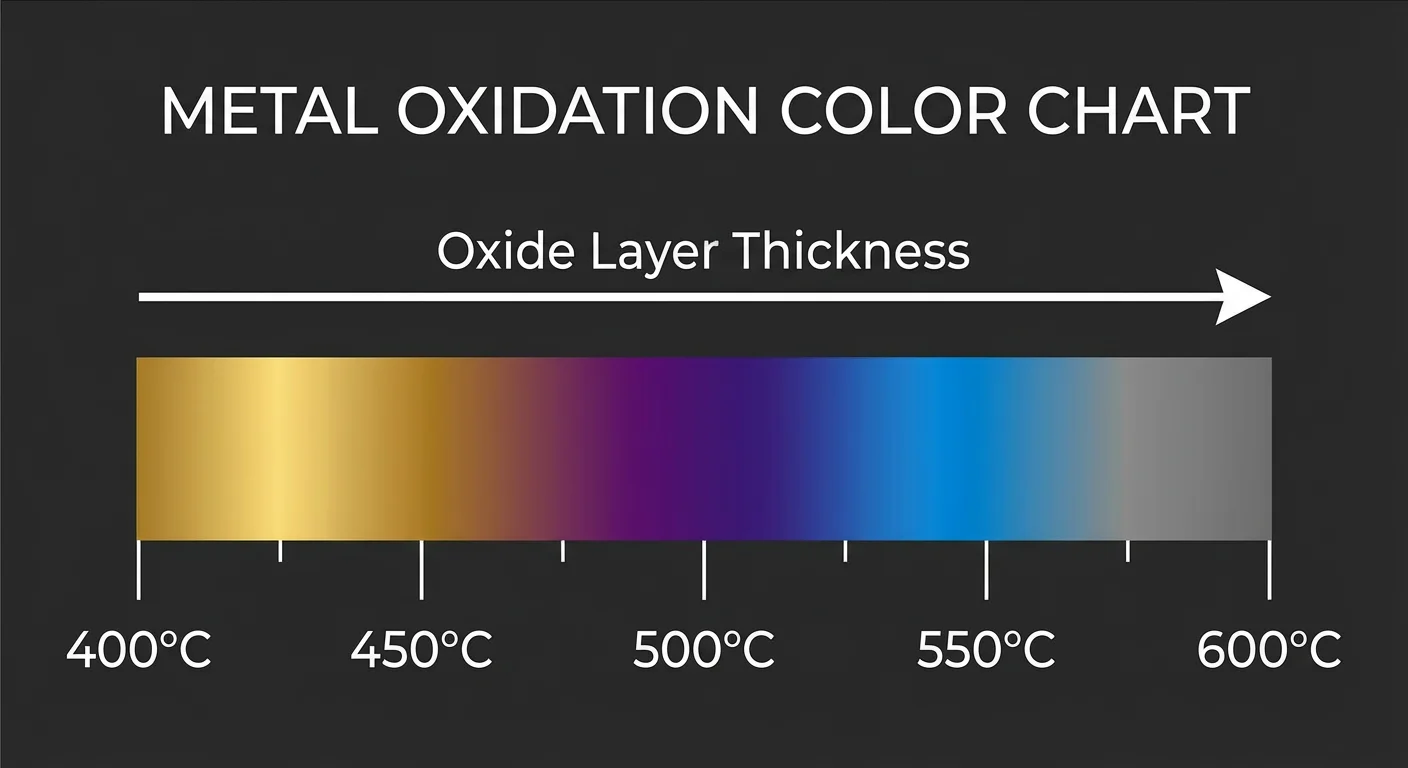
The Science: It’s All About the Oxide Layer
Titanium is a highly reactive metal. When it is exposed to heat or electricity, it reacts with oxygen in the air to form a transparent layer of Titanium Dioxide (TiO2) on its surface.Here is where the magic happens:This oxide layer is clear, but depending on its thickness, it refracts light differently. As the layer gets thicker, it interferes with light waves, canceling out some colors and reflecting others.
- Thin Layer: Reflects Gold / Bronze.
- Medium Layer: Reflects Purple / Violet.
- Thick Layer: Reflects the iconic Electric Blue.
So, when you look at a burnt titanium exhaust, you aren’t seeing blue pigment—you are seeing light bouncing off a microscopic shield of oxidation.
How It’s Made: Flame vs. Voltage
To achieve this finish, craftsmen typically use one of two methods. Both require skill, but they produce different results:
1. Flame Anodization (The “Burnt” Look)
This is the traditional method used for automotive parts like exhaust tips. A craftsman uses an industrial torch to heat the raw titanium. The metal changes color based on temperature: it starts turning gold around 400°C (750°F), shifts to purple at 500°C (930°F), and finally hits that perfect blue sweet spot around 600°C (1100°F). Because it’s done by hand, every flame-anodized piece is 100% unique, often featuring “tiger stripes” or natural fades.
2. Electrical Anodization
This method is common for precision EDC gear (like knife scales or pens). By submerging the titanium in an electrolyte solution and controlling the voltage precisely, makers can “dial in” a specific color. For example, 25 volts might yield a deep blue, while 80 volts could turn it pink. This results in a uniform, solid color with high saturation.
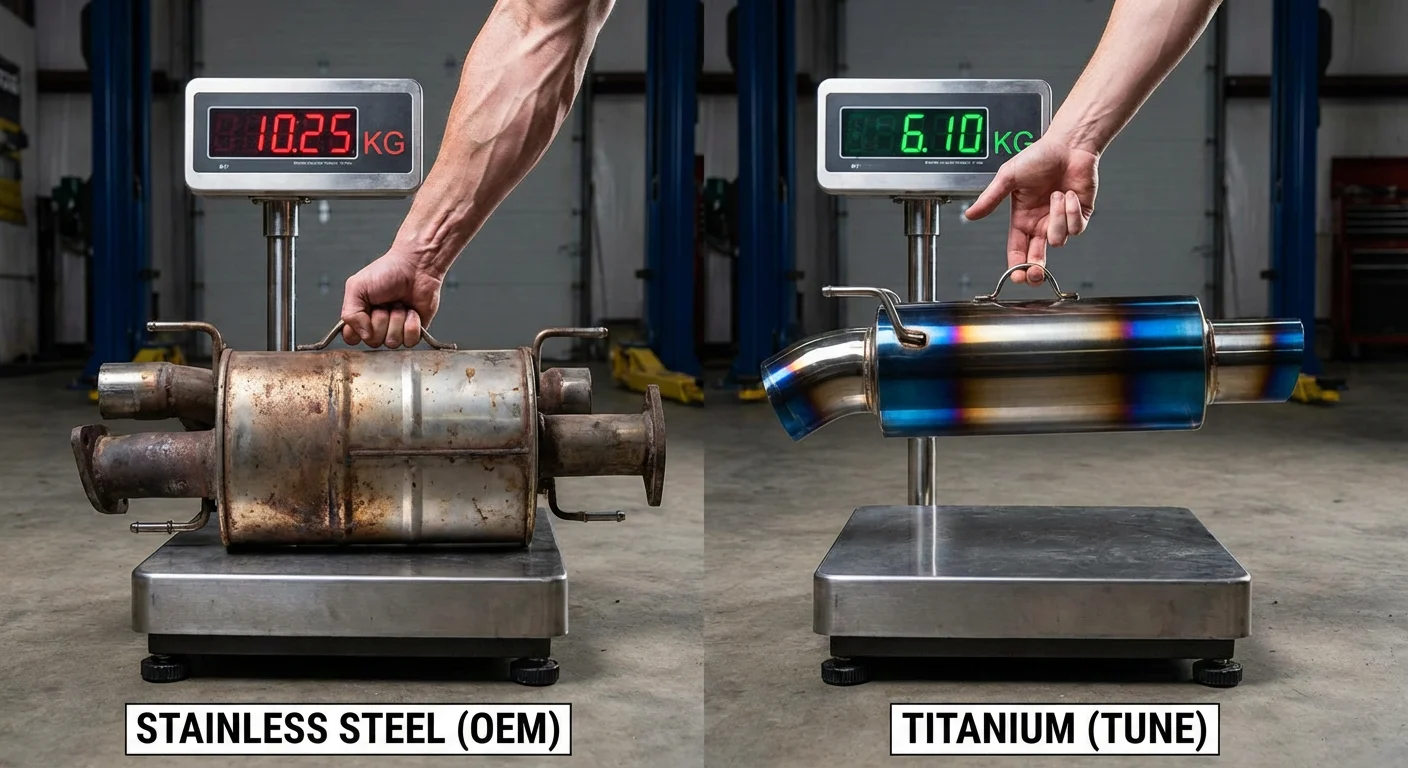
More Than Just Looks: Top 3 Benefits of Grade 5 Titanium
Sure, the burnt finish looks incredible in an engine bay or a pocket dump. But why are enthusiasts willing to pay the “Titanium Tax”? Why choose titanium over cheaper stainless steel or aluminum?The answer lies in the material itself. Most high-end aftermarket parts are made from Grade 5 Titanium (Ti-6Al-4V), an aerospace-grade alloy that offers a trifecta of benefits:
1. Extreme Weight Reduction
For performance cars, weight is the enemy. Titanium is significantly less dense than steel, typically offering a 40-45% weight reduction for the same volume. Swapping a stock stainless steel exhaust system for a full titanium one can shave off 20-40 lbs (10-18 kg) instantly.
2. Unmatched Corrosion Resistance
Unlike steel, which relies on heavy coatings to prevent rust, titanium is naturally immune to corrosion. The same oxide layer that gives it color also acts as a permanent shield. It withstands road salt, rain, and harsh weather conditions better than almost any other metal.
3. The Signature Sound & Heat Dissipation
Because titanium is less dense and structurally stiffer than steel, it resonates differently. It produces a crisp, metallic “raspy” tone that gets higher-pitched as RPMs climb. It’s a sharper, more exotic sound compared to the deeper, muddier “thud” of stainless steel.Additionally, titanium dissipates heat much faster than steel, meaning your exhaust tips cool down quicker after a hard drive.
Real vs. Fake: How to Spot “Neo-Chrome” Imposters
Because titanium is expensive to machine and source, the market is flooded with cheap imitations. These are usually stainless steel parts with a PVD coating (often called “Neo-Chrome”) designed to look like burnt titanium.Don’t get scammed. Here is how to tell the difference between a masterpiece and a fake.
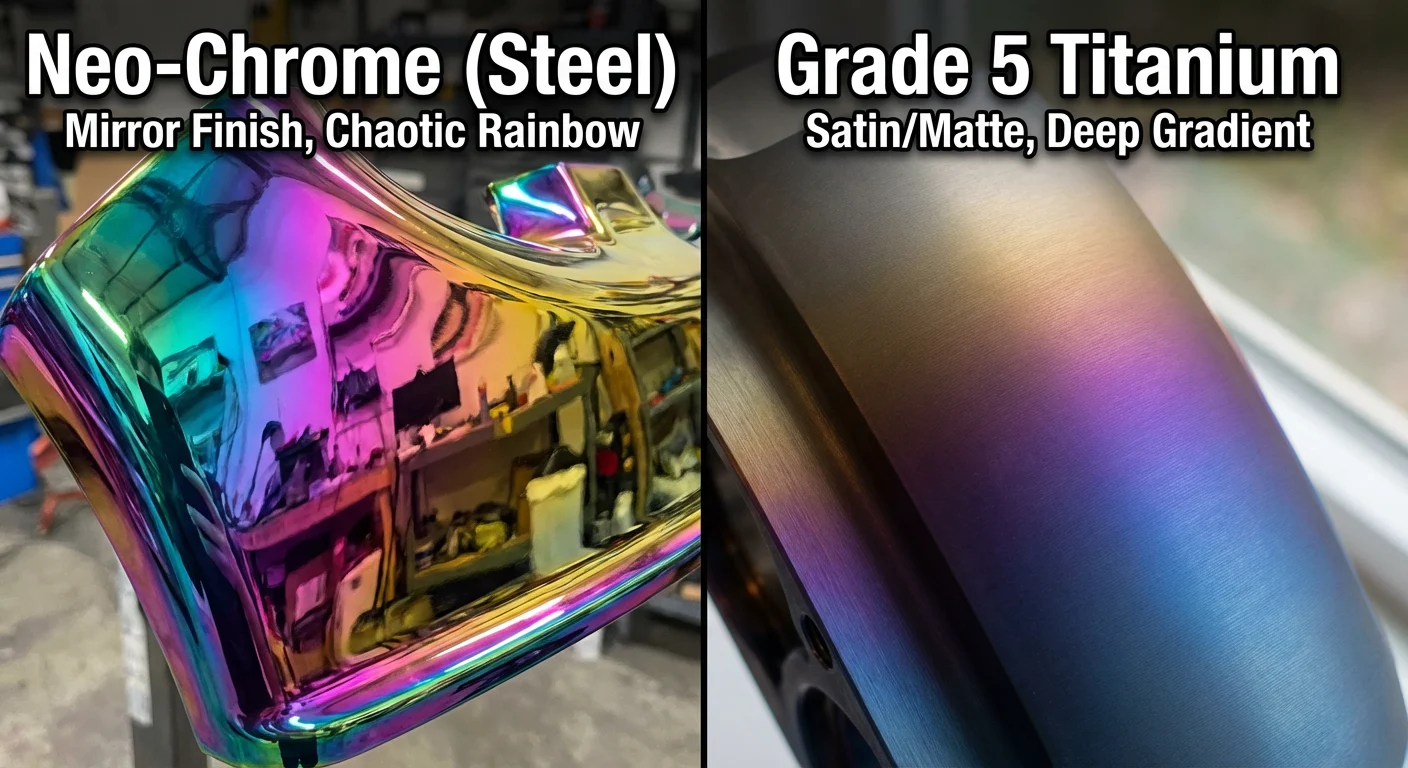
The Comparison Cheat Sheet
| Feature | Real Burnt Titanium | Fake / Neo-Chrome Steel |
|---|---|---|
| Weight | Ultra-light (Featherweight feel) | Heavy (Feels like standard steel) |
| Finish | Satin, Matte, or Semi-Gloss | Mirror-like, High-Gloss, Reflective |
| Color Flow | Organic, natural gradients | Rainbow-like, sharp abrupt lines |
| Magnetism | Non-Magnetic (Mostly) | Often Magnetic |
| Sound (Tap) | High-pitched “Ting” | Dull, heavy “Thud” |
The 3-Step Field Test
1. The Visual Test (Look for the “Mirror”) Imitations are often electroplated, resulting in a finish that is incredibly shiny—almost like a bathroom mirror. The colors often look like a chaotic “oil slick” rainbow. Real titanium usually has a subtle, metallic grain. Even when polished, it retains a deep, satin luster rather than a cheap, plastic-like shine.
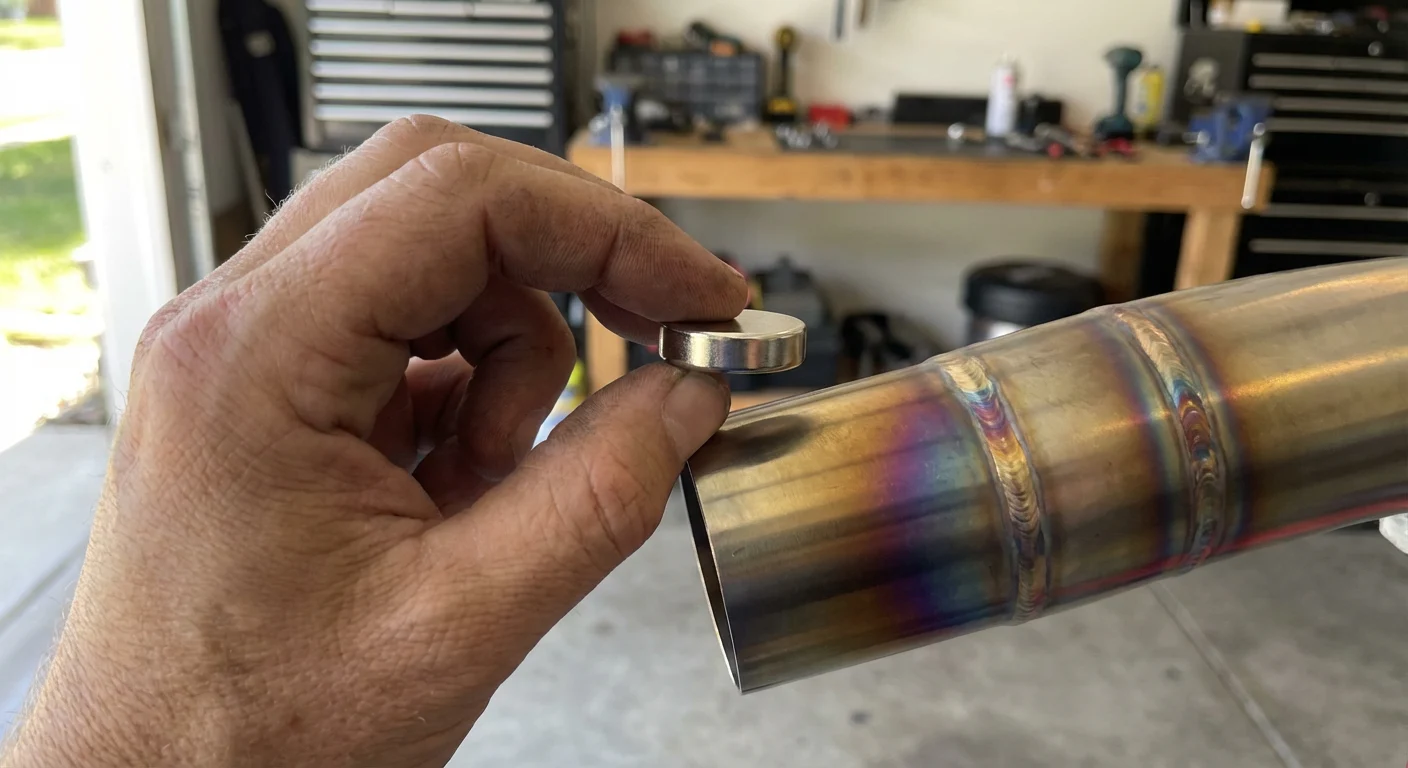
2. The Magnet Test Bring a small magnet with you. Genuine Grade 5 Titanium is non-magnetic. If the magnet sticks, it is likely steel.
3. The “Coin Tap” Test (The Audio Check)Gently tap the edge of the tip with a coin.
- Real Titanium: You will hear a distinct, thin, high-pitched “ting” (like tapping crystal).
- Steel: You will hear a dull, solid “thud” or “clunk”.
Care & Maintenance: Can You Clean Burnt Titanium?
So, you’ve invested in genuine burnt titanium parts. How do you keep them looking like new? A common fear is that the blue color will fade or peel off. Remember: It is not paint. It is a chemical layer. While it won’t peel, it can be worn down by abrasion.
The Big Mistake: PUT DOWN THE METAL POLISH
We cannot stress this enough: Never use abrasive metal polishes (like Autosol, Mag & Aluminum Polish) or steel wool on burnt titanium. These products contain micro-abrasives designed to strip away the top layer of metal. Since the “burnt blue” is just a thin surface layer, polishing it will literally sand the color off, leaving you with a plain silver piece.

The Correct Way to Clean
To remove road grime, fingerprints, or carbon buildup without hurting the color, use this method:
- The Universal Cleaner: WD-40. It is the gold standard for cleaning titanium. Spray it on a microfiber towel and wipe gently. It dissolves oil and grease while adding a protective sheen that makes the colors pop.
- For Light Dirt: Standard Ammonia-based Glass Cleaner (like Windex) works wonders for removing fingerprints from EDC gear or shift knobs.
- The Tool: Always use a soft Microfiber Cloth. Avoid paper towels (which can leave scratches) or scouring pads.
Restoration: What If It Fades?
Over years of intense heat and road debris, the color on an exhaust tip might naturally dull. Because it’s solid titanium, it can be restored. A professional can polish the tip back to raw silver (removing the old oxide) and then re-torch it to bring back the vibrant blue-purple gradient.
Conclusion: Is the “Titanium Tax” Worth It?
In the world of modification, burnt titanium occupies a unique space. Yes, it costs significantly more than stainless steel. But you aren’t just paying for a color.You are paying for the physics—the 40% weight reduction, the heat dissipation, and the corrosion resistance. You are paying for the craftsmanship—the skill required to freeze fire at the exact moment it turns electric blue. And you are paying for the character—the fact that no two hand-burnt pieces are exactly alike.Whether you are building a track weapon or curating the perfect pocket dump, burnt titanium is the ultimate finish line. It says you care about the details that others overlook.
Frequently Asked Questions (FAQ)
Does the “burnt” color affect the metal’s strength?
No. The oxidation layer created during the process is microscopic (only a few nanometers thick) and does not compromise the structural integrity of the titanium. In fact, it can slightly enhance surface corrosion resistance.
Why is my “burnt titanium” magnetic?
If it is magnetic, it is almost certainly a fake. Genuine Grade 5 (Ti-6Al-4V) titanium is non-magnetic. You likely have a stainless steel part that has been heat-treated or plated to look like titanium.
Can I burn titanium myself?
Yes, but it requires practice. You can use a propane torch (flame anodizing) or a DC power supply with an electrolyte solution (electrical anodizing). However, achieving the smooth, professional gradient found on high-end parts is difficult to master without ruining the finish.
Does burnt titanium fade over time?
It can. Since the color is an optical effect created by the oxide layer’s thickness, friction (from handling) or intense abrasion (from road debris) can wear this layer down. However, unlike paint, it won’t chip or peel, and it can often be restored by re-torching.