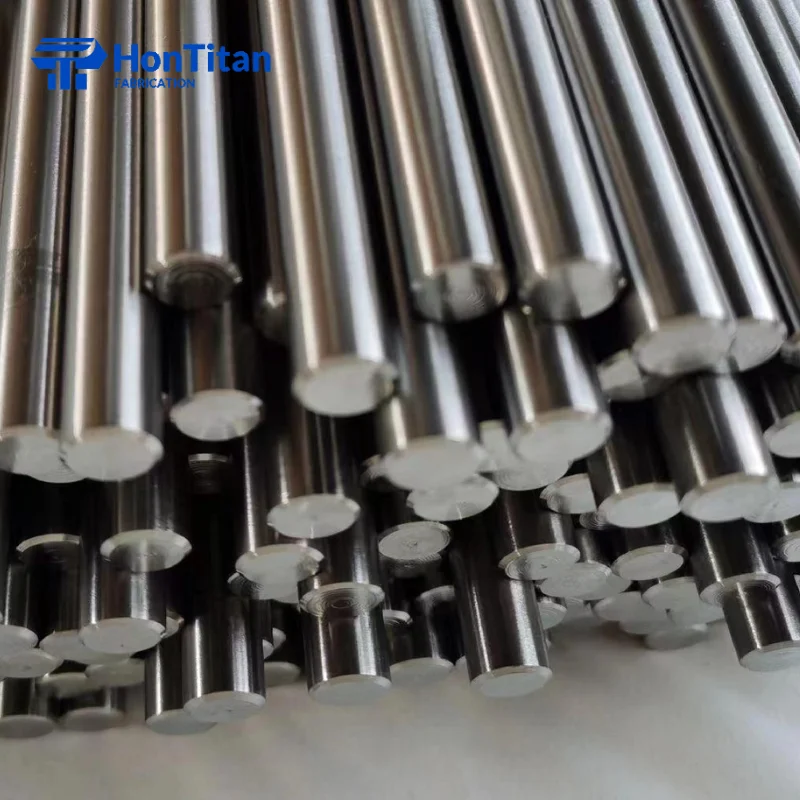
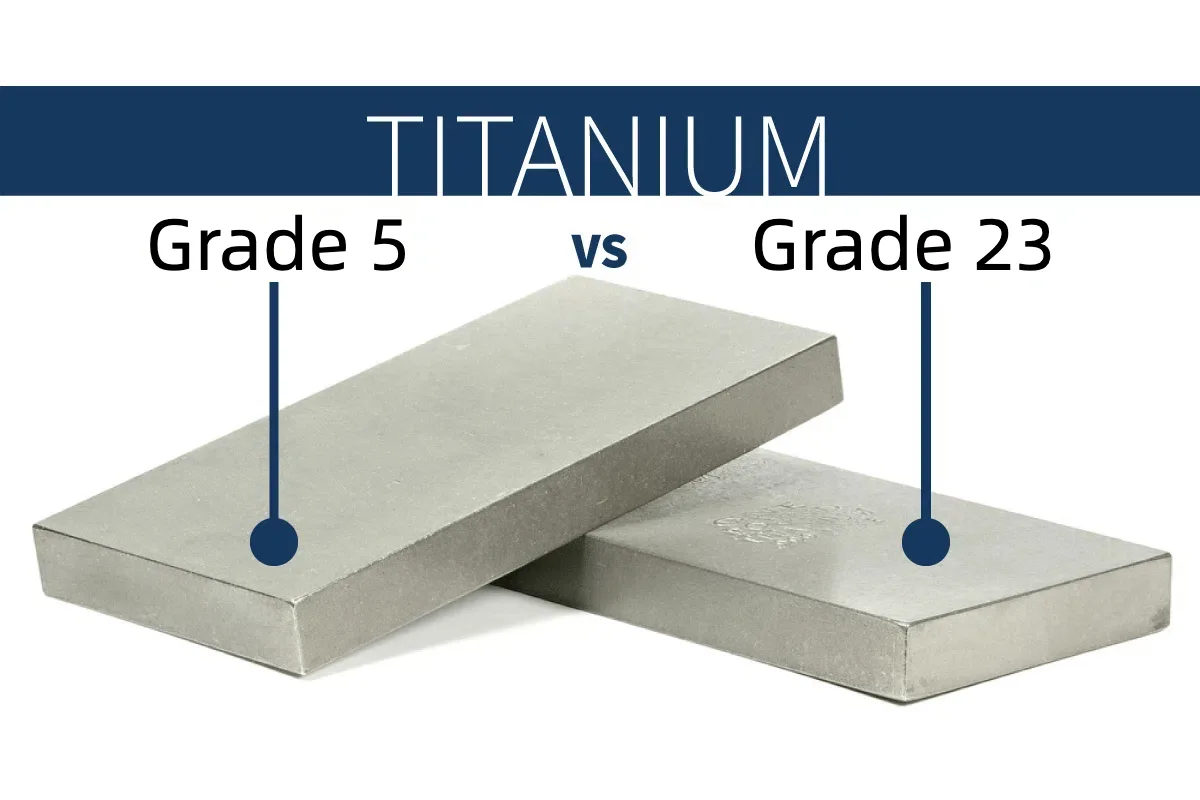
El grado 5 (Ti-6Al-4V) y el grado 23 (Ti-6Al-4V ELI) comparten la misma composición básica de aluminio 6% y vanadio 4%. La diferencia fundamental radica en el control de los elementos intersticiales: el grado 23 limita el oxígeno a 0,13% máx. frente a los 0,20% máx. del grado 5, junto con límites más estrictos para el nitrógeno y el hidrógeno. Este cambio químico produce un comportamiento mecánico significativamente diferente: El Grado 23 ofrece un alargamiento y una tenacidad a la fractura significativamente superiores (75-90 MPa√m frente a 55-75 MPa√m), con una resistencia a la tracción y un límite elástico comparables en condiciones de recocido. Para los implantes médicos regidos por la norma ASTM F136, el Grado 23 es obligatorio. Para trabajos estructurales aeroespaciales e industriales en general, el Grado 5 sigue siendo la opción por defecto, y la más rentable.
¿Qué significa ELI y por qué debería importarle?
ELI son las siglas de Extra Low Interstitials. No se trata de una aleación independiente, sino de una variante de producción de mayor pureza de la misma composición química Ti-6Al-4V. La denominación “extra bajo” se refiere específicamente a los elementos intersticiales: oxígeno, nitrógeno, carbono e hidrógeno. Se trata de pequeños átomos que se encuentran en los huecos (intersticios) de la red cristalina del titanio y que tienen un efecto enorme en el comportamiento del metal bajo tensión.
En mi experiencia trabajando con especificaciones de compras, el malentendido más común es que ELI es una “aleación diferente”. No lo es. Si se enviaran los grados 5 y 23 a un espectrómetro y sólo se midieran el aluminio, el vanadio y el titanio, los resultados serían prácticamente idénticos. La diferencia radica en los límites de impurezas, que hacen del grado 23 la elección obligatoria para los productos sanitarios implantables.
La razón por la que los intersticiales importan tanto es metalúrgica. El oxígeno y el nitrógeno son fuertes estabilizadores de la fase alfa. Elevan la temperatura de transición alfa-beta y producen un notable efecto endurecedor en la red de titanio. Más oxígeno significa mayor resistencia a la tracción, pero también menor capacidad de deformación antes de la fractura. En un soporte de carga estática de un avión, esa compensación favorece al Grado 5. En una barra espinal que se flexiona millones de veces a lo largo de la vida de un paciente, favorece el Grado 23.
5º curso frente a 23º curso: análisis comparativo
La siguiente tabla compara las dos calidades en todas las métricas importantes para la selección de ingeniería. Los valores proceden de las especificaciones ASTM B348, las hojas de datos de Carpenter Technology y las bases de datos de materiales de MakeItFrom.com. Cuando se indican rangos, representan la dispersión entre múltiples fuentes certificadas.
Límites de composición química (peso máximo %)
| Elemento | Grado 5 (Ti-6Al-4V) | Grado 23 (Ti-6Al-4V ELI) | Por qué es importante |
|---|---|---|---|
| Aluminio (Al) | 5.5-6.75% | 5.5-6.75% | Estabilizador alfa; idéntica gama |
| Vanadio (V) | 3,5-4,5% | 3,5-4,5% | Estabilizador beta; idéntica gama |
| Oxígeno (O) | ≤ 0,20% | ≤ 0,13% | Diferenciador principal — unidades fuerza frente a. compromiso entre ductilidad |
| Nitrógeno (N) | ≤ 0,05% | ≤ 0,03% | Estabilizador alfa; afecta a la tenacidad y soldabilidad |
| Hierro (Fe) | ≤ 0,40% | ≤ 0,25% | Estabilizador beta; afecta a la homogeneidad de la microestructura |
| Carbono (C) | ≤ 0,08% | ≤ 0,08% | Límite idéntico |
| Hidrógeno (H) | ≤ 0,015% | ≤ 0,0125% | Afecta al riesgo de fragilización |
| Titanio (Ti) | Equilibrio (~88%) | Equilibrio (~89%) | Mayor balance de Ti debido a la menor cantidad de impurezas |
Propiedades mecánicas (recocido)
| Propiedad | Grado 5 (Ti-6Al-4V) | Grado 23 (Ti-6Al-4V ELI) | Δ Diferencia |
|---|---|---|---|
| Resistencia a la tracción (UTS) | Mínimo 895 MPa; Típico 950-1000 MPa | Mínimo 860 MPa; Típico 860-930 MPa | Grado 5 ligeramente superior |
| Límite elástico (0,2% offset) | Mínimo 828 MPa; Típico ~880 MPa | Mínimo 795 MPa; Típico ~795-830 MPa | Grado 5 ligeramente superior |
| Alargamiento a la rotura | Mín 10%; Típico 14-18% | Mínimo 10%; Típico 14-16% | Grado 23 comparable a ligeramente mejor |
| Reducción de la superficie | Mínimo 20-25%; Típico ~36% | Mínimo 25%; Típico 30-40% | Grado 23 mayor ductilidad |
| Resistencia a la fractura (K_IC) | 55-75 MPa√m | 75-90 MPa√m | El grado 23 es ~30% superior |
| Resistencia a la fatiga (10⁷ ciclos) | ~510 MPa | ~500 MPa | Comparable |
| Módulo elástico | 114 GPa | 113 GPa | Prácticamente idénticos |
| Dureza | 34-36 HRC | 30-35 HRC | Diferencia insignificante |
Propiedades físicas y térmicas
| Propiedad | 5º curso | Grado 23 |
|---|---|---|
| Densidad | 4,43 g/cm³ | 4,43 g/cm³ |
| Intervalo de fusión | 1604-1660°C | 1604-1660°C |
| Conductividad térmica | 6,8 W/m-K | 7,1 W/m-K |
| Temperatura máxima de funcionamiento | ~350 °C | ~350 °C |
En resumen: El grado 5 ofrece una mayor resistencia estática; el grado 23 ofrece una tolerancia al daño notablemente superior, es decir, la capacidad de resistir el avance de las grietas y soportar cargas cíclicas sin sufrir fallos catastróficos.
El laberinto de las normas ASTM: B348, F136 y F1472
Uno de los aspectos más confusos a la hora de especificar La aleación de titanio se caracteriza por cumplir con múltiples normas ASTM Las normas abarcan los mismos fundamentos químicos. Esto no es redundante: cada norma regula una forma de producto o una aplicación final diferente.
ASTM B348 portadas barra de aleación de titanio y lingotes para uso general. Tanto el grado 5 como el grado 23 se definen aquí con sus respectivos requisitos químicos y mecánicos. Se trata de la norma de la “cadena de suministro general”, la que se encuentra con mayor frecuencia al realizar pedidos de productos laminados.
ASTM F136 es el estándar de calidad para implantes del titanio forjado Ti-6Al-4V ELI para aplicaciones de implantes quirúrgicos. Esta norma hace referencia a la composición química del Grado 23 y especifica márgenes de propiedades mecánicas más estrictos, adaptados a los requisitos médicos. Si su producto es un implante o un instrumento quirúrgico, la norma F136 es la que debe tenerse en cuenta, y esta exige la composición química ELI. El Grado 5 no cumple los requisitos de la norma F136.
ASTM F1472 abarca el Ti-6Al-4V para aplicaciones en implantes quirúrgicos, pero hace referencia a la composición estándar (no ELI) del grado 5. En la práctica, el F136 (ELI) domina el mercado de los implantes debido a su superior resistencia a la fatiga y a la fractura.
Esta es la regla de decisión práctica: Si su aplicación requiere el cumplimiento de la norma ASTM F136, debe utilizar el grado 23. No hay alternativas. Si su aplicación requiere titanio estructural general (soportes aeroespaciales, componentes industriales, piezas para coches de carreras), la norma ASTM B348, grado 5, es la estándar, y además es la opción más económica.
| Estándar | Portadas | Cursos incluidos | Aplicación típica |
|---|---|---|---|
| ASTM B348 | Barra y lingote (general) | 5.º curso, 23.º curso | Suministros generales de ingeniería |
| ASTM F136 | Implante quirúrgico forjado | Solo 2.º de ESO (ELI) | Implantes médicos, instrumentos quirúrgicos |
| ASTM F1472 | Implante quirúrgico forjado | Solo para 5.º curso | Menos habitual en el caso de los implantes |
| ASTM B863 | Alambre para soldadura | 5.º curso, 23.º curso | Materiales de consumo para soldadura |
Análisis en profundidad de las propiedades mecánicas: las ventajas de cada grado
Punto fuerte: la ventaja de 5.º curso
En estado recocido, ambos los grados presentan resistencias a la tracción y a la deformación comparables — El grado 5 solo es ligeramente superior. Sin embargo, el grado 5 puede someterse a un tratamiento térmico para alcanzar niveles de resistencia más altos (límite superior de resistencia a la tracción de más de 1000 MPa) con mayor facilidad que el grado 23, ya que su mayor contenido de oxígeno favorece una fase alfa más resistente. En un escenario de carga estática —un soporte que sujeta un sensor, un elemento estructural del bastidor, una unión con brida—, esta ventaja en cuanto a resistencia permite diseñar piezas más delgadas y ligeras.
Sin embargo, la diferencia es menor de lo que muchos ingenieros suponen. El límite elástico del grado 23, de 795 MPa (mínimo según la norma ASTM F136), sigue siendo impresionantemente alto y, para la mayoría de las aplicaciones estructurales, supera con creces los requisitos de diseño. La diferencia de resistencia solo se convierte en una limitación en aplicaciones que llevan el material al límite.
Ductilidad y tenacidad: la ventaja del grado 23
Aquí es donde el grado 23 destaca. Con una elongación de 14–16 % (frente al 14–18 % del grado 5 en condiciones típicas de recocido —los rangos se solapan más de lo que sugieren muchas fuentes—) y una tenacidad a la fractura de 75–90 MPa√m (frente a los 55–75 MPa√m), el grado 23 es más resistente a la iniciación y propagación de grietas.
En mi análisis de los modos de fallo en la práctica, la tenacidad a la fractura es la propiedad que marca la diferencia entre un daño molesto y un fallo catastrófico. Una pieza de grado 5 con una pequeña grieta superficial puede tolerarla hasta un tamaño crítico, tras lo cual falla repentinamente. Una pieza de grado 23 tolera una grieta mayor antes de alcanzar ese punto crítico, lo que da a los inspectores más tiempo para detectarla y a los ingenieros un mayor margen de error.
En entornos sometidos a cargas cíclicas —cualquier elemento que sufra ciclos de tensión repetidos, desde las barras de fijación espinal hasta los casquillos del tren de aterrizaje o los equipos industriales que vibran—, esta mayor resistencia se traduce directamente en una vida útil más larga.
La fatiga: más cerca de lo que crees
La resistencia a la fatiga a 10⁷ ciclos muestra que ambos grados presentan un comportamiento similar: aproximadamente 500 MPa para el grado 23 y 510 MPa para el grado 5 en ensayos sin muesca. La cifra de resistencia a la fatiga favorece ligeramente al grado 5, pero el parámetro más relevante para la integridad estructural es la velocidad de propagación de la grieta por fatiga: la rapidez con la que se extiende una grieta una vez que se ha iniciado.
Los datos de Carpenter Technology y los estudios publicados demuestran sistemáticamente que el acero ELI de grado 23 presenta una menor velocidad de propagación de grietas por fatiga, lo que significa que, una vez que se inicia una grieta, esta crece más lentamente. Para las filosofías de diseño tolerantes al daño —que rigen la mayoría de las aplicaciones aeroespaciales y de implantes—, este es el parámetro que importa, y no la resistencia a la iniciación de grietas.
Implantes médicos: por qué el ELI es imprescindible
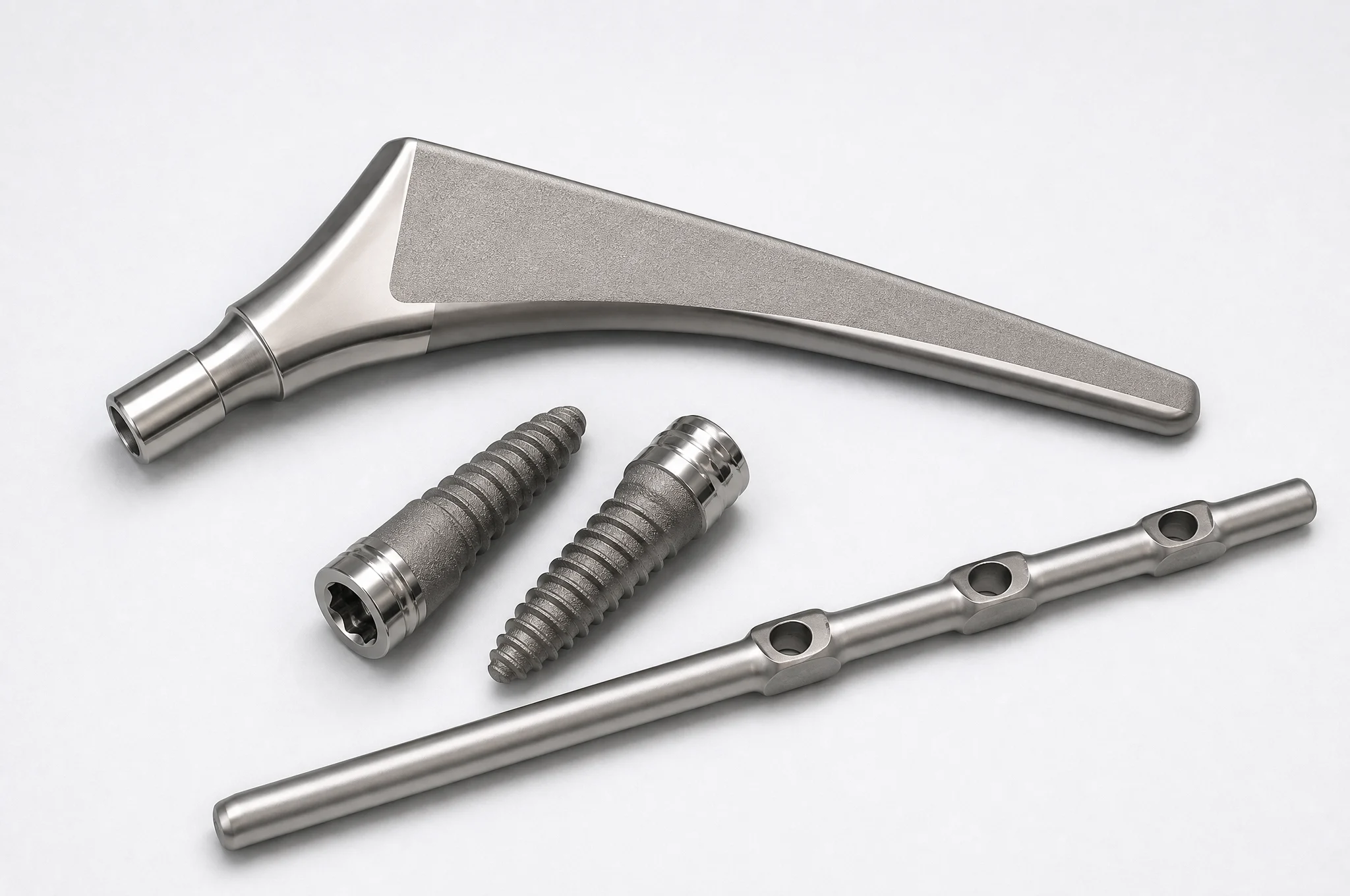
Para cualquier dispositivo implantado en el cuerpo humano —prótesis articulares, implantes de columna, implantes dentales, tornillos óseos, carcasas de marcapasos—, el grado 23 (Ti-6Al-4V ELI) es el material estándar del sector y, en la mayoría de los casos, el requisito normativo.
Las razones van más allá de “unas cifras mejores en la ficha técnica”.”
Cumplimiento normativo. La norma ASTM F136, que regula los implantes quirúrgicos de titanio forjado Ti-6Al-4V, especifica explícitamente la composición química del ELI. Una pieza de grado 5 con un contenido de oxígeno superior no cumple los requisitos de la norma F136. La presentación de una notificación previa a la comercialización 510(k) a la FDA con material de grado 5 para una aplicación de implante no superaría la revisión de las especificaciones del material.
Biocompatibilidad. Aunque ambos grados presentan una buena biocompatibilidad, el menor contenido intersticial del grado 23 da lugar a una capa de óxido superficial (TiO₂) más limpia y homogénea. La composición química ELI es el estándar del sector para aplicaciones de implantes precisamente porque cumple los requisitos más estrictos de la norma ASTM F136 y ha sido validada a lo largo de décadas de uso clínico en prótesis de cadera, implantes de columna y aplicaciones dentales.
Fatiga corporal. El vástago femoral de una prótesis de cadera soporta aproximadamente entre uno y dos millones de ciclos de carga al año. Una barra vertebral en un paciente activo se flexiona con cada movimiento. El cuerpo humano es un entorno de fatiga extraordinariamente exigente. La resistencia superior a la fractura y la menor velocidad de propagación de grietas del acero de grado 23 responden directamente a este desafío.
Margen de la cirugía de revisión. Cuando es necesario revisar o extraer un implante, el hueso y el tejido circundantes se ven afectados. La mayor ductilidad del grado 23 permite extraer el implante con mayor facilidad sin que se fracture, y su tolerancia a los microdaños preexistentes es mayor.
He visto cómo equipos de compras intentaban sustituir el grado 23 por el grado 5 en los componentes de los implantes para reducir el coste de los materiales entre un 20 % y un 30 %. En todos los casos de los que tengo constancia, esta sustitución ha sido rechazada en la fase de control de calidad. Los argumentos normativos y de rendimiento a favor del ELI en los implantes son sencillamente demasiado sólidos.
Aplicaciones de ingeniería más allá del ámbito médico
Componentes estructurales aeroespaciales
El grado 5 predomina en las aplicaciones estructurales generales del sector aeroespacial: mamparos, accesorios de alas, soportes de motores y componentes del tren de aterrizaje. Más del 70% del total La aleación de titanio que se funde en todo el mundo es, en alguna de sus variantes, Ti-6Al-4V, y la mayor parte de ese material corresponde al nivel estándar de 5.º curso.
El grado 23 se utiliza en estructuras críticas de la célula —componentes en los que un fallo tendría consecuencias catastróficas y en los que los intervalos de inspección deben tener en cuenta el avance de las grietas entre revisiones—. Es el caso, por ejemplo, de las vigas del tren de aterrizaje, las estructuras de prolongación del ala y las palas del ventilador del motor. La mayor tenacidad permite ganar tiempo en el ciclo de inspección.
Deportes de motor y automoción de alto rendimiento
En los componentes de la suspensión de los coches de carreras, los elementos del chasis y las piezas del sistema de transmisión, el grado 5 es la opción habitual. En estas aplicaciones, la resistencia es más importante que la tenacidad, ya que las piezas están diseñadas para una vida útil más corta y se sustituyen con mayor frecuencia.
Dicho esto, he visto que se especifica el acero de grado 23 para las uniones de las jaulas antivuelco y los componentes de la estructura de seguridad, donde la absorción de energía mediante la deformación es más importante que la resistencia máxima.
Fabricación aditiva
El panorama de la fabricación aditiva está aportando nuevos matices al debate entre el grado 5 y el grado 23. En el caso de la fusión en lecho de polvo (PBF-LB, antes conocida como SLM), el polvo ELI de grado 23 goza de una preferencia cada vez mayor debido a que:
- Un menor contenido de oxígeno en el polvo de partida se traduce en un menor contenido de oxígeno en la pieza acabada
- Las piezas fabricadas mediante impresión 3D presentan, por naturaleza, una mayor porosidad residual que las forjadas, lo que hace que la tenacidad a la fractura sea aún más importante
- Las velocidades de solidificación más lentas en la fabricación aditiva dan lugar a microestructuras diferentes en las que se conserva la ventaja de la ELI en cuanto a tenacidad
En la deposición de energía dirigida (DED/WAAM), se utilizan ambos grados. Una investigación publicada (Mashigo et al., SAIMM 2021) reveló que las paredes de grado 5 producidas mediante WAAM presentaban mayor resistencia y dureza, pero menor ductilidad que las de grado 23, lo que concuerda con el comportamiento del forjado y confirma que el efecto intersticial persiste independientemente del método de fabricación.
Consideraciones sobre los costes: cuál es el verdadero importe de la prima del ELI
El ELI de grado 23 tiene un sobreprecio respecto al de grado 5, que suele oscilar entre 15 y 40%, dependiendo de la forma del producto, el volumen del pedido y el proveedor. En el caso de las barras de dimensiones estándar, el sobreprecio suele situarse entre 20 y 40%. En el caso de las barras de grado médico certificadas según la norma ASTM F136 —con trazabilidad completa del material, informes de ensayos de fábrica y documentación a nivel de lote—, el sobrecoste total puede ser mayor debido a los gastos adicionales de ensayos y certificación.
El sobrecoste se debe a dos factores. En primer lugar, el control más estricto de los procesos químicos durante la fundición y el refinado requiere pasos de procesamiento adicionales y da lugar a mayores índices de rechazo. En segundo lugar, el material de grado médico conlleva los gastos generales que suponen la trazabilidad completa del material, los informes de ensayo certificados (certificados de fábrica) y la documentación de calidad a nivel de lote.
¿Se justifica ese sobreprecio? Depende totalmente de la aplicación:
| Aplicación | Calificación 5: Rentabilidad | Justificación del grado 23 |
|---|---|---|
| Estructura aeroespacial general | ✅ Gana el 5.º curso | No, la concentración estándar es suficiente |
| Estructura de la aeronave susceptible de fracturas | — | ✅ ELI obligatorio según las especificaciones de diseño |
| Implante médico | — | ✅ ELI exigido por la norma ASTM F136 y la FDA |
| Componente de competición | ✅ Gana el 5.º curso | Solo para estructuras de choque |
| Prototipo de fabricación aditiva (PBF-LB) | Considera el grado 23 | ✅ Mejores resultados en las piezas acabadas |
| Equipos industriales | ✅ Gana el 5.º curso | No: un gasto adicional sin ningún beneficio |
Marco de decisión: ¿qué grado debes especificar?
En lugar de una recomendación general, aquí tienes un árbol de decisión basado en los requisitos de la aplicación:
Paso 1: ¿Se trata de un implante para el cuerpo humano o de un instrumento quirúrgico? → Si la respuesta es SÍ: Grado 23 (ELI) — exigido por la norma ASTM F136. No hay alternativa. → Si la respuesta es NO: Pase al paso 2.
Paso 2: ¿Es la pieza crítica en cuanto a fracturas (una falla = un incidente de seguridad)? → Si la respuesta es SÍ: considere seriamente el grado 23 como margen de tenacidad a la fractura. → Si la respuesta es NO: pase al paso 3.
Paso 3: ¿Está la pieza sometida a una carga cíclica significativa (>10⁶ ciclos)? → Si la respuesta es SÍ: Evalúa si la resistencia a la fatiga del acero de grado 5 cumple los requisitos de diseño con un factor de seguridad adecuado. Si el margen es ajustado, la resistencia al crecimiento de grietas del acero de grado 23 ofrece una garantía adicional. → Si la respuesta es NO: Pasa al paso 4.
Paso 4: ¿El diseño está limitado por la resistencia (funciona cerca del límite elástico)? → Si la respuesta es SÍ: el grado 5 puede ser la mejor opción por su ventaja en cuanto a resistencia (3–8%). → Si la respuesta es NO: el grado 5 es la opción predeterminada más rentable.
Paso 5: ¿Se ha fabricado la pieza mediante fabricación aditiva (PBF-LB)? → Si la respuesta es SÍ: Considere utilizar polvo ELI de grado 23 para obtener mejores propiedades en la pieza acabada. → Si la respuesta es NO: Utilice el grado 5 para aplicaciones de ingeniería general.
Diferencias entre la soldadura, el mecanizado y el tratamiento térmico
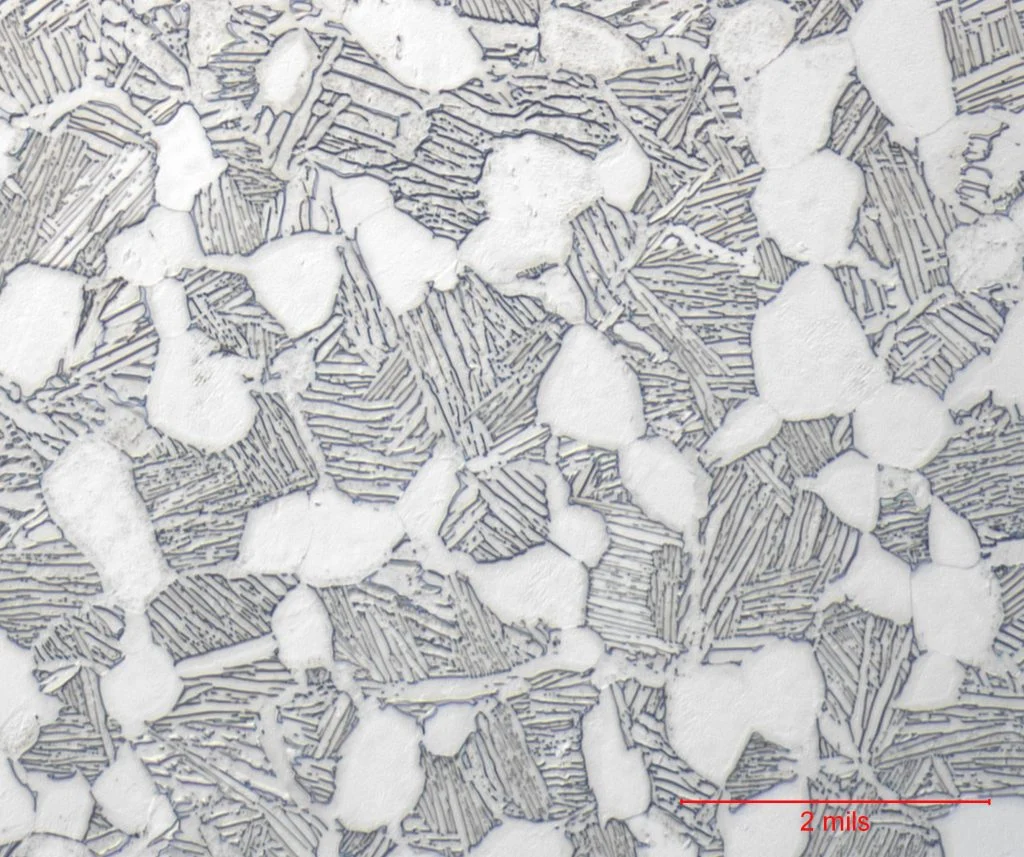
En la práctica, los grados 5 y 23 se comportan de manera muy similar durante el proceso de fabricación. Ambos son totalmente aptos para el tratamiento térmico en secciones de hasta aproximadamente 15 mm y pueden someterse a un tratamiento de solubilización y envejecimiento (STA) para aumentar su resistencia. Ambos responden bien al mecanizado convencional con las herramientas y los parámetros adecuados.
Las diferencias son sutiles, pero reales:
Soldadura. El menor contenido de nitrógeno del grado 23 mejora la soldabilidad. El nitrógeno aumenta el riesgo de porosidad y fragilización en la soldadura. Para estructuras soldadas críticas, se prefiere el alambre de aportación ELI (ASTM B863 Grado 23) incluso al soldar material base de Grado 5. En las especificaciones de soldadura aeroespacial, los consumibles ELI suelen ser obligatorios independientemente del grado del material base.
Respuesta al tratamiento térmico. El menor contenido de oxígeno del grado 23 implica un comportamiento ligeramente diferente en la transformación de fases durante el tratamiento térmico. La temperatura de transición alfa-beta se modifica, y la microestructura resultante tras el tratamiento de estabilización (STA) puede variar. Para la mayoría de las aplicaciones, los ciclos de tratamiento térmico estándar funcionan para ambos grados, pero si se busca optimizar propiedades específicas (por ejemplo, maximizar la vida a fatiga en una pieza fabricada mediante fabricación aditiva), merece la pena desarrollar un tratamiento térmico específico para cada grado.
Mecanizado. En la práctica, no hay diferencias significativas. Ambos grados requieren las mismas herramientas, velocidades y avances. La resistencia ligeramente superior del grado 5 puede aumentar mínimamente el desgaste de las herramientas, pero esto se encuentra dentro de la variación normal del proceso.
Errores habituales que cometen los ingenieros
Error n.º 1: Dar por sentado que “una mayor resistencia equivale a una mejor calidad”.” La ventaja del grado 5 en cuanto a resistencia se da principalmente en condiciones de tratamiento térmico. En estado recocido, ambos grados presentan resistencias a la tracción y al límite elástico comparables. Especificar el grado 5 ’porque es más resistente“ pasa por alto la pérdida de tenacidad que ello conlleva y puede dar lugar a una pieza que sufra un fallo más catastrófico.
Error n.º 2: Confundir ASTM B348 y ASTM F136. Una barra B348 de grado 5 y una F136 Las barras de grado 23 tienen un aspecto idéntico. No son intercambiables en aplicaciones de implantes. Comprueba siempre qué norma exige realmente la especificación de tu diseño.
Error n.º 3: Considerar el ELI como una etiqueta de marketing. Algunos proveedores comercializan productos de calidad “ELI” sin la certificación F136 completa. Si su aplicación requiere material de grado implantable, exija la certificación ASTM F136 con informes completos de ensayo del material, y no se conforme solo con la “composición ELI”.”
Error n.º 4: Ignorar el contenido de oxígeno en los polvos AM. Si se utiliza polvo de titanio para la impresión 3D, el contenido de oxígeno del polvo de partida influye directamente en las propiedades de la pieza acabada. El polvo de grado 5 con un contenido de oxígeno de 0,201 % no producirá propiedades de grado 23 en la pieza acabada, independientemente de los parámetros de impresión.
Error n.º 5: Pasar por alto los costes a nivel del sistema. El sobrecoste del material para el grado 23 suele ser reducido en comparación con el coste total de un implante acabado (mecanizado, tratamiento de superficies, esterilización, cumplimiento normativo, embalaje). Según mi experiencia, la diferencia en el coste del material suele representar entre el 2 % y el 5 % del coste total del dispositivo, una cifra muy inferior al coste normativo que supone obtener la aprobación de una sustitución de material.
Preguntas frecuentes: respuestas rápidas
¿Cuál es la diferencia entre el Ti-6Al-4V de grado 5 y el de grado 23?
El grado 23 (ELI) presenta límites máximos más bajos para el oxígeno (0,13% frente a 0,20%), nitrógeno (0,031 % en peso frente a 0,051 % en peso) e hidrógeno (0,01251 % en peso frente a 0,0151 % en peso). Esto da lugar a una tenacidad a la fractura significativamente mayor (75–90 frente a 55–75 MPa√m) y una ductilidad comparable, con una resistencia a la tracción similar en estado recocido.
¿El titanio de grado 23 es lo mismo que el titanio de grado implantológico?
Sí, la aleación de titanio de grado 23 (Ti-6Al-4V ELI) es la aleación de titanio de grado implantológico estándar cuando se especifica según la norma ASTM F136. Es la aleación de titanio de grado implantológico más utilizada a nivel mundial.
¿Qué significa «ELI» en el ámbito del titanio?
ELI son las siglas de «Extra Low Interstitials» (contenido intersticial extremadamente bajo), lo que hace referencia a un contenido reducido de oxígeno, nitrógeno, carbono e hidrógeno en comparación con el grado estándar de la aleación.
¿Es el titanio de grado 23 mejor que el de grado 5?
Ninguno de los dos es “mejor” en todos los casos. El grado 23 presenta una ductilidad, una resistencia a la fractura y una biocompatibilidad superiores. El grado 5 tiene una mayor resistencia a la tracción y un coste menor. La elección adecuada depende de la aplicación.
¿Se puede sustituir el grado 23 por el grado 5?
Sí, el grado 23 puede sustituir al grado 5 en la mayoría de las aplicaciones (cumple o supera los requisitos mecánicos del grado 5, salvo por una diferencia de resistencia mínima). Sin embargo, la sustitución del grado 5 por el grado 23 no es admisible en aplicaciones de implantes reguladas por la norma ASTM F136.
¿Por qué se utiliza el Ti-6Al-4V ELI en lugar del grado 5 estándar?
Para aplicaciones que requieran una tolerancia al daño superior (resistencia a la fractura, resistencia al avance de grietas por fatiga) o el cumplimiento de la norma ASTM F136 para implantes médicos.
¿Cuál es la diferencia de precio entre el grado 5 y el grado 23?
El grado 23 suele costar entre un 15 % y un 401 % más que el grado 5 en el caso de las barras comerciales, dependiendo de la forma del producto, el volumen del pedido y los requisitos de certificación. El material F136 certificado para uso médico conlleva un recargo adicional debido a los requisitos de ensayo y trazabilidad.
Resumen: La perspectiva de un ingeniero
Tras años de trabajar con especificaciones de aleaciones de titanio en aplicaciones aeroespaciales, médicas e industriales, la elección entre el grado 5 y el grado 23 es una decisión que veo que se toma de forma errónea con más frecuencia de la que debería —por lo general, porque los ingenieros se decantan por el grado 5 “porque es más resistente” sin comprender del todo la relación entre resistencia y tenacidad.
En resumen:
El 5.º curso es el pilar fundamental. Es la opción predeterminada adecuada para el 80% en aplicaciones estructurales de titanio. Es más resistente, más económico y es lo que tu proveedor tiene en stock. No lo cambies sin una razón técnica.
El grado 23 es el especialista. Existe por tres razones concretas: el cumplimiento de las normas para implantes médicos (ASTM F136), las aplicaciones estructurales en las que las fracturas pueden ser críticas y los entornos en los que la tolerancia al daño es más importante que la resistencia máxima. Cuando lo necesitas, lo necesitas de verdad, y no hay alternativa.
El contenido de oxígeno lo dice todo. Si no recuerdas nada más de este artículo, recuerda esto: la diferencia entre los grados 0.13% y 0.20% radica en el contenido de oxígeno. Todo lo demás se deriva de esa única especificación química.
Si está a punto de realizar un pedido de material y aún no tiene claro qué grado se adapta a su aplicación, le recomiendo encarecidamente que consulte con el equipo técnico de su proveedor de materiales y le exponga sus requisitos de diseño específicos. El coste de esa consulta es nulo; el coste de especificar un grado incorrecto se puede medir en piezas rechazadas, certificaciones fallidas o, en el peor de los casos, fallos en el campo.