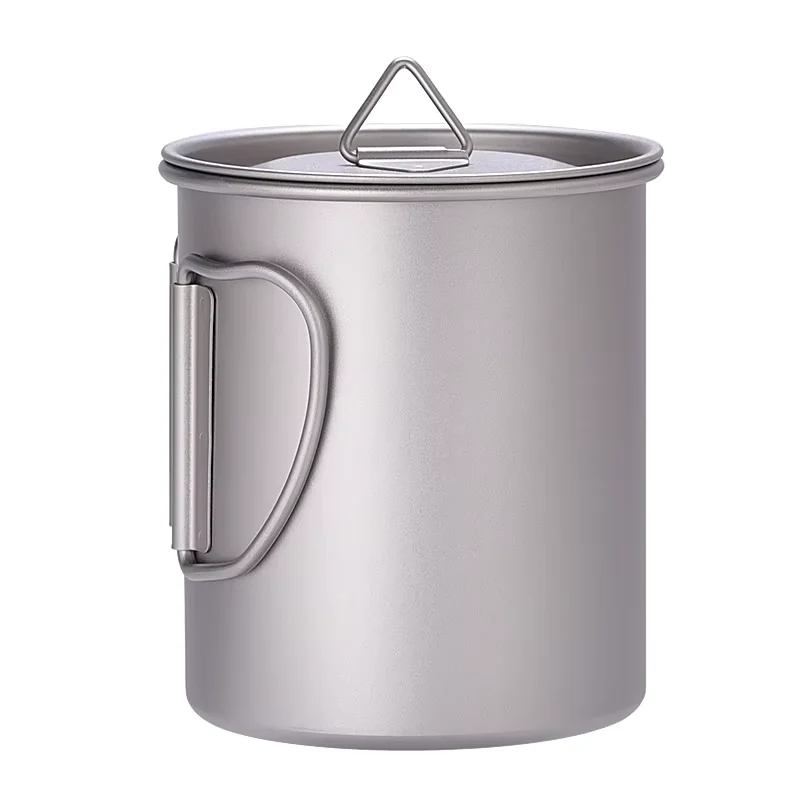

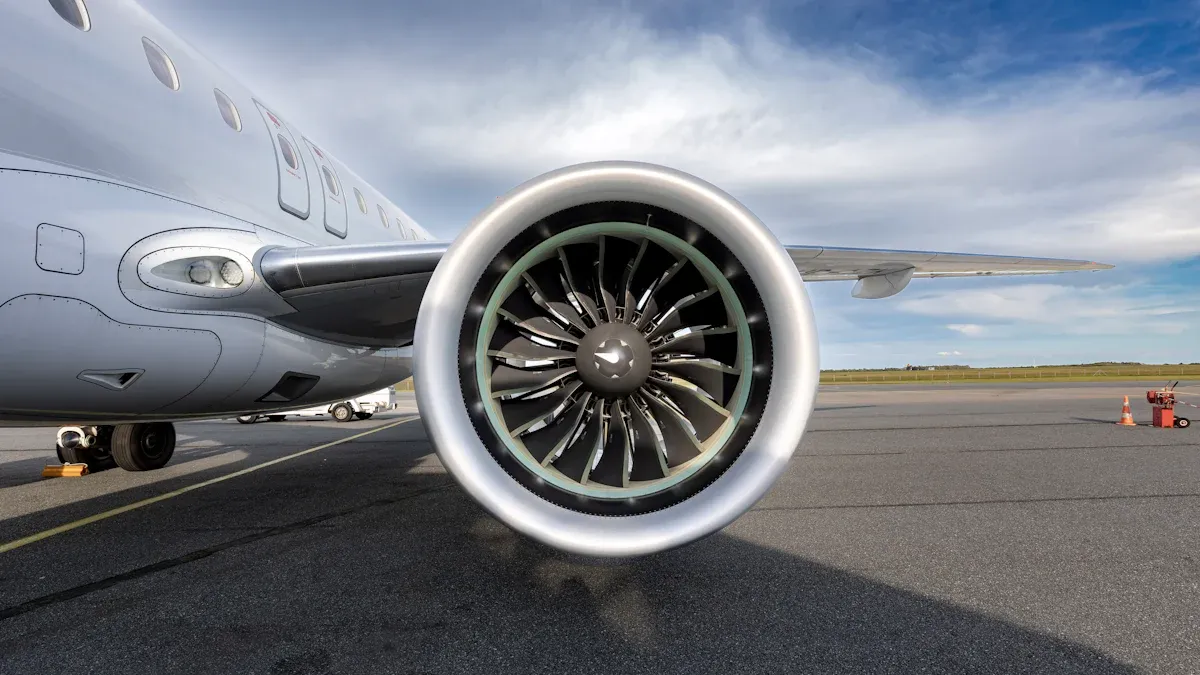
You see titanium for aerospace used in both commercial and military aircraft because of its outstanding properties. Titanium alloys deliver high strength and toughness, which help aircraft handle stress during flight. These alloys show impressive fatigue and corrosion resistance, so you get longer service life and safer operation. Many modern jets, like the Airbus A350 and Boeing 787, rely on titanium alloys for up to 20% of their structure. You benefit from a material that stays strong in harsh environments and supports advanced aerospace design.
Titanium for Aerospace: Weight Reduction
Low Density Advantage
You gain a major advantage when you use titanium for aerospace because of its low density. This property means you can design lighter aircraft without sacrificing strength. Titanium Grade 9, for example, offers both low density and high strength. You can build lighter planes that still meet strict safety standards.
Fuel Efficiency Impact
When you reduce the weight of an aircraft, you lower the amount of fuel it needs to fly. Lighter planes require less energy to stay in the air. This leads to lower fuel consumption and helps airlines save money. The Boeing 787 Dreamliner uses titanium alloys to create a lightweight structure. As a result, you see better fuel efficiency and reduced operating costs. The unique mix of high strength and low density in titanium alloys lets you design aircraft that travel farther on less fuel.
Payload Optimization
Weight savings also let you carry more cargo or passengers. If you use titanium for aerospace components, you can increase the payload without going over weight limits. For example, replacing traditional steel with titanium alloys in landing gear can save about 270 kg per aircraft. This extra capacity means you can transport more goods or people on each flight.
Airframe Applications
Titanium alloys play a key role in many parts of an aircraft. You find them in fuselages, engine mounts, and landing gears. These components benefit the most from weight reduction, which improves performance and efficiency.
| Component | Benefit |
|---|---|
| Fuselages | Reduced weight for better performance |
| Engine mounts | Enhanced structural integrity |
| Landing gears | Ability to endure heavy loads |
Commercial Jets
Many commercial jets rely on titanium alloys to cut down on weight. The Boeing 777, for example, uses Ti-10V-2Fe-3Al in its main landing gear. This change reduces the landing gear weight by 270 kg and helps solve stress corrosion problems. The Boeing 787 Dreamliner also uses titanium alloys in its structure to boost fuel efficiency and lower emissions.
Military Aircraft
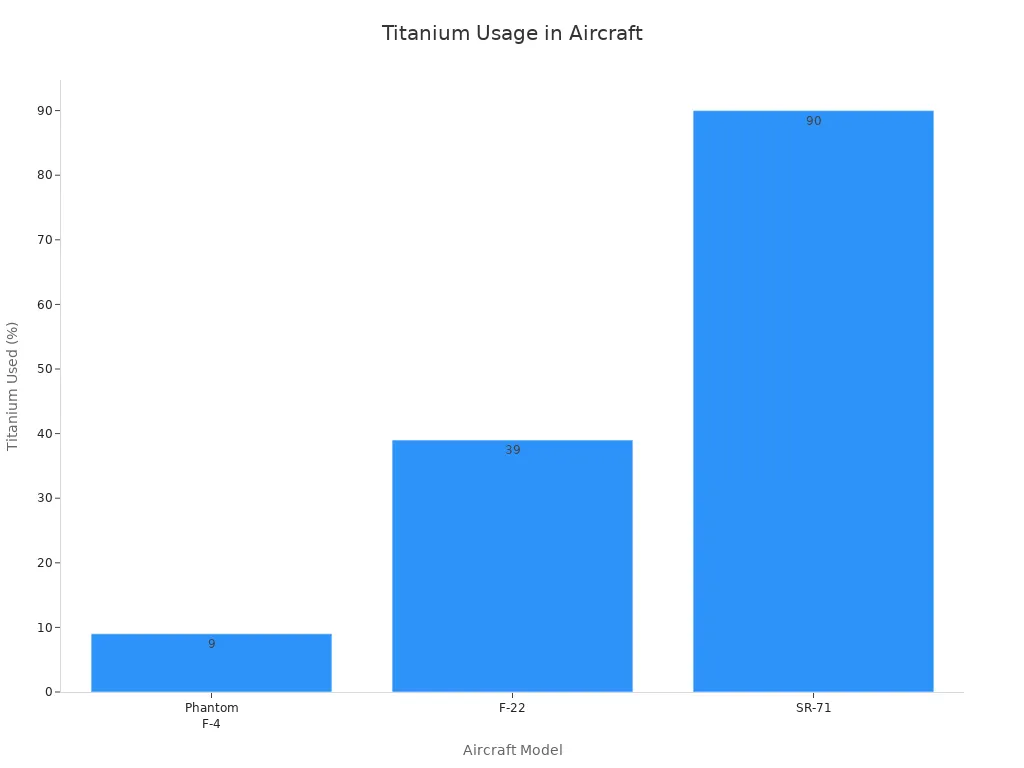
Military aircraft need to be both strong and light. Titanium alloys help you achieve this balance. The F-22 uses titanium for 39% of its structure, while the SR-71 Blackbird uses titanium for 90%. These high percentages show how important titanium alloys are for advanced military planes.
| Aircraft Model | Percentage of Titanium Used | Year Introduced |
|---|---|---|
| Douglas X-3 Stiletto | N/A | 1950s |
| Phantom F-4 | 9% | N/A |
| F-22 | 39% | N/A |
| SR-71 | 90% | N/A |
Tip: By choosing titanium alloys for key airframe parts, you improve both the structural integrity and the overall efficiency of your aircraft.
Strength-to-Weight Ratio
Structural Integrity
When you choose materials for aircraft, you want the best balance between strength and weight. Titanium alloys give you a high strength-to-weight ratio, which means you get strong parts without adding much mass. This property lets you design lighter planes that still meet strict safety standards. You can see the difference when you compare titanium to other metals used in aerospace.
| Metal | Strength-to-Weight Ratio | Operational Load Capacity |
|---|---|---|
| Titanium Alloys | 0.875 | High |
| Aluminum | Lower than titanium | Moderate |
| Steel | Higher strength but heavier | Variable |
You notice that titanium alloys offer a unique advantage. They combine high tensile strength (around 140 ksi or 960 MPa) with a low density (about 0.16 lb/in³). This combination means you can reduce aircraft weight while keeping the structure strong and reliable.
Safety in Flight
You want every flight to be safe. Titanium for aerospace helps you achieve this goal. The high strength-to-weight ratio means your aircraft can handle heavy loads and sudden stresses during takeoff, landing, and turbulence. You reduce the risk of structural failure because titanium alloys do not add unnecessary weight. This property also helps you meet strict safety regulations in the aviation industry.
Extreme Conditions
Aircraft face extreme conditions, such as high speeds, rapid altitude changes, and severe weather. Titanium alloys keep their strength even when temperatures change quickly or when forces become intense. You can trust these materials to perform well in both hot and cold environments. This reliability gives you peace of mind when designing for challenging missions.
Engine Components
Titanium alloys are not just for the airframe. You also find them in many engine parts. These components must be strong, light, and able to handle high temperatures.
Turbine Blades
You use titanium alloys in turbine blades because they need to spin at high speeds and withstand intense heat. By choosing titanium, you reduce the weight of each blade by 15% to 20% compared to steel. This weight reduction improves fuel efficiency and lowers emissions. Lighter blades also mean less stress on the engine, which can increase its lifespan.
Compressor Disks
Compressor disks made from titanium alloys help your engine run smoothly. These disks must resist fatigue and maintain their shape under pressure. Titanium alloys provide the right mix of strength and low weight. You get better engine performance and lower maintenance costs. Titanium valve springs and piston pins also show less wear and last longer, which means your engine stays reliable over time.
Tip: When you use titanium for aerospace engine components, you boost efficiency, reduce fuel burn, and extend the life of your aircraft.
Corrosion Resistance
Environmental Protection
Saltwater and Humidity
You face many challenges when you design aircraft for real-world environments. Saltwater and humidity can damage metals quickly. Titanium alloys stand out because they resist corrosion much better than other common aerospace materials.
- Titanium alloys show excellent corrosion resistance, even in harsh aerospace environments.
- Aluminum can suffer from pitting when exposed to saltwater, which limits its use in highly corrosive areas.
- Steel needs extra protection to prevent rust, which adds weight and cost.
When you choose titanium for aerospace, you protect your aircraft from the harmful effects of moisture and salt. This resistance helps you avoid costly repairs and keeps your aircraft safe during long flights over oceans or in humid climates.
Service Life Extension
You want your aircraft components to last as long as possible. Titanium alloys help you reach this goal. Their ability to resist corrosion means you do not need to replace parts as often. This property leads to longer service intervals and fewer inspections.
| Benefit | Description |
|---|---|
| Corrosion Resistance | Enhances durability and reduces maintenance costs, allowing components to withstand harsh conditions. |
| Extended Operational Lifespan | Results in longer intervals between inspections and replacements, particularly for stressed components like landing gear. |
You see these benefits in many parts of the aircraft. For example, compressor blades made from titanium alloys can last over 40% longer than those made from other metals. Landing gear also benefits from this durability, which means you spend less time and money on maintenance.
Landing Gear Use
Harsh Runway Exposure
Landing gear faces some of the toughest conditions in aviation. Each landing exposes these parts to water, chemicals, and debris on the runway. Titanium alloys give you a strong advantage here. They resist corrosion and maintain their strength, even after many cycles of harsh exposure.
| Material | Weight Comparison | Mechanical Strength | Stiffness | Deformation Resistance |
|---|---|---|---|---|
| Steel Alloy | Heavier (66% more) | Higher | Lower | Higher |
| Titanium Alloy | Lighter | Moderate | Higher | Lower |
You get lighter landing gear that still performs well under stress. This combination improves safety and efficiency for every flight.
Maintenance Reduction
You want to reduce maintenance costs and keep your aircraft in service longer. Titanium alloys make this possible. Their corrosion resistance means you can extend maintenance intervals and lower the frequency of repairs.
| Evidence Type | Details |
|---|---|
| Material Advantage | Titanium alloys provide superior corrosion resistance and strength. |
| Maintenance Interval Extension | Extended maintenance intervals lead to reduced frequency of maintenance actions. |
| Cost Savings | Overall cost savings for aircraft operators due to lower maintenance costs. |
| Adoption Rate | Adoption of titanium in landing gear has grown by approximately 20% over recent years. |
Tip: By using titanium alloys in landing gear, you not only improve performance but also save money and time on maintenance. This makes titanium for aerospace a smart choice for modern aircraft.
High-Temperature Performance
Stability at Heat
Jet Engine Operation
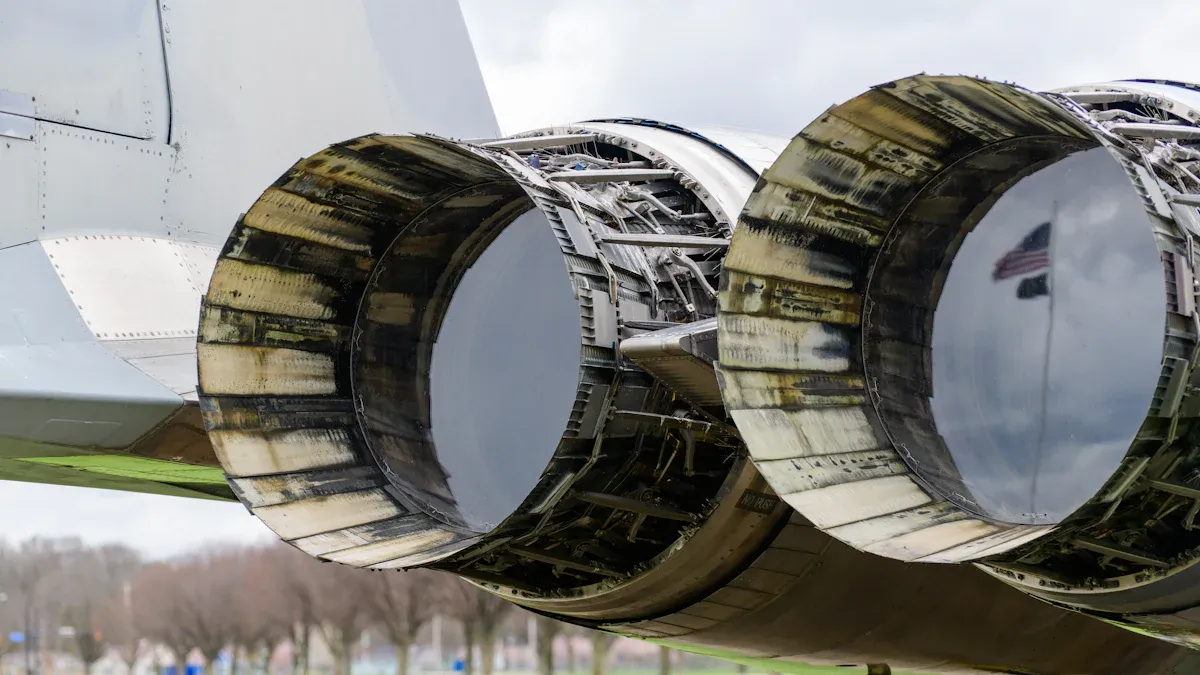
You need materials that can handle extreme heat when you design jet engines. Titanium alloys keep their strength even at temperatures as high as 600°C (1,112°F). This property is essential for parts like compressor blades and fan disks. These components face intense heat and pressure during every flight. If you use titanium alloys, you make sure these parts do not lose their shape or strength. For example, the IMI834 alloy works in the Trent700 engine of the Boeing 777. This alloy shows how high-temperature titanium alloys help modern jet engines run safely and efficiently. Unlike aluminum, which weakens above 150°C (302°F), titanium alloys stay strong. You can trust them to keep your engine reliable and safe.
Spacecraft Shields
Spacecraft face even more extreme temperatures, especially during re-entry or when exposed to the sun in space. You want shields and panels that do not fail under these conditions. Titanium alloys provide the thermal stability you need. They protect sensitive equipment from heat damage. You see these alloys used in spacecraft shields because they do not warp or crack when temperatures rise quickly. This stability helps keep missions safe and successful.
Fasteners and Connectors
Thermal Expansion
You must consider how materials expand and contract with temperature changes. Fasteners and connectors made from titanium alloys handle these shifts well. They do not loosen or break when exposed to heat. Grade 5 titanium alloy (Ti-6Al-4V) is the most common choice for aerospace fasteners. It offers high strength, corrosion resistance, and excellent heat tolerance. You can use these fasteners in both engines and airframes without worrying about failure.
Reliability
You want every part of your aircraft or spacecraft to stay secure, even in tough conditions. Titanium alloy fasteners and connectors give you this reliability. Their tensile strength often goes beyond 900 MPa, which means they hold parts together tightly. You also get weight savings, which improves overall performance. Here is a table showing some common titanium alloys used for fasteners:
| Alloy | Description | Applications |
|---|---|---|
| TC4 (Ti‑6Al‑4V) | Widely used, ideal for bolts and rivets | Aerospace fasteners |
| TB3 (Ti‑10Mo‑8V‑1Fe‑3.5Al) | Excellent formability, high strength up to 1100 MPa | High-strength fasteners |
| TC6 (Ti‑6Al‑2Sn‑4Zr‑2Mo) | High strength, resists corrosion at high temperatures | Engines, high-strength structures |
You see titanium for aerospace used in fasteners because these alloys keep your aircraft and spacecraft safe, even when temperatures soar.
Tip: Choose titanium alloy fasteners and connectors to ensure your aerospace designs stay strong and reliable in any environment.
Fatigue Resistance in Titanium for Aerospace
Endurance Over Cycles
You want your aircraft to withstand repeated stress during every flight. Titanium alloys help you achieve this goal. These materials show outstanding fatigue resistance, which means they can handle millions of cycles without cracking or failing. When you compare titanium alloys to aluminum and steel, you see clear advantages:
- Aluminum alloys like AA2024-T3 are lightweight, but titanium alloys such as Ti-6Al-4V offer much higher strength and fatigue resistance.
- Titanium alloys, especially TC4, have replaced aluminum and steel in many aerospace parts because they last longer under repeated stress.
- The fatigue life requirement for titanium alloys reaches up to 10^9 cycles. In contrast, iron-based and nickel-based superalloys are rated for only 10^7 cycles, and other materials for about 3 × 10^7 cycles.
You benefit from this endurance in critical sections of the aircraft, including engine components and wing structures. Titanium alloys maintain their mechanical properties even at high temperatures, which is essential for aerospace applications.
Structural Failure Prevention
You reduce the risk of structural failure when you use titanium alloys. These materials resist crack growth, even when exposed to harsh conditions. You can trust titanium for aerospace to keep your aircraft safe during long flights and frequent takeoffs and landings. The ability to withstand repeated stress helps prevent sudden failures that could endanger passengers and crew.
Tip: Choose titanium alloys for parts that face constant vibration and pressure. You improve safety and reliability with every flight.
Lifespan Extension
You extend the lifespan of your aircraft by using titanium alloys. Components made from these materials require fewer replacements and less frequent inspections. You save money and keep your planes in service longer. For example, compressor blades and landing gear made from titanium alloys last up to 40% longer than those made from other metals.
| Material | Typical Fatigue Life (Cycles) | Maintenance Frequency | Service Life Extension |
|---|---|---|---|
| Titanium Alloys | 10^9 | Low | High |
| Aluminum Alloys | 3 × 10^7 | Moderate | Moderate |
| Steel Alloys | 10^7 | High | Low |
Critical Fasteners
You rely on fasteners like rivets and bolts to hold your aircraft together. Titanium alloys play a vital role in these components.
Rivets and Bolts
You choose titanium alloys for aviation fasteners because they offer high strength and excellent corrosion resistance. Common alloys include Ti-6Al-4V and Ti-3Al-4.5V-5Mo, which provide durability and reliability. Beta alloys such as Ti-10Mo-8V-1Fe-3.5Al also perform well in demanding environments. These fasteners resist fatigue and maintain their grip, even after thousands of cycles.
- Titanium fasteners prevent loosening and cracking under vibration.
- You see fewer failures in critical joints and connections.
- The properties of titanium alloys ensure that rivets and bolts last longer and require less maintenance.
Safety Assurance
You improve safety by using titanium alloy fasteners. These components help prevent structural failure, especially in high-stress areas like wings and engine mounts. You can trust titanium for aerospace to keep your aircraft secure, even during extreme conditions. The combination of fatigue resistance and corrosion protection means you get reliable performance throughout the aircraft’s service life.
Note: By selecting titanium alloys for fasteners, you enhance both safety and durability. Your aircraft stays strong and dependable, flight after flight.
Design Versatility
Engineering Flexibility
You want materials that let you adapt your designs for different aerospace missions. Titanium alloys give you this flexibility. You can bend and shape titanium without losing strength. This makes it perfect for building complex structures that must fit into tight spaces or unusual shapes.
| Advantage | Description |
|---|---|
| Flexible Bending | You can bend and shape titanium easily, which helps you create complex aerospace structures. |
| High Strength | Titanium’s strength-to-weight ratio is higher than steel, so you can carry heavy loads with less mass. |
| Corrosion-Resistant | You get natural resistance to corrosion, which is important for pipelines and exposed components. |
| Lightweight | Titanium weighs about 60% as much as steel, making your designs lighter and more efficient. |
| Easy to Weld | You can weld titanium easily, which helps you build strong, seamless parts for high-temperature use. |
Mission Customization
You can customize your aircraft or spacecraft for each mission when you use titanium alloys. The high strength-to-weight ratio means you can reduce structural weight without losing durability. This lets you increase payload or fuel capacity. You can design lighter, more efficient vehicles that meet the demands of commercial flights, military operations, or space exploration.
- Titanium’s density is about 60% that of steel, but its tensile strength matches or exceeds many steels.
- You can build lighter structures that still handle heavy loads.
- Your aircraft can carry more cargo or travel farther on the same amount of fuel.
Composite Integration
You often need to combine metals with advanced composites in modern aerospace design. Titanium alloys work well with composite materials. Titanium matrix composites (TMCs) use titanium as the base, which gives you excellent corrosion resistance and high strength at high temperatures. When you add fibers to TMCs, you boost their mechanical properties. This makes them ideal for aircraft structures that must handle high speeds and temperatures. Discontinuously reinforced TMCs give you even better stiffness, strength, and thermal stability than regular titanium alloys. You can use these materials to build more efficient and durable aircraft. This integration helps you meet the demands of next-generation aerospace engineering.
Spacecraft Structures
You see titanium alloys used in many spacecraft and advanced aircraft. These materials help you achieve mission-critical performance.
Satellite Frames
You need satellite frames that are both light and strong. Titanium alloys give you high strength-to-weight ratios, so you get durable structures without extra mass. These alloys resist fatigue, which means your satellites can survive the stresses of launch and orbit. Corrosion resistance protects your equipment from the harsh chemicals found in space.
- Titanium alloys make satellite frames lighter and stronger.
- You get better durability and longer mission life.
- New manufacturing methods, like additive manufacturing, let you create complex shapes that improve performance.
Deep Space Probes
You want deep space probes to last through long missions and extreme conditions. Titanium alloys help you reach this goal. They provide the strength and fatigue resistance needed for years of travel. NASA’s Mars Rover uses titanium for key parts that must survive the Martian environment. You can trust titanium to protect your instruments from temperature swings and chemical exposure.
Tip: Choose titanium alloys for your spacecraft structures to ensure durability, reliability, and mission success—even in the toughest environments.
Cost and Sustainability
Economic Benefits
Maintenance Savings
You want to keep your aircraft in service and reduce downtime. Titanium alloys help you save money on maintenance. These materials resist corrosion and fatigue, so you do not need to replace parts as often. You spend less on repairs and inspections. Over time, you see real savings because titanium components last longer and require fewer interventions.
- You lower energy and resource input when you use recycled titanium instead of producing new material.
- You boost profitability by reducing material costs and maintenance expenses.
- You gain a competitive edge by integrating recycled titanium into your supply chain.
- You generate extra revenue by selling titanium scrap.
Lifecycle Value
You should look at the total cost of ownership, not just the price of materials. Titanium alloys may cost more at first, but they offer better value over the life of your aircraft. The table below shows how titanium compares to aluminum and steel:
| Material | Initial Cost | Longevity | Maintenance Requirements | Performance Characteristics |
|---|---|---|---|---|
| Titanium Alloys | Higher | Longer | Lower | Superior in demanding environments |
| Aluminum/Steel | Lower | Shorter | Higher | Adequate for general use |
You see that titanium alloys last longer and need less maintenance. This means you spend less money over time, even if you pay more at the start. You also get better performance in tough conditions.
Environmental Impact
Recyclability
You help protect the environment when you choose titanium alloys. About 95% of titanium used in aerospace can be recycled. This high rate means most titanium parts are collected and reused. You reduce the need for new mining and lower the impact on nature. Recycling titanium also uses less energy, which cuts down on emissions. You support a circular economy by making sure valuable materials stay in use. Recycling titanium alloys not only saves resources but also keeps energy use low. You help lower emissions and make aerospace manufacturing more sustainable.
Greener Aviation
You play a role in making aviation greener when you use titanium alloys. Titanium is light and strong, so your aircraft uses less fuel. This leads to lower carbon emissions and better fuel efficiency. For example, titanium seamless pipes can cut CO₂ emissions by up to 45%.
- Titanium’s light weight and high strength help you build lighter planes.
- Lighter planes use less fuel, which means lower costs and fewer emissions.
- Recycling titanium scrap reduces the need for new materials and saves energy.
You support global efforts to reduce greenhouse gases by choosing titanium alloys. You make aviation cleaner and more efficient for the future.
You see titanium alloys deliver unmatched strength, low weight, and high temperature tolerance for aerospace engineering. Experts highlight that titanium parts are about 40% lighter than alternatives and maintain integrity under extreme conditions.
| Property | Benefit |
|---|---|
| Strength | Handles high stress |
| Weight | Improves fuel efficiency |
| Temperature | Resists heat and deformation |
The future looks bright. New alloy compositions and additive manufacturing will help you build safer, more efficient aircraft and spacecraft. Titanium’s role will keep growing as you seek better performance and sustainability.
FAQ
What makes titanium alloys better than aluminum in aerospace?
You get higher strength and better heat resistance with titanium alloys. Aluminum weighs less, but titanium lasts longer and handles stress better. You also see less corrosion with titanium, which means fewer repairs.
Can you weld titanium alloys easily?
You can weld titanium alloys, but you need special equipment. You must keep the metal clean and use a protective gas. This prevents contamination and keeps the weld strong.
Why do jet engines use titanium alloys?
You see titanium alloys in jet engines because they stay strong at high temperatures. They also resist corrosion and fatigue. This helps your engine run safely and last longer.
Are titanium alloys expensive for aircraft?
You pay more for titanium alloys at first. Over time, you save money on maintenance and repairs. The long service life and lower fuel costs make titanium a smart investment.
How does titanium help reduce aircraft weight?
You use titanium alloys to replace heavier metals like steel. This cuts down the total weight of your aircraft. Lighter planes use less fuel and carry more cargo.
Is titanium safe for use in space?
You can trust titanium alloys in space. They handle extreme temperatures and resist radiation damage. Spacecraft frames and shields often use titanium for safety and durability.
Can you recycle titanium alloys from old aircraft?
You can recycle most titanium alloys. Recycling saves energy and reduces waste. Many aerospace companies collect and reuse titanium parts to support greener aviation.