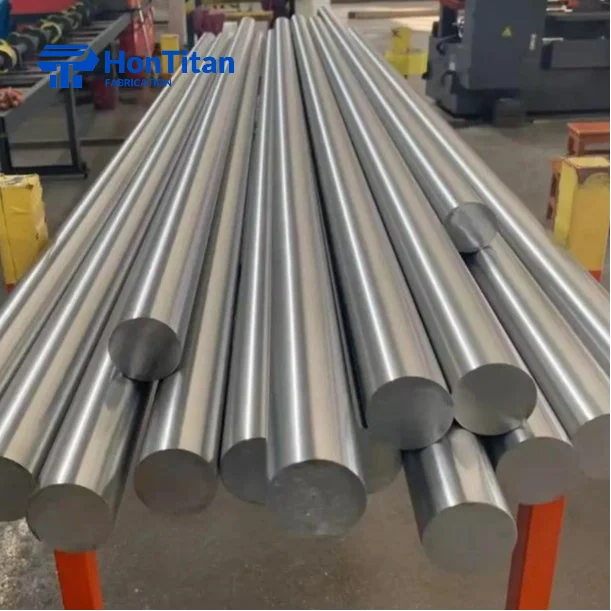
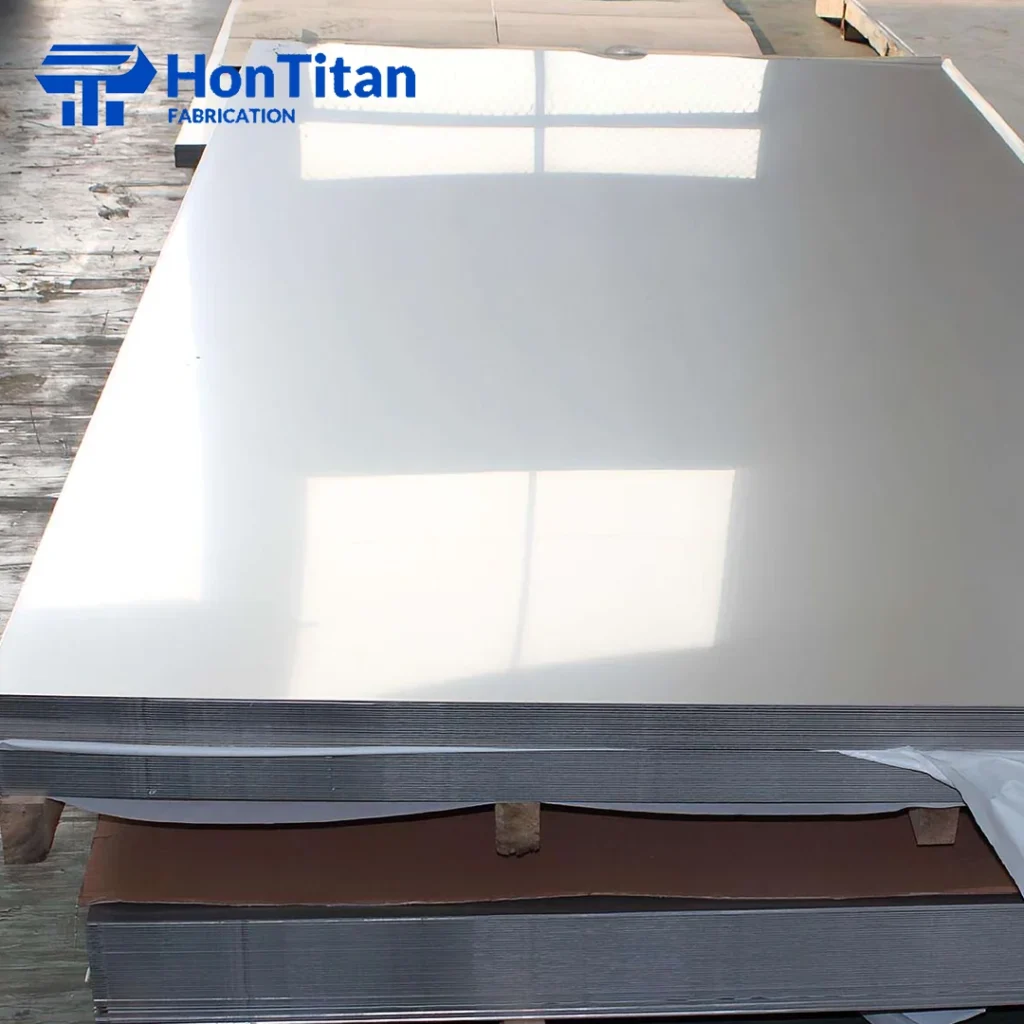
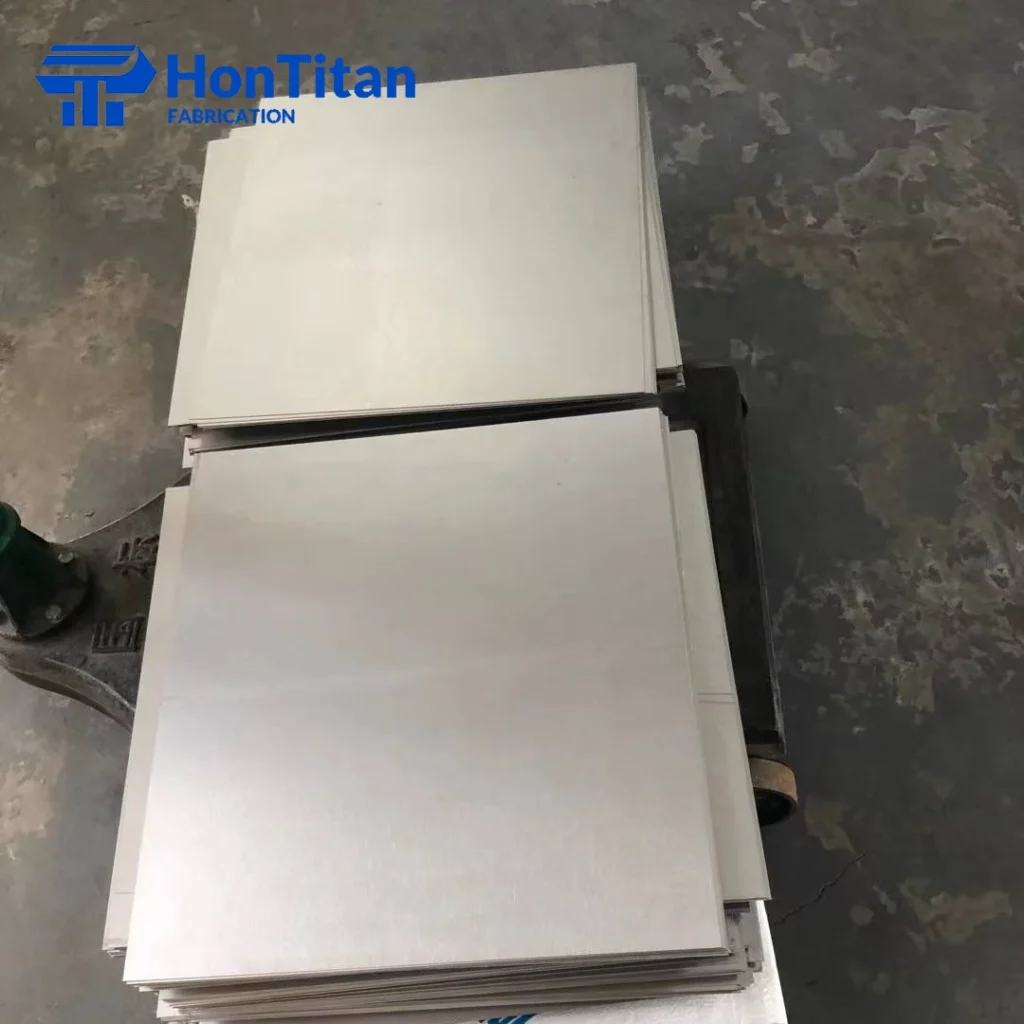
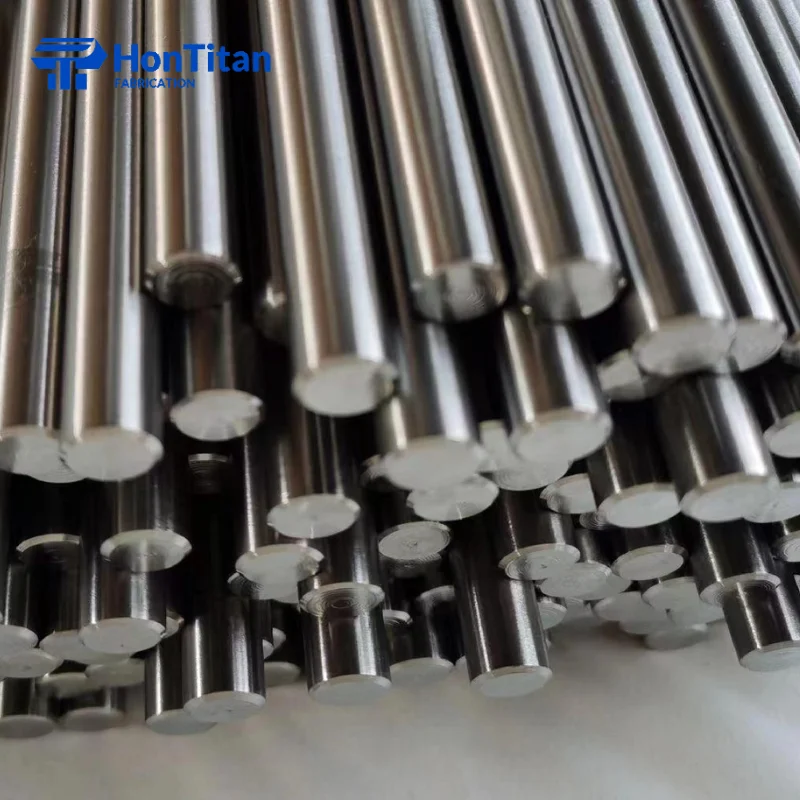
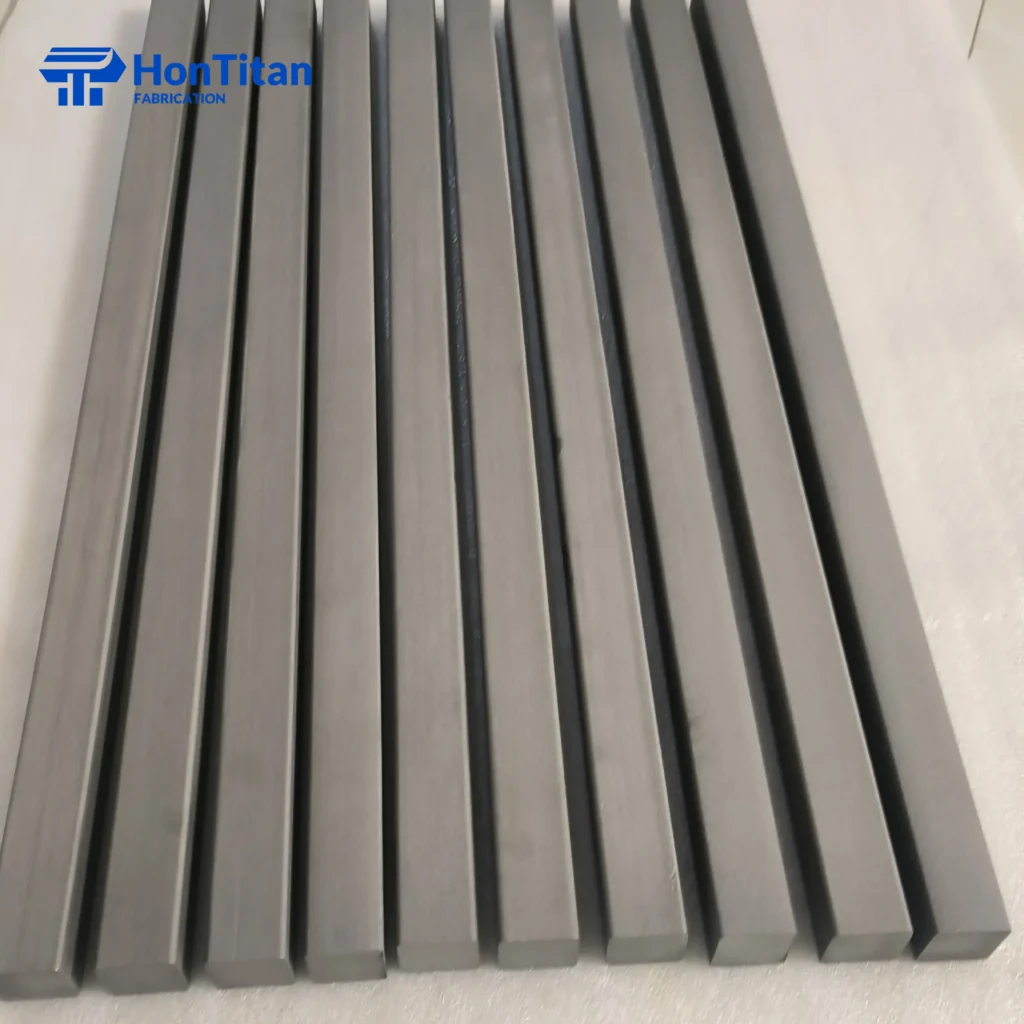
Grade 7 titanium round bar is a commercially pure (CP) titanium alloy containing 0.12–0.25 wt% palladium, supplied to ASTM B348 and ASME SB-348 standards. The palladium addition delivers a decisive corrosion advantage in reducing acid and hot chloride environments while retaining the full mechanical properties of Grade 2. Typical applications include agitator shafts, pump shafts, valve stems, fastener blanks, and reactor internals in chemical processing, desalination, pharmaceutical, and offshore service.
Quick Specifications
| Parameter |
Value |
| Material |
Grade 7 CP Titanium (Ti-0.2Pd) |
| Standard |
ASTM B348 / ASME SB-348 |
| UNS No. |
R52400 |
| DIN / EN Equiv. |
3.7235 |
| Pd Content |
0.12–0.25 wt% |
| Tensile Strength (min) |
345 MPa (50 ksi) |
| Yield Strength (min) |
275 MPa (40 ksi) |
| Diameter Range |
6–300 mm |
| Length |
Up to 6,000 mm (cut-to-length available) |
| Surface Condition |
Hot-rolled/pickled, cold-drawn, centerless-ground |
| Mill Cert |
EN 10204 3.1 (standard); 3.2 on request |
Why Grade 7? The Palladium Advantage in Reducing Acid Service
Grade 7 is mechanically identical to Grade 2 but performs in corrosive environments where Grade 2 fails. That difference — the entire reason Grade 7 exists — comes from a single controlled addition: 0.12–0.25 wt% palladium.
How Palladium Transforms Titanium’s Corrosion Behavior
Unalloyed CP titanium (Grade 1, Grade 2) relies on a stable TiO₂ passive film for corrosion resistance. In oxidizing environments and neutral chloride media, that film is self-healing and highly protective. In reducing acid environments — dilute hydrochloric acid, dilute sulfuric acid, hot phosphoric acid — the passive film becomes thermodynamically unstable, and Grade 2 corrodes actively.
Palladium corrects this by acting as a cathodic depolarizer. At the electrochemical level, Pd reduces the hydrogen overpotential on the titanium surface, shifting the open-circuit corrosion potential to a more noble (positive) value. This shift moves the alloy’s operating potential above the active/passive transition — keeping the TiO₂ film intact under conditions that would strip it from unalloyed titanium.
The practical result: Grade 7 remains passive in dilute HCl, dilute H₂SO₄, and wet HCl gas at temperatures and concentrations that cause rapid active corrosion in Grade 2 and most austenitic stainless steels.
Crevice Corrosion Resistance
Crevice corrosion is a particular concern in heat exchanger tube sheets, flanged joints, and fastener assemblies where geometry restricts electrolyte access. Published data from ATI and TIMET show that the palladium addition raises the critical crevice corrosion temperature significantly:
| Grade |
Crevice Corrosion Threshold (pH > 1 chloride media) |
| Grade 1 / Grade 2 (CP Ti, unalloyed) |
~80°C |
| Grade 7 / Grade 11 / Grade 17 (Pd-alloyed) |
~250°C |
This 170°C margin is the primary engineering reason Grade 7 is specified for hot brine circuits, chlorine-containing scrubber liquors, and high-temperature acid process streams.
Grade 7 vs Grade 11 vs Grade 12 vs Grade 17 — How to Choose
All four grades offer enhanced corrosion resistance over CP titanium. The selection depends on base alloy strength, Pd content, and cost priority:
| Grade |
UNS |
Base |
Pd Content |
UTS (min) |
Best For |
| Grade 7 |
R52400 |
Grade 2 (higher O) |
0.12–0.25% |
345 MPa |
Reducing acids, crevice corrosion, general chemical service |
| Grade 11 |
R52250 |
Grade 1 (lower O) |
0.12–0.25% |
241 MPa |
Cold-forming applications requiring maximum ductility |
| Grade 12 |
R53400 |
CP Ti + Mo + Ni |
0 (no Pd) |
483 MPa |
Mildly aggressive media + higher strength at lower cost |
| Grade 17 |
R52252 |
Grade 1 base |
0.04–0.08% |
241 MPa |
Cost-optimized alternative where lower Pd content is sufficient |
Decision guide:
- Reducing acid service (dilute HCl, dilute H₂SO₄, hot H₃PO₄) → Grade 7
- Maximum cold-formability in corrosive service → Grade 11
- Higher strength requirement + mildly corrosive media → Grade 12
- Cost pressure where reduced Pd content is technically acceptable → Grade 17
Chemical Composition — ASTM B348 Grade 7 Requirements
The chemical composition of Grade 7 titanium round bar is governed by ASTM B348-19 (Standard Specification for Titanium and Titanium Alloy Bars and Billets). All elements listed below are maximum limits except palladium, which is a controlled range.
| Element |
Requirement (wt%) |
| Titanium |
Balance |
| Palladium (Pd) |
0.12–0.25 |
| Iron (Fe) |
≤ 0.30 |
| Oxygen (O) |
≤ 0.25 |
| Carbon © |
≤ 0.08 |
| Nitrogen (N) |
≤ 0.03 |
| Hydrogen (H) |
≤ 0.015 |
Why Oxygen and Iron Limits Matter
Oxygen and iron are the primary interstitial strengtheners in CP titanium. Grade 7 uses the Grade 2 base composition (O ≤ 0.25%, Fe ≤ 0.30%), which provides a balance between strength and ductility. The Grade 1 base (used in Grade 11) permits lower oxygen (≤ 0.18%), yielding higher ductility and cold-formability at the cost of tensile strength.
For corrosion-critical applications, iron content deserves attention: elevated Fe can form iron-rich second phases at grain boundaries, creating galvanic microcells that locally undermine the protective TiO₂ film. Specifying to ASTM B348 with a traceable MTR ensures iron remains within the controlled limit.
Mechanical Properties — ASTM B348 Grade 7
Grade 7 meets the same minimum mechanical property requirements as Grade 2, making it a direct drop-in substitution wherever Grade 2 is already approved but additional corrosion resistance is required.
| Property |
Requirement |
Test Standard |
| Tensile Strength (UTS) |
≥ 345 MPa (50 ksi) |
ASTM E8 |
| Yield Strength (0.2% offset) |
≥ 275 MPa (40 ksi) |
ASTM E8 |
| Elongation in 2 in. (50 mm) |
≥ 20% |
ASTM E8 |
| Reduction of Area |
≥ 30% |
ASTM E8 |
| Hardness (typical) |
~150 HB |
ASTM E18 |
| Elastic Modulus (typical) |
~103–110 GPa (14.9–16.0 × 10⁶ psi) |
— |
| Density (typical) |
4.51 g/cm³ |
— |
Grade 7 vs Grade 5 (Ti-6Al-4V) — Corrosion Priority vs Strength Priority
Grade 5 (Ti-6Al-4V, UNS R56400) offers approximately twice the tensile strength of Grade 7 (UTS ≥ 895 MPa per ASTM B348 vs ≥ 345 MPa), making it the default choice for structural and aerospace applications. However, Grade 5 does not match Grade 7’s corrosion resistance in reducing acid service and is significantly more difficult to weld without post-weld heat treatment. For chemical plant shafts, valve stems, and fasteners where the service environment — not structural load — is the governing design criterion, Grade 7 is the correct specification.
Corrosion Performance in Aggressive Chemical Environments
Grade 7’s primary value proposition is its quantifiably superior corrosion resistance compared to unalloyed CP titanium and common stainless steel grades. The data below reflects published corrosion performance compiled from ATI Metals, TIMET technical notes, and ASM Handbook Volume 13B (Corrosion: Materials).
Resistance in Dilute Hydrochloric Acid (HCl)
Unalloyed Grade 2 titanium corrodes at measurable rates above approximately 5% HCl at room temperature, and at very low concentrations (1–3%) once temperature exceeds ~60°C. Grade 7 extends the safe operating envelope substantially:
| HCl Concentration |
Grade 2 Max Service Temp |
Grade 7 Max Service Temp |
| 1% |
~60°C |
~190°C |
| 3% |
~40°C |
~130°C |
| 5% |
~25°C (marginal) |
~90°C |
| 10% |
Not recommended |
~50°C |
Values represent approximate isocorrosion boundaries at < 0.13 mm/yr (5 mpy). Actual performance depends on aeration, velocity, and presence of oxidizing species. Source: ATI Ti Corrosion Engineering Guide; ASM Handbook Vol. 13B.
Resistance in Sulfuric Acid (H₂SO₄)
Grade 7 provides meaningful protection in dilute sulfuric acid where Grade 2 fails:
| H₂SO₄ Concentration |
Grade 2 |
Grade 7 |
| 1–5% |
Marginal above 50°C |
Resistant to ~150–190°C |
| 10% |
Not recommended |
Resistant to ~70°C (corrosion rate increases sharply above 100°C) |
| > 20% |
Not recommended |
Not recommended at elevated temperature |
Note: Grade 7 corrosion rates in 1–5% H₂SO₄ remain below 0.13 mm/yr (5 mpy) up to 190°C under deaerated conditions (source: TIMET corrosion rate data). Performance degrades rapidly in concentrated H₂SO₄ above 20%. For concentrated sulfuric acid service, zirconium or Hastelloy B-3 should be evaluated.
Crevice Corrosion in Hot Chloride Media
The critical crevice corrosion temperature (CCT) for titanium in NaCl and MgCl₂ brines is a key design parameter for desalination and marine heat exchangers:
- Grade 2: CCT ≈ 80°C in saturated MgCl₂ at pH > 1
- Grade 7: CCT ≈ 250°C in saturated MgCl₂ at pH > 1 (per ATI published data)
This 170°C margin means Grade 7 can be used without crevice corrosion risk in virtually all commercial desalination brine temperatures (typically 40–120°C).
Grade 7 vs Hastelloy C-276 — Lifecycle Cost Perspective
In reducing acid service, Hastelloy C-276 (UNS N10276) is the traditional high-performance alternative. Grade 7 competes favorably on lifecycle cost for several reasons:
| Factor |
Grade 7 Ti |
Hastelloy C-276 |
| Density |
4.51 g/cm³ |
8.89 g/cm³ |
| Weight saving (same volume) |
— |
Grade 7 is ~49% lighter |
| Weldability |
Excellent (no PWHT) |
Good (PWHT sometimes required) |
| Corrosion allowance in dilute HCl |
Nil to minimal |
Minimal |
| Relative material cost (bar stock) |
Lower to comparable |
Higher |
For agitator shafts and pump shafts where weight directly affects bearing loads and seal wear, the density advantage of Grade 7 translates to measurable equipment lifecycle savings independent of material price.
Available Specifications — Dimensions and Tolerances
Grade 7 titanium round bar is produced across a wide size range to accommodate machined components, structural members, and fastener blanks.
Diameter and Length Range
| Form |
Diameter Range |
Standard Length |
Tolerance Class |
| Hot-rolled / pickled |
20–300 mm |
1,000–6,000 mm |
ASTM B348 commercial |
| Cold-drawn |
6–50 mm |
1,000–4,000 mm |
h11 / h9 |
| Centerless ground |
6–100 mm |
1,000–3,000 mm |
h9 / h8 |
| Forged bar / billet |
100–400 mm |
Per order |
As-forged or machined |
Cut-to-length service is available for all forms. Minimum cut length is 100 mm; no surcharge on standard stock sizes.
Surface Conditions
- Hot-rolled / scale-removed (pickled): Standard finish for larger diameters used in rough-machined components. Surface oxide fully removed by acid pickling per ASTM B600.
- Cold-drawn: Improved dimensional accuracy and surface finish vs hot-rolled. Suitable for precision-machined parts where further stock removal is limited.
- Centerless-ground: Tightest dimensional control. Standard for pump shafts, valve stems, and other close-tolerance rotating components. Typical tolerance h9 (e.g., 25 mm diameter: +0/−0.052 mm).
Related Product Forms — ASTM Grade 7
| Form |
Standard |
Typical Use |
| Sheet / Strip / Plate |
ASTM B265 Grade 7 |
Vessel linings, heat exchanger components |
| Seamless / Welded Tube |
ASTM B338 Grade 7 |
Heat exchanger tubes, condensers |
| Seamless / Welded Pipe |
ASTM B861 / B862 Grade 7 |
Process piping |
| Forgings |
ASTM B381 Grade F-7 |
Flanges, valve bodies, pump casings |
| Wire |
ASTM B863 Grade 7 |
Welding filler (ERTi-7), fastener cold heading |
Standards and Certifications
Grade 7 titanium round bar is produced and tested to the following standards. All applicable standards are listed with their current designation.
| Standard |
Scope |
| ASTM B348-19 |
Primary product standard — titanium and titanium alloy bar and billet (current revision: B348/B348M-21) |
| ASME SB-348 |
ASME Boiler & Pressure Vessel Code adoption of ASTM B348 |
| NACE MR0175 / ISO 15156 |
Sour service (H₂S-containing) — Grade 7 (UNS R52400) is listed as acceptable |
| PED 2014/68/EU |
Pressure Equipment Directive — applicable for EU pressure vessel components |
| EN 10204 Type 3.1 |
Standard mill test report — issued by manufacturer’s authorised inspector |
| EN 10204 Type 3.2 |
Dual-witnessed MTR — validated by purchaser’s inspector or third party |
EN 10204 3.1 vs 3.2 — What Each Means for Project Requirements
Type 3.1 is the industry standard for chemical plant and offshore procurement. The mill’s own authorised inspector witnesses and signs the test report. The document is traceable to the specific production heat number and covers all ASTM B348 required tests.
Type 3.2 is required by some EPC contractors, nuclear projects, and defence specifications. An independent inspector (Lloyd’s, Bureau Veritas, TÜV, or the end-user’s own inspector) co-witnesses the testing and co-signs the report. Lead time is longer and carries an additional cost. Specify 3.2 at the RFQ stage — it cannot be added retrospectively to a 3.1 certificate.
Fabrication, Machining, and Welding
Machining Grade 7 Round Bar
Grade 7 machines similarly to Grade 2 CP titanium. The key challenges are low thermal conductivity (causing heat concentration at the cutting edge), tendency to work-harden, and springback. Recommended practice:
- Tooling: Carbide (C-2 grade or coated) preferred; sharp edges essential — never machine with worn tooling
- Cutting speed: 30–60 m/min for turning (lower than stainless steel — heat dissipation is critical)
- Feed rate: Moderate to high — light passes promote work hardening; maintain continuous chip contact
- Coolant: Flood cooling mandatory; water-soluble coolants preferred; no dry machining
- Avoid: Built-up edge conditions; allow chips to clear freely to prevent re-cutting and heat buildup
Welding Grade 7 — Process and Shielding Requirements
Grade 7 is fully weldable by GTAW (TIG). The critical requirement is complete exclusion of oxygen and nitrogen from the weld zone during and after the heating cycle. The maximum tolerable oxygen content in titanium weld metal is approximately 0.3% (3,000 ppm); hydrogen contamination above 150 ppm causes embrittlement. Both risks are controlled by continuous inert gas shielding throughout the weld cycle.
Filler metal: ERTi-7 (AWS A5.16) — palladium-bearing filler that matches Grade 7 base metal corrosion performance at the weld. ERTi-2 (Grade 2 filler) is acceptable for structural joints where weld corrosion resistance is not critical, but ERTi-7 should be used wherever the weld is exposed to the process environment.
Shielding requirements:
- Torch shielding gas: Argon (99.998% purity minimum), 10–15 L/min
- Back-purge (root side): Argon, maintain until weld and HAZ cool below 260°C (500°F) minimum — titanium reacts with oxygen above this threshold (per AWS D10.6)
- Trailing shield: Required on external passes — extend 75–100 mm behind the arc
Weld heat tint — acceptable vs reject criteria:
| Heat Tint Color |
Contamination Level |
Acceptance |
| Bright silver / light straw / dark straw / bronze |
Negligible |
Acceptable |
| Light blue |
Moderate oxygen |
Reject — rework required |
| Blue / grey-blue |
Significant oxygen |
Reject — rework required |
| Grey / white oxide scale |
Severe contamination |
Reject — cut out and reweld |
Post-weld heat treatment (PWHT) is not required for Grade 7 weldments in standard chemical service. Stress relief may be specified for thick-section components in high-cycle fatigue service.
Welding Grade 7 to Grade 2
Dissimilar welds between Grade 7 and Grade 2 are metallurgically compatible — both are alpha-phase CP titanium. Use ERTi-7 filler to maintain palladium in the weld deposit where the joint is exposed to the corrosive process. The mechanical properties of the weld joint will match the lower-strength base metal (Grade 2 or Grade 7 — both have the same minimum requirements).
Industry Applications
Grade 7 round bar is selected for rotating and static components in corrosion-critical chemical plant and marine service. The following represent primary application areas where round bar — as distinct from sheet, plate, or tube — is the appropriate product form.
- Chlor-alkali plants: Anode support shafts, valve stems, and fastener blanks in wet chlorine and chlorine dioxide environments where Grade 2 undergoes accelerated attack
- Phosphoric acid and sulfuric acid handling: Agitator shafts, pump shafts, and column internals in fertilizer production and acid concentration plants operating in the dilute acid range (< 10% H₂SO₄, < 5% H₃PO₄)
- FGD scrubbers (flue gas desulfurization): Fasteners, support brackets, and structural members in SO₂ scrubbing circuits with chloride-contaminated liquor
- Pulp and paper — bleach plant: Shaft stock and fasteners in ClO₂ bleaching towers and hypochlorite washing stages
- Desalination — brine circuits: Heat exchanger tube sheet plugs, pump shaft sleeves, and fastener stock in multi-stage flash (MSF) and reverse osmosis (RO) brine circuits up to 120°C
- Offshore oil and gas: Subsea fasteners, valve stems, and instrument fittings in sour service (H₂S-containing) environments per NACE MR0175
Ordering, Stock, and Certification Package
Standard Stock and Lead Time
| Category |
Diameter Range |
Lead Time |
| Ex-stock (common sizes) |
25, 32, 40, 50, 63, 75, 100 mm |
2–5 business days |
| Ex-stock (extended range) |
12–150 mm (selected sizes) |
5–10 business days |
| Mill order (non-stock) |
6–300 mm |
6–12 weeks |
| Custom billet / large diameter |
200–400 mm |
10–16 weeks |
Cut-to-length, polishing, and centerless grinding are available as secondary operations on ex-stock material.
Certification Package (Standard)
Every shipment of ASTM B348 Grade 7 round bar includes:
- EN 10204 3.1 Mill Test Report containing: heat number, chemical composition (all elements per ASTM B348 including confirmed Pd 0.12–0.25%), mechanical test results (UTS, YS, elongation, reduction of area), heat treatment condition, and authorised inspector signature
- Dimensional inspection record: diameter, straightness, and length per ASTM B348 permissible variations
- Material marking confirmation: heat number stamped or stencilled on bar per ASTM B348 Section 13
EN 10204 3.2, NACE MR0175 compliance statement, PMI (XRF) test report, and customer-specific documentation available on request — specify at RFQ stage.
Minimum Order Quantity
No mandatory MOQ on ex-stock sizes. Mill orders are subject to mill minimum heat weights (typically 500 kg–2,000 kg depending on diameter). Contact our sales team for split-heat arrangements on smaller quantity requirements.
FAQ — Grade 7 Titanium Round Bar
What makes Grade 7 more corrosion resistant than Grade 2?
Grade 7 contains 0.12–0.25 wt% palladium (per ASTM B348), which acts as a cathodic depolarizer. In reducing acid environments — dilute HCl, dilute H₂SO₄, hot phosphoric acid — palladium shifts the corrosion potential above the active/passive transition, keeping the TiO₂ passive film intact where Grade 2 corrodes actively.
What is the difference between Grade 7 and Grade 11 titanium?
Both grades contain the same palladium range (0.12–0.25%) and offer the same corrosion resistance. The difference is the base composition: Grade 7 uses a Grade 2 base (O ≤ 0.25%, UTS ≥ 345 MPa); Grade 11 uses a Grade 1 base (O ≤ 0.18%, UTS ≥ 241 MPa). Grade 11 is chosen when maximum cold-formability is required; Grade 7 is the standard choice for machined bar stock applications.
What documents are included with every shipment?
Every shipment includes an EN 10204 3.1 Mill Test Report with full chemical composition (including confirmed Pd 0.12–0.25% range), mechanical test results traceable to the production heat number, and dimensional inspection records. EN 10204 3.2 and NACE MR0175 compliance documentation are available on request.
How do I verify the bar received is Grade 7 and not Grade 2?
XRF (portable X-ray fluorescence) analysis detects palladium content in seconds and is standard practice in incoming inspection for Pd-alloyed titanium. For critical applications, ICP-OES (inductively coupled plasma) laboratory analysis of a sample from the supplied heat provides definitive chemical composition. Always cross-reference the heat number on the bar markings against the MTR.
When should Grade 7 be chosen over Grade 12?
Choose Grade 7 for reducing acid service (dilute HCl, dilute H₂SO₄, wet HCl gas) and where crevice corrosion risk exists in hot halide media. Grade 12 (Ti-0.3Mo-0.8Ni, UNS R53400) offers higher strength (UTS ≥ 483 MPa) and is more cost-effective for mildly corrosive environments where the nickel/molybdenum combination provides sufficient protection. Grade 7 is the conservative, specification-safe choice where corrosion failure carries safety or regulatory consequences.
Is Grade 7 titanium weldable?
Yes. Grade 7 is fully weldable using GTAW (TIG) with ERTi-7 palladium-bearing filler wire. Complete inert gas shielding — torch gas, back-purge, and trailing shield — is required throughout the weld cycle to prevent oxygen and nitrogen contamination. Acceptable weld quality is confirmed by heat tint inspection: silver to light gold tint is acceptable; blue or grey tint indicates contamination and requires rework.
Does Grade 7 comply with NACE MR0175 / ISO 15156 for sour service?
Yes. NACE MR0175 / ISO 15156-3 lists Grade 7 (UNS R52400) as an acceptable material for sour (H₂S-containing) oil and gas service. Compliance documentation is available on request for projects requiring formal NACE certification.
What is the standard size range and typical lead time?
Common diameters (25–100 mm) are held in stock with 2–5 business day dispatch. Non-standard diameters and lengths are produced on mill order with 6–12 week lead time. Custom billet from 200–400 mm diameter requires 10–16 weeks. Cut-to-length and surface finishing are available on stock material with no additional lead time impact.