Инженеры по закупкам, которые впервые ищут титановые трубы, часто наталкиваются на одну и ту же проблему: поставщик запрашивает марку сплава, внешний диаметр, толщину стенки, длину, тип обработки поверхности и состояние торцов — и если у вас нет четких данных по всем пяти пунктам, вы рискуете погрязнуть в бесконечной переписке, которая затянет сроки поставки на недели.
В этом руководстве рассказывается о том, что вам действительно нужно знать, чтобы оформить четкий и понятный заказ на покупку титановой бесшовной трубы.
Что такое титановая бесшовная труба?
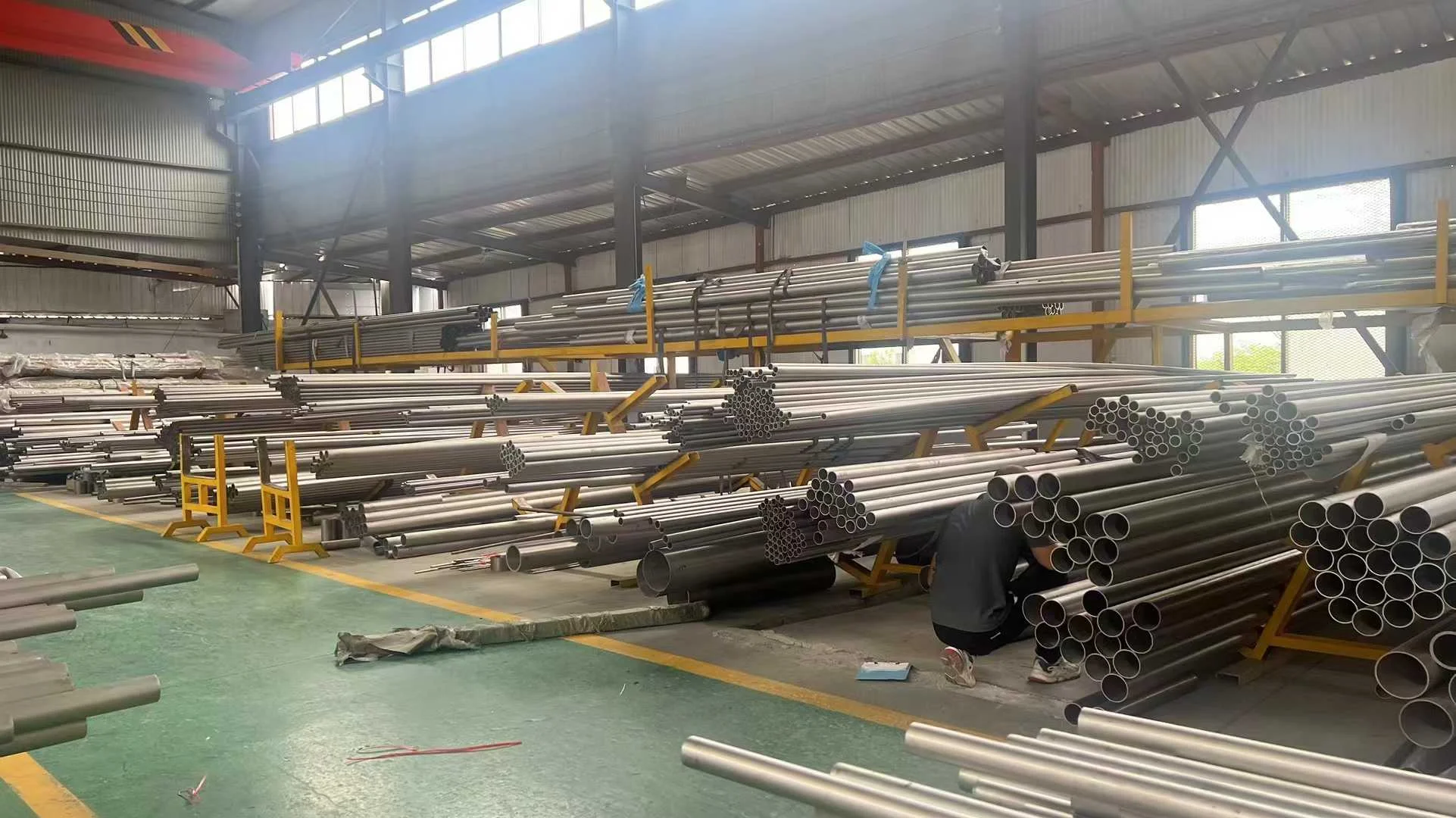
Бесшовная труба изготавливается методом экструзии или волочения из цельной заготовки — по всей длине стенки трубы отсутствует продольный сварной шов. Это структурное различие имеет огромное значение при работе под высоким давлением или в условиях критической коррозии.
Сварная титановая труба изготавливается путем сворачивания плоской ленты в цилиндр с последующей сваркой шва. Производство стандартных типоразмеров таким способом обходится дешевле и быстрее. Однако зона сварного шва является металлургической границей — здесь присутствуют остаточные напряжения, измененная структура зерна и возможная микропористость. При циклическом давлении или в условиях риска щелевой коррозии именно шов становится первым местом разрушения трубы.
Бесшовная труба полностью исключает подобный сценарий отказа. Стенка трубы имеет однородный химический состав и микроструктуру от внешнего до внутреннего диаметра по всей длине.
Для трубных пучков теплообменников, морских конденсаторов, фармацевтических технологических линий и любых других областей, где выход из строя одной трубки означает внеплановую остановку, инженеры выбирают именно бесшовное исполнение.
Типовой диапазон размеров бесшовных труб по стандарту ASTM B338:
- Наружный диаметр: от 6,35 мм до 101,6 мм (от ¼ дюйма до 4 дюймов)
- Толщина стенки: от 0,5 мм до 6,35 мм
- Длина: случайная (3–8 м) или мерная по заказу
Разбор ASTM B338: стандарт, регулирующий производство труб для теплообменников
ASTM B338 — это спецификация на бесшовные и сварные трубы из титана и титановых сплавов для конденсаторов и теплообменников. Он опубликован ASTM International и является эталонным стандартом практически в каждом техническом описании теплообменников, где требуются титановые трубы.
Стандарт охватывает:
- Марки: 1, 2, 3, 5, 7, 9, 11, 12, 26, 28 (и некоторые другие)
- Типы труб: бесшовные (тип S) и сварные (тип W), а также сварные с последующей вытяжкой (тип WD) в качестве третьего варианта
- Требования к механическим свойствам в зависимости от марки
- Допуски на размеры по наружному диаметру, толщине стенки, прямолинейности и длине
- Требования к испытаниям: испытание на сплющивание, испытание на раздачу, гидростатическое или неразрушающее электрическое испытание
- Сертификация и маркировка требования
Когда в заказе на покупку указано “ASTM B338, Grade 2, Type S”, эта строка точно говорит заводу-изготовителю, что именно нужно производить и тестировать. Любое отклонение — неверный химический состав сплава, несоответствие механическим свойствам, неудачное испытание на сплющивание — является несоответствием, которое должно быть задокументировано, иначе материал будет отбракован.
Ключевые размерные допуски согласно B338
| Размер | Толерантность |
|---|---|
| Наружный диаметр (≤ 25,4 мм) | ±0,13 мм |
| Наружный диаметр (> 25,4 мм) | ±0,25 мм |
| Толщина стенки | ±12,5% от номинала |
| Прямолинейность | 3,2 мм на каждые 1500 мм (кривизна) |
| Длина (мерная) | +6,4 мм / −0 мм |
Эти допуски напрямую влияют на проектирование трубной решетки вашего теплообменника. Если отверстия в трубной решетке просверлены под плотную посадку, заранее проверьте класс допуска по наружному диаметру — трубы с более жесткими допусками доступны, но стоят дороже.
Сравнение марок: Grade 1, Grade 2 и Grade 9
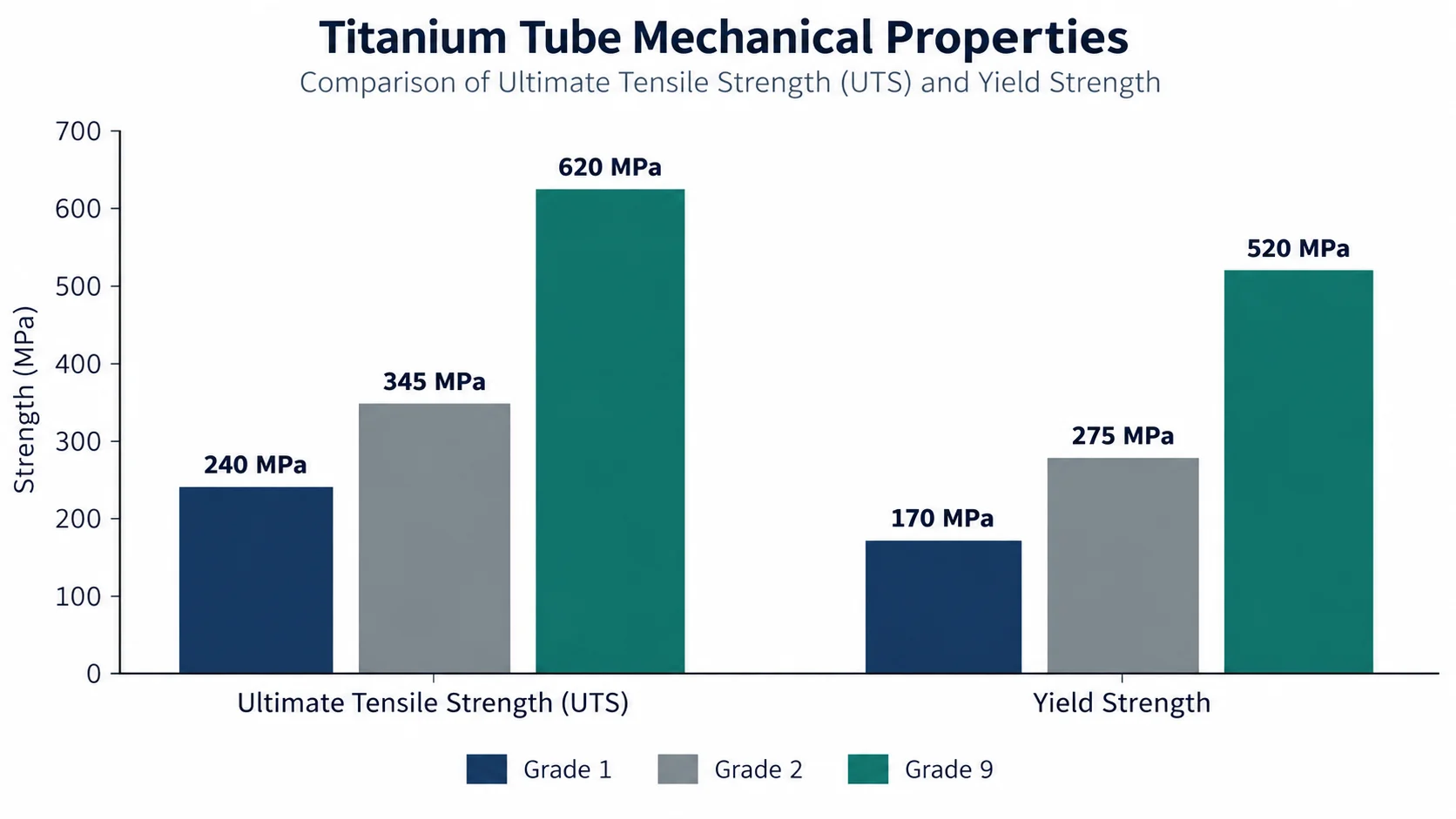
По умолчанию в спецификациях большинства теплообменников указана марка Grade 2. Однако, в зависимости от условий эксплуатации, Grade 1 или Grade 9 могут быть более подходящими. Вот их сравнение:
| Недвижимость | 1-й класс (CP-Ti) | 2-й класс (CP-Ti) | Класс 9 (Ti-3Al-2.5V) |
|---|---|---|---|
| UTS (мин.) | 240 МПа | 345 МПа | 620 МПа |
| Предел текучести (мин) | 170 МПа | 275 МПа | 520 МПа |
| Удлинение (мин) | 24% | 20% | 15% |
| Устойчивость к коррозии | Превосходно | Превосходно | Хорошая (ниже, чем у G1/G2) |
| Формуемость | Самый высокий | Высокий | Умеренный |
| Стоимость (относительная) | Самый низкий | Низкая/средняя | Выше |
| Типичное использование | Тонкостенные изделия, высокая формуемость | Теплообменники, химическая промышленность | Aerospace, hydraulic lines |
Grade 2 is the workhorse. It balances corrosion resistance, mechanical strength, and cost for the majority of chemical process and marine heat exchanger applications.
1 класс is specified when the tube needs maximum ductility — for example, thin-wall tubes that undergo significant expansion during tube-to-tubesheet rolling. It also offers slightly better corrosion resistance in oxidizing acid environments.
Класс 9 (Ti-3Al-2.5V) is an alpha-beta alloy — stronger than commercial purity grades, but with lower corrosion resistance and higher price. It’s the standard for aerospace hydraulic tubing and bicycle frames, not the first choice for wet chemical service.
Other grades worth knowing:
- 7 класс: Grade 2 + 0.12–0.25% palladium. Dramatically improved resistance to reducing acids (HCl, H₂SO₄ at high temperature). Specified when Grade 2 would corrode.
- 12 класс: Grade 2 + molybdenum + nickel. Crevice corrosion resistance better than Grade 2, used in seawater and hot brine.
Where Titanium Seamless Tube Is Used
Heat exchangers and condensers account for the largest volume of ASTM B338 tube consumption. Titanium’s resistance to seawater, brine, chlorides, and most industrial acids makes it the material of choice when stainless steel fails prematurely. A power plant cooling water condenser that runs 20+ years on titanium tube would cycle through multiple stainless steel bundles in the same timeframe.
Химическая обработка — pharmaceutical, chlor-alkali, fertilizer, and petrochemical plants all have process streams that attack stainless and copper alloys. Titanium tube handles hypochlorite, dilute sulfuric acid, and organic acids that would destroy other metals.
Опреснение воды — multi-stage flash (MSF) and multi-effect distillation (MED) plants use titanium tube extensively in brine heaters and heat recovery sections. The combination of elevated temperature, high chloride concentration, and thermal cycling is exactly where titanium earns its premium.
Aerospace and defense — hydraulic lines, fuel systems, and structural tubing use Grade 9 and Grade 5 (Ti-6Al-4V) seamless tube where weight savings justify the cost.
Medical and semiconductor — high-purity applications where contamination from iron or nickel would be catastrophic.
How to Specify and Order Titanium Seamless Tube
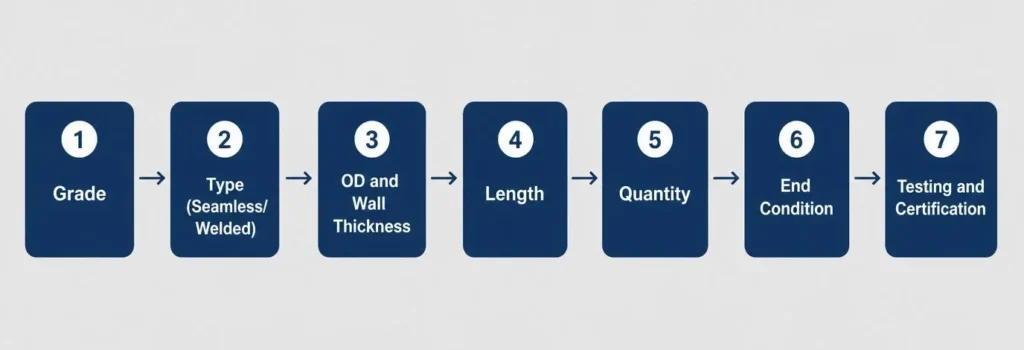
Placing a clear PO requires seven pieces of information. Missing any one of them leads to clarification requests and delays.
Step 1: Grade
Specify the ASTM B338 grade. “Grade 2” is correct. “Commercially pure titanium” alone is not a specification.
Step 2: Type
Seamless = Type S. Welded = Type W. If you need seamless, say so explicitly — some suppliers quote welded by default when seamless isn’t specified.
Step 3: OD and Wall Thickness
State OD × wall thickness in mm or inches. Example: 19.05 mm OD × 1.24 mm wall. If you’re working from a tube sheet drawing, confirm the OD tolerance class you need.
Step 4: Length
Random length (typically 3–8 m, mill discretion) is cheaper. Cut-to-length (exact dimension with tolerance) adds cost but saves shop labor.
Step 5: Quantity
State quantity in pieces or kg. For heat exchanger procurement, pieces × length is clearest. Mills typically have minimum order quantities — for uncommon sizes, 100–500 kg MOQ is common.
Step 6: End Condition
Plain ends (cut, no bevel) are standard. Square-cut ends, chamfered ends, or specific finish (bright annealed, pickled) must be called out.
Step 7: Testing and Certification
Specify which tests you require:
- Hydrostatic test или nondestructive electric test (NDET) — B338 allows either
- Mill Test Report (MTR/CMTR) — always required; certifies chemistry and mechanical properties
- Third-party inspection — required for nuclear, offshore, or defense procurement
A complete line item looks like this:
ASTM B338, Grade 2, Type S, 19.05 mm OD × 1.24 mm wall, 6000 mm cut-to-length ±3 mm, plain ends, NDET tested, MTR required. Qty: 200 pcs.
What to Verify Before Releasing the PO
1. Mill Test Report (MTR) format
The MTR must show heat number, chemistry analysis (matching B338 Grade 2 limits), and mechanical test results from the same heat. A generic certificate without heat traceability is not acceptable for most industrial applications.
2. Country of origin and mill certifications
Many projects (nuclear, defense, certain petrochemical) specify approved mills. Verify the supplier can provide tubes from a qualified source. Reputable suppliers like ХонТитан can provide documentation linking each batch to the originating mill.
3. Dimensional inspection report
For tight-tolerance applications, request a dimensional inspection report (OD, wall, straightness per tube or per lot). Some suppliers include this; others charge extra.
4. Lead time — stock vs. custom
- Stock sizes (common ODs in Grade 2): typically 1–2 weeks
- Custom sizes or less-common grades: 4–8 weeks from mill
- Grades 7, 12, or alloys (Grade 9, Grade 5): 6–12 weeks is realistic; plan accordingly
5. Packaging
Titanium tube scratches and oxidizes at surface contact points. Proper packaging — end caps, inter-layer separators, bundled with no metal-to-metal contact — matters for long shipments. Clarify packaging spec before order if the application is appearance-critical or involves thin walls.
6. Price per kg vs. per piece
Get both. Price per kg is standard for trading, but price per piece is what your budget needs. Confirm whether the quoted price includes cut-to-length or only random length.
ЧАСТО ЗАДАВАЕМЫЕ ВОПРОСЫ
В чем разница между стандартами ASTM B338 и ASTM B337?
B338 covers tubes for heat exchangers and condensers. B337 covers seamless and welded tubes for general service (pipe-like applications with higher working pressures). They share similar grade coverage but have different dimensional, testing, and application scopes. Specify the correct standard for your application — a heat exchanger engineer should use B338.
Можно ли использовать титановые трубы Grade 2 для работы в морской воде?
Yes — Grade 2 has excellent resistance to seawater, brackish water, and most chloride environments at temperatures up to roughly 130°C. For elevated-temperature brine or crevice-prone geometries, Grade 12 (with Mo+Ni additions) offers better crevice corrosion resistance and is worth the modest price premium.
What wall thickness should I specify for a shell-and-tube heat exchanger?
The most common wall for heat exchanger service is 0.7 mm to 1.65 mm (0.028″ to 0.065″ BWG). TEMA standards give minimum wall recommendations based on tube OD and design pressure. For most cooling water service at moderate pressure, 0.7 mm or 0.9 mm wall in a 19.05 mm OD tube is the standard starting point.
How do I verify that titanium tube is actually titanium and not a substitution?
Request the MTR and cross-check the heat number against the physical markings on the tube. For critical applications, XRF (X-ray fluorescence) spot-testing is a fast, non-destructive way to confirm alloy identity at incoming inspection. Some project specifications require third-party verification.
What is the lead time for small quantities of ASTM B338 Grade 2 tube?
Distributors who stock common sizes (typically 6.35 mm to 25.4 mm OD in standard wall) can ship within 1–2 weeks. For non-stock sizes, less common grades, or cut-to-length requirements, plan for 4–8 weeks from a mill order. Grade 7 and Grade 12 typically run 6–10 weeks.
Spec It Right the First Time
Titanium seamless tube is not a commodity buy — a wrong grade, missed tolerance, or untraceable certificate can mean a rejected bundle and a four-week delay at the worst possible moment in a project schedule.
The framework is straightforward: know your service conditions, pick the right grade, write a complete line-item specification, and require full traceability documentation before the material ships. Whether you’re sourcing 50 pieces for a pilot heat exchanger or 5,000 pieces for a full bundle replacement, the same discipline applies.
For Grade 2 seamless tube, budget $30–$80/kg depending on wall thickness, OD, quantity, and cut-to-length requirements. Thin-wall small-diameter tube sits at the higher end; large-OD thick-wall orders at volume pull the price down. Get quotes with MTR included — if a supplier can’t provide that, move on.
Suppliers who specialize in titanium industrial tube — such as ХонТитан — can advise on grade equivalencies, available stock sizes, and documentation packages for specific project requirements.