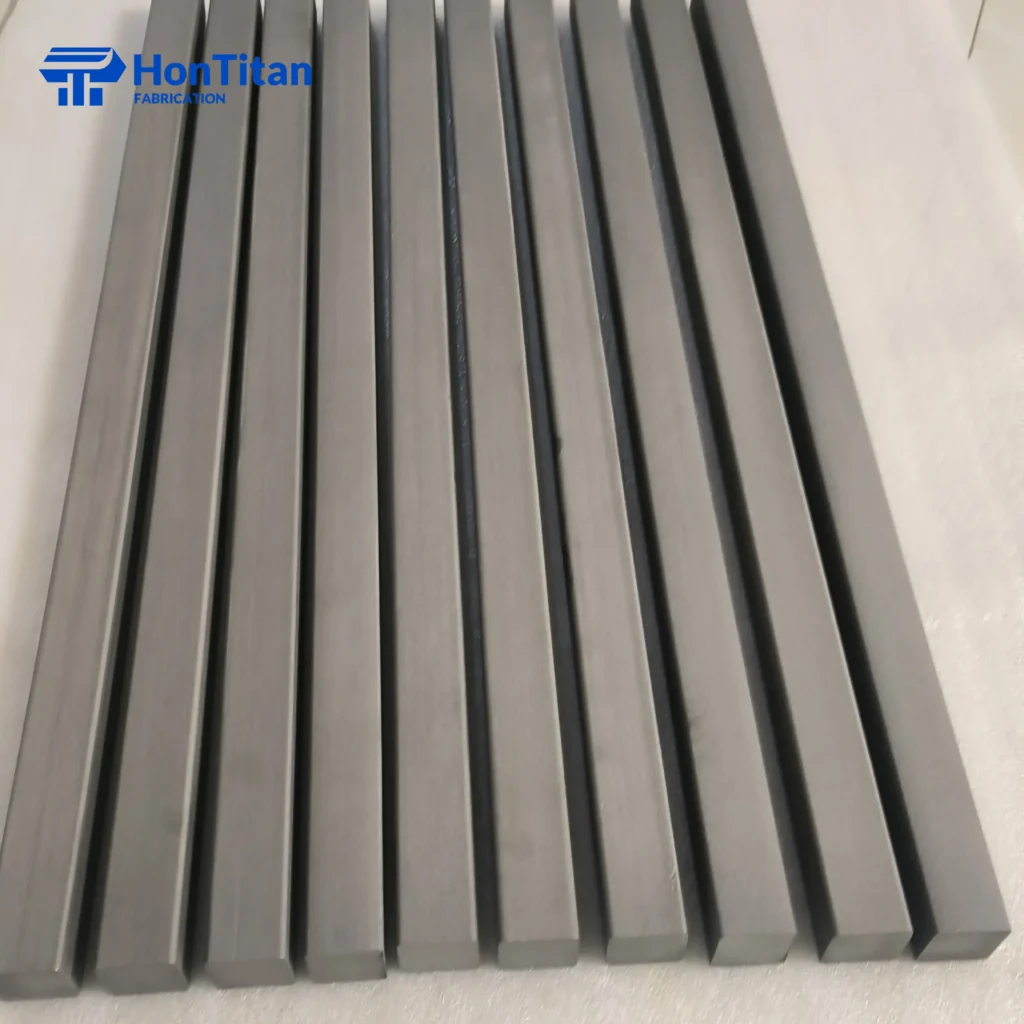
The primary difference between Ti-6Al-4V (Grade 5) and Ti-6Al-4V ELI (Grade 23) is material purity. Grade 5 contains higher oxygen and iron levels, offering maximum tensile strength for aerospace applications. Conversely, Grade 23 features Extra Low Interstitials (ELI), deliberately restricting these impurities to deliver superior fracture toughness, ductility, and exceptional biocompatibility for medical implants.
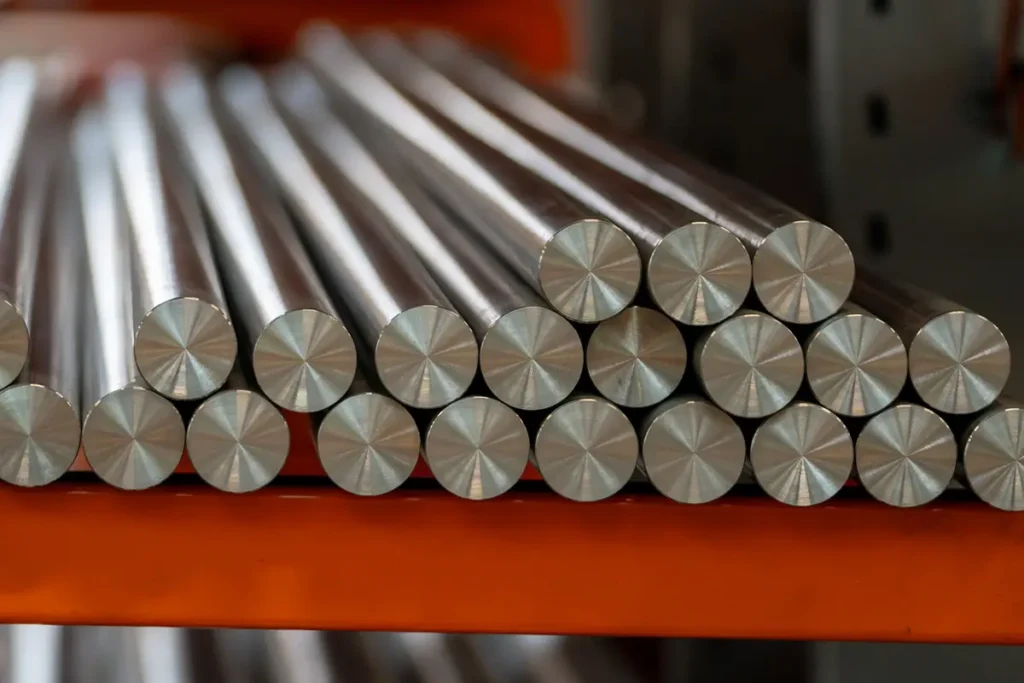
The Significance of Extra Low Interstitials (ELI)
In titanium metallurgy, the acronym ELI stands for Extra Low Interstitials. To understand the engineering significance of this designation, one must first examine the origin of titanium alloys.
During the initial reduction of titanium sponge and the subsequent melting phases, certain trace elements—specifically oxygen (O), nitrogen (N), carbon (C), hydrogen (H), and iron (Fe)—naturally integrate into the metal’s crystal lattice. These are classified as “interstitial elements” because their atoms are small enough to occupy the microscopic spaces (interstices) between the larger titanium atoms.
While standard Ti-6Al-4V (Grade 5) permits a controlled baseline of these elements, Ti-6Al-4V ELI (Grade 23) mandates a drastically restricted threshold. Achieving this ELI status is a highly complex metallurgical feat. It typically requires advanced, multi-stage vacuum melting technologies, such as Vacuum Arc Remelting (VAR) or Electron Beam (EB) cold hearth melting, to meticulously vaporize and extract these trace impurities.
This rigorous purification process is the fundamental reason why Grade 23 commands a higher cost in the supply chain. The strict parameter controls required to drive out microscopic levels of oxygen and iron are substantial. However, as the mechanical data will demonstrate, this precise metallurgical refinement fundamentally alters how the alloy behaves under extreme stress and within biological environments.
Comparative Chemical Composition Analysis
At their core, both materials are alpha-beta titanium alloys containing nominally 6% Aluminum (the alpha stabilizer) and 4% Vanadium (the beta stabilizer). The true divergence emerges only under strict metallurgical analysis of their interstitial impurities.
The following table illustrates the maximum allowable weight percentages for trace elements according to standard industrial and medical specifications (e.g., ASTM B348 and ASTM F136):
| Element | Ti-6Al-4V (Grade 5) Max % | Ti-6Al-4V ELI (Grade 23) Max % |
|---|---|---|
| Aluminum (Al) | 5.50 – 6.75% | 5.50 – 6.50% |
| Vanadium (V) | 3.50 – 4.50% | 3.50 – 4.50% |
| Oxygen (O) | 0.20% | 0.13% |
| Iron (Fe) | 0.40% | 0.25% |
| Carbon (C) | 0.08% | 0.08% |
| Nitrogen (N) | 0.05% | 0.05% |
| Hydrogen (H) | 0.015% | 0.012% |
Takeaway for Engineers: The critical differentiator in this matrix is the oxygen limit. In titanium metallurgy, oxygen is not merely a byproduct; it acts as a potent interstitial strengthener. While a reduction of a mere 0.07% in oxygen content (from 0.20% to 0.13%) may appear statistically insignificant to a layperson, it triggers a macroscopic transformation in the alloy’s physical behavior.
Mechanical Performance and Material Toughness
The alteration of interstitial elements dictates a fundamental engineering trade-off: the balance between absolute static strength and damage tolerance.
- Grade 5 (Optimized for High Strength): Because it retains a higher concentration of oxygen and iron, standard Ti-6Al-4V achieves a higher baseline strength. The oxygen atoms restrict the movement of dislocations within the crystal lattice, functioning as a hardening agent. Consequently, Grade 5 typically delivers a higher Ultimate Tensile Strength (UTS) of approximately 950 MPa and a Yield Strength of around 895 MPa. It is engineered for environments where bearing massive static loads without deformation is the primary objective.
- Grade 23 (Optimized for High Toughness): By deliberately extracting the “hardening” oxygen and iron atoms, Ti-6Al-4V ELI sacrifices approximately 5% to 10% of its absolute static strength. However, this metallurgical concession is highly strategic. The purified lattice structure vastly improves the alloy’s ductility, fracture toughness ($K_{Ic}$), and fatigue crack growth resistance.
In dynamic engineering applications—such as a prosthetic hip joint enduring millions of human walking cycles, or a cryogenic pressure vessel subjected to extreme thermal contraction—raw hardness often becomes a liability, increasing the risk of sudden brittle failure. Grade 23 excels precisely because its superior toughness allows it to absorb continuous cyclic stress and resist micro-crack propagation over decades of use.
Strategic Material Selection by Industry
The engineering decision between Grade 5 and Grade 23 is rarely a matter of “better” or “worse,” but rather one of strategic alignment with the specific failure modes of the end-use environment.
Aerospace and Heavy Industry Sectors
Standard Ti-6Al-4V (Grade 5) remains the “workhorse” for the aerospace and defense industries. In these sectors, the primary design driver is the strength-to-weight ratio. Structural components, such as airframe sections, wing spars, and engine turbine blades, must withstand massive static and aerodynamic loads without plastic deformation.

Because Grade 5 provides the maximum allowable yield strength for this alloy class, it allows engineers to minimize sectional thickness, thereby reducing the overall weight of the aircraft. It is also the preferred choice for high-performance automotive racing and marine hardware, where resistance to seawater corrosion must be coupled with high mechanical tension.
Biomedical and Cryogenic Sectors
Ti-6Al-4V ELI (Grade 23) is the definitive choice for the biomedical industry and specialized cryogenic engineering.
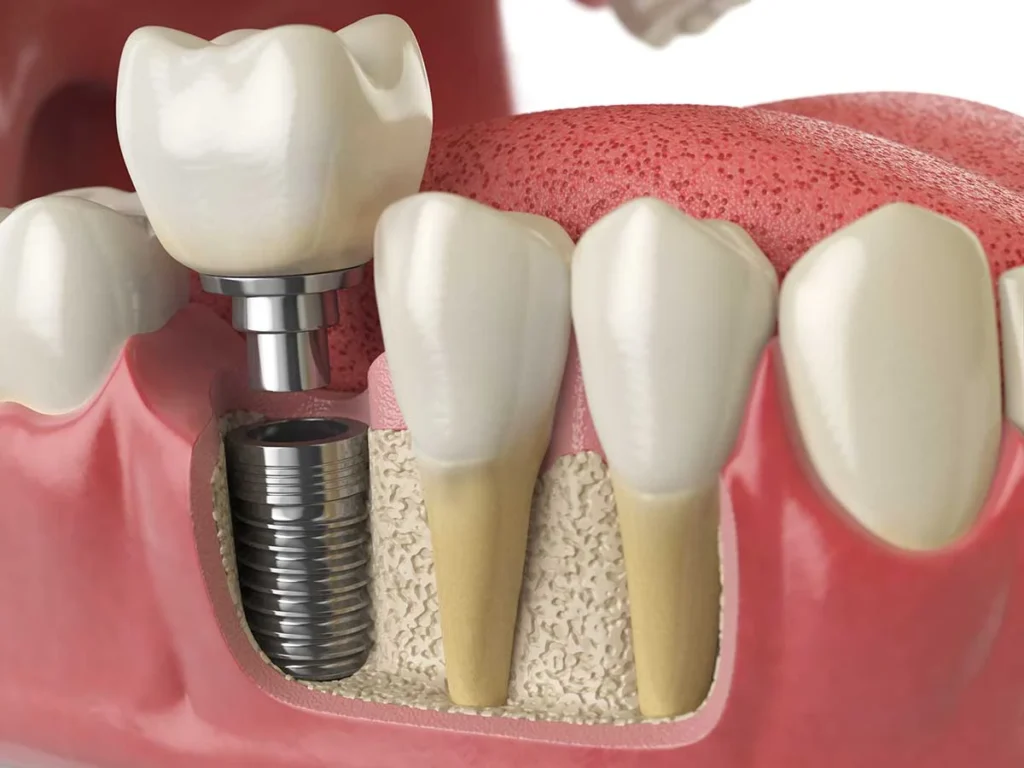
In orthopedic and dental implantology, the material is integrated into the human body for decades. The reduced interstitial content of Grade 23 minimizes the risk of adverse biological reactions and optimizes the material’s fatigue life under the constant, cyclic loading of human movement (e.g., hip and knee replacements). Furthermore, its lower oxygen content results in a slightly lower modulus of elasticity compared to Grade 5, which helps reduce “stress shielding”—a phenomenon where the metal implant carries too much load, causing the surrounding natural bone to weaken.
Beyond medicine, Grade 23 is indispensable for cryogenic applications. While most metals become brittle at extremely low temperatures, the ELI grade maintains its toughness and ductility even when exposed to liquid nitrogen or oxygen, making it the standard for aerospace fuel tanks and spacecraft pressure vessels.
Regulatory Compliance and ASTM Standards
In the global supply chain, technical claims must be validated by strict adherence to international consensus standards. For B2B procurement, verifying the specific ASTM or ISO designation is the only method to ensure material integrity and mitigate legal liability.
The following standards are the primary benchmarks for these alloys:
- ASTM F136: The definitive standard for Ti-6Al-4V ELI specifically intended for surgical implant applications. If a project involves human implantation, compliance with F136 is mandatory.
- ASTM B348: The general specification for titanium and titanium alloy bars and billets. This is the most common standard for industrial Grade 5 material.
- ASTM F1472: The standard specification for wrought Ti-6Al-4V intended for surgical implants, though it does not mandate the “Extra Low Interstitial” purity of F136.
- AMS 4911 / 4928: These are Aerospace Material Specifications (AMS) typically cited for Grade 5 sheets, strips, plates, and bars used in aircraft manufacturing.
- ISO 5832-3: The international equivalent to ASTM F136, governing the requirements for wrought titanium 6-aluminum 4-vanadium alloy for use in surgical implants.
Through our rigorous quality assurance processes, we frequently warn clients about the “Grade 23 trap.” Simply labeling a product as chemically compliant with Grade 23 limits does not automatically qualify it for biological use. We have seen numerous industry cases where chemically sound material is rejected by medical device OEMs because it lacks strict ASTM F136 manufacturing traceability. Therefore, procurement officers should always demand a Material Test Certificate (MTC) that explicitly cites these standards to confirm material origin and compliance.
Machining and Additive Manufacturing Capabilities
From a fabrication standpoint, the processing behavior of both alloys must be carefully managed to maintain their structural integrity.
In traditional subtractive manufacturing (CNC machining, milling, and turning), Grade 5 and Grade 23 exhibit nearly identical machinability profiles. Both materials pose challenges due to their low thermal conductivity, which concentrates heat at the cutting edge, and their strong tendency to gall or weld to cutting tools. Machining either grade requires rigid setups, high-pressure coolant, low cutting speeds, and specialized carbide tooling. Based on our internal fabrication data for complex, thin-walled geometries, we have observed that while Grade 5 yields a slightly more brilliant polished finish, the higher ductility of Grade 23 makes it noticeably more forgiving against micro-cracking during aggressive CNC operations.
The distinction becomes even more relevant in the rapidly expanding field of Additive Manufacturing (AM).
When utilizing technologies like Selective Laser Melting (SLM) or Electron Beam Melting (EBM) to print complex components, the choice of metal powder is critical. Ti-6Al-4V ELI spherical powder is heavily favored for advanced biomedical AM applications, such as 3D-printed porous acetabular cups or patient-specific cranial implants.
Our recent laboratory stress tests on 3D-printed premium smartwatch enclosures further validate this. While engineers typically default to Grade 5 for machined external cases due to its surface hardness, our data shows that Grade 23 spherical powder better withstands the rapid thermal gradients of SLM printing. Starting with an ELI-grade powder ensures the printed component maintains a higher threshold for ductility and damage tolerance, yielding superior shock resistance in the final product—especially after post-print thermal treatments like Hot Isostatic Pressing (HIP).
Technical Inquiries and Parameter Clarifications
To address common engineering uncertainties and procurement long-tail queries, the following technical clarifications are provided:
Is Grade 23 (ELI) physically stronger than standard Grade 5?
No. It is a common misconception that “higher purity” equates to “higher strength.” Standard Grade 5 possesses a higher Ultimate Tensile Strength (UTS) due to its higher oxygen content, which hardens the alloy. Grade 23 deliberately sacrifices a small percentage of this raw strength to maximize fracture toughness and ductility.
Is medical-grade Ti-6Al-4V ELI compatible with MRI technology?
Yes. Both Grade 5 and Grade 23 titanium alloys are non-ferromagnetic. Medical implants manufactured from Grade 23 are entirely safe for Magnetic Resonance Imaging (MRI) and will not be displaced or significantly heated by the magnetic fields.
How can a facility verify whether they have received Grade 5 or Grade 23?
Visual inspection, weight analysis, and basic mechanical testing cannot reliably differentiate the two grades. The only definitive method is precise chemical analysis to measure interstitial elements. Engineers must verify the Material Test Certificate (MTC) provided by the mill or conduct Positive Material Identification (PMI) using advanced spectroscopy to confirm the oxygen content is at or below 0.13%.
Request an Engineering Consultation or Quote
Selecting the exact titanium specification is critical for product performance, regulatory compliance, and project budgeting. Whether your application requires the immense structural strength of standard Ti-6Al-4V or the highly refined biocompatibility of ASTM F136-certified Ti-6Al-4V ELI, our supply chain is equipped to deliver.
We provide fully traceable titanium bars, plates, and AM spherical powders backed by comprehensive Material Test Certificates (MTCs). Contact our metallurgical team today to submit your technical drawings, clarify ASTM specifications, or request a real-time quote for your next manufacturing run.