It is the “holy grail” of aerospace engineering. It is lighter than steel, stronger than aluminum, and completely rust-proof. But does that make it good for cooking?
If you search for “Titanium Cookware,” you will find a confusing mix of opinions. Ultralight backpackers swear by it, calling it the best gear money can buy. Meanwhile, home chefs often complain that it ruins their food and costs a fortune.
So, who is right?
The honest truth is: Titanium is not a magical metal that does everything. It is a specialized tool. In the hands of a thru-hiker, it is a game-changer. On a stovetop trying to sear a steak, it can be a disaster.
In this guide, we will cut through the marketing hype. We will analyze the physics, compare it to stainless steel and aluminum, and help you decide if titanium belongs in your pack—or your kitchen.

The 3 Types of Titanium Cookware
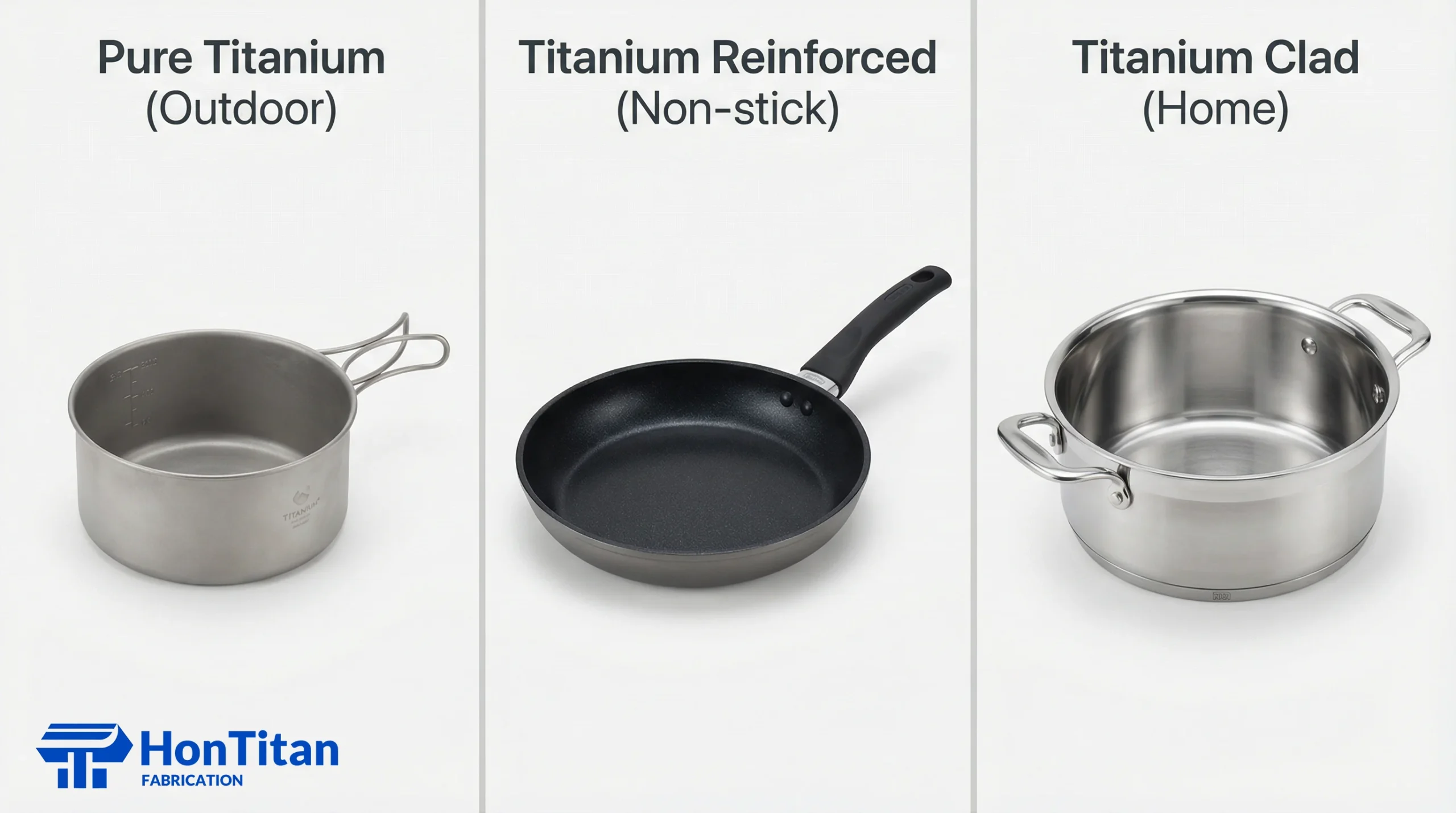
Before we talk about performance, we must fix the biggest misunderstanding in the market. Not all “titanium pans” are created equal. Mistaking one for another is the primary reason for buyer’s remorse.
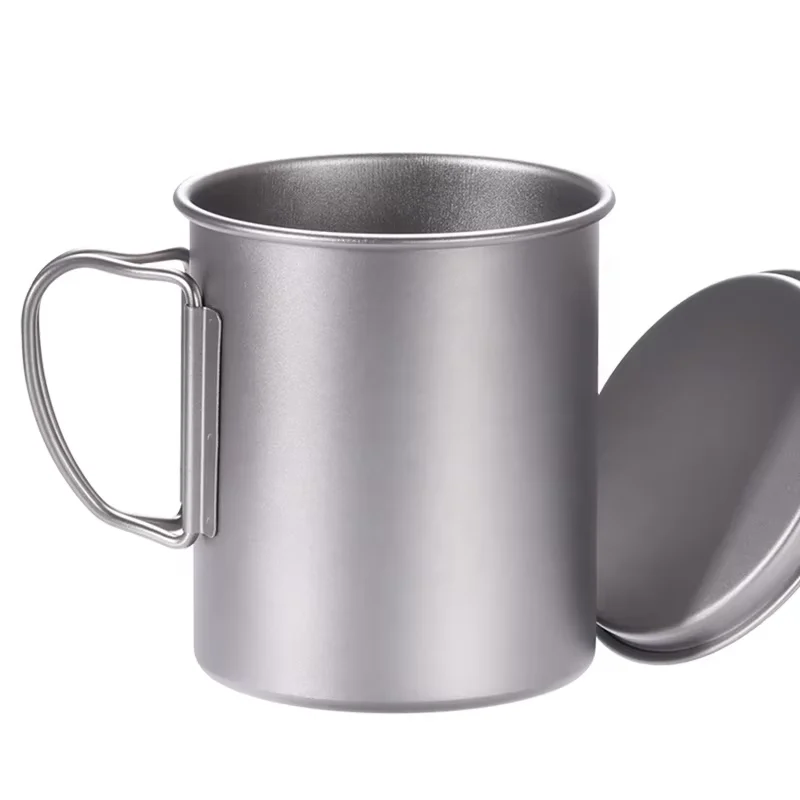
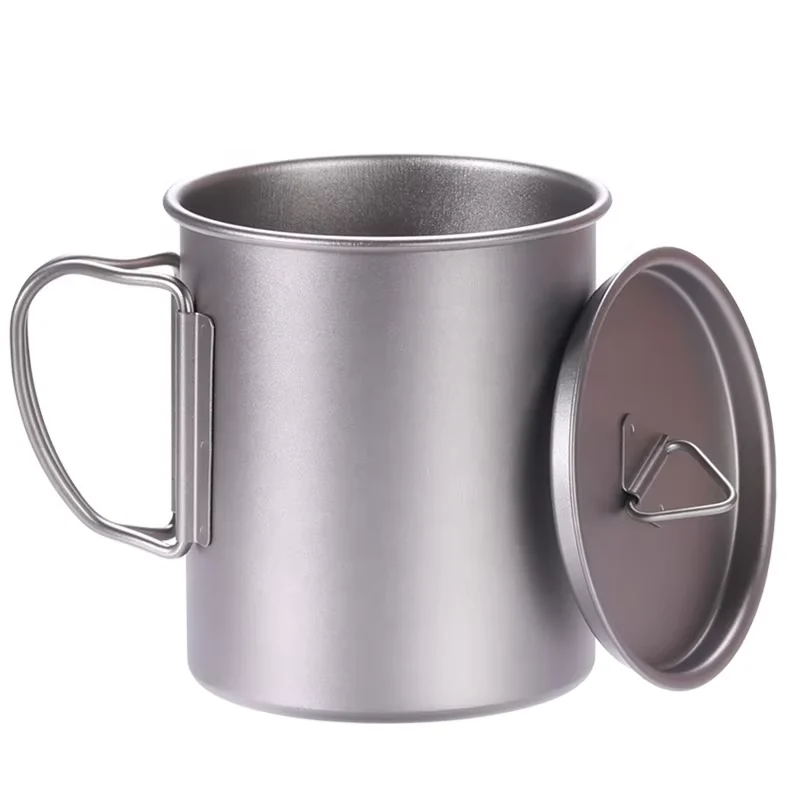
Pure Titanium (The Outdoor Standard) This is the focus of our guide. Pure titanium cookware, typically made from Grade 1 or Grade 2 commercially pure titanium, is instantly recognizable by its grey, matte finish and unbelievably thin walls. It is designed specifically for backpacking, camping, and boiling water. Brands like Snow Peak, Keith, and Toaks dominate this niche, where every gram counts.
Titanium-Reinforced Non-Stick (The “Supermarket” Pan) You often see these in department stores labeled as “Titanium Pans,” but this is largely marketing terminology. In reality, these are aluminum pans coated with PTFE (Teflon) that has been reinforced with microscopic titanium particles to increase durability. While effective for home use, they are not true titanium cookware and do not offer the lightweight or health benefits of the pure metal.
Titanium Clad Stainless Steel (The High-End Home) At the premium end of the home market, you will find cookware like the Hestan NanoBond series. These pots feature a stainless steel core bonded with a titanium surface. They are excellent for gourmet home cooking because they combine the heat retention of steel with the durability of titanium, but they are heavy and come with a steep price tag.
Why Titanium is Unique
Why do ultralight hikers pay premium prices for a simple mug? The answer lies in the physics of the metal itself, specifically its density and melting point.
The “Density Paradox”
It surprises many to learn that aluminum is technically less dense (approx. 2.7 g/cm³) than titanium (approx. 4.5 g/cm³). However, titanium cookware is significantly lighter than aluminum cookware. This is due to titanium’s incredible strength-to-weight ratio. Because the metal is so strong, manufacturers can press titanium into walls as thin as 0.3mm—thinner than a credit card—without compromising structural integrity. An aluminum pot that thin would easily crush or dent in a backpack.
The “Campfire Proof” Durability
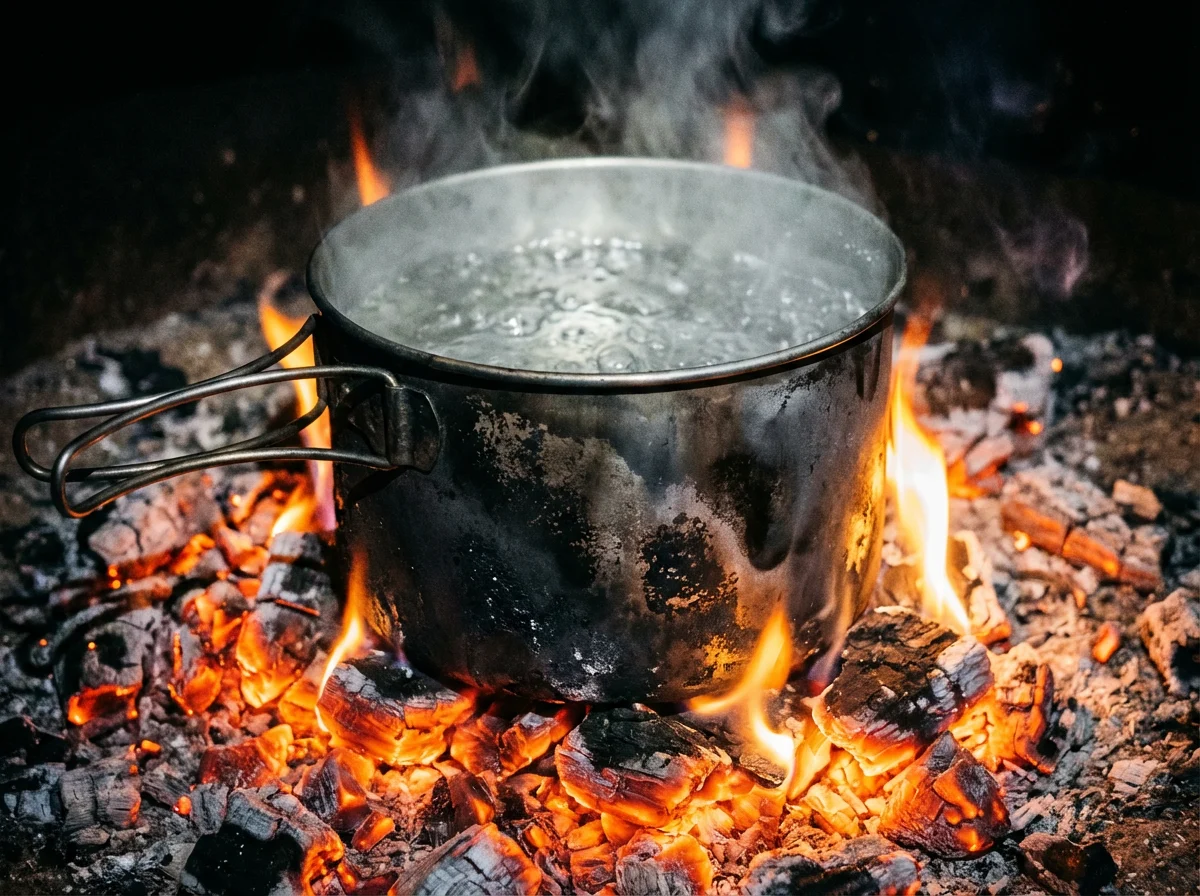
Titanium is virtually indestructible in a fire. While aluminum melts at roughly 660°C (1,220°F), titanium boasts a melting point of approximately 1,668°C (3,034°F).
In a real-world scenario, a hot campfire core can reach temperatures exceeding 500°C. You can throw a pure titanium pot directly into the red-hot coals to boil water without fear. If you attempted this with ultralight aluminum gear, you would risk warping the shape or even melting the metal entirely.
Thermal Conductivity
If titanium is so strong and light, why don’t professional chefs use it in restaurants? The answer is simple: It is a terrible conductor of heat.
This creates a phenomenon known as “Hot Spots.” Imagine placing a titanium pan on a small camping stove. The area directly above the flame will skyrocket in temperature instantly, while the metal just an inch away remains relatively cool.
You can actually perform a “finger test” to prove this: heat one side of a titanium pot, and you can often touch the handle or the rim on the other side without burning yourself. While this property makes the pot safe to drink from (the lip cools down fast), it makes cooking real food difficult. Without even heat distribution, food tends to burn in the center while staying raw on the edges.
Titanium vs. Stainless Steel vs. Aluminum
To make an informed decision, it helps to see the hard numbers side-by-side.
| Feature | Titanium | Stainless Steel | Aluminum (Hard Anodized) |
|---|---|---|---|
| Weight | ★★★★★ (Lightest) | ★★☆☆☆ (Heavy) | ★★★★☆ (Light) |
| Heat Conductivity | ★☆☆☆☆ (Poor) | ★☆☆☆☆ (Poor) | ★★★★★ (Great) |
| Durability | ★★★★★ (Bombproof) | ★★★★☆ (Tough) | ★★★☆☆ (Dents easily) |
| Corrosion Resistance | ★★★★★ (Rust Proof) | ★★★☆☆ (Rust Resistant) | ★★★★☆ (Oxidizes) |
| Price | $$$(Expensive) | $ (Cheap) | $$ (Moderate) |
The Verdict Your choice ultimately depends on your environment. If weight is your absolute priority, such as for long-distance thru-hiking, titanium is unrivaled. However, if you plan to fry fish or simmer complex sauces on the trail, aluminum is a more practical choice despite the slight weight penalty. For car camping or home use where weight is irrelevant, stainless steel remains the most economical and versatile option.
How to Cook Without Burning
Can you fry an egg in titanium? Yes, but you cannot treat it like your home cookware. Because the metal won’t spread the heat for you, you must use specific techniques to compensate:
- The “Lazy Flame” Technique Avoid high-powered “jet engine” stoves (like the BRS-3000T) for cooking solid food. These stoves create intense, pinpoint heat that exacerbates hot spots. Instead, opt for an alcohol stove or a canister stove with a wide burner head, which provides a gentler flame.
- Use More Fat Since titanium lacks non-stick properties and heat distribution, use twice the amount of oil or butter you usually would. The oil acts as a conductive buffer between the hot metal and your food.
- Constant Motion Don’t let the food sit. Stir constantly or keep the pan moving above the flame to manually distribute the heat.
- The Heat Diffuser Hack If you plan to do real cooking, carry a small heat diffuser plate (or use a flat stone in an emergency). It adds weight, but it forces the heat to spread evenly.
Pro Tip: For the most hassle-free experience, consider the “Boil-Only” Strategy. Many seasoned hikers use titanium exclusively for boiling water to rehydrate freeze-dried meals. Water conducts heat perfectly on its own, negating titanium’s thermal disadvantages.
Is Titanium Cookware Safe?
For health-conscious consumers, titanium is arguably the safest metal on the planet for cooking. Its primary advantage is biocompatibility.
Titanium is the same material used in medical applications like heart pacemakers, dental implants, and joint replacements because the human body does not reject it. Unlike stainless steel, which contains nickel and can trigger reactions in sensitive individuals, pure titanium is completely nickel-free.
Furthermore, titanium is chemically inert. Acidic foods like tomatoes or vinegar can strip aluminum ions into your food or cause cast iron to taste metallic, but they have no effect on titanium. This means you get zero leaching and zero metallic taste, preserving the pure flavor of your coffee, tea, or food.
Titanium Grades & Surface Finishes
As industry insiders, we look at details that consumers often miss, specifically the grade of the metal and the surface finish.
Grade 1 Titanium Most premium cookware is manufactured from Grade 1 Titanium. This grade is softer and possesses higher ductility than Grade 2, allowing manufacturers to press it into deep shapes without micro-cracking. This quality control ensures the longevity of the pot.
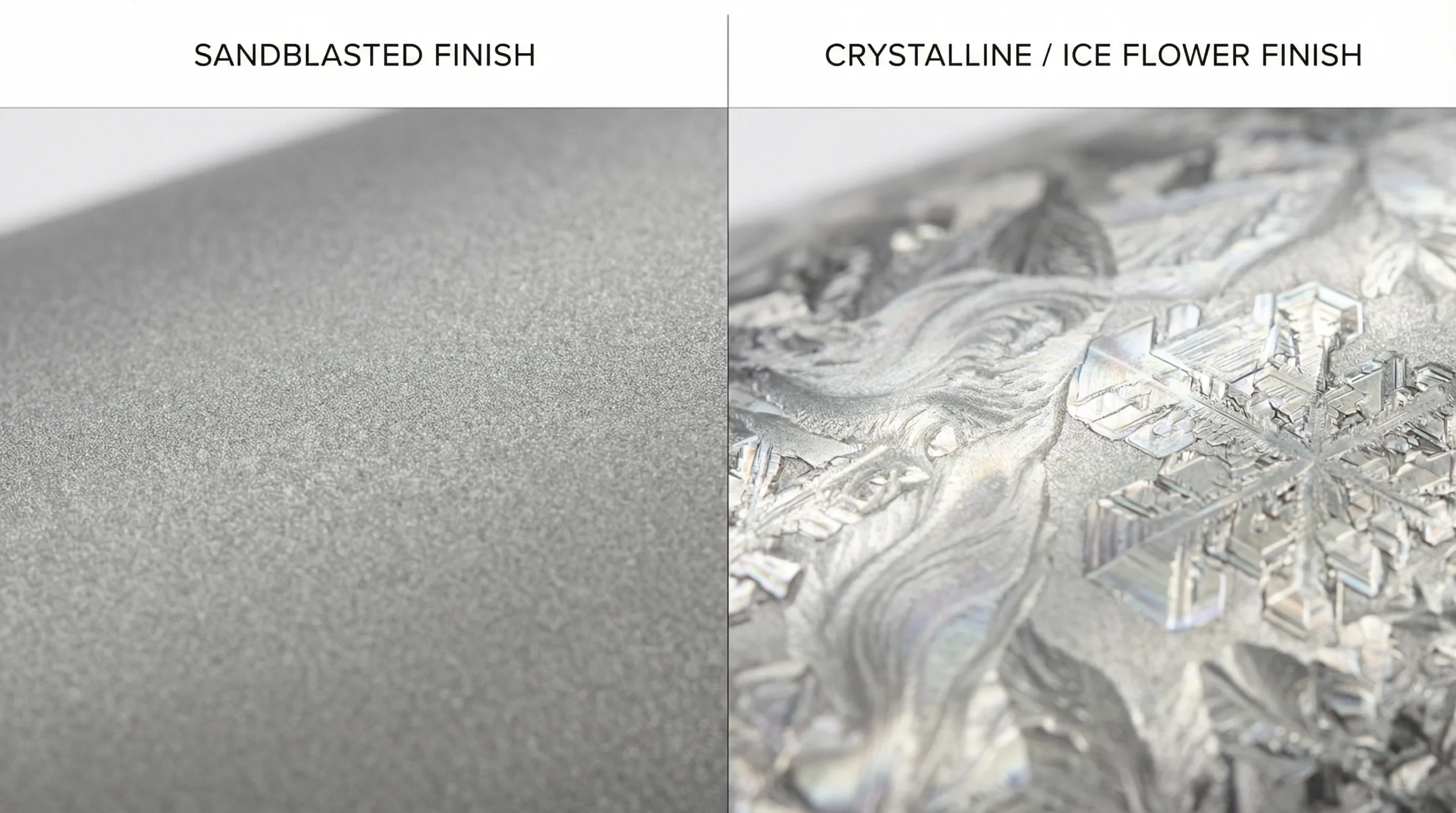
Surface Finishes You will typically find two types of finishes on the market:
- Sandblasted: The standard matte grey look. It offers good grip but some users find the texture slightly “scratchy” like a chalkboard.
- Crystalline (Ice Flower): A premium finish achieved by treating the titanium at high temperatures in a vacuum. It creates a beautiful, natural crystallized pattern. Beyond aesthetics, this finish is smoother and significantly easier to clean than sandblasted surfaces.
FAQ: Common Questions About Titanium Cookware
Can you use titanium on an induction stove?
No. Pure titanium is non-magnetic. It will not work on induction cooktops unless it is a specialized “Clad” pot with a magnetic steel base.
How do you clean a burnt titanium pot?
The beauty of titanium is that you can’t really hurt it. You can scrub it with steel wool, use sand (if you are camping), or boil water with baking soda in it.
Why did my titanium pot turn blue?
This is called “Heat Tint.” When titanium is exposed to heat, the oxide layer thickens and refracts light, creating rainbow colors (Blue, Purple, Gold). This is perfectly safe and many enthusiasts prize this look.
Conclusion
Titanium cookware is not for everyone. If you are looking for a heavy-bottomed pan to sear steak at home, stick to Cast Iron or Stainless Steel.
But if you are a hiker counting every gram, or a health-conscious user looking for a completely non-toxic, nickel-free vessel, Titanium is unrivaled. It is the only gear that you can abuse, burn, and carry for thousands of miles, only to have it last long enough to pass down to your grandchildren.
References
Material Properties: AZoM – Titanium Grade 1 Data Sheet
Medical Safety: NCBI – Biocompatibility of Titanium Implants