A quote lands in your inbox: “Titanium Grade 2” from one supplier, “Grade 5 titanium” from another, and a third one casually promises “implant grade titanium earrings” without showing any paperwork. The price gap is wide. The spec sheet looks familiar. And yet, this is exactly where expensive mistakes happen: buying the strongest grade when you needed the most formable one—or trusting a marketing label when you actually needed a standard-backed alloy.
This guide is built for real decisions. You’ll get a clear grade overview, a practical properties chart, a Grade 2 vs Grade 5 decision matrix, and a simple way to verify what you’re actually being sold.
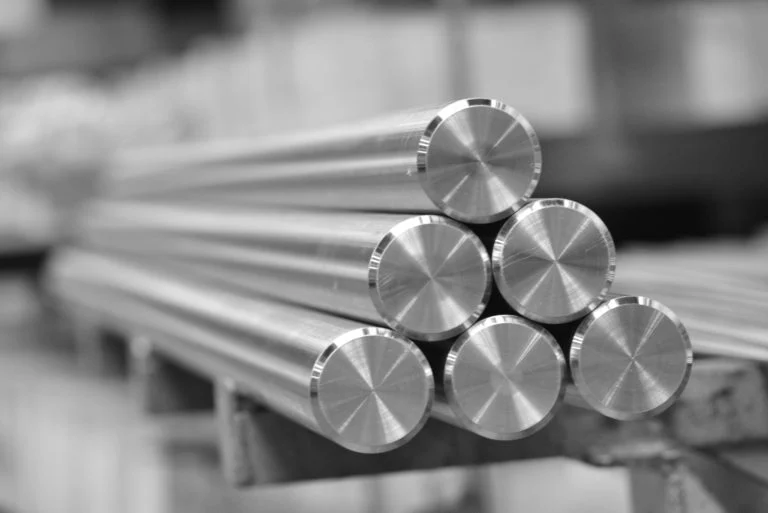
Why titanium has grades (and why the names get confusing)
Bottom line: “Titanium grades” are a shorthand for different chemistries and impurity limits, which change strength, ductility, corrosion behavior, and how the metal behaves in machining and welding. Confusion happens because people mix up grade names with standards and with marketing claims.
CP titanium vs alloyed titanium
In everyday buying, titanium falls into two buckets:
- Commercially Pure (CP) titanium — Grades 1–4. These are “mostly titanium,” with controlled amounts of oxygen, iron, nitrogen, carbon, and hydrogen. As those interstitial elements increase, strength rises and ductility drops.
- Titanium alloys — like Grade 5 (Ti-6Al-4V). Alloying elements (aluminum and vanadium, in this case) change the microstructure and deliver much higher strength—often at the cost of formability and sometimes weld/machining forgiveness.
“Grade” vs ASTM/ISO standard vs marketing terms
Here’s the chain you should rely on when you make a choice:
- Name on the listing (“Grade 5 titanium”, “implant grade”) is not proof.
- Standard (for example, ASTM specifications) defines what chemistry and properties are allowed.
- Certificate / MTR (Material Test Report) is your evidence for the specific batch/heat.
Two standards frequently appear in titanium discussions:
- ASTM International publishes widely used material specifications. In procurement, the difference between “a grade name” and “a standard-backed product” matters because your QA team can only verify against the standard and the MTR.
- For any wording that implies medical use (like “implant grade”), it’s wise to keep claims tied to standards and documentation, not to promise outcomes. The U.S. FDA Medical Devices framework is a reminder that “implant” language can be sensitive depending on product type and marketing.
The quick answer: Grade 1, Grade 2, and Grade 5 in 60 seconds
If you only remember three lines, use these:
- Grade 1 titanium (CP): softest and most formable among common grades. Great when you need deep drawing/forming, gentle bending, or maximum ductility.
- Grade 2 titanium (CP): the “workhorse” CP grade—stronger than Grade 1, still quite corrosion-resistant, and often a smart choice for general corrosion service, chemical handling, and parts where formability and stable behavior matter.
- Grade 5 titanium (Ti-6Al-4V): the go-to high-strength alloy. Great for high load-bearing parts and weight-critical designs—when you can accept more demanding machining and less forgiving forming.
A counterintuitive but important point: Grade 2 can be the “premium” choice when your real enemy is corrosion + fabrication risk, not ultimate tensile strength. Many teams overbuy Grade 5 because it sounds “best,” then pay twice—once in raw material and again in machining and rework.
Titanium grades chart (properties + what they actually mean in practice)
Important note: Mechanical properties vary by product form (sheet, bar, wire), processing route, and exact standard. Use these as typical industry ranges for early-stage selection, then lock your spec to the appropriate ASTM/ISO requirement during purchasing.
| Grade | Type | Typical Tensile Strength (MPa) | Typical Yield Strength (MPa) | What it feels like in the shop | Common “best fit” |
|---|---|---|---|---|---|
| Grade 1 | CP | ~240 | ~170 | Very formable; dents/scratches easier; simplest for deep forming | Formed sheet parts, liners, low-load components |
| Grade 2 | CP | ~345 | ~275 | Balanced; good corrosion resistance; commonly welded; predictable fabrication | Chemical processing, marine-ish environments, general purpose |
| Grade 5 (Ti-6Al-4V) | Alloy | ~895 | ~825 | High strength; more tool wear; forming is harder; needs process control | Aerospace-style strength needs, high-performance parts |
How to translate these numbers into decisions (the part most charts never explain)
- Strength affects thickness and weight, but not automatically durability. If your part is strength-limited, Grade 5 can allow a thinner section. If your part is corrosion-limited or fabrication-limited, Grade 2 may reduce failures even if it’s “weaker.”
- Higher strength often means higher consequences for poor process control. On the floor, Grade 5 punishes heat buildup and dull tooling faster. In welding, contamination control matters for all titanium, but the cost of mistakes rises with more demanding applications.
- Ductility is your friend for forming and assembly tolerance. If your design requires bending, flaring, crimping, or press fits, CP grades (1/2) often behave more forgivingly.
What the table does NOT tell you
- Surface condition and cleanliness can dominate performance in sensitive uses (especially jewelry). A great alloy with poor finishing can still irritate skin.
- Fatigue performance depends on surface finish, geometry, and defects—numbers alone can mislead.
- Standards and inspection levels are part of “the grade you’re buying.” A labeled grade without traceability is a risk, not a bargain.
Grade 2 titanium vs Grade 5 titanium: a decision matrix by application
People ask “Which is better?” but the better question is: What is your dominant constraint? Cost, corrosion, strength, machining time, weld quality, or regulatory claims?
| Selection Driver | Grade 2 titanium tends to win when… | Grade 5 titanium tends to win when… | Common mistake |
|---|---|---|---|
| Corrosion + stability | You need robust general corrosion resistance and predictable fabrication | You need high strength and corrosion is not the bottleneck | Buying Grade 5 “just in case,” then struggling with fabrication |
| Forming / ductility | Parts require bending, forming, deep draw, or forgiving fit-up | Minimal forming; mostly machining from bar/forging | Assuming higher strength means easier manufacturing |
| Machining time & tooling | You want simpler machining economics and less sensitivity (still needs good practice) | You can tolerate slower feeds/speeds, higher tool cost, more process control | Ignoring the “second cost” (tooling + cycle time) |
| Strength-to-weight | Your loads are moderate and design can accommodate thickness | Your design is strength-limited and weight-critical | Overengineering: using Grade 5 where loads don’t demand it |
| Welding | Welded structures where fabrication robustness is key | Welded joints with proven procedures and strong QA controls | Underestimating shielding/contamination control needs |
A failure-mode-first shortcut (use this when you’re stuck)
- If the last failure was corrosion/pitting/crevice-like issues: revisit environment assumptions, crevice geometry, and finishing—don’t automatically jump to Grade 5. Grade 2 plus good design often solves more than “stronger alloy.”
- If the last failure was yielding/bending/cracking under load: Grade 5 may be appropriate, but check fatigue drivers and stress concentrators first. Sometimes geometry changes beat material changes.
- If the last failure was manufacturing (warping, weld discoloration, tool burn): improve process control or consider Grade 2 to reduce sensitivity—especially in early production ramps.
What is “implant grade titanium” for earrings? Standards, proof, and safe wording
“Implant grade titanium earrings” is a high-intent search because people are trying to avoid irritation and vague metal claims. But the phrase itself is often used loosely.
Practical definition (non-medical advice): In commerce, “implant grade” should mean the material is made to an implant-related standard (commonly cited: ASTM implant alloy specifications) and the seller can show documentation (MTR/certificates) that matches the standard.
ASTM F136 vs “Grade 5” vs Grade 23 (ELI) — what’s the difference?
- Grade 5 titanium typically refers to Ti-6Al-4V.
- “ELI” means Extra Low Interstitials (tighter limits on elements like oxygen). In many buying conversations, “implant-grade Ti-6Al-4V” points to ELI variants used for higher toughness/fatigue sensitivity contexts.
- Grade 23 is commonly associated with Ti-6Al-4V ELI in industry usage. (Exact requirements depend on the governing standard and product form.)
For earrings and body jewelry, the key isn’t just the alloy name. It’s: standard + traceability + finishing quality.
What to ask a supplier (documentation & traceability)
If you run a piercing studio or buy jewelry in volume, save this checklist:
- Ask which standard the material meets (don’t accept only “implant grade” as an answer).
- Request an MTR / certificate tied to a heat/lot number.
- Confirm the product form (wire/bar) and whether the cert matches that form.
- Ask about surface finishing (polish level, deburring, threading quality). Poor finish can cause mechanical irritation regardless of grade.
A plain-language supplier request script (copy/paste)
“We label these as titanium and want to be accurate. Can you share the material standard (e.g., ASTM spec) and the MTR/certificate for the lot, including chemistry and heat/lot number? Also, what surface finish and polishing process is used for skin-contact parts?”
Small but important disclaimer: This article is for material education and purchasing clarity, not medical guidance. For individual skin reactions or medical concerns, consult a qualified clinician.
How to verify titanium grade in the real world (MTR checklist)
Here’s the uncomfortable truth: two sellers can both say “Grade 5 titanium,” and only one can prove it properly. Verification is not bureaucracy—it’s how you avoid relabeling, mixed lots, and silent spec drift.
What to check on a titanium MTR (Material Test Report)
- Standard/specification listed (the MTR must cite the governing standard, not just “Grade 2”).
- Chemical composition with limits and measured values (watch interstitials like oxygen closely when relevant).
- Mechanical properties (tensile/yield/elongation) for the supplied product form.
- Heat number / lot number and traceability identifiers that link to the physical batch.
- Date, issuing mill/processor, and consistent company identifiers.
Red flags (these show up more often than people admit)
- No standard named, only a grade label.
- Generic certificate with no heat/lot traceability (or numbers that don’t match packaging/labels).
- Overly perfect PDFs with missing signatures, no lab details, or inconsistent units/formatting across pages.
- “Equivalent to” language without stating what is equivalent (chemistry? properties? both? which revision?).
A simple internal process that saves time
- During RFQ: write the required standard + grade + product form in one line (example: “Titanium bar, Grade 2, per applicable ASTM specification, MTR required”).
- On receipt: match heat/lot numbers on packaging to MTR.
- Before production: spot-check chemistry and key mechanical values against your acceptance criteria.
For traceability mindset and measurement rigor, NIST is a useful reference point on why consistent, verifiable documentation matters in industrial supply chains: NIST.
FAQ (Titanium Grades)
Is Grade 5 titanium the same as Ti-6Al-4V?
In most industrial usage, yes—Grade 5 commonly refers to Ti-6Al-4V. Always confirm via the governing standard and the MTR for the specific product form.
Is Grade 2 titanium better than Grade 5?
Not universally. Grade 5 is much stronger; Grade 2 is often more forgiving to form and can be a smarter choice when corrosion resistance and fabrication reliability matter more than maximum strength.
What is CP titanium?
“CP” means commercially pure titanium (typically Grades 1–4). These grades vary mainly by controlled impurity levels, which shift strength and ductility.
What titanium grade is best for earrings?
Many buyers look for “implant-grade” claims, but the practical answer is: choose titanium with clear standards compliance, traceable certification, and high-quality surface finishing. If you sell earrings, ask for MTRs and finishing details rather than trusting a label.
Does titanium contain nickel?
Pure titanium does not contain nickel as an intentional alloying element. However, the real-world concern is not just chemistry—surface contamination, unknown alloys, or poor traceability can undermine claims. Documentation matters.
How do I avoid overpaying for titanium?
Start with the failure mode and fabrication needs. If your design isn’t strength-limited, Grade 2 may meet requirements at lower total cost (material + machining + scrap risk). Ask suppliers to justify Grade 5 with specific performance requirements.
Information gain (new value): The FAQ focuses on decision and verification, not generic textbook answers, increasing usefulness for both engineers and jewelry buyers.
HonTitan can help you pick the right titanium grade
If you’re torn between Grade 1, Grade 2, and Grade 5—or you’re trying to source “implant grade titanium earrings” responsibly—HonTitan can help you match the grade to your real use-case and documentation needs. Tell us your application, required standard, and product form. We’ll support with clear specs, certificate expectations, and a straightforward RFQ process so you can buy with confidence.