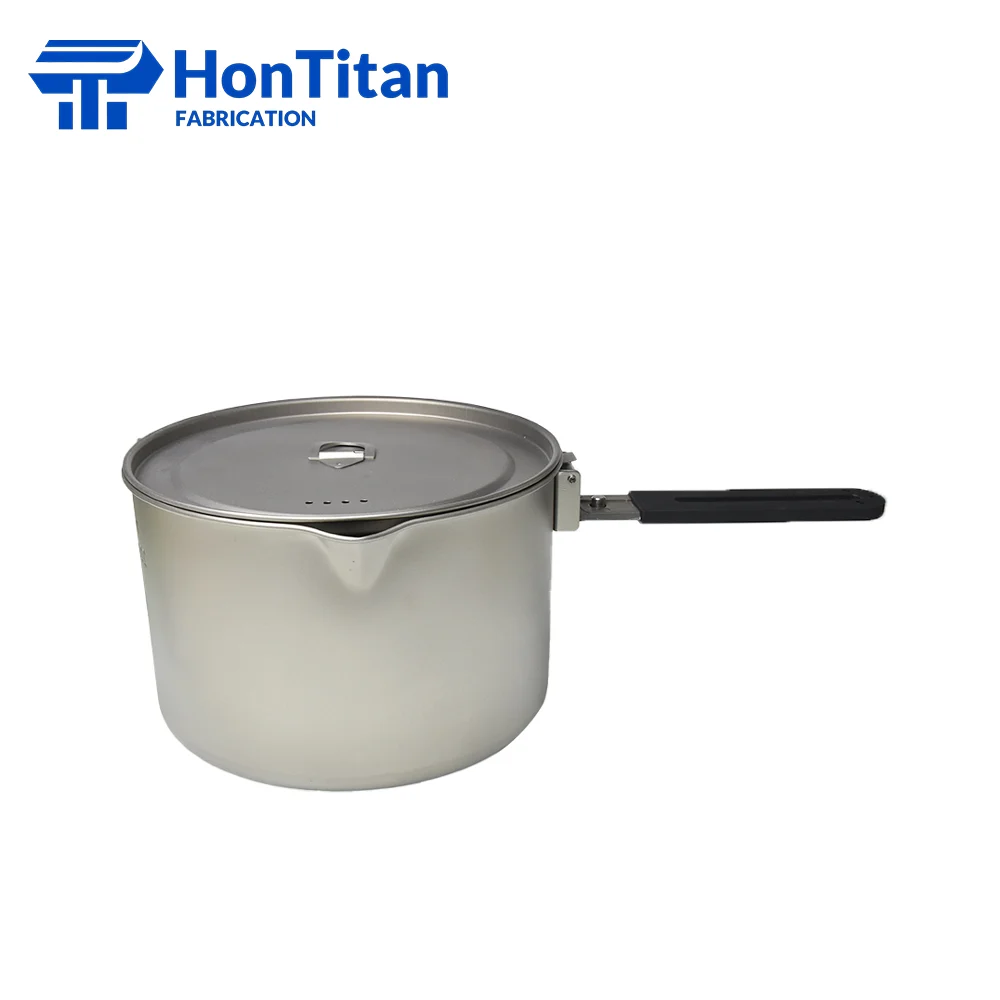
You’re standing in a store, or maybe you have two browser tabs open. On one side, a sleek, matte grey titanium cup. On the other, a classic, gleaming stainless steel mug. The price difference is stark, and the marketing promises are lofty. You’re left with a simple but frustrating question: which one should you actually buy?
This is a common dilemma for anyone investing in durable drinkware, whether for a remote mountain trail or your daily office commute. But this guide isn’t just a list of facts. It’s a decision-making tool. We’ll break down the real-world differences to help you choose the material that’s truly right for your specific needs, budget, and lifestyle.
Quick Answer: A Side-by-Side Comparison Table
For those in a hurry, here’s a quick rundown of how these two materials stack up.
| Feature | Titanium | Stainless Steel | The Winner Is… |
|---|---|---|---|
| Weight | Extremely light | Heavier, but robust | Titanium |
| Price | Premium / Expensive | Affordable / Budget-friendly | Stainless Steel |
| Durability | Excellent strength-to-weight ratio | Extremely tough, resists dents well | Tie |
| Heat Transfer (Single-Wall) | Fast (good for cooking) | Fast (good for cooking) | Tie |
| Purity of Taste | Completely inert, no taste | Can impart a slight metallic taste | Titanium |
| Long-Term Value | A premium, lifetime investment for performance | An unbeatable, cost-effective workhorse | Depends on user |
The Deep Dive: 7 Key Differences Analyzed
Now, let’s get into the details. The best choice for you lies in understanding how these differences impact your daily use.
1. Weight & Portability: The Deciding Factor for a Heavy Pack
This is titanium’s headline feature. With a density of around 4.5 g/cm³, titanium is approximately 45% lighter than food-grade stainless steel (which has a density of ~8.0 g/cm³). While a few ounces might seem trivial, for ultralight backpackers, thru-hikers, or cycle tourers, these savings are monumental. When your base weight is a primary concern, a titanium cup is an undeniable upgrade.
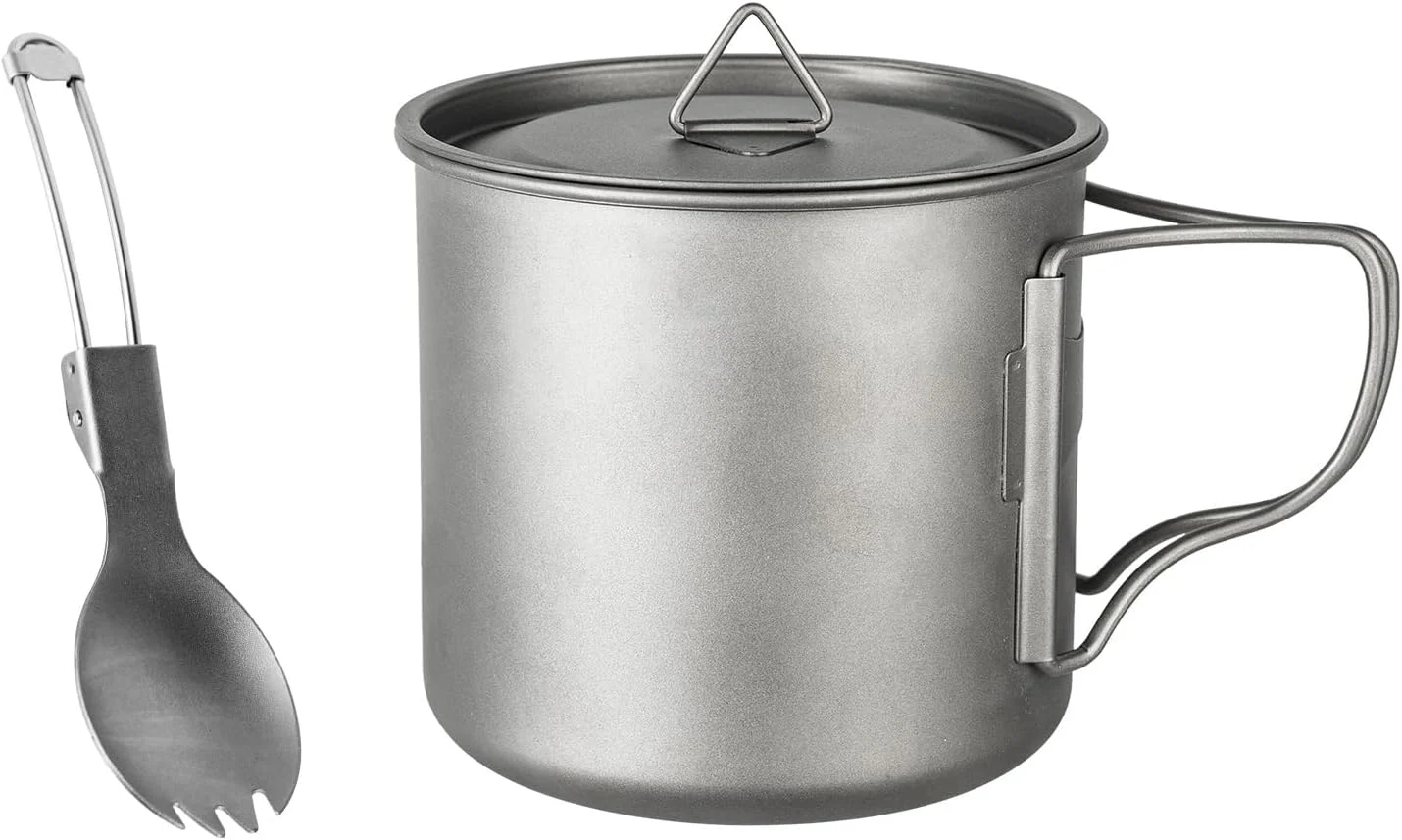
Case in point: A standard 750ml titanium pot/mug can weigh as little as 3-4 ounces (90-115g), while a similar stainless steel version can easily weigh 8-10 ounces (225-280g) or more. For the backpacker, that’s a significant weight saving.
2. Durability & Strength: A Battle of Brawn
Both materials are exceptionally durable, but in different ways. Titanium boasts a superior strength-to-weight ratio, meaning it’s incredibly strong for how little it weighs. It won’t rust or corrode. However, because titanium gear is made with very thin walls to save weight, it can be more prone to denting than a thick-walled stainless steel cup.
Stainless steel is a brute. It’s tougher in terms of sheer dent and scratch resistance, often due to its thicker construction. You can throw a steel cup in your truck bed or drop it on rocks, and it will likely just gain character marks. Both are “buy it for life” purchases, but steel is often the more forgiving of the two for rough, careless use.
3. Price & Value: Is Titanium Worth the Hefty Price Tag?
There’s no sugarcoating it: titanium is expensive. You can expect to pay 2 to 4 times more for a titanium cup compared to a stainless steel one of a similar size. This cost is due to the raw material’s rarity and the difficult, energy-intensive process of refining and machining it.
So, is it worth it?
- For performance-driven users (like ultralight hikers): Yes. The weight savings directly translate to a better experience on the trail.
- For budget-conscious or general users: Probably not. Stainless steel offers 90% of the functionality for a fraction of the price, making it a much better value proposition for most people.
4. Heat Transfer: Hot Coffee or Seared Lips?
This depends entirely on the construction: single-wall or double-wall.
- Single-Wall: Both titanium and stainless steel transfer heat very quickly. This is excellent for boiling water directly in your cup over a camp stove. It’s a major drawback for drinking hot liquids, as the rim will become scaldingly hot.
- Double-Wall: Both materials can be made into excellent insulated cups that keep drinks hot or cold for hours while the outside remains comfortable to touch. In this category, performance is more about the quality of the vacuum seal than the material itself.
5. Taste & Purity: Does Your Cup Affect Your Coffee’s Flavor?
For coffee purists and those with a sensitive palate, this is a critical differentiator. Titanium is completely inert and biocompatible. This is why it’s widely used for medical implants. It will not leach any flavor or chemicals into your drink. Your water will taste like water, and your coffee will taste exactly as the roaster intended.
High-quality, food-grade (18/8 or 304) stainless steel is also very safe, but it can, in some cases, impart a very faint metallic taste. Many people never notice it, but if you’re one of the few who does, titanium is the clear winner for taste purity.
6. Health & Safety: Are They Safe to Drink From?
The short answer is a resounding yes, for both. As mentioned, titanium is so non-reactive that it’s trusted inside the human body. As confirmed by numerous studies referenced by institutions like the National Center for Biotechnology Information (NCBI), its biocompatibility is top-tier.
Likewise, food-grade stainless steel is a global standard for kitchen and medical use for a reason. It’s stable, non-toxic, and does not leach harmful substances. Just be sure you’re buying from a reputable brand that specifies its use of 18/8 or 304 grade steel.
7. Aesthetics & Maintenance: Looks and Upkeep
This is subjective. Titanium has a unique, modern, matte grey finish that develops a subtle patina over time. It looks technical and premium. However, it shows fingerprints and oils very easily. Stainless steel offers a classic bright, shiny look (or a brushed finish) that is familiar and often easier to wipe clean without leaving smudges.
The Final Verdict: Which Cup Should You Buy?
Let’s bring it all together. Forget “which is better” and ask “which is better for me?”
Choose a Titanium Cup If You Are…
- The Ultralight Backpacker: Every gram matters to you. The weight savings are not a luxury; they are a core performance requirement.
- The Gear Aficionado: You appreciate cutting-edge materials and are willing to pay for the absolute best performance and technology.
- The Taste-Sensitive Drinker: You can detect the slightest metallic taste from other vessels and want the purest possible flavor from your coffee, tea, or whiskey.
Choose a Stainless Steel Cup If You Are…
- The Budget-Conscious Adventurer: You need a bombproof, reliable cup for camping and the outdoors but prefer to spend your money on other gear or experiences.
- The Everyday Commuter or Office Worker: Insulated stainless steel mugs from brands like Stanley or Hydro Flask offer fantastic performance and durability at a great price, and the slight weight penalty is irrelevant.
- The “Rough Use” Camper: You’re tough on your gear and want a cup that can be tossed, dropped, and scraped without you worrying about your high-dollar investment.
Conclusion: Your Perfect Cup Awaits
The debate between titanium and stainless steel boils down to a simple trade-off: Weight vs. Cost.
If you need the lightest possible gear and are willing to pay a premium for it, titanium is your champion. For everyone else, stainless steel provides an incredible combination of durability, safety, and value that is impossible to beat. There is no wrong answer here—only the right answer for your pack, your palate, and your wallet.
Frequently Asked Questions (FAQ)
Can you put a titanium cup directly on a fire?
Yes, a single-wall titanium cup is excellent for heating water directly over a camp stove or even hot coals. Do not do this with a double-wall insulated cup, as the sealed vacuum layer can build pressure and rupture dangerously.
Is titanium healthier than stainless steel?
Both are extremely safe for food and drink. Titanium is technically more biocompatible and inert, meaning there is zero chance of it reacting with your body or your drink. However, food-grade stainless steel is also incredibly safe and has been used for decades without issue.
Do titanium cups keep drinks hot?
Only if it’s a double-wall insulated model. A single-wall titanium cup will lose heat very quickly, just like a single-wall steel cup. The insulation comes from the vacuum between the two walls, not the material itself.
Why are titanium cups so expensive?
The high cost comes from the difficulty in processing the raw material. Titanium is harder to mine, refine, and machine into a final product than stainless steel, requiring more energy and specialized equipment.
How do I clean fingerprints off my titanium cup?
A simple wash with soap and water will remove fingerprints. For a more pristine look, wiping it down with an isopropyl alcohol wipe will remove oils and leave a streak-free finish.