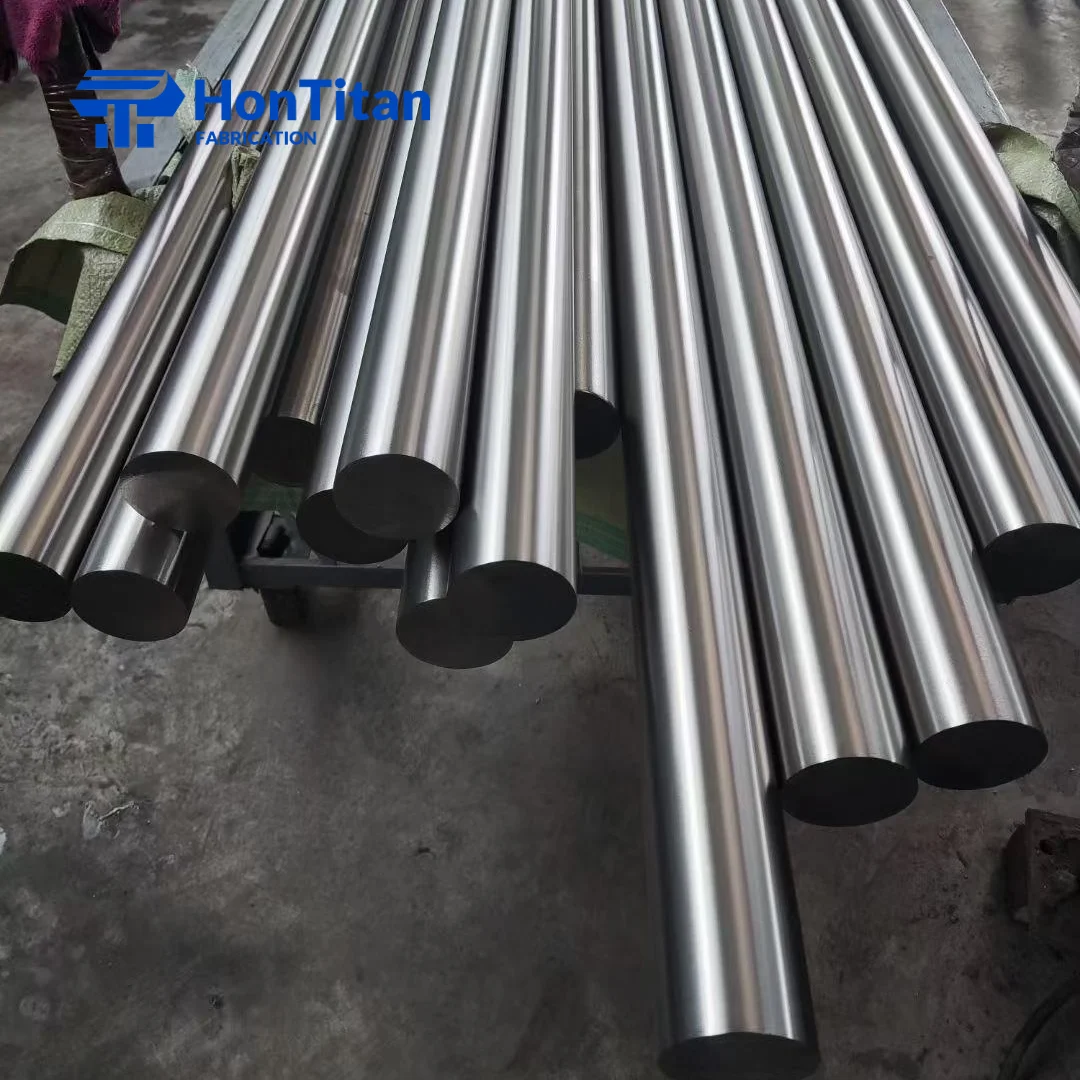
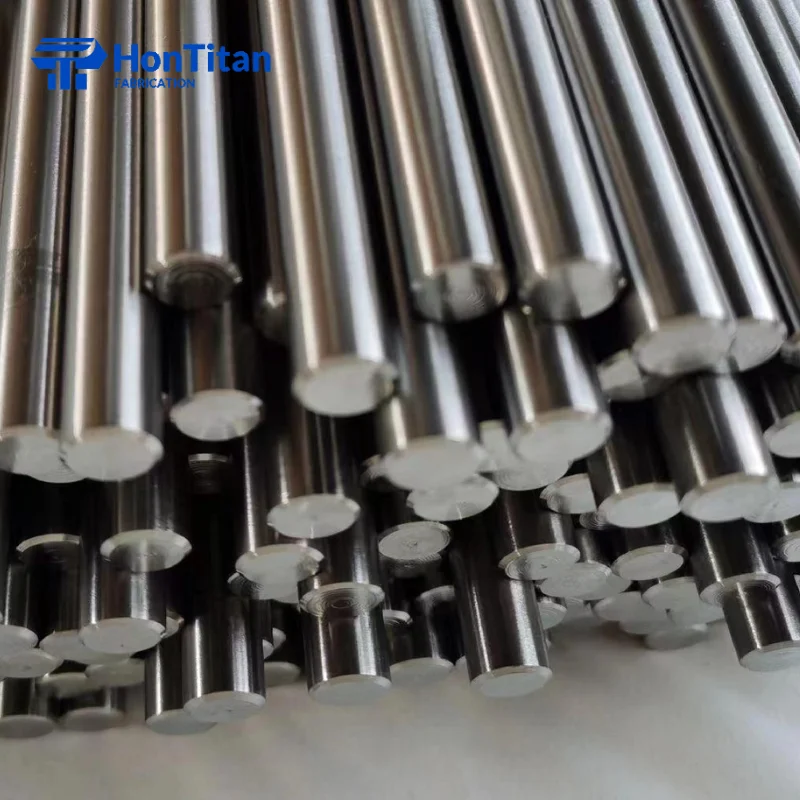
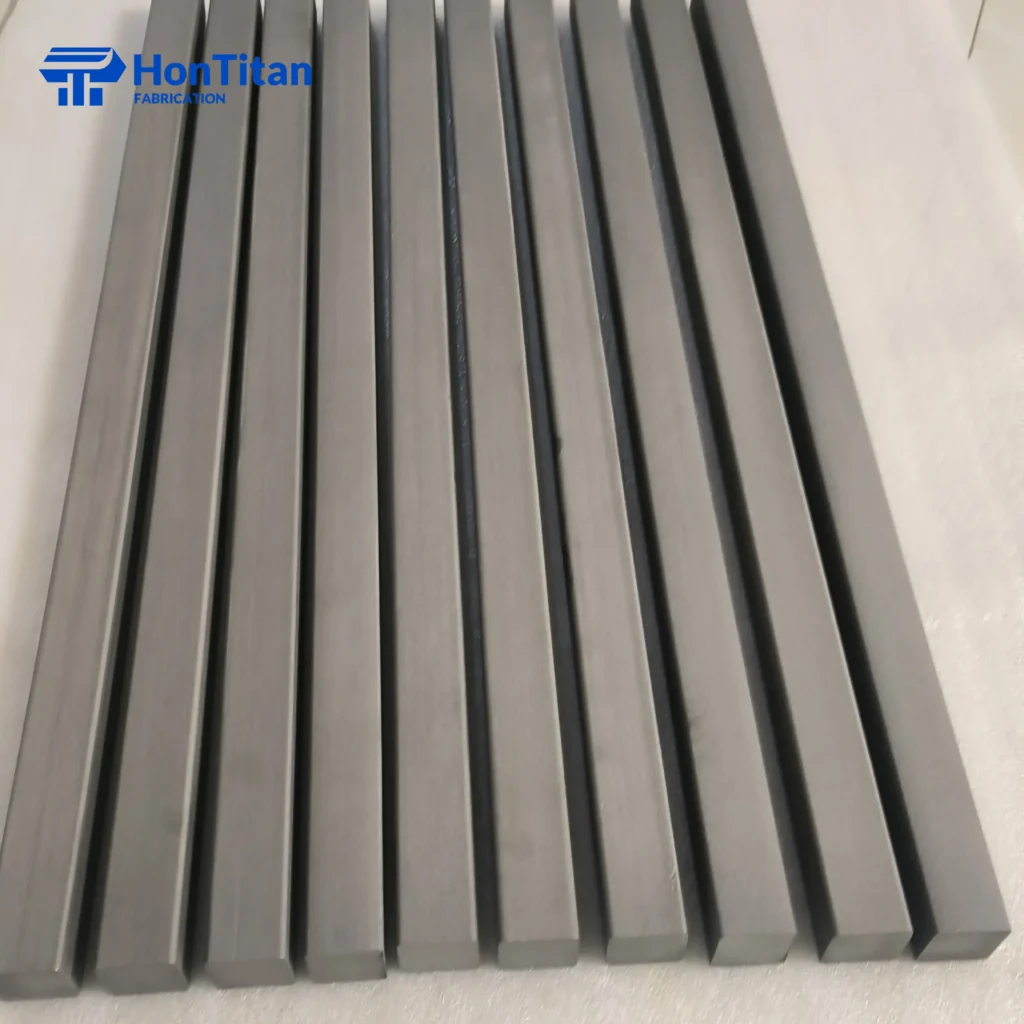
Grade 1 Titanium Round Bar — Key Specifications
Grade 1 titanium round bar (UNS R50250) is the purest and most ductile of the four commercially pure titanium grades defined under ASTM B348-21. The following table summarizes the core procurement parameters.
| Parameter |
Value |
| Material |
Commercially Pure Titanium (CP-Ti), Grade 1 |
| UNS Number |
R50250 |
| Primary Standard |
ASTM B348-21 / ASME SB-348 |
| Additional Standards |
ASTM F67, ISO 5832-2 |
| Diameter Range |
Ø6 mm – Ø300 mm |
| Length |
Up to 6,000 mm (custom cut-to-length available) |
| Delivery Condition |
Annealed |
| Surface Finish |
Mill finish, rough turned, precision turned, ground, polished |
| Mill Test Certificate |
EN 10204 3.1 (standard with every order) |
What Is Grade 1 Titanium? Material Properties & Standards
Grade 1 titanium (UNS R50250) is an unalloyed, commercially pure titanium (CP-Ti) containing a minimum of 99.5% titanium by weight. Among the four CP-Ti grades covered by ASTM B348-21, Grade 1 carries the lowest allowable concentrations of interstitial elements — oxygen (≤ 0.18 wt%), iron (≤ 0.20 wt%), nitrogen (≤ 0.03 wt%), hydrogen (≤ 0.015 wt%), and carbon (≤ 0.08 wt%). This minimal interstitial content is directly responsible for the grade’s defining characteristics: the highest ductility and cold formability of all CP-Ti grades, combined with outstanding weldability and excellent impact toughness. The material is supplied in the annealed condition unless otherwise specified.
Corrosion resistance stems from a self-healing TiO₂ passive oxide layer that forms spontaneously on the surface in oxidizing and mildly reducing environments. This passive film remains stable across a broad range of pH values and regenerates within milliseconds after mechanical damage, making Grade 1 titanium bar highly effective in chloride-rich, acidic, and seawater environments where stainless steels and nickel alloys are prone to pitting or crevice corrosion.
Chemical Composition — ASTM B348-21, Grade 1 (UNS R50250)
| Element |
Max. Content (wt%) |
| Oxygen (O) |
0.18 |
| Iron (Fe) |
0.20 |
| Nitrogen (N) |
0.03 |
| Hydrogen (H) |
0.015 |
| Carbon © |
0.08 |
| Other elements (each) |
0.10 |
| Other elements (total) |
0.40 |
| Titanium (Ti) |
Balance |
Mechanical Properties — ASTM B348-21, Grade 1 (Annealed)
| Property |
Minimum Value |
Unit |
| Tensile Strength (Rm) |
240 |
MPa |
| Yield Strength 0.2% offset (Rp0.2) |
138 |
MPa |
| Elongation in 2 in. (50 mm) |
24 |
% |
| Reduction of Area |
30 |
% |
| Brinell Hardness |
— (max 120 HB) |
HB |
All values per ASTM B348-21 Table 2. Testing per ASTM E8/E8M.
Applicable Standards
| Standard |
Scope |
| ASTM B348-21 / ASME SB-348 |
Standard Specification for Titanium and Titanium Alloy Bars and Billets |
| ASTM F67 |
Unalloyed titanium for surgical implant applications |
| ISO 5832-2 |
Implants for surgery — Metallic materials — Part 2: Unalloyed titanium |
| EN 10204 3.1 |
Mill Test Certificate issued by manufacturer |
Grade 1 vs Grade 2 Titanium: Which One Do You Need?
Both Grade 1 and Grade 2 are commercially pure titanium grades covered by ASTM B348-21, but they serve different engineering priorities. The table below provides a direct technical comparison to support material selection decisions.
| Property |
Grade 1 (UNS R50250) |
Grade 2 (UNS R50400) |
| Oxygen content (max) |
0.18 wt% |
0.25 wt% |
| Iron content (max) |
0.20 wt% |
0.30 wt% |
| Tensile Strength (min) |
240 MPa |
345 MPa |
| Yield Strength 0.2% (min) |
138 MPa |
275 MPa |
| Elongation (min) |
24% |
20% |
| Ductility / Formability |
Highest among CP-Ti grades |
Good |
| Weldability |
Excellent |
Excellent |
| Corrosion Resistance |
Superior in strongly reducing media |
Excellent |
| Machinability Index |
~46% (relative to free-machining steel SAE 1112) |
~45% |
| Typical Applications |
Deep-drawn chemical equipment, electroplating anodes, medical blanks requiring max formability |
General industrial components, heat exchangers, pressure vessels, marine fasteners |
Grade 1 is the preferred choice when the fabrication process requires significant cold forming, deep drawing, or spinning — or when the service environment demands maximum corrosion resistance in dilute reducing acids. The lower strength is rarely a design constraint in applications driven by corrosion resistance rather than structural load.
Grade 2 is the more common general-purpose selection where a balance of moderate strength and good corrosion resistance is sufficient and cold formability requirements are less demanding.
Industry Applications of Grade 1 Titanium Round Bar
The combination of maximum ductility, excellent weldability, and superior corrosion resistance in aggressive media makes Grade 1 titanium round bar a preferred bar stock across the following industries.
-
Chemical Processing Equipment — Reactor shafts, agitator components, pump shafts, and valve stems in contact with dilute sulfuric acid, hydrochloric acid, chloride brines, and oxidizing acid media. The self-healing TiO₂ passive layer provides resistance where 316L stainless steel is susceptible to pitting.
-
Heat Exchangers & Condenser Tube Sheets — Tube sheet blanks and baffle components for shell-and-tube heat exchangers operating with seawater, brackish water, or process streams containing chlorides. Grade 1’s superior formability simplifies tube-to-tube-sheet rolling and seal welding.
-
Seawater Desalination Systems — Structural and rotating components in multi-stage flash (MSF) and reverse osmosis (RO) desalination plants, where continuous contact with high-salinity, high-temperature seawater demands a material with no susceptibility to chloride stress corrosion cracking.
-
Electroplating Anode Baskets — Insoluble anode baskets and current-carrying bar components in electroplating and electrochemical processing lines. Grade 1’s low iron content and stable passive film ensure consistent current distribution without contaminating the plating bath.
-
Medical Devices & Surgical Instruments — Bar stock for machining orthopedic instrument handles, trial components, and non-implanted surgical tools per ASTM F67. The grade’s biocompatibility and ease of sterilization make it suitable for direct patient-contact applications.
-
Marine & Offshore Engineering — Fasteners, tie rods, and structural pins for offshore platforms, seawater intake systems, and subsea equipment where weight reduction and immunity to seawater corrosion are design requirements.
Quality Assurance & Material Traceability
Every shipment of Grade 1 titanium round bar is accompanied by a Mill Test Certificate (MTC) issued per EN 10204 3.1, the internationally recognized inspection document standard for metallic products. The MTC is generated by the manufacturer’s authorized quality representative and is traceable to a specific heat number, providing a complete chain of custody from the original melt to the delivered bar.
What the EN 10204 3.1 MTC Includes
- Full chemical composition analysis (all elements per ASTM B348-21 Table 1)
- Mechanical property test results (tensile, yield, elongation, reduction of area per ASTM E8/E8M)
- Heat number and lot identification
- Product dimensions and delivery condition
- Reference to the applicable standard (ASTM B348-21 / ASME SB-348)
In-House Testing Capabilities
| Test Type |
Standard |
| Chemical composition (OES / XRF) |
ASTM E2371 / ASTM E1409 |
| Tensile testing |
ASTM E8/E8M |
| Hardness testing |
ASTM E10 (Brinell) |
| Dimensional inspection |
Per ASTM B348-21 tolerances |
| Visual and surface inspection |
Per applicable standard |
Third-Party Inspection
Independent inspection and witnessing by SGS, Bureau Veritas (BV), or TÜV can be arranged on request prior to shipment. Documentation packages for customer-specific quality plans (PPAP, ITP, or FAI) are available upon agreement.
Certifications
- ISO 9001 — Quality management system certification
- EN 10204 3.1 MTC issued as standard with all orders
Available Dimensions & Custom Cut-to-Length Service
Grade 1 titanium round bar is stocked and produced in two form categories, covering a broad diameter range suitable for both machined components and forged blanks.
Rolled Bar (Hot-Rolled / Cold-Drawn)
| Parameter |
Range |
| Diameter |
Ø6 mm – Ø130 mm |
| Length |
Up to 6,000 mm |
| Delivery Condition |
Annealed |
| Typical Tolerance (diameter) |
Per ASTM B348-21 Table 7 |
Forged Bar
| Parameter |
Range |
| Diameter |
Ø40 mm – Ø300 mm |
| Length |
Up to 6,000 mm |
| Delivery Condition |
Annealed or as-forged (specify on RFQ) |
| Typical Tolerance (diameter) |
Per ASTM B348-21 Table 7 |
Surface Finish Options
- Mill finish (black skin) — Standard as-rolled or as-forged surface
- Rough turned — Scale removed, surface Ra typically 3.2–6.3 µm
- Precision turned — Tighter dimensional tolerance, Ra typically 1.6–3.2 µm
- Ground — Close tolerance, Ra typically 0.4–1.6 µm
- Polished — Bright finish, Ra ≤ 0.4 µm (specify requirement)
Custom Cut-to-Length & MOQ
Cut-to-length sawing is available for all diameters. Sample quantities for material qualification and incoming inspection are accepted. Submit an RFQ with the required diameter, length, quantity, surface condition, and applicable standard for a prompt quotation.
Frequently Asked Questions
What is the difference between Grade 1 and Grade 2 titanium?
Grade 1 (UNS R50250) has the lowest interstitial element content of all commercially pure titanium grades — maximum oxygen 0.18 wt% vs 0.25 wt% for Grade 2 (UNS R50400). This results in higher ductility and cold formability in Grade 1, while Grade 2 offers approximately 105–140 MPa higher tensile and yield strength per ASTM B348-21. Grade 1 is selected when maximum formability, weldability, or corrosion resistance in strongly reducing media is required. Grade 2 is the standard general-purpose choice where a moderate strength increase is beneficial.
What standards does Grade 1 Titanium Round Bar comply with?
The primary standard is ASTM B348-21 (Standard Specification for Titanium and Titanium Alloy Bars and Billets), with the equivalent ASME pressure vessel standard ASME SB-348. For surgical implant applications, ASTM F67 applies. ISO 5832-2 (Implants for surgery — Metallic materials — Part 2: Unalloyed titanium) covers titanium for medical device use. Mill Test Certificates are issued per EN 10204 3.1, with full chemical and mechanical data traceable to the original heat number.
Is Grade 1 titanium round bar suitable for chemical processing environments?
Yes. The self-healing TiO₂ passive layer provides resistance to a wide range of corrosive media including chloride solutions, dilute sulfuric acid, nitric acid, and seawater. In seawater and neutral chloride environments, Grade 1 titanium maintains corrosion resistance at temperatures up to approximately 260°C. Grade 1 titanium bar is used in chemical reactors, heat exchanger tube sheets, condenser components, pump shafts, and desalination equipment where corrosion resistance combined with high formability is required.
Can Grade 1 titanium round bar be welded?
Grade 1 titanium has excellent weldability. The preferred joining method is GTAW (TIG welding) with argon or helium shielding gas to prevent atmospheric contamination of the weld pool and heat-affected zone. The low oxygen content (≤ 0.18 wt%) contributes to outstanding weld ductility. Post-weld stress-relief heat treatment at 480–595°C may be specified for critical applications.
Do you provide Mill Test Certificates (MTC) with each order?
Yes. Every order is supplied with an EN 10204 3.1 MTC that includes full chemical composition analysis, mechanical property test results, heat number, and product identification — all traceable to the original manufacturing heat. Third-party inspection by SGS, Bureau Veritas, or TÜV can be arranged upon request at an additional charge.
What is the minimum order quantity (MOQ)?
MOQ varies by diameter and surface condition. Sample quantities for incoming inspection and material qualification are accepted. Contact the sales team with specific diameter, length, surface finish, and quantity requirements to receive a quotation with lead time.
What sizes and diameters are available?
Rolled Grade 1 titanium round bar is available from Ø6 mm to Ø130 mm and forged bar from Ø40 mm to Ø300 mm, with lengths up to 6,000 mm. Custom cut-to-length is available for all diameters. Surface finishes range from mill finish to precision turned, ground, and polished.