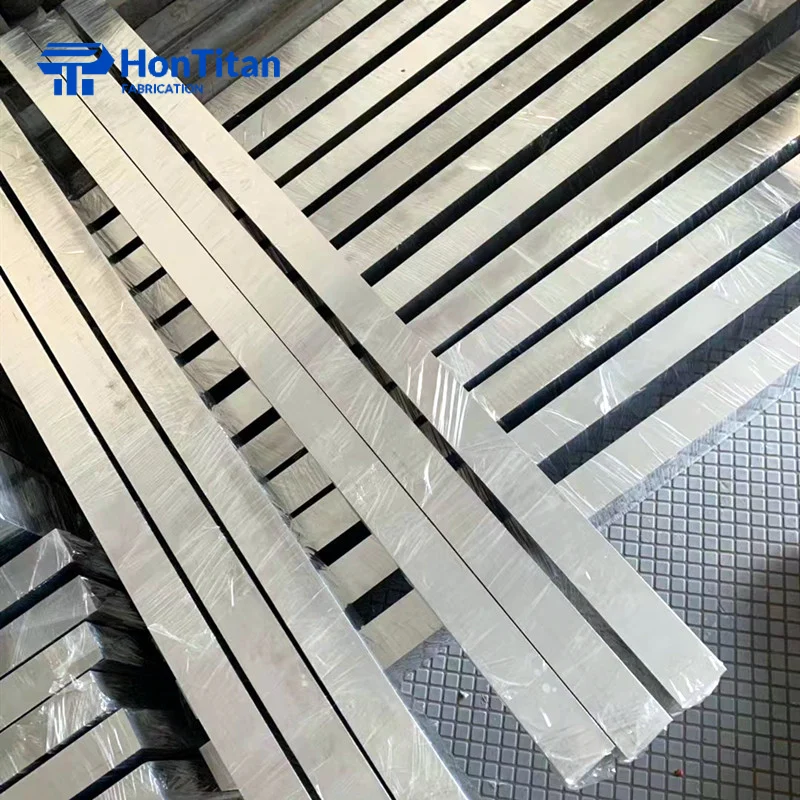
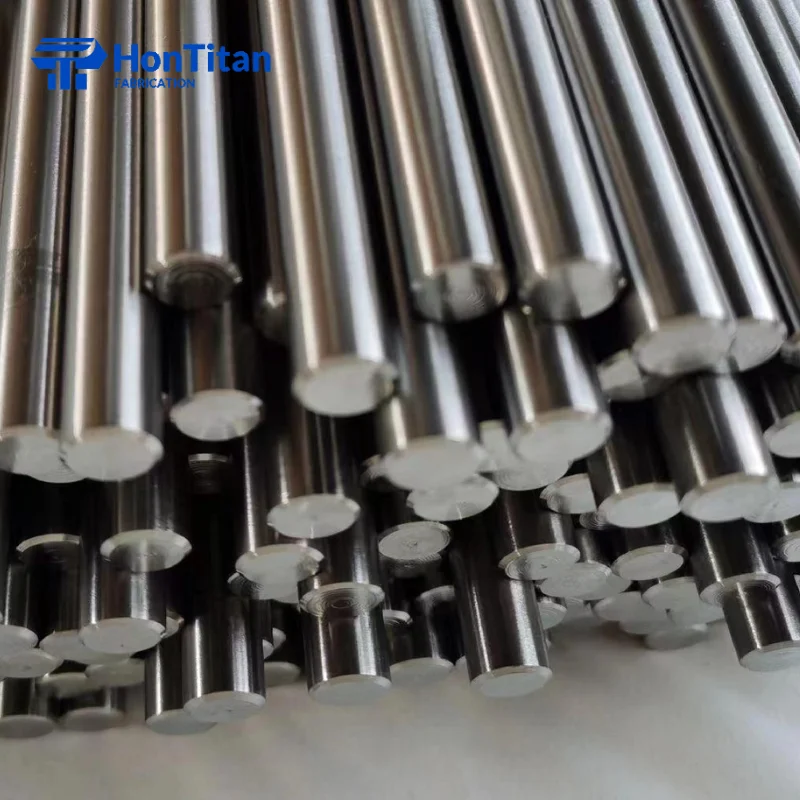
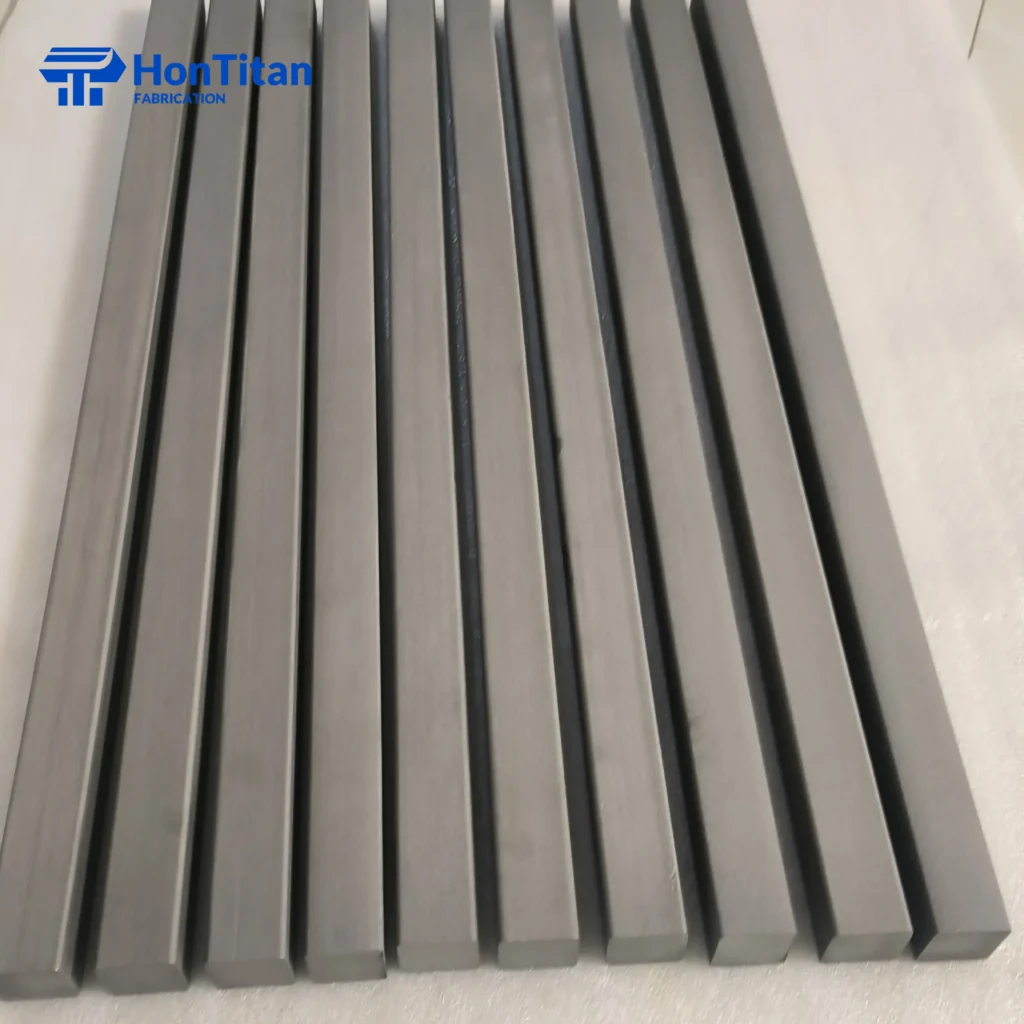
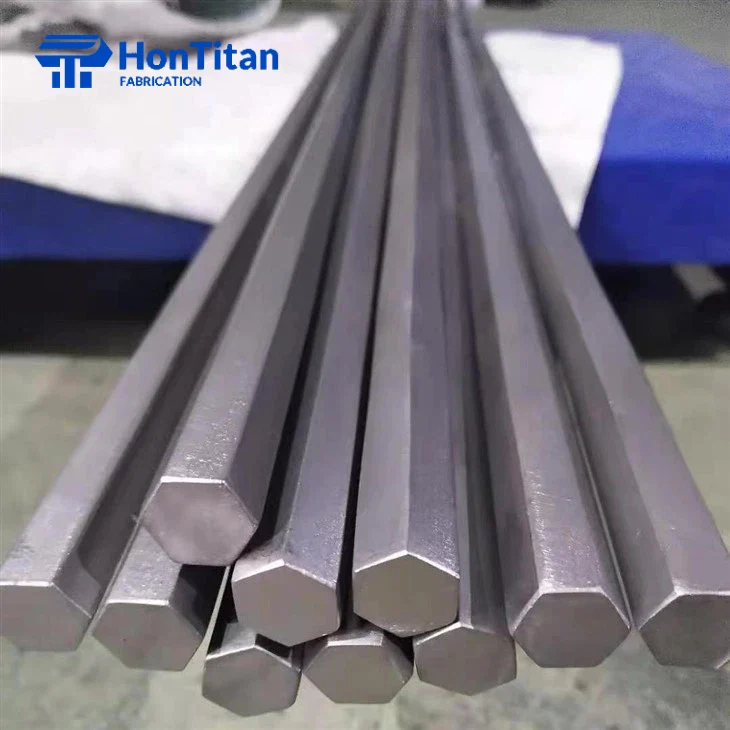
Ti-6Al-4V (UNS R56400, DIN 3.7165) is the most widely specified titanium alloy, accounting for approximately 50% of global titanium consumption. Grade 5 flat bar in the annealed condition delivers a minimum tensile strength of 130 ksi (895 MPa) and a strength-to-weight ratio approximately 3× that of structural steel, making it the reference material for aerospace structural brackets, medical implant blanks, chemical-processing hardware, and marine structural components.
Material is supplied per ASTM B348 (bars and billets) or AMS 4928 (annealed bars and forgings), with EN 10204 3.1 Mill Test Certificate included as standard. Annealed and solution-treated-and-aged (STA) conditions are both available.
Quick Specifications
Grade 5 (Ti-6Al-4V) titanium flat bar conforms to the parameters in the table below; all values are minimums or ranges per the referenced standard unless otherwise noted.
| Parameter |
Value |
| Material Grade |
Grade 5 / Ti-6Al-4V / UNS R56400 / DIN 3.7165 / TC4 |
| Primary Standards |
ASTM B348 (bar & billet); AMS 4928 (annealed); AMS 4965 / AMS 4967 (STA) |
| Additional Standards |
ASTM F1472 (medical); ISO 5832-3 (surgical implant); MIL-T-9047 / AMS-T-9047 |
| Condition |
Annealed (standard); STA available on request |
| Thickness Range |
3 mm – 80 mm (0.118″ – 3.15″) |
| Width Range |
20 mm – 200 mm (0.787″ – 7.87″) |
| Length |
Up to 6,000 mm; cut-to-length available |
| Tolerance |
Per ASTM B348 Table 10 (hot-rolled); tighter cold-finished tolerances available |
| Surface Finish |
Pickled (standard); polished, anodized, sandblasted on request |
| MOQ |
1 piece (standard stock); custom cut accepted |
| Lead Time |
3–5 business days (stock sizes); 7–20 business days (custom) |
| Mill Test Certificate |
EN 10204 3.1 included as standard |
| Quality System |
ISO 9001 / AS9100 supply chain |
Chemical Composition
Grade 5 (Ti-6Al-4V) chemical composition per ASTM B348 and AMS 4928 (stricter AMS 4928 limits noted where they differ):
| Element |
Symbol |
Min (%) |
Max (%) |
AMS 4928 Max |
| Aluminum |
Al |
5.50 |
6.75 |
6.75 |
| Vanadium |
V |
3.50 |
4.50 |
4.50 |
| Iron |
Fe |
— |
0.40 |
0.30 |
| Oxygen |
O |
— |
0.20 |
0.20 |
| Carbon |
C |
— |
0.08 |
0.08 |
| Nitrogen |
N |
— |
0.05 |
0.05 |
| Hydrogen |
H |
— |
0.015 |
0.0125 |
| Yttrium |
Y |
— |
— |
0.005 |
| Other, each |
— |
— |
0.10 |
0.10 |
| Other, total |
— |
— |
0.40 |
0.40 |
| Titanium |
Ti |
Bal. |
Bal. |
Bal. |
Note: AMS 4928 imposes tighter limits on Fe (0.30% max vs 0.40%) and H (0.0125% vs 0.015%). Aerospace applications typically specify AMS 4928 for these reasons.
Mechanical Properties
Annealed Condition (per AMS 4928)
Mechanical properties vary with cross-section size due to through-thickness microstructural gradients in larger sections.
| Cross-Section (Thickness) |
Tensile Strength Min |
Yield Strength (0.2% offset) Min |
Elongation (2″, min) |
Reduction of Area (min) |
| ≤ 2.000 in. (≤ 50.8 mm) |
135 ksi / 931 MPa |
125 ksi / 862 MPa |
10% |
25% |
| > 2.000 – 4.000 in. (50.8–101.6 mm) |
130 ksi / 896 MPa |
120 ksi / 827 MPa |
10% |
25% |
| > 4.000 – 6.000 in. (101.6–152.4 mm) |
130 ksi / 896 MPa |
120 ksi / 827 MPa |
10% |
20% |
Solution Treated and Aged — STA (per AMS 4965 / AMS 4967)
Solution treatment and aging elevates strength significantly at a modest reduction in ductility. Typical STA properties for flat bar sections ≤ 2″:
| Property |
Typical STA Range |
| Tensile Strength |
140–170 ksi (965–1,172 MPa) |
| Yield Strength (0.2% offset) |
130–150 ksi (896–1,034 MPa) |
| Elongation |
8–10% min |
| Reduction of Area |
20–25% min |
STA condition is heat-treatable; maximum strength achieved depends on section thickness and heat treatment cycle. Contact the technical team to specify the required condition.
Additional Physical Properties
| Property |
Value |
Reference |
| Density |
4.43 g/cm³ (0.160 lb/in³) |
ASTM B311 |
| Elastic Modulus |
114 GPa (16,500 ksi) |
— |
| Poisson’s Ratio |
0.31 |
— |
| Thermal Conductivity |
6.7–7.2 W/(m·K) at 20°C |
— |
| Coefficient of Thermal Expansion |
8.8 µm/(m·°C) (0–100°C) |
— |
| Melting Range |
1,604–1,660°C (2,920–3,020°F) |
— |
| Specific Heat Capacity |
526 J/(kg·K) |
— |
Technical Overview
Grade 5 titanium (Ti-6Al-4V) is an alpha-beta (α+β) alloy in which aluminum stabilizes the alpha phase and vanadium stabilizes the beta phase, producing a dual-phase microstructure that balances strength, ductility, and thermal stability up to 315°C (600°F).
The alloy’s corrosion resistance derives from a spontaneously forming, self-healing titanium oxide (TiO₂) passive film. This film provides exceptional resistance to seawater, oxidizing acids, chlorinated media (aqueous), and alkaline environments. Degradation is limited to high-concentration reducing acids (concentrated HCl, H₂SO₄ above threshold concentrations) and anhydrous chlorine gas. Stress-corrosion cracking (SCC) risk is low in aqueous service; hydrogen embrittlement requires hydrogen content to be maintained ≤ 150 ppm during processing and heat treatment.
Flat bar is produced primarily by hot rolling or forging from vacuum-arc-remelted (VAR) or electron-beam (EB) hearth-melted ingot. Hot-rolled flat bar exhibits excellent plasticity and is suitable for subsequent forming, stamping, or welding. Cold-finished flat bar achieves tighter dimensional tolerances (±0.05–0.10 mm thickness) and improved surface finish for precision machining applications. The alloy is weldable by GTAW (TIG) and electron beam welding with inert-gas shielding; post-weld stress relief is recommended. Machinability is comparable to 304/316 austenitic stainless steel — slow cutting speeds, heavy feeds, and non-chlorinated cutting fluid are required to control work-hardening and tool wear.
Pyrophoric note: Titanium fines, chips, and grinding dust can ignite above 480°F (250°C). Machining waste must be collected in closed metal containers; Class D extinguishing agents are required.
Dimensional Tolerances
Hot-Rolled Flat Bar (per ASTM B348 Table 10)
| Width (in.) |
Width (mm) |
Thickness Tolerance ≤ 0.500″ |
Thickness Tolerance > 0.500–1.000″ |
Thickness Tolerance > 1.000–2.000″ |
| ≤ 1.000 |
≤ 25.4 |
±0.008″ (±0.20 mm) |
±0.010″ (±0.25 mm) |
— |
| > 1.000 – 2.000 |
25.4 – 50.8 |
±0.012″ (±0.30 mm) |
±0.015″ (±0.38 mm) |
±0.031″ (±0.79 mm) |
| > 2.000 – 4.000 |
50.8 – 101.6 |
±0.015″ (±0.38 mm) |
±0.020″ (±0.51 mm) |
±0.031″ (±0.79 mm) |
| > 4.000 – 6.000 |
101.6 – 152.4 |
±0.015″ (±0.38 mm) |
±0.020″ (±0.51 mm) |
±0.031″ (±0.79 mm) |
Cold-Finished Flat Bar (per ASTM B348)
| Width Range (in.) |
Width Range (mm) |
Thickness Tolerance |
| > 0.375 – 1.000 |
9.5 – 25.4 |
±0.002″ (±0.05 mm) |
| > 1.000 – 2.000 |
25.4 – 50.8 |
±0.003″ (±0.08 mm) |
| > 2.000 – 3.000 |
50.8 – 76.2 |
±0.004″ (±0.10 mm) |
| > 3.000 – 4.500 |
76.2 – 114.3 |
±0.005″ (±0.13 mm) |
Available Product Forms
Grade 5 (Ti-6Al-4V) flat bar is available in four production routes, each optimized for different downstream requirements:
| Form |
Typical Thickness |
Typical Width |
Key Advantage |
| Hot-Rolled Flat Bar |
6.35–50 mm |
25–150 mm |
Plastic formability; suitable for welding, stamping, hot forming |
| Forged Flat Bar |
10–80 mm |
30–200 mm |
Dense fine-grain microstructure; tensile strength 950–1,000 MPa typical; aerospace-critical structures |
| Extruded Flat Bar |
5–25 mm |
Up to 100 mm |
Consistent cross-section; lengths up to 6,000 mm; OEM profile applications |
| Cold-Finished Flat Bar |
2.0–25 mm |
20–100 mm |
Tight tolerance (±0.05–0.10 mm); smooth surface for CNC precision machining, medical components |
Corrosion Resistance
Ti-6Al-4V flat bar maintains near-zero corrosion rates in seawater and many industrial media due to the stability of its passive oxide film.
Corrosion Resistance by Media
| Corrosive Media |
Grade |
Notes |
| Seawater |
Excellent |
Corrosion rate ≈ nil at ambient temperature |
| Acetic acid |
Excellent |
Stable across wide concentration range |
| NaCl salt spray |
Excellent |
Passive film stable |
| Humidity / condensation |
Excellent |
No pitting observed |
| Sulfuric acid (dilute, <5%) |
Moderate |
Concentration- and temperature-dependent |
| Sodium hydroxide (25%) |
Moderate |
Rate ≈ 0.046–0.051 mm/yr at 65.6°C |
| Hydrochloric acid (2%) |
Low |
0.03 mm/yr at 37.8°C |
| Dry chlorine gas |
Unacceptable |
Passive film breakdown — avoid |
| Concentrated HF |
Unacceptable |
Rapid dissolution — avoid |
Applications
Grade 5 titanium flat bar is specified across six primary industries where the combination of high specific strength, corrosion resistance, and bio-compatibility is required:
- Aerospace Structures — Airframe brackets, wing spars, fuselage frames, bulkhead fittings, fastener blanks (ASTM B348 / AMS 4928; Boeing BMS 7-269 available on request)
- Medical Devices — Orthopedic implant blanks, spinal instrumentation, prosthetic components (ASTM F1472; ISO 5832-3; ELI Grade 23 available for fatigue-critical implants)
- Chemical Processing — Heat exchanger baffles, reaction vessel liners, pump components where chloride resistance is required (ASTM B348)
- Marine & Offshore — Subsea structural hardware, clamp bodies, fasteners, hulls (seawater-grade corrosion performance)
- Defense & Space — Pressure vessel components, rocket motor casings, missile guidance housings, satellite structural elements (MIL-T-9047 / AMS-T-9047)
- Motorsport & High-Performance Engineering — Suspension components, connecting rod blanks, roll cage structures where mass reduction is the primary driver
Grade 5 vs. Grade 23 (Ti-6Al-4V ELI)
Grade 5 and Grade 23 share the same nominal alloy chemistry (Ti-6Al-4V) but differ in interstitial element limits. Grade 23 (Extra Low Interstitial — ELI) specifies lower oxygen, nitrogen, and carbon maxima to improve fracture toughness and fatigue performance in cryogenic and medical applications.
| Property |
Grade 5 (ASTM B348) |
Grade 23 ELI (ASTM F136) |
| Oxygen max |
0.20% |
0.13% |
| Nitrogen max |
0.05% |
0.03% |
| Iron max |
0.40% |
0.25% |
| Tensile strength min |
895 MPa (130 ksi) |
860 MPa (125 ksi) |
| Fracture toughness |
Standard |
Superior (lower interstitials) |
| Primary use |
Aerospace, industrial, marine |
Medical implants, cryogenic, fracture-critical |
| Standard |
ASTM B348 / AMS 4928 |
ASTM F136 (surgical implants); ASTM B348 Grade 23 (bar form) |
Grade 23 ELI flat bar is available; specify ASTM F136 (surgical implant applications) or ASTM B348 Grade 23 (industrial bar form) at time of inquiry.
Quality Assurance & Certifications
All Grade 5 titanium flat bar is tested and documented prior to shipment. Standard inspection package includes:
- Chemical composition analysis per ASTM E1456 / ASTM E2371 (ICP-OES), verifying compliance with ASTM B348 or AMS 4928 element limits
- Mechanical properties testing per ASTM E8 (tensile), ASTM E517 (elongation), confirming minimum tensile, yield, and elongation requirements
- Ultrasonic testing (UT) per AMS 2631 for aerospace-grade flat bar detecting internal voids, cracks, or inclusions
- Dye penetrant testing (PT) per ASTM E165 for surface crack detection
- Dimensional inspection with calibrated instruments, traceable to NIST standards
- EN 10204 3.1 Mill Test Certificate issued with every shipment; includes heat number, chemical analysis, mechanical test results, and standard compliance declaration
Quality systems: ISO 9001:2015; AS9100 mill supply chain available on request.
Value-Added Processing
The following processing services are available prior to shipment to reduce downstream machining lead time:
- Saw cutting / shearing to specified length, tolerance ±0.5 mm
- Waterjet cutting for complex profiles and heat-sensitive applications
- CNC milling / face milling to near-net thickness
- Thread tapping and drilling (M3–M20, through-holes, countersinks)
- Surface treatments: pickling, mechanical polishing, anodizing, sandblasting
- Ultrasonic inspection on request for aerospace qualification lots
FAQ
What standard covers Grade 5 titanium flat bar?
Grade 5 titanium flat bar conforms to ASTM B348, which covers titanium and titanium alloy bars and billets. AMS 4928 specifies additional requirements for the annealed condition and is the primary aerospace procurement standard. ASTM B265 covers strip, sheet, and plate — not bar products. Specifying ASTM B348 or AMS 4928 ensures the correct chemical composition limits and mechanical property requirements are applied to flat bar.
What is the tensile strength of Grade 5 (Ti-6Al-4V) titanium flat bar?
In the annealed condition per AMS 4928, Grade 5 titanium flat bar achieves a minimum tensile strength of 135 ksi (931 MPa) for sections ≤ 2″ thick, and 130 ksi (896 MPa) for sections 2–6″ thick. Solution-treated and aged (STA) flat bar per AMS 4965/4967 reaches typical tensile strengths of 140–170 ksi (965–1,172 MPa), depending on section size and heat treatment cycle.
What is the difference between Grade 5 and Grade 23 titanium?
Grade 5 (Ti-6Al-4V, ASTM B348) and Grade 23 (Ti-6Al-4V ELI, ASTM F136) share the same base alloy composition but differ in interstitial limits. Grade 23 specifies lower oxygen (0.13% max vs 0.20%), lower nitrogen (0.03% vs 0.05%), and lower iron (0.25% vs 0.40%). These tighter limits improve fracture toughness and fatigue life, making Grade 23 the standard choice for medical implants and cryogenic structures. Grade 5 is preferred for aerospace, industrial, and marine applications where maximum strength at lower cost is the priority.
Can Ti-6Al-4V flat bar be welded?
Ti-6Al-4V flat bar is weldable by gas tungsten arc welding (GTAW / TIG) and electron beam welding when inert-gas shielding (argon or helium) is maintained. Atmospheric contamination above 260°C (500°F) causes embrittlement; full inert-gas back-purging is required. Post-weld stress relief at 538–649°C (1,000–1,200°F) for 1–4 hours, air cool, is recommended. Chlorinated cutting fluids and cleaning agents must be avoided prior to and during welding.
What does STA condition mean for titanium flat bar?
STA stands for Solution Treated and Aged, a two-step heat treatment process. The material is first solution-treated above the beta transus temperature, then aged at a lower temperature to precipitate strengthening phases. For Ti-6Al-4V flat bar, STA per AMS 4965 or AMS 4967 produces typical tensile strengths of 140–170 ksi compared to 130–135 ksi in the annealed condition, with a modest reduction in ductility. STA material is used where maximum strength is the design driver, such as aerospace fasteners and structural forgings.
What is the density and strength-to-weight ratio of Grade 5 titanium?
Grade 5 titanium has a density of 4.43 g/cm³ (0.160 lb/in³), approximately 56% of the density of steel (7.85 g/cm³) — roughly 45% lighter than structural steel — and 60% of nickel alloys. With a minimum tensile strength of 895 MPa (annealed), Ti-6Al-4V delivers a specific strength (strength-to-density ratio) of approximately 202 kN·m/kg, more than three times that of structural carbon steel (A36) and roughly comparable to high-strength aluminum alloys at significantly higher service temperature capability.
What industries specify Grade 5 titanium flat bar?
Grade 5 titanium flat bar is specified in aerospace (airframe structures, engine components), medical device manufacturing (implant blanks, spinal hardware), chemical processing (corrosion-resistant hardware), marine and offshore engineering (subsea structural components), defense and space (pressure vessels, rocket structures), and high-performance motorsport (lightweight structural members). The alloy accounts for approximately 50% of total global titanium consumption due to its combination of strength, low density, and corrosion resistance.
What certifications and documentation come with each order?
Every shipment of Grade 5 titanium flat bar includes an EN 10204 3.1 Mill Test Certificate with chemical composition results, mechanical test data, heat number, and standard compliance declaration (ASTM B348 or AMS 4928 as specified). Ultrasonic test reports, dye penetrant records, and dimensional inspection reports are available on request. Material is traceable from ingot heat to finished product.