チタン製の時計は、同等のステンレス製モデルに比べて約45%軽量ですが、耐傷性はグレードや表面処理によって大きく異なります。 エントリー~ミドルレンジの腕時計で最も一般的なグレードであるグレード2のチタン(未加工)のビッカース硬度は約145 HVであり、150~200 HVの316Lステンレス鋼とほぼ同等です。 グレード5チタン(Ti-6Al-4V)は、約349~380 HVに達し、硬度は約2倍になります。 シチズンの「デュラテクト(Duratect)DLC」のような表面硬化処理が施されたものは1,000~1,400 HVに達し、一方、高級スポーツウォッチに施される標準的なDLCコーティングは2,000~3,000 HVに達します。 洗浄については、無コーティングのチタン製部品にはぬるま湯と石鹸水、そして柔らかい歯ブラシを使用すれば問題ありません。DLCやPVDコーティングが施されている場合は、アンモニア系洗浄剤の使用を避けてください。アンモニアは時間の経過とともに結合層を劣化させる恐れがあります。.
『スクラッチ・リアリティ』:グレード2チタンは、あなたが想像しているものとは異なる
時計のケースに使用される最も一般的なチタンは、通常のステンレス鋼と同程度の硬度しかなく――しかし、ほとんどのブランドはこの事実をこっそりと伏せている。.
1980年代にチタン製腕時計が主流となった際、セイコーとシチズンは、この素材の軽量性と耐食性を強調しました。 耐傷性については二の次でした。数十年経った今でも、この期待とのギャップは解消されていません。購入者はチタンを航空宇宙産業と結びつけ、より頑丈であるに違いないと想定しているため、新しい時計が購入から1ヶ月も経たないうちに表面に傷がついてしまうと、心からがっかりしてしまうのです。.
私は2年間、グレード2のチタン製セイコーの普段使い用時計と、同時代の316Lステンレススチール製のダイバーズウォッチを並行して着用しました。チタン製時計は、毎日着用し始めてから2週間以内に表面に細かい傷が見られるようになりましたが、その発生率はスチール製時計とほぼ同じでした。6ヶ月経過時点での傷の蓄積量に、有意な違いは見られませんでした。.
これは品質上の問題ではありません。グレード2のチタンは、ビッカース硬度がおよそ145~170 HVです。標準的な316Lステンレス鋼は150~200 HVです。耐傷性という点では、この2つの材料は実質的に同等です。 チタンは重量と耐食性の点で優れており、これらは実用上大きな利点ですが、母材レベルでは鋼よりも硬いわけではありません。.
この混乱は、2つの異なる問題を混同していることに起因しています: 衝撃靭性 (チタンは素晴らしい素材です――へこみにくく、衝撃を吸収してくれます)そして 表面硬度 (グレード2のチタンは特に際立った特徴はありません)。特に耐傷性に関しては、「チタン」という名称そのものよりも、グレードや表面処理の方がはるかに重要です。.
チタンの硬度スペクトル:1つの表で必要な数値がすべて揃う
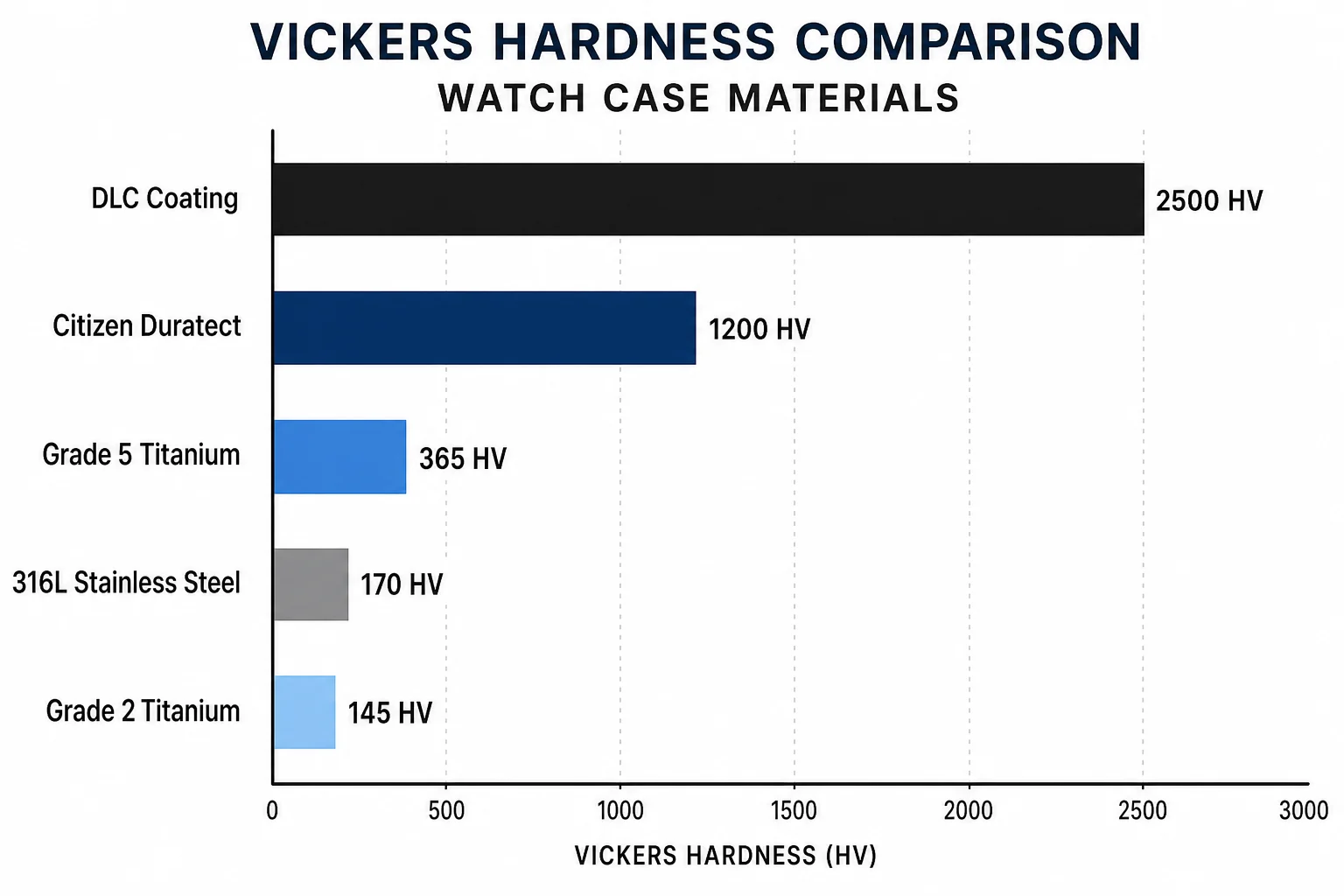
以下の表は、未加工のグレード2からDLCコーティングまでを網羅しており、主要な時計専門誌のどこにも一か所にまとめて掲載されたことのない比較となっています。.
| 素材 | ビッカース硬度(HV) | 代表的な時計用アプリケーション | 耐傷性 |
|---|---|---|---|
| グレード2チタン(商業用純チタン) | ~145~170 | エントリー~ミドルクラスのチタン製ケースおよびブレスレットのほとんど | 低 — 鋼と同等 |
| 316Lステンレス鋼 | 150~200 | 基準点 | 低い |
| 5級チタン(Ti-6Al-4V) | ~349–380 | チューダー「ペラゴス ウルトラ」のケースバック、ロレックス「RLX Ti」、厳選されたプレミアムケース | 中程度 — 鋼の約2倍の硬度 |
| シチズン デュラテクト(DLC仕様) | 約1,000~1,400 | シチズン エコ・ドライブ チタンシリーズ | 高い |
| IWC セラタニウム(チタン・セラミック合金) | 未公表(セラミックレベル範囲) | IWCのアクアタイマーおよびインジニエールシリーズ | 高い |
| 標準DLC(ダイヤモンドライクカーボン)コーティング | 2,000~3,000 | プレミアムスポーツウォッチ、カシオ G-SHOCK MR-G | 非常に高い |
| 時計用セラミック | 約1,200~2,500 | セラミックベゼル、セラミックケース | 非常に高い |
| サファイアクリスタル(参考) | ~2,000 | 時計のガラス | 参考文献 |
この表を素直に読み取ると、Duratectコーティングが施されたCitizenは、表面の硬度がコーティングなしのグレード5のTudorの4~5倍である。Tudorは下地として「より優れた」チタンを使用しているにもかかわらず、表面処理は耐傷性において常にベース合金よりも優れている。.
チタンのグレードは依然として重要です。グレード5は構造強度が優れているため、へこみや変形に強く、剛性を損なうことなくケースの壁を薄くすることができます。しかし、鍵や机、ドア枠などによる日常的な傷については、何が 表面 こそが、本当に重要なのです。.
2年生対5年生:あなたの時計が実際に使っているもの
グレード2とグレード5は互換性がない――これらはそれぞれ異なる問題を解決するため、一部のブランドでは同じ時計に両方を採用している。.
グレード2チタンは商業用純チタン(酸素と鉄の含有量が厳密に管理された、約98.8%のチタン)です。加工が容易で、合金に比べて1キログラムあたりのコストが大幅に安く、優れた耐食性を備えています。市場に出回っているチタン製腕時計のほとんどは、ケース本体とブレスレットにグレード2チタンを使用しています。.
グレード5、すなわちTi-6Al-4V(チタン90%、アルミニウム6%、バナジウム4%)は、航空宇宙用の構造用合金です。グレード2に比べて硬度は約2倍、引張強度はおよそ3倍です。 また、機械加工が難しく、コストも高くなります。航空宇宙分野のような構造的負荷を必要としない時計のケースにおいて、グレード5の割高感は正当化されにくいことが多く、そのため、マーケティングよりも機能性を重視した技術的判断で知られるチューダーでさえ、次のような意図的な選択を行ったのです: 「ペラゴス・ウルトラ(2025)」は、グレード2のケース本体とグレード5のケースバックを採用しています。. ケースバックには、深海での潜水時に生じる圧力差に耐えるための剛性が求められますが、ケース本体については、軽量化と加工性の向上がより重要となります。(注:初期のペラゴスモデルおよび現行のペラゴス39では、グレード2のケースにステンレス製のケースバックが採用されています。)
ロレックスは、独自開発の「RLXチタン」によってさらに一歩先を行く。これは、同ブランド独自の改良型グレード5合金であり、「ヨットマスター」や「エクスプローラー」に採用されている。具体的にどのような点が独自性であるかは公表されていないが、その意図は明らかだ。すなわち、時計用合金において最高の硬度と構造的性能を実現することである。.
実用的な購入者の方へ:仕様書に「チタン」と記載されているだけでグレードが明記されていない場合は、グレード2であると想定してください。グレード5またはTi-6Al-4Vと明記されている場合は、母材レベルでの耐スクラッチ性が大幅に向上していますが、表面硬化処理が施された製品にはまだ及びません。.
表面処理:耐傷性が実際に発揮される場所
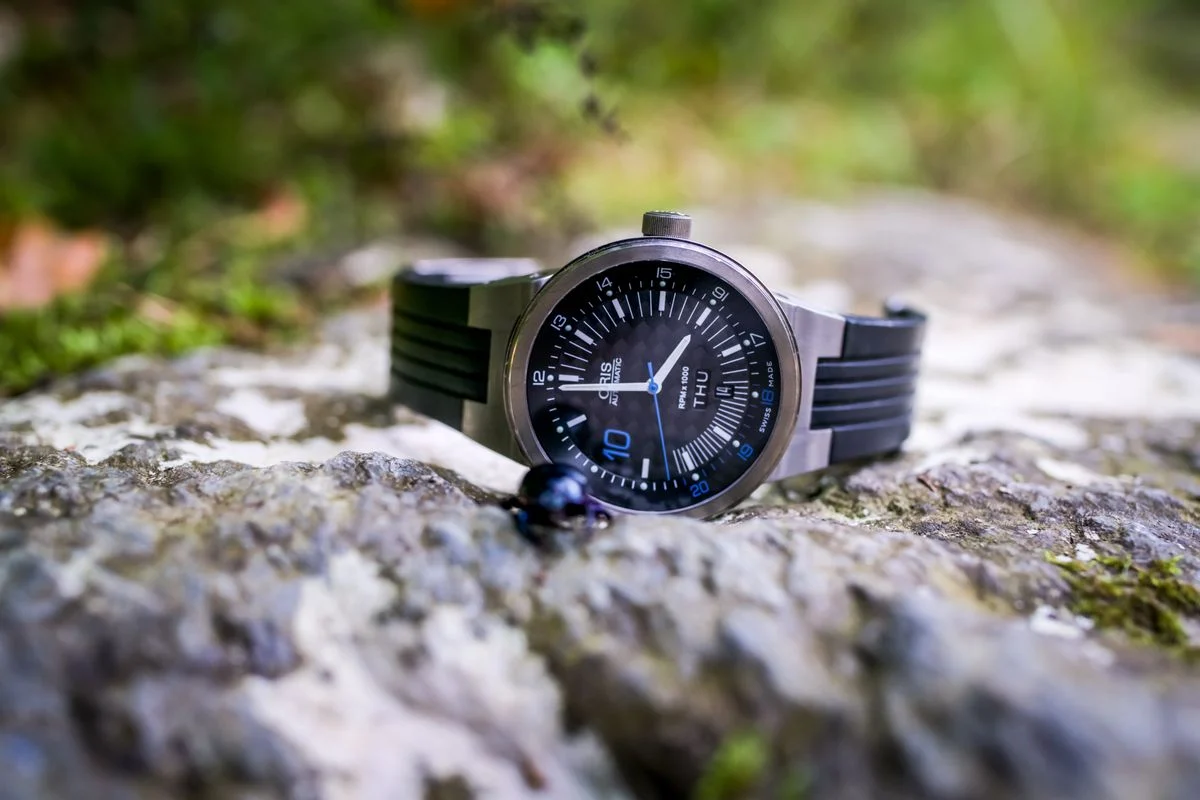
この記事で最も重要な一文:表面処理が施されたグレード2の時計は、日常的な耐傷性において、表面処理が施されていないグレード5の時計よりも優れた性能を発揮することが多い。.
時計メーカーは、グレード5では硬度約400 HVしか得られないことを承知しています。また、DLCコーティングを施せば3,000 HVに達することも知っています。興味深い技術的工夫は、その中間にあるのです。つまり、欠けやすい別個のコーティング層を追加することなく、より硬い化合物をチタンに融合させる独自の表面硬化処理です。.
最も重要な3つは以下の通りです:
シチズン・デュラテクト — シチズンはこれを自社で開発し、4つのバリエーションに採用しています:
- デュラテクト DLC: ダイヤモンドライクカーボン(DLC)コーティング、約1,000~1,400 HV、ブラックおよびダークトーンの仕上げ
- デュラテクト MRX: 金属樹脂複合材、高い表面硬度、シルバー調
- デュラテクト・アルファ: ゴールド調のバリエーション
- デュラテクト・シールド: 摩擦係数が低いシルバー調のバリエーション
デュラテクト加工では、標準的なPVDよりも硬化層がチタン表面のより深い部分まで密着します。このことが一因となり、この処理が施されたシチズンの腕時計は、長年にわたる日常的な使用にも耐えうるという評判を得ています。.
グランドセイコー ブリリアントハードチタン/高強度チタン(HIT) — グランドセイコー独自の技術で、SBGAおよびSBGWシリーズのモデルに採用されています。HITは、グランドセイコーの文字盤とケースの美観を特徴づける、高度に研磨された「ザラツ」鏡面仕上げを実現し、その状態を維持するように設計されています。 通常のチタン表面では、日常の使用においてこのレベルの光沢を維持することはできませんが、硬化層によってそれが可能になります。正確な硬度値はグランドセイコーから公表されていませんが、時計専門誌による実機テストでは、グレード5を上回り、デュラテクトの下限レベルに匹敵するものとされています。.
IWC セラタニウム — IWCの「アクアタイマー」および「インジニエール」シリーズにのみ採用されているチタン・セラミック合金。「セラタニウム」は、チタンにコーティングを施すのではなく、合金全体にセラミック化合物が均一に分散されたハイブリッド素材である。 その結果、セラミック並みの表面硬度を持ちながら、チタンの軽さを兼ね備え、かつ厳密な公差で機械加工が可能となっています。IWCはビッカース硬度値を公表していませんが、実際に手に取ってみると、この素材は未加工のグレード5チタンとは明らかに異なる感触があります。.
耐傷性を最優先とする場合は、チタンのグレードではなく、表面処理でまず絞り込んでください。.
DLC層:印象的だが、完全無欠ではない
DLC(ダイヤモンドライクカーボン)は、一般向けの腕時計のケースに施される表面処理の中で最も硬度が高いものですが、所有者なら誰もが知っておくべき2つの不具合の原因があります。.
DLCは、真空チャンバー内で物理気相成長法(PVD)または化学気相成長法(CVD)を用いて成膜される非晶質炭素構造です。厚さは通常、ミクロン単位で測定されます。 これは、G-Shock MR-Gモデルにほぼ黒色の仕上げをもたらすものであり、パネライが「カーボテック」シリーズに採用している技術でもあります。硬度2,000~3,000 HVを誇るため、日常的な接触では傷がつくことは極めて困難です。.
故障モード 1:エッジの欠け。. ラグ、リューズの肩、ベゼルの面取りなど、鋭いエッジ部分に施されたDLCコーティングは、幾何学的な応力にさらされています。これらの箇所に薄くコーティングされていると、強い衝撃で欠けてしまうことがあります。DLCが欠けると、その下にある柔らかいグレード2チタンが露出します。暗いDLCと明るい未処理のチタンとのコントラストは視覚的にも明らかであり、自宅での修復は困難です。.
故障モード 2:化学物質による接合部の劣化。. 炭素層は、分子レベルの界面を通じてチタンと結合しています。アンモニア系洗浄剤(「ウィンデックス」などの製品を含む)は、繰り返し接触することで、この結合を徐々に弱める可能性があります。 表面はすぐには目に見えるほど劣化しませんが、数ヶ月にわたって定期的に接触し続けると、DLCコーティングに曇りや縁部の微細な剥離といった接着不良が現れ始めることがあります。.
これが重要なのは、アンモニア系洗剤が いいよ 無処理のブラッシュ仕上げチタンには適しており、ストーンウォッシュ仕上げのチタンに輝きを取り戻すためにも推奨されることがあります。原則として、素材ごとに異なります。無処理のチタンは、常識の範囲内であればどのような方法で洗浄しても構いませんが、DLCコーティングが施されたチタンを洗浄する際は、中性洗剤と水以上の強い洗浄剤は使用しないでください。.
DLCコーティングは再施工できますか?はい。専門の再コーティングサービスがあり、古いDLCコーティングを剥離して新しい層を施すことが可能です。 費用はケースの複雑さにもよりますが、およそ$80~$300程度で、所要期間は通常2~6週間です。安くはありませんが、今後も使い続けたい時計にとっては現実的な選択肢です。.
チタン製腕時計のお手入れ方法:手順別ガイド
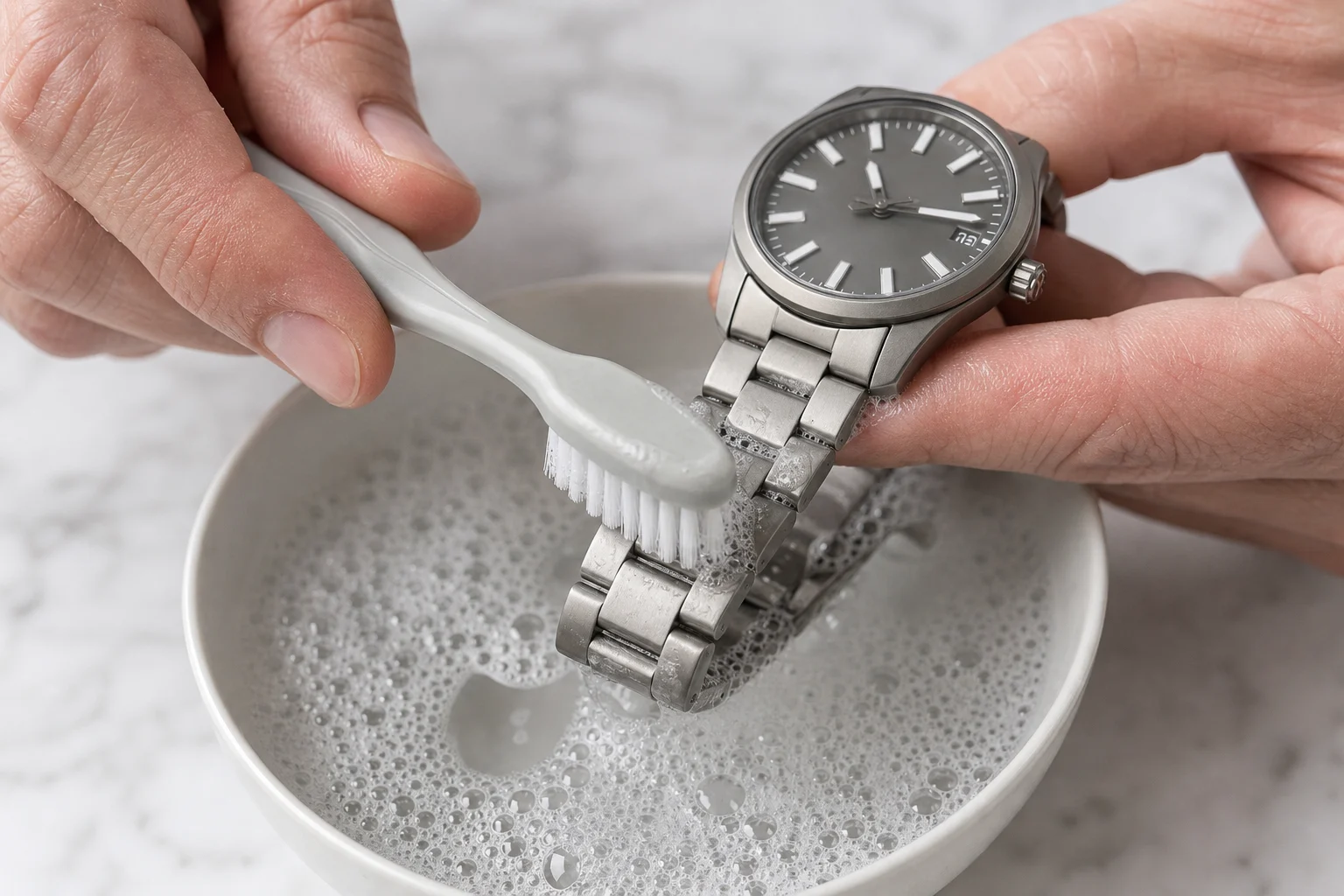
適切なクリーニング方法は、お使いの時計が素地のチタン仕上げか、それとも表面コーティング(DLC/PVD/デュラテクト)が施されているかによって異なります。.
どちらのタイプも、基本的な手順は同じで、所要時間は約5分です:
手順 1 — 時計に工具不要のクイックリリース式リンクシステムが搭載されている場合は、ブレスレットを取り外してください。. 最近のチタン製スポーツウォッチのほとんどはそうになっています。ケースとブレスレットを別々に洗浄することで、ラグの裏側やブレスレットのリンク間の隙間といった、皮脂や塩分が最もたまりやすい部分までしっかり洗浄することができます。.
ステップ2 — ぬるま湯に、少量の刺激の少ない食器用洗剤を混ぜます。. 温かい(熱くない)水を入れたボウルに数滴垂らせば十分です。ガスケットが古くなっている場合、熱や温度差によって湿気がクラウン内部に侵入することがあります。.
ステップ3 — ブレスレットやくぼんだ部分は、毛先の柔らかい歯ブラシを使って磨いてください。. 歯医者で無料で貰えるようなものが理想的です。ブレスレットのリンクに沿って、ラグの部分まで軽く圧力をかけながら磨いてください。私は時計の掃除用とラベルを貼った専用の歯ブラシを使っています。他の用途に再利用すると、歯磨き粉の研磨剤による汚染のリスクが生じるからです。.
ステップ4 — ケースの平らな面には、湿らせたマイクロファイバークロスを使用してください。. ブラッシングした部分は、拭き取ってください と ブラッシングは木目に沿って行い、木目を横切ったり円を描くようにしたりしないでください。木目に垂直に磨くと微細な傷がつき、それだけで摩耗によるものよりも早く仕上げの光沢が失われてしまいます。.
手順 5 — 流水で十分にすすいでください。. ブレスレットのリンクやリューズ周辺に残った石鹸カスは、汚れを引き寄せます。時計の防水性能が100m以上であれば、水道の流水でしっかりと洗い流しても安全かつ効果的です。.
手順 6 — きれいなマイクロファイバークロスで軽く水気を拭き取り、その後、布の上で 15~20 分間そのまま置いておきます 着用する前に、リンクの間にこもった湿気が蒸発するようにしてください。.
頻度: 海水にさらされた後は、その日のうちに洗浄してください。ブレスレットのリンク内に塩の結晶が乾くと、動きに合わせて内側から摩耗が進みます。通常の環境で毎日着用される場合は、月に1回で十分です。「デスクダイバー」(主にデスクやオフィスで着用する方)の場合は、6~8週間ごとに洗浄すれば問題ありません。.
避けるべきこと――そして化学的相性が重要な理由
“「刺激の強い化学物質は避ける」というのは、役に立たないアドバイスです。具体的に何を避けるべきか、そしてその理由を以下に説明します。.
| 製品/化学品 | 素のTiでも安全ですか? | DLC/PVD/Duratectには影響ありませんか? | なぜ |
|---|---|---|---|
| 中性食器用洗剤+水 | はい | はい | pH中性、研磨剤不使用 |
| イソプロピルアルコール(70%) | はい | 繰り返し使用しないでください | ゴム製のガスケットやシールを乾燥させてしまう恐れがあります。一度限りの部分的な汚れ落としには適しています。 |
| アンモニア系洗浄剤(ウィンデックス) | はい――明るさを元に戻すことができます | いいえ | 繰り返し使用することで、DLC結合層が劣化します |
| 塩素系漂白剤 | いいえ | いいえ | 酸化チタン層と反応し、ピッチングや変色を引き起こす可能性がある |
| 研磨剤(金属用研磨剤、歯磨き粉) | いいえ | いいえ | 研磨材は、処理済みの鋼種から表面硬化層を除去し、素地のチタンを傷つける。 |
| 超音波洗浄機 | Bare Ti:注意して使えば問題ない | DLCでは避けるべき | エッジ部分の振動により、DLCコーティングに微細な剥離が生じる可能性があります |
| フッ化水素酸(エッチング製品) | 決して | 決して | チタンを直接侵食する。家庭用製品ではないが、産業現場では有用である。 |
最もよくある間違いは、チタン製時計に「輝きを取り戻す」ために金属用研磨剤を使用することです。 金属用研磨剤には微細な研磨剤が含まれており、無処理のグレード2チタンには目に見えるほど輝きを与えますが、デュラテクト(Duratect)やHIT、あるいは同様の処理が施された表面の硬化層を取り除いてしまいます。こうした時計を研磨すると、表面硬度が1,000 HV以上から、素地の約200 HVにまで低下してしまう可能性があります。.
保管と長期保存
チタンは、それよりも硬いものには傷がつきます。これには、他のほとんどの時計のケースやジュエリーも含まれます。.
チタン製の腕時計は、個別のポーチ、ウォッチロール、または仕切り付きのケースに入れて保管してください。同じトレイの中で、チタン製のセイコーがスチール製のロレックスとぶつかり合ってガタガタと音を立てるような状況は、チタン製の腕時計にとって好ましくありません。また、セラミック製のベゼルと接触しただけでも、保護コーティングが施されていないグレード2の表面に傷がつく可能性があります。.
先手を打った保護を求めるオーナーには、薄いポリウレタンフィルムのプロテクター(WatchSkinsやGadgetWrapsなどのブランドから販売されているもの)がおすすめです。ケースやベゼルの上に貼ることで、目立たない細かい傷を吸収してくれます。特にDLCコーティングが施されたベゼルでは、表面が暗いため、わずかな傷でも目立ちやすいため、このプロテクターが特に役立ちます。 このフィルムは防水性やストラップの機能に影響を与えず、剥がして再利用したり、交換したりすることも可能です。.
研磨と再仕上げについて:無塗装のチタンに長年の使用による表面の傷が蓄積している場合、ほとんどの時計職人なら、ブラッシュ仕上げの表面を軽く再仕上げすることができます。. 表面硬化処理が施された時計(デュラテクト、HIT、セラタニウム)を鏡面仕上げにするよう依頼しないでください。 — 研磨工程により、硬化層が削り取られ、その下にあるより柔らかい素のチタンが露出します。これらの時計の硬化層は、通常、厚さがわずか数ミクロンから数十ミクロン程度であり、過酷な再仕上げには耐えられません。.
よくある質問
チタンは丈夫だと言われているのに、なぜ私のチタン製の腕時計はこんなに傷つきやすいのでしょうか?
ほとんどのチタン製腕時計には、ビッカース硬度145~200 HVのグレード2チタンが使用されています。これは316Lステンレス鋼とほぼ同等の硬度です。チタンの利点は、軽量化(鋼よりも約45%軽い)と耐食性であり、表面硬度ではありません。 より優れた耐傷性を求めるなら、表面処理が施された時計を選びましょう。具体的には、グレード5、シチズン・デュラテクト、グランドセイコー・ブリリアントハードチタン、あるいはDLCコーティングなどが挙げられます。.
グレード5のチタンは、その耐傷性のために割高な価格を払う価値が本当にあるのでしょうか?
中程度 — グレード5(Ti-6Al-4V)の硬度は約349~380 HVに達し、グレード2の約2倍です。これは無処理のグレード2に比べて大幅な向上ですが、表面硬化処理が施された品種には依然として及ばないレベルです。 耐傷性を最優先とする場合、Duratectコーティングを施したグレード2の時計は、コーティングなしのグレード5のケースよりも優れた性能を発揮します。グレード5は、表面の耐傷性というよりも、構造的剛性や耐衝撃性においてその真価を発揮します。.
チタン製の腕時計に、ウィンデックスやガラスクリーナーを使っても大丈夫ですか?
これは、時計に未処理のチタンが使用されている場合に限ります。Windexのようなアンモニア系クリーナーは、未処理のブラッシュ仕上げやストーンウォッシュ仕上げのチタンには問題なく使用でき、輝きを取り戻すのにも役立ちます。しかし、時計にDLC、PVD、またはDuratectコーティングが施されている場合、アンモニアに繰り返しさらされると、コーティングの結合層が劣化してしまう可能性があります。 迷った場合は、中性洗剤と水で洗うようにしましょう。これはどのタイプにも安全です。.
DLCコーティングが剥がれてしまった場合はどうすればいいですか?
わずかな欠けは、時計の機能に影響を与えません。下にあるチタンが露出しても、錆びたり腐食したりすることはありません。見た目を整えるために、DLC再コーティングサービスを利用すれば、ケースの複雑さに応じて、約$80~$300でコーティング層を剥離・再コーティングすることができます。 欠けをマーカーや塗料で埋めることは避けてください。光の下で見ると、かえって見栄えが悪くなってしまいます。欠けが軽微で、目立ちにくい場所にある場合は、そのままにしておくのも全く妥当な選択肢です。.
チタン製の時計はどのくらいの頻度で掃除すべきですか?
通常の環境下で毎日着用される方は、月に1回程度のお手入れで十分です。海水や塩素入りの水に触れた後は、すぐに洗浄してください。ブレスレットのリンク内部で塩の結晶が乾燥すると、動きによって擦れが生じる原因となります。汗をかいた後の運動後は、本格的な洗浄の合間であっても、真水でさっとすすぐことをお勧めします。.
概要
チタン製の腕時計には、他のどの素材の組み合わせにも匹敵しない、重量と耐食性という真の技術的優位性があります。しかし、耐傷性はチタンという素材そのものの特性ではなく、特定のグレードや表面処理によって得られる特性です。 グレード2の硬度はステンレス鋼と同程度です。グレード5の硬度はその約2倍です。シチズンの「デュラテクト」、グランドセイコーの「HIT」、そしてDLCコーティングは、表面を真に傷がつきにくい領域へと押し上げます。.
お手入れには、中性洗剤と柔らかいブラシでほとんどの場合対応できます。化学的な観点から唯一守っていただきたいルールは、表面にコーティングが施されている時計には、アンモニア系洗剤や研磨剤入りの洗浄剤を使用しないことです。基材は、その上に施された処理層よりも耐性が強いためです。.
長年にわたり、さまざまなグレードや表面処理が施されたチタン製腕時計(無処理のグレード2、グレード5、デュラテクトなど)を着用してきた経験から、合金仕様よりも適切に選ばれた表面処理の方が重要であるという結論に至りました。 仕様書を注意深く読みましょう。表面処理の名称が明記されず、単に「チタン」とだけ記載されている場合は、表面はグレード2であるため、それに応じた傷の発生を想定しておく必要があります。.