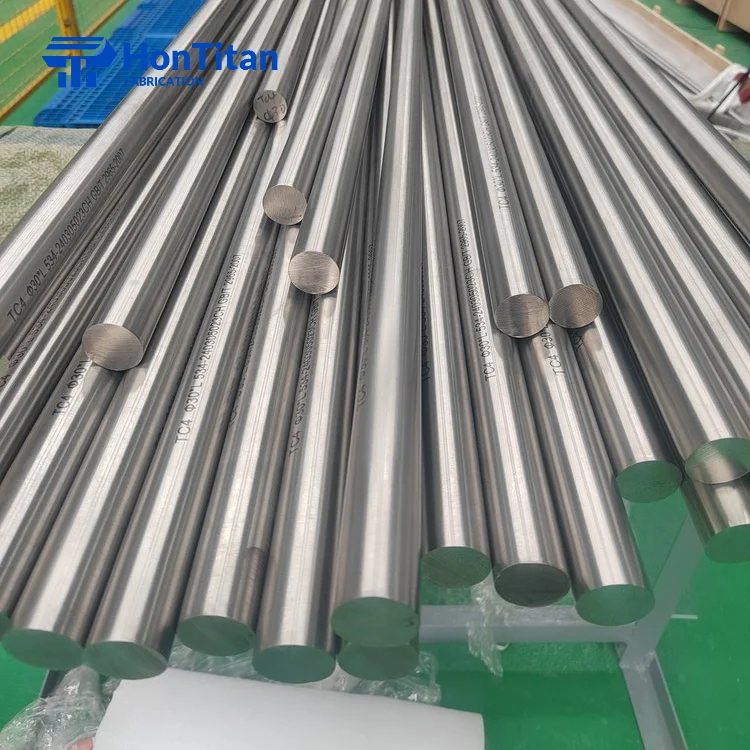
Grade 4 commercially pure titanium round bar is the highest-strength CP titanium grade, supplied to ASTM B348/B348M-25 and AMS 4921 with traceable EN 10204 3.1 mill test certificates. Diameter range covers 6–300 mm in as-forged, turned, or ground condition. Standard applications include chemical process equipment, marine structural components, and medical device manufacturing where oxidizing corrosion environments demand proven resistance without alloying additions.
Quick Specifications
| Parameter |
Value |
| Material |
Commercially Pure Titanium, Grade 4 |
| UNS Designation |
UNS R50700 |
| Primary Standard |
ASTM B348/B348M-25 / AMS 4921 / ASTM F67 |
| Min. Tensile Strength |
550 MPa (80 ksi) |
| Min. Yield Strength |
480 MPa (70 ksi) |
| Min. Elongation |
15% |
| Diameter Range |
6–300 mm |
| Length |
Up to 6,000 mm |
| Surface Conditions |
As-forged, Turned & Polished, Ground |
| Mill Test Certificate |
EN 10204 3.1 |
| MOQ |
Contact for RFQ |
Chemical Composition and Mechanical Properties of Grade 4 Titanium
Grade 4 titanium (UNS R50700) is the strongest of the four commercially pure (CP) titanium grades, achieving its elevated strength primarily through a higher allowable oxygen content — up to 0.40 wt% versus 0.25 wt% in Grade 2. All composition limits below are per ASTM B348/B348M-25.
Chemical Composition (ASTM B348/B348M-25, Grade 4)
| Element |
Max (wt%) |
| Nitrogen (N) |
0.05 |
| Carbon © |
0.08 |
| Hydrogen (H) |
0.015 |
| Iron (Fe) |
0.50 |
| Oxygen (O) |
0.40 |
| Titanium (Ti) |
Balance |
Oxygen is the primary solid-solution strengthener in commercially pure titanium. The higher O limit in Grade 4 is the key differentiator from Grades 1–3, and the mechanism behind its elevated yield strength.
Mechanical Properties (ASTM B348/B348M-25, Grade 4, Annealed)
| Property |
Minimum |
Typical |
| Ultimate Tensile Strength |
550 MPa (80 ksi) |
620–700 MPa |
| 0.2% Yield Strength |
480 MPa (70 ksi) |
520–590 MPa |
| Elongation (4D gauge) |
15% |
18–22% |
| Reduction of Area |
25% |
30–40% |
| Brinell Hardness |
— |
200–265 HB |
| Modulus of Elasticity |
— |
105 GPa (15,200 ksi) |
Physical Properties
| Property |
Value |
| Density |
4.51 g/cm³ (0.163 lb/in³) |
| Melting Range |
1,660°C (3,020°F) |
| Thermal Conductivity |
17.2 W/m·K |
| Thermal Expansion (20–100°C) |
8.6 × 10⁻⁶ /°C |
| Electrical Resistivity |
0.60 µΩ·m |
Manufacturing Standards and Quality Documentation
Grade 4 titanium round bar is produced and certified under multiple international standards, allowing direct cross-referencing by aerospace, medical, and industrial procurement teams worldwide.
Applicable Standards Cross-Reference
| Standard |
Scope |
| ASTM B348/B348M-25 |
Bars and billets — primary procurement specification |
| ASME SB-348 |
Identical to ASTM B348; used in pressure vessel / piping procurement |
| AMS 4921 (AMS4921S) |
Bars, wire, forgings, and flash welded rings for aerospace applications |
| AMS-T-9047 Gr.4 |
U.S. military titanium bar specification — CANCELLED February 2005; superseded by AMS 4921 |
| ASTM F67 Gr.4 |
Surgical implant-grade CP titanium (medical applications) |
| ISO 5832-2 |
Metallic materials for surgical implants — CP titanium |
| DIN/EN 3.7065 |
German/European material number equivalent to Grade 4 (UNS R50700) |
| EN 10204 3.1 |
Mill test certificate standard — inspection by manufacturer’s representative |
Quality Documentation Provided
Each shipment is accompanied by an EN 10204 3.1 mill test certificate (MTC) documenting:
- Heat number and lot traceability
- Chemical analysis results versus specification limits
- Mechanical test results (UTS, YS, elongation) versus ASTM B348 minimums
- Dimension and visual inspection confirmation
- Authorized signatory of the material manufacturer
Third-party inspection (SGS, Bureau Veritas, Intertek) and additional documentation (DFARS compliance statements, country-of-origin declarations) are available upon request at order stage.
Available Forms, Size Range, and Surface Conditions
Grade 4 titanium round bar is stocked and produced across a broad dimensional range to support both prototype and high-volume production requirements.
Dimensional Range
| Parameter |
Standard Range |
Extended / Custom |
| Diameter |
6–150 mm |
Up to 300 mm |
| Length |
1,000–6,000 mm |
Up to 11,000 mm |
| Straightness |
≤ 3 mm/m (ASTM B348) |
Tighter on request |
Available Cross-Section Profiles
- Round bar (most common; this specification)
- Flat bar (thickness 2–200 mm, width 6–250 mm)
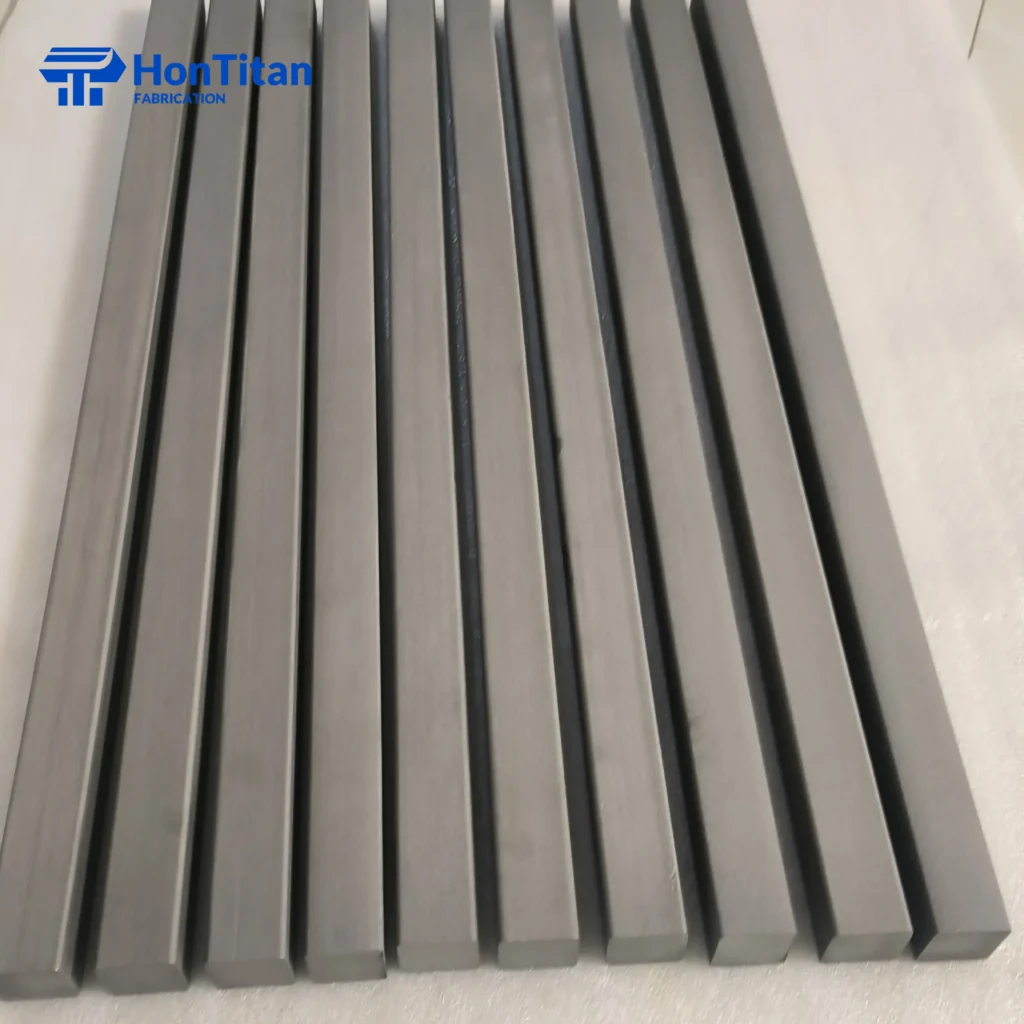
- Square bar (side width 6–200 mm)
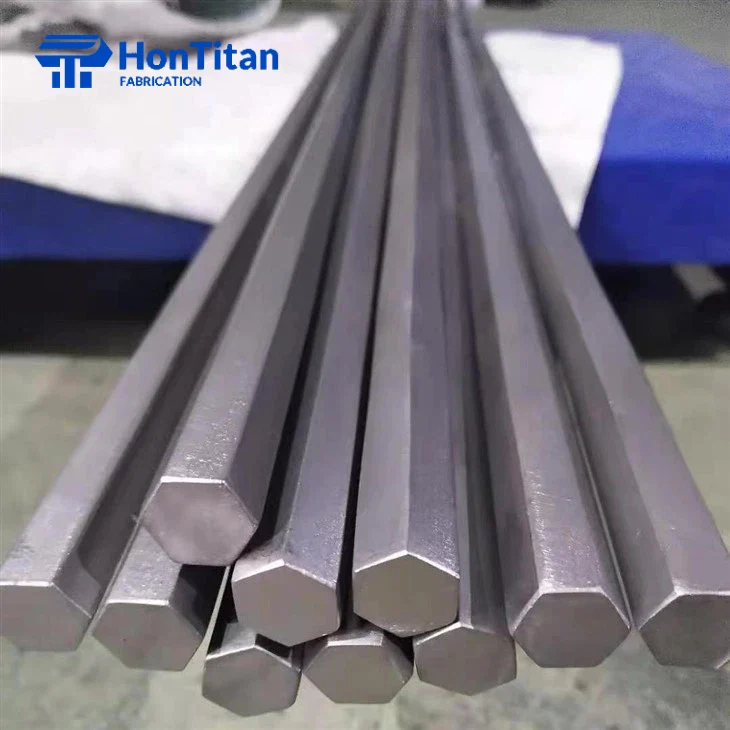
- Hexagonal bar (inscribed diameter 6–150 mm)
Surface Conditions and Finish Options
| Condition |
Description |
Typical Use |
| As-forged / As-rolled |
Scale surface, loosest tolerances |
Rough machining stock |
| Acid-pickled |
Oxide scale removed, matte silver |
General industrial use |
| Turned & polished |
Bright surface, h9–h11 tolerance |
Precision machining, medical |
| Ground (centerless) |
Tight diameter tolerance ±0.1 mm |
High-precision components |
| Peeled |
Intermediate between turned and ground |
Bar stock for CNC turning |
Tolerance Standards
Dimensional tolerances conform to ASTM B348 requirements by default. Tighter h9/h11 tolerances per ISO 286-2 are available for ground and turned conditions. Custom tolerances for aerospace and medical applications are confirmed at order review.
Industrial Applications of Grade 4 CP Titanium Round Bar
Grade 4 titanium combines the highest strength among commercially pure titanium grades with the material’s characteristic corrosion resistance, low density (4.51 g/cm³), and biocompatibility. This profile makes it the preferred CP grade where Grade 2 lacks the structural margin and alloyed Grade 5 would be cost-prohibitive or medically inadvisable.
Chemical Processing & Petrochemical
Round bar for pump shafts, agitator components, valve bodies, and fasteners in environments involving chlorides, sulfuric acid, nitric acid, and organic acids. Grade 4 performs reliably in oxidizing conditions where 316L stainless steel undergoes pitting or crevice corrosion.
Marine & Offshore Engineering
Structural fasteners, propeller shaft components, subsea hardware, and seawater cooling system parts. Titanium’s immunity to biofouling-accelerated corrosion in chlorinated seawater makes it the material of choice for long-service offshore installations.
Medical Devices & Surgical Instruments
Bone screws, dental abutments, instrument handles, and implant-adjacent components manufactured to ASTM F67 and ISO 5832-2. Grade 4 is specified where greater yield strength is required than Grade 2 can provide, without introducing alloying elements.
Aerospace Structures & Hydraulic Systems
Airframe brackets, hydraulic fitting bodies, and structural fasteners where weight reduction against steel is critical and the service environment precludes aluminum alloys. Covered under AMS 4921 for bar and forging procurement.
Electrochemical & Chlor-Alkali Equipment
Electrode substrates, cell frames, and current collectors in chlorine production and electroplating facilities. Titanium’s passivity in strong oxidizing electrolytes and its electronic conductivity (with applied platinum-group coatings) are exploited extensively in this sector.
Desalination & Water Treatment
Heat exchanger tubes, pump impellers, and valve trim in multi-stage flash (MSF) and reverse osmosis (RO) desalination plants. Resistance to saline water, hypochlorite, and brine at elevated temperature is the primary selection driver.
Grade 4 vs. Grade 2 Titanium — Selecting the Right CP Grade
Among the four commercially pure titanium grades defined in ASTM B348, Grades 2 and 4 account for the majority of industrial bar procurement. The choice between them is driven by the required strength margin and the degree of cold formability needed during fabrication.
CP Titanium Grade Comparison (ASTM B348)
| Property |
Grade 1 |
Grade 2 |
Grade 3 |
Grade 4 |
| UNS |
R50250 |
R50400 |
R50550 |
R50700 |
| Max O (wt%) |
0.18 |
0.25 |
0.35 |
0.40 |
| Max Fe (wt%) |
0.20 |
0.30 |
0.30 |
0.50 |
| Min UTS (MPa) |
240 |
345 |
450 |
550 |
| Min YS 0.2% (MPa) |
170 |
275 |
380 |
483 |
| Min Elongation |
24% |
20% |
18% |
15% |
| Typical Use |
Most ductile; deep drawing |
Most common general use |
Moderate strength |
Highest CP strength |
When to Specify Grade 4 Over Grade 2
- Structural load-bearing components where Grade 2’s 345 MPa UTS is insufficient
- Applications requiring strength comparable to annealed austenitic stainless steel (304/316) at roughly 60% of the weight
- Situations where Ti-6Al-4V (Grade 5) would introduce unnecessary alloying elements — particularly relevant for implant-adjacent medical components
- Fabricated assemblies where some cold-work capacity is still needed (unlike the near-zero ductility of work-hardened CP grades)
When Grade 2 Remains the Better Choice
- Thin-wall tubing, sheet-metal parts, or components requiring extensive cold forming
- Environments where the marginal strength gain of Grade 4 over Grade 2 does not justify the slight reduction in ductility and formability
Machinability and Weldability of Grade 4 Titanium Bar
Machinability
Grade 4 CP titanium machines satisfactorily with conventional equipment when standard titanium cutting practices are observed. Its machinability index is approximately 28% relative to free-cutting steel (AISI B1112 = 100%) — lower than Grade 2 (~40%) due to the higher oxygen and iron content. Key guidelines:
- Cutting speed: 45–100 m/min for turning with carbide tooling; adjust down for smaller diameters and interrupted cuts
- Tooling: Sharp, positive-rake carbide or high-speed steel (HSS) inserts; avoid worn tools — titanium work-hardens rapidly under rubbing
- Coolant: Flood coolant (water-soluble oil) throughout all operations to prevent heat buildup and tool welding
- Chip control: Titanium produces stringy chips; chip-breaker geometries reduce entanglement
- Operations: Turning, milling, drilling, and grinding all feasible; EDM is an alternative for complex profiles
Compared to Grade 5 (Ti-6Al-4V), Grade 4 CP titanium machines somewhat more freely due to the absence of hardening alloying elements, though both grades require the same attentive tooling and cooling discipline.
Weldability
Grade 4 titanium is readily weldable by gas tungsten arc welding (GTAW/TIG), which is the standard joining process for CP titanium bar-to-fitting or bar-to-plate assemblies.
- Shielding gas: 99.995% pure argon (Grade 5.0) on both torch side and purge side; oxygen contamination above ~50 ppm produces discoloration and embrittlement
- Joint color standard: Weld bead should remain bright silver to light straw; blue, grey, or white discoloration indicates inadequate shielding
- Filler metal: ERTi-4 (AWS A5.16) for matching-grade welds; ERTi-2 may be used where weld-zone ductility takes priority over strength matching
- Post-weld treatment: Generally not required for CP grades in most environments; stress relief at 480–595°C in vacuum or inert atmosphere is applied for fatigue-critical aerospace components
- Dissimilar metal welding: Grade 4 can be joined to Grade 2 and Grade 3 without significant metallurgical concerns; joining to Grade 5 is possible but requires engineering review of strength mismatch at the weld zone
Frequently Asked Questions
What is the difference between Grade 2 and Grade 4 titanium?
Both are commercially pure (CP) titanium with no intentional alloying additions. Grade 4 (UNS R50700) has higher allowable oxygen and iron content, producing a minimum tensile strength of 550 MPa versus Grade 2’s 345 MPa minimum. The tradeoff is reduced elongation (15% vs 20% minimum) and slightly lower formability. Grade 2 dominates thin-wall tubing and sheet applications; Grade 4 is selected where structural margin is the primary driver.
What are the ASTM B348 Grade 4 mechanical property minimums?
Per ASTM B348/B348M-25, Grade 4 annealed bar must meet: ultimate tensile strength ≥ 550 MPa (80 ksi), 0.2% yield strength ≥ 480 MPa (70 ksi), elongation ≥ 15% in a 4D gauge length, and reduction of area ≥ 25%. These values are verified and reported on the EN 10204 3.1 mill test certificate accompanying each shipment.
Is Grade 4 titanium suitable for medical implants?
Yes. Grade 4 CP titanium is explicitly covered by ASTM F67 (Standard Specification for Unalloyed Titanium for Surgical Implant Applications) and ISO 5832-2. Its biocompatibility and osseointegration behavior are well-established in orthopedic and dental applications. Where higher fatigue strength is required (e.g., load-bearing orthopedic implants), Ti-6Al-4V ELI (Grade 23, ASTM F136) is typically preferred instead.
Can Grade 4 titanium round bar be welded?
Grade 4 titanium is classified as readily weldable. Gas tungsten arc welding (GTAW/TIG) with ERTi-4 filler wire (AWS A5.16) is the standard process. Adequate inert gas shielding (99.995% Ar) on both the torch side and the purge side is mandatory — oxygen ingress above ~50 ppm causes embrittlement. Electron beam welding (EBW) and plasma arc welding (PAW) are used in high-precision aerospace fabrication.
What mill test certificates are provided with shipment?
All material is supplied with an EN 10204 3.1 mill test certificate (MTC) traceable to the production heat. The certificate documents chemical composition, mechanical test results, and dimensional inspection against ASTM B348 requirements. Third-party witnessed inspection (SGS, Bureau Veritas, Intertek) and supplementary documentation (DFARS, country-of-origin) are available on request.
What is the MOQ and typical lead time?
Minimum order quantities and lead times vary by diameter, condition, and stock availability. Standard stocked diameters (typically 10–80 mm, as-rolled/pickled) can ship within 3–7 business days. Custom dimensions, tighter tolerances, or specific finish conditions (ground, turned) typically carry a 3–6 week production lead time. Contact the sales team with diameter, length, quantity, and required standard for a firm quotation.
What diameter and length tolerances are available?
Standard tolerances conform to ASTM B348 requirements for diameter and straightness. Ground and turned bar is available to h9/h11 tolerance per ISO 286-2. Tighter tolerances for precision machining or medical applications are available and confirmed at order review stage.
How does Grade 4 titanium compare to 316L stainless steel for chemical plant use?
Grade 4 titanium offers significantly superior corrosion resistance to 316L stainless steel in chloride-containing environments, oxidizing acids (nitric, chromic), and mixed acid service. It is immune to pitting and crevice corrosion in seawater and brines where 316L is susceptible. Density is approximately 57% that of 316L (4.51 vs 7.99 g/cm³), enabling weight reduction in rotating or elevated components. The material cost per kilogram is higher, but the service life differential in aggressive environments typically yields a favorable total cost of ownership. For moderately corrosive or ambient-temperature fresh water service, 316L remains the more economical choice.