Не все титановые сплавы демонстрируют одинаковую стойкость в условиях химического воздействия. Сплав марки 2 надежно выдерживает воздействие окисляющих сред, таких как азотная кислота, но теряет стойкость в восстановительных кислотах, таких как соляная и серная, при концентрации выше ~5%. Марка 7 — марка 2 с добавлением палладия — расширяет диапазон стойкости в средах восстановительных кислот до ~10% HCl и ~30% H₂SO₄ при температуре окружающей среды. Марка 12 (Ti-Mo-Ni) занимает промежуточное положение: она обладает лучшей стойкостью к хлоридам и горячим рассолам, чем марка 2, при этом ее стоимость ниже, чем у марки 7. Марка 16, представляющая собой вариант марки 7 с меньшим содержанием палладия, обеспечивает практически эквивалентные показатели коррозионной стойкости при значительном снижении затрат и заслуживает большего внимания, чем ей обычно уделяется. В данном руководстве каждый сорт соотносится с конкретными кислотными средами с указанием пороговых значений концентрации и температуры, на основании которых инженеры могут принимать решения.
Почему оценка имеет большее значение, чем вы думаете
Коррозионная стойкость титана обусловлена тонкой самовосстанавливающейся пассивной пленкой из диоксида титана (TiO₂), которая самопроизвольно образуется в присутствии кислорода или влаги. В окисляющих средах — азотной кислоте, хромовой кислоте, большинстве водных растворов хлоридов при комнатной температуре — эта пленка остается стабильной и быстро восстанавливается в случае повреждения. Именно поэтому нелегированный титан уже 40 лет успешно используется в конденсаторах заводов по производству азотной кислоты.
Проблема заключается в агрессивных средах. В горячей серной кислоте, горячей соляной кислоте или любой другой среде, где наблюдается истощение растворенного кислорода (низкий pH, высокая температура, щелевая геометрия), эта пассивная пленка не может сохраняться. Нелегированный титан начинает подвергаться коррозии, причем иногда очень быстро.
Стратегия легирования в марках 7, 11, 16 и 17 напрямую решает эту проблему. Небольшое добавление палладия (0,05–0,25%) снижает коррозионный потенциал титана до значения, при котором пассивная пленка остается стабильной даже в деаэрированных восстановительных условиях. Механизм этого явления электрохимический: Pd действует как катодный деполяризатор, смещая рабочий потенциал в зону пассивации. Именно поэтому добавление 0,2% Pd кардинально изменяет поведение марки 2 в HCl или H₂SO₄ — это не незначительная корректировка состава, а принципиально иная коррозионная реакция.
В 12-м классе используется иной подход — добавление молибдена и никеля, которые повышают стабильность пассивной пленки в горячих хлоридных растворах, — при этом не требуется дорогостоящий палладий.
Выбор неверного уровня в любом направлении влечет за собой реальные издержки. Использование материала класса 7 вместо класса 2 для работы с чистой азотной кислотой, с которой класс 2 справляется без проблем, приводит к увеличению затрат на материалы в 2–3 раза без каких-либо технических преимуществ. Недостаточная спецификация стали класса 2 в теплообменнике 20%, работающем с H₂SO₄, приводит к коррозионному разрушению в течение 12–18 месяцев. Решение не представляет сложности, если коррозионная среда правильно охарактеризована.
Пять показателей, которые действительно имеют значение в сфере химических услуг
Более 95% титана, используемого в промышленной химической переработке, подразделяется на пять марок. Марки 1, 3, 4 и 5 имеют свои области применения, однако марки 1 и 3 в химической промышленности в значительной степени вытеснены маркой 2; марка 4 обладает повышенной прочностью, но не обладает антикоррозионными свойствами, а марка 5 (Ti-6Al-4V) представляет собой авиакосмический сплав, который фактически обладает хуже коррозионную стойкость, чем марки с катодной защитой, в большинстве химических сред.
| Класс | Наименование | Состав | Уровень затрат | Основное применение химического вещества |
|---|---|---|---|---|
| 2 класс | CP-Ti, ASTM R50400 | 99%+ Ti | Исходные данные | Окисляющие кислоты, азотная кислота, разбавленные восстанавливающие кислоты при комнатной температуре |
| 7 класс | Ti-0,2Pd, ASTM R52400 | Класс 2 + 0,12–0,251 TP3T Pd | 2–3× 2-й класс | Восстановительные кислоты: HCl, H₂SO₄, фосфорная кислота, органические кислоты |
| 11-й класс | Ti-0,2Pd, ASTM R52250 | Класс 1 + 0,12–0,251 TP3T Pd | Аналогично 7-му классу | То же, что и для 7-го класса, но с более высокой формуемостью (тонкостенные детали) |
| 12 класс | Ti-Mo-Ni, ASTM R53400 | Ti + 0,3% Mo + 0,8% Ni | ~1,3–1,5× 2-й класс | Горячие хлоридные рассолы, морская вода, смешанные кислотные среды |
| 16-й класс | Ti-0,05Pd, ASTM R52402 | 2-й сорт + 0,04–0,081 TP3T Pd | ~1,5–2× 2-й класс | Почти эквивалентно 7-му классу при более низких затратах на Pd |
Применимые стандарты на формы выпуска продукции: лист/лента/плита (ASTM B265), бесшовные и сварные трубы для применения в коррозионных средах (ASTM B337), сварные трубы для теплообменников (ASTM B338), бесшовные трубы (ASTM B861), сварные трубы (ASTM B862), поковки (ASTM B381).
2-й класс — исходный уровень для окислительных кислотных сред
Марка 2 является оптимальным выбором по умолчанию для работы в условиях окислительной кислоты; она не подходит в случае восстановительных условий.
На практике ученики 2-го класса демонстрируют исключительно высокие результаты в следующих областях:
- Азотная кислота (HNO₃): Обладает стойкостью во всем диапазоне промышленных концентраций (10–65%) и при температурах вплоть до температуры кипения. По своим эксплуатационным характеристикам превосходит большинство никелевых сплавов в загрязненных потоках азотной кислоты, содержащих фториды, которые ускоряют коррозию нержавеющих сталей, но не титана.
- Хромовая кислота: Устойчив при всех концентрациях при комнатной температуре.
- Влажный хлор и гипохлорит: Устойчив к воздействию раствора Cl₂ с концентрацией до 2% при нормальных условиях окружающей среды — широко применяется на хлор-щелочных заводах для изготовления анодов, трубопроводов и технологического оборудования.
- Разбавленные серная и соляная кислоты при комнатной температуре: Материал класса 2 выдерживает воздействие разбавленных восстановительных кислот при условии низкой температуры и наличия растворенного кислорода. Практические пределы: H₂SO₄ до ~5% при 25 °C, HCl до ~1–2% при 25 °C при наличии растворенного кислорода.
В чём заключается недостаток 2-го класса:
- Концентрация H₂SO₄ выше 5% или температура выше 60 °C
- HCl выше ~5–7% при комнатной температуре в условиях аэрации или выше ~1–2% при повышенных температурах либо при истощении кислорода
- Горячая фосфорная кислота с температурой выше 60 °C и концентрацией выше 10%
- Любая геометрия щелей в горячих растворах хлоридов при температуре выше 80 °C
Порог щелевой коррозии при 80 °C имеет важное значение для проектирования оборудования. В местах соединения труб с трубной доской теплообменников, в зонах контакта фланцевых поверхностей или в соединениях с прокладками появление щелей неизбежно. При температурах выше 80 °C в хлоридных средах сталь марки 2 может подвергаться локализованной щелевой коррозии даже в условиях, когда общая коррозия не наблюдается.
7-й класс — лучший выбор для нейтрализации кислой среды
Титан сплав марки Grade 7 является наиболее коррозионно-стойким из доступных на рынке титановых сплавов и является оптимальным выбором в условиях воздействия кислот, повышенных температур или риска образования щелевой коррозии.
Содержание палладия (0,12–0,25% по массе) смещает потенциал коррозии титана примерно на +200 мВ по сравнению с нелегированным материалом. Этого сдвига достаточно для того, чтобы рабочий потенциал находился в пассивной области в деаэрированных восстановительных кислотных средах, в которых титан марки 2 был бы активным и подвергался бы коррозии.
Данные о практической производительности:
- Соляная кислота (HCl): Сталь марки Grade 7 обладает коррозионной стойкостью при концентрации до примерно 20–27% при 25 °C (изокоррозионные кривые по данным завода TIMET). Марка 2 в насыщенной кислородом HCl выдерживает концентрацию до ~5–7% при комнатной температуре, однако этот предел резко снижается при повышенных температурах или при истощении растворенного кислорода.
- Серная кислота (H₂SO₄): Устойчив до ~45% при 25 °C, ~20% при 60 °C, ~7% при температуре кипения. Нелегированная марка 2 начинает подвергаться коррозии при температуре выше ~5% при комнатной температуре.
- Фосфорная кислота (H₃PO₄): Марка 7 выдерживает концентрации до ~80% при комнатной температуре; марка 2 ограничена значением ~30% при 25 °C, а при повышенных температурах этот показатель значительно ниже.
- Органические кислоты (уксусная, муравьиная, щавелевая): Сталь марки Grade 7 по сути не подвергается коррозии в диапазоне всех промышленных концентраций при температурах до 100 °C.
- Порог щелевой коррозии: Сталь марки 7 не подвергается щелевой коррозии в растворах хлоридов при температурах ниже 250 °C (при pH выше 1). Пороговое значение для стали марки 2 составляет 80 °C. Уже одно это различие оправдывает выбор стали марки 7 для теплообменников, работающих с горячим рассолом, в которых невозможно исключить наличие щелевых образований.
Сталь марки Grade 7 также обладает стойкостью к воздействию влажного газообразного HCl и смешанных кислотных сред, широко используемых в фармацевтическом производстве — условиях, в которых ни нержавеющая сталь, ни никелевые сплавы не демонстрируют достаточной эффективности без применения чрезмерно дорогих сплавов.
Две области, в которых 7-й класс по-прежнему не справляется:
- Фтористоводородная кислота (HF): Все марки титана подвергаются коррозии под действием фтористого водорода. Ион фторида растворяет пассивную пленку TiO₂. Ни одна из марок титана не подходит для работы с фтористым водородом — следует использовать цирконий, оборудование с PTFE-покрытием или сплав Hastelloy C-276.
- Дымящаяся азотная кислота (красная дымящаяся HNO₃ с содержанием NO₂ >5%): Может вызывать коррозионное растрескивание под напряжением в титане. Это является особым исключением из правила, согласно которому титан, как правило, обладает превосходной стойкостью к азотной кислоте.
12-я серия — экономичный и надежный «рабочий конь» для эксплуатации в средах с содержанием хлоридов и горячего рассола
Благодаря добавкам молибдена и никеля сплав марки 12 обладает устойчивостью к воздействию горячих хлоридных сред, которой не обладает сплав марки 2, при этом его надбавка составляет примерно половину от надбавки за сплав марки 7.
В сплаве Grade 12 (Ti-0,3Mo-0,8Ni) не используется палладий, что позволяет устранить основной фактор, определяющий стоимость сплава Grade 7. Вместо этого молибден и никель обеспечивают стабилизацию пассивной пленки именно в горячих рассолах, морской воде и смешанных хлоридно-кислотных средах.
По сравнению со 2-м классом:
- Устойчивость к щелевой коррозии в морской воде сохраняется при температуре до примерно 120 °C (по сравнению с 80 °C для марки 2)
- Повышенная стойкость к воздействию горячей фосфорной кислоты, содержащей галогенидные примеси
- Повышенная прочность на разрыв (не менее 483 МПа по сравнению с не менее 345 МПа для марки 2) — позволяет изготавливать конструкции с более тонкими стенками
- Повышенная стойкость в горячих растворах гипохлорита натрия
По сравнению с 7-м классом:
- 12-й сорт, как правило, уступает по эффективности при использовании в условиях прямого восстановления кислотами (HCl, H₂SO₄)
- Станья класса 12 демонстрирует сопоставимые или даже лучшие характеристики в системах с горячими хлоридными рассолами и морской водой, где основной проблемой является щелевая коррозия, а не коррозия под действием восстановительных кислот
- У 12-го класса нет преимуществ в условиях HF (оба терминала выходят из строя)
Оптимальные сценарии для 12-го класса:
- Оффшорное опреснение воды и обработка попутной воды (горячая солевая вода, повышенная температура)
- Оборудование отбелочных установок целлюлозно-бумажной промышленности, подвергающееся воздействию смесей хлоридов и гипохлоритов
- Обработка морских химических веществ, при которой охлаждение морской водой сочетается с воздействием слабых кислот
- Нефтеперерабатывающие заводы, оснащенные системами рециркуляции рассола, где не требуется устойчивость к воздействию чистой кислоты
16-й класс — недостаточно обсуждаемая альтернатива 7-му классу
Марка 16 содержит примерно половину количества палладия по сравнению с маркой 7 (0,04–0,08% против 0,12–0,25%) и обеспечивает коррозионную стойкость, которая в большинстве реальных химических сред неотличима от марка 7.
Этот сорт практически не упоминается в стандартных инженерных руководствах, несмотря на очевидное преимущество: палладий неизменно составляет значительную долю надбавки к стоимости листов и труб сортов 7 и 11. При рыночных ценах на палладий заказ на листы марки 16 может обойтись на 20–35% дешевле, чем эквивалентный заказ на марку 7 с сопоставимыми антикоррозионными характеристиками в большинстве технологических сред.
Механизм коррозии остается тем же — добавление палладия смещает коррозионный потенциал в область пассивности — и данные испытаний, проведенных компанией TIMET, а также данные из литературы по коррозионной инженерии показывают, что содержание палладия 0,05% достаточно для обеспечения пассивного поведения в большинстве восстановительных кислотных сред. Преимущество более высокого содержания палладия (марка 7) проявляется в первую очередь в экстремальных условиях: при использовании очень концентрированных восстановительных кислот, при очень высоких температурах или в средах, где потенциал коррозии снижается до особенно низких значений.
Когда следует указывать класс 16 вместо класса 7:
- Условия эксплуатации в умеренном диапазоне (H₂SO₄ <20%, HCl <5%, температура ниже 80 °C)
- Применения, в которых значительную роль играет фактор стоимости и инженер может подтвердить эквивалентность на основании опубликованных данных испытаний
- Проекты, требующие большого количества листов, в которых разница в стоимости является существенной (изготовление корпусов реакторов, корпусов крупных теплообменников)
Когда следует остаться в 7-м классе:
- Эксплуатация в условиях воздействия горячей концентрированной восстановительной кислоты, близкой к верхним пределам коррозионной стойкости стали класса 7
- Области применения, в которых по условиям контракта требуется соблюдение консервативных технических требований (атомная энергетика, фармацевтическое технологическое оборудование с валидацией FDA)
- Условия в щелевых пространствах при температуре выше 200 °C — более высокое содержание Pd обеспечивает большую консервативность
Марка 17 является эквивалентом марки 16 на основе марки 1 (более пластичная, с более низкой прочностью) и подходит для тех же областей применения, где требуется исключительная формуемость при сниженной кислотостойкости.
Концепция отбора «кислота за кислотой»
Наиболее прямым способом использования этой информации является матрица кислотной среды. В приведенной ниже таблице представлены данные, на которые часто ссылаются в руководствах по коррозии TIMET и в опубликованной литературе по коррозионной инженерии.
Выбор марки титана в зависимости от кислотной среды
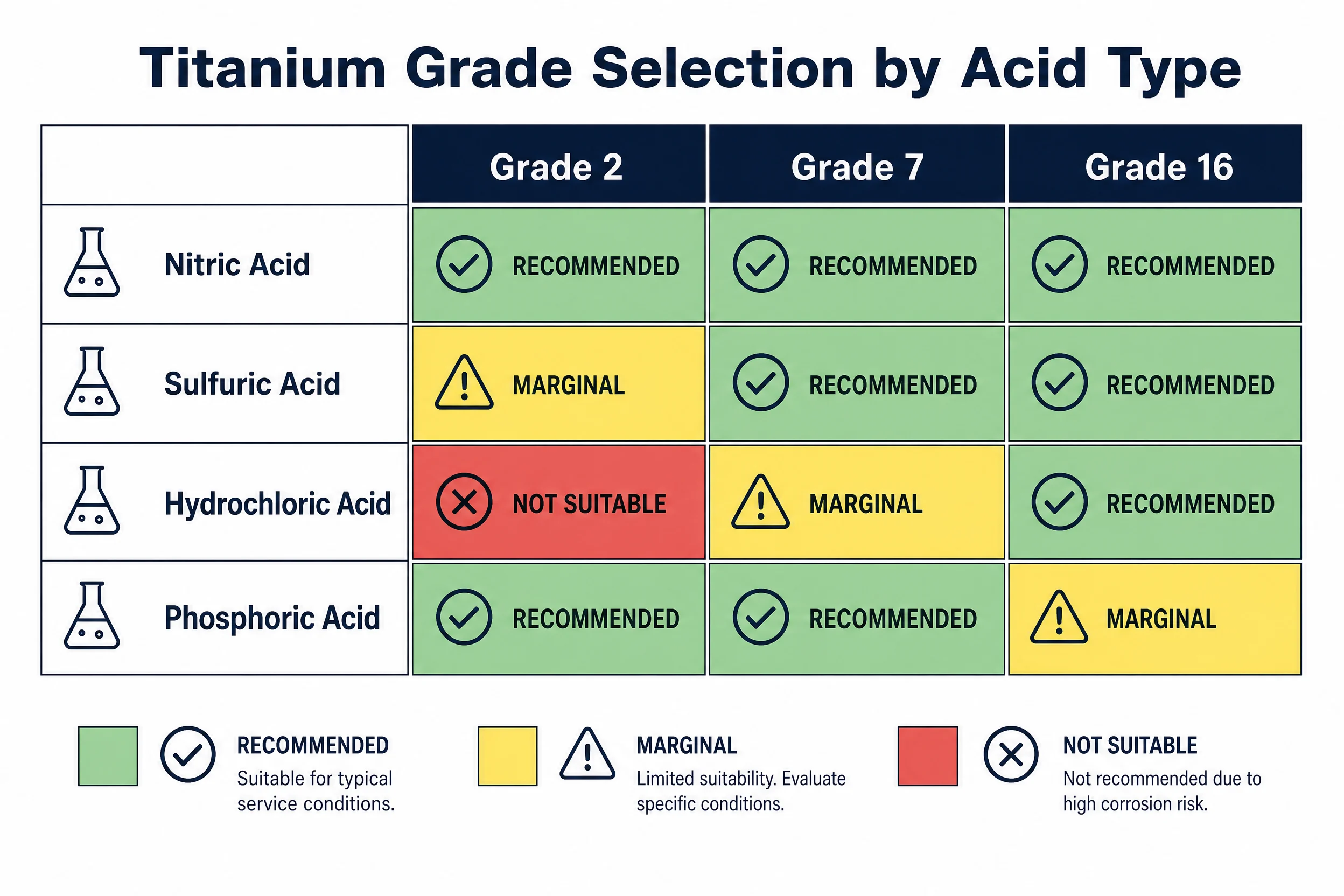
| Кислота | Концентрация | Температура | Рекомендуемый класс | Примечания |
|---|---|---|---|---|
| Азотная кислота (HNO₃) | 10–65% | До закипания | 2 класс | Все оценки по программе CP удовлетворительные; оценка «7» не даёт никакого преимущества |
| Азотная кислота (красная дымящаяся) | >5% NO₂ | Любой | Избегайте всего, что связано с Ti | Риск развития SCC во всех степенях |
| Серная кислота (H₂SO₄) | <5% | <60 °C | 2 класс | Должен присутствовать растворенный O₂ |
| Серная кислота | 5–45% | <60 °C | 7-й класс или 16-й класс | Сталь класса 2 подвергается коррозии при температуре выше 5% |
| Серная кислота | >45% | Любой | 7-й класс (с осторожностью) | Требуются данные испытаний; для сплавов выше 60% следует рассмотреть использование Zr или Ta |
| Соляная кислота (HCl) | <5–7%, аэрированный | Только RT | 2 класс | Необходимое количество растворенного O₂; при повышенной температуре предельное значение резко снижается |
| Соляная кислота | 5–27% | До 50 °C | 7-й класс или 16-й класс | 2-й класс — не соответствует требованиям при значении выше ~5–7% с аэрацией |
| Соляная кислота | >27% | Любой | Ознакомьтесь с данными испытаний | Сталь марки Grade 7 может подвергаться коррозии при температуре выше 27% |
| Фосфорная кислота (H₃PO₄) | <30% | <80 °C | 2 класс | Допустимо при наличии аэрации |
| Фосфорная кислота | 30–80% | Любой | 7-й класс или 16-й класс | Допускается использование 12-го класса, если он не содержит галогенидов |
| Фтористоводородная кислота (HF) | Любой | Любой | Нет | Все марки титана не подходят — используйте Zr, трубы с PTFE-покрытием или Hastelloy |
| Органические кислоты (уксусная, муравьиная) | Все коммерческие | <100 °C | 2-й или 7-й класс | 2-й сорт — для разбавленного раствора, 7-й сорт — для концентрированного/горячего раствора |
| Горячий хлоридный рассол | NaCl >10%, >80 °C | 80–150 °C | 12-й класс или 7-й класс | Риск образования щелевой коррозии 2-й степени при температуре выше 80 °C |
| Горячий гипохлорит | NaOCl >1%, >60 °C | До закипания | 12-й класс или 7-й класс | 2-я степень: предельное значение выше 60 °C |
| Влажный газ Cl₂ | До 2% | <100 °C | 2 класс | Все марки CP демонстрируют удовлетворительные характеристики в условиях влажной среды с содержанием Cl₂ |
Данная методика охватывает наиболее распространенные кислотные среды, встречающиеся в химической промышленности. Системы со смешанными кислотами, загрязненные потоки (например, HNO₃ + HF при травлении нержавеющей стали) и запатентованные технологические жидкости требуют проведения индивидуальных испытаний на коррозионную стойкость — ни одна из опубликованных таблиц не может полностью заменить испытания методом погружения в реальную технологическую жидкость.
«Palladium Premium»: когда стоимость 7-го класса трудно оправдать
Палладий торгуется по цене примерно $1 000–$1 500 за тройскую унцию. Марка 7 содержит 0,12–0,25% Pd по весу — в заказе на пластины весом 1 000 фунтов это составляет примерно 1,2–2,5 фунта палладия, входящего в состав сплава. Это содержание палладия обусловливает существенную надбавку к цене, которая напрямую зависит от спотовой цены на палладий.
Когда расход стали марки 2 составляет $5–8/фунт, а марки 7 — $12–18/фунт, при принятии решения о затратах следует руководствоваться инженерной строгостью, а не по осторожности выбирать более высокую марку.
Простая формулировка показателя рентабельности инвестиций (ROI):
- Стоимость преждевременного отказа 2-й степени: Незапланированная остановка для замены теплообменника на химическом заводе с непрерывным технологическим процессом может обойтись в $200 000–$500 000 в виде упущенной выработки, плюс $50,000–$150 000 на замену материалов и оплату труда.
- Стоимость перехода в 7-й класс: Для пучка теплообменников весом 10 000 фунтов надбавка за класс 7 по сравнению с классом 2 может составлять от $70 000 до $100 000.
- Точка безубыточности: Если марка 7 позволяет продлить срок службы хотя бы на 2–3 года в среде с восстановительной кислотой, в которой марка 2 вышла бы из строя через 1–2 года, то с экономической точки зрения марка 7 является явно более выгодным выбором.
Марка 16 вносит дополнительные изменения в эти расчёты. Если цена на марку 16 составит $8–12/фунт — что отражает более низкое содержание паладия — и она обеспечит эквивалентный срок службы в данной конкретной среде, то надбавка по сравнению с маркой 2 снизится до такого уровня, при котором даже незначительное повышение надёжности оправдает переход на более высокую марку.
Практическая рекомендация: По умолчанию следует применять класс 2 для подтвержденных сред, характеризующихся исключительно окислительными условиями; класс 16 — для сред с умеренно восстановительными кислотами, где важным фактором является стоимость; а класс 7 — для сред с агрессивными восстановительными кислотами или в случаях, когда существует известный риск щелевой коррозии при повышенной температуре.
Металлообработка и сварка: когда выбор марки стали теряет смысл
Коррозионная стойкость титана может быть нарушена в результате ненадлежащего выполнения сварочных работ, независимо от указанной марки. В большинстве руководств по выбору марок этому аспекту уделяется недостаточное внимание.
Ключевой вопрос: образование альфа-случаев. При сварке титана или его нагревании до температуры выше 600 °C в присутствии воздуха, азота или кислорода образуется твёрдый, хрупкий, обогащённый кислородом поверхностный слой, называемый альфа-оболочкой. Альфа-оболочка обладает низкой пластичностью и, что особенно важно, ухудшенной коррозионной стойкостью, поскольку её химический состав больше не соответствует составу основного сплава.
Для сварки в условиях воздействия химических веществ:
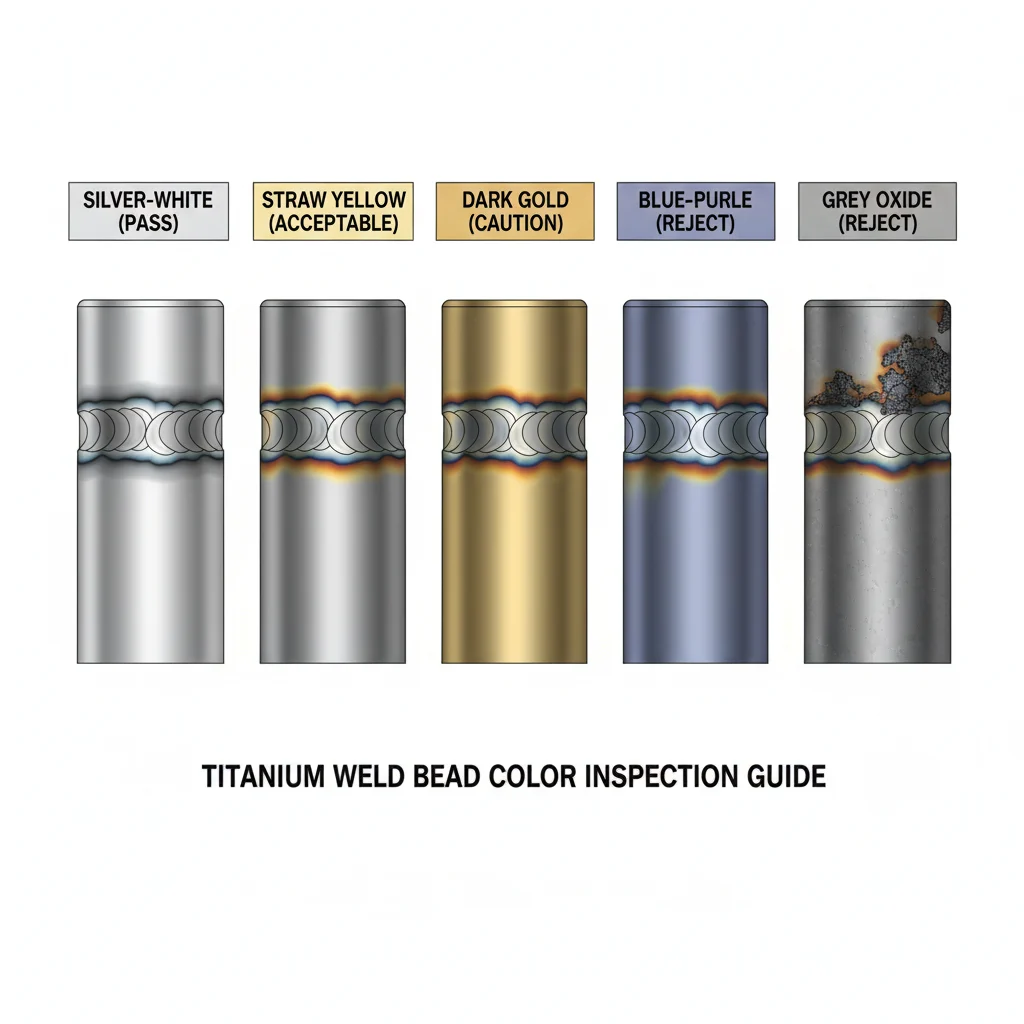
- Обязательно следует использовать защиту инертным газом — как на лицевой стороне сварного шва, так и на его корне. Обратная продувка аргоном (чистота не менее 99,995%) является обязательным условием при сварке титана для применения в химической промышленности. “Проверка цвета” сварного шва является практическим показателем качества: серебристо-белый цвет считается приемлемым, соломенно-желтый — на грани приемлемости, а синий или фиолетовый означает загрязнение кислородом, и такой сварной шов подлежит браку.
- Титан необходимо сваривать с использованием титановой присадочной проволоки того же или более низкого класса. Не следует использовать присадочный материал 5-го класса (Ti-6Al-4V) для основного металла 2-го или 7-го класса — содержание алюминия в присадочном материале снижает коррозионную стойкость в зоне сварного шва.
- Чистота поверхности: Титан вступает в реакцию с железом при температурах сварки. Попадание железа в результате шлифования стальными инструментами, контакта со стальными металлическими щетками или наличия частиц железа в производственной среде может привести к локальной коррозии в местах сварных швов. Необходимо использовать специальные щетки из нержавеющей стали и обеспечивать чистоту рабочих зон.
- Пассивация после сварки: Титан, как правило, не требует химической пассивации (в отличие от нержавеющей стали), однако перед вводом оборудования в эксплуатацию рекомендуется удалить механическим способом все потемневшие зоны сварных швов, а затем очистить поверхность растворителем.
Сварка сплавов класса 7 и класса 12 осуществляется практически так же, как и сплава класса 2 — без каких-либо специальных параметров, помимо стандартных требований к сварке титана, приведенных выше. При правильном выполнении сварки коррозионная стойкость сварных швов соответствует коррозионной стойкости основного металла.
Резюме: Соответствие уровня образования условиям окружающей среды
Выбор марки титана для химической переработки сводится к нескольким ключевым решениям:
Является ли кислая среда преимущественно окисляющей? → Класс 2 является стандартной спецификацией. Он обеспечивает срок службы более 40 лет при эксплуатации в средах, содержащих азотную и хромовую кислоты, а также в средах с влажным хлором, при этом оставаясь конкурентоспособным по стоимости.
Имеются ли в составе концентрированные кислоты (HCl, H₂SO₄, горячая фосфорная кислота)? → Укажите марку 7 или марку 16. Добавление палладия в этих условиях — не роскошь, а необходимое условие, без которого титан вообще не может использоваться. Марка 16 — это экономичный вариант для эксплуатации в условиях умеренных концентраций и температур.
Основную проблему представляет горячий хлоридный рассол или морская вода, а не снижение концентрации кислот? → Подходит марка 12. Добавление Mo-Ni позволяет справиться с конкретным механизмом щелевой коррозии в горячих солевых средах при меньших затратах, чем в случае марок, содержащих Pd.
Имеет ли к этому отношение фтористоводородная кислота? → Ни один из сортов титана не подходит. Прекратите оценку и рассмотрите возможность использования циркония, конструкции с PTFE-покрытием или сплава Hastelloy C-276.
Сам по себе выбор марки — это лишь половина инженерного решения. Качество сварки, конструкция соединения, позволяющая свести к минимуму образование щелей, а также характеристики технологического потока (в частности, содержание растворенного кислорода, температурный профиль и ионы примесей) определяют, будет ли указанная марка работать так, как задумано. Правильно подобранная марка 2 с чистыми сварными швами в среде азотной кислоты всегда прослужит дольше, чем некачественно изготовленная марка 7 в тех же условиях.
Часто задаваемые вопросы
Какая марка титана обладает наибольшей коррозионной стойкостью при эксплуатации в химической среде?
Сплав марки 7 (Ti-0,2Pd) является наиболее коррозионно-стойким из имеющихся в продаже титановых сплавов. Добавление палладия смещает потенциал коррозии в область пассивации в восстановительных кислотных средах, в которых нелегированный титан подвергается коррозии. При комнатной температуре он устойчив к воздействию HCl до ~10% и H₂SO₄ до ~30%, а также не подвергается щелевой коррозии в растворах хлоридов при температуре ниже 250 °C и pH выше 1.
Когда следует использовать «12-й класс» вместо «7-го класса»?
Марка 12 является предпочтительным выбором в тех случаях, когда основной риск коррозии связан с воздействием горячего хлоридного раствора или морской воды, а не с воздействием восстановительных кислот. Благодаря добавке молибдена и никеля она обеспечивает превосходную стойкость к щелевой коррозии в горячих солевых средах по сравнению с маркой 2, при этом ее стоимость ниже, чем у марки 7. Если в вашем технологическом процессе используются горячие растворы H₂SO₄ или HCl, марка 7 превосходит марку 12 по своим характеристикам.
В чём разница между 7-м и 16-м классом?
В обоих марках для повышения стойкости к коррозии в кислотных средах используется добавка палладия. Марка 7 содержит 0,12–0,25% Pd; марка 16 — 0,04–0,08% Pd. Более низкое содержание палладия в марки 16 делает её менее дорогой, и в большинстве реальных условий химической переработки при умеренных концентрациях кислот и температурах её коррозионные характеристики эквивалентны характеристикам марки 7. Марка 7 обеспечивает большую надёжность в экстремальных условиях.
Подвергается ли титан коррозии в фтористоводородной кислоте?
Да. Все марки титана подвергаются коррозии под действием фтористоводородной кислоты (HF) и фторидсодержащих растворов при значении pH ниже примерно 3. Ионы фторида растворяют защитную пассивную пленку TiO₂. Для работы с HF не следует выбирать титановые марки — используйте оборудование с покрытием из циркония, фторполимеров (PTFE/PFA) или никелевые сплавы, такие как Hastelloy C-276.
Подходит ли титан 2-го класса для работы в среде серной кислоты?
Марка 2 подходит для использования с разбавленной серной кислотой (концентрация H₂SO₄ менее 5%) при температуре окружающей среды в присутствии растворенного кислорода. При концентрации выше 5%, температуре выше 60 °C или в условиях деаэрации материал класса 2 подвергается коррозии с недопустимой скоростью. Для эксплуатации в среде H₂SO₄, превышающей указанные пороговые значения, следует выбирать материал класса 7 или класса 16.
Почему качество сварки имеет столь большое значение при изготовлении химического оборудования из титана?
При сварке титана без надлежащей обратной продувки инертным газом на поверхности образуется загрязнённый кислородом поверхностный слой (альфа-слой), который характеризуется пониженной коррозионной стойкостью и низкой пластичностью. Визуально безупречный шов с синим или фиолетовым оттенком является бракованным при эксплуатации в средах с химически активными веществами. Сварка титана требует обратной продувки аргоном, использования специальных инструментов, не содержащих примесей железа, а также обязательного контроля качества путем проверки цвета сварного шва.