Titanium heat treatment varies significantly by alloy grade. Commercially pure (CP) grades 1–4 can only be annealed (538–760°C / 1000–1400°F) and stress-relieved—they cannot be strengthened by heat treatment. Grade 5 (Ti-6Al-4V), the most widely used alloy, can be annealed at 691–760°C (1275–1400°F) or solution treated at 913–954°C (1675–1750°F) and aged at 524–552°C (975–1025°F) to achieve ~20% higher strength than the annealed condition. The critical reference temperature for any titanium alloy is the beta transus—heating above it fundamentally changes the microstructure and properties. All heat treatment above 538°C (1000°F) requires a vacuum, inert gas, or protective atmosphere per AMS 2801.
Quick Reference: Titanium Heat Treatment Temperatures by Grade
The table every titanium engineer should have bookmarked. All temperatures from ATI mill datasheets and AMS 2801 requirements.
| Grade | Alloy | Beta Transus | Stress Relief | Anneal Temp | Anneal Time | STA Option |
|---|---|---|---|---|---|---|
| Grade 1 | CP Ti (0.18% O max) | ~888°C / 1630°F | 538–593°C / 1000–1100°F | 538–704°C / 1000–1300°F | ½–2 hr, AC | No |
| Grade 2 | CP Ti (0.25% O max) | ~913°C / 1675°F | 538–593°C / 1000–1100°F | 649–760°C / 1200–1400°F | ½–2 hr, AC | No |
| Grade 3 | CP Ti (0.35% O max) | ~921°C / 1690°F | 538–593°C / 1000–1100°F | 649–760°C / 1200–1400°F | ½–2 hr, AC | No |
| Grade 4 | CP Ti (0.40% O max) | ~949°C / 1740°F | 538–593°C / 1000–1100°F | 649–760°C / 1200–1400°F | ½–2 hr, AC | No |
| Grade 5 | Ti-6Al-4V | 995°C ± 14°C / 1820°F ± 25°F | 538–649°C / 1000–1200°F | 691–760°C / 1275–1400°F | ½–2 hr, AC or FC | Yes (STA) |
| Grade 23 | Ti-6Al-4V ELI | 977°C ± 4°C / 1790°F ± 25°F | 482–649°C / 900–1200°F | 704–732°C / 1300–1350°F | 1–8 hr, AC | Yes (rarely) |
AC = air cool, FC = furnace cool. Sources: ATI Technical Data Sheets; AMS 2801D; Carpenter Technology CP Ti datasheet.
The single most important principle: For Grade 5 and Grade 23, the anneal temperature must stay at least 35–80°C below the beta transus. Cross that line and you get a fully transformed beta microstructure on cooling — a coarser, tougher, lower-fatigue-strength part than what most applications need.
Understanding the Beta Transus — Why This Temperature Changes Everything
The beta transus is the single most important thermal reference point in titanium metallurgy. Every heat treatment parameter — annealing, solution treating, stress relief — is defined relative to it.
Pure titanium undergoes an allotropic transformation at 882.5°C: below this temperature, the crystal structure is hexagonal close-packed (HCP), called the alpha phase. Above it, the structure shifts to body-centered cubic (BCC), the beta phase. When you add alloying elements — aluminum, vanadium, oxygen, tin — this transformation temperature shifts.
For Ti-6Al-4V, the beta transus sits at approximately 995°C (1820°F), with a typical mill-reported tolerance of ±14°C (±25°F). This means a given heat of Ti-6Al-4V might transform at anywhere from 981°C to 1009°C. ATI’s production data cites 999°C ± 14°C (1830°F ± 25°F) for their 6-4 product.
Why the tolerance matters: If you solution treat at 960°C and the beta transus for that particular heat is 981°C, you’re still sub-transus and working in the two-phase alpha+beta field — which is exactly where you want to be for STA. But if the transus is 958°C and you’re at 960°C, you’ve gone above it. The beta fraction at temperature is now 100%, and the cooling microstructure will look completely different.
This is why the ATI datasheet specifies solution treating at 1675–1750°F (913–954°C) — a window deliberately set 45–85°C below the nominal beta transus, giving sufficient buffer for heat variation.
Grade 23 (ELI) has a measurably lower beta transus: 977°C ± 4°C (1790°F ± 25°F). The tighter ELI chemistry (lower Fe, lower interstitials) shifts the transus slightly downward. This affects every heat treat parameter — the anneal, the solution treat window, and the applicable AMS specifications all differ from standard Grade 5.
CP titanium grades 1–4 are pure alpha alloys. Their beta transus ranges from 888°C for Grade 1 up to 949°C for Grade 4 (higher oxygen and iron content stabilizes beta, raising the transus). Since these grades contain no beta-stabilizing elements like vanadium, there’s nothing to precipitate during aging — no STA is possible.
The Four Heat Treatment Types for Titanium — And What Each One Does
| Treatment | Temperature Zone | Primary Purpose | Applicable Grades |
|---|---|---|---|
| Stress Relief | 482–649°C (900–1200°F) — well below anneal | Reduce residual stress from machining, forming, welding | All grades |
| Anneal | 538–760°C depending on grade — below beta transus | Optimize ductility, toughness, dimensional stability | All grades |
| Solution Treat + Age (STA) | ST: 913–954°C then Age: 480–595°C | Maximize strength (up to ~20% over annealed) | Grade 5, Grade 23 (rarely), some beta alloys |
| Beta Anneal | Above beta transus, then controlled cool | Maximize fracture toughness, crack growth resistance | Grade 5, beta alloys |
Most aerospace and industrial parts land in one of two conditions: mill annealed (AMS 4928 for Ti-6Al-4V bar/billet) or solution treated and aged (AMS 4965). The choice depends on the required strength level, section size, and whether the geometry can survive the water quench of solution treatment.
Annealing Titanium: Mill Anneal, Full Anneal, and Duplex Anneal
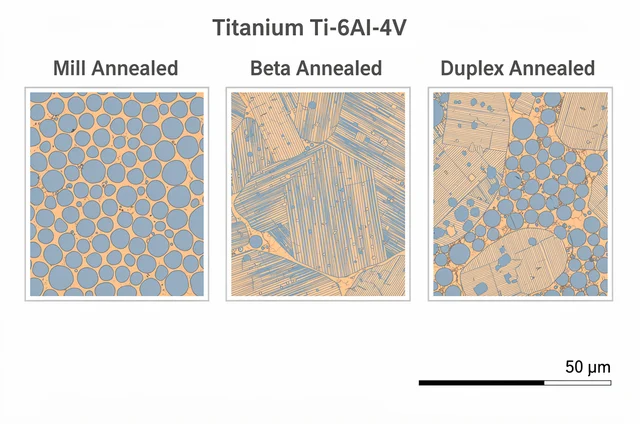
Standard annealing of titanium produces a stable, ductile baseline condition — but “anneal” covers at least three distinct processes, each with different outcomes.
Mill Anneal
The most common condition for Ti-6Al-4V in commercial supply. Material is annealed by the mill during or after primary processing — typically at 700–790°C (1292–1454°F) for bars and plate. AMS 4928 covers Ti-6Al-4V bar, billet, and forgings in the annealed condition, with minimum properties of 895 MPa (130 ksi) UTS and 825 MPa (120 ksi) YS at 10% elongation.
For CP titanium (Grades 1–4), annealing produces a fully recrystallized equiaxed alpha structure. Grain size and strength can be adjusted by varying the anneal temperature within the range — lower temperatures give finer grains and higher strength; higher temperatures coarsen grains and maximize ductility.
Full / Recrystallization Anneal
For Ti-6Al-4V that has been heavily cold-worked or has a deformed microstructure from aggressive machining, a full recrystallization anneal is applied: 704–760°C (1300–1400°F), 2 hours, air or furnace cool. This produces a more completely recrystallized equiaxed alpha structure than a mill anneal.
Duplex Anneal
A duplex anneal uses two temperature steps to optimize the alpha/transformed-beta balance. Research data from TotalMateria and Scientific Reports shows duplex processing of Ti-6Al-4V — combining a higher-temperature solution step with a lower-temperature stabilization — can achieve strength improvements up to 25% over standard mill anneal while maintaining adequate ductility.
The duplex process: first heat to the upper alpha+beta range (~925°C), air cool or furnace cool, then hold at a lower temperature (~700°C) to stabilize the microstructure. This produces a bimodal (equiaxed primary alpha + transformed beta) microstructure that balances fatigue resistance with fracture toughness.
Beta Anneal
Heating Ti-6Al-4V above its beta transus (~995°C) and then slow-cooling produces a fully lamellar “Widmanstätten” alpha+beta microstructure. Beta annealing maximizes fracture toughness and crack growth resistance at the cost of lower yield strength and lower high-cycle fatigue performance. It’s used for thick-section structural parts in rotorcraft and some airframe applications where toughness outweighs peak strength.
Solution Treating Ti-6Al-4V: The Parameters That Determine Your Properties
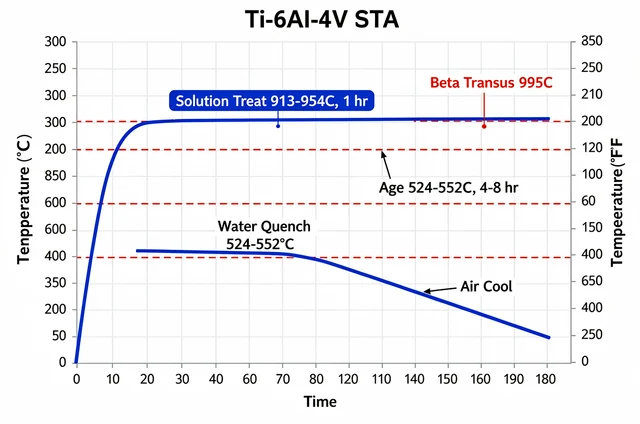
Solution treatment (ST) is the first step of STA — and the parameters you choose here determine the final microstructure and strength more than any other variable.
The Solution Treat Window
Per ATI’s production data and AMS 4965 requirements, the solution treat range for Ti-6Al-4V is 913–954°C (1675–1750°F), held for 1 hour minimum. Some sources list the window starting at 904°C (1660°F) — the ATI datasheet specifies 913°C as the lower bound for their product.
This range is intentionally set 45–80°C below the nominal beta transus (~995°C). At 913–954°C, approximately 70–85% of the microstructure is alpha, with 15–30% beta phase present at temperature. When water quenched from this range, the beta transforms to either:
- Martensite (α′) — if quench rate is fast enough (water quench achieves this in most sections ≤25mm)
- Widmanstätten alpha+beta — if cooling is slower, in thicker sections where the center can’t quench fast enough
The martensite/retained beta phase then provides the supersaturated starting point for aging.
Why Not to Solution Treat Above the Beta Transus
Heating above ~995°C for solution treatment is sometimes done in research and for specific toughness-oriented applications (called “beta solution treat”), but in standard aerospace production it’s avoided for strength-critical parts. Above the transus, all alpha dissolves. The beta grains coarsen significantly. On subsequent cooling and aging, you get a coarser lamellar microstructure that has lower fatigue strength and lower yield strength than an alpha+beta STA.
AMS 4965 specifies the annealed + heat treatable condition specifically to prevent accidental over-temperature.
Cooling Rate from Solution Temperature
Water quench is the standard for Ti-6Al-4V STA. Polymer quench is an acceptable alternative for parts sensitive to quench distortion, but the quench rate must be equivalent — confirmed by mechanical property testing.
Air cooling from solution temperature is not sufficient to retain the beta/martensite phase needed for strengthening by aging. Air-cooled material from the ST temperature produces a microstructure similar to a high-temperature anneal — ductile but not fully strengthened.
Section Size — The Hardenability Limit
This is the point that catches many engineers by surprise: Ti-6Al-4V STA is only fully effective in sections up to approximately 15–25mm (0.6–1.0 inch) in diameter or thickness. Beyond that, the center of the section cannot cool fast enough during water quench to fully suppress beta transformation into equilibrium alpha+beta. The result is a property gradient — higher strength at the surface than at the core.
ATI’s technical data states that “the very best properties in the STA condition are obtained in small sections.” TIMET similarly notes hardenability limitations for thicker cross-sections. If you’re designing a Ti-6Al-4V fastener (typically 10–15mm diameter), STA works well. If you’re specifying STA for a 50mm shaft, expect core properties to fall short of the AMS 4965 minimums — even if the furnace cycle was perfect.
Aging Ti-6Al-4V: Converting Quenched Potential Into Real Strength
Aging is where the strength of STA Ti-6Al-4V is actually created. The solution treat just sets up the microstructure; aging does the work.
After water quenching from the solution treat temperature, Ti-6Al-4V contains a supersaturated mixture of retained beta and/or martensite (α′). These are metastable phases with significant stored energy. Aging at the right temperature activates controlled decomposition: martensite decomposes into fine alpha + beta; retained beta precipitates fine secondary alpha (αs) throughout the matrix. These fine precipitates are the source of the strength increase.
Standard Aging Parameters
Per ATI data:
- Temperature: 524–552°C (975–1025°F)
- Time: 4–8 hours
- Cooling: Air cool
A broader range from TIMET and industry sources: 480–595°C (900–1100°F), 1–24 hours. The ATI window is tighter and represents the sweet spot for typical aerospace applications.
Lower aging temperatures (480–500°C) produce finer precipitates and higher peak strength, at the cost of some ductility. Useful for high-load fasteners.
Higher aging temperatures (570–595°C) produce coarser alpha and better ductility / fracture toughness, with slightly lower UTS. Used for structural parts that need impact resistance.
Over-aging (above 595°C for extended times) starts to coarsen the alpha precipitates, reducing strength with minimal ductility benefit. Aging above 595°C is effectively moving toward a stress relief, not a strengthening treatment.
What STA Actually Achieves — Property Numbers
The annealed condition (AMS 4928) carries minimum specification values of 895 MPa UTS / 825 MPa YS / 10% elongation. STA to AMS 4965 raises the specification minimums to 1103 MPa UTS / 1034 MPa YS / 8% elongation — a roughly 23% jump in strength at a ~2% reduction in minimum elongation.
Scientific Reports data (2023) confirms that STA processing typically delivers a ~20% increase in tensile strength over mill annealing for Ti-6Al-4V.
This is why aerospace fasteners, rocket motor cases, compressor discs, and other high-load parts are specified in the STA condition: the strength-to-weight ratio is about 23% better than annealed, with fully acceptable ductility.
Stress Relief vs. Annealing — When You Actually Need Each
Stress relief and annealing are often confused because both involve heating titanium to elevated temperatures. The distinction comes down to what you’re trying to fix.
Stress Relief
Stress relief treats one problem: residual stresses from machining, cold forming, welding, or straightening. The temperature range is intentionally kept below the annealing range — typically 482–649°C (900–1200°F) for Ti-6Al-4V — so that the microstructure doesn’t change meaningfully. You’re relaxing internal stresses without altering grain structure or phase balance.
AMS 2801 specifies stress relief for Ti-6Al-4V parts at 593°C (1100°F) for 2 hours, air cool. This is the go-to parameter for post-welding stress relief and after rough machining on precision aerospace parts.
For CP titanium (Grades 1–4), stress relief typically runs 538–593°C (1000–1100°F) for 30 minutes, air cool.
When to use stress relief instead of annealing:
- After welding, before final machining, when you don’t need to restore full ductility
- Between forming passes, to allow further cold work
- On heat-treated (STA) parts that need stress reduction without losing the aged strength — this is the critical case. If you fully anneal an STA part, you destroy the aging treatment. A stress relief keeps you safely below the aging temperature range, so the properties are preserved.
Annealing
Annealing goes further: it recrystallizes the microstructure, restores full ductility, and removes all residual stress. It’s appropriate when:
- Material has been severely cold-worked and needs full property restoration
- You need maximum ductility for subsequent forming operations
- The finished part requires the dimensional stability that only a fully annealed microstructure provides
The downside of annealing over stress relief: it takes longer, requires the same protective atmosphere, and — critically — if you anneal an STA part you eliminate all the strengthening from aging. The part returns to essentially the annealed baseline.
Practical decision rule: If the part is in the annealed condition and you’re machining it, a stress relief is usually sufficient. If the part has been cold-formed or has severe microstructural distortion, anneal it. If it’s in the STA condition and you need stress reduction, stay in the 480–538°C range (below the aging range) and treat it as a low-temperature stress relief.
Atmosphere Control and Alpha Case — The Contamination Failure That Fails Inspections
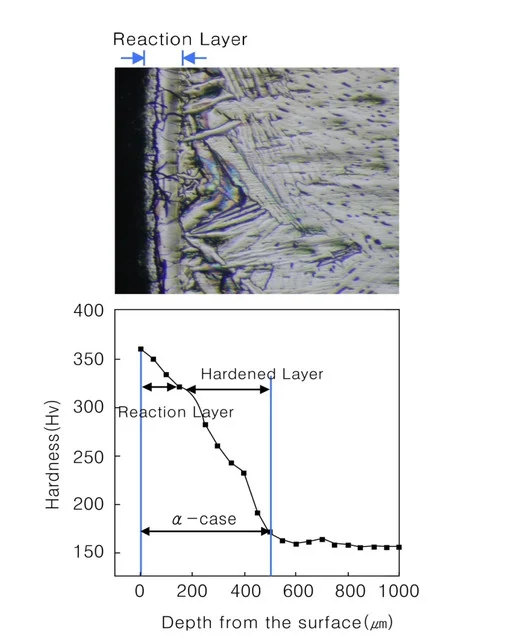
Alpha case is the most common heat treatment-related rejection mode for titanium parts in aerospace production — and it’s entirely preventable.
What Alpha Case Is
When titanium is heated above approximately 538°C in air, it reacts aggressively with oxygen and nitrogen. The oxygen diffuses into the surface, stabilizing alpha phase to a depth that can range from 0.025 to 0.25mm depending on temperature and time. This oxygen-stabilized surface layer is called alpha case: it’s harder, more brittle, and lower in ductility than the underlying substrate.
Alpha case is essentially invisible to the naked eye. It doesn’t affect dimensional inspection, doesn’t show up on coordinate measuring machines, and can pass visual. It only becomes apparent on metallurgical cross-section or — in the worst case — during fatigue testing or service when a surface crack initiates in the brittle zone.
In aerospace applications, AMS 2801 establishes two key temperature thresholds:
- Above 204°C in air, surface contamination begins — parts should not be exposed to open air above this point per AMS 2801 Note 8.5.
- Parts with net dimensions shall not be heated above 538°C (1000°F) in air or non-inert atmosphere furnaces unless coated with a protective coating. Any resulting alpha case must be removed by mechanical or chemical means before acceptance.
- Vacuum level for titanium heat treatment per AMS 2801 should be ≤0.1 µm Hg (10⁻⁴ torr). Many commercial vacuum furnace operators maintain tighter — Solar Atmospheres and similar shops run titanium at vacuum levels well below this floor.
Practical Implications
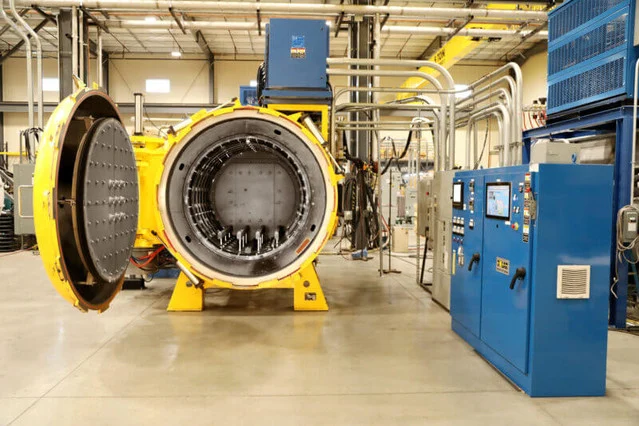
For stress relief at or below 538°C, an air atmosphere furnace is technically acceptable — you’re at the threshold where oxidation is manageable. But in practice, most heat treaters process all titanium in vacuum to eliminate any risk.
For annealing (691–760°C for Ti-6Al-4V) and solution treating (913–954°C), vacuum or inert atmosphere is non-negotiable. The alpha case growth rate increases dramatically above 700°C. Running Ti-6Al-4V solution treatment in air without protection will produce severe alpha case and parts that fail fatigue inspection.
For AM/LPBF parts specifically: the net-shape geometry makes alpha case removal by machining impractical. ASTM F3301 and AMS 2801 both specify that LPBF Ti-6Al-4V heat treatments must be done in vacuum for this reason.
Heat Treatment Conditions and AMS Specifications — Which Spec Goes on the Drawing

One of the most common questions from engineers new to titanium: “Which AMS spec do I call out?” The answer depends on the product form and the intended condition.
| AMS Spec | Product Form | Condition | Alloy |
|---|---|---|---|
| AMS 4928 | Bar, billet, forgings | Annealed | Ti-6Al-4V (Grade 5) |
| AMS 4965 | Bar, forgings | Solution treated + aged | Ti-6Al-4V (Grade 5) |
| AMS 4967 | Bar, forgings | Annealed, heat treatable | Ti-6Al-4V (Grade 5) |
| AMS 4911 | Sheet, strip, plate | Annealed | Ti-6Al-4V (Grade 5) |
| AMS 4930 | Bar, wire, billet, rings | Annealed | Ti-6Al-4V ELI (Grade 23) |
| AMS 4931 | Bar, billet, rings | Annealed | Ti-6Al-4V ELI (Grade 23) |
| AMS 4921 | Bar, wire, forgings | Annealed | CP Ti Grades 1–4 |
| AMS 2801 | (Process spec) | Heat treatment of parts | All titanium alloys |
Important distinction: AMS 4928, 4965, and 4911 are material specifications — they govern what the mill ships. AMS 2801 is a process specification — it governs how a part fabricator or heat treat shop applies heat treatment to parts during manufacturing.
If your drawing calls out AMS 4928 on the material callout block, you’ve specified annealed Ti-6Al-4V bar stock. If you also want post-machining stress relief or STA, you need a separate process note referencing AMS 2801 with the specific treatment parameters.
For aerospace prime contractors, AMS 4967 (“Annealed, Heat Treatable”) is the typical raw material purchase spec when the part fabricator will perform STA on machined/forged parts. The bar arrives annealed (easy to machine), and the fabricator applies the STA cycle after rough machining.
Grade 23 (Ti-6Al-4V ELI) — Heat Treatment Differences That Matter
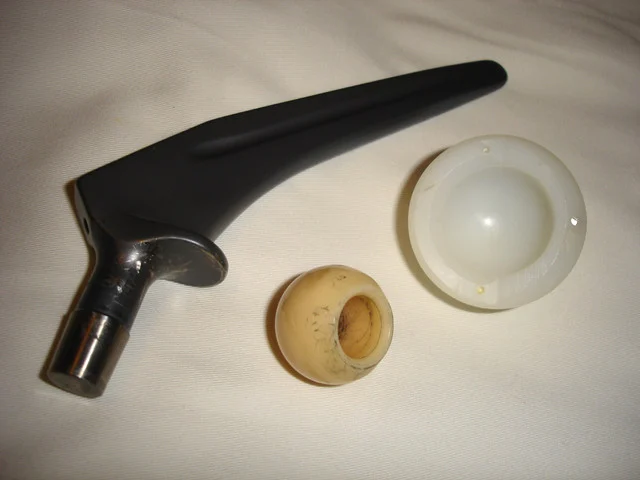
Grade 23 is not just “cleaner Grade 5.” The ELI chemistry changes the beta transus and the heat treatment parameters enough that using Grade 5 numbers on Grade 23 material is a mistake.
ELI stands for Extra-Low Interstitial. Compared to standard Grade 5:
- Oxygen max: 0.13% (vs. 0.20% in Grade 5)
- Iron max: 0.25% (vs. 0.40%)
- Nitrogen max: 0.05% (same)
These lower interstitial levels reduce the alpha-stabilizing effect of oxygen and iron, which lowers the beta transus to approximately 977°C ± 4°C (1790°F ± 25°F) — about 18–22°C below the Grade 5 transus.
Heat treatment parameters for Grade 23 (ATI data):
- Anneal: 704–732°C (1300–1350°F), 1–8 hours, air cool
- Stress Relief: 482–649°C (900–1200°F), 1–4 hours, air cool
- Solution treat: Same window as Grade 5 (904–954°C), but the lower transus gives a slightly wider process margin
Why Grade 23 is rarely STA’d in practice: Its primary applications are surgical implants and orthopedic devices (ASTM F136 covers Grade 23 for implants). In those applications, the maximum fracture toughness and fatigue life of the annealed condition are preferred over the higher strength of STA. Annealing at 704–732°C gives a fine-grained equiaxed alpha structure with excellent toughness and ductility — exactly what bone screws and hip stems need.
AMS 4930 and AMS 4931 cover Grade 23 bar and billet in the annealed condition. ASTM F136 governs Grade 23 specifically for surgical implants.
Post-LPBF Titanium: Heat Treatment Requirements for Additive Parts
If you’re working with titanium from laser powder bed fusion (LPBF) or directed energy deposition (DED), the heat treatment rules are mostly the same as wrought — with one critical procedural difference.
ASTM F3301–18a (“Additive Manufacturing — Titanium 6Al-4V with Powder Bed Fusion”) specifies that thermal post-processing of LPBF Ti-6Al-4V shall be carried out per AMS 2801. So the same temperature windows apply.
The key difference is sequence and atmosphere. LPBF parts grow on a build substrate (base plate), and significant residual stresses develop between the part and the substrate during printing. The sequence matters:
- Stress relief before substrate removal. Apply the AMS 2801 stress relief cycle (typically 593°C / 1100°F, 2 hours, vacuum) while the part is still attached to the substrate. This releases the majority of residual stress in a controlled manner.
- Remove from substrate after stress relief. Wire EDM or machining.
- Anneal or STA as required by the application.
Running this sequence in reverse — removing the part from the substrate before any stress relief — risks distortion or cracking as internal stresses are released in an uncontrolled manner.
Atmosphere is non-negotiable for LPBF Ti-6Al-4V: Because LPBF produces net-shape parts with complex surfaces that can’t be easily machined for alpha case removal, all heat treatments above 538°C must be in vacuum (≤0.1 µm Hg per AMS 2801). Air furnace processing is not acceptable for LPBF titanium parts.
This rules out any heat treatment shop that doesn’t have vacuum furnace capability. For engineers sourcing heat treatment services for AM titanium, AMS 2801 compliance and adequate vacuum level documentation are the minimum qualification requirements.
Frequently Asked Questions
What is the annealing temperature for Ti-6Al-4V?
The standard annealing range for Ti-6Al-4V (Grade 5) is 691–760°C (1275–1400°F), held for ½ to 2 hours, followed by air or furnace cooling. AMS 2801 specifies 704°C (1300°F) / 2 hours as the default for part-level annealing. Temperatures up to 815°C may be used with a protective atmosphere, but contamination (alpha case) must be removed if present.
What is the beta transus temperature of Ti-6Al-4V?
The beta transus of Ti-6Al-4V is approximately 995°C (1820°F), with a mill-reported tolerance of ±14°C (±25°F). ATI’s production data for their 6-4 product cites 999°C ± 14°C (1830°F ± 25°F). Every heat treat parameter for Ti-6Al-4V — annealing, solution treating, beta annealing — is defined relative to this temperature. Grade 23 (ELI) has a lower transus at ~977°C ± 4°C.
What is solution treating and aging (STA) for titanium?
STA is a two-step strengthening heat treatment for alpha-beta titanium alloys. The alloy is first heated to a temperature below the beta transus (913–954°C for Ti-6Al-4V) and water quenched to lock in a supersaturated beta/martensite phase. It is then aged at a lower temperature (524–552°C for Ti-6Al-4V, 4–8 hours) to precipitate fine secondary alpha, which raises tensile strength by approximately 20% compared to the annealed condition. STA is covered by AMS 4965 for Ti-6Al-4V bar and forgings.
Can titanium be heat treated in air?
Only below 538°C (1000°F). Per AMS 2801, titanium parts shall not be exposed to air above 538°C without a protective atmosphere or coating. Above this temperature, oxygen diffuses into the surface and forms alpha case — a hard, brittle, oxygen-stabilized layer that reduces fatigue life. All annealing, solution treating, and aging above 538°C must be done in vacuum (≤0.1 µm Hg) or an inert gas atmosphere.
What is the difference between stress relief and annealing for titanium?
Stress relief (482–649°C for Ti-6Al-4V) removes residual stresses from machining, welding, and forming without changing the microstructure. Annealing (691–760°C) goes further: it recrystallizes the microstructure and restores full ductility. If a Ti-6Al-4V part is in the STA condition, a stress relief preserves the aged properties; a full anneal destroys them.
Which AMS spec covers Ti-6Al-4V in the solution treated and aged condition?
AMS 4965 covers Ti-6Al-4V bar and forgings in the solution treated and aged (STA) condition. AMS 4928 covers the same product forms in the annealed condition. AMS 2801 is the process specification governing the heat treatment cycle itself, applied by the part fabricator.
Why can’t Grade 2 titanium be strengthened by heat treatment?
Grade 2 is commercially pure (CP) titanium — it contains no significant beta-stabilizing elements like vanadium. Without beta phase, there are no precipitates to form during aging. CP titanium alloys can only be annealed (to soften and restore ductility) or stress-relieved. Strengthening must be achieved through cold work rather than heat treatment.
What is alpha case in titanium and how do you prevent it?
Alpha case is an oxygen- and nitrogen-rich surface layer that forms when titanium is heated above 538°C in air. It appears metallurgically similar to the base metal but is harder and more brittle. Prevention: heat treat only in vacuum or inert gas above 538°C per AMS 2801. Detection: metallographic cross-section; thickness-sensitive etch. Remediation: mechanical removal (grinding) or chemical removal (acid pickling per AMS 2801).
Summary: What Actually Matters in Titanium Heat Treatment
After working through thousands of Ti-6Al-4V heat treat certifications and tracking down more than a few unexpected rejections, here’s what I’d tell a junior engineer starting out with titanium:
The beta transus is your reference point for everything. Know it for your specific heat, not just the nominal value. Ti-6Al-4V is approximately 995°C — but verify the certified material test report (CMTR) for the exact heat value before setting furnace temperatures for solution treating.
CP titanium cannot be strengthened by heat treatment. If a design calls for high strength, the answer is Ti-6Al-4V STA — not trying to heat-treat Grade 2.
Vacuum is not optional above 538°C. Alpha case failures are among the most costly in aerospace production: parts can pass every dimensional inspection and still be scrap. The cost of a proper vacuum furnace cycle is trivial compared to scrapping finished parts or — worse — service failures.
Section size limits STA effectiveness. Ti-6Al-4V fully hardens in sections up to approximately 15–25mm. If your application needs STA properties in a 50mm cross-section, you need a different design approach.
Stress relief first, then final machining. For complex machined parts, stress relieve after rough machining to release stored stresses before finish cuts. This sequence keeps tolerances tight and prevents distortion on thin walls.
Grade 23 anneal temperatures are slightly different from Grade 5. 704–732°C vs. 691–760°C — close, but the lower beta transus matters, especially for solution treating. Use Grade 23-specific parameters.
The technical parameters in this guide come from ATI’s Ti-6Al-4V technical data sheet, TIMET’s Timetal 6-4 properties document, Carpenter Technology’s CP Ti Grade 2 datasheet, AMS 2801D, and published research from Thermal Processing Magazine and Scientific Reports. These are the same sources a heat treat shop uses to write its work instructions — and they’re the right sources to cite on a drawing or PO.