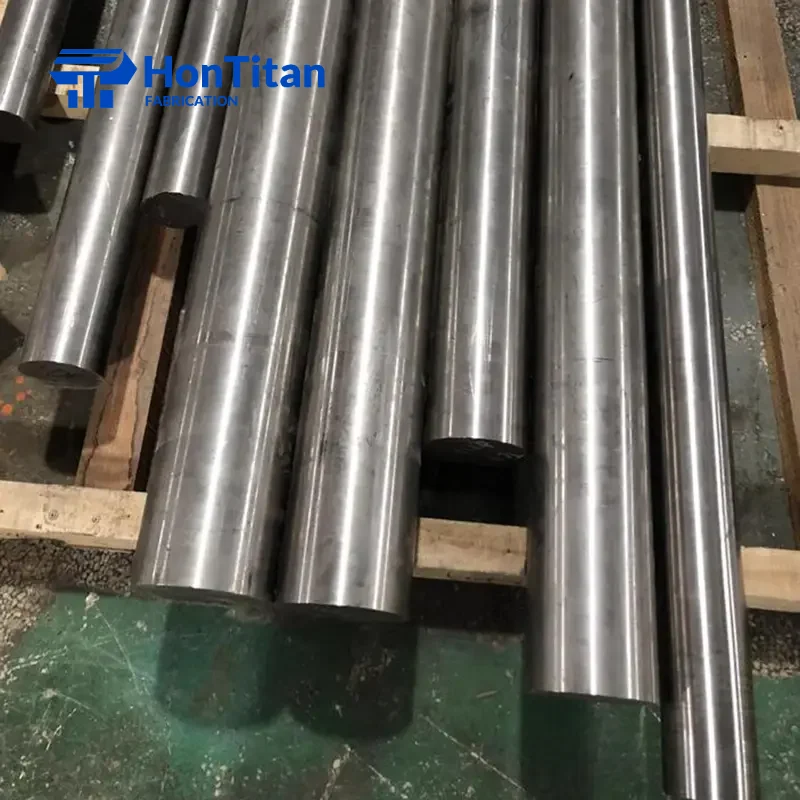
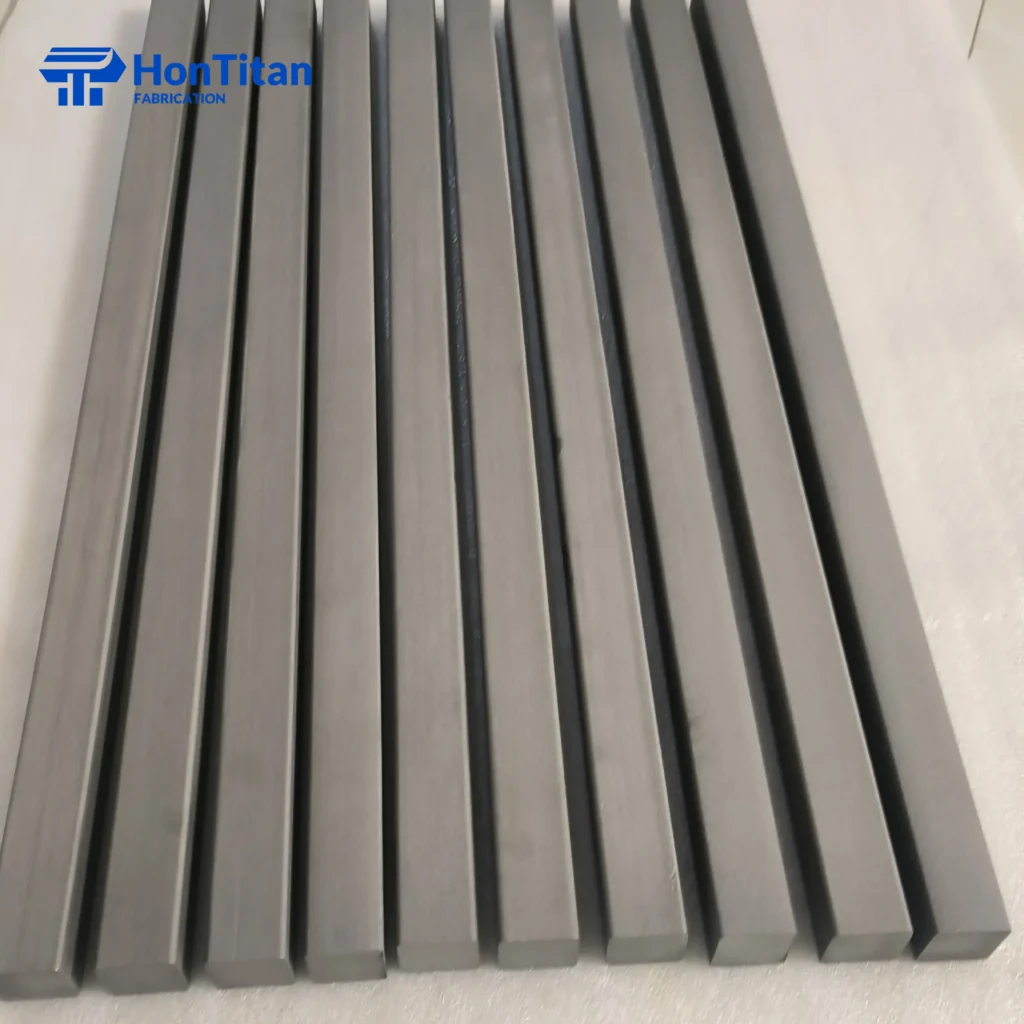
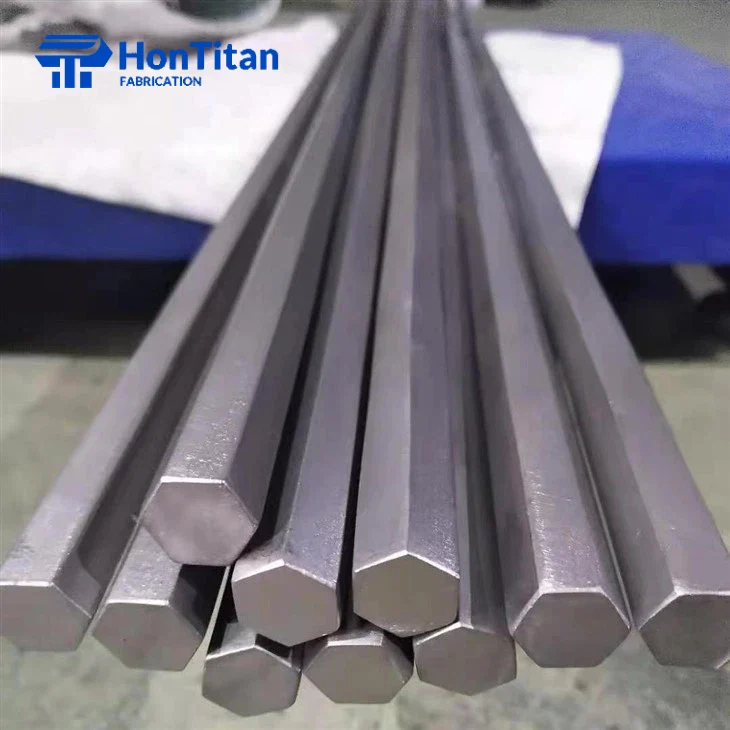
Grade 9 titanium round bar, designation Ti-3Al-2.5V (UNS R56320), is an alpha-beta titanium alloy that occupies the performance zone between commercially pure titanium and the higher-strength Grade 5 (Ti-6Al-4V). Governed by ASTM B348 and available in both annealed and cold-worked stress-relieved (CWSR) conditions, it is the primary material choice for aerospace hydraulic tubing preforms, high-performance bicycle frame blanks, and corrosion-critical industrial components.
Mill Test Certificates to EN 10204 3.1 are issued with every shipment. RFQ inquiries receive dimensional and lead-time confirmation within 24 hours.
Quick Specifications
| Parameter |
Value |
| Material |
Ti-3Al-2.5V (Grade 9), UNS R56320 |
| Standard |
ASTM B348-19 / AMS 4946 |
| Diameter Range |
6 mm – 200 mm (0.25″ – 8″) |
| Length |
Up to 6,000 mm; cut-to-length available |
| Condition |
Annealed (ANN) standard; CWSR available on request |
| UTS (Annealed) |
≥ 620 MPa (90 ksi) per ASTM B348 |
| Diameter Tolerance |
h9 to h11 (ground); as-forged per ASTM B348 Annex |
| Surface Finish |
Turned, ground, or black (as-forged/rolled) |
| Mill Test Certificate |
EN 10204 3.1 included as standard |
| MOQ |
[To be confirmed] |
What Is Grade 9 Titanium (Ti-3Al-2.5V)?
Grade 9 titanium, alloy designation Ti-3Al-2.5V (UNS R56320), is an alpha-beta titanium alloy containing nominally 3% aluminum as an alpha stabilizer and 2.5% vanadium as a beta stabilizer, offering a strength-to-weight ratio and fabricability profile that bridges commercially pure (CP) titanium grades and the high-strength aerospace Grade 5 (Ti-6Al-4V) alloy.
The alloy is sometimes referred to in the industry as “half-6-4” because its aluminum and vanadium contents are approximately half those of Ti-6Al-4V — a shorthand that reflects both its intermediate strength and its superior cold-formability relative to Grade 5. The density of 4.48 g/cm³ is effectively the same across all titanium grades, so strength-per-unit-weight is directly set by tensile properties.
Key characteristics:
- Alloy class: Alpha-beta titanium (α+β microstructure at room temperature)
- UNS designation: R56320
- Comparable international designations: DIN 3.7195 (Germany)
- Standard for bar/billet: ASTM B348 / AMS 4946 (rounds, squares, hexagons, rectangles, and forged billet)
- Standard for seamless tube: ASTM B338, AMS 4943/4944/4945
- Condition options: Annealed (ANN) is standard for bar stock; CWSR is available on request (primarily a tube-stage condition per ASTM B338)
Note on standards: ASTM B348 governs round bar and billet. ASTM B338 governs seamless and welded tube. Engineers specifying Ti-3Al-2.5V for hydraulic tubing preforms should confirm whether the drawing callout refers to the bar standard (B348) or the finished tube standard (B338), as the required minimum properties differ between conditions.
Chemical Composition — ASTM B348 Grade 9 Requirements
The chemical composition of Grade 9 titanium round bar is specified in ASTM B348-19, Table 1. All elements are verified by the mill laboratory using optical emission spectrometry (per ASTM E2371) or inert gas fusion (ASTM E1447 for hydrogen), with results reported on the EN 10204 3.1 Mill Test Certificate.
| Element |
Minimum (wt%) |
Maximum (wt%) |
Role in Alloy |
| Aluminum (Al) |
2.5 |
3.5 |
Alpha stabilizer; strengthening |
| Vanadium (V) |
2.0 |
3.0 |
Beta stabilizer; improves ductility |
| Iron (Fe) |
— |
0.25 |
Interstitial impurity (controlled) |
| Oxygen (O) |
— |
0.15 |
Interstitial strengthener (controlled) |
| Carbon © |
— |
0.08 |
Interstitial impurity |
| Nitrogen (N) |
— |
0.03 |
Interstitial impurity |
| Hydrogen (H) |
— |
0.015 |
Interstitial (embrittlement risk; tightly controlled) |
| Titanium (Ti) |
Balance |
— |
Matrix |
Interstitial control note: Oxygen, nitrogen, and hydrogen are tightly restricted because even small concentrations significantly affect ductility and fracture toughness. Hydrogen must be held below 0.015 wt% to prevent hydride-induced embrittlement during cold-drawing operations.
Note on AMS vs ASTM limits: The values above apply to ASTM B348 bar/billet. AMS tubing specifications (4943/4944/4945) impose stricter limits for aerospace hydraulic tubing: Carbon ≤ 0.050% (vs 0.08% in B348) and Iron ≤ 0.20% (vs 0.25% in B348). When reviewing MTCs for tubing preform stock, confirm the applicable specification with your procurement team.
Mechanical Properties of Grade 9 Titanium Round Bar
Minimum tensile properties for Grade 9 titanium round bar in the annealed condition are defined in ASTM B348-19, Table 3. All tensile tests are performed per ASTM E8/E8M.
Note on CWSR condition for bar: ASTM B348 primarily governs annealed bar. CWSR (cold-worked stress-relieved) mechanical minimums are more commonly cited for tube specifications (ASTM B338 / AMS 4944). If CWSR bar is specifically required, confirm the applicable specification and minimum properties with the mill before ordering.
| Property |
Annealed (ANN) — ASTM B348 |
CWSR — ASTM B338 (tubing ref.) |
Test Method |
| Ultimate Tensile Strength (UTS) |
≥ 620 MPa (90 ksi) |
≥ 860 MPa (125 ksi) |
ASTM E8/E8M |
| 0.2% Offset Yield Strength (YS) |
≥ 483 MPa (70 ksi) |
≥ 725 MPa (105 ksi) |
ASTM E8/E8M |
| Elongation in 2 in. (50 mm) |
≥ 15% |
≥ 10% |
ASTM E8/E8M |
| Reduction in Area |
≥ 25% |
— |
ASTM E8/E8M |
| Hardness |
≤ 30 HRB (approx.) |
— |
ASTM E18 |
Physical and thermal properties (typical):
| Property |
Value |
| Density |
4.48 g/cm³ (0.162 lb/in³) |
| Elastic Modulus (E) |
~100 GPa (14.5 Msi) |
| Shear Modulus (G) |
33–44 GPa (typical range) |
| Poisson’s Ratio |
0.35–0.37 |
| Melting Range |
~1590–1640°C (~2890–2980°F) |
| Thermal Conductivity |
7.5–8.3 W/m·K at 20°C |
| Coefficient of Thermal Expansion |
~7.9–8.1 µm/m·°C (20–100°C) |
Condition selection: Annealed bar is the standard choice for cold-drawn hydraulic tubing preforms — the lower yield strength allows greater cold-reduction per draw pass. CWSR is applied at the tube stage after cold drawing, not typically specified as a bar condition for round bar stock.
Available Sizes and Dimensional Tolerances
| Form |
Diameter Range |
Standard Length |
Cut-to-Length |
| Round bar (turned/ground) |
6 mm – 80 mm (0.25″ – 3.15″) |
3,000 mm / 6,000 mm |
Available |
| Round bar (forged/rolled) |
80 mm – 200 mm (3.15″ – 8.0″) |
1,500 mm – 4,500 mm |
Available |
| Billet (forged) |
200 mm – 350 mm (8.0″ – 13.8″) |
By agreement |
Available |
Diameter tolerances (ASTM B348-19 Annex / ISO 286-1):
| Tolerance Class |
Application |
Typical Deviation (Ø25 mm example) |
| h9 |
Precision ground bar |
0 / −0.052 mm |
| h11 |
Standard turned bar |
0 / −0.130 mm |
| As-forged |
Large forged/rolled bar |
Per ASTM B348 Table |
| h6 / h7 |
Tight tolerance (on request) |
Available; specify on RFQ |
Surface finishes: Turned and polished (bright) · Centerless ground · Black/as-forged · Pickled
Straightness: ≤ 3 mm per 1,000 mm unless otherwise specified.
Applications of Ti-3Al-2.5V Round Bar
Aerospace — Hydraulic Tubing Preforms
The largest volume application for Ti-3Al-2.5V round bar is as starting stock for cold-drawn seamless hydraulic tubing used in aircraft flight control, landing gear, and engine actuation systems. The alloy’s combination of adequate strength, excellent cold-drawing response, and TIG-weldability makes it the default material for aerospace hydraulic lines per ASTM B338 and AMS 4943/4944/4945.
Cycling and High-Performance Sports
Ti-3Al-2.5V round bar is drawn into thin-wall tube for bicycle frame construction. The alloy’s intermediate strength allows tube wall thicknesses that produce ride compliance not achievable with Grade 5, while retaining the corrosion immunity and weight advantage of titanium over steel and aluminum.
Chemical Processing and Industrial Equipment
Resistance to chloride-induced pitting and crevice corrosion, combined with strength advantage over CP titanium, makes this alloy suitable for heat exchanger tube sheets, pump shafts, valve spindles, and agitator components in aggressive chemical environments.
Medical Device Components
Non-implantable medical instruments and structural components utilize Ti-3Al-2.5V bar for sterilization compatibility, corrosion resistance in bodily-fluid-adjacent environments, and lower elastic modulus relative to stainless steel.
Motorsport and Defense
Suspension components, fastener blanks, and lightweight structural members in motorsport and tactical defense platforms benefit from the alloy’s fatigue resistance and specific strength. CWSR condition is typically specified for these applications.
Marine and Offshore
Seawater-immersed hardware — fasteners, valve bodies, connector pins — where immunity to chloride corrosion and biofouling adhesion resistance justify the material cost premium over duplex stainless steel.
Grade 9 vs Grade 5 vs Grade 2 Titanium — Comparison Guide
| Property |
Grade 2 (CP Titanium) |
Grade 9 (Ti-3Al-2.5V) |
Grade 5 (Ti-6Al-4V) |
| UTS (Annealed) |
345 MPa (50 ksi) |
620 MPa (90 ksi) |
895 MPa (130 ksi) |
| 0.2% YS (Annealed) |
275 MPa (40 ksi) |
483 MPa (70 ksi) |
828 MPa (120 ksi) |
| Elongation |
≥ 20% |
≥ 15% |
≥ 10% |
| Density (g/cm³) |
4.51 |
4.48 |
4.43 |
| Cold-drawing response |
Excellent |
Good |
Poor |
| Weldability (TIG/GTAW) |
Excellent |
Good |
Moderate |
| Corrosion resistance |
Excellent |
Excellent |
Good |
| Relative material cost |
Low |
Medium |
High |
| Bar standard |
ASTM B348 Gr.2 |
ASTM B348 Gr.9 |
ASTM B348 Gr.5 |
| Typical applications |
Chemical, marine, architecture |
Hydraulic tubing, cycling, industrial |
Aerospace structure, medical implants |
Selection guidance:
- Grade 2 — maximum formability and weldability; strength demand ≤ 345 MPa UTS
- Grade 9 — cold-drawing to tube or thin-wall form at moderate strength; cost-constrained relative to Grade 5
- Grade 5 — design load requires UTS ≥ 895 MPa; high-cycle fatigue or elevated-temperature service above 260°C
Weldability and Machinability
Weldability
Grade 9 titanium round bar is readily weldable by Gas Tungsten Arc Welding (GTAW/TIG) without post-weld heat treatment (PWHT) in most structural applications.
- Shielding gas: Pure argon (99.999% purity minimum); trailing shield required until weld temperature drops below ~430°C (800°F)
- Contamination control: Solvent-clean and wire-brush with a stainless steel brush reserved exclusively for titanium
- Chlorinated solvents: Prohibited
- Filler metal: ERTi-9 per AWS A5.16
Electron Beam Welding (EBW) and laser welding are used in high-specification aerospace applications where vacuum or controlled environment provides inherent atmospheric protection.
Machinability
| Factor |
Recommendation |
| Cutting speed |
30–60 m/min (carbide); 15–25 m/min (HSS) |
| Feed rate |
Moderate — avoid work-hardening by not dwelling |
| Cutting fluid |
High-pressure flood coolant; soluble oil or synthetic |
| Tool material |
Uncoated or TiAlN-coated fine-grain carbide |
| Depth of cut |
Maintain positive engagement; light finishing passes risk rubbing |
Titanium’s low thermal conductivity (~7.5 W/m·K vs ~50 W/m·K for steel) concentrates heat at the tool tip — adequate coolant flow is essential to prevent tool failure and surface contamination.
Quality Assurance and Mill Test Certificate
Mill Test Certificate (MTC)
Every shipment is supported by an EN 10204 Type 3.1 MTC — signed and certified by the manufacturer’s inspection department, independent of production — reporting: heat/lot number, chemical composition (all elements per ASTM B348 Table 1), mechanical test results (UTS, YS, elongation, reduction in area), hardness, heat treatment condition, applicable standards, and dimensional verification.
Third-Party Inspection (available on request)
- SGS, Bureau Veritas (BV), TÜV Rheinland, or Intertek witness testing
- Supplementary reports: PMI (XRF), ultrasonic testing (UT) per ASTM E2375, dye penetrant inspection (PT), dimensional and surface finish verification
Traceability
- Heat-to-bar traceability maintained throughout all processing steps
- Each bar or bundle marked with heat number, grade, standard, and condition per ASTM B348 marking requirements
Frequently Asked Questions
What is Grade 9 titanium (Ti-3Al-2.5V)?
Grade 9 titanium is an alpha-beta titanium alloy (UNS R56320) containing approximately 3% aluminum and 2.5% vanadium. It offers intermediate strength between commercially pure CP titanium (Grade 2) and the high-strength Grade 5 (Ti-6Al-4V), combined with good cold-drawing response and TIG weldability. The governing standard for round bar and billet is ASTM B348.
What are the mechanical properties of Grade 9 titanium round bar per ASTM B348?
In the annealed condition (ASTM B348): UTS ≥ 620 MPa (90 ksi), 0.2% yield strength ≥ 483 MPa (70 ksi), elongation ≥ 15%. CWSR minimums apply primarily to tube specifications (ASTM B338): UTS ≥ 860 MPa (125 ksi), yield strength ≥ 725 MPa (105 ksi), elongation ≥ 10%.
How does Grade 9 compare to Grade 5 (Ti-6Al-4V)?
Grade 9 has roughly 30% lower tensile strength than Grade 5 (620 MPa vs 895 MPa), but significantly better cold-formability and weldability. Grade 9 is the preferred choice when the part will be further cold-drawn to tube form, or when fabrication requirements (TIG welding without PWHT) favor a more ductile alloy. Grade 5 is specified when the design load requires strength ≥ 895 MPa.
Is Grade 9 titanium weldable?
Yes. Ti-3Al-2.5V is readily weldable by GTAW/TIG using ERTi-9 filler wire (per AWS A5.16) and pure argon shielding. Post-weld heat treatment is not required for most applications. Atmospheric contamination during welding must be prevented by trailing shielding until the weld cools below approximately 430°C.
What standard governs Grade 9 titanium round bar?
The primary standard for Ti-3Al-2.5V round bar and billet is ASTM B348. The aerospace bar, wire, and extrusion specification is AMS 4946. Note: ASTM B338 and AMS 4943/4944/4945 govern seamless tube of the same alloy and should not be specified for bar form.
What diameter range is available?
Standard inventory covers 6 mm to 80 mm (0.25″ to 3.15″) in turned/ground finish and 80 mm to 200 mm (up to 8.0″) in forged/rolled form. Billet up to 350 mm diameter is available by arrangement. Custom diameters and tight tolerance (h6/h7) are available on request.
Do you provide a Mill Test Certificate?
Yes. Every shipment includes an EN 10204 Type 3.1 MTC covering full chemical composition and mechanical test results traceable to the specific heat/lot. Third-party inspection reports (SGS, BV, TÜV) can be arranged on request.