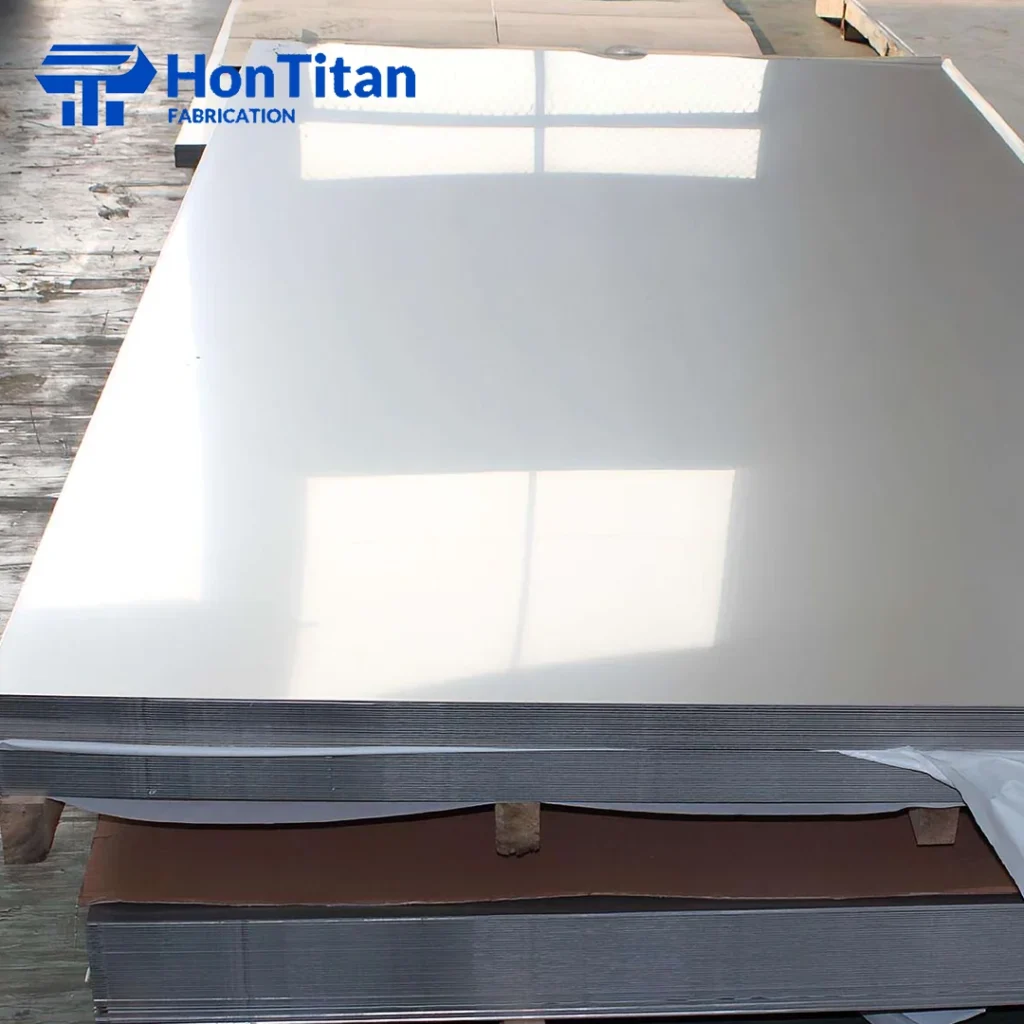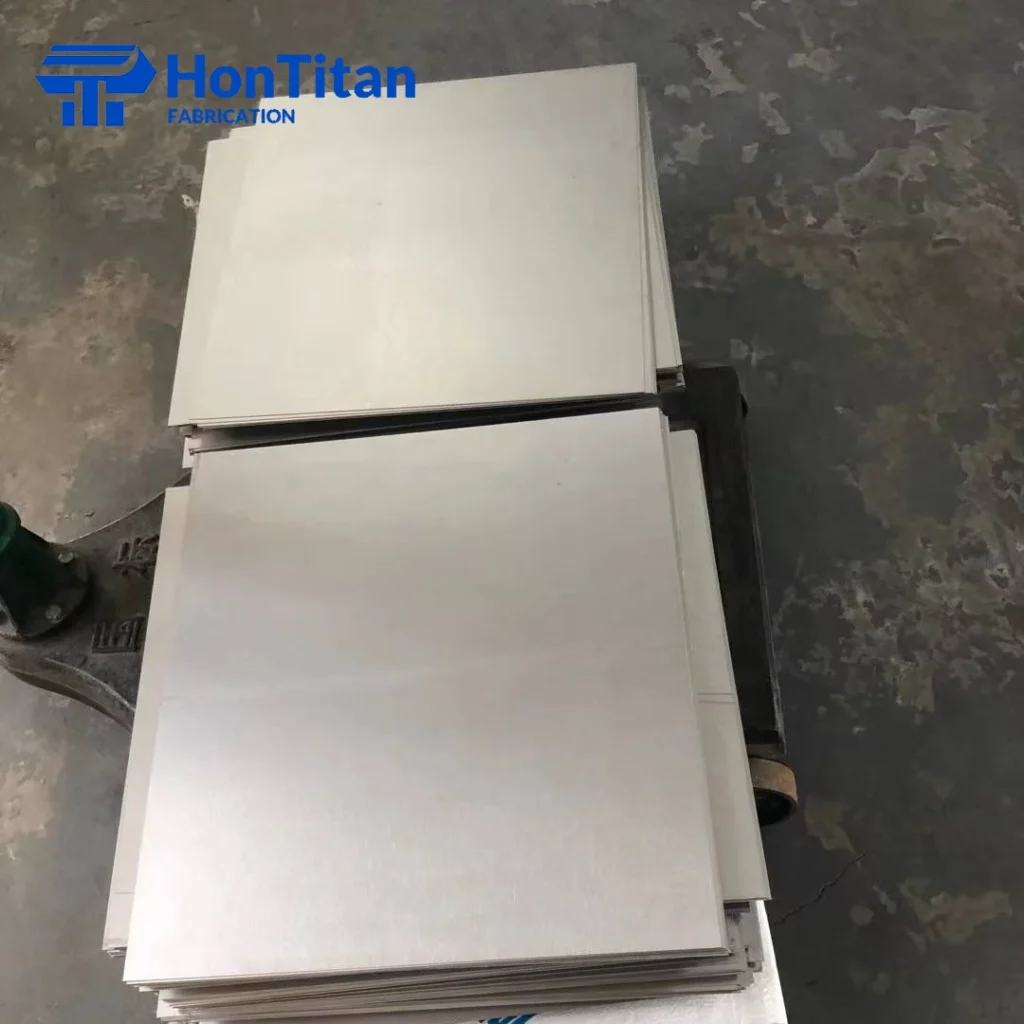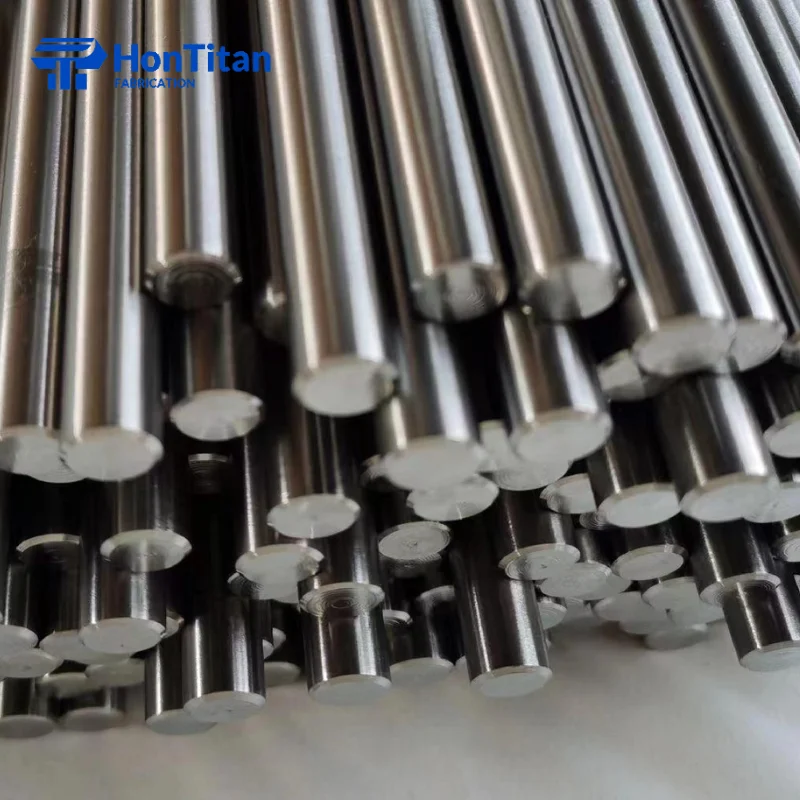
Solid titanium is not easily flammable — its auto-ignition temperature in bulk form is 2,200°F (1,204°C). But the same metal in fine powder or dust form ignites at just 480°F (249°C), well within the range of cutting friction and grinding sparks. Titanium chips from machining occupy a middle ground: coarse chips are relatively safe with proper coolant, but fine swarf and accumulated dust are a genuine Class D fire and explosion hazard. This guide explains exactly which forms of titanium are dangerous, what conditions trigger ignition during machining, how NFPA 484 governs titanium handling, and what to do if a titanium fire starts.
Is Titanium Flammable? The Answer Depends on Form
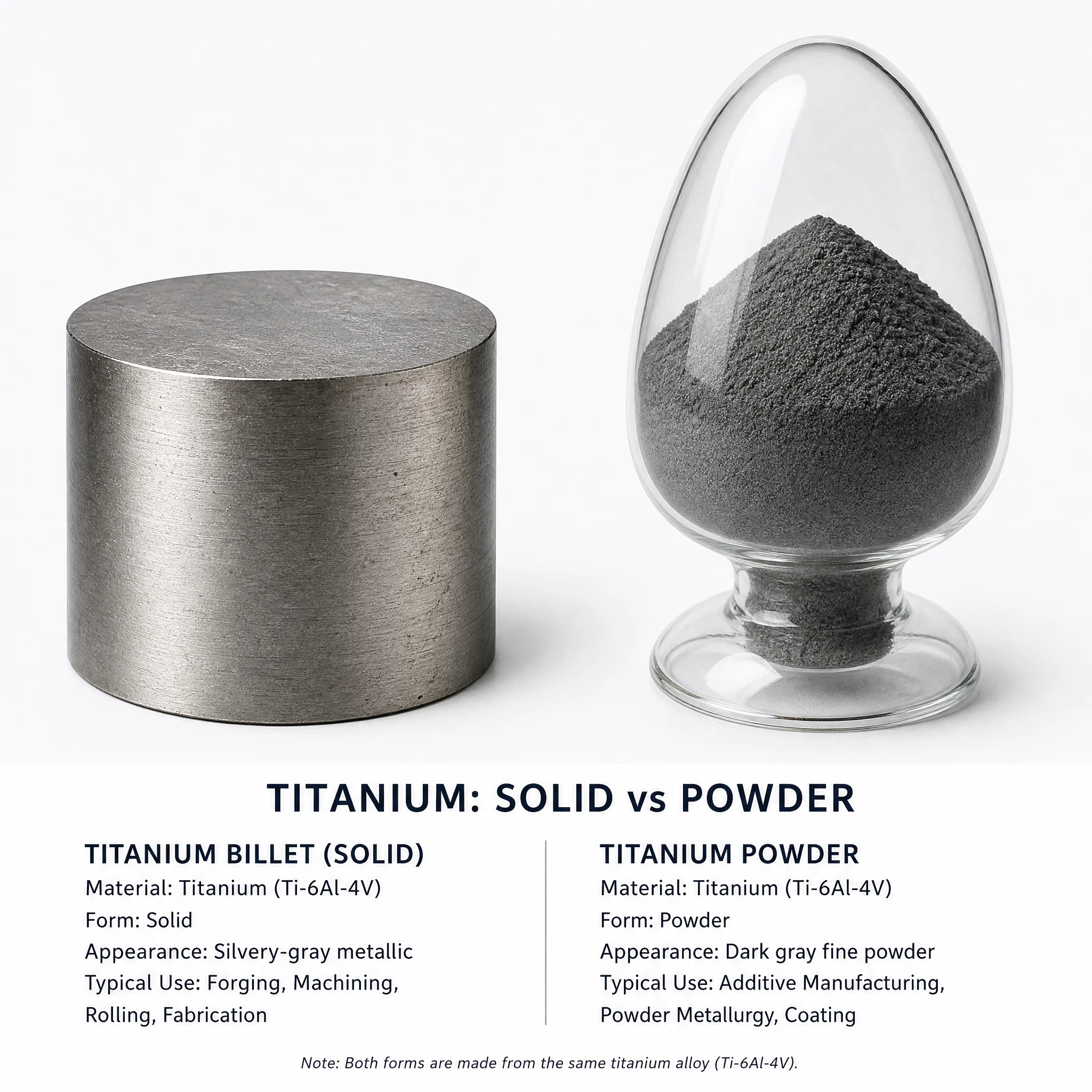
The short answer machinists often hear — “titanium is relatively safe to work with” — is only half true. Whether titanium burns depends entirely on what form it’s in.
| Form | Auto-Ignition Temp (Air) | Practical Risk |
|---|---|---|
| Bulk solid (billet, bar, plate) | ~2,200°F (1,204°C) | Very low — CNC operations rarely reach this |
| Coarse chips / turnings (>1 mm) | High — requires sustained heat contact | Low to moderate — coolant prevents accumulation |
| Fine swarf / thin ribbons | Moderate ignition threshold | Moderate — dry machining or no coolant = real risk |
| Powder / dust (<420 µm particles) | ~480°F (249°C) | High — explosion hazard in suspended cloud |
The critical insight here is surface area. A titanium billet is dense and conducts heat away slowly, but it takes a lot of energy to raise the bulk temperature to ignition. Powder is the opposite: each particle is almost entirely surface, oxygen has direct contact with the metal, and the ignition threshold drops by a factor of nearly five.
NFPA 484, the Standard for Combustible Metals, is built around this surface area reality. It defines a combustible dust as any particulate that passes through a 420 µm (U.S. No. 40) sieve — and titanium particles at this size or below are classified as explosive when suspended in air.
The bottom line before getting into specifics: solid titanium in a machine shop is not a significant fire risk under normal conditions with coolant. Titanium dust and fine swarf without coolant are.
Why Particle Size Changes Everything: The Surface Area Effect
To understand why titanium powder can ignite at temperatures a titanium block could never reach, you need to think about the combustion reaction itself.
Titanium oxidizes: Ti + O₂ → TiO₂. This reaction releases significant heat — enough to sustain combustion once started. In a solid block, only the outer surface is exposed to oxygen, so the reaction rate is limited and the heat dissipates into the surrounding metal mass. You’d need to raise that surface to 2,200°F to start a self-sustaining fire.
In a dust cloud, every particle is a surface. A cloud of titanium particles suspended in air presents essentially unlimited oxygen contact across the entire mass of metal simultaneously. The reaction can propagate from particle to particle at high speed. This is not just a fire — it’s a deflagration event, and in a confined space, the pressure wave can cause a structural explosion.
The NFPA’s Industrial Fire Hazards Handbook states it plainly: “any industrial process that reduces a combustible material and some normally non-combustible materials to a finely divided state presents a potential for a serious fire or explosion.”
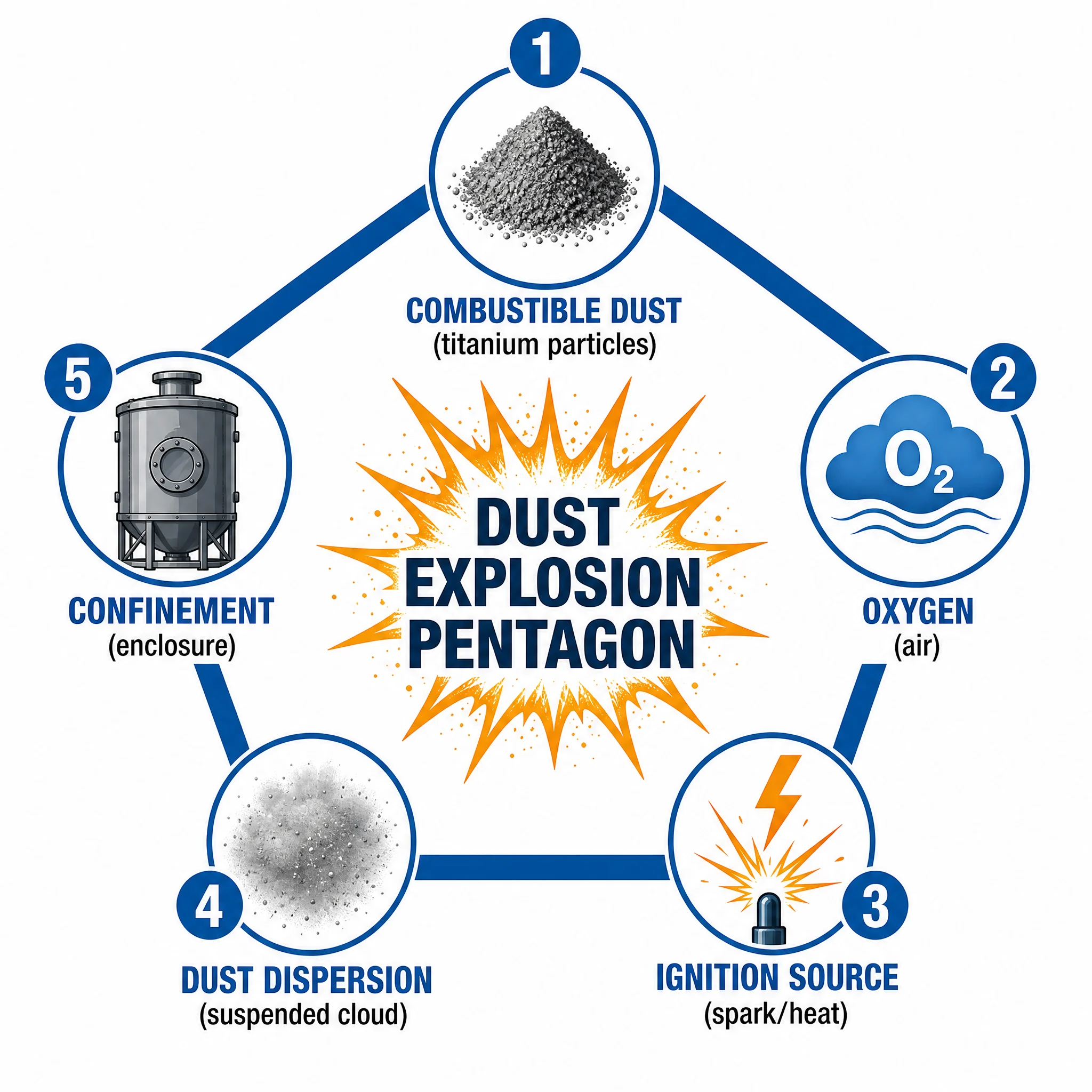
For the dust explosion pentagon to complete — and it’s the same framework OSHA uses — you need five conditions simultaneously:
- Combustible dust (titanium particles ≤420 µm)
- Oxygen present (air in the workspace)
- Ignition source (spark, friction heat, static discharge)
- Dispersion of dust in air (suspended cloud)
- Confinement (machine enclosure, ductwork, storage container)
Remove any one element and the explosion cannot occur. This is why NFPA 484 compliance focuses on dust collection, housekeeping (no accumulation), ignition control, and ventilation design.
One practical note from the machinist community: titanium swarf that looks like coarse ribbon chips is far safer than the fine metallic particles generated during grinding and polishing operations. If you’re turning titanium with proper chip geometry and flood coolant, your risk profile is very different from a shop that dry-grinds titanium castings.
Titanium Machining Fire Risks: What Actually Ignites
The forum record on titanium fires is instructive. Threads on Practical Machinist and Reddit’s r/Machinists both document the same scenario repeatedly: chips caught fire when an inexperienced operator turned titanium without coolant, or when coolant ran out mid-operation.
The physics makes this predictable. Titanium’s low thermal conductivity — roughly 6.7 W/m·K for Ti-6Al-4V (Grade 5), the most commonly machined aerospace alloy, compared to ~50 W/m·K for carbon steel — means heat generated at the cutting edge doesn’t dissipate into the workpiece. Instead, it concentrates at the tool-chip interface. With flood coolant, that heat is continuously removed. Without it, chip temperature climbs fast.
Compounding this: titanium work-hardens as it’s cut. Dull tools or insufficient chip load both increase cutting forces, which increases heat. A worn end mill cutting titanium dry is generating both the fuel (fine chips) and the ignition source (friction heat) simultaneously.
The specific conditions that create the highest fire risk during machining:
- Dry machining without flood coolant — the single most common factor in documented titanium chip fires. Mist coolant is generally inadequate; flood coolant directed precisely at the cutting point is the standard.
- Fine chips from high-speed, light-feed cuts — thin chips have a higher surface-to-mass ratio and lower thermal mass, so they ignite more easily than heavy chip loads.
- Chip accumulation in the machine enclosure — piled chips act as an insulating mass. If the base layer is still hot and fresh chips are landing on top, the pile can self-sustain combustion or even spontaneous ignition.
- Grinding and polishing operations — these specifically create fine particles below 420 µm, putting the operation squarely into NFPA 484 dust explosion territory.
- Drill breakage or tool grabbing — sudden friction spikes from a stuck drill or a grabbing tool can instantly generate enough heat to ignite chips already present in the cut.
Machining operation risk comparison:
| Operation | Chip/Swarf Fineness | Risk Level | Coolant Requirement |
|---|---|---|---|
| Turning / OD milling | Coarse ribbons | Low–moderate | Flood coolant required |
| Drilling | Variable — can be fine | Moderate | Flood coolant through spindle recommended |
| End milling | Fine chips, especially in pockets | Moderate–high | High-pressure flood coolant |
| Grinding | Fine dust, <420 µm | High | Wet grinding table required (NFPA 484) |
| Polishing / deburring | Very fine particles | High | Wet process or HEPA/explosion-proof extraction |
The Titanium Dust Explosion Hazard
Machining fires are localized. A dust explosion is a facility-level event.
Titanium dust is classified as an explosive material by NFPA 484 and is subject to the same deflagration hazard framework as grain dust or coal dust in other industries. According to a 2024 study published in Nature Scientific Reports, titanium powder’s explosive power exceeds that of most other industrial powders, and its susceptibility to oxidation and combustion makes it one of the higher-severity combustible metal hazards.
Dust explosion parameters for titanium (from NFPA 484 and industry data):
- Minimum ignition energy (MIE): very low — titanium dust can be ignited by static electric discharge
- Minimum explosive concentration (MEC): varies by particle size, but fine titanium dust clouds are explosive at concentrations achievable in grinding and polishing operations
- Maximum explosion pressure: can reach 7–10 bar in confined space (destructive to building structures)
Industries with the highest documented titanium dust explosion risk:
- Aerospace manufacturing (wing spars, turbine components — large volumes of titanium machined to tight tolerances)
- Additive manufacturing / 3D printing (titanium powder handling for SLS/DMLS)
- Medical device manufacturing (implants machined from Ti-6Al-4V)
- Military/defense component production
- Titanium recycling and grinding operations
The Titanium industry’s own association (International Titanium Association) maintains a dedicated Safety Resources page specifically because combustible dust hazards in titanium facilities are well-documented and have caused fatalities.
How to Prevent Titanium Fires During Machining
Prevention is simpler than it might seem if approached systematically. Every documented titanium shop fire has at least one of three root causes: no coolant, poor chip management, or inadequate dust collection.
1. Coolant — non-negotiable for most operations
Flood coolant directed precisely at the cutting point is the baseline requirement. The flow rate matters: titanium’s low thermal conductivity means the cooling effect is dramatically reduced if the coolant isn’t hitting the exact point of chip formation. A general spray or mist directed at the part surface does almost nothing useful.
Recommended approach: high-flow flood coolant (not mist) for turning, milling, and drilling. For grinding and polishing, NFPA 484 requires wet downdraft tables — dry downdraft tables are prohibited for titanium.
2. Chip management — clear before they accumulate
Piled chips are a fire waiting for an ignition source. NFPA 484 titanium-specific requirements include:
- Regular removal of chips from machine enclosures and work areas
- Storage of titanium chips in covered, non-combustible containers
- Separation from other combustible materials during storage
- Chips should not be stored in large open piles where self-heating can occur
Wet chips (from coolant-flooded operations) are much safer than dry chips. Keep coolant running through the full operation, including the chip-clearing step.
3. Dust collection — explosion-proof equipment only
Standard shop vacs and conventional dust collectors are ignition sources, not solutions, when used with titanium dust. They contain electrical motors that produce sparks, and a spark inside a titanium dust-laden filter is a guaranteed ignition event.
NFPA 484-compliant dust collection for titanium requires:
- Explosion-proof (Div. 1 or Div. 2) vacuum and collection equipment
- Fully grounded and static-dissipating construction
- HEPA filtration rated for metal particulate
- No painted internal components (which can create hot spots)
- Regular inspection and filter change schedules per manufacturer specification
4. Machining parameters — design away from fine-chip conditions
Heavier chip loads generate coarser chips with less surface area. A 30% speed increase can shorten tool life by up to 80% in titanium — so running aggressive speeds to compensate for poor chip load is doubly counterproductive: it wears tools faster and creates finer, more dangerous chips.
Use sharp tooling. Dull tools work-harden the titanium surface and increase cutting forces, generating heat without producing proper chip formation.
What Happens When Titanium Burns — and How to Fight It
Titanium fires have one property that makes them uniquely dangerous compared to most metal fires: titanium burns in atmospheres that would extinguish ordinary fires.
At high temperatures, titanium reacts with:
- Oxygen (O₂) — the standard combustion reaction
- Nitrogen (N₂) — titanium reacts with nitrogen to form titanium nitride; smothering with nitrogen gas does not extinguish a titanium fire
- Carbon dioxide (CO₂) — conventional CO₂ extinguishers are ineffective and can feed the reaction at very high temperatures
This makes a burning titanium fire extremely difficult to extinguish by conventional means. Fire crews unfamiliar with Class D fires have made titanium fires significantly worse by applying water or CO₂.
Water is particularly dangerous. Titanium becomes water-reactive at approximately 700°C (1,292°F). When molten or burning titanium contacts water, the reaction produces hydrogen gas (H₂), which is itself highly flammable and can cause a secondary explosion. Never apply water to a titanium fire.
Correct extinguishing agents for titanium (Class D fires):
| Agent | Method | Notes |
|---|---|---|
| Dry sand | Pour slowly over burning mass to smother | Most available option; effective for chip/swarf fires |
| Table salt (NaCl) | Same — pour to smother | Often recommended as first-response agent |
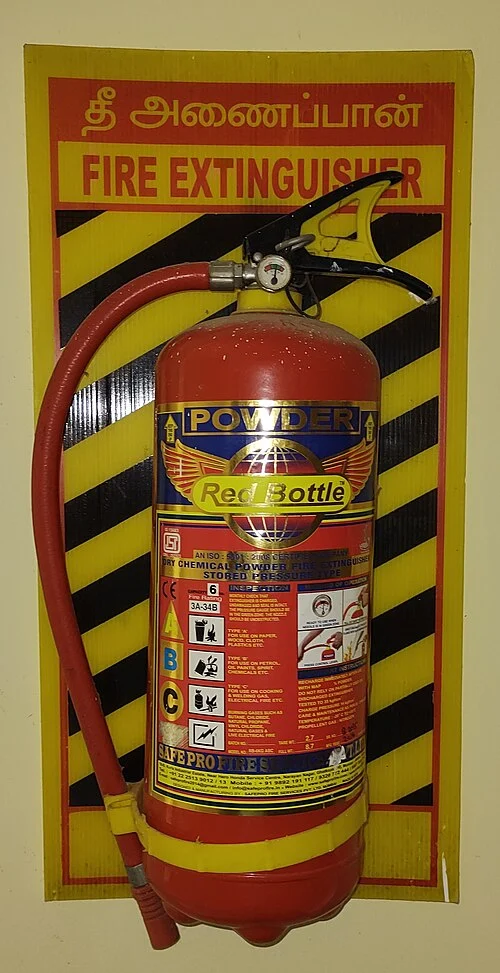
| Class D dry powder extinguisher | Applied gently to smother (not spray) | Specialized — keep one at each titanium machining station |
| Dry graphite powder | Pour to smother | Effective but messier cleanup |
What NOT to use:
- Water — causes hydrogen explosion at elevated temperatures
- CO₂ extinguisher — feeds the reaction at high temperatures
- ABC dry chemical — contains ammonium phosphate, reactive with titanium
- Halon / halogenated agents — reactive with burning titanium
If a titanium fire starts in a CNC machine:
- Stop the spindle and all cutting immediately
- Cut coolant if it’s water-based (can worsen a hot fire)
- Do not open the machine enclosure suddenly — a sudden air influx can intensify the fire
- Apply Class D agent through the chip conveyor or access point
- Evacuate non-essential personnel and call emergency services
- Do not re-enter until the mass has completely cooled
NFPA 484 Compliance: What Titanium Machinists Need to Know
NFPA 484, Standard for Combustible Metals, is the primary regulatory framework governing titanium handling in the U.S. OSHA enforces it under the General Duty Clause and has cited facilities directly for non-compliance (OSHA citation 311784201 references NFPA 484 for titanium machining, fabrication, and finishing requirements).
Who NFPA 484 applies to:
Any facility that machines, fabricates, finishes, handles, stores, or recycles titanium in forms that can generate combustible dust or fines. This includes:
- CNC machining shops
- Grinding and polishing operations
- Aerospace component manufacturers
- Medical device manufacturers
- Titanium additive manufacturing (powder handling)
- Titanium recycling operations
Titanium-specific requirements (current 2022 edition, Chapter 17, Section 17.7):
- Dust Hazard Analysis (DHA) — facilities must conduct and document a DHA identifying all combustible dust hazards in titanium operations
- Ignition source control — electrical equipment in dust-generating areas must be rated for the hazardous location classification
- Housekeeping program — written schedule for removing titanium dust/chips from surfaces; accumulation is a violation
- Dust collection systems — must meet explosion-proof standards; wet downdraft tables required for grinding/polishing (dry prohibited)
- Fire suppression — Class D extinguishing agents must be accessible at each titanium machining station
- Training — all personnel handling titanium must be trained on combustible metal hazards and emergency response
- Storage — wet chips in covered, non-combustible containers; dry chips stored separately from other combustibles
Note on NFPA 660: In late 2024, NFPA published NFPA 660, consolidating six prior combustible dust standards including NFPA 652 (which took effect December 2024). NFPA 660 coordinates with metal-specific standards like NFPA 484. If you’re updating compliance documentation, verify which version is currently enforced in your jurisdiction.
A Note on Titanium Dioxide (TiO₂) vs. Metallic Titanium
One source of confusion that shows up consistently in search results: titanium dioxide (TiO₂) is not metallic titanium, and their fire properties are entirely different.
TiO₂ is the fully oxidized form of titanium — it’s already “burned,” chemically speaking. It’s the white pigment in most paints, sunscreens, and food coatings. TiO₂ is non-flammable and chemically inert under normal conditions.
Metallic titanium — the Grade 2, Grade 5 (Ti-6Al-4V), or other alloy forms used in machining — is what this article is about, and it is combustible in the forms described above.
If your SDS sheet is for titanium dioxide (CAS 13463-67-7), the flammability information does not apply to your machining chips. If it’s for titanium metal (CAS 7440-32-6), it does.
Frequently Asked Questions
Is solid titanium flammable?
A solid titanium billet or workpiece has an auto-ignition temperature of approximately 2,200°F (1,204°C) in air. Under normal machining conditions with proper coolant, bulk titanium is not a significant fire hazard. The fire risk comes from fine chips, swarf, and especially dust generated during machining.
At what temperature does titanium catch fire?
It depends on form. Bulk titanium auto-ignites at ~2,200°F (1,204°C). Titanium powder ignites at ~480°F (249°C) in air. Titanium alloys (like Ti-6Al-4V) have a measured ignition point of approximately 1,953 K (~1,680°C / 3,056°F) based on experimental combustion studies, though the threshold varies by alloy condition and testing method.
Can titanium chips catch fire during CNC machining?
Yes — this is the most common titanium fire scenario in production shops. Chips catch fire when machinists run titanium dry (without coolant), when coolant supply is interrupted, or when fine chips accumulate in the machine enclosure and a heat source ignites them. Documented incidents exist on Practical Machinist forums and in video form on YouTube.
Is titanium dust an explosion hazard?
Yes. Titanium dust meeting NFPA’s ≤420 µm definition is classified as a combustible dust and presents a deflagration (explosion) hazard when suspended in air. A 2024 study in Nature Scientific Reports notes titanium powder’s explosive power exceeds that of most other industrial powders.
What extinguisher should I use on a titanium fire?
Class D extinguishing agents only: dry sand, table salt (NaCl), Class D dry powder extinguisher, or dry graphite. Never use water (hydrogen explosion risk above 700°C), CO₂ (feeds the reaction), or standard ABC extinguishers (ammonium phosphate is reactive with titanium).
Does NFPA 484 apply to my titanium machining shop?
If your operation machines, grinds, polishes, or otherwise generates titanium fines or dust, NFPA 484 applies. OSHA enforces it under the General Duty Clause. Specific requirements include dust hazard analysis, explosion-proof dust collection, housekeeping schedules, Class D fire suppression at each station, and worker training.
Can I machine titanium without coolant?
Technically possible for very specific conditions — very low speeds, heavy chip loads, and coarse cuts — but not recommended and contrary to best practice guidance from tooling manufacturers and NFPA 484. The risk is not worth managing manually when flood coolant eliminates it.
What color does titanium burn?
Titanium burns with a characteristic brilliant white flame, similar to magnesium but somewhat less intense. The oxidation product (TiO₂) is a white powder. The high-temperature flame is bright enough to cause eye damage if viewed directly.
Summary
Titanium’s flammability is real but form-dependent. A machinist turning a titanium billet with flood coolant is not in danger. A grinding operator producing fine titanium particles without explosion-proof collection is managing a genuine explosion hazard.
The three numbers to keep in mind: 2,200°F (bulk ignition), 480°F (dust/powder ignition), and 700°C (water reactivity threshold — the reason you never apply water to a titanium fire). These aren’t theoretical — they come directly from Titanium Industries’ MSDS and the Kyocera SGS technical guidance used by production machinists worldwide.
NFPA 484 Chapter 16 provides the compliance framework. The practical rules it enforces — flood coolant, wet dust collection for grinding, chip removal schedules, Class D extinguisher at every titanium station — are not bureaucratic overhead. They’re the distillation of what has gone wrong in actual facilities.
If you’re setting up a new titanium machining operation or auditing an existing one, start with a Dust Hazard Analysis, verify your dust collection equipment is explosion-rated, and put a Class D extinguisher within reach of every machine that runs titanium. That’s the foundation.