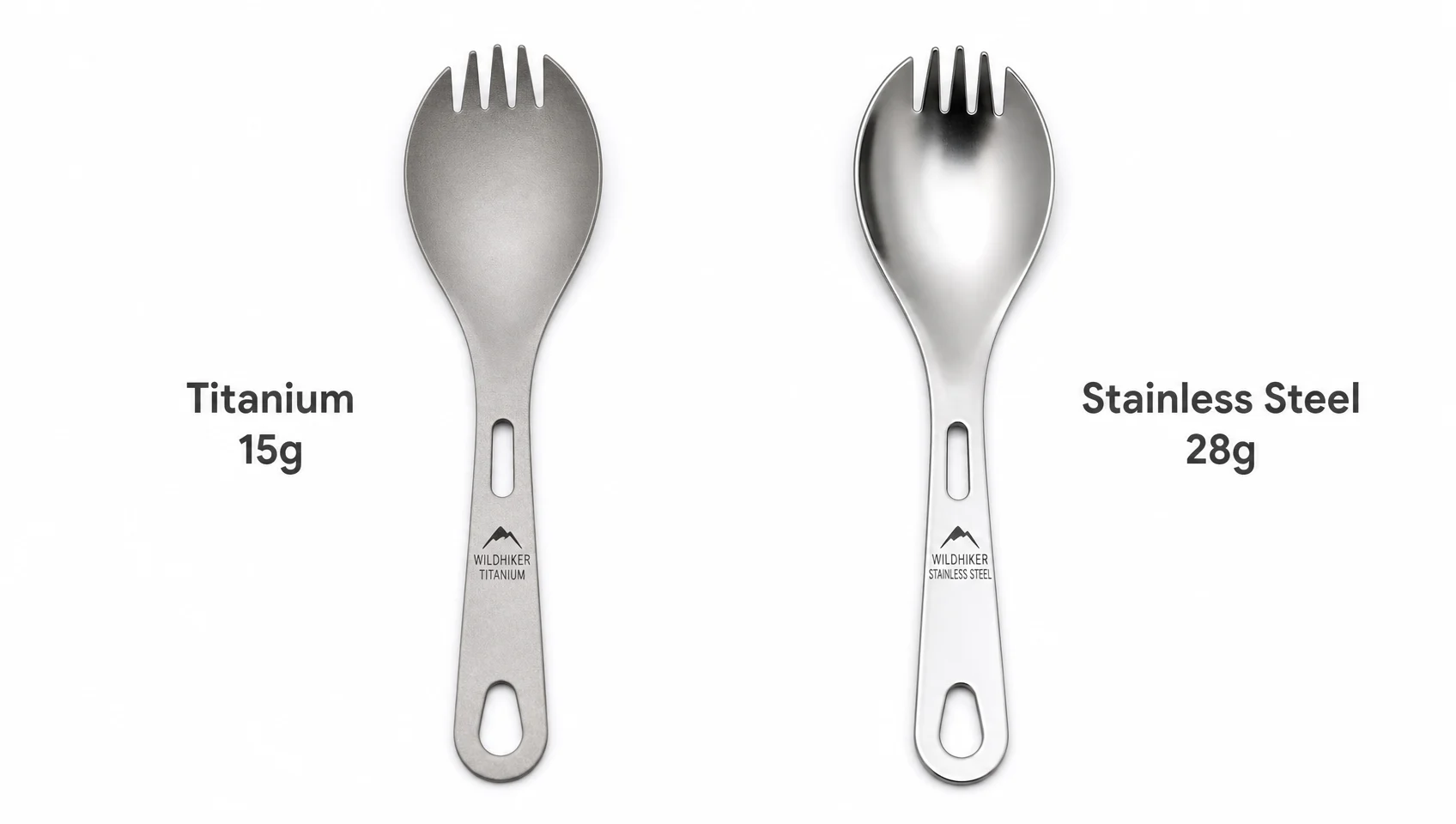
純チタン製カトラリーは非反応性でニッケルフリーであり,同等のステンレス製品より約44%軽量です。グレード1純チタンは生体適合性を持ち,外科用インプラントに使用されるのと同じ素材であるため,最も安全なカトラリー素材の一つです。主なトレードオフはコストです:チタン製キャンプ用スポークは$9〜$20なのに対し,ステンレス製は$3〜$8です。グラム単位で重量を気にするバックパッカーやニッケル過敏症の方には,チタンが明らかに優れた選択肢です。日常の家庭料理には,ステンレス鋼が実用的でリスクの低い選択肢であり続けています。.
ラベルの罠:「チタン」は必ずしもチタンを意味しない
何かを比較する前に,すべての購入ガイドが脚注に埋もれさせている区別があります: “「チタン製調理器具」と「チタンコーティング調理器具」はまったく異なる製品です。.
「チタン」として販売されている低価格のフライパンの多くは,チタン配合のノンスティックコーティングを施したアルミ製フライパンであり,コーティングの厚さが数ミクロンしかない場合もあります。これらはコーティングの性能(耐傷性,熱放出性)で評価されており,下地金属の不活性性によるものではありません。.
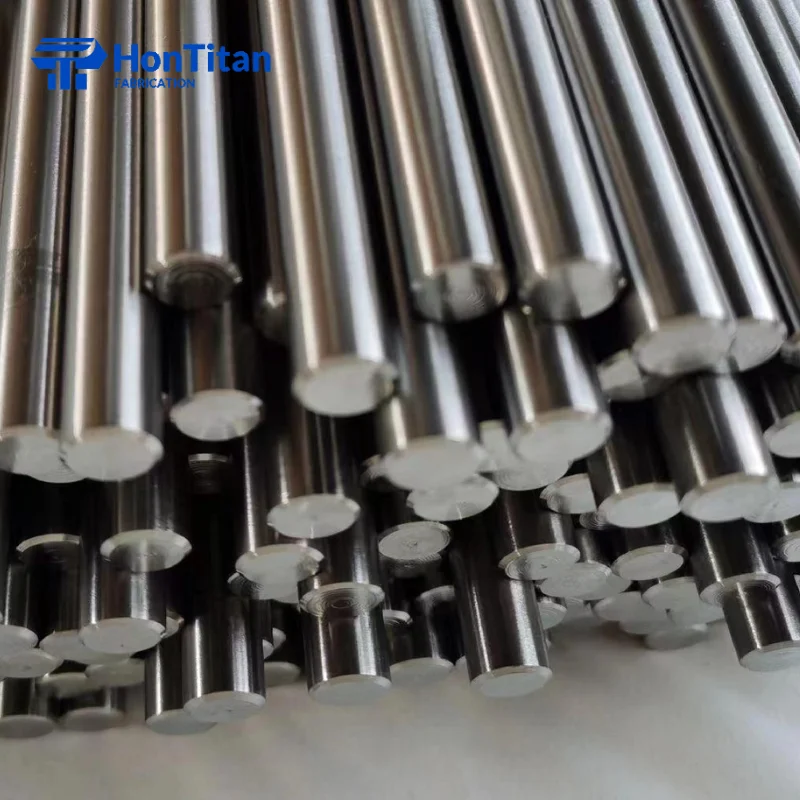
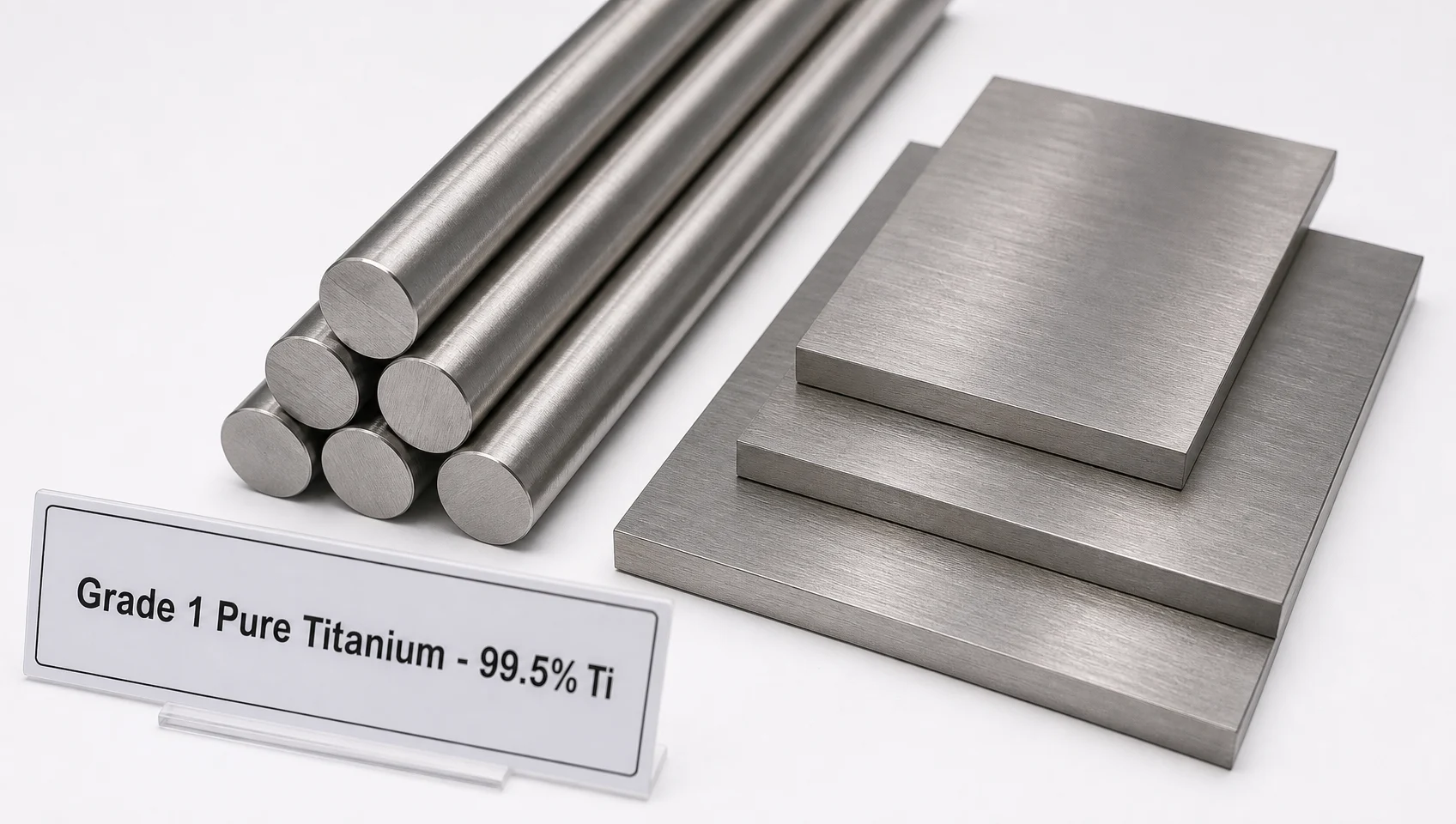
純チタン製カトラリー ——キャンプ用品やアウトドアギアに使用される種類——は,グレード1工業用純チタン(Ti純度≧99.5%)の無垢材から打ち抜きまたは機械加工されています。コーティングなし。合金フィラーなし。金属そのものがカトラリーです。.
この記事では純チタン製カトラリーについて取り上げます。コーティング加工されたフライパンとステンレスを比較したい場合は,別の話になります。.
チタン製カトラリーは安全ですか?
はい——純チタンは使用できる最も安全なカトラリー素材の一つです。.
グレード1純チタンは,表面に自己修復性の二酸化チタン(TiO₂)酸化膜を形成します。この膜は化学的に不活性であり,酸性食品(柑橘類,トマト,酢),アルカリ,または塩水と反応しません。通常の調理や食事の条件下では,金属が食品にイオンを溶出させることはありません。.
FDAが医療機器材料安全性概要に公表している生体適合性データは,チタンが生体適合性を持つことを一貫して確認しており,骨ねじ,歯科インプラント,人工股関節など,数十年間人体内に留まるグレード1素材と同じです。ある素材が30年間大腿骨の中にあっても安全であれば,パスタに20分間触れても安全です。.
味はどうですか? 管理された食事比較において,純チタンは金属フレーバーの移行がありません——これは安価なステンレス製カトラリーで,特に酸性食品と組み合わせた場合に時折見られることです。.
唯一の注意点: この安全性プロファイルは 純チタン. に適用されます。Ti-6Al-4V(グレード5)はアルミニウムを6%,バナジウムを4%含み,航空宇宙や一部の工具に使用されますが,食品グレードのカトラリーには使用されません。信頼性の高いキャンプ用カトラリーブランド(TOAKS,Snow Peak,Boundless Voyage)はグレード1純チタンを明記しています——購入前に確認してください。.
チタン対ステンレス鋼カトラリー:直接比較
| プロパティ | 純チタン(グレード1) | Stainless Steel (SS 304) |
|---|---|---|
| 密度 | 4.51 g/cm³ | 7.75–8.0 g/cm³ |
| Weight (same-size spork) | ~12–16 g | ~25–35 g |
| 軽量化 | ~44% lighter | — |
| ニッケル含有量 | 0% | 8–10.5% |
| クロム含有量 | 0% (pure grade) | 17.5–19.5% |
| 熱伝導率 | ~21.9 W/m·K | ~16 W/m·K (SS 304) |
| 耐食性 | Excellent (self-healing TiO₂) | Good (passive Cr₂O₃ layer) |
| Metal taste transfer | なし | Minimal (detectable with acids) |
| Typical utensil price | $9–$20 | $3–$8 |
| Durability (utensil) | Excellent, scratches patina | Excellent, more scratch-resistant |
| 食器洗い機対応 | はい | はい |
Sources: Density from ASTM data via steelprogroup.com; thermal conductivity from chalcotitanium.com; SS 304 composition from silverantoutdoors.com citing manufacturer data.
Weight: Where Titanium Wins Every Argument
Titanium’s density is 4.51 g/cm³ vs. stainless steel’s 7.75–8.0 g/cm³ — making it roughly 44% lighter for the same volume of metal.
In practice, that translates directly to product weights:
- Snow Peak Titanium Spork (SCT-004): 15 g (per REI and manufacturer specs)
- TOAKS Titanium Spork: 12.5 g (tested by bikehikesafari.com on multiple thru-hiking routes)
- TOAKS Titanium 3-Piece Set (spoon + fork + chopsticks): ~48 g
- A comparable stainless steel 3-piece set typically runs 80–110 g
For a weekend backpacker, that’s 30–60 g saved on cutlery alone — roughly equivalent to removing a couple of energy bars from your pack without eating them.
For ultralight hikers and thru-hikers doing 500+ mile routes, these numbers compound. On a 5-month PCT or AT attempt, every gram is negotiated. Titanium utensils are one of the easiest weight reductions available at under $20.
The Heat Distribution Issue — And Why It Mostly Doesn’t Apply to Utensils
You’ll read in almost every comparison article that “titanium heats unevenly.” This is true — and almost entirely irrelevant for utensils.
Thermal conductivity matters for 調理器具 (pots, pans) because you need heat to distribute from the burner across the full cooking surface. Uneven distribution means hot spots, scorched food, undercooked edges.
A spoon, fork, or spork doesn’t cook anything. It transfers food from container to mouth.
The thermal conductivity of your fork is only relevant in one edge case: eating directly from a hot titanium pot over a camp stove. In that scenario, a titanium spoon handle will get warm faster than you’d expect because titanium conducts heat from the bowl to the handle more quickly than some people anticipate. Snow Peak’s spork is short enough that this isn’t an issue. TOAKS’s long handle spoon (8.5 inches) keeps your hand further from the heat source — a deliberate design choice.
For home flatware, thermal conductivity of the metal is simply not a consideration. Your fork isn’t touching a flame.
Nickel Sensitivity: The Stainless Steel Concern Worth Taking Seriously
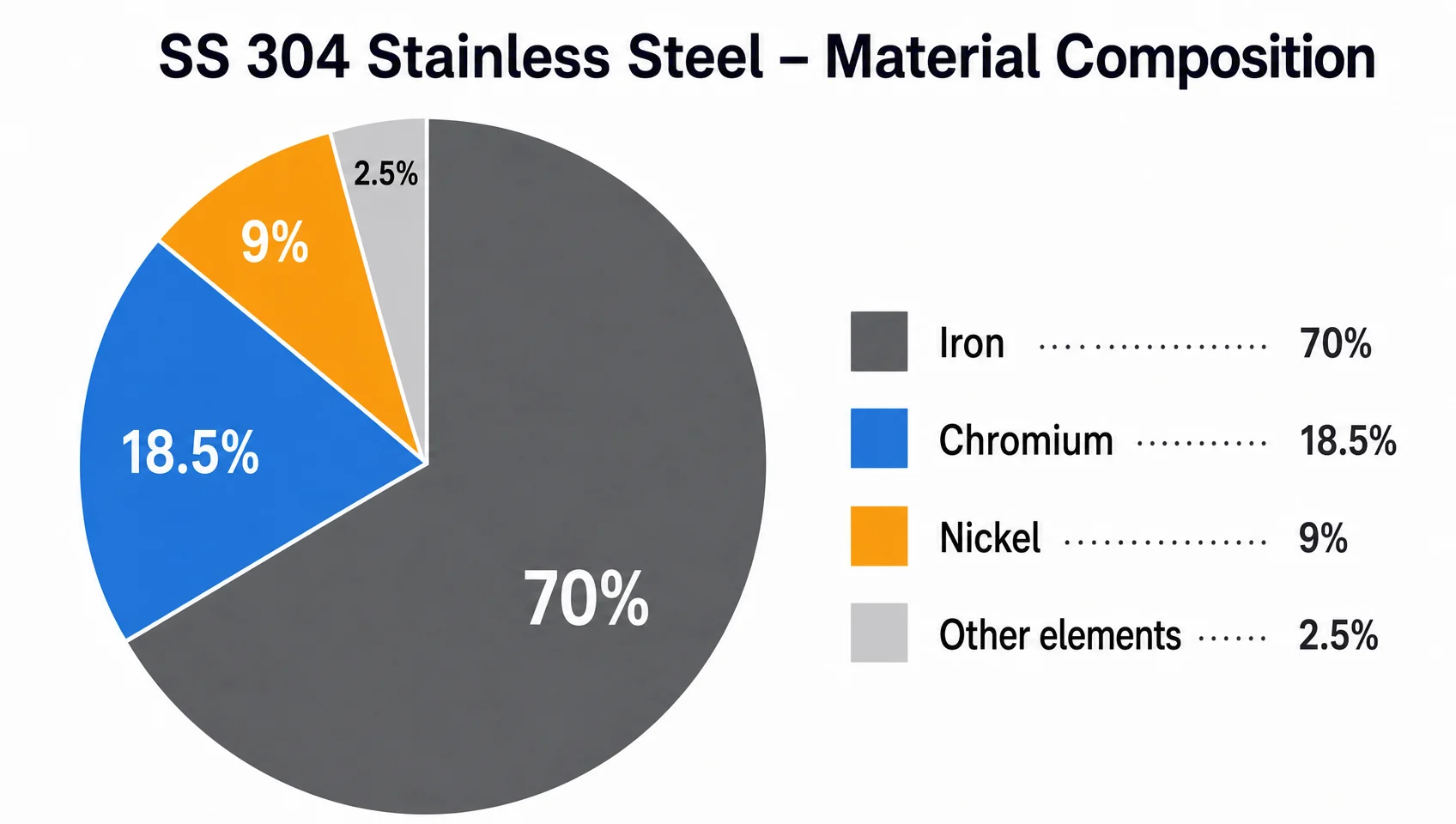
SS 304 — the most common grade in kitchen flatware and camping utensils — contains 8–10.5% nickel and 17.5–19.5% chromium by weight. Under normal use, migration is minimal. But two conditions increase it:
- Acidic foods — tomato sauce, citrus, vinegar left in contact with stainless over time
- Scratched or worn surfaces — damaged passive layer allows higher ion transfer
Nickel is the most common cause of contact dermatitis. The National Library of Medicine has linked chronic nickel exposure to cardiovascular effects, kidney effects, and respiratory concerns at elevated levels. For most people, the ion transfer from food-grade SS 304 flatware is far below threshold.
But for people with confirmed nickel allergies, stainless steel flatware is a genuine issue. Titanium has zero nickel content, making it the straightforward choice for anyone in this group.
This isn’t a marketing claim — it’s a practical substitution. Several titanium flatware brands (Everti, TOAKS, Snow Peak) market directly to the nickel-sensitive community for this reason.
Best Titanium Camping Utensil Sets (With Actual Weights)
After looking at specs and verified buyer feedback, here are the picks worth considering:
For most backpackers: Snow Peak Titanium Spork (SCT-004)
- Weight: 15 g
- Length: 16.5 cm
- Material: グレード1 pure titanium
- Price: ~$9
- The standard-bearer. Used on the Wonderland Trail, AT, and PCT by more thru-hikers than I can count. The spork tines are functional, the spoon bowl is deep enough for freeze-dried meals. Carabiner loop built in.
For deep pot cooking (freeze-dried bags): TOAKS Titanium Long Handle Spoon
- Weight: ~23 g
- Length: 21.5 cm (8.5 inches)
- Material: グレード1 pure titanium
- Price: ~$14
- Reaches the bottom of a Mountain House bag without scraping your knuckles. Polished bowl is noticeably more food-releasing than the matte finish. CleverHiker called it “the magic wand of backcountry meal making” after testing it on multiple seasons of routes.
For a full set: TOAKS Titanium 3-Piece Cutlery Set
- Weight: ~48 g (fork + spoon + knife)
- Material: グレード1 pure titanium
- Price: ~$25–$30
- Gives you proper flatware geometry instead of the spork compromise. The knife is thin enough to slice most camp food. At under 50 g for a complete set, the weight penalty over a single spork is minor.
For home use (nickel-sensitive): Everti Titanium Flatware
- Material: グレード1 pure titanium
- Note: Designed for kitchen table use, not camping weight optimization
- Price: Higher (~$40–$60 per set)
- For people replacing SS flatware due to nickel sensitivity, this is the pragmatic solution.
When Stainless Steel Still Makes More Sense
Titanium wins on weight and purity, but stainless makes sense in several real scenarios:
- Home kitchen, everyday use: The weight advantage doesn’t matter at your dining table. SS 304 flatware at $15–$30 per set is food-safe, dishwasher-proof, and lasts decades.
- Car camping or canoe tripping: Weight is irrelevant when you’re driving or paddling to camp. Bring real flatware.
- High-contact cooking surfaces: If you’re searing in a pan, a stainless steel spatula survives harder use without patina concerns.
- Budget-constrained buyers: A titanium spork at $9 is reasonable; a full titanium flatware set at $50+ is a luxury.
How to Care for Titanium Utensils
Titanium requires almost no maintenance:
- Wash: Soap and water or dishwasher — the TiO₂ layer is stable
- 傷: Will develop a patina over time but don’t compromise safety or performance
- 保管方法: No special requirements; titanium doesn’t rust or corrode in any normal environment
- Don’t: Use titanium utensils to stir highly alkaline solutions at high temperature for extended periods — extremely edge case in a kitchen, irrelevant for eating utensils
Which Should You Choose?
Buy titanium if: You’re backpacking and counting grams, have a nickel sensitivity, or want the cleanest possible material choice for long-term daily use.
以下の場合はステンレスを選んでください: Weight doesn’t matter in your use case, budget is the primary constraint, or you’re outfitting a car camping kit where durability under rough handling outweighs everything else.
The one thing to avoid: “titanium-coated” cookware sold as equivalent to pure titanium. The coating may be safe, but it’s a different product with a different failure mode. For pure titanium utensils — the kind that are just solid metal — there’s no documented safety concern, and the weight savings are real and measurable.
よくある質問
チタン製の調理器具は日常使用に安全ですか?
Yes. グレード1 pure titanium is biocompatible and non-reactive. It does not leach metals into food and has no nickel content. The FDA recognizes titanium as a safe implant material, and the same inertness applies at the dining table.
チタンには金属的な味がありますか?
No. Pure titanium has zero detectable taste transfer, even with acidic foods. This is one area where it outperforms budget stainless flatware, which can impart a faint metallic note with citrus or vinegar.
チタン製スポークはステンレス鋼よりどれくらい軽いですか?
The Snow Peak titanium spork weighs 15 g. A comparable stainless steel spork of the same size typically weighs 25–35 g — about 40–50% heavier.
Is titanium-coated cookware the same as pure titanium?
No. Titanium-coated pans are aluminum pans with a titanium-infused non-stick layer. They behave like non-stick cookware. Pure titanium utensils are solid metal with no coating. The safety profiles and performance characteristics are different.
Can I use titanium utensils with all types of cookware?
Yes. Titanium won’t scratch ceramic, non-stick, or stainless cookware any more aggressively than stainless flatware does. Its 硬さ is lower than steel, so it’s actually gentler on coated surfaces.
Is titanium utensil safe for people with nickel allergies?
Yes. グレード1 pure titanium contains no nickel. It’s the recommended substitution for anyone with confirmed nickel contact sensitivity who currently uses SS 304 flatware.