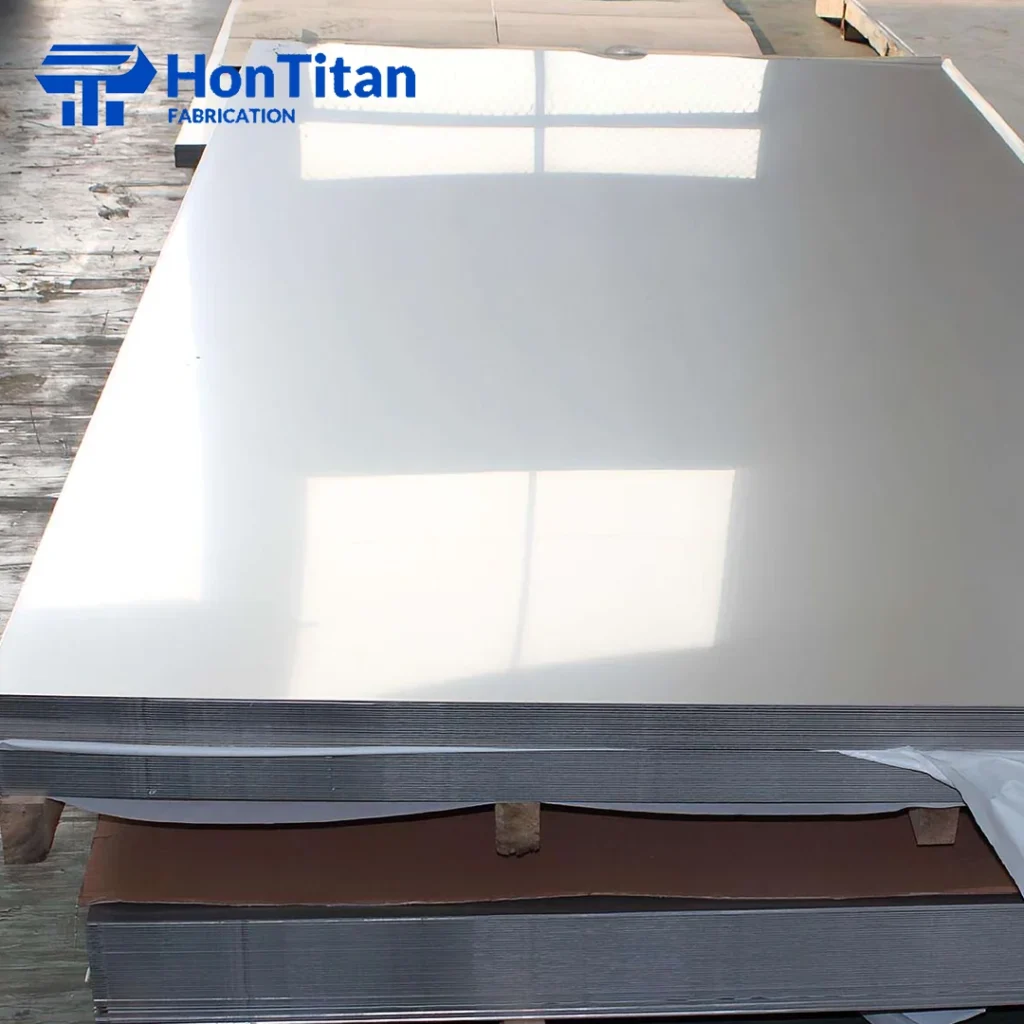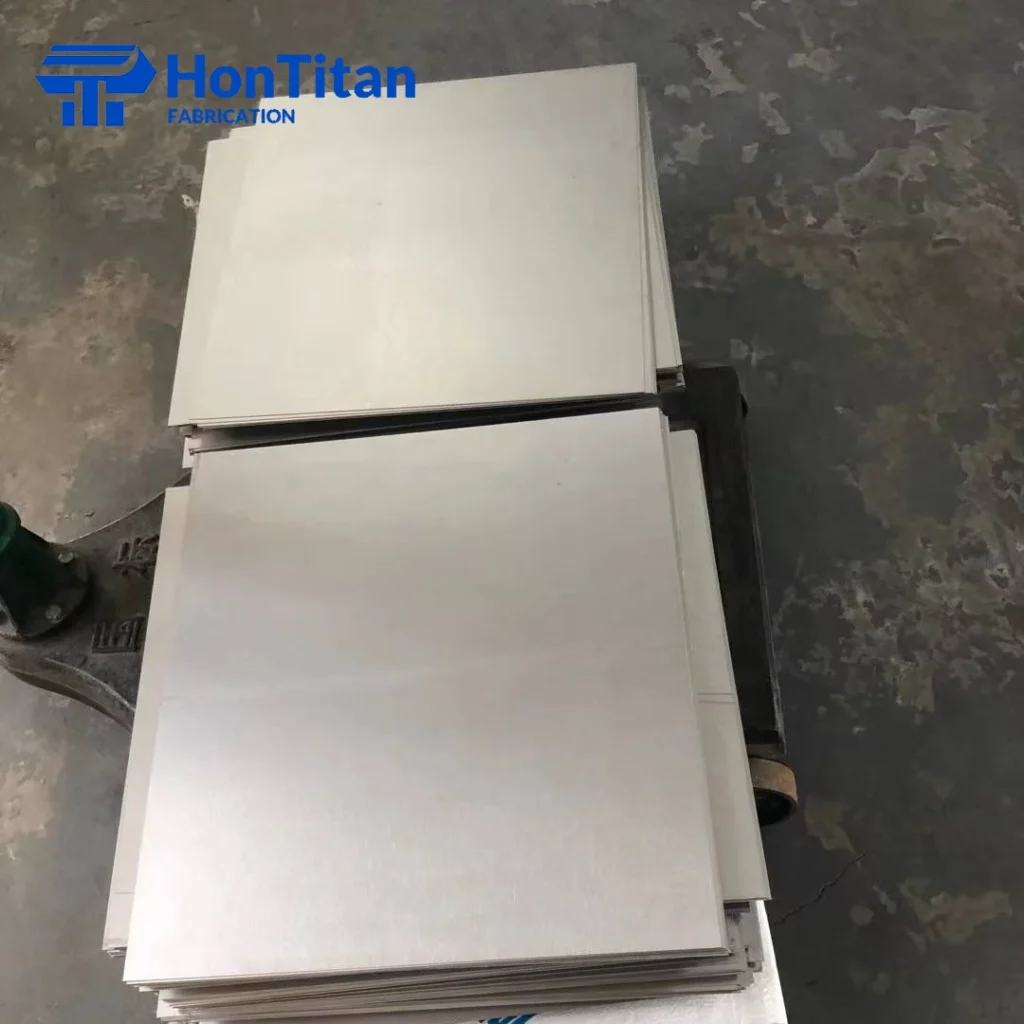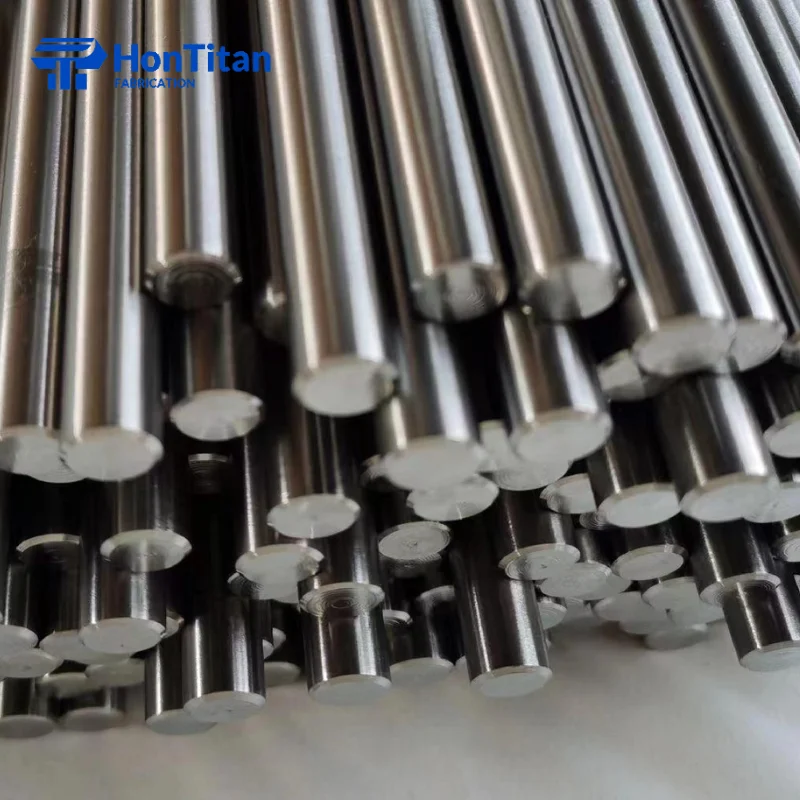
Grade 7 titanium (UNS R52400, ASTM B265) is commercially pure titanium with 0.12–0.25 wt% palladium added. That small Pd addition fundamentally changes how the alloy behaves in reducing acid environments — environments where standard titanium grades corrode rapidly. Grade 11 carries the same palladium range but uses a lower-oxygen, lower-iron base (equivalent to Grade 1 CP Ti), giving it identical corrosion resistance with better ductility and cold formability. For most structural and chemical processing applications, Grade 7 is the default choice. Grade 11 is specified when fabrication requires deep drawing, tube bending, or thin-wall forming. This guide covers the palladium mechanism, the property differences between the two grades, and practical selection guidance.
What Is Grade 7 Titanium?
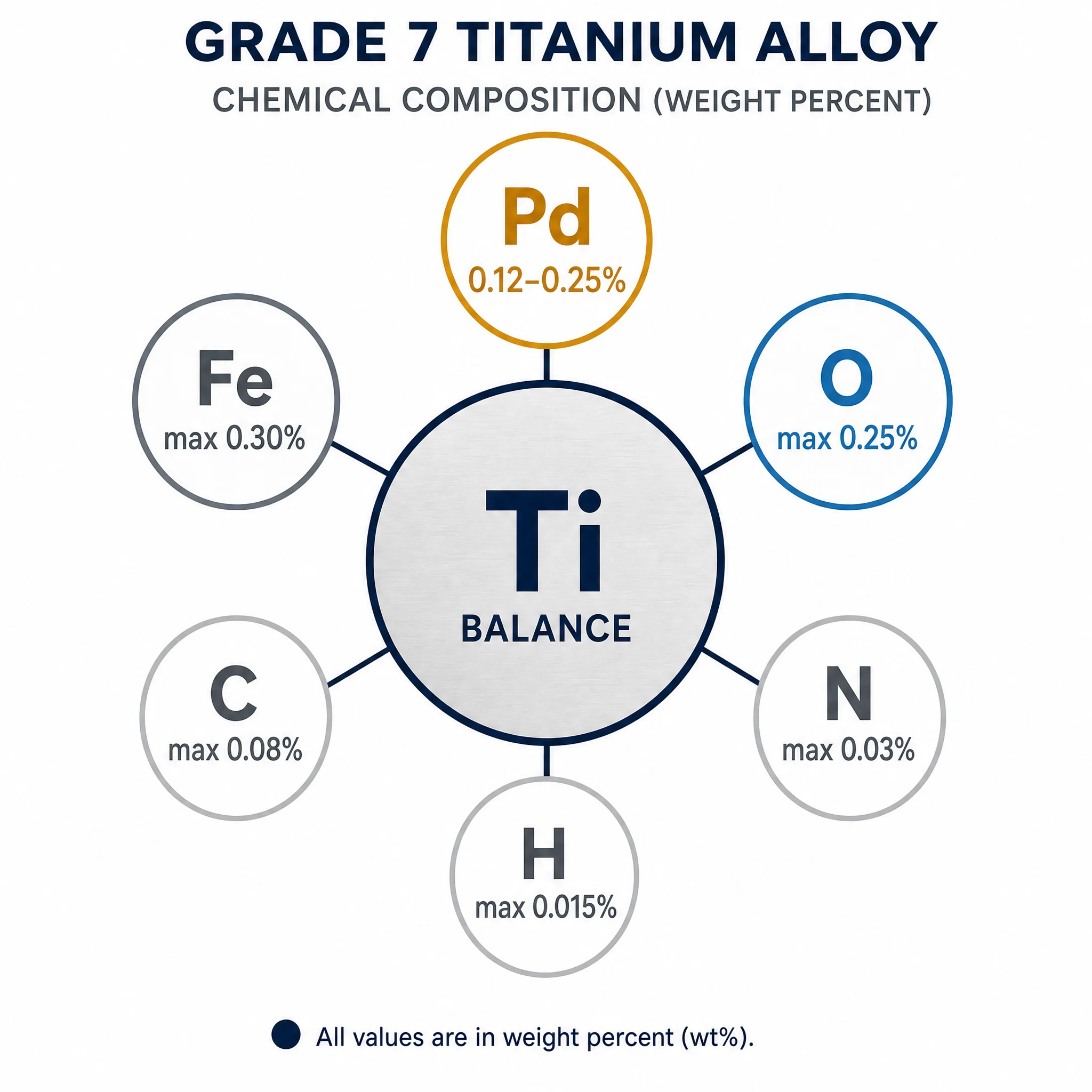
Grade 7 is an alpha-phase, commercially pure titanium alloy defined by a single controlled addition: 0.12–0.25 wt% palladium. Everything else about its composition mirrors Grade 2 CP titanium — the same iron ceiling of 0.30%, the same oxygen ceiling of 0.25%, the same interstitial limits for carbon, nitrogen, and hydrogen.
| Element | Grade 7 Limit |
|---|---|
| Palladium | 0.12–0.25% |
| Iron | ≤ 0.30% |
| Oxygen | ≤ 0.25% |
| Carbon | ≤ 0.08% |
| Nitrogen | ≤ 0.03% |
| Hydrogen | ≤ 0.015% |
| Titanium | Balance |
Its UNS designation is R52400. In European standards it appears as material number 3.7235. ASTM covers Grade 7 across multiple product-form standards: B265 (strip, sheet, plate), B337/B338 (tubing), B348 (bar and billet), and B861 (seamless pipe), among others.
Because the base composition is essentially Grade 2, mechanical properties are nearly identical to Grade 2. Minimum yield strength is 275 MPa (40 ksi), ultimate tensile strength is 345 MPa (50 ksi), and minimum elongation is 20%. Elastic modulus is 108 GPa. Density is 4.51 g/cm³.
The palladium content is where Grade 7 earns its place in a specification. At 0.2 wt% — less than one-quarter of one percent — palladium raises the alloy’s corrosion resistance in reducing environments dramatically, while leaving mechanical properties and fabricability essentially unchanged from Grade 2.
Note on Grade 7H: ASTM also defines Grade 7H, which shares the same Pd range and composition limits but sets a higher minimum UTS of 400 MPa (58 ksi). Grade 7H is specified when designers need the higher strength floor without moving to an alloyed grade like Ti-6Al-4V.
The Palladium Mechanism: Why 0.2% Changes Everything
Pure unalloyed titanium forms a dense, self-repairing TiO₂ passive film in oxidizing and neutral environments. This is why Grade 2 handles seawater, dilute oxidizing acids, and most chloride service without issue. The problem is reducing environments — dilute hydrochloric acid, warm sulfuric acid, or hydrofluoric acid at low concentration. In those conditions, there is insufficient oxidizing species to sustain the passive film, and the titanium surface begins to dissolve.
Palladium fixes this through a cathodic depolarization mechanism.
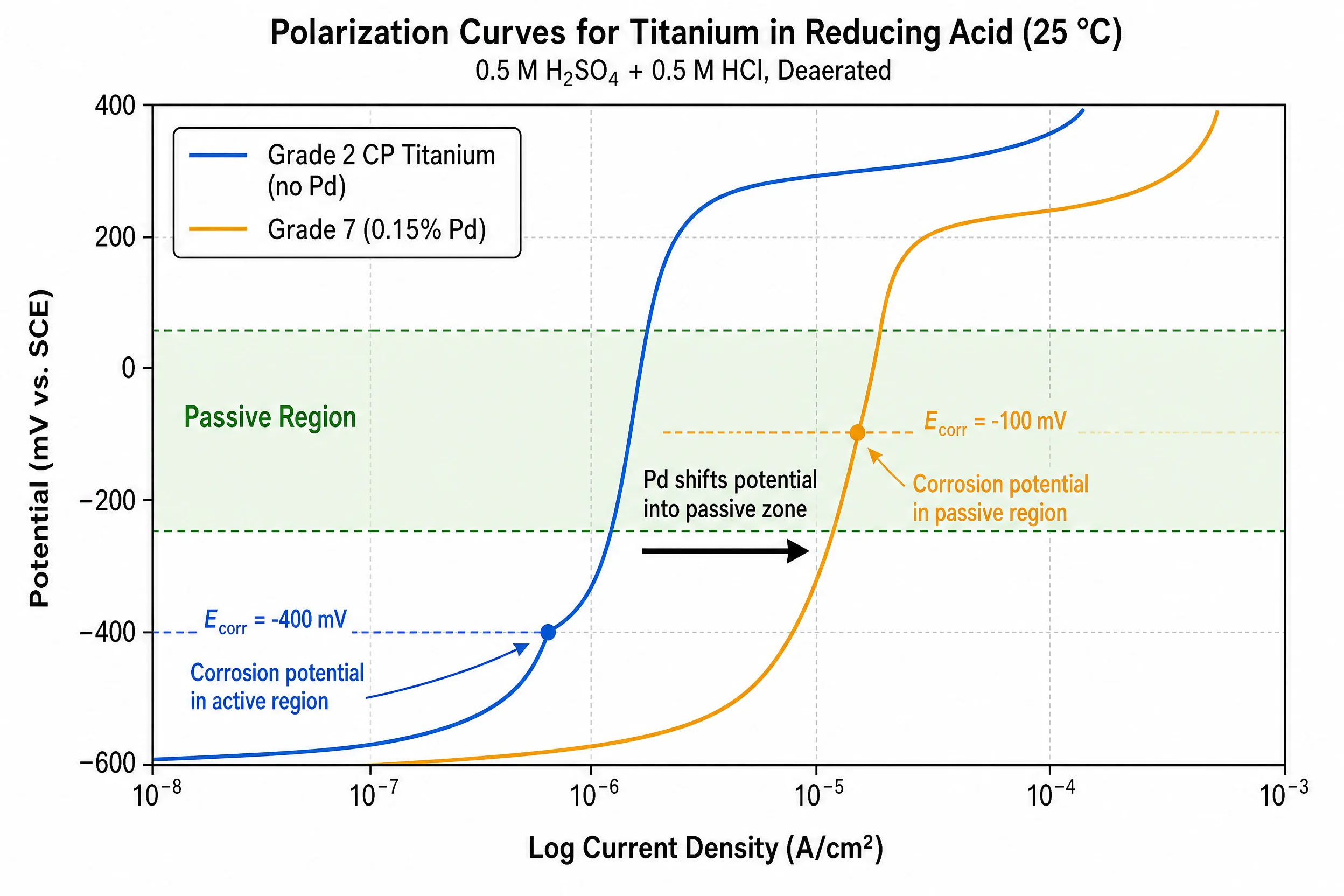
Pd is a noble metal with a much lower hydrogen-overpotential than titanium. When Pd is present at the surface — even at 0.15–0.20 wt% — it acts as a preferential site for the hydrogen evolution reaction:
2H⁺ + 2e⁻ → H₂
This reaction consumes protons at the Pd sites, which raises the mixed potential of the alloy surface. The shift is large enough to push the corrosion potential from the active dissolution region into the passive region, where the TiO₂ film is stable — even without external oxidizing species. The result: Grade 7 remains passive in reducing acids where pure titanium actively corrodes.
This mechanism was established in research published by Johnson Matthey as early as the 1960s and confirmed in electrochemical studies through the 1990s–2000s, including NRC-commissioned work on titanium alloy behavior in nuclear repository environments.
What palladium does not protect against:
The cathodic depolarization mechanism has limits. At high acid concentrations — concentrated HCl above roughly 20% at elevated temperatures, or boiling H2SO4 above ~10% — the Pd surface sites become overwhelmed and the passive film breaks down. Grade 7 is also still susceptible to attack in strong reducing fluoride environments (anhydrous HF) and in strongly alkaline conditions above pH 12. Crevice corrosion in hot concentrated chlorides remains a concern, though Grade 7’s resistance is substantially better than Grade 2 in this regard.
The core engineering implication: Grade 7 dramatically widens the safe operating window in reducing acid chloride environments but does not make titanium universally immune to corrosion.
Grade 7 vs. Grade 11 Titanium: Key Differences
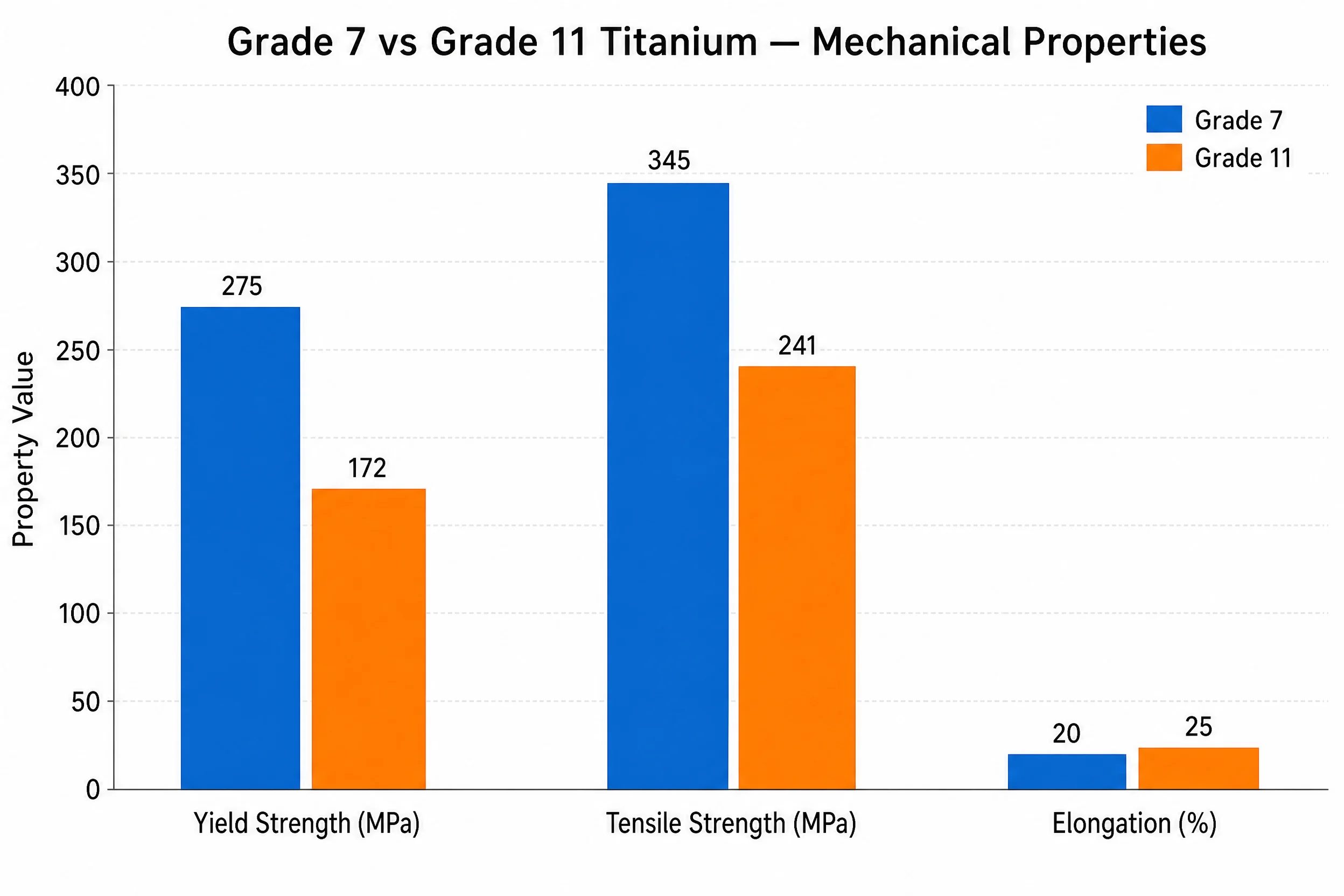
Grade 7 and Grade 11 share identical palladium content (0.12–0.25 wt%) and therefore identical corrosion resistance. The difference is entirely in their base titanium purity.
- Grade 7 is built on a Grade 2 base — higher allowable oxygen (≤ 0.25%) and iron (≤ 0.30%)
- Grade 11 is built on a Grade 1 base — lower oxygen (< 0.18%) and iron (< 0.20%)
Lower interstitials mean lower yield strength but greater ductility. That is the entire Grade 7 vs. Grade 11 tradeoff in one sentence.
| Property | Grade 7 (UNS R52400) | Grade 11 (UNS R52250) |
|---|---|---|
| Pd content | 0.12–0.25% | 0.12–0.25% |
| Fe max | 0.30% | 0.20% |
| O max | 0.25% | 0.18% |
| Yield strength (min) | 275 MPa (40 ksi) | 172 MPa (25 ksi) |
| Tensile strength (min) | 345 MPa (50 ksi) | 241 MPa (35 ksi) |
| Elongation (min) | 20% | 25% |
| Elastic modulus | 108 GPa | 103 GPa |
| Density | 4.51 g/cm³ | 4.51 g/cm³ |
| Thermal conductivity | ~17 W/m·K | ~20.6 W/m·K |
| Corrosion resistance | Excellent | Excellent (identical to Grade 7) |
| Cold formability | Good | Very good |
| Primary base equivalent | Grade 2 CP Ti | Grade 1 CP Ti |
The 103 MPa difference in yield strength between the two grades is not trivial for pressure vessel and structural component design. A vessel wall calculated for Grade 7 can be 20–25% thinner than one designed to Grade 11 minimum yield strength, directly affecting material cost — even though the raw Pd-bearing alloy is more expensive per kilogram than the pure titanium grades.
Corrosion resistance is not a differentiator between Grade 7 and Grade 11. Engineers who specify Grade 11 primarily for “better corrosion resistance” are working from a misconception. Both grades carry the same Pd range and behave identically in every corrosive environment tested to date. The selection criterion is fabrication and structural requirements, not corrosion performance.
Grade 7 Titanium Corrosion Resistance: What It Handles — and What It Doesn’t
The practical value of Grade 7’s palladium is most visible in four categories of aggressive environments where Grade 2 titanium fails.
1. Reducing acids at moderate concentrations
This is Grade 7’s primary territory. Pure titanium passivates poorly in non-oxidizing acids because there is no oxidizing agent to sustain the TiO₂ film. Grade 7 sidesteps this requirement through the Pd-catalyzed hydrogen evolution mechanism described earlier.
In practice, Grade 7 handles:
- Hydrochloric acid (HCl): resistant at room temperature up to approximately 20% concentration, and at elevated temperatures in dilute concentrations (5–10% at 60–80°C with appropriate design margins)
- Sulfuric acid (H₂SO₄): resistant in dilute conditions up to roughly 5% at moderate temperatures; performance drops rapidly above that range
- Phosphoric acid (H₃PO₄): generally resistant in dilute-to-moderate concentrations
- Mixed acid streams containing chlorides: Grade 7 extends the safe operating window significantly compared to Grade 2
These limits are not fixed cutoffs — temperature, velocity, aeration, and the presence of other species all shift the corrosion boundary. Qualification testing in the actual process environment is the standard practice for critical equipment.
2. Hot brines and chloride solutions
Unalloyed titanium already performs well in ambient seawater, but crevice corrosion becomes a concern in hot concentrated brines (above 70–80°C) or in stagnant chloride zones like tube-to-tubesheet joints. Grade 7 raises the critical crevice temperature and extends usable service life in these conditions.
Desalination plant heat exchangers and evaporator tubes in high-temperature brine service are a common application because of this.
3. Mixed-oxidant environments: wet chlorine and hypochlorite
Grade 7 handles wet chlorine gas, chlorine dioxide, and sodium hypochlorite well — environments found in pulp and paper bleach plants and water treatment facilities. The Pd addition reduces the risk of ignition or crevice attack that can occur with pure titanium in dry or concentrated chlorine service.
4. Wet nuclear waste environments (long-duration service)
Grade 7 was extensively studied for nuclear waste repository applications (specifically the U.S. Department of Energy’s Yucca Mountain project). Research published in the journal Corrosion (Vol. 61, No. 10, AMPP) reviewed Grade 7 and related alloys under long-duration repository conditions — acidic groundwater, gamma radiation fields, potential crevice environments. Grade 7 showed measurable improvements over Grade 2 in these conditions, with crevice corrosion resistance the primary benefit cited.
Where Grade 7 does not provide reliable protection:
| Environment | Grade 7 Performance | Note |
|---|---|---|
| Concentrated HCl (>20% at RT, or dilute at >100°C) | Active corrosion | Even Pd cannot sustain passivity |
| Concentrated H₂SO₄ (>10–15%) | Active corrosion | Use Hastelloy C-276 or tantalum |
| Anhydrous HF | Active corrosion | No fluoride resistance in pure HF |
| Strong alkali (NaOH >30% at elevated T) | Corrosion risk | Titanium grades generally susceptible above pH 12 |
| Red fuming nitric acid | Pyrophoric risk | Titanium prohibited |
| Dry chlorine gas at high temperature | Titanium fire risk | Grade 7 does not resolve this |
When to Choose Grade 11 Over Grade 7
Grade 11 exists for one primary reason: fabrication scenarios where Grade 7’s slightly higher strength creates forming difficulties, and the designer cannot tolerate the risk of cracking or springback.
The fabrication cases where Grade 11 is the correct choice:
Thin-wall tubing with tight bend radii. Grade 11’s minimum yield of 172 MPa versus Grade 7’s 275 MPa means the material work-hardens less aggressively and springs back less during bending. For corrugated heat exchanger tubing, U-bend configurations, or welded expansion joints in small diameters, Grade 11’s softness is an advantage.
Deep-drawn components. Forming press operations that involve significant area reduction — tube sheets, formed end caps, complex flange geometries — benefit from Grade 11’s higher elongation (25% vs. Grade 7’s 20%) and lower flow stress. Failure during forming is the risk that Grade 11 mitigates.
Applications where weld ductility is critical. Both grades are weldable, but Grade 11 produces welds with slightly lower residual stress and higher ductility. For equipment that will see thermal cycling, Grade 11 weld zones have more margin before cracking initiates.
When Grade 7 is the better choice:
| Scenario | Preferred Grade | Reason |
|---|---|---|
| Pressure vessels and columns | Grade 7 | Higher yield → thinner wall, less material cost |
| Structural frames and supports | Grade 7 | Structural design limited by yield, Grade 7 allows smaller cross-sections |
| Sheet and plate fabrication with conventional forming | Grade 7 | Grade 2-equivalent formability is adequate for most plate work |
| High-temperature service (with pressure) | Grade 7 | Higher strength floor at elevated temperature |
| Standard tubing in straight runs | Grade 7 | No forming advantage from Grade 11 |
The practical reality in most procurement scenarios: Grade 7 is stocked more widely, and Grade 11 is a special order from most service centers. When fabrication constraints are not limiting, Grade 7 is the default choice by market availability alone.
Real-World Applications of Grade 7 and Grade 11
Both grades serve the same industry base. The grade selection within a given project depends on the component geometry and stress requirements, not the corrosive environment.
Chemical processing industry
Heat exchangers handling mixed acid streams, scrubbers in HCl gas service, and reaction vessels for organic acid synthesis are the core use cases. Grade 7 is specified for shell-and-tube heat exchanger tubes when the process side contains dilute HCl or warm sulfuric acid. The economic case is straightforward: Grade 7 at a Pd-alloy premium still outperforms a full Hastelloy C-276 construction cost when wall thickness, weld complexity, and fabrication labor are factored in for the same service life target.
Pharmaceutical and fine chemical manufacturing
Chlorinated solvents, HCl catalyst recovery loops, and pharmaceutical intermediates processing in reducing acid environments. Grade 7 vessel linings and wetted-surface components are specified where Grade 2 has shown active corrosion in lab-scale testing.
Desalination
Multi-stage flash (MSF) and multi-effect distillation (MED) brine heater tube bundles. Grade 7 extends crevice corrosion resistance in tube-to-tubesheet gaps where brine concentration is highest and stagnant conditions can develop during shutdown.
Pulp and paper — bleach plant
Washers, piping, and vessels handling chlorine dioxide (ClO₂), hypochlorite bleach liquor, and mixed acid wash filtrates. Grade 7 and Grade 11 both see use here, with Grade 11 in formed vessel heads and Grade 7 in pipe and plate construction.
Nuclear waste containment
Grade 7 was the primary candidate material for the outer barrier of drip shield and waste package components in proposed high-level nuclear waste repositories. The key design requirement was 10,000+ year corrosion resistance in a groundwater environment that could become acidic over time. Grade 7’s Pd addition was the deciding factor over Grade 2 and Grade 12 alternatives.
Offshore and marine
Titanium seawater piping has been standard in offshore platforms for decades. Where process streams mix seawater with drilling fluid or acidic mud additives, Grade 7 provides insurance against the reducing acid events that can occur during well acidizing operations.

Photo credit: Uwe Aranas / Wikimedia Commons (CC BY-SA 4.0)
Navigating the Grade 7 Family: Variants and Alternatives
Grade 7H — Same composition as Grade 7, minimum UTS raised to 400 MPa (58 ksi) per ASTM. Used when higher design stress is required with Grade 7 corrosion resistance but without alloying additions like aluminum or vanadium. Available in the same product forms as Grade 7.
Grade 11 vs. Grade 17 — Grade 17 carries the same Grade 1 base as Grade 11 but uses only 0.04–0.08 wt% Pd — roughly half the palladium content. This reduces raw material cost but narrows the effective corrosion window. Grade 17 is adequate for mild reducing environments where the full Grade 11/7 Pd content would be over-specified. For aggressive HCl or warm sulfuric acid service, Grade 17 is not a safe substitute.
Grade 12 as an alternative to Grade 7 — Some procurement teams compare Grade 7 and Grade 12 as “corrosion-upgraded” titanium. They are not equivalent. Grade 12 (Ti-0.3Mo-0.8Ni, UNS R53400) achieves improved crevice corrosion resistance through nickel and molybdenum additions, which are far less expensive than palladium. Grade 12 costs less per kilogram. However, Grade 12 does not match Grade 7 in reducing acid environments — nickel and molybdenum do not replicate the cathodic depolarization mechanism that palladium provides. For environments where Grade 7 was specifically evaluated (warm dilute HCl, reducing acid chloride service), Grade 12 is not an equivalent substitution.
When Grade 29 appears in specifications — Grade 29 (Ti-3Al-2.5V + Pd) combines palladium with aluminum and vanadium for higher strength applications requiring corrosion resistance in reducing environments. It is an aerospace-oriented grade and not commonly used in commodity chemical processing equipment.
Frequently Asked Questions
What percentage of palladium is in Grade 7 titanium?
ASTM specifies 0.12–0.25 wt% palladium for Grade 7. The typical nominal value used in data references and industry literature is 0.15–0.20%, sometimes shorthand-written as “Ti-0.2Pd.” Grade 11 carries the same palladium range.
Is Grade 7 titanium the same as Grade 11 in terms of corrosion resistance?
Yes. Both grades contain 0.12–0.25 wt% Pd and behave identically in all corrosive environments studied to date. Grade 7 has higher yield strength (275 MPa vs. 172 MPa minimum) because its base composition is Grade 2-equivalent rather than Grade 1-equivalent. If a specification requires Grade 7 corrosion resistance with maximum formability, Grade 11 is the correct choice — not a higher-Pd grade.
Will Grade 7 titanium resist hydrochloric acid?
Grade 7 resists dilute HCl at room temperature up to approximately 20% concentration. At elevated temperatures, the concentration limit drops — approximately 5–10% at 60°C with engineering margins applied. The precise limit depends on temperature, flow velocity, aeration, and the presence of other species. For critical applications, corrosion coupons in the actual process stream are the standard qualification method.
Why is palladium used instead of just adding more titanium purity?
Higher-purity titanium (Grade 1) improves mechanical ductility but does not improve corrosion resistance in reducing acids. The problem for Grade 2 in reducing environments is electrochemical — the corrosion potential sits in the active dissolution region without oxidizing species to push it passive. Increasing purity does not change the electrochemistry. Palladium does, by providing cathodic sites that shift the potential into the passive region regardless of the external oxidizing environment.
How does Grade 7 compare to Hastelloy C-276 in acid service?
Hastelloy C-276 (Ni-Mo-Cr alloy) has broader corrosion resistance across a wider range of acid concentrations and temperatures, including reducing and oxidizing environments. Grade 7 is more competitive in cost for low-to-moderate concentration reducing acid service where C-276 would be over-specified. Grade 7 is also significantly lighter (4.51 g/cm³ vs. C-276’s 8.89 g/cm³), which reduces structural support requirements and weight-sensitive installation costs. For concentrations or temperatures beyond Grade 7’s documented envelope, C-276 or tantalum are the typical alternatives.
Can Grade 7 and Grade 11 be welded?
Yes. Both grades are readily welded by GTAW (TIG), GMAW, plasma arc, and electron beam processes. The same precautions apply as for any titanium welding: inert gas shielding on the weld face, back-purge shielding on the root, and protection from atmospheric contamination until the weld zone cools below approximately 427°C (800°F). Grade 11 welds show slightly lower residual stress and somewhat better ductility in the heat-affected zone, which is one factor favoring it for cyclic service.
Summary
Grade 7 titanium is Grade 2 with palladium — the addition costs more per kilogram but pays for itself in environments where standard CP titanium fails. The palladium mechanism is electrochemical: Pd lowers the hydrogen overpotential at the alloy surface, shifting the corrosion potential into the passive region even in reducing acids that cannot sustain the TiO₂ passive film on their own. That is why 0.2% of a precious metal makes such a decisive practical difference.
Grade 11 carries the same palladium content as Grade 7 and therefore the same corrosion resistance. It is selected when the application demands maximum ductility, tight bend radii, or deep drawing — characteristics that flow from its lower-interstitial Grade 1 base. When those constraints are absent, Grade 7 is the standard choice: wider availability, higher yield strength, and the same corrosion performance.
For environments beyond Grade 7’s reliable envelope — concentrated HCl above 20%, boiling dilute sulfuric acid, anhydrous HF — the correct alternative is not more palladium, but a different alloy family entirely: Hastelloy C-276, Inconel 625, or tantalum depending on the specific chemistry.