Quick Summary: Titanium surface finishing encompasses mechanical polishing, chemical polishing, electropolishing, anodizing, passivation, and advanced coatings—each serving distinct performance and aesthetic goals. This guide covers complete grit progressions, Ra value specifications by industry, alloy-specific procedures, and a decision framework for selecting the right finishing method based on application, budget, and compliance requirements. Drawing on 15 years of hands-on experience in titanium component manufacturing, it provides the engineering-grade data that most online resources lack.
Why Titanium Surface Finishing Is Different From Every Other Metal
Titanium does not polish like stainless steel, aluminum, or copper. Understanding why starts with the oxide layer.
Titanium instantly forms a thin, tenacious titanium dioxide (TiO₂) film when exposed to air—typically 1–5 nm thick under ambient conditions, with 2–3 nm being most common for mature native oxide (Wikipedia; ACS Journal). This passive oxide layer is what gives titanium its legendary corrosion resistance, but it also creates a unique challenge during polishing: every time you abrade the surface, you expose fresh titanium that immediately re-oxidizes. The process is never just mechanical removal; it is a constant interaction between abrasion and re-passivation.
This reactivity has two practical consequences that catch first-time titanium polishers off guard:
- Work hardening. When titanium is cut, ground, or abraded, the surface layer hardens by up to 30% compared to its original hardness (TiRapid, 2026; JLCCNC). This means that if you apply inconsistent pressure or skip a grit stage, the work-hardened zone becomes increasingly difficult to refine in subsequent steps.
- Galling. Titanium is notoriously susceptible to galling—a form of adhesive wear where material transfers between contacting surfaces. All titanium alloys are susceptible, though CP grades (particularly Grade 2) are actually worse than Ti-6Al-4V due to their lower hardness (~150 HV vs ~360 HV for Ti-6Al-4V). Galling during polishing can embed abrasive particles into the surface rather than removing them, creating future corrosion initiation points (ScienceDirect, 2001; Brindley Metals, 2024).
In my experience working with Ti-6Al-4V hydraulic valve blocks for aerospace applications, the single most important factor that separates a successful titanium polish from a failed one is patience at each grit stage. Rushing through intermediate grits does not save time—it doubles the total polishing time because work-hardened scratches become buried under subsequent finishes and reappear under reflected light.
Titanium Surface Finish Types: A Comparison Reference
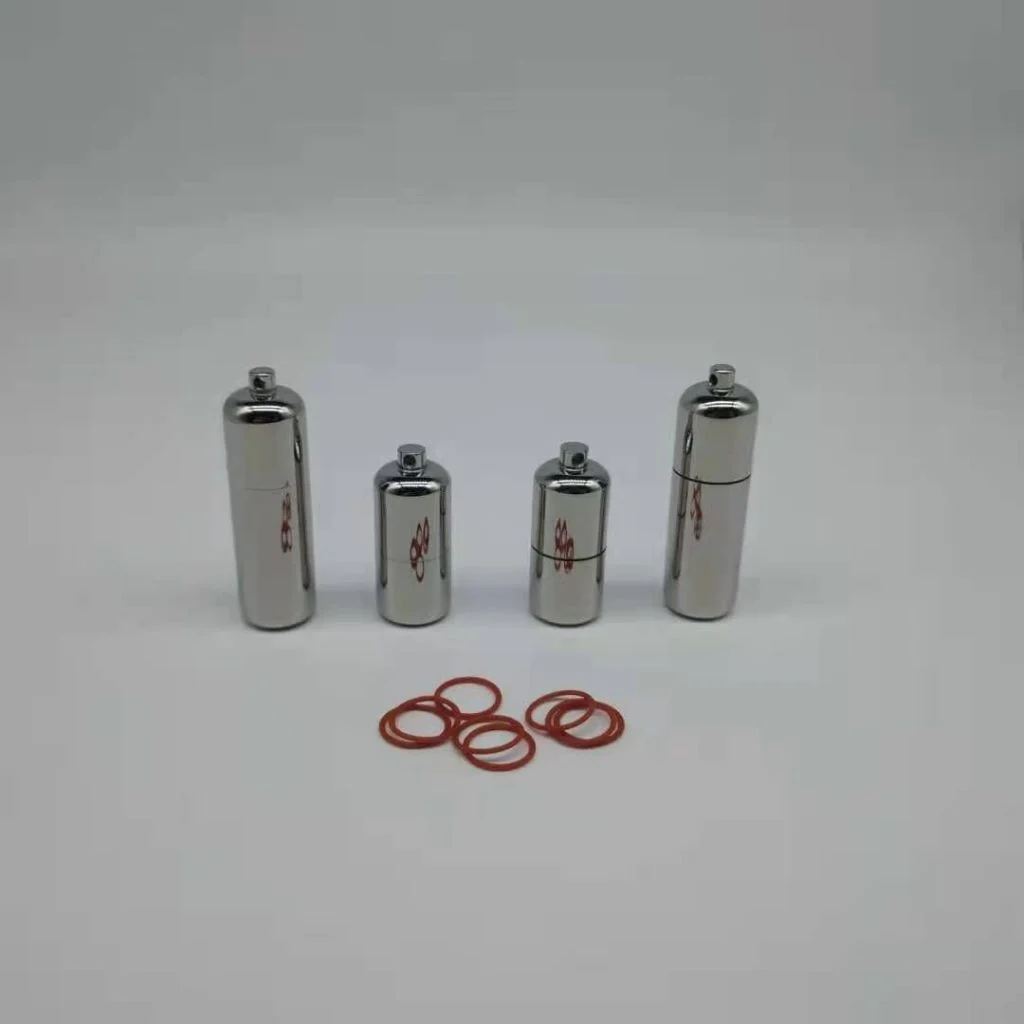
Before selecting a finishing method, it helps to understand the full spectrum of available surface finishes and their specifications.
| Finish Type | Typical Ra (μm) | Appearance | Primary Applications | Relative Cost |
|---|---|---|---|---|
| Mill Finish | 1.6–3.2 | Industrial matte, visible tool marks | Raw stock, non-critical structural parts | $ |
| Bead-Blasted | 0.8–1.6 | Uniform matte, non-directional | Medical housings, industrial enclosures | $$ |
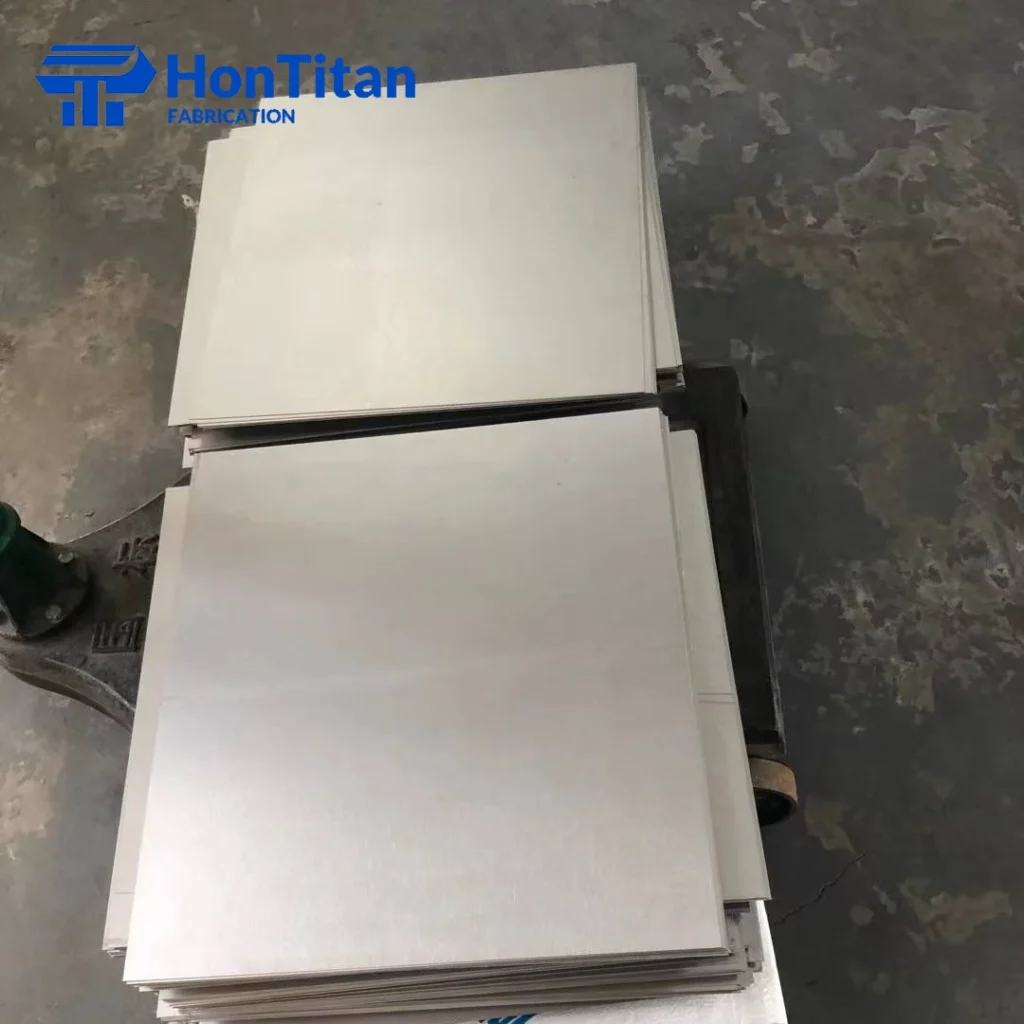
| Brushed | 0.4–0.8 | Linear texture, soft satin | Consumer electronics, architectural panels | $$ |
| Satin | 0.2–0.6 | Smooth low-gloss | Medical instruments, industrial components | $$–$$$ |
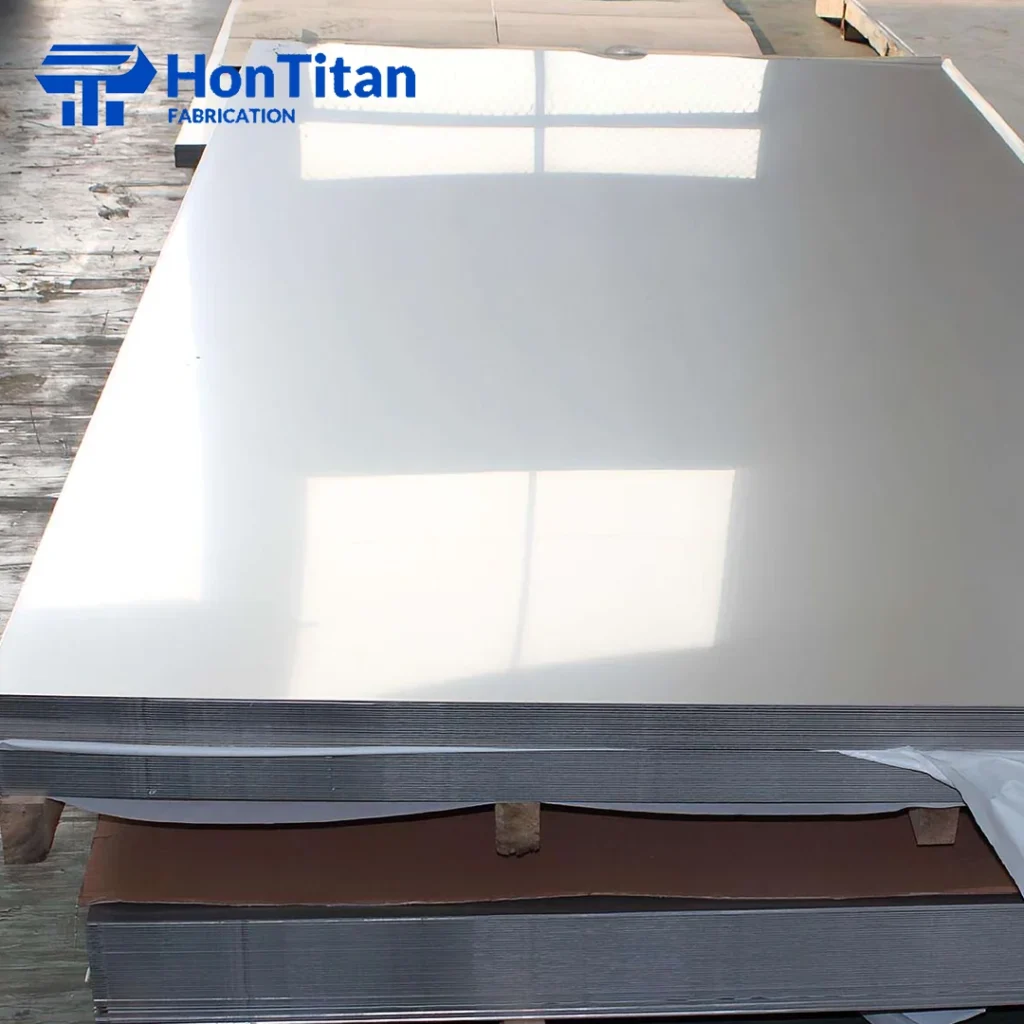
| Mirror Polish | 0.01–0.05 | Highly reflective | Medical implants, aerospace fuel systems, jewelry | $$$$ |
| Anodized (Type 2) | N/A (oxide layer) | Gray wear-resistant coating | Aerospace structural, medical devices | $$$ |
| Anodized (Type 3) | N/A (oxide layer) | Colored (blue, gold, purple, green) | Decorative, component identification | $$$ |
| Passivated | N/A | Minimal visual change | Medical, pharma, chemical processing | $ |
| PVD/TiN Coated | N/A (coating) | Gold-colored, 2,200–2,400 HV | Cutting tools, implants, high-wear surfaces | $$$$ |
Sources: ptsmake.com Ra specifications; bangid.com process data; Oerlikon TiN hardness data (2,200–2,400 Vickers); AMS 2488 for anodizing types.
Key takeaway: The “right” finish depends entirely on function. A medical implant requires Ra < 0.2 μm for controlled osseointegration, while a bead-blasted aerospace housing at Ra 0.8–1.6 μm serves purely structural purposes. Choosing mirror polish when satin suffices adds cost without performance benefit.
Mechanical Polishing: The Complete Grit Progression Reference
Mechanical polishing is the most accessible titanium finishing method. It works by progressively removing material with finer abrasives until the surface roughness reaches the target Ra value.
Engineering Reference Table
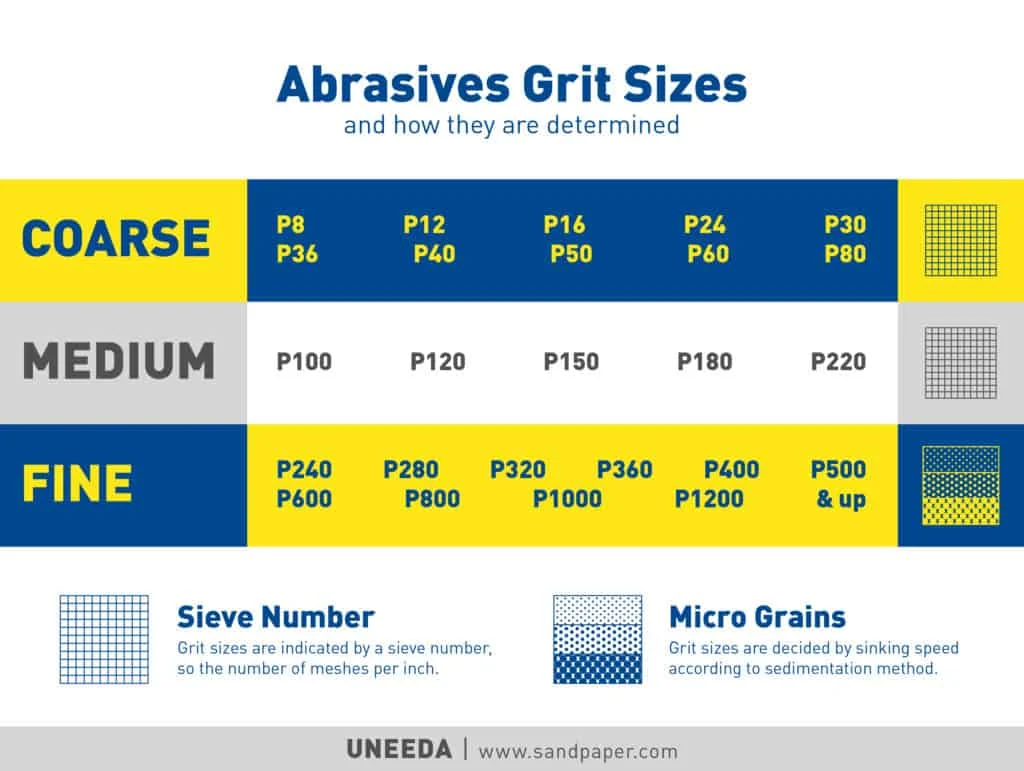
This is the table I wish existed when I started working with titanium. Each stage must fully remove the scratches from the previous stage before advancing.
| Stage | Grit | Tool Speed (RPM) | Pressure | Target Ra (μm) | Approx. Time | Notes |
|---|---|---|---|---|---|---|
| 1. Coarse Grinding | 80–120 | 1,500–2,000 | Moderate-firm | 3.2–6.3 | 5–10 min | Remove machining marks; flood coolant mandatory |
| 2. Intermediate | 240–400 | 1,500–2,000 | Moderate | 0.8–1.6 | 5–8 min | Remove subsurface deformation from Stage 1 |
| 3. Fine Sanding | 600–800 | 1,200–1,800 | Light-moderate | 0.2–0.4 | 4–6 min | Each grit removes ~1.5× scratch depth of previous |
| 4. Pre-Polish | 1,000–1,200 | 1,000–1,500 | Light | 0.05–0.2 | 3–5 min | Critical stage—most defects caught here |
| 5. Final Polish | 2,000+ | 800–1,200 | Very light | 0.01–0.05 | 3–5 min | Mirror achievable with proper prior stages |
| 6. Buffing | Polishing compound | Variable | Minimal | — | 2–3 min | Tripoli or white rouge for final luster |
Sources: ptsmake.com grit sequences; bangid.com cutting speed and coolant specifications; Qinghang Metal sanding progression.
Critical Process Rules
Flood coolant is mandatory during grinding. Titanium’s low thermal conductivity (~6.7–7.2 W/m·K for Ti-6Al-4V; 16.4 W/m·K for CP Grade 2) means heat concentrates at the surface rather than dissipating. Surface temperatures above 150°C cause oxidation discoloration and accelerate work hardening. Water-soluble coolants are preferred; avoid chlorine-containing fluids, which cause stress-corrosion cracking in titanium.
Never skip a grit stage. Each grit removes approximately 1.5× the scratch depth of the previous stage. If you jump from 240 to 800 grit, the 240-grit scratches remain trapped beneath the 800-grit surface. They will be invisible under diffuse light but appear as deep grooves under reflected or angled light—exactly the condition where mirror finishes are evaluated.
Directional change between stages. After completing each grit stage, rotate the polishing direction 90°. This ensures the current grit fully removes scratches from the previous stage. When all scratches from the prior direction are gone, you are ready to advance.
Chemical Polishing & Electropolishing: Beyond Mechanical Methods
When geometry is too complex for mechanical polishing—internal channels, intricate medical implants, or surfaces requiring extreme cleanliness—chemical and electropolishing offer alternatives.
Chemical Polishing
Chemical polishing immerses the titanium workpiece in an acidic solution that dissolves surface irregularities without mechanical contact. The standard chemistry uses hydrofluoric acid (HF) mixed with nitric acid (HNO₃), typically in ratios optimized for the specific alloy grade.
Process parameters:
- Temperature: 20–40°C (controlled precisely; ±2°C)
- Immersion time: 30 seconds to 5 minutes depending on alloy and target Ra
- Acid concentration: Varies by alloy; Ti-6Al-4V typically requires stronger concentrations than CP grades
Chemical polishing is especially useful for:
- Complex geometries that mechanical tools cannot reach
- Dental titanium frameworks (Chalco Titanium, 2025)
- Batch processing of small components
Electropolishing
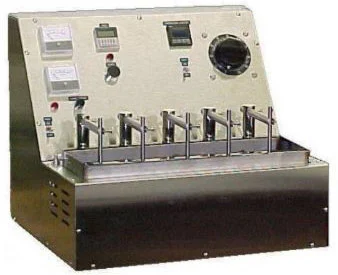
Electropolishing uses electrochemical reactions to dissolve surface peaks preferentially, achieving smoother finishes than mechanical polishing alone. The titanium part serves as the anode in an electrolyte bath.
Key specifications (Best Technology Inc.):
- Ra improvement: Up to 50% reduction maximum (typical practical improvement is 10–30% depending on starting finish; e.g., 40 Ra → 20 Ra best case)
- Material removal: 5–25 μm per cycle (up to 30 μm on sharp edges/geometries)
- Electrolyte temperature: 170–180°F (77–82°C) for conventional electropolishing; titanium-specific processes may use different ranges
- Current density: 140–250 amps per square foot
Important limitation: Electropolishing cannot substitute for mechanical pre-finishing. If a freshly machined part measures 80 Ra, electropolishing alone can only achieve 40 Ra. For tighter specifications, use centrifugal barrel tumbling or vibratory finishing to reach 40 Ra first, then electropolish to 20 Ra (Best Technology, 2025).
Mechanical vs. Chemical vs. Electropolishing: Decision Table
| Factor | Mechanical | Chemical | Electropolishing |
|---|---|---|---|
| Best Ra achievable | 0.01 μm | 0.1–0.5 μm | 0.05–0.2 μm |
| Geometry flexibility | External surfaces | All geometries | All geometries |
| Batch processing | No (single part) | Yes | Yes |
| Removes embedded contaminants | No (can embed them) | Yes | Yes |
| Safety hazard | Low (dust) | High (HF exposure) | Moderate (acid + electrical) |
| Capital equipment cost | Low ($500–$5,000) | Medium ($10,000–$50,000) | High ($20,000–$100,000+) |
| Typical per-part cost | $5–$50 | $2–$15 | $5–$30 |
Sources: Best Technology electropolishing specs; Able Electropolishing batch vs. single-part comparison; bangid.com process data.
Safety note on HF: Hydrofluoric acid is extremely hazardous. Even dilute solutions can cause deep tissue damage that may not be immediately painful. Full PPE (acid-resistant suit, face shield, neoprene gloves, respiratory protection) and calcium gluconate gel for emergency treatment are non-negotiable. If you are not in a facility equipped for HF handling, chemical polishing is not a DIY option.
Anodizing & Passivation: Protective Surface Treatments
These methods modify the titanium surface without removing material, enhancing corrosion resistance and adding functional or decorative properties.
Anodizing
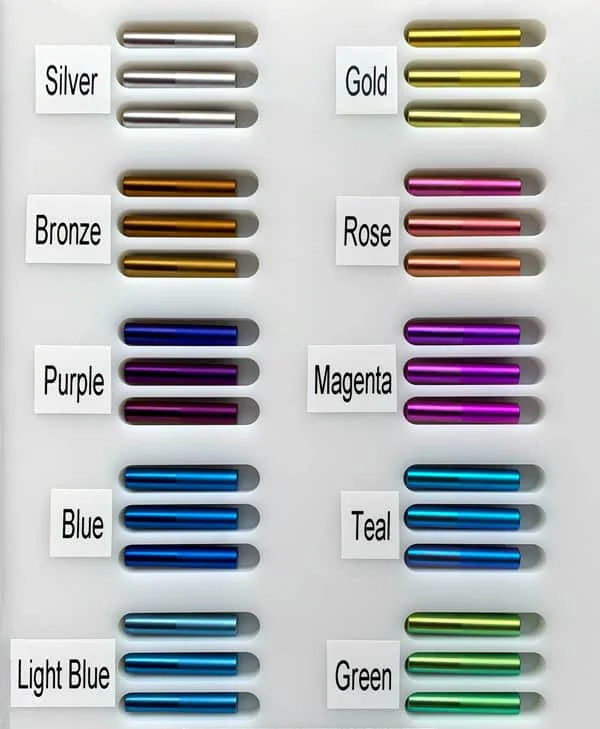
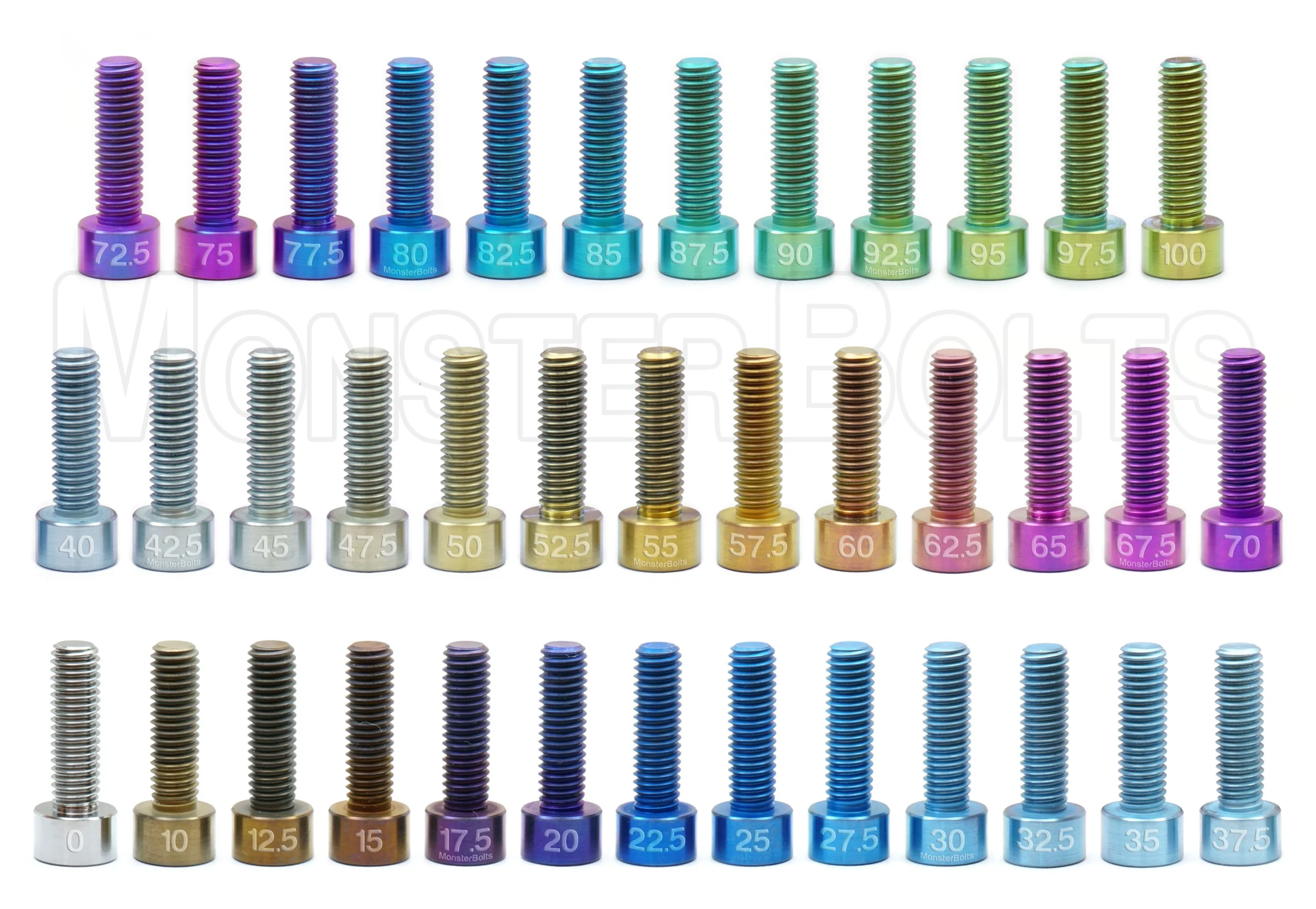
Titanium anodizing is an electrochemical process that thickens the natural TiO₂ oxide layer. Unlike aluminum anodizing, titanium anodizing produces colors through optical interference—no dyes or pigments are used.
Three anodizing types per AMS 2488 and industry practice:
| Type | Standard | Purpose | Key Properties |
|---|---|---|---|
| Basic Anodic Layer | — | Light corrosion protection | Thin, transparent oxide |
| Type 2 (Gray) | AMS 2488 | Wear resistance | Gray appearance; specified for aerospace and medical |
| Type 3 (Color) | No formal standard | Decorative / identification | Voltage-controlled color (blue, gold, purple, green) |
Voltage-to-color mapping (Type 3):
| Voltage (V) | Approximate Color | Oxide Thickness (nm) |
|---|---|---|
| 10 | Light gold | ~16 |
| 20 | Deep gold/bronze | ~32 |
| 30 | Blue | ~48 |
| 50 | Purple | ~80 |
| 70+ | Green | ~112+ |
Formula: Oxide thickness (nm) ≈ 1.6 × Voltage (V) — TiRapid, 2025 (conservative estimate; range is 1.6–2.5 nm/V depending on electrolyte and temperature)
Anodizing longevity: Anodized titanium can last decades or the lifetime of the component, as the oxide layer is chemically bonded to the substrate (LinkedIn/Tuofa CNC, 2024). Titanium can typically undergo 3–5 stripping and re-anodizing cycles without measurable loss of mechanical integrity.
Passivation
Passivation is a chemical treatment that removes contaminants (particularly free iron) from the titanium surface and strengthens the natural oxide layer. Unlike polishing or anodizing, passivation produces minimal visual change.
Primary standard: ASTM F86 — Standard Practice for Surface Preparation and Marking of Metallic Surgical Implants.
Typical process:
- Alkaline cleaning to remove organic contaminants
- Acid etch (dilute HF or citric acid alternative)
- Nitric acid passivation bath
- Rinse and dry in clean environment
When to use passivation instead of anodizing:
- Pharmaceutical equipment (FDA 21 CFR compliance)
- Chemical processing systems
- Medical devices requiring biocompatibility validation without color
Anodizing vs. Passivation: Quick Decision
| Requirement | Choose Anodizing | Choose Passivation |
|---|---|---|
| Wear resistance needed | ✓ | |
| Color identification needed | ✓ | |
| Biocompatibility validation | ✓ | |
| Minimal visual change preferred | ✓ | |
| AMS 2488 aerospace compliance | ✓ | |
| FDA/ISO 13485 medical compliance | Optional | ✓ |
PVD Coatings, Nitriding & Advanced Surface Treatments
For applications requiring surface hardness far exceeding what polishing alone provides, advanced coatings transform titanium’s performance envelope.
PVD (Physical Vapor Deposition) Coatings
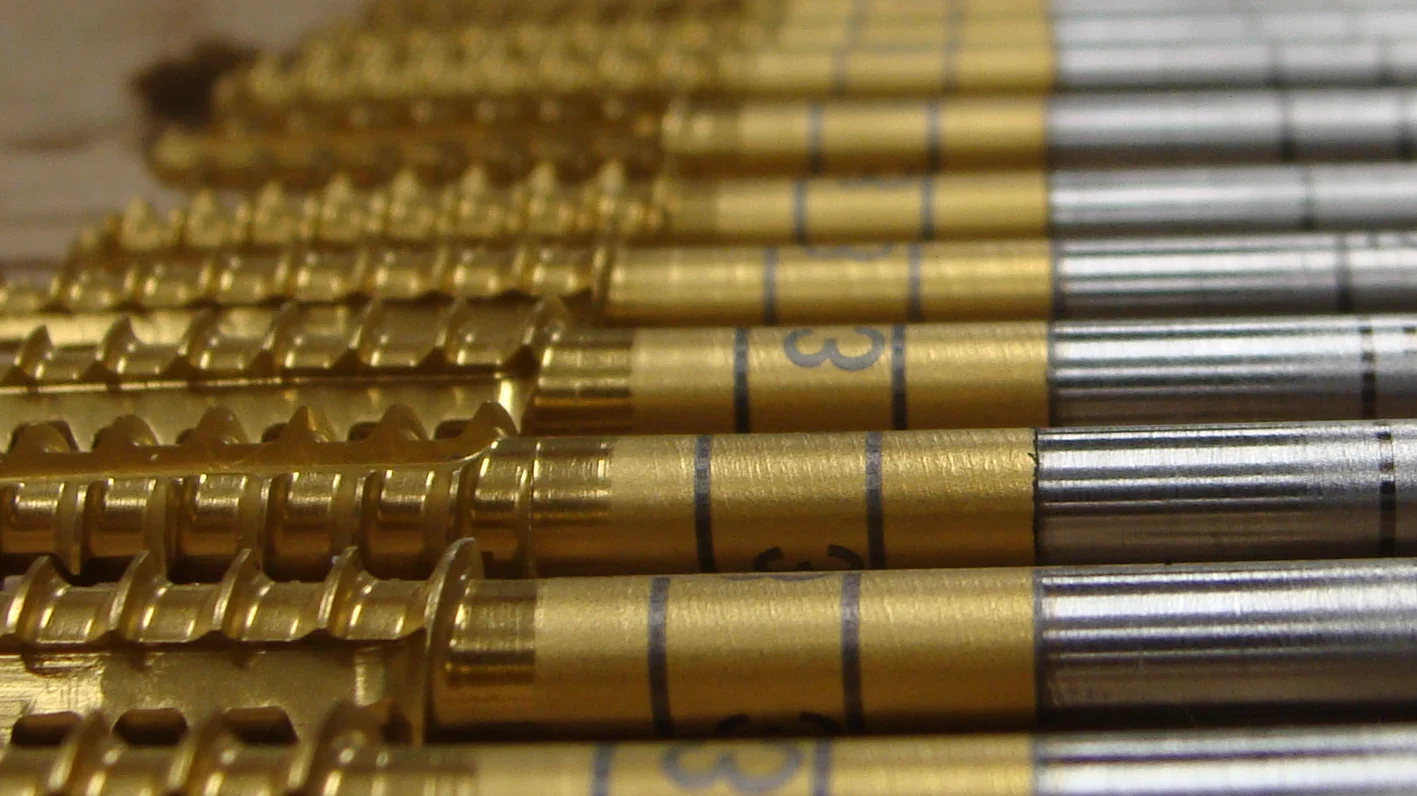
PVD applies thin, extremely hard films to titanium surfaces in a vacuum chamber. The most common coating is titanium nitride (TiN), recognized by its distinctive gold color.
PVD coating comparison:
| Coating | Hardness (HV) | Color | Primary Application |
|---|---|---|---|
| TiN | 2,200–2,400 | Gold | General purpose; cutting tools, implants |
| TiCN | 2,800–3,200 | Gray-silver | High-wear applications |
| TiAlN | 2,800–3,300 | Dark violet | High-temperature applications |
| AlTiN | 3,000+ | Black | Extreme wear resistance |
Source: Oerlikon medical device coating data; Hannibal Carbide Tool specifications.
Medical implant relevance: PVD-coated titanium implants improve osseointegration, reduce wear and friction, increase corrosion resistance, and can provide antibacterial properties (Heliyon, 2024). TiN-coated orthopedic implants show positive biocompatibility and tribological properties, though some reports note third-body wear concerns (PMC/NIH, 2015).
Plasma Nitriding
Plasma nitriding introduces nitrogen into the titanium surface at temperatures above 540°C, creating a hard case layer. Surface hardness reaches 1,100–2,500 HV depending on process parameters and alloy composition (Keronite, 2019; IntechOpen; MDPI Encyclopedia). The hardest layers (~2,500 HV) form the TiN delta phase under optimized high-temperature conditions, while Ti₂N epsilon phases reach ~1,500 HV.
Plasma Electrolytic Oxidation (PEO)
PEO creates a thick, ceramic-like oxide layer on titanium under high-voltage conditions. It provides superior wear and corrosion resistance for demanding applications, including aerospace components exposed to extreme environments.
Industry-Specific Surface Finish Requirements
Different industries impose fundamentally different surface finish standards. Matching your finishing process to the applicable standard is not optional—it is a compliance requirement.
Aerospace (AS9100 / NADCAP)
| Application | Required Ra | Surface Treatment |
|---|---|---|
| Engine components | 4–8 μin (0.1–0.2 μm) | Mirror polish |
| Structural parts | 16–32 μin (0.4–0.8 μm) | Standard polish |
| Interior components | 32–63 μin (0.8–1.6 μm) | Utility finish |
| Flight-critical fasteners | Per AMS spec | Passivation or anodizing |
Aerospace surface finishing is governed by AMS 2488 (anodizing), ASTM F86/ASTM B600 (titanium surface preparation and passivation), and individual OEM specifications. Stress-free surface finishes are mandatory for fatigue-critical components—residual stress from aggressive mechanical polishing can reduce fatigue life.
Medical Devices & Implants (FDA / ISO 13485 / ASTM F86)
| Application | Required Ra | Surface Treatment |
|---|---|---|
| Orthopedic implants (smooth) | < 0.2 μm | Mechanical + electropolishing |
| Orthopedic implants (rough) | 1.0–2.0 μm | Plasma spray / grit blast |
| Dental implants | 1.0–2.0 μm (moderately rough) | Acid etching + SLA |
| Surgical instruments | < 0.4 μm | Mechanical polishing + passivation |
| Catheter components | < 0.1 μm | Electropolishing |
Medical implant surface roughness directly affects osseointegration. Smooth surfaces (Ra < 0.2 μm) resist bacterial adhesion; moderately rough surfaces (Ra 1.0–2.0 μm) promote bone cell attachment. Choosing the wrong Ra value is not just an engineering error—it is a patient safety issue (Criterion Precision, 2026; PMC, 2022).
Consumer Products (No Formal Standard)
| Application | Typical Ra | Finish Preference |
|---|---|---|
| Watch cases | 0.05–0.2 μm | Brushed or polished |
| Jewelry (rings) | 0.01–0.1 μm | Mirror or brushed |
| EDC tools | 0.2–0.8 μm | Bead-blasted or stonewashed |
| Smartphone frames | 0.4–1.0 μm | Brushed or bead-blasted |
Polishing Different Titanium Alloys: Why One Size Does Not Fit All
One of the most overlooked topics in titanium finishing is that different titanium alloys behave very differently under the same polishing process. The SERP articles treating “titanium” as a single material are misleading.
CP (Commercially Pure) Grades 1–4
CP titanium is softer and easier to polish than alloys. It responds well to standard mechanical polishing progressions and is more forgiving of skipped grit stages. However, its lower hardness means the finished surface is more susceptible to scratching in service.
- Best polishing method: Standard mechanical progression (80 → 2,000 grit + buffing)
- Mirror finish difficulty: Low–Moderate
- Typical application: Chemical processing equipment, desalination plants
Ti-6Al-4V (Grade 5 / Grade 23)
The workhorse of aerospace and medical titanium. Significantly harder than CP grades (~360 HV vs ~150 HV for Grade 2), which makes it more resistant to scratching but harder to polish. The aluminum and vanadium content also changes the re-passivation behavior during polishing.
- Best polishing method: Mechanical (for external) + electropolishing (for complex geometries)
- Mirror finish difficulty: Moderate–High
- Key challenge: Work hardening during grinding is more severe; consistent pressure is critical
- Typical application: Aerospace structures, medical implants, high-performance automotive
Ti-3Al-2.5V (Grade 9)
Intermediate between CP and Ti-6Al-4V. Polishes more easily than Grade 5 but retains better strength than CP grades.
- Best polishing method: Standard mechanical progression with moderate pressure
- Mirror finish difficulty: Moderate
- Typical application: Golf club shafts, bicycle frames, hydraulic tubing
In practice, the polishing procedure that produces a mirror finish on CP Grade 2 in 20 minutes may require 35–45 minutes on Ti-6Al-4V for the same Ra value. Budget your finishing time accordingly.
How to Choose the Right Titanium Finishing Method: A Decision Framework
With multiple finishing methods available, the selection process should follow a structured logic.
Step 1: Define the Performance Requirement
| If you need… | Start with… |
|---|---|
| Corrosion resistance | Passivation or anodizing |
| Wear resistance | PVD coating or nitriding |
| Mirror aesthetic | Mechanical polishing or electropolishing |
| Biocompatibility | Passivation + controlled Ra (ASTM F86) |
| Color identification | Type 3 anodizing |
| Internal channel finishing | Chemical or electropolishing |
Step 2: Check Compliance Requirements
| Industry | Required Standards |
|---|---|
| Aerospace | AMS 2488, ASTM F86, AS9100, NADCAP |
| Medical | ASTM F86, ISO 13485, FDA 21 CFR 820 |
| Food/Pharma | FDA, 3-A Sanitary Standards |
| Defense | MIL-STD-1500, MIL-STD-1689 |
Step 3: Evaluate Budget and Volume
| Method | Setup Cost | Per-Part Cost | Best Volume |
|---|---|---|---|
| Manual mechanical | $500–$5,000 | $20–$100 | 1–100 parts |
| Automated mechanical | $20,000–$100,000 | $5–$30 | 100–10,000+ parts |
| Chemical polishing | $10,000–$50,000 | $2–$15 | 500+ parts |
| Electropolishing | $20,000–$100,000+ | $5–$30 | 200+ parts |
| Anodizing | $15,000–$80,000 | $3–$20 | 100+ parts |
| PVD coating | $50,000–$200,000+ | $10–$50 | 500+ parts |
Common Titanium Polishing Mistakes (And How to Avoid Them)
After years of supervising titanium finishing operations, the same errors appear repeatedly—especially in shops transitioning from stainless steel to titanium work.
Mistake 1: Skipping grit stages.
Going directly from 240 to 800 grit because “it looks smooth enough.” The hidden 240-grit scratches reappear under inspection lighting and require complete rework. The time saved is negative.
Mistake 2: Insufficient cooling.
Titanium’s low thermal conductivity (~6.7 W/m·K for Ti-6Al-4V) traps heat at the surface. Dry polishing or using inadequate coolant causes blue/gold discoloration (titanium oxide coloring at 300–600°C) and accelerates work hardening. Always use flood coolant during grinding stages.
Mistake 3: Reusing contaminated abrasives.
Abrasive paper or wheels used on stainless steel contain embedded iron particles. When used on titanium, these iron particles transfer to the titanium surface, creating localized corrosion cells. Use dedicated titanium-only abrasives.
Mistake 4: Excessive pressure.
More pressure does not remove material faster on titanium—it generates heat, causes work hardening, and increases the risk of galling. Moderate, consistent pressure outperforms heavy pressure every time.
Mistake 5: Ignoring directional changes.
Polishing in the same direction at every stage means previous-stage scratches are never fully removed. Rotate 90° between grit changes and verify removal under angled light before advancing.
Mistake 6: Using chlorine-based cleaners.
Chlorine and bleach cause stress-corrosion cracking in titanium. Clean titanium only with non-chlorinated solvents, mild soap, or designated titanium cleaning solutions.
Post-Finishing Care: Maintaining Your Titanium Surface
A polished titanium surface is durable, but it is not maintenance-free.
For mirror finishes:
- Clean with mild soap and warm water; avoid abrasive cleaners
- Store wrapped in soft cloth or anti-tarnish packaging
- For fingerprints and light marks: titanium polishing cloth with light pressure
- Avoid prolonged contact with other metals (galvanic corrosion risk)
For anodized finishes:
- Anodized titanium is highly resistant to fading—the color comes from the oxide layer itself, not a surface coating
- Clean with water and mild detergent
- Avoid abrasive scrubbing, which can thin the oxide layer unevenly
For passivated surfaces:
- Passivation provides long-term corrosion protection but can be compromised by mechanical damage
- Re-passivate after any grinding, machining, or scratch repair
- Store in clean, dry environments when not in service
Frequently Asked Questions
What is the best method to polish titanium?
Mechanical polishing with progressive grit stages (80 → 2,000+ grit) followed by buffing is the most accessible method for achieving a mirror finish. For complex geometries or batch processing, electropolishing is superior—it removes embedded contaminants and improves Ra by up to 50% without mechanical contact.
How to polish titanium to a mirror finish?
Start with 80–120 grit under flood coolant, progress through 240, 400, 800, and 1,200 grit with 90° directional changes between stages, finish with 2,000+ grit, and buff with tripoli or white rouge compound. Total time: 25–45 minutes depending on alloy grade and starting condition.
What Ra value is required for a mirror finish on titanium?
A mirror finish on titanium corresponds to Ra 0.01–0.05 μm (approximately 0.4–2 μin). For aerospace engine components, Ra 4–8 μin (0.1–0.2 μm) is typical. Medical implants vary: smooth surfaces require Ra < 0.2 μm, while osseointegration-optimized surfaces target Ra 1.0–2.0 μm.
Can you polish titanium at home?
Light polishing of small titanium items (jewelry, watch cases) is possible with progressive-grit sandpaper (400–2,000) and polishing compound. However, mirror-quality results require practice, consistent pressure, and patience. Industrial-grade finishing requires specialized equipment.
Is anodizing the same as passivation for titanium?
No. Anodizing is an electrochemical process that thickens the oxide layer using controlled voltage, producing colored or wear-resistant surfaces (AMS 2488). Passivation is a chemical treatment (typically per ASTM F86) that removes contaminants and strengthens the natural oxide layer without significantly changing appearance.
What is the difference between brushed and polished titanium?
Brushed titanium has a linear texture pattern with a satin appearance (Ra 0.4–0.8 μm), while polished titanium is smooth and reflective (Ra 0.01–0.05 μm). Brushed finishes hide minor scratches better; polished finishes are more visually striking but show surface damage more readily.
How long does anodizing last on titanium?
Anodized titanium can last decades or the lifetime of the component. The oxide layer is chemically bonded to the substrate, not a surface coating. Titanium can undergo 3–5 stripping and re-anodizing cycles without measurable loss of mechanical integrity.
Is titanium prone to galling during polishing?
Yes, titanium is notoriously susceptible to galling, though CP grades (especially Grade 2) are actually worse than Ti-6Al-4V. Use sharp, dedicated titanium tooling, maintain consistent moderate pressure, and ensure adequate lubrication. Galling creates embedded surface defects that compromise both aesthetics and corrosion resistance.
Conclusion
Titanium surface finishing is not a single skill—it is a family of related processes, each with distinct parameters, constraints, and outcomes. After fifteen years of working with titanium components across aerospace, medical, and consumer applications, the most important lesson I can share is this: the finish is only as good as the preparation beneath it.
No amount of final-stage buffing can compensate for skipped grit stages, contaminated abrasives, or inadequate cooling. The engineering data in this guide—the Ra values, grit progressions, voltage tables, and alloy-specific recommendations—exists because I have spent years refining these processes through trial, measurement, and occasional rework.
If you take away one principle from this guide, let it be this: match the finishing method to the performance requirement, not to the budget alone. A $5 polish on a flight-critical component is not a saving—it is a liability.